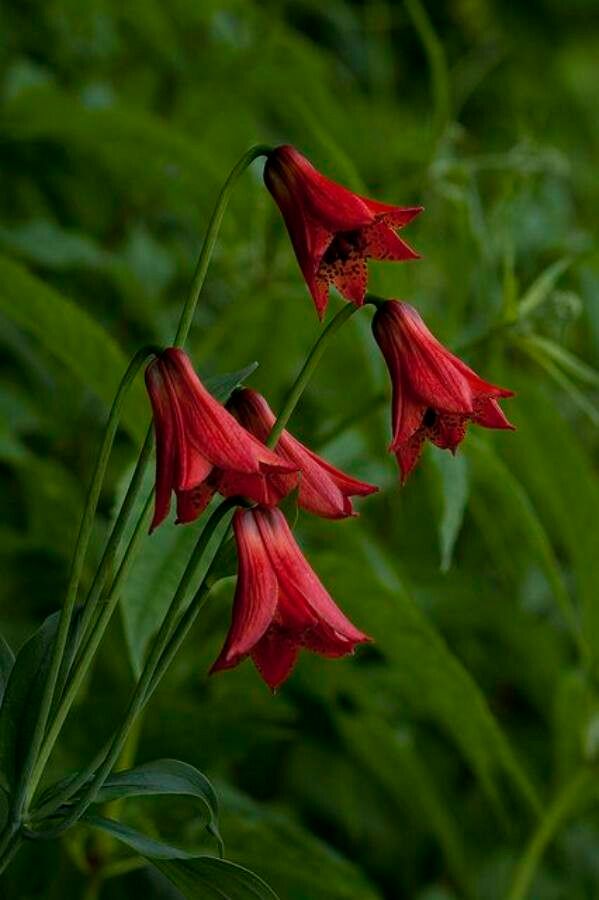
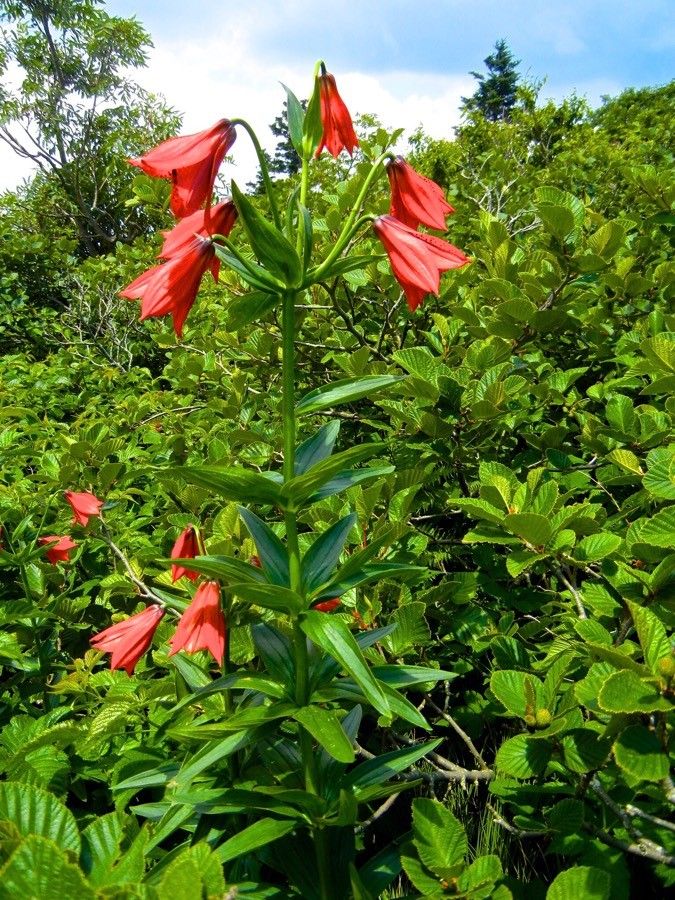
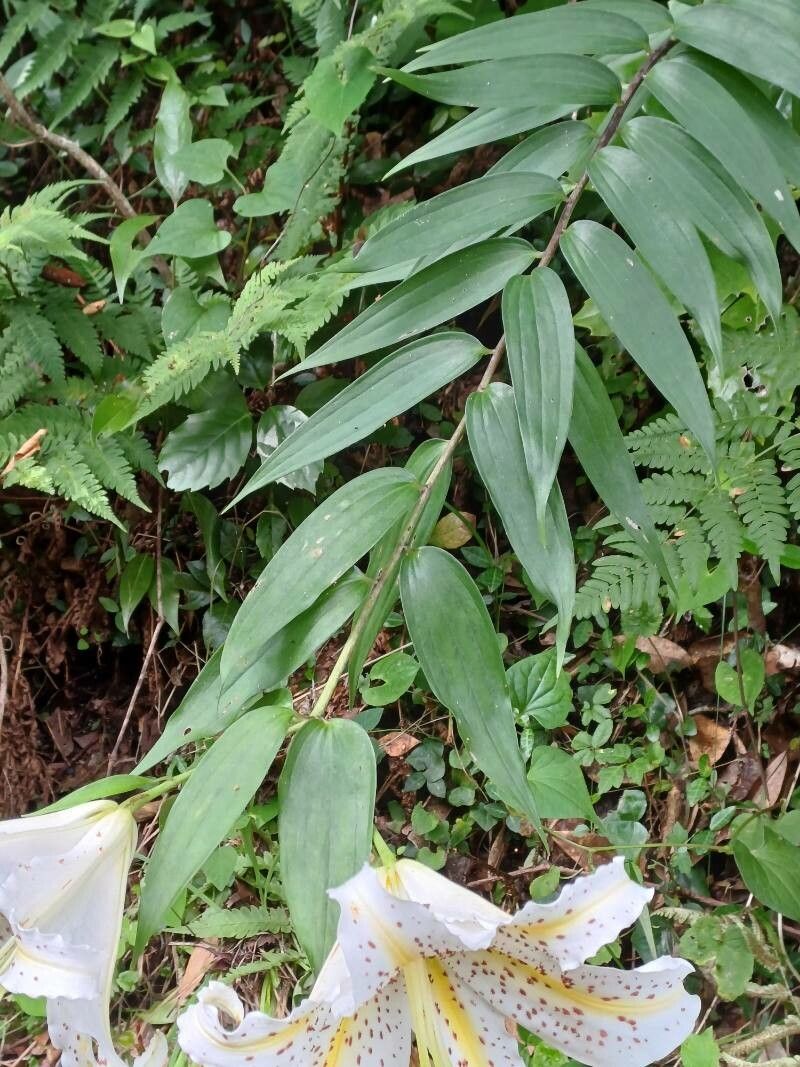
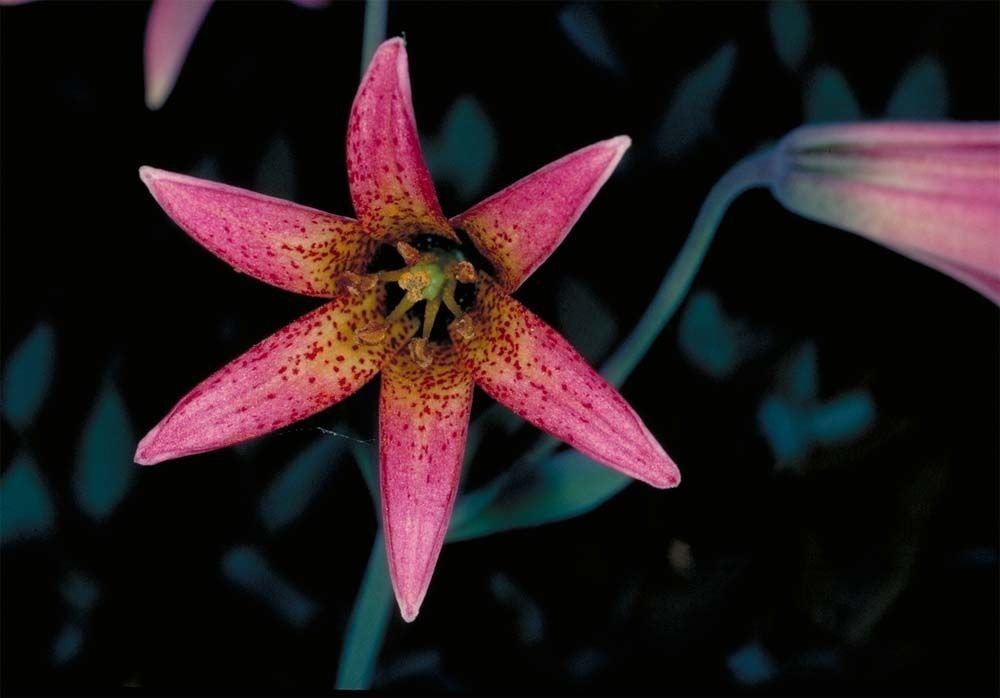
Lilium grayi (Gray's lily, orange bell lily, Roan lily) is a perennial plant that is endemic to the eastern US states of North Carolina, Virginia, and Tennessee, growing in moist, acid soil in the Appalachian mountains on higher elevation meadows, bogs, and seeps. The plant was introduced to Royal Botanic Gardens, Kew in 1890 and was featured in the Kew Bulletin in 1892.
Gray's lily is fairly disease-resistant and typically does not suffer from many illnesses. Still, it can be affected by pests and diseases found nearby. When infections occur, they are generally mild. Care-wise, the plant needs a moderate level of maintenance. It should be pruned on a regular basis to preserve a neat appearance and healthy growth. Applying fertilizer can also encourage blooming. Gray's lily is appropriate for anyone with outdoor space, like a garden or patio, and does not demand extensive gardening experience. It may need more attentive care if kept indoors.
How to keep Lilium Grayi.
Light
Gray's lily is native to habitats such as forest understories or rocky areas, where it grows in natural shade. Its preferred sunlight condition is partial sun, but it can adapt to full sun or full shade, demonstrating its versatile and hardy nature.
Water
Gray's lily thrives in moist conditions, but it is sensitive to standing water. During the seedling phase, follow a strict watering schedule, and then reduce the frequency as the plant matures, unless there is a drought. After applying topdressing, be sure to water the plants, and enhance soil drainage during rainy periods to prevent waterlogging.
Temperature
Gray's lily can tolerate a wide range of temperatures, but its distribution may still be restricted by specific combinations of moisture and heat. It performs best in warm summer climates with sufficient rainfall or regular watering. Extended stretches of cloudy, rainy weather or prolonged high temperatures raise the likelihood of the lily dying. In winter, adequate protection from the cold can improve its survival rate.
Fertilizer
The best time to fertilize a Gray's lily is in early spring, as it comes out of dormancy and begins active growth. Fertilization supplies essential nutrients for healthy development. Although Gray's lily has modest fertilizer requirements, feeding it annually can improve its survival and encourage better, longer-lasting flowers.
Pruning
Prune Gray's lily in early spring by removing dead stems and trimming old flower heads. This encourages healthier blooms and prevents seed formation. Pruning also improves air circulation and sun exposure, reducing the risk of pests and supporting the plant's natural growth cycle. For best practices, consult reliable gardening sources to verify pruning methods.
Botanical profile.
- Plant Type
- Herb
- Life Cycle
- Perennial
- Genus
- Lilium
- Family
- Liliaceae
- Hardiness Zone
- 4-8
- Mature Height
- 0.61 m to 1.22 m
- Mature Spread
- 30 cm to 46 cm
- Leaf Color
- Green, Dark Green
- Leaf Type
- Deciduous
- Flower Color
- Red
- Flower Size
- 2.54 cm to 7.62 cm
- Bloom Time
- Early summer, Mid summer
- Planting Time
- Spring, Summer
- Harvest Time
- Late summer, Early fall
Other names.