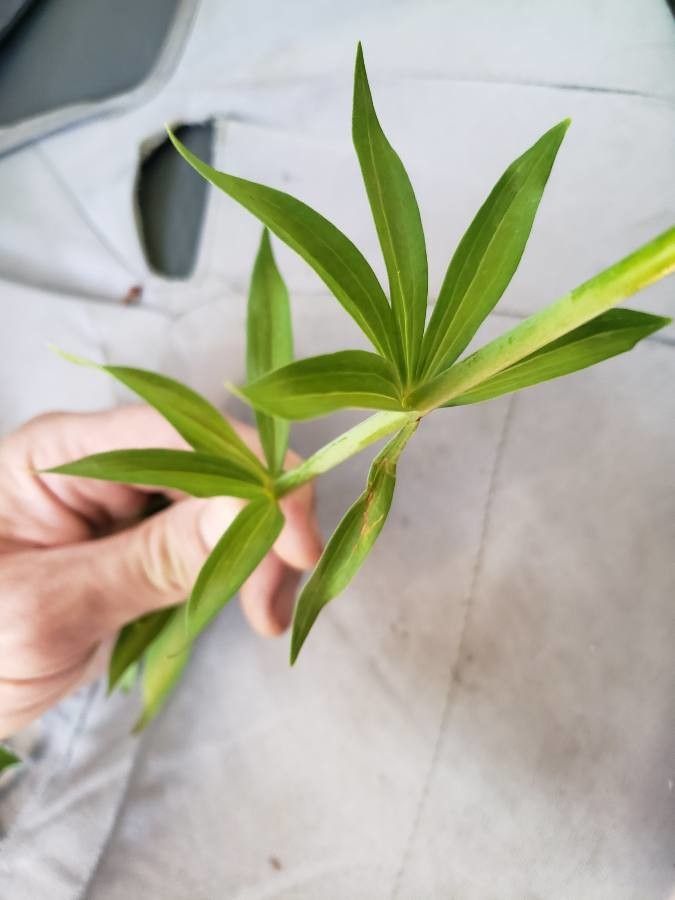
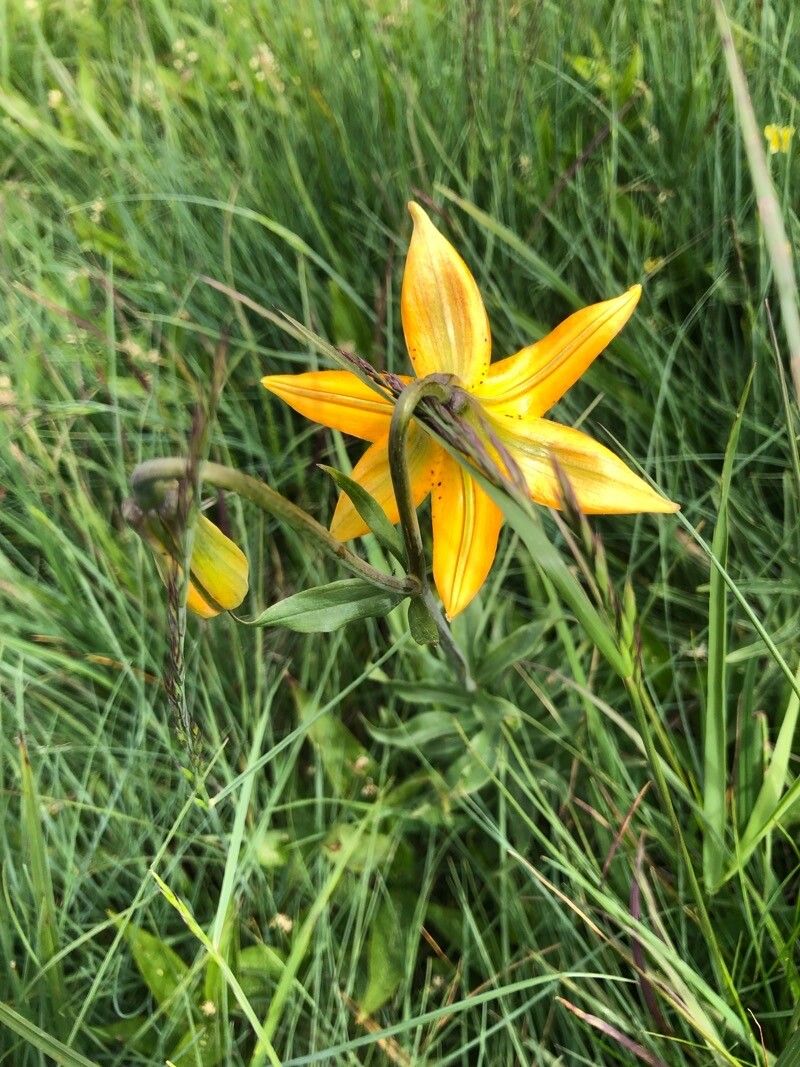
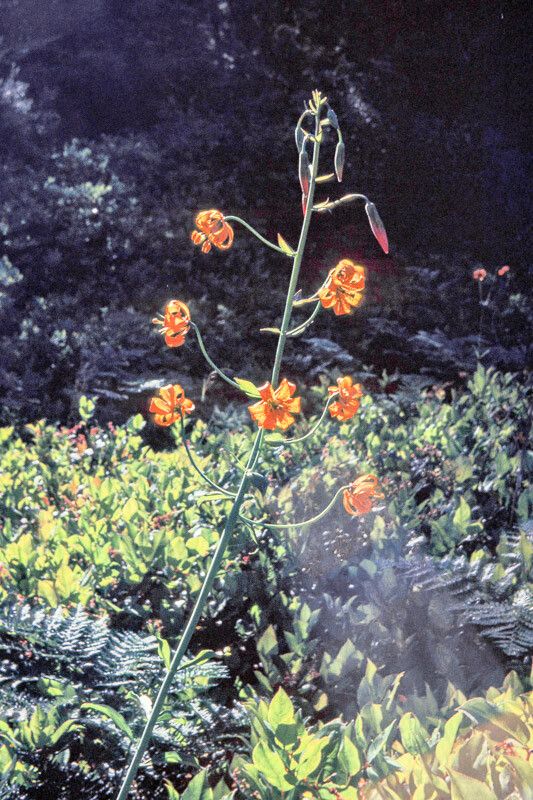
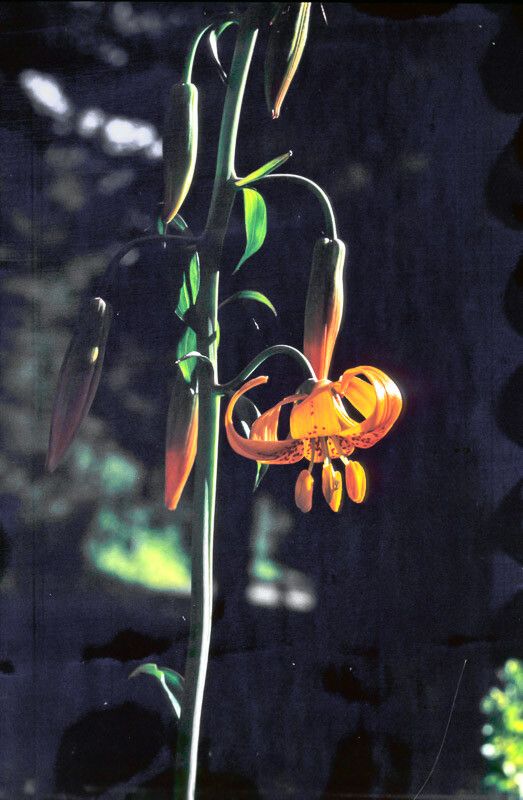
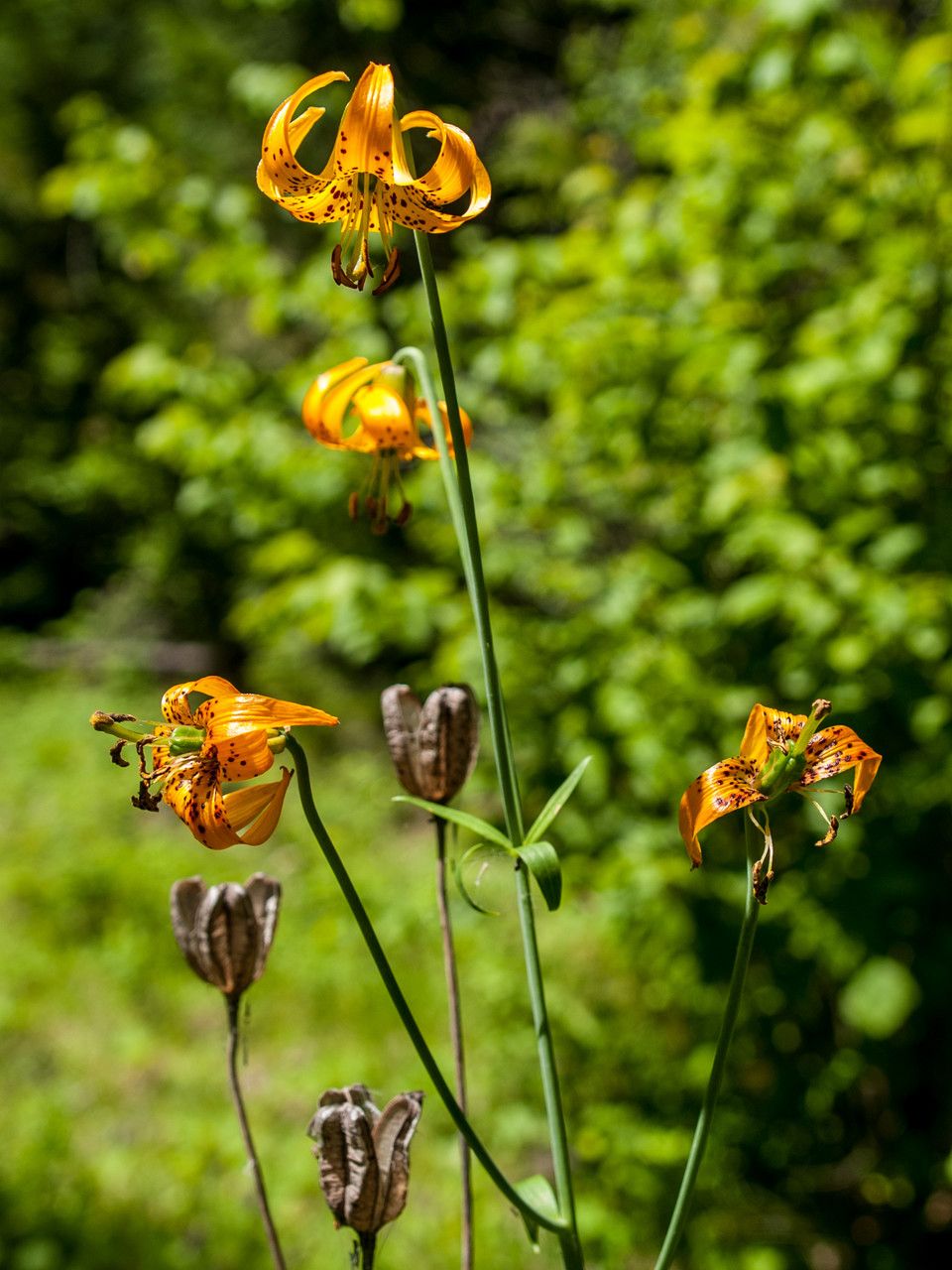
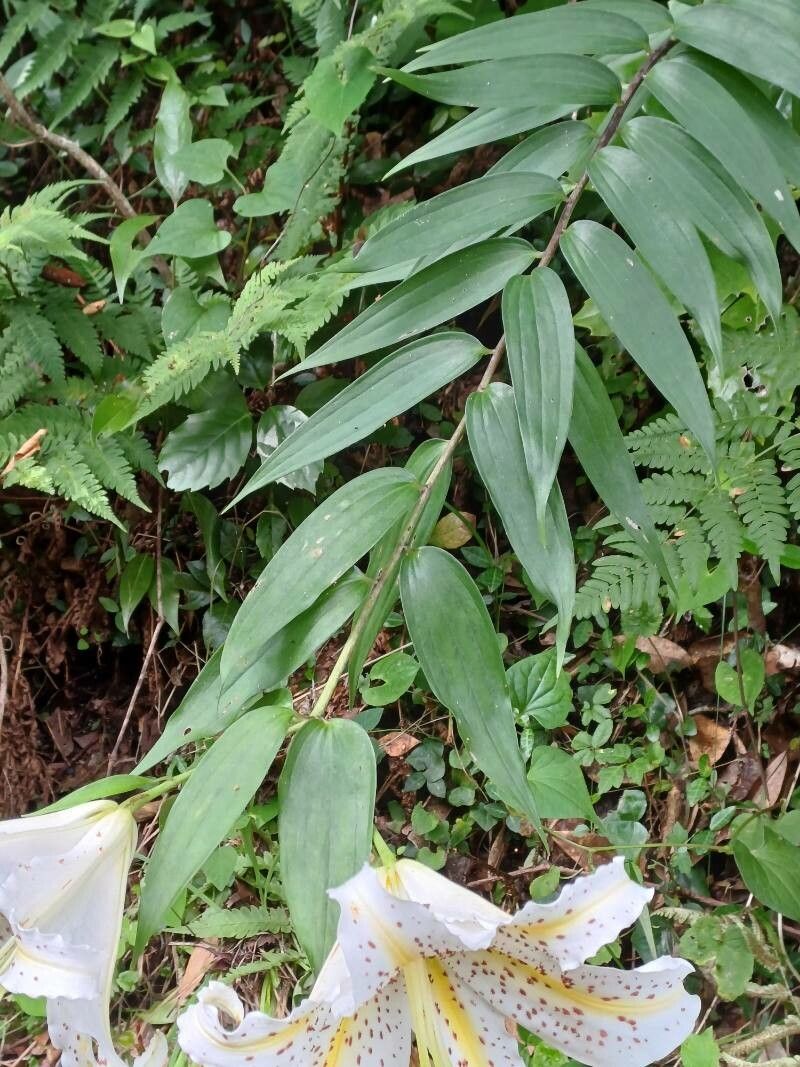
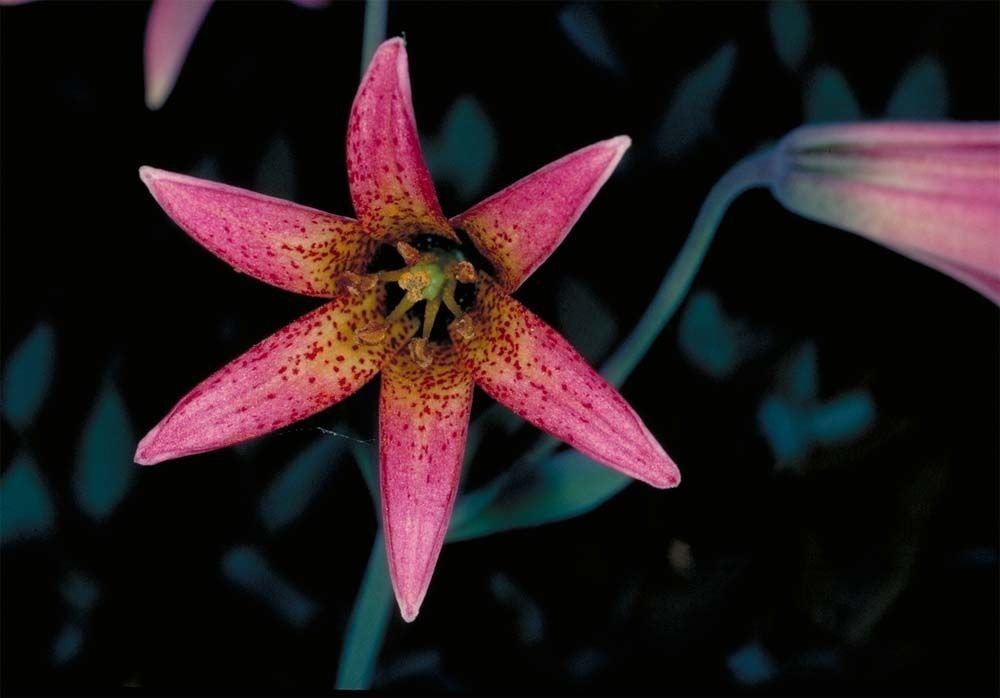
Lilium columbianum, commonly known as the Columbia lily, is a species native to western North America. This perennial herbaceous plant can reach heights of up to 1.5 meters and features striking orange-red flowers adorned with dark spots. The flowers are trumpet-shaped with six petals that curve backward, creating a distinctive and captivating appearance.
The Columbia lily thrives in moist habitats such as meadows, forests, and along streams, occurring at elevations from sea level to subalpine regions. It favors well-drained soils rich in organic content.
Historically, Native American tribes have utilized the Columbia lily for its medicinal properties, employing it to treat wounds and respiratory ailments. The plant's bulbs were also a source of food for some tribes.
Despite its overall commonality, the Columbia lily has become rare in certain parts of its range due to habitat loss from logging and development. Nonetheless, it is also cultivated as an ornamental plant, prized for its beautiful flowers that bloom in late spring or early summer.
In summary, Lilium columbianum is a stunning native species with cultural significance, playing a crucial role in maintaining healthy ecosystems throughout western North America.
Botanical profile.
- Plant Type
- Herb
- Life Cycle
- Perennial
- Genus
- Lilium
- Family
- Liliaceae
- Hardiness Zone
- 7
- Mature Height
- 0.3 m to 1.52 m
- Mature Spread
- 30 cm
- Leaf Color
- Green, Yellow
- Leaf Type
- Deciduous
- Flower Color
- Orange, Red
- Flower Size
- 7.62 cm to 10.16 cm
- Bloom Time
- Early summer, Mid summer
- Planting Time
- Spring
- Harvest Time
- Late summer, Early fall
Other names.