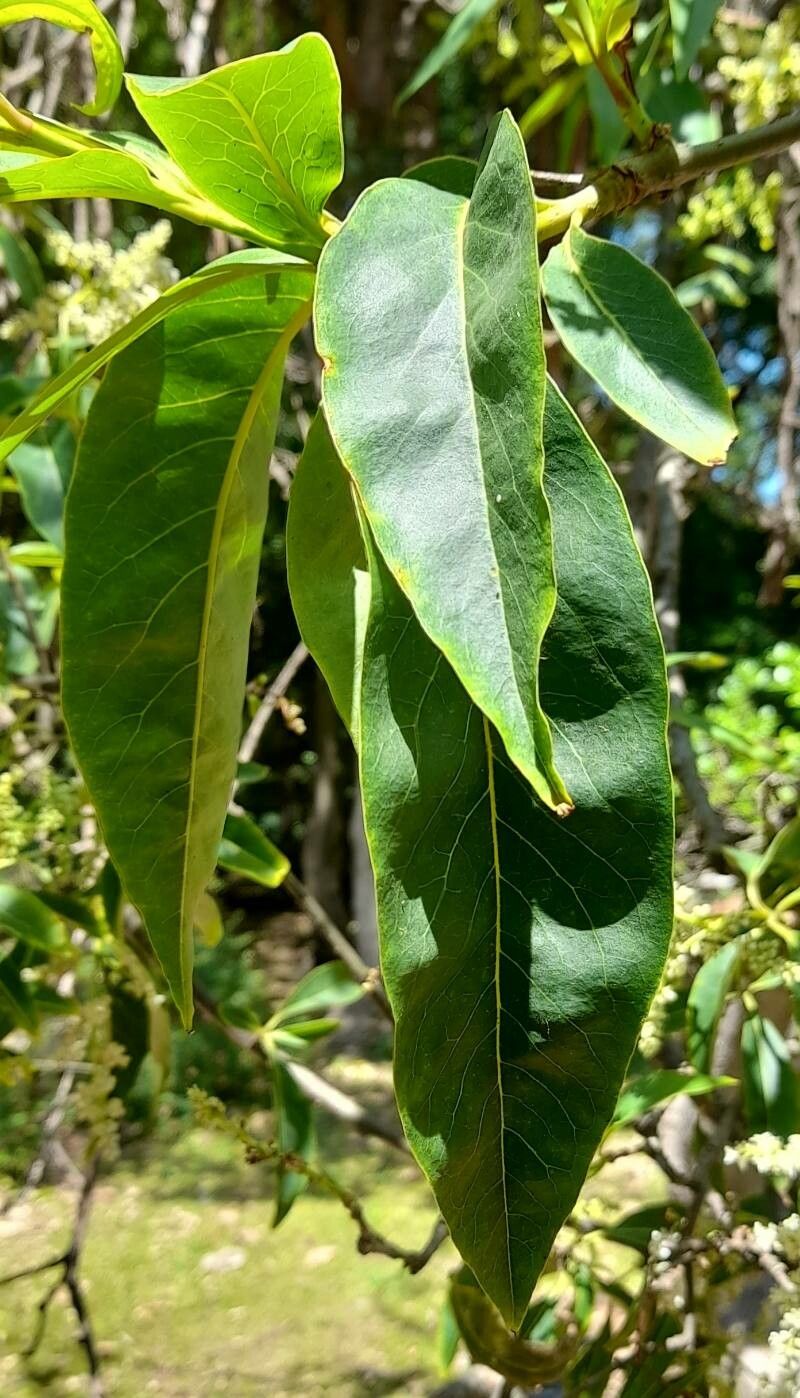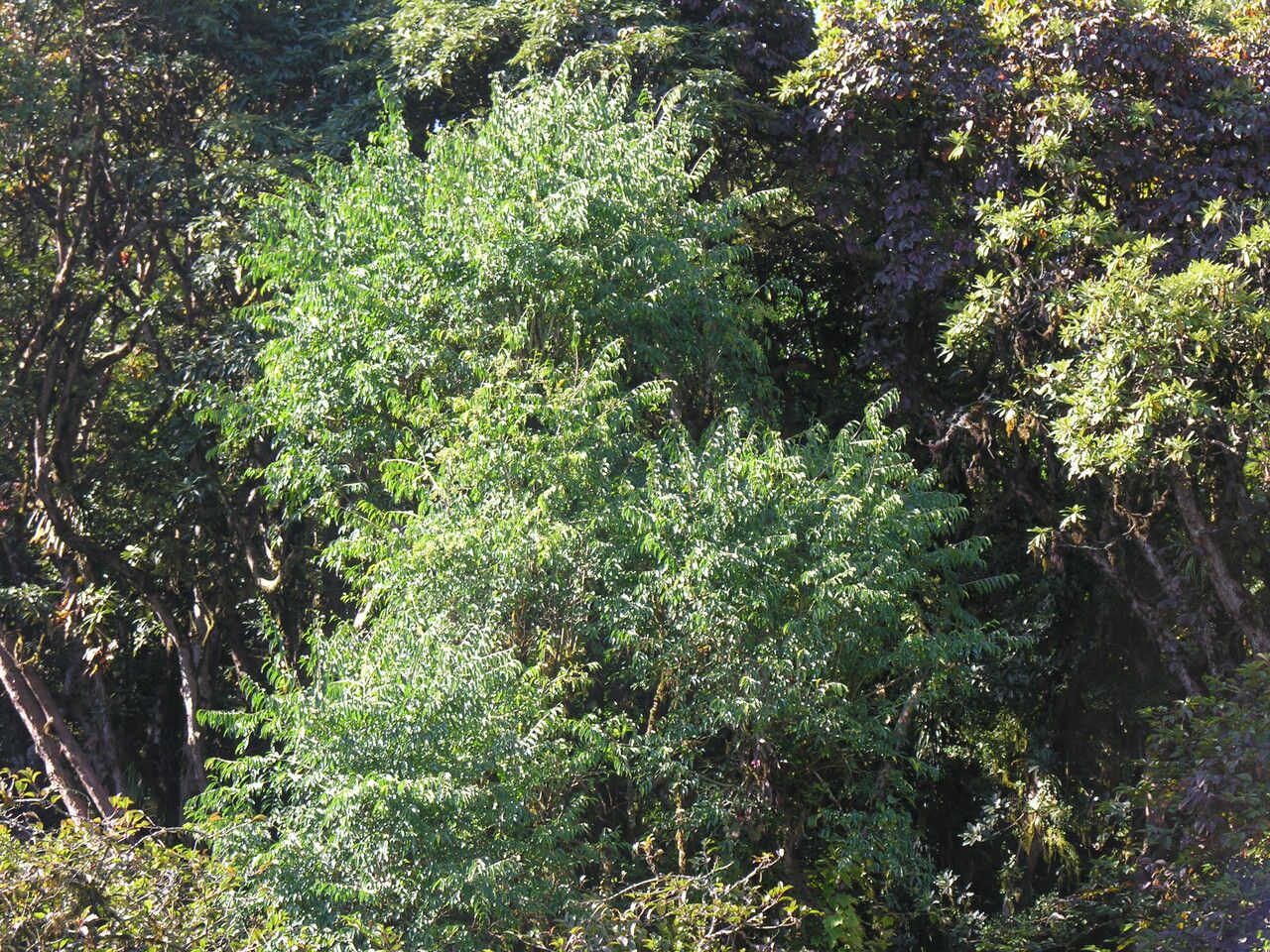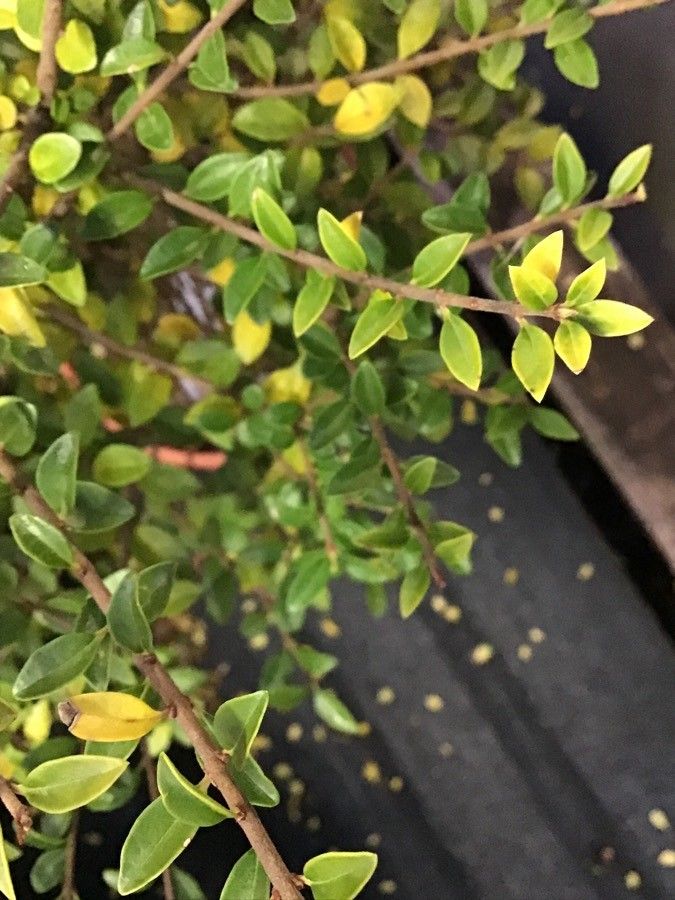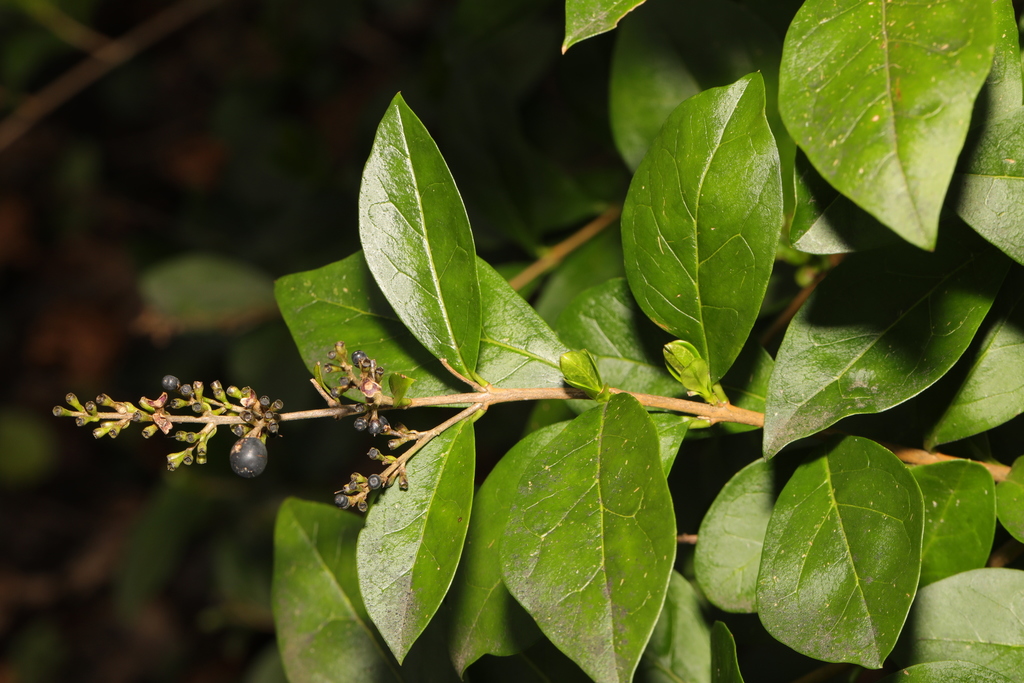
Ligustrum ovalifolium, commonly known as the Japanese privet, is a fast-growing evergreen shrub native to Japan and Korea. This plant, which belongs to the Oleaceae family, can reach heights of up to 15 feet with a spread of about 10 feet. Its glossy, oval-shaped leaves are dark green and can grow up to 3 inches long.
In late spring or early summer, the Japanese privet produces small, highly fragrant white flowers. These blossoms are followed by small black berries that attract birds.
Due to its dense growth habit and excellent tolerance for pruning, this plant is often used as a hedge or screen. It thrives in full sun but can also tolerate partial shade and a variety of well-draining soil types.
While generally low-maintenance, the Japanese privet may need occasional pruning during the growing season, especially if used for hedging. It can be susceptible to pests such as aphids and spider mites, but these can be managed with insecticidal soap if necessary.
Overall, Ligustrum ovalifolium is an attractive evergreen shrub with fragrant flowers, making it an excellent choice for hedging or screening in gardens and landscapes.
California privet is resistant to disease and is generally not susceptible to illnesses. As for care, this plant is fairly low-maintenance. When grown outdoors it needs little watering, and larger specimens usually do not require pruning. Smaller plants, however, should be pruned after they finish blooming. California privet is appropriate for anyone with an outdoor area, such as a garden or deck, and does not demand much gardening experience.
How to keep Ligustrum Ovalifolium.
Light
California privet does best in locations where it receives unobstructed sunlight for most of the day. It can, however, persist in areas where sunlight is only intermittent. Too little light may limit its growth, while too much sun does not necessarily cause significant harm to its overall health.
Water
California privet thrives in moderate climates and requires watering every one to two weeks. It prefers evenly moist soil and should neither be overwatered nor underwatered. Being an evergreen, California privet retains its foliage year-round, so maintaining consistent soil moisture is essential for its health.
Temperature
The California privet is native to temperate regions and can tolerate a wide range of temperatures. It prefers temperatures between 41 and 89 ℉ (5 and 32 ℃). During hot summers, mulching will help keep its roots cool. In colder months it may lose some leaves, but new growth will appear in spring.
Fertilizer
To encourage healthy growth, feed your California privet in early spring. Consistent fertilizing improves overall health, producing vigorous growth, better tolerance of harsh conditions, and enhanced resistance to pests and diseases. Keep a regular fertilization routine for your California privet to maintain lively, deeply colored foliage and a lush appearance.
Pruning
California privet is a fast-growing hedge plant known for its dense foliage. To maintain its shape and ensure good air circulation, it's best to prune it later in the spring. Avoid pruning in late fall to prevent any potential damage to the plant. Regular maintenance not only keeps the hedge healthy but also enhances its appearance while managing its vigorous growth.
Pot & Repot
To help California privet thrive in pots, provide excellent drainage. This prevents waterlogging and root rot while ensuring adequate airflow to the roots.
Botanical profile.
- Plant Type
- Shrub
- Life Cycle
- Perennial
- Genus
- Ligustrum
- Family
- Oleaceae
- Hardiness Zone
- 5-8
- Mature Height
- 3.05 m to 4.57 m
- Mature Spread
- 3.05 m to 4.57 m
- Leaf Color
- Green, Yellow
- Leaf Type
- Evergreen, Semi-evergreen
- Flower Color
- White
- Flower Size
- 3.05 cm to 6.35 cm
- Bloom Time
- Early summer, Mid summer
- Planting Time
- Spring, Autumn
- Harvest Time
- Mid summer, Late summer
- Native Area
- Japan, South Korea
Other names.
Reader questions.
How can I know if I am giving enough water to my California privet plant?
The California privet is more commonly affected by overwatering, and there are specific signs to watch for. An overwatered plant will have yellow leaves and may shed some of them. It can also lead to the plant shriveling and root rot. Conversely, an underwatered plant will wilt and have brown or brittle leaves. Regardless of the issue, it's important to take action and restore the plant's health.
Why should I put fertilizer on my California privet?
No matter which type of California privet you have, regular fertilization is essential for its overall health. By providing the right nutrients, you can make your California privet grow stronger and more resilient to difficult conditions, while also improving its ability to ward off diseases and pests. The attractive foliage of your California privet is worth preserving, so it is important to establish and follow a specific fertilization schedule. This will help your California privet develop vibrant colored leaves and a lush appearance.
What are the sunlight requirements for California Privet?
California Privet thrives best when it receives full sun, which is above 6 hours of sunlight daily. It can also grow well in partial sun, defined as about 3-6 hours of sunlight. It's crucial to observe the movement of sunlight through your garden to ensure that your plants are positioned in areas that offer the ideal balance of light and shade, promoting their well-being.
What are the ideal temperature conditions for California Privet?
California Privet, known botanically as Ligustrum ovalifolium, thrives in temperate regions, preferring temperatures between 41°F to 89°F (5°C to 32°C). It is quite adaptable to a wide range of temperatures and possesses strong cold resistance, making special frost protection measures unnecessary in most cases. However, it benefits from mulching during hot summers to keep its roots cool and requires abundant watering before the first freeze in autumn to ensure the soil remains moist and enters a frozen state. This helps prevent drought and water scarcity for the plant during winter and early spring.
How should I water my California privet when it is growing at different stages?
When the California privet is young, especially as a seedling, it requires more water compared to when it is mature. It is crucial to keep the soil consistently moist during the early stages of this plant's life to promote root growth. The same applies if you transplant the California privet to a new location. Additionally, if the California privet is producing flowers or fruits, it may need slightly more water than usual to support these plant structures.
When should I fertilize my California privet?
To keep your California privet healthy and growing well, it's important to fertilize it at certain times. The first time to fertilize is in late winter or early spring, which gives the plant the nutrients it needs to grow when the weather gets warmer. If you live in a warm climate region, it's also a good idea to fertilize again in early fall. This provides extra nutrients for the next growing season and helps the plant withstand the winter cold without damage to its leaves. Fertilizing earlier in the fall ensures that new branches have enough time to grow and withstand the winter.
What are the essential sunlight conditions for optimal growth of California Privet?
For optimal growth, California Privet requires a significant amount of unobstructed sunlight throughout most of the day. It can still survive with intermittent sun exposure but may not grow as vigorously. Too little light can impede its growth, while too much sunlight doesn't pose a serious threat. In cases where natural light is insufficient, especially indoors or during less sunny seasons, artificial lighting such as LED lights can provide the necessary wavelengths for healthy growth. For plants needing full sun, artificial lighting should be 30-50W/sq ft, for partial sun plants 20-30W/sq ft, and for full shade plants 10-20W/sq ft.
How does California Privet react to temperature changes, and what are the recommended solutions?
California Privet shows resilience against temperature variations. In cold conditions, when temperatures drop below a certain limit (not specified), although there may not be obvious changes during winter, the plant's branches may become brittle and dry in spring, with no new shoots emerging. In such cases, pruning dead branches that failed to produce new leaves in spring is advised. During high temperatures, particularly when they exceed specified limits, the plant's leaves may lighten in color, and tips may become dry and withered, increasing susceptibility to sunburn. To alleviate these symptoms, trim away the sunburned and dried up parts of the plant, relocate it to a shaded area or use a shade cloth to protect it from the midday and afternoon sun, and ensure the soil is kept moist by watering the plant in the morning and evening.
What's the difference between watering my California privet inside or outside?
If your California privet is growing outside, it may not need extra watering and can survive on rainwater alone. However, if you live in an area with little to no rain, watering every two weeks is recommended. If you live outside the plant's natural hardiness zone, it should be grown indoors. Indoors, keep an eye on the soil moisture as it can dry out faster in containers or near HVAC units like air conditioners. Due to these drying factors, you may need to water the plant more frequently compared to growing it outdoors.
When should I not put fertilizer on my California privet?
To ensure optimal growth for your California privet, it is important to be mindful of when you should not fertilize it. Firstly, avoid fertilizing during the early and mid-winter months when the plant is dormant and does not require any nutrients. Additionally, refrain from fertilizing during the late spring and summer, as the hotter and drier weather during this period can have adverse effects on your privet if it is fertilized. To prevent any potential problems, it is recommended to stick to a fertilization schedule that involves feeding only in the early spring and early fall.
What symptoms indicate insufficient or excessive sunlight for California Privet?
Symptoms of insufficient sunlight in California Privet include smaller new leaves, leggy or sparse growth, faster leaf drop, slower or no new growth, and lighter-colored new leaves. In contrast, excessive sunlight can cause chlorosis (leaves turning yellow), sunscald, leaf curling, wilting, and leaf scorching. These symptoms showcase the plant's struggle to adapt to its lighting conditions, affecting its overall health and growth.
How should I water my California privet plant?
Watering your California privet is a flexible task - you can use various tools such as watering cans, hoses, or even cups. The important thing is to make sure you water the plant directly at the soil level. It's recommended to apply the water evenly to all areas of the soil to provide adequate hydration for the entire root system. For optimal results, using filtered water is preferred since tap water may contain harmful particles. Additionally, it's best to use water that is at or slightly above room temperature, avoiding water that is too hot or too cold as it may shock the plant. However, the California privet generally adapts well to any type of water.