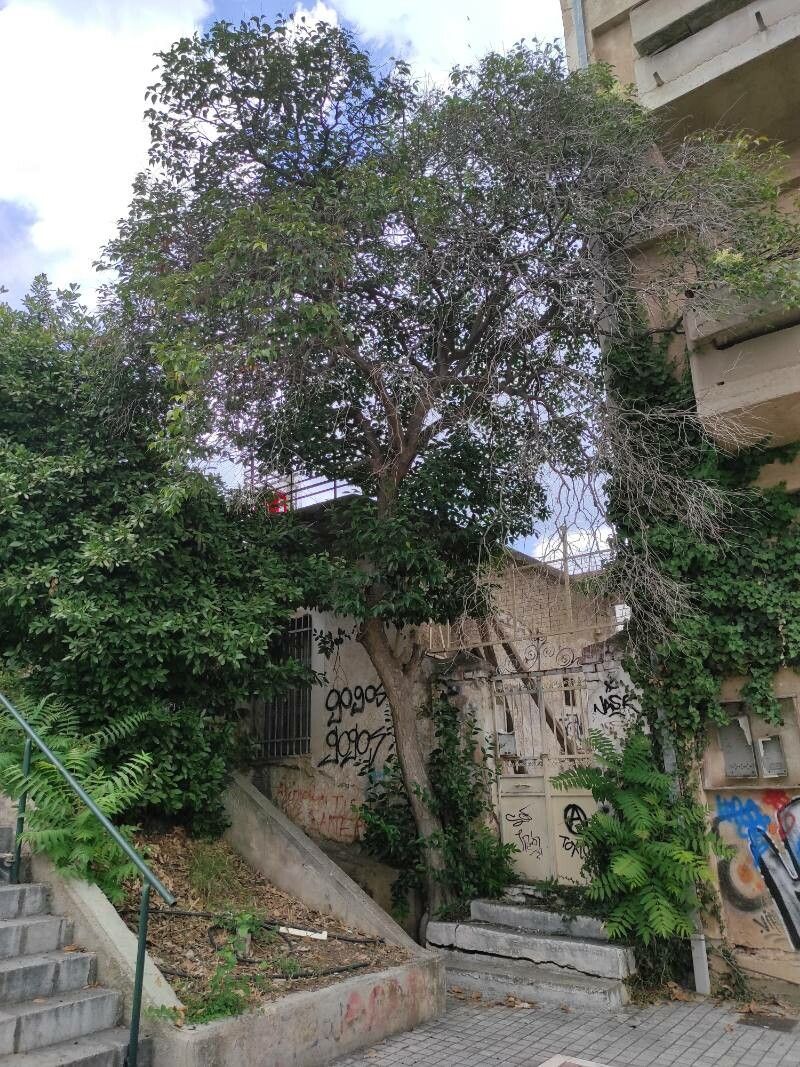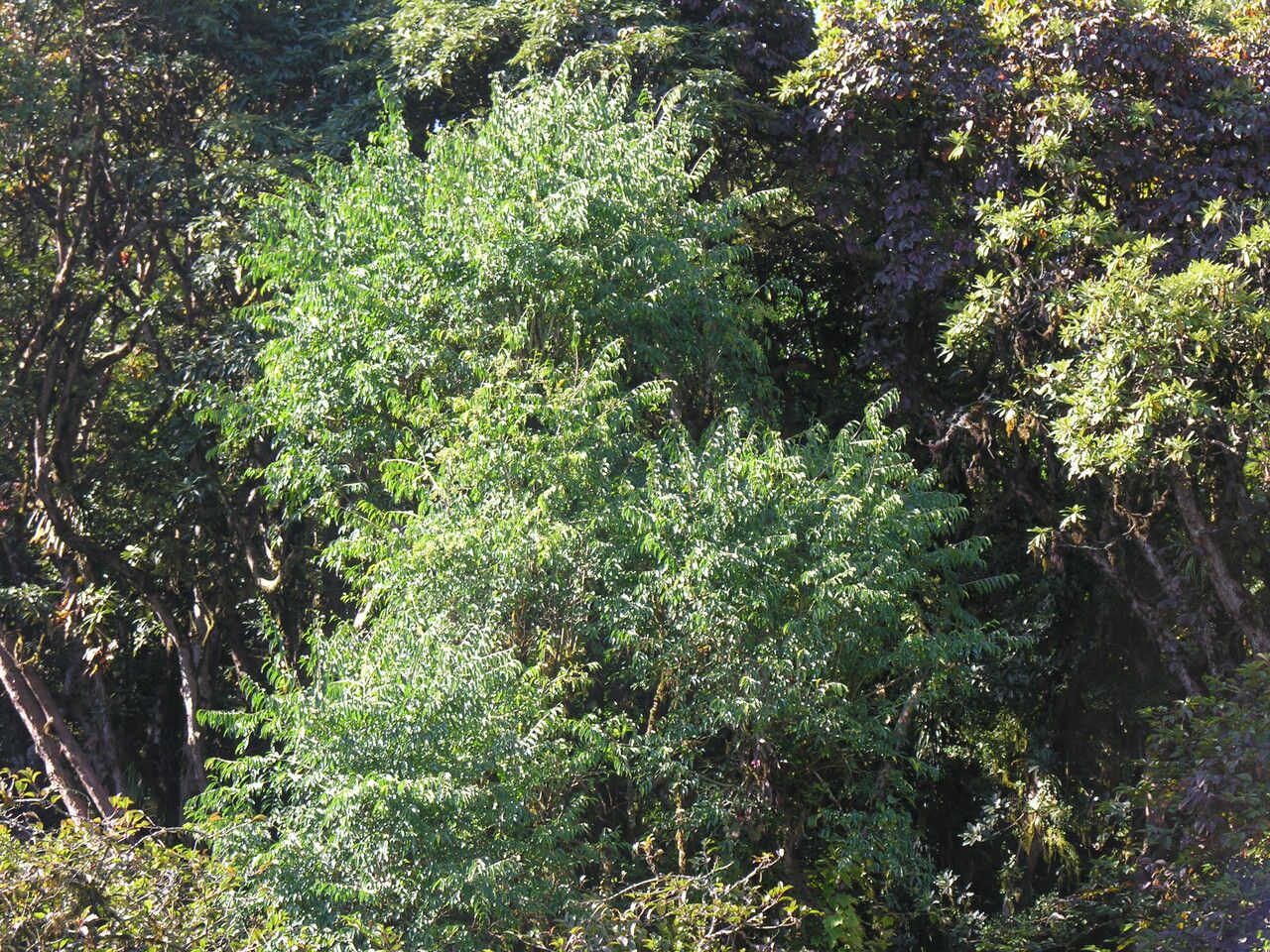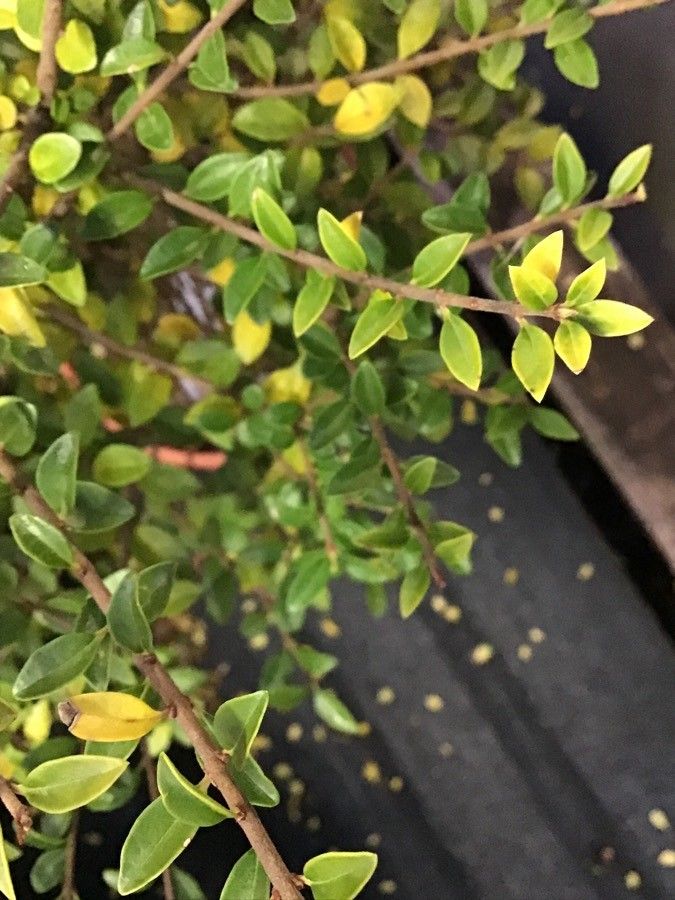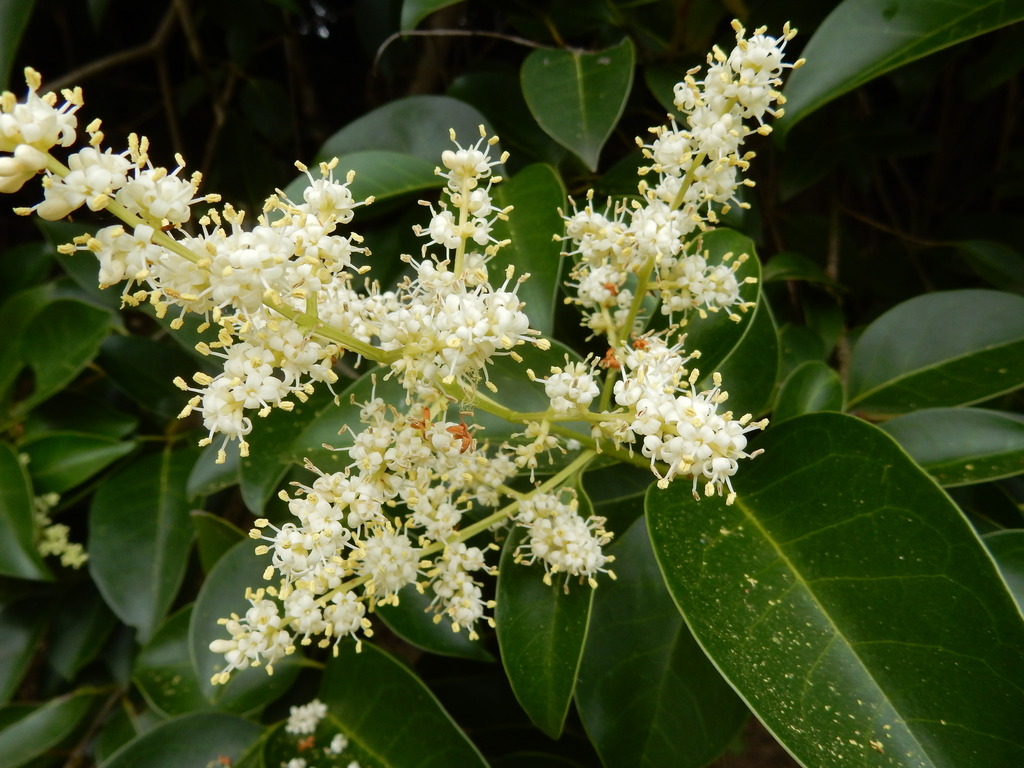
Ligustrum lucidum, commonly known as glossy privet or Chinese privet, is a species of evergreen shrub or small tree in the Oleaceae family. Native to China, it has been widely cultivated around the world as an ornamental plant.
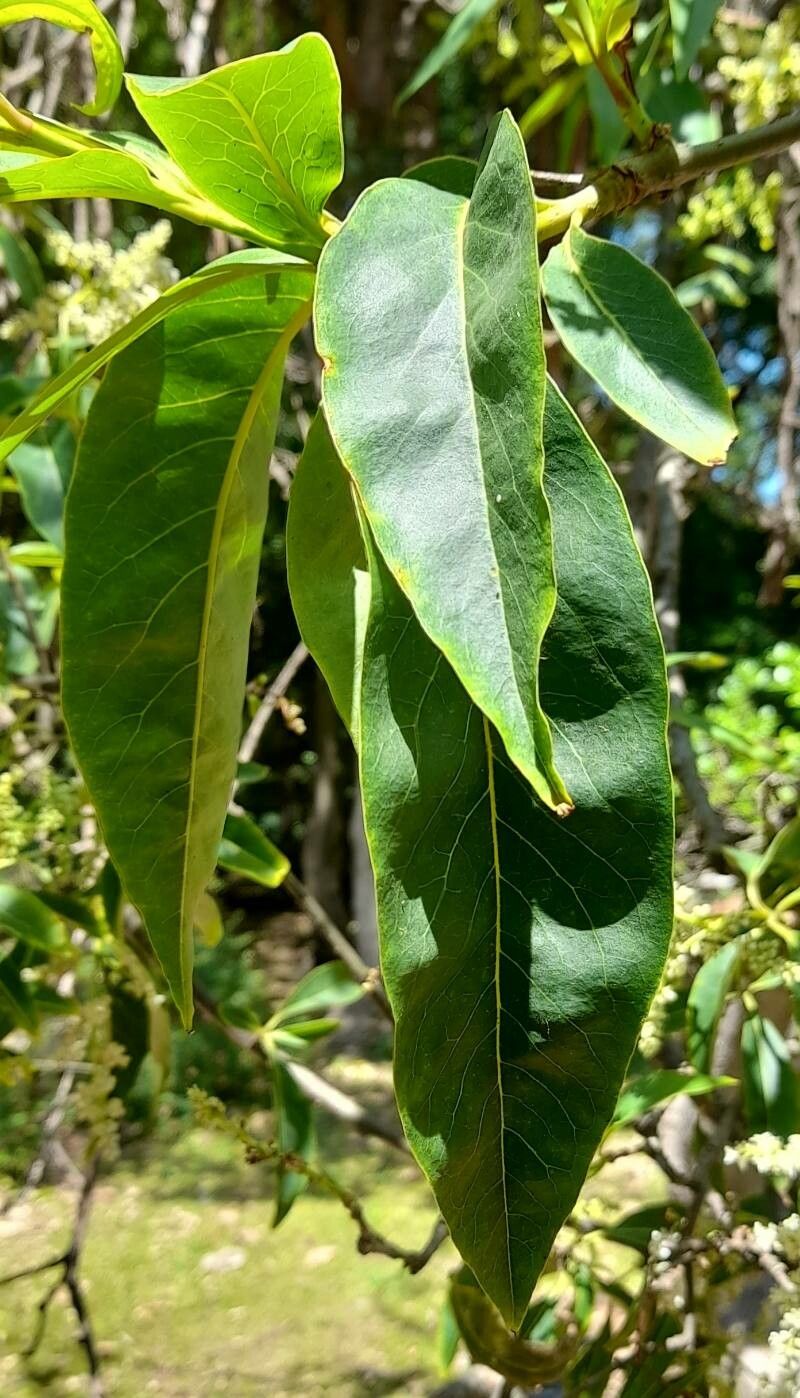
This plant can grow up to 10 meters tall and boasts a dense, rounded crown. Its leaves are glossy, dark green, and measure 5-10 cm in length and 2-5 cm in width. They are arranged in opposite pairs along the stem and have a leathery texture with smooth margins.
In late spring or early summer, Ligustrum lucidum produces small, sweet-smelling white flowers that cluster at the ends of branches. These flowers attract bees, aiding in pollination.
The Ligustrum lucidum, commonly known as glossy privet, is highly popular in landscaping due to its distinctive rounded, dome-like shape. Its leaves compete for sunlight, resulting in most of them clustering around the edges of the tree. This leaves the interior of the canopy relatively empty and helps create the characteristic crust-like, rounded shape of the tree. FUN FACT · FROM THE LIBRARY
The plant bears small black berries that ripen in late summer or early fall. While these berries are toxic to humans if ingested, they serve as a food source for birds.
Ligustrum lucidum is often used as an ornamental hedge because of its dense foliage and its resilience to pruning. It also has medicinal properties and has been used to treat conditions such as coughs, asthma, and bronchitis.
However, it has the potential to become invasive if not properly managed. The plant can spread through its seeds, which birds can carry over long distances, making it difficult to control once established outside its native range.
Overall, Ligustrum lucidum is an attractive evergreen shrub or tree with multiple uses. Nevertheless, it requires careful management to prevent its invasive tendencies when planted outside its native habitat.
Glossy privet is a type of plant belonging to the Ligustrum genus, which includes several species often referred to collectively as privets. To differentiate between the various species within this genus, a descriptive adjective is added to the name "privet" based on each plant's unique characteristics. In the case of the Glossy Privet, the leaves are notably smoother and shinier compared to other Ligustrum species. The specific epithet "lucidum" refers to the leaves' bright and shiny appearance, which is why this plant is called Glossy Privet.
Glossy privet is resistant to disease and is generally not susceptible to illnesses. In terms of care, this plant is fairly low-maintenance. When grown outdoors it needs little watering, and larger plants typically do not need pruning. However, smaller plants should be pruned after they finish blooming. Glossy privet is appropriate for anyone with an outdoor space, such as a garden or deck, and does not require much experience in plant care.
How to keep Ligustrum Lucidum.
Light
Glossy privet, native to habitats dominated by sunlight, thrives when exposed to abundant sunlight that helps regulate its growth. Although it tolerates a mix of shade and sun, generous sun exposure encourages its best development. In contrast, limited sunlight can hinder its growth and vigor.
Water
Glossy privet thrives best in moderate moisture and balanced humidity. It should be watered every 1-2 weeks, allowing the soil to dry slightly between waterings. This plant is adaptable to outdoor conditions and benefits from natural rainfall, making it an excellent choice for garden landscapes with regular rain cycles.
Humidity
This plant prefers dry conditions, so don't mist it. However, watering it less often can also thrive in higher humidity.
Temperature
The glossy privet is native to regions with mild climates where temperatures range from 15 to 35 ℃ (59 to 95 ℉). It prefers warm conditions and can thrive in full sun or partial shade. To help it cope with cooler temperatures, it is recommended to add mulch around the plant’s base during winter.
Fertilizer
Fertilize your Glossy privet in early spring to encourage healthy growth. Regular feeding improves overall health, producing vigorous growth, greater tolerance of adverse conditions, and increased resistance to diseases and pests. Keep a consistent fertilization routine for your Glossy privet to maintain foliage that is vibrant with rich color and a lush appearance.
Pruning
Glossy privet benefits from strategic pruning, which is best done in late winter when the plant is dormant. To promote healthy growth, remove dead branches and thin out overcrowded areas. This enhances air circulation and encourages dense foliage. Pruning at the right time reduces stress on the plant, supporting its strong development and preserving its visual appeal.
Botanical profile.
- Plant Type
- Tree
- Life Cycle
- Perennial
- Genus
- Ligustrum
- Family
- Oleaceae
- Hardiness Zone
- 7-9
- Mature Height
- 24.99 m
- Mature Spread
- 2.44 m to 4.57 m
- Leaf Color
- Green
- Leaf Type
- Evergreen
- Flower Color
- White, Cream
- Flower Size
- 7.62 cm to 25.40 cm
- Bloom Time
- Late spring, Early summer, Mid summer
- Planting Time
- Spring, Autumn
- Harvest Time
- Mid summer
- Native Area
- Nepal, South Korea, Tajikistan, China
Other names.
Reader questions.
When should I water my Glossy Privet?
Timely watering of Glossy Privet, or Ligustrum lucidum, is vital for its health, impacting growth, development, and nutrient absorption. Observing the plant for signs of needing water is key. For instance, when its leaves begin to droop or change color, or when the top 1-2 inches of soil feel dry, it's time to water. Seasonal changes also affect its water needs, requiring more frequent watering in hot seasons and less in cooler or dormant periods. For those growing Glossy Privet in containers, be mindful that these might dry out faster and need more regular watering. Both overwatering and underwatering pose risks, such as root rot or dehydration, so recognizing and responding to the plant's signs is crucial for maintaining its health and attractiveness.
Why should I put fertilizer on my Glossy privet plant?
To ensure your Glossy privet plant thrives, it's important to provide regular fertilization. This will enhance the plant's overall health and make it more resilient to difficult growing conditions, as well as improve its ability to combat diseases and pests. Since the foliage is a key aspect of Glossy privet's attractive appearance, it is crucial to maintain it by creating and following a specific fertilization schedule tailored to your plant. By doing so, your Glossy privet will develop vibrant and lush leaves with a deep color.
What are the sunlight requirements for Glossy Privet?
Glossy Privet (Ligustrum lucidum) thrives best in full sun, requiring above 6 hours of sunlight daily, but it can also adapt to partial sun conditions, which means about 3-6 hours of sunlight. Observing how sunlight moves through your garden will help you find spots that offer the perfect balance of light and shade, ensuring your plants remain happy and healthy. In environments where the sun is dominant, Glossy Privet flourishes, with ample sun exposure promoting optimal growth. However, in low sun conditions, the plant's growth and vitality may be hampered.
What is the native climate for the glossy privet?
The glossy privet, or Ligustrum lucidum, is native to regions that experience mild temperatures, specifically ranging between 15 to 35°C (59 to 95°F). It flourishes in warm environments and can grow both in full sun and partial shade. The plant has a strong resistance to cold, making special frost protection measures typically unnecessary. However, in expectation of particularly cold winters where temperatures might drop below its growth limit, steps should be taken to protect it.
How should I water my Glossy Privet?
Watering your Glossy Privet correctly involves a few specific techniques. Bottom-watering is recommended to ensure the roots receive adequate moisture without the risk of over-saturation at the surface, thereby minimizing the likelihood of fungal diseases. If using a watering can, opt for one with a narrow spout to direct water flow to the base of the plant, thus avoiding excessive wetness on the foliage which could lead to fungal issues. This approach helps target hydration directly to the roots and maintain the optimal health of your Glossy Privet.
When should I add fertilizer to my Glossy privet plant?
To ensure healthy growth, the Glossy privet should be fertilized for the first time in late winter or early spring. This gives the plant the necessary nutrients to thrive once the weather becomes warmer. In warm climate regions, it is beneficial to provide an additional fertilizer feeding in early fall. This not only adds nutrients for the following growing season, but also helps the plant withstand the cold winter without foliage damage. Fertilizing earlier in the year ensures that new branches have ample time to grow and endure the winter conditions.
How does artificial lighting support plant growth?
Artificial lighting plays a crucial role, especially for indoor plants when natural sunlight is insufficient, like in winter or less sunny spaces. Artificial lights, such as LEDs, can mimic natural sunlight by offering specific wavelengths needed for plant growth. For plants requiring full sun, 30-50W/sq ft of artificial light is recommended; for partial sun plants, 20-30W/sq ft; and for full shade plants, 10-20W/sq ft. The light source should be placed 12-36 inches above the plant, ensuring it gets 8-12 hours of light daily to mimic natural daylight hours, promoting faster and healthier growth.
How should I protect my glossy privet in winter?
To protect your glossy privet during the winter, especially if temperatures are expected to plunge below its cold tolerance limit, it's important to provide adequate cold protection. This can be accomplished by wrapping the plant's trunk and branches with non-woven fabric or cloth. Additionally, watering the plant abundantly before the first freeze of the season ensures the soil stays moist and enters a frozen state, helping to prevent drought and water scarcity during the colder months and into early spring.
How much water does Glossy Privet really need?
Glossy Privet's water requirements vary based on factors such as pot size, plant size, and environmental conditions. Generally, it's important to water the plant thoroughly, ensuring the root ball is soaked during watering sessions. On average, a mature plant in a medium-sized pot may need about 1 to 2 liters per session. Proper hydration is evident through glossy, vibrant leaves and healthy growth. Overwatering and underwatering can present problems, such as yellowing or wilting leaves, indicating adjustments to watering frequency or volume might be needed. Using a pot with drainage holes and allowing soil to dry slightly between waterings can promote root health and prevent waterlogging.
When is the best time to not use fertilizer on my Glossy privet?
There are certain times of the year when you should refrain from fertilizing your Glossy privet. One such time is early and mid-winter when the plant is dormant and does not require any nourishment. Another time to avoid fertilization is during late spring and throughout the summer as the weather tends to be hotter and dryer. These conditions can have a detrimental effect on the Glossy privet if fertilized. To prevent any problems, it is recommended to only feed the plant during early spring and early fall according to a specific schedule.
What are the symptoms of light deficiency in Glossy Privet?
When Glossy Privet does not receive sufficient sunlight, it may exhibit symptoms such as smaller new leaves compared to mature ones, leggy or sparse growth, faster leaf drop, slower or no new growth, and lighter-colored new leaves. Conditions like chlorosis, where leaves lose their green color and turn yellow; sunscald, resulting in damaged leaves or stems from intense sunlight; leaf curling as a defense mechanism against sunlight exposure; wilting from excessive water loss; and leaf scorching with brown, dry edges on leaves can also occur.
What happens if my glossy privet is exposed to temperatures outside its ideal range?
Exposing glossy privet to temperatures below its ideal growth range, though it is cold-tolerant, can lead to brittleness and dryness in its branches come spring, with new shoots failing to emerge. On the flip side, temperatures exceeding its comfortable summer range can cause the leaves to lighten in color, experience dry and withered tips, and increase the risk of sunburn. In response, spring requires pruning of dead branches while summer demands trimming of sunburned sections, relocation to shadier spots, or installation of a shade cloth, alongside morning and evening watering to maintain soil moisture.