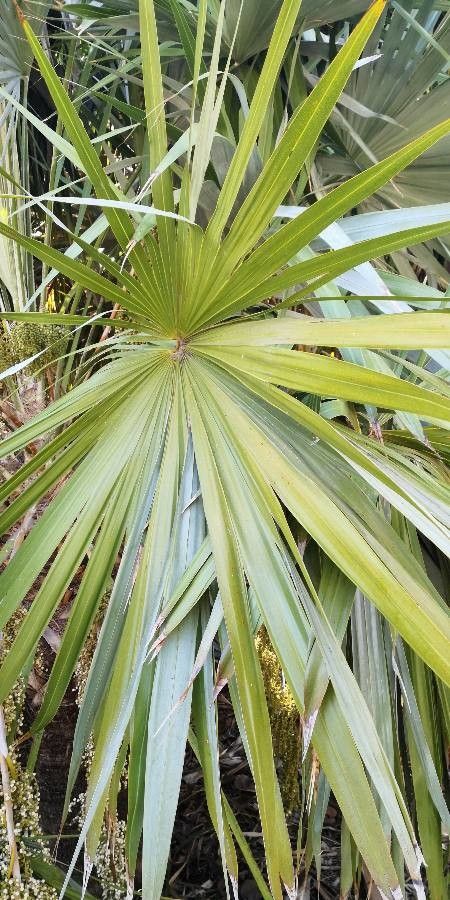
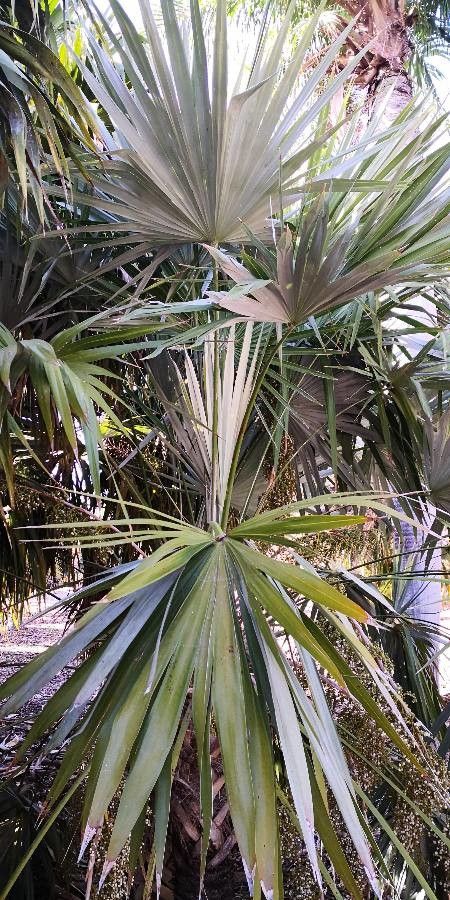
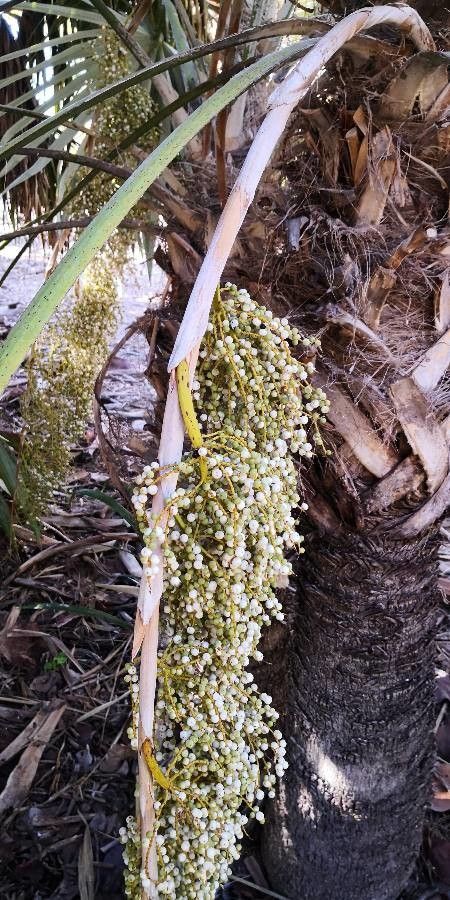
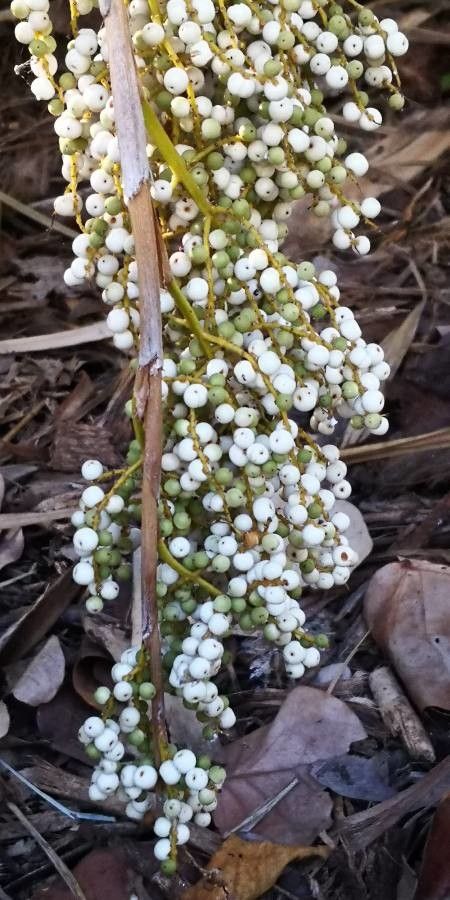
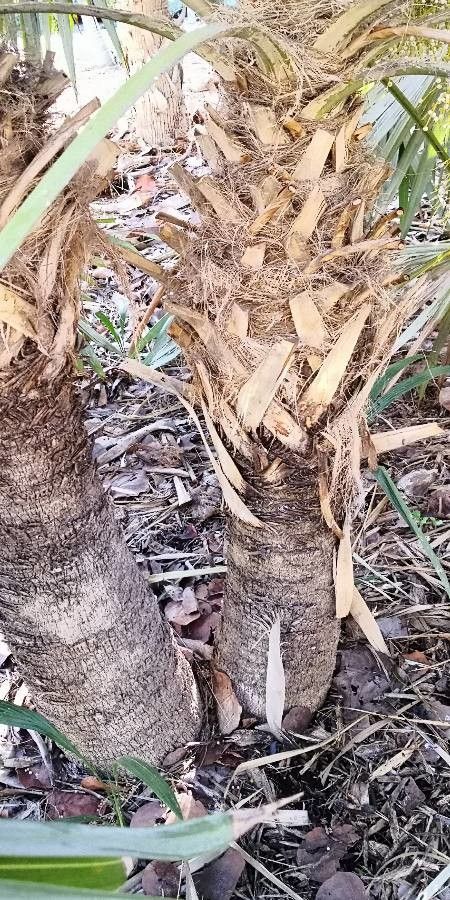
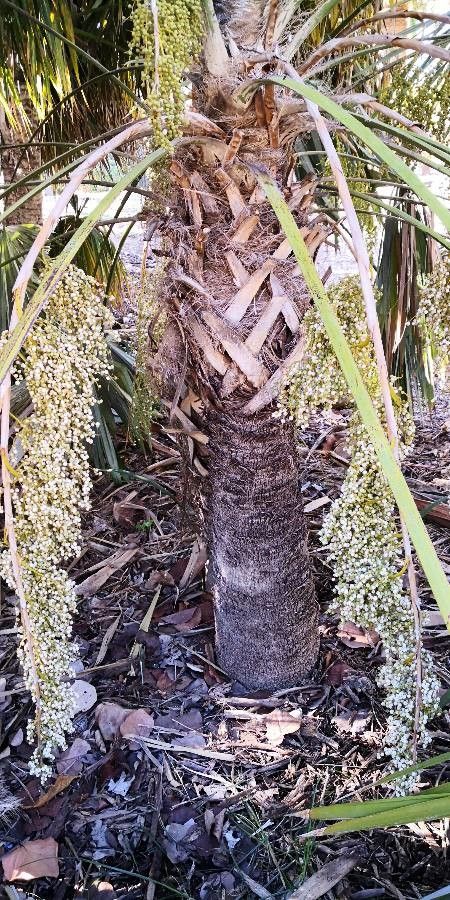
Leucothrinax morrisii, the Key thatch palm, is a small palm which is native to the Greater Antilles (except Jamaica), northern Lesser Antilles, The Bahamas and Florida and the Florida Keys in the United States. Until 2008 it was known as Thrinax morrisii. It was split from the genus Thrinax after phylogenetic studies showed that its inclusion in Thrinax would render that genus paraphyletic. The generic name combines leuco (in reference to the whitish colour of its flowering stalks and the undersides of its leaves) with thrinax.
The key thatch palm has good resistance to disease and is generally not susceptible to illnesses. As for care, this plant is fairly low-maintenance. When grown outdoors it needs only minimal watering, and larger plants typically do not require pruning. Smaller plants, however, should be pruned after they have finished blooming. The key thatch palm is well suited to anyone with an outdoor area, such as a garden or deck, and does not demand extensive plant-care experience.
How to keep Leucothrinax Morrisii.
Light
Key thatch palm comes from open habitats, such as sunny meadows and forest margins, which provide plentiful light. It does best in Full Sun but can also tolerate Partial Sun, adapting well to a range of sunlight conditions.
Temperature
Key thatch palm comes from tropical areas, where the climate is generally warm and humid. Therefore, it is well suited to high temperatures and moisture. It does not tolerate abrupt temperature shifts and prefers a steady temperature, so avoiding indoor temperature fluctuations is important. It typically cannot endure cold conditions and needs warmer temperatures to grow. If the surrounding temperature falls too low, the plant may stop growing or even die.
Fertilizer
The best time to fertilize a Key thatch palm is in early spring as it breaks dormancy. This encourages overall growth and flower formation. Fertilizing improves the foliage, stems, and branches, while encouraging large, vibrant, and long-lasting blooms. It also helps transport nutrients from the roots to the flowers and strengthens the plant’s health and disease resistance.
Pruning
The key thatch palm is characterized by its slender trunk and fan-shaped leaves. To maintain its health and appearance, it is best to prune these palms in early spring. Be sure to remove any dead or damaged fronds and sterilize your tools to prevent the spread of disease. This practice not only improves the palm's appearance but also promotes better air circulation and reduces the risk of pests.
Botanical profile.
- Plant Type
- Tree, Shrub
- Life Cycle
- Perennial
- Genus
- Leucothrinax
- Family
- Arecaceae
- Hardiness Zone
- 10-12
- Mature Height
- 10.06 m
- Mature Spread
- 3.35 m
- Leaf Color
- Light Green, Silver
- Leaf Type
- Evergreen
- Flower Color
- White
- Flower Size
- 0.20 cm to 0.25 cm
- Bloom Time
- Summer
- Planting Time
- Spring, Summer, Autumn
- Harvest Time
- Late summer, Fall
Other names.