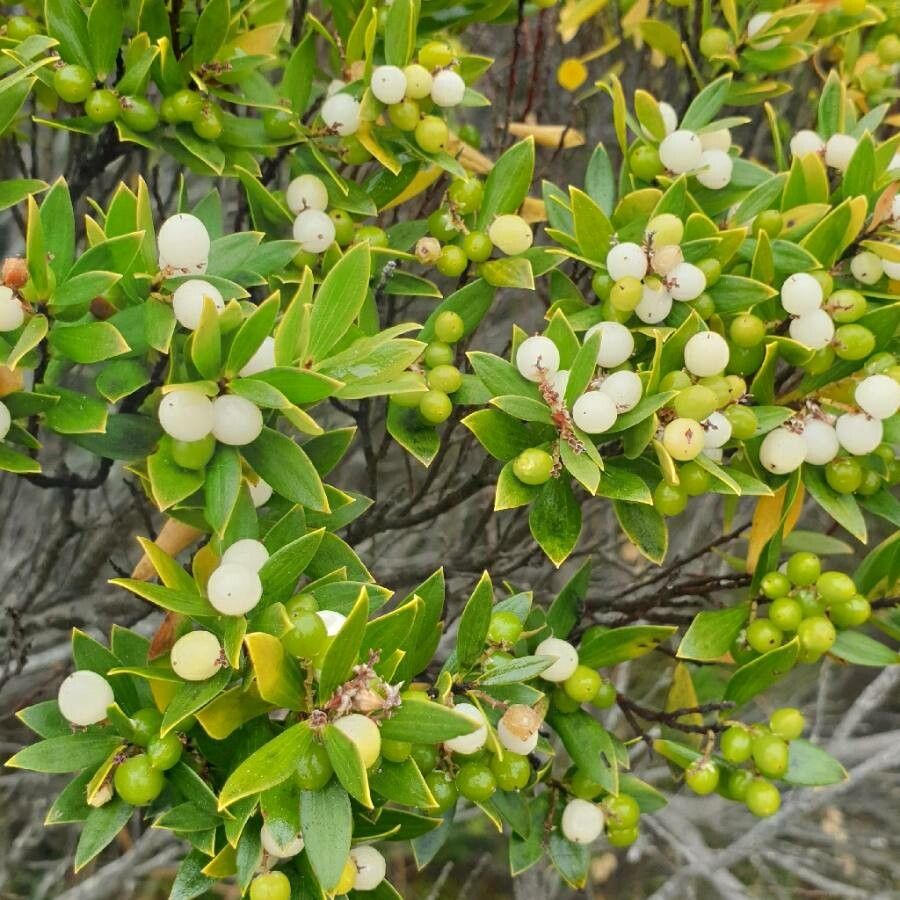
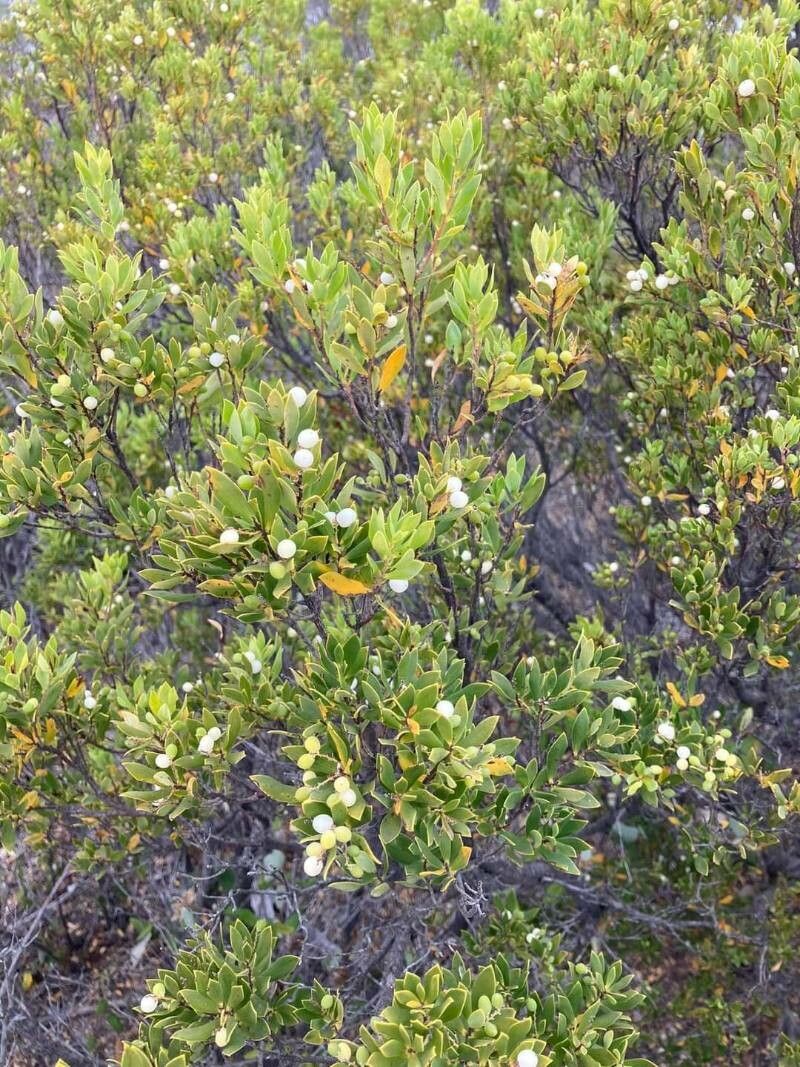
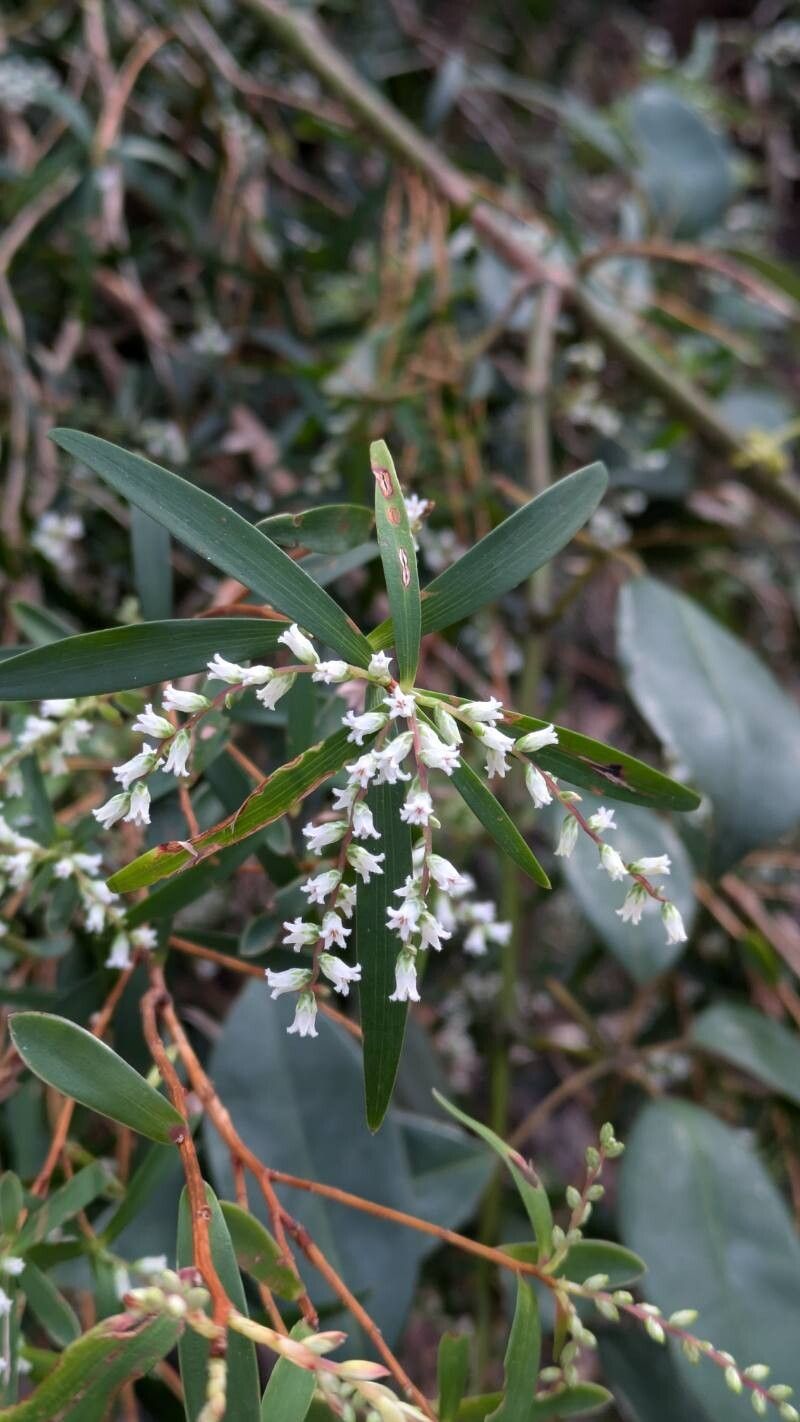
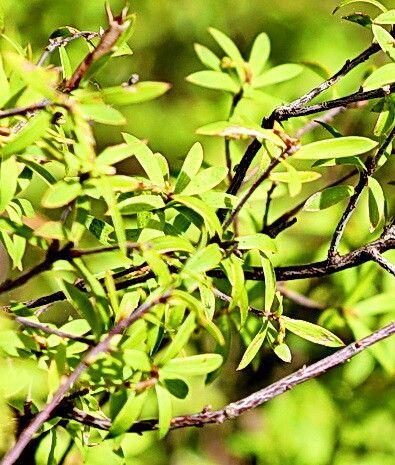
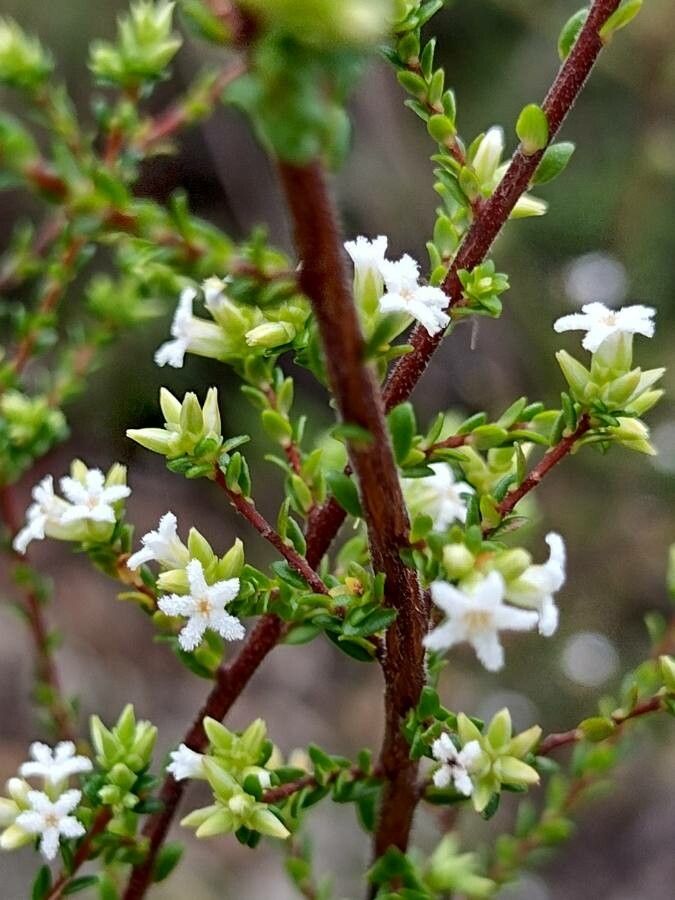
Leucopogon parviflorus, commonly known as coast beard-heath or native currant, is a shrub or small tree in the family Ericaceae. It is native to all Australian states and territories excluding the Northern Territory and the ACT and also grows in New Zealand. The species can grow to between 1 and 5 metres in height and has leaves that are 11 to 29 mm long and 2.4 to 7.5 mm in width, often with curved tips. The white flowers are around 15 mm long and are produced in spikes of 7 to 13. These occur throughout the year.Leucopogon parviflorus can grow in many differing conditions, from sandy dunes to rocky cliff faces, in sheltered or exposed weather conditions. However, it does grow most efficiently in sandier areas, with sufficient shelter from the elements. It is a significant food source to many Australian coastal birds and insects and relies on these animals for pollination and seed dispersion. It is also commercially cultivated by landscapers and florists to be used in coastal gardens and floral arrangements.
Pink mountain berry shows good resistance to disease and is generally not prone to illness. Regarding care, this plant is fairly low-maintenance. When grown outdoors it needs little watering, and larger plants typically do not require pruning. Smaller plants, however, should be pruned after they have bloomed. Pink mountain berryt is appropriate for anyone with an outdoor area, such as a garden or deck, and does not demand much care experience.
How to keep Leucopogon Parviflorus.
Light
Pink mountain berry is native to habitats like forest understories or rocky areas, where it typically grows in shaded conditions. It prefers partial sun but can tolerate both full sun and full shade, reflecting its hardy and adaptable nature.
Temperature
Pink mountain berry is highly adaptable to a variety of climate conditions, from scorching summers to cold winters. Nevertheless, it has an optimal temperature range for growth. If temperatures become too high, the plant is vulnerable to heat and humidity stress, which can cause it to die. In areas where temperatures approach the lower limit of its cold tolerance, it is necessary to use insulation measures to protect the plant.
Botanical profile.
- Plant Type
- Shrub
- Life Cycle
- Annual
- Genus
- Leucopogon
- Family
- Ericaceae
- Hardiness Zone
- 8-11
- Mature Height
- 49 cm to 91 cm
- Mature Spread
- 49 cm to 91 cm
- Leaf Color
- Dark Green
- Leaf Type
- Semi-evergreen
- Flower Size
- 0.25 cm to 0.51 cm
- Bloom Time
- Mid fall, Late fall, Early winter
- Planting Time
- Spring, Summer, Autumn
- Harvest Time
- Late winter, Early spring, Mid spring
Other names.