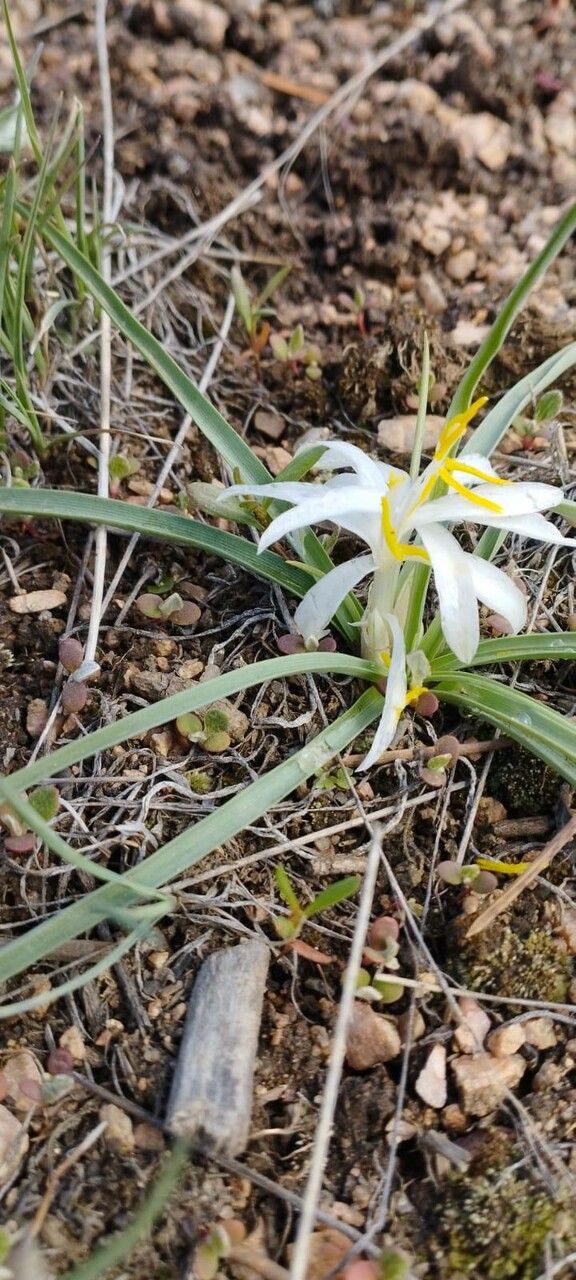
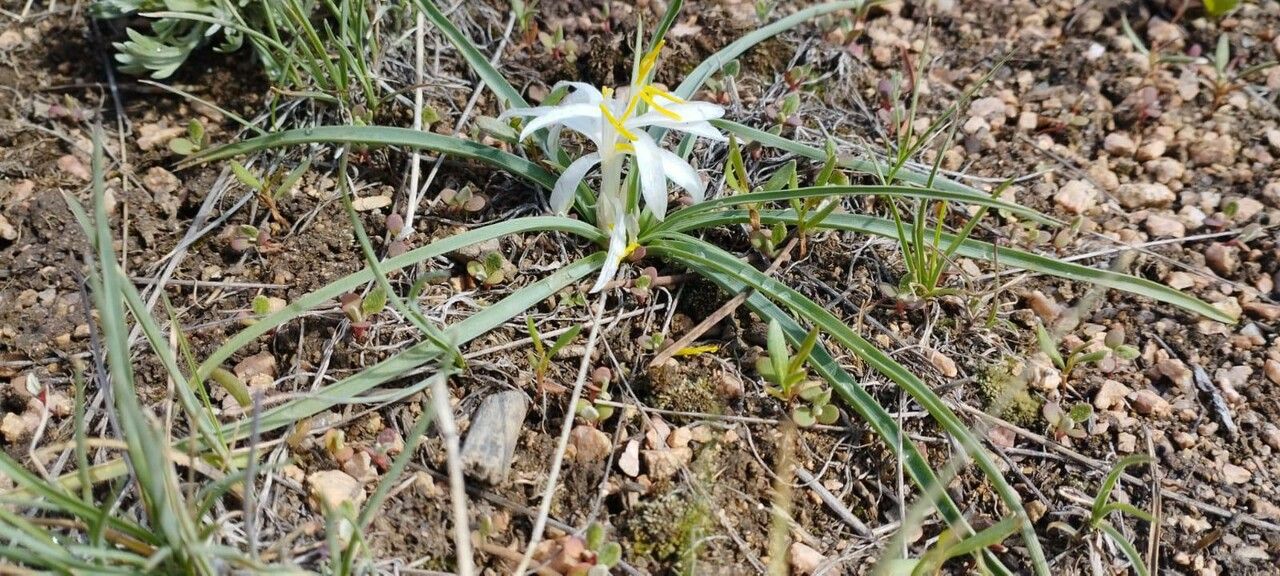
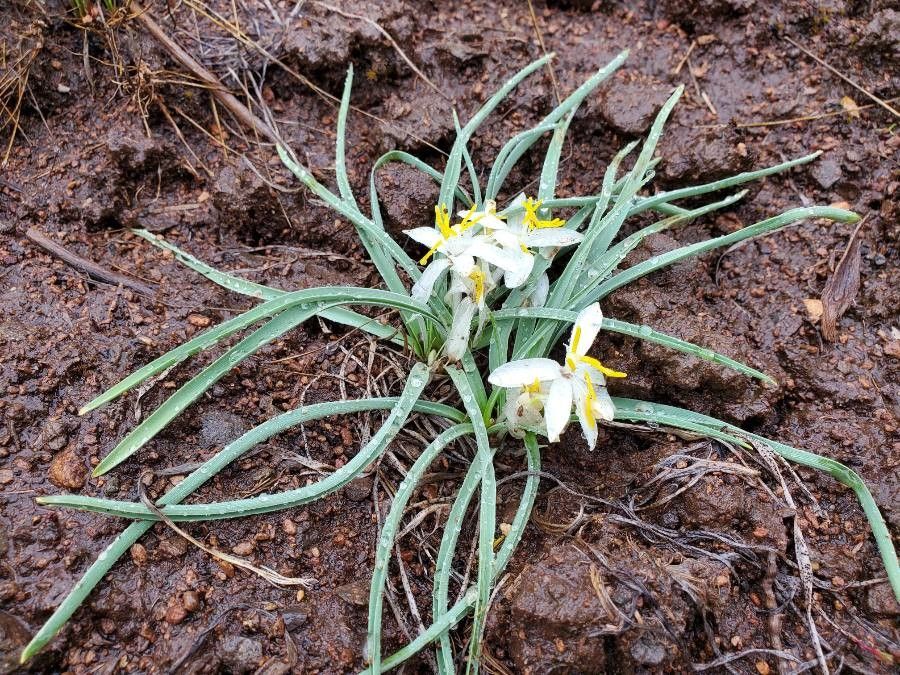
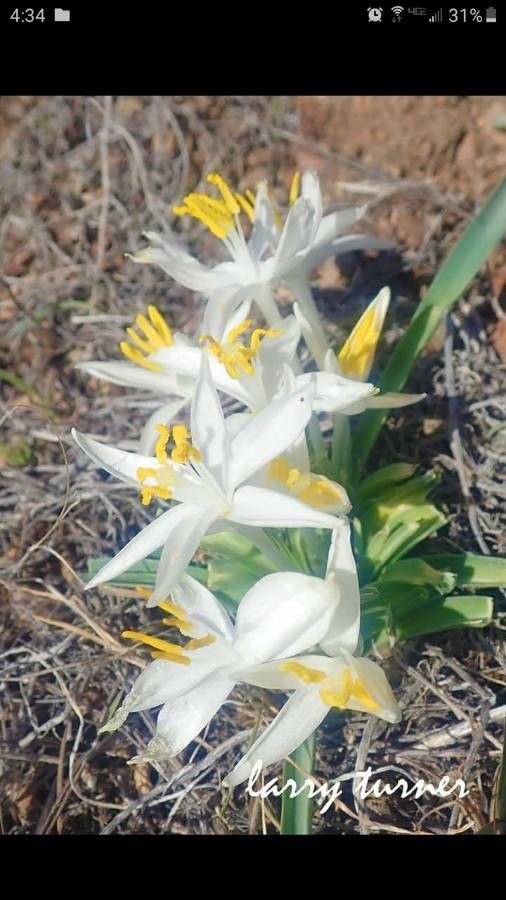
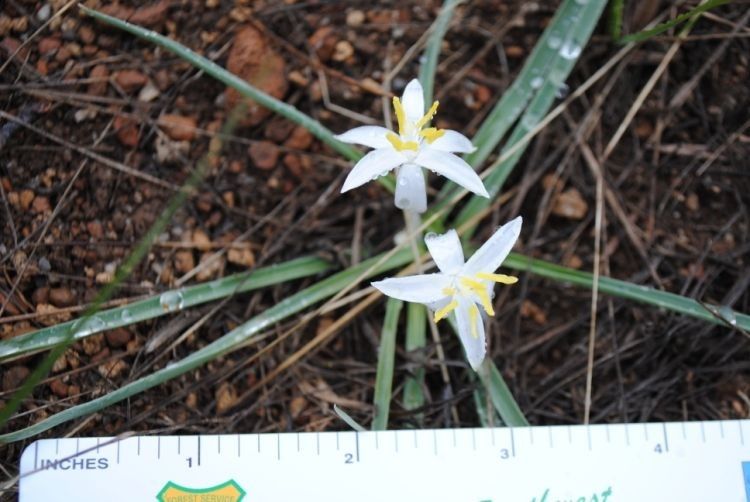
Leucocrinum montanum, commonly known as the star lily or sand lily, is a perennial herbaceous plant in the Liliaceae family. Native to western North America, it thrives in dry, sandy environments such as deserts, sagebrush plains, and rocky slopes. The plant typically grows up to 30 cm tall and features a basal rosette of narrow leaves, each about 10-20 cm long. Its white flowers, which bloom in late spring or early summer, have six petals fused at the base, forming a star shape. These flowers are not only visually appealing but also emit a sweet fragrance. Leucocrinum montanum serves as a vital food source for various animals, including deer, elk, bighorn sheep, pronghorn antelope, and rodents. Additionally, Native Americans have historically used it for medicinal purposes. The plant prefers well-drained soils in full sun or partial shade and can withstand drought conditions once established. It is an attractive choice for rock gardens and xeriscapes due to its low maintenance requirements. In summary, Leucocrinum montanum is a fascinating native plant that offers ecological benefits while adding beauty to its surroundings. Its lovely white flowers and adaptability make it a valuable component of wildlife habitats in the dry regions of western North America.
The common starlily is largely disease-resistant and generally not prone to illnesses. Nevertheless, it can be affected by pests and diseases present in its environment. Such infections are typically mild. Regarding care, this plant requires moderate maintenance. It should be pruned regularly to preserve a neat appearance and support healthy growth. Fertilizing can also encourage flowering. The common starlily is well suited for anyone with outdoor space, like a garden or patio, and does not demand extensive care experience. It may need more attention when grown indoors.
How to keep Leucocrinum Montanum.
Light
The common starlily thrives in locations that receive plentiful sunlight throughout the day. In the wild it is usually found in open areas with good sun exposure. Although it is hardy, too little or too much light can harm it, interfering with normal growth and flowering.
Water
The common starlily thrives in arid environments due to its impressive drought tolerance and modest watering needs, requiring watering only about once a week. It prefers full sun and well-draining soil, which helps it conserve water effectively, enabling it to withstand periods of low precipitation.
Temperature
Common starlily originates from regions with a temperate climate, where temperatures typically range from 41 to 95 °F (5 to 35 ℃). To promote optimal growth, it is recommended to preserve these temperature conditions through the different seasons.
Fertilizer
The main time to fertilize Common starlily is in early spring, when the flowers are forming. The correct fertilizer promotes better blooms and helps Common starlily produce attractive flowers. Fertilizing in early spring ensures strong flowering during the season and supplies energy for dormant growth phases.
Pruning
The common starlily is a perennial herbaceous plant known for its low-growing, star-shaped flowers. To encourage new growth, prune the plant between early and late spring to remove any dead foliage. Trimming spent flowers not only improves the plant's appearance but also promotes further blooming. Proper pruning increases the plant's vigor and ornamental value. For more detailed guidance, consult horticultural guides.
Botanical profile.
- Plant Type
- Herb
- Life Cycle
- Perennial
- Genus
- Leucocrinum
- Family
- Asparagaceae
- Hardiness Zone
- 5-9
- Mature Height
- 5 cm to 8 cm
- Mature Spread
- 15 cm
- Leaf Color
- Green
- Leaf Type
- Deciduous
- Flower Color
- White
- Flower Size
- 4.06 cm to 5.08 cm
- Bloom Time
- Early spring, Mid spring
- Planting Time
- Spring
- Harvest Time
- Late spring, Early summer
Other names.
Reader questions.
How do I water my Common starlily as it grows?
The water needs of the Common starlily vary depending on its growth stages. In the first few years of its life or after being transplanted, it requires more water. During this time, the plant focuses on developing new roots for future growth, which thrive with a bit more moisture. As the plant matures, it will require less water. Additionally, during the bloom period, the Common starlily may need additional water as the flower development utilizes a significant amount of moisture.
What are the sunlight requirements for a common starlily?
The common starlily (Leucocrinum montanum) requires full sun, which means it needs above 6 hours of sunlight daily to thrive optimally. In its natural habitat, this plant grows best in clear, unobstructed landscapes that receive a generous amount of sunlight throughout the day. Although it is a resilient plant, both insufficient and excessive sunlight can adversely affect its health, leading to disrupted growth and flowering patterns. It’s important to watch how sunlight moves through your garden and choose spots that offer a balance of light and shade to ensure your plants' happiness.
What is the native climate for Common starlily?
The Common starlily, or Leucocrinum montanum, is native to moderate climates, thriving in temperatures that range from 41 to 95 °F (5 to 35 °C). For optimal growth, it's recommended to maintain these temperature conditions throughout the various seasons. Thanks to its strong cold resistance, special frost protection measures are generally not required in winter. However, if temperatures are expected to drop below -25°C, providing cold protection with materials like soil or straw is advised. Additionally, watering the plant abundantly before the first freeze in autumn helps keep the soil moist, protecting the plant during winter and early spring from drought and water scarcity.
How do I water my Common starlily in different seasons?
The water needs of the Common starlily vary depending on the season. During the hottest months of the year, particularly in summer, the plant will require frequent watering, possibly more than once a week if the soil dries quickly. However, in winter, the plant enters a dormant phase, and its water requirements decrease significantly. In fact, you may not need to provide any water at all during this time. If you do choose to water the plant in winter, it should be done sparingly, around once a month. Overwatering during winter can increase the risk of disease for the Common starlily.
How can artificial lighting help common starlilies grow indoors?
Indoor common starlilies can benefit greatly from artificial lighting, especially when natural sunlight is not sufficient, such as during winter or in less sunlit spaces. Artificial lights facilitate optimal growth by providing the necessary light intensity and duration. LED lights are a popular choice because they can be customized to suit the specific light wavelengths needed by plants. Full sun plants require 30-50W/sq ft of artificial light, partial sun plants need 20-30W/sq ft, and full shade plants need 10-20W/sq ft. The light source should be placed 12-36 inches above the plant to mimic natural sunlight conditions, and most plants will benefit from 8-12 hours of light per day.
How does Common starlily respond to low temperatures?
The Common starlily is notably cold-tolerant and flourishes best when temperatures stay above 5°C. It should remain above -20°C during the winter months. When temperatures fall below -25°C, the plant might not show immediate changes during winter but could experience a decrease in sprouting or fail to sprout at all come springtime. The recommended course of action in spring for any parts of the plant that fail to sprout is their removal, to promote healthier growth for the rest of the plant.
How does watering my Common starlily plant inside compare to outside?
Indoor gardening is best for Common starlilies if you don't live in temperate or tropical regions. Keep in mind that the soil in a container can dry out faster than ground soil. If you have drying elements like air conditioning, you'll need to water your Common starlily more often. However, if you plant it outside, you might not need to water it much at all, especially if you receive regular rainfall. On the other hand, if you grow Common starlilies indoors, you'll need to water them more frequently because you can't rely on rainwater to moisten the soil.
What symptoms indicate a common starlily is receiving inappropriate light levels?
Symptoms of inappropriate light levels for a common starlily include small or immature leaves, leggy or sparse growth due to increased spacing between leaves or stems, faster leaf drop as the plant conserves resources, slower or halted new growth indicating a survival mode, lighter-colored new leaves suggesting insufficient sunlight, chlorosis or the yellowing of leaves due to chlorophyll breakdown, sunscald visible as pale or necrotic areas from intense sunlight, leaf curling as a defense mechanism against extreme sunlight, wilting from excess water loss under intense light, and leaf scorching characterized by brown or crispy leaf edges.
How should you care for Common starlily in high temperatures?
In the summer, it is crucial to ensure that the Common starlily does not endure temperatures above 35°C. Should the temperature rise above 38°C, the plant's leaves may lighten in color, become prone to curling, suffer from sunburn, and in severe cases, the entire plant might wilt and dry out. To mitigate these effects, it's advised to trim away any sunburned or dried parts of the plant. Moving the plant to a shaded location or using a shade cloth can protect it from the midday and afternoon sun. Additionally, watering the plant in the morning and evening helps keep the soil moist and supports the plant's health during high temperatures.
How should I water my Common starlily plant?
To properly water the Common starlily, it is recommended to use filtered water at room temperature. Tap water may contain harmful particles so filtered water is a better option. The plant prefers water that is warm or slightly warmer since it is accustomed to a warm environment. Cold water can be a shock to its system. It is also important to avoid overhead watering as it may cause issues with the foliage. Instead, simply soak the soil with the filtered room temperature water until it is fully saturated. This provides the plant's roots with moisture and allows them to spread and collect necessary nutrients.
What solutions can improve a common starlily's exposure to sunlight?
Improving a common starlily's sunlight exposure involves several strategies depending on the growing environment. Indoors, gradually moving the plant to a place with at least 6 hours of direct sunlight daily or using artificial lighting, such as a desk or ceiling lamp for 8 hours daily, can help. Outdoors, it's important to gradually acclimate the plant to sunnier spots, avoiding sudden light intensity changes that may cause sunburn. Reducing obstructions like branches that block sunlight, along with transplanting smaller plants during their dormant period, can ensure ample sunlight reaches the plants. However, parts of the plant affected by prior insufficient sunlight may not recover, but new growth should be healthy with adjusted light exposure.
What do I need to do if I give my Common starlily too much or too little water?
Overwatering can harm your Common starlily more than underwatering. Too much water causes wilting and yellowing of stems and leaves. It can also result in diseases like root rot, mold, and mildew that can be fatal for the plant. Underwatering is rare as the Common starlily can tolerate drought. However, it can still happen, causing brittle and brown leaves. To care for your Common starlily, it is important to recognize signs of overwatering early. Diseases like root rot are difficult to correct if left too long. Reduce watering if you notice early signs of overwatering and check the soil for poor drainage. Replace it with a loose, well-draining potting mix if necessary. If your Common starlily shows signs of underwatering, simply water more regularly until the signs disappear.