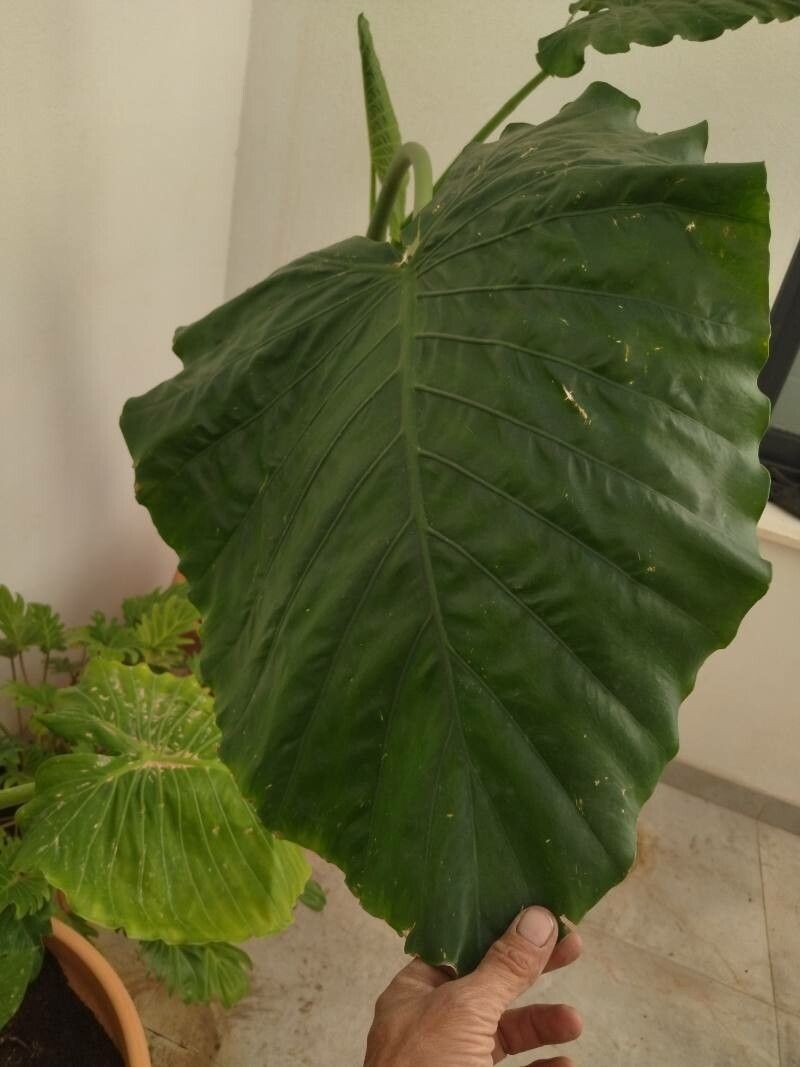
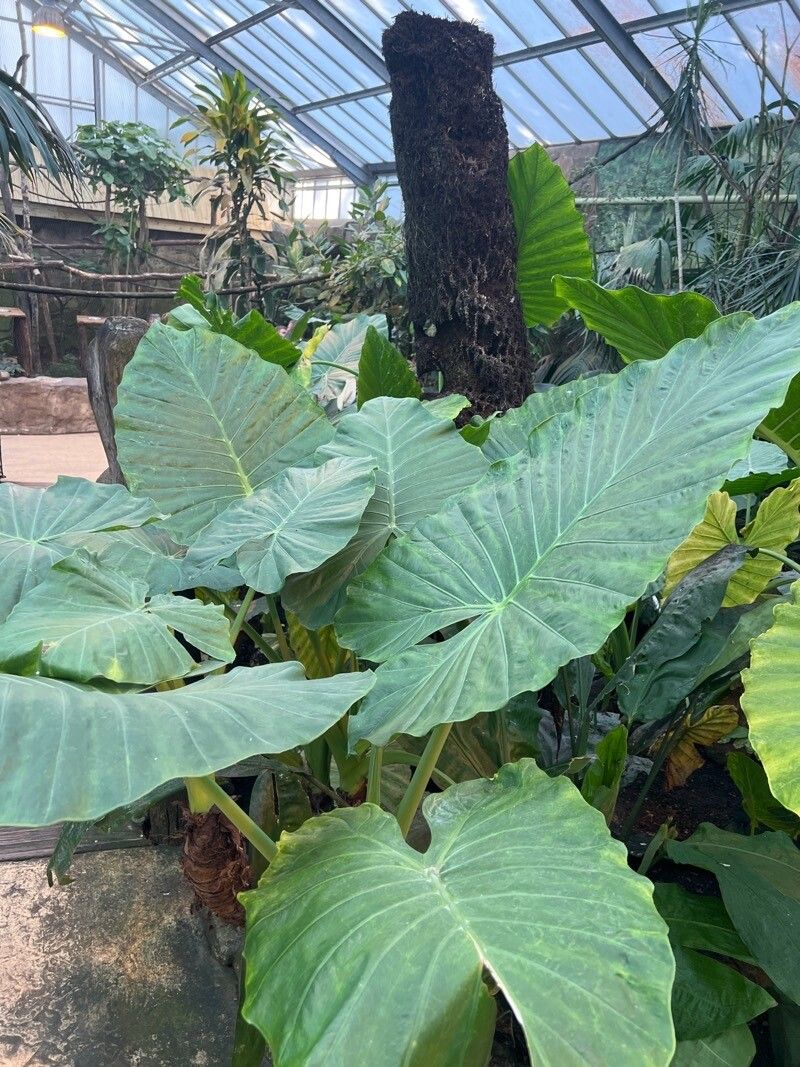
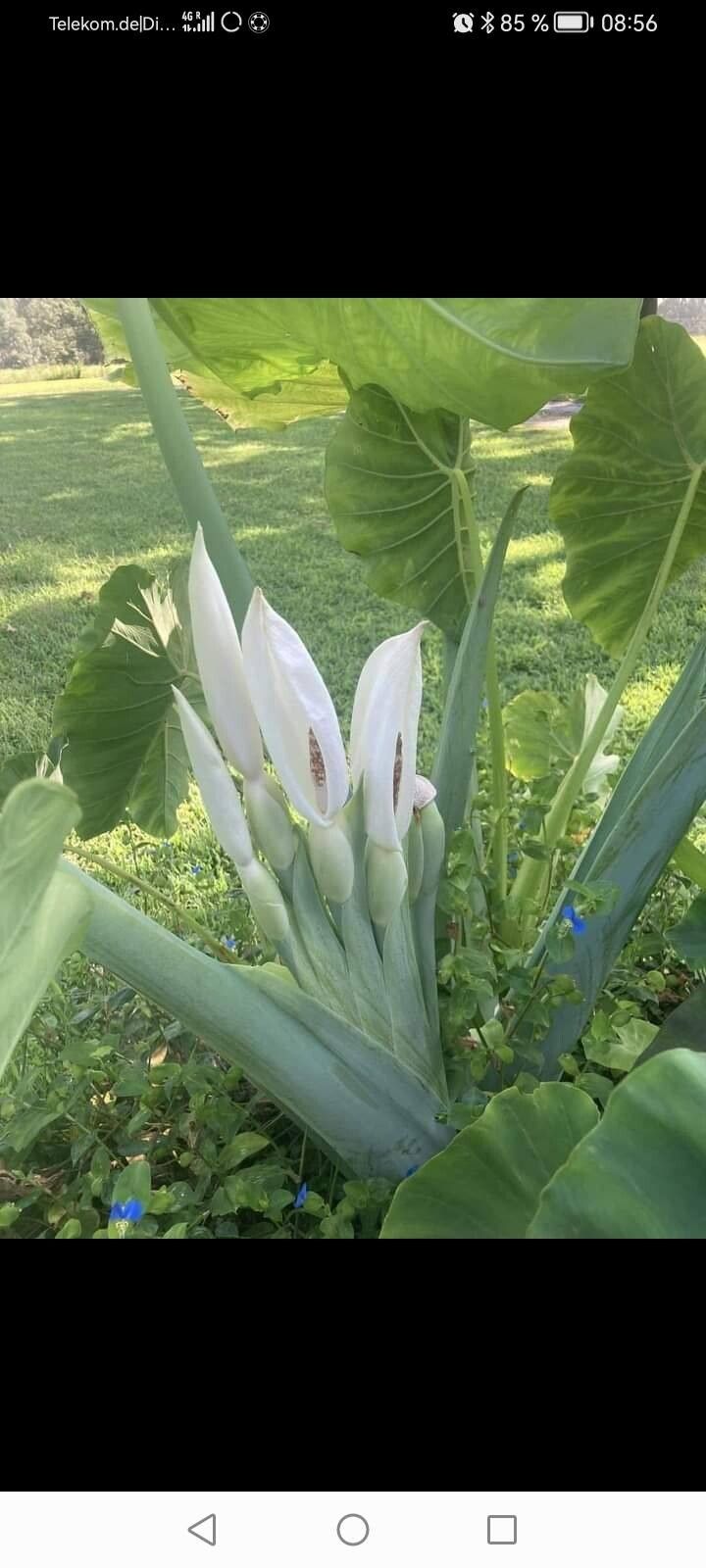
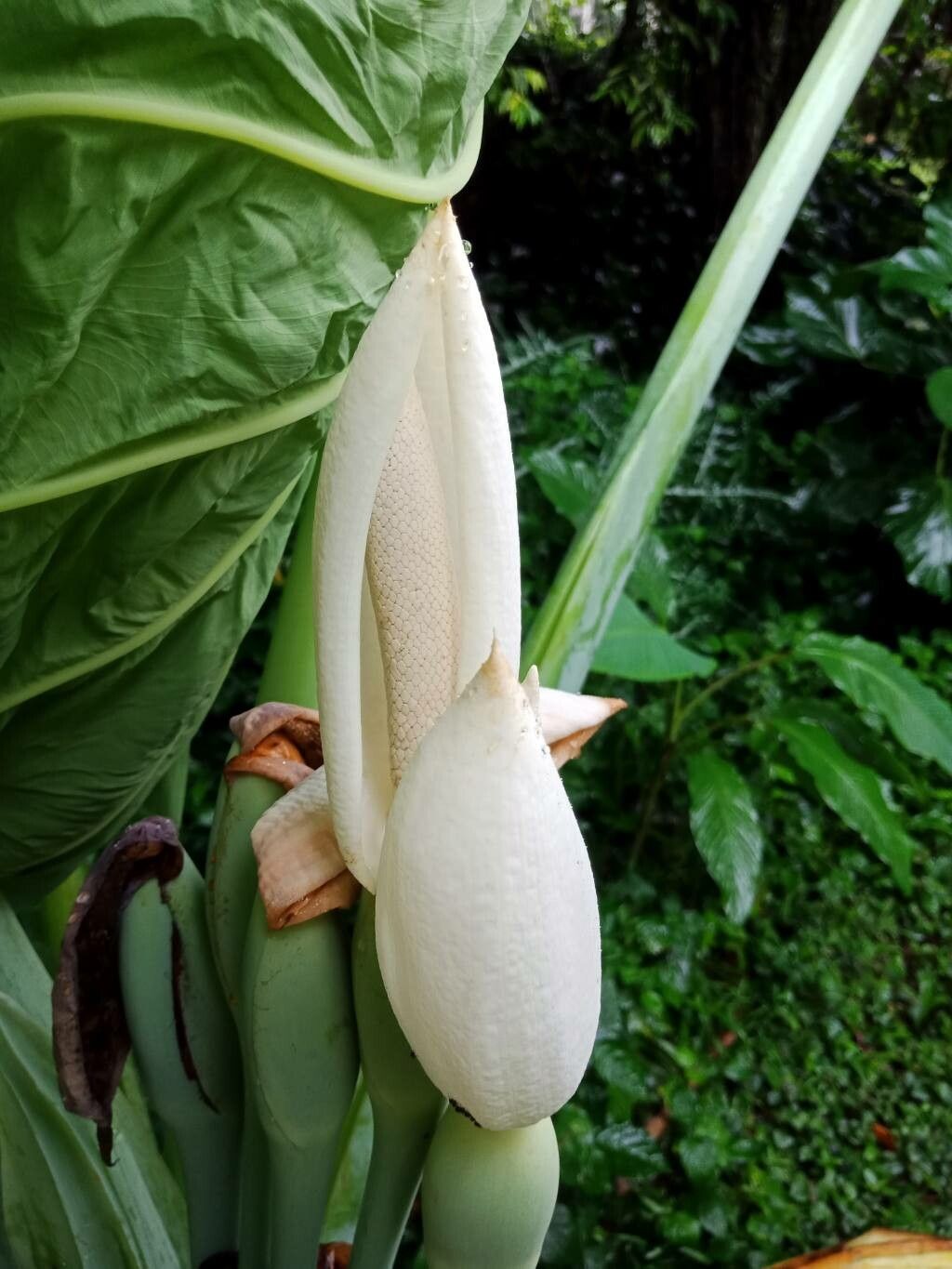
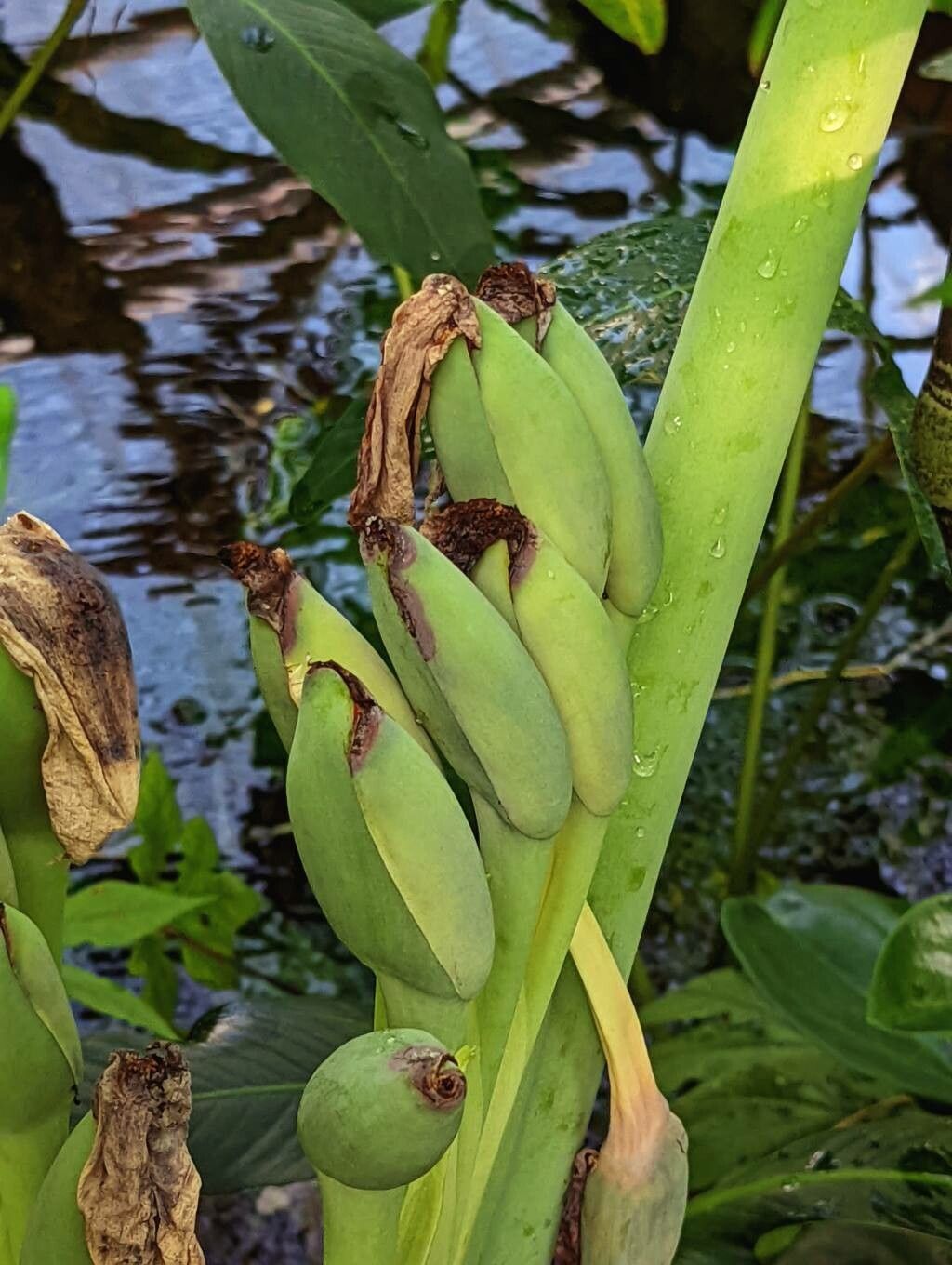
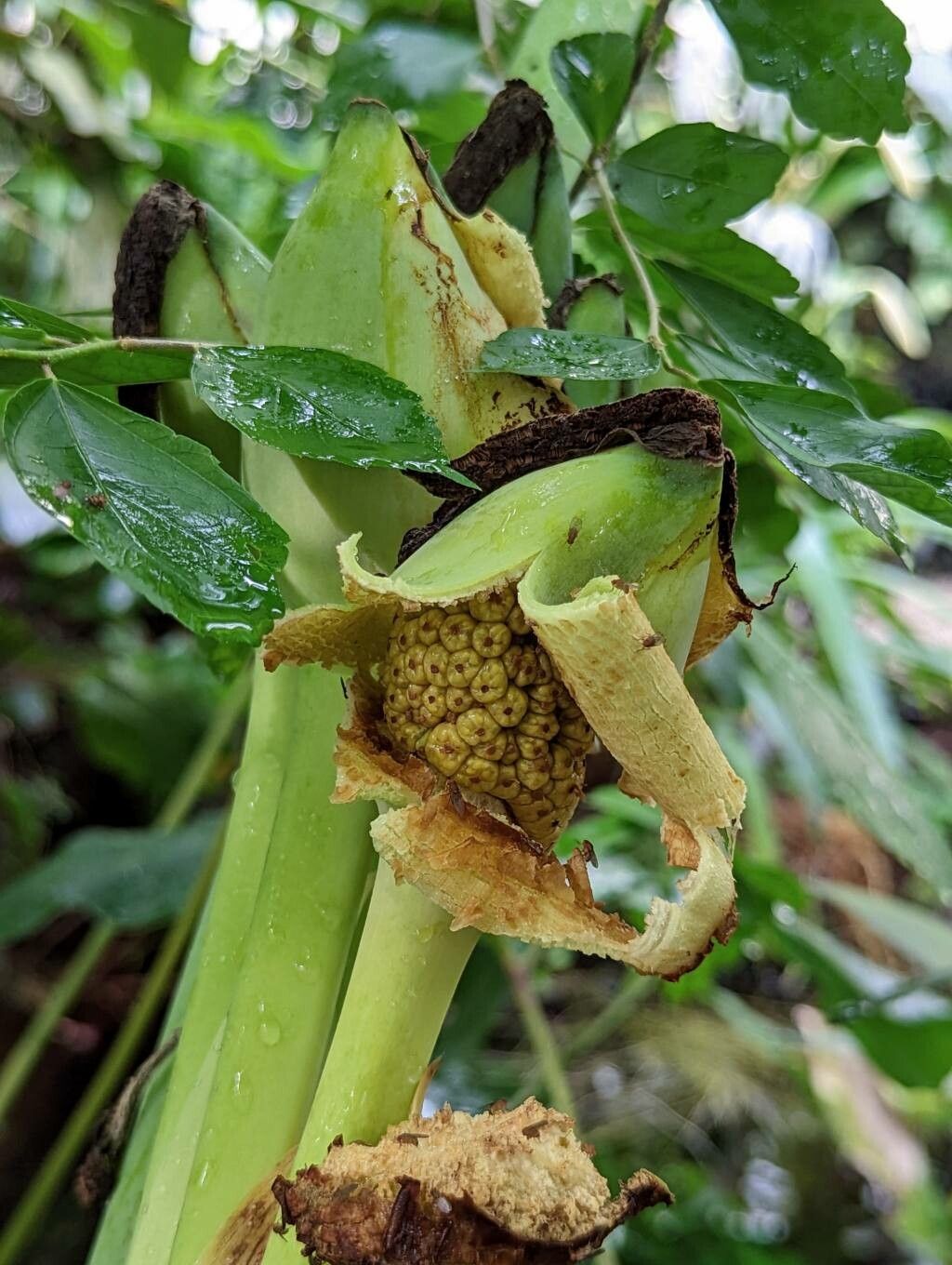
Leucocasia gigantea, also called the giant elephant ear or Indian taro, is a species of flowering plant. It is a 1.5–3 m tall aroid plant with a large, fibrous corm, producing at its apex a whorl of thick, green leaves. It is the sole species in genus Leucocasia.
The Thailand Giant Elephant Ear, also known as the Laosy Giant, gets its name for an obvious reason. Its leaves resemble the size and shape of an elephant's ears, and they have the ability to literally and figuratively overshadow most other plants in a garden.
Laosy Giant is resistant to many diseases and generally does not tend to get sick. Nevertheless, it can be affected by pests and diseases present in its surroundings, and these infections are typically not severe. In terms of care, the plant requires moderate maintenance. It should be pruned regularly to keep a good appearance and support healthy growth. Fertilizing can also help encourage flowering. Laosy Giant is well suited for anyone with outdoor space, such as a garden or patio, and does not demand extensive care experience. It may require more attention when grown indoors.
How to keep Leucocasia Gigantea.
Light
Laosy Giant prefers abundant sunlight and can tolerate moderate sun levels. Being conditioned by its native habitat’s bright sun exposure encourages healthy growth. Excessive or insufficient light can stunt development or cause the plant to become spindly.
Water
The Laos Giant, which originates from tropical undergrowth, thrives in high humidity and needs consistently moist soil. It requires weekly watering to maintain these conditions. Typically, this plant is grown indoors to better control its humidity. During the active growing season, the Laos Giant's water uptake increases, so careful irrigation is necessary to support its vigorous growth.
Temperature
Laosy Giant is adapted to grow in moderate temperatures, usually from 59 to 95 °F (15 to 35 °C). During very hot periods, cautious watering practices can help reduce heat stress.
Fertilizer
The optimal time to fertilize a Laosy Giant is in early spring, as it comes out of dormancy and begins active growth. Fertilizing supplies essential nutrients for healthy development. Although the Laosy Giant has relatively low fertilization requirements, applying fertilizer once a year can improve its survival and encourage better, longer-lasting flowers.
Pruning
The Laosy Giant is known for its impressive size and striking foliage. To keep the plant healthy, prune it from early to late spring, concentrating on removing any dead or damaged parts. Also, take out any yellowing leaves to improve air circulation. This seasonal maintenance encourages flowering and boosts the plant's vitality, ensuring it remains a strong presence in your garden.
Botanical profile.
- Plant Type
- Herb
- Life Cycle
- Perennial
- Genus
- Leucocasia
- Family
- Araceae
- Hardiness Zone
- 7-10
- Mature Height
- 1.52 m to 3.05 m
- Mature Spread
- 1.52 m to 3.66 m
- Leaf Color
- Dark Green, Forest Green
- Leaf Type
- Deciduous
- Flower Color
- White
- Flower Size
- 1.02 cm to 2.03 cm
- Bloom Time
- Summer, Early fall
- Planting Time
- Spring, Summer, Autumn
- Harvest Time
- Late summer, Fall
- Native Area
- Malaysia, Indonesia, Cambodia, Vietnam, Myanmar, Japan, Laos, Thailand, China
Other names.