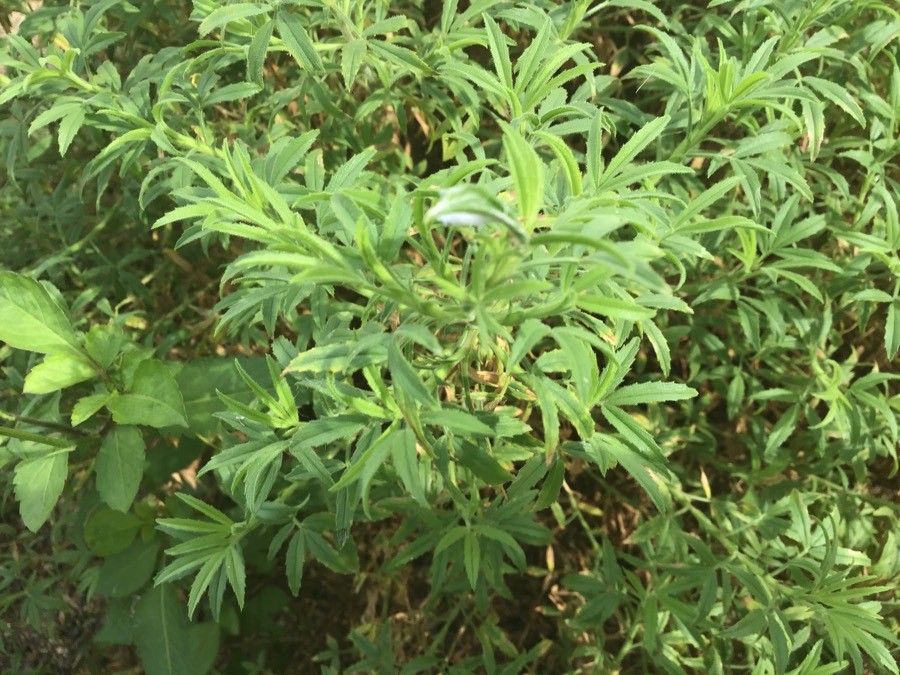
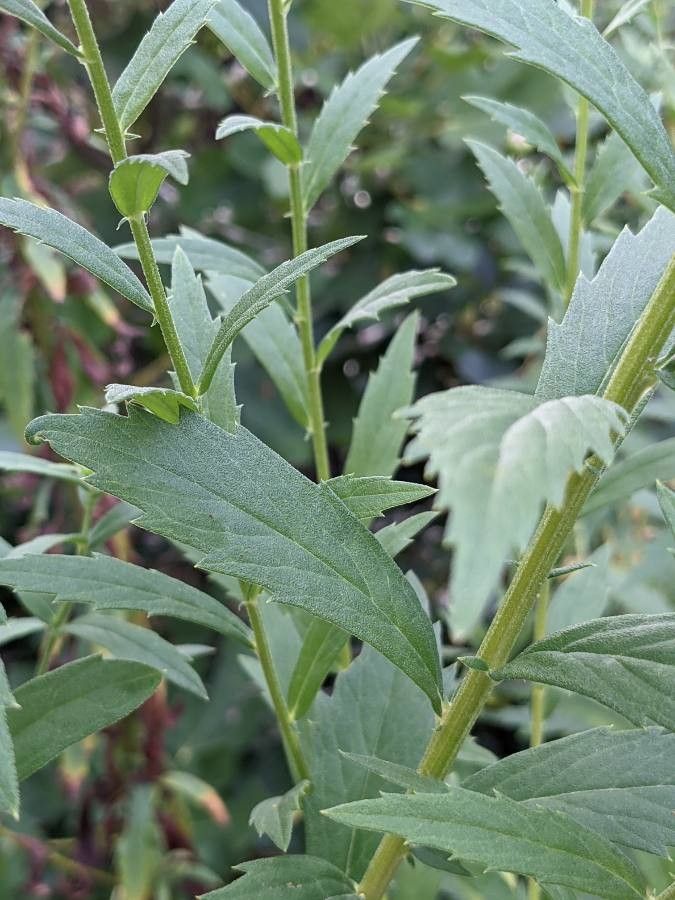
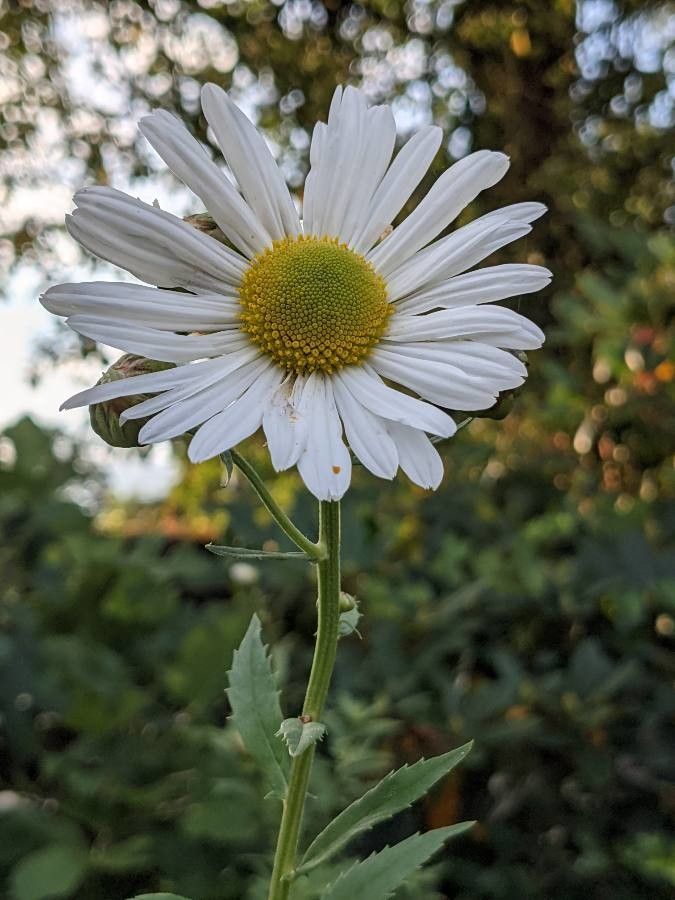
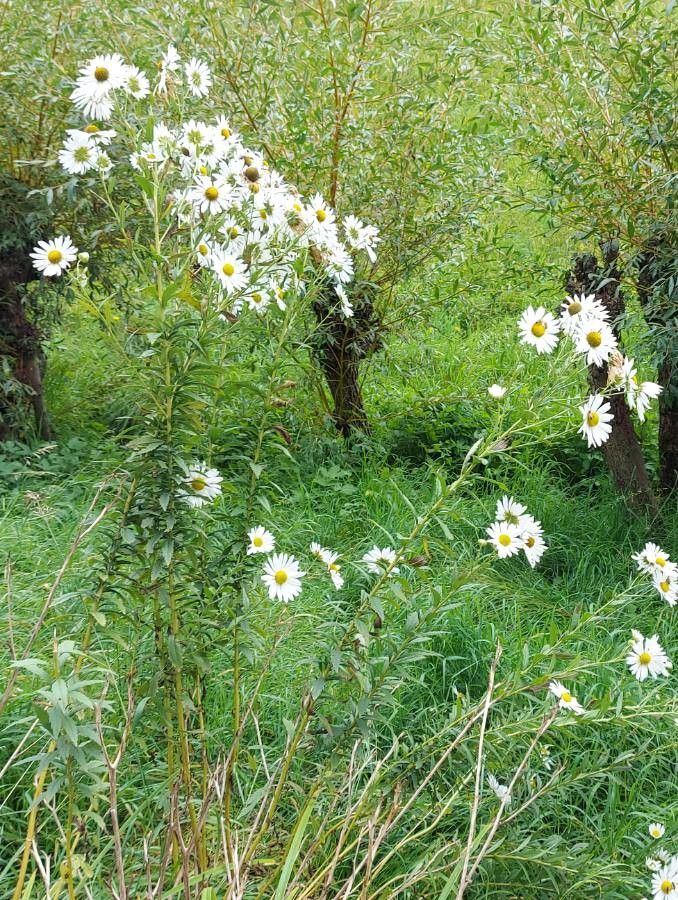
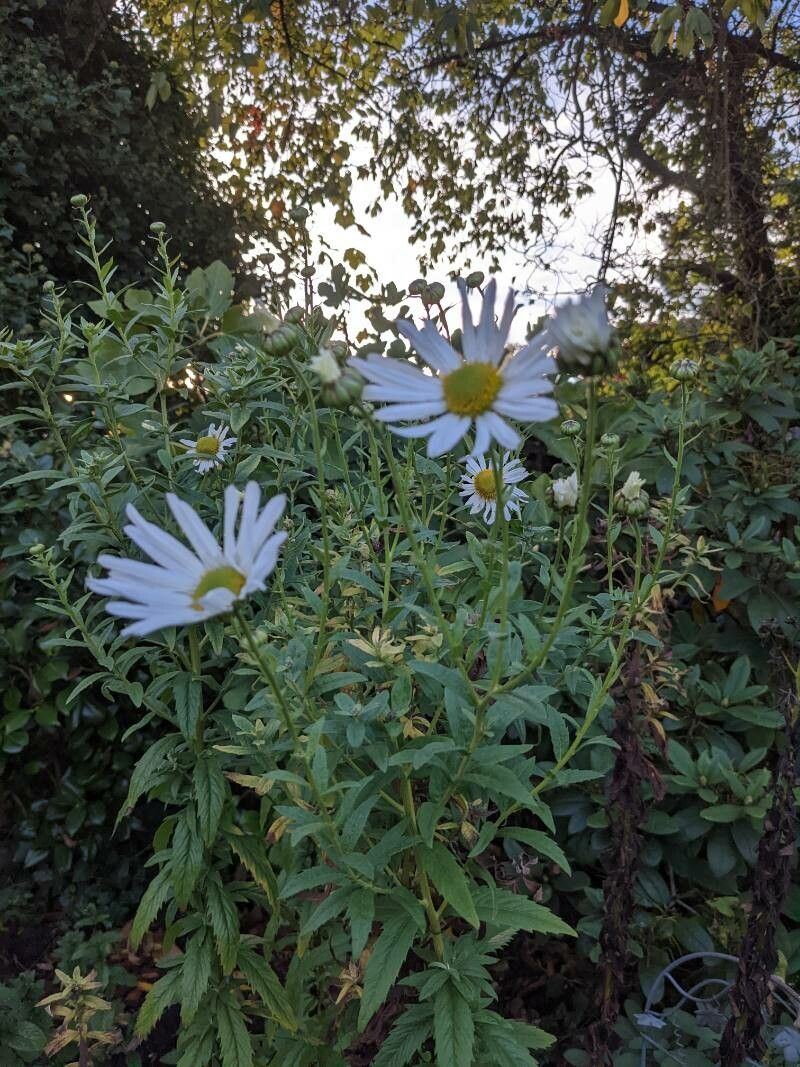
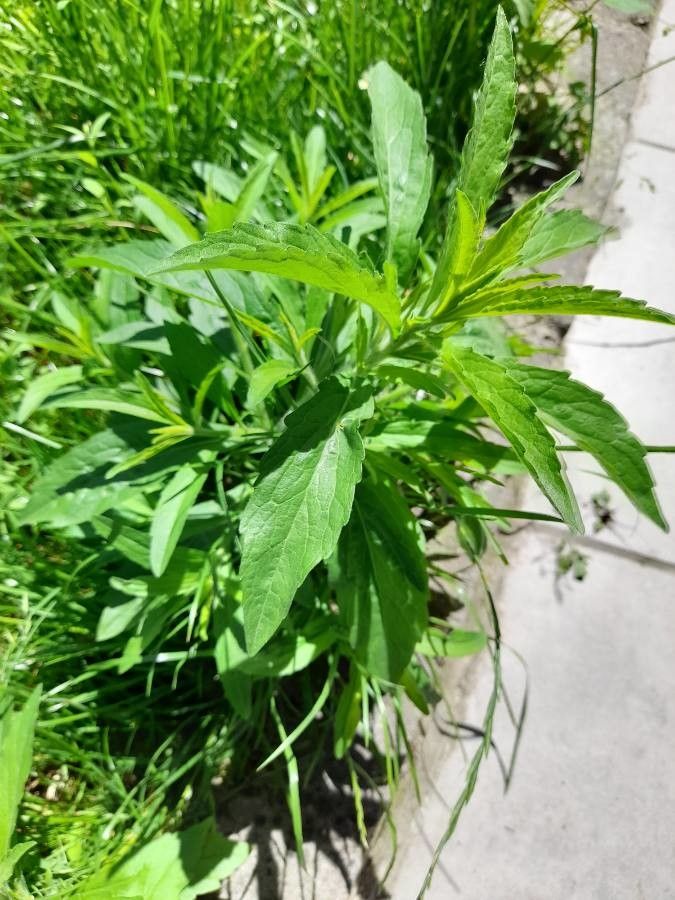
Leucanthemella serotina, called the autumn ox-eye, is a species of flowering plant in the genus Leucanthemella, native to Poland, the former Czechoslovakia, Hungary, the former Yugoslavia, Romania, Bulgaria, and Ukraine, and introduced to Connecticut, Massachusetts, Michigan, Minnesota and New York in the United States, Ontario and Québec in Canada, and France, Germany, Great Britain, and Switzerland. It is a vigorous, erect perennial growing to 1.5 m (5 ft) tall, bearing flowerheads with white ray florets and greenish-yellow centres, throughout autumn. It has gained the Royal Horticultural Society's Award of Garden Merit, and is also considered by them to be a good plant to attract pollinators.
Giantdaisy has strong resistance to diseases and is generally not prone to them. However, it can be vulnerable to pests and diseases present in its environment. These problems are typically not serious. As for care, the plant requires moderate maintenance. It should be pruned regularly to keep a neat appearance and encourage healthy growth. Fertilizing can also help increase flowering. Giantdaisy is suitable for anyone with outdoor space, like a garden or patio, and does not need extensive care experience. It may need more attention when grown indoors.
How to keep Leucanthemella Serotina.
Light
Giantdaisy is a sun-loving, perennial herbaceous plant native to open habitats, commonly occurring in meadows and grasslands. It prefers full sun but can also tolerate partial sun.
Water
Giantdaisy flourishes in wet, humid conditions and requires weekly watering to stay healthy. As a herbaceous perennial, it is well-suited for container growth that retains moisture, making it an excellent choice for indoor cultivation.
Temperature
Giantdaisy can tolerate a wide range of temperatures, but its distribution may still be limited by different combinations of water and heat. It grows best in warm summer climates with sufficient rainfall or watering. Extended periods of cloudy, rainy weather or prolonged high temperatures can increase the likelihood of Giantdaisy dying. In winter, protecting it properly from cold can improve the plant's survival rate.
Fertilizer
The best time to fertilize a Giantdaisy is in early spring, when it is coming out of dormancy and starting active growth. Fertilization supplies essential nutrients needed for healthy growth. Although Giantdaisy has relatively low fertilizer requirements, applying fertilizer annually can improve its survival and promote better, longer-lasting flowers.
Pruning
Giantdaisy produces large, daisy-like flowers and benefits from pruning in the spring, which encourages growth and enhances flowering. To promote new growth and maintain the plant's shape, it is important to trim dead stems and remove spent blooms. This also helps prevent the plant from becoming leggy. Pruning at the right time supports vigorous development and can extend the blooming period.
Botanical profile.
- Plant Type
- Herb
- Life Cycle
- Perennial
- Genus
- Leucanthemella
- Family
- Asteraceae
- Hardiness Zone
- 3-9
- Mature Height
- 0.91 m to 1.83 m
- Mature Spread
- 91 cm
- Leaf Color
- Green
- Leaf Type
- Deciduous
- Flower Color
- White, Yellow
- Flower Size
- 5.08 cm to 6.35 cm
- Bloom Time
- Late summer, Early fall, Mid fall
- Planting Time
- Spring, Summer, Autumn
- Harvest Time
- Mid fall, Late fall
- Native Area
- Slovakia, Romania, Bulgaria, Moldova, Poland, Hungary, Croatia, Ukraine, Serbia
Other names.