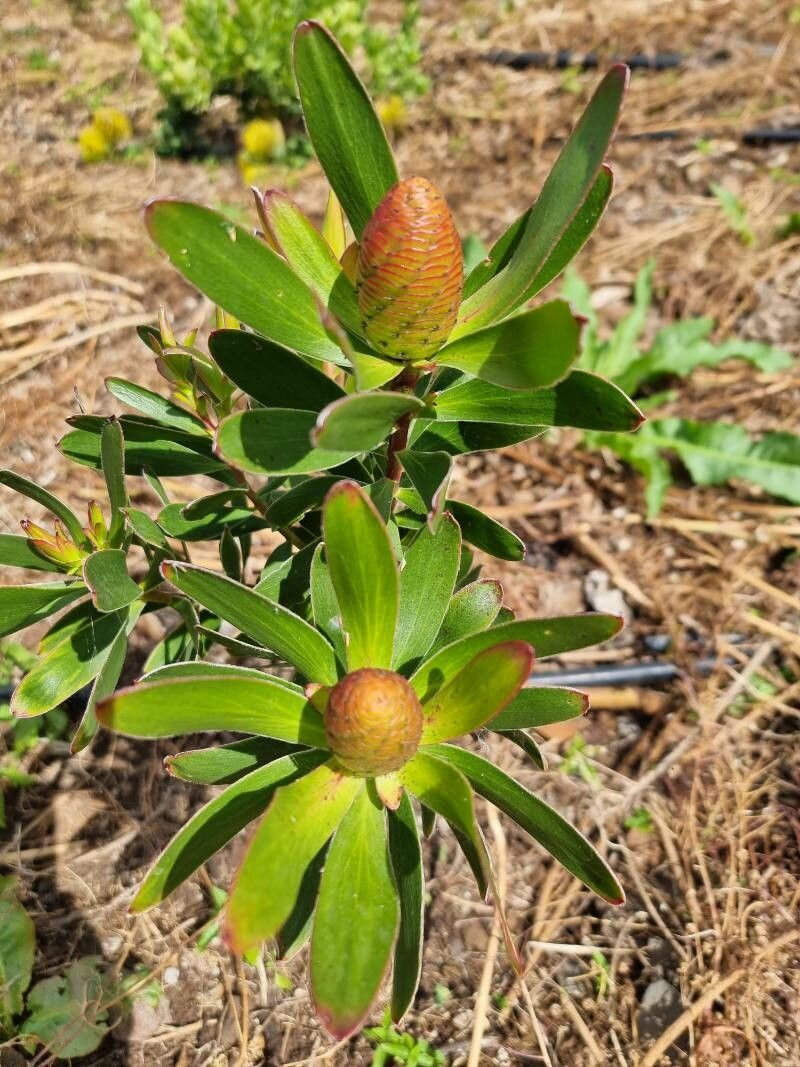
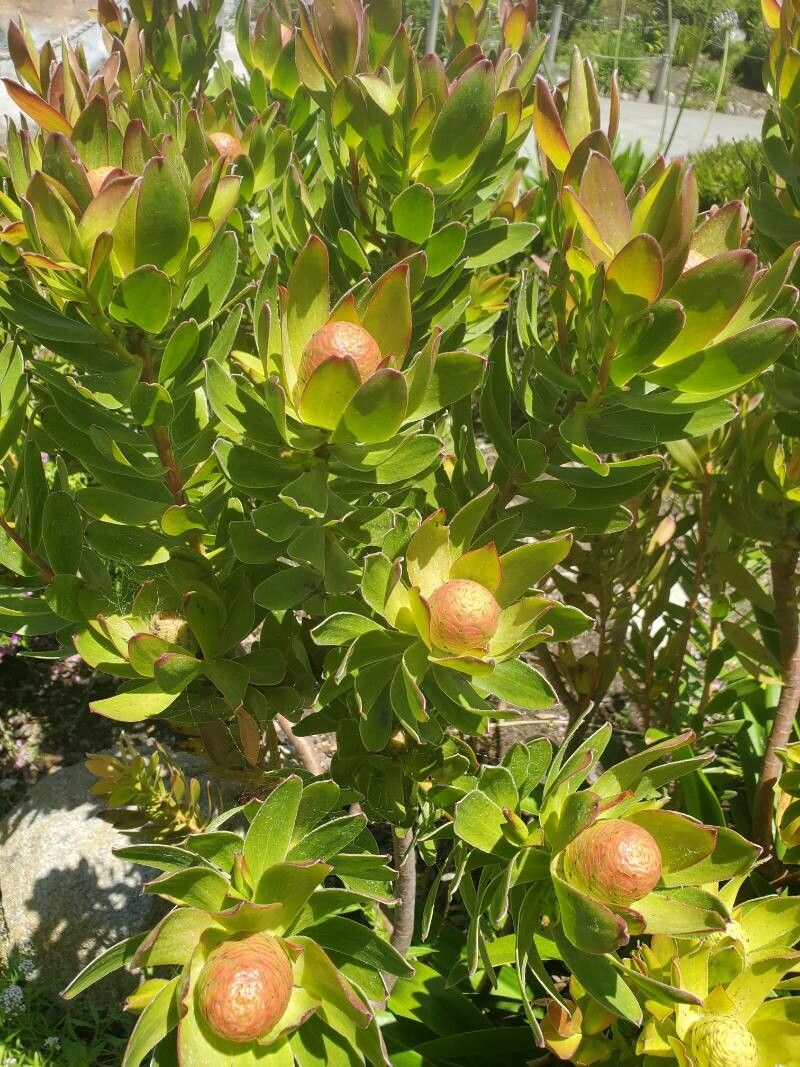
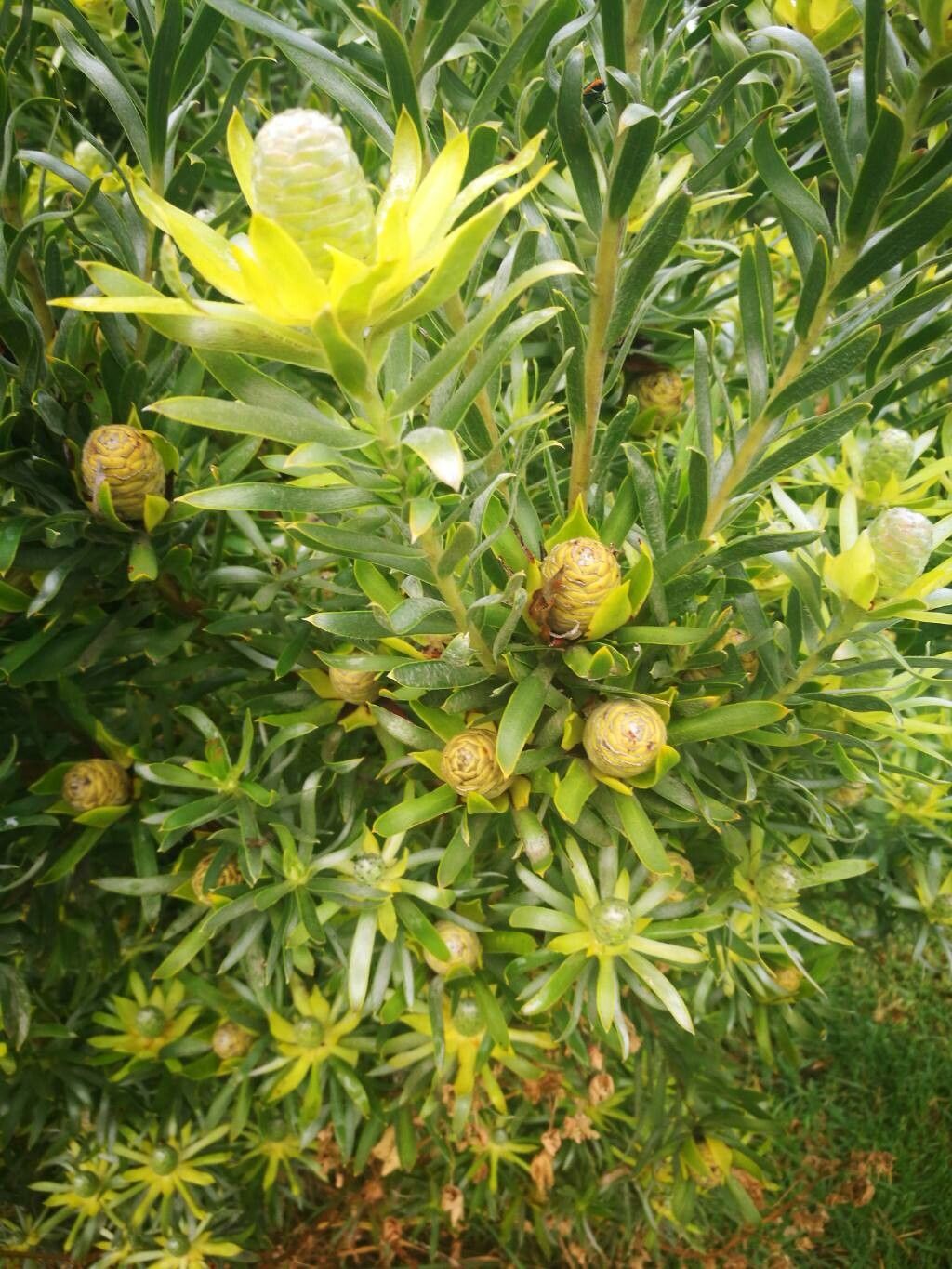
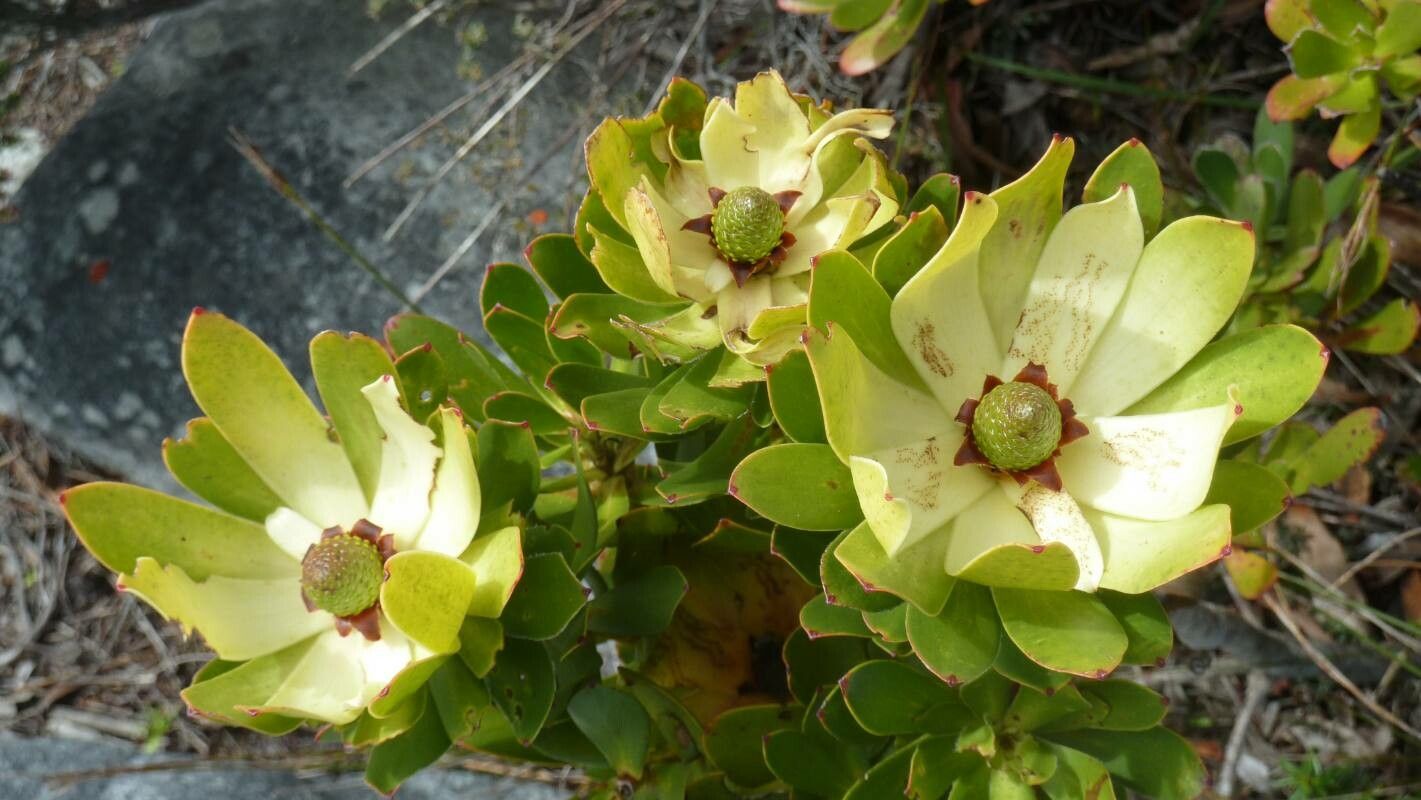
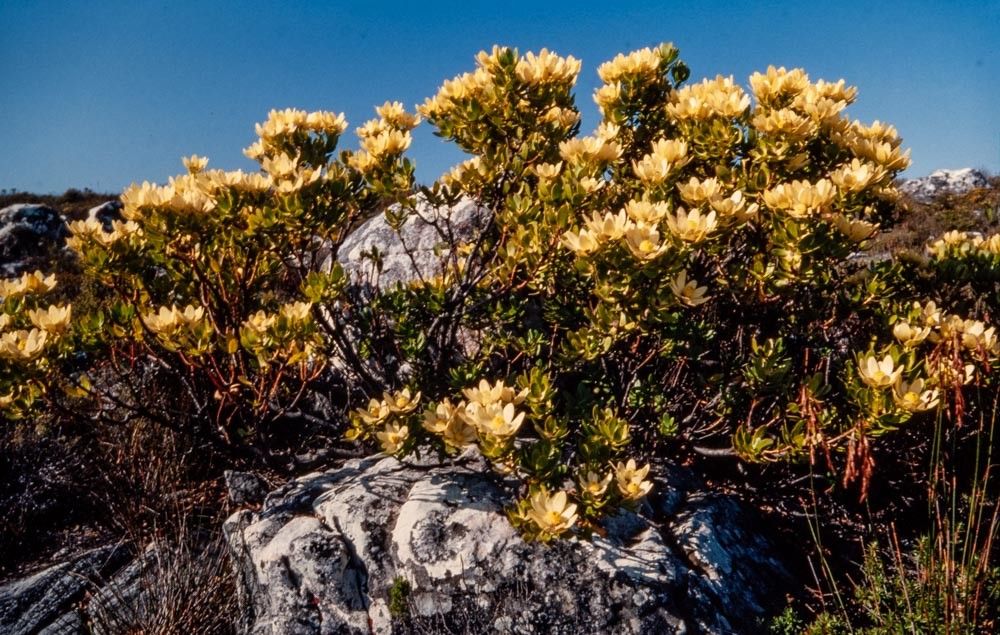
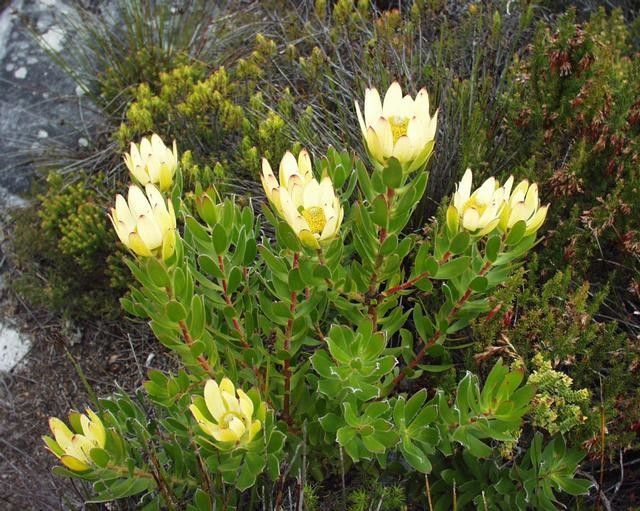
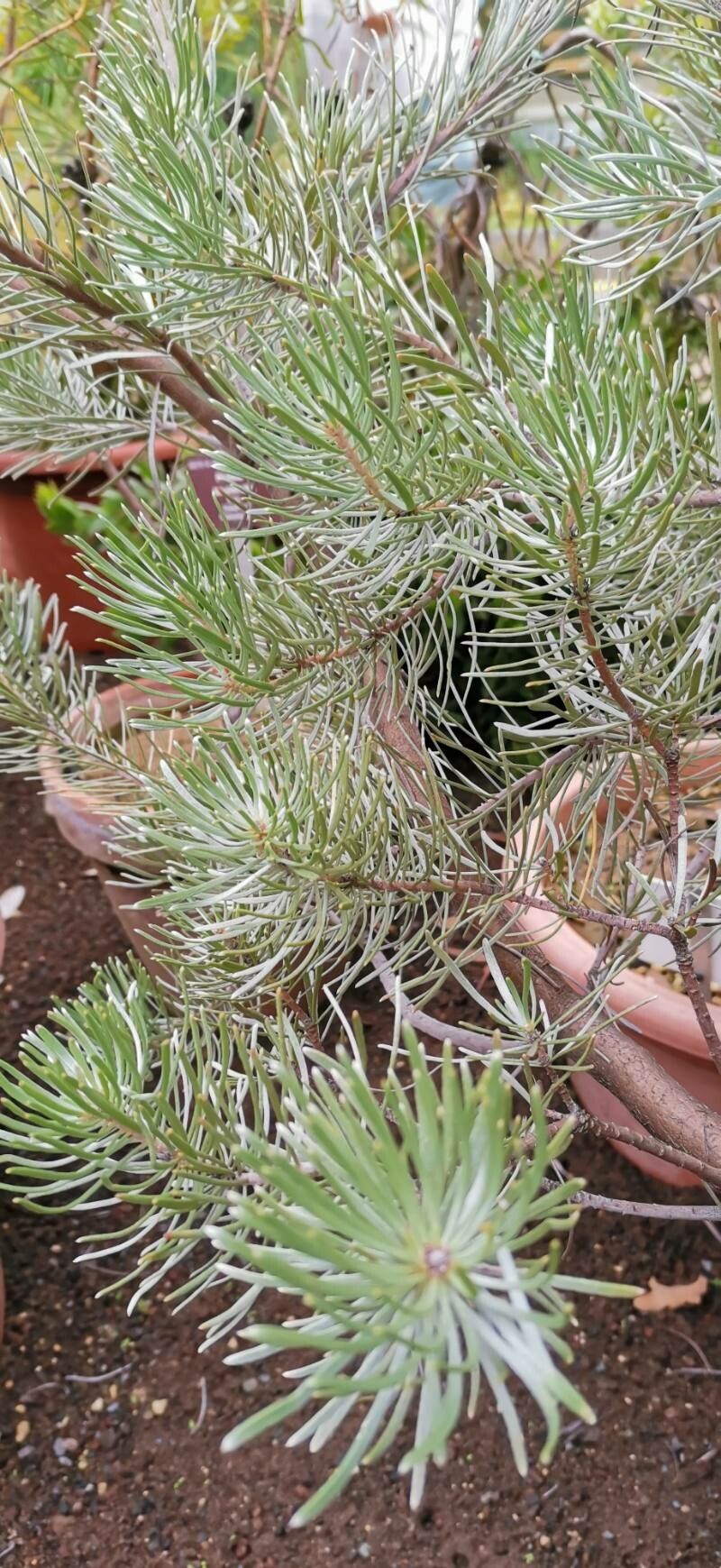
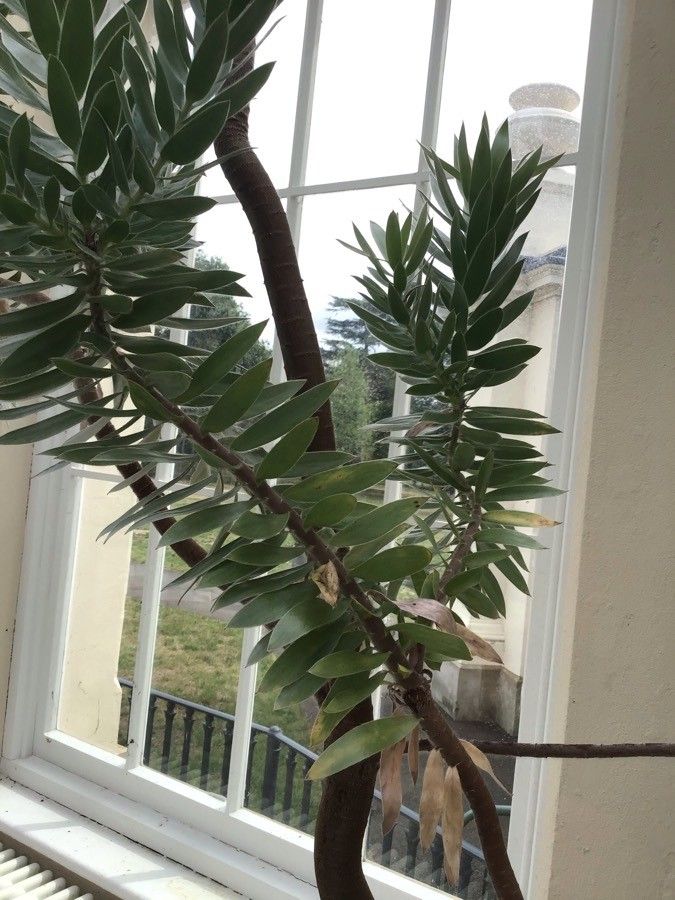
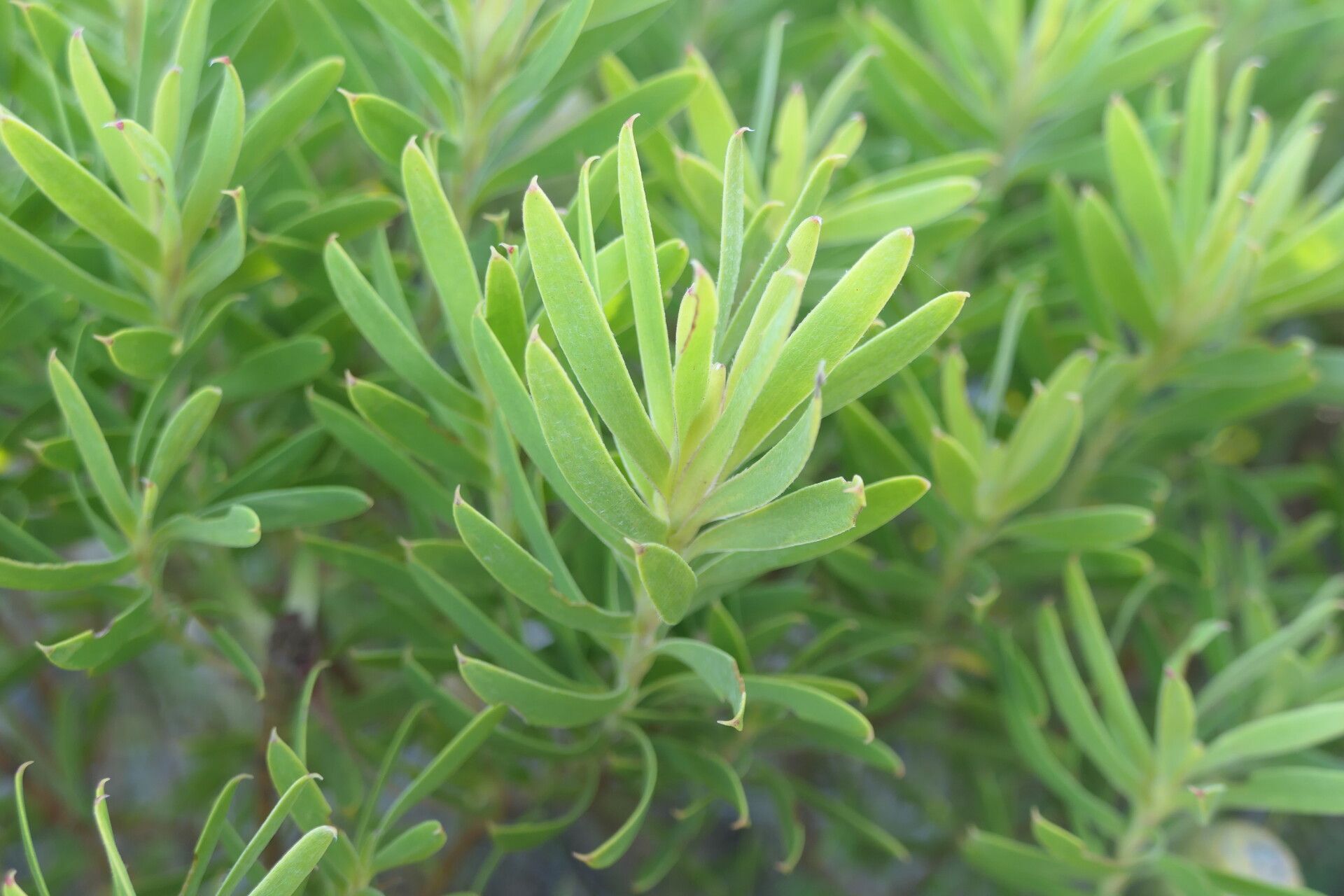
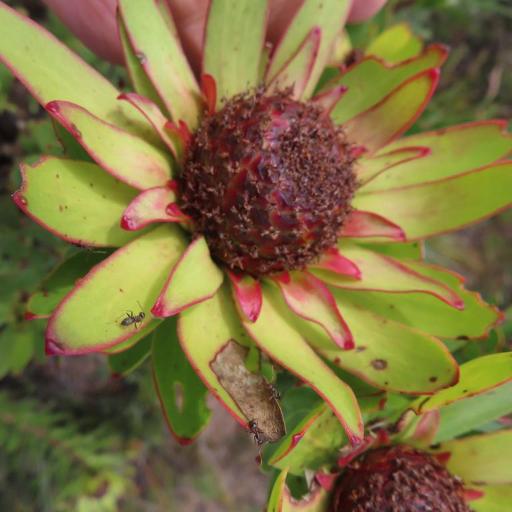
Leucadendron strobilinum, commonly known as the Conebush, is a species of flowering plant in the family Proteaceae. Native to South Africa, it has gained popularity worldwide as an ornamental plant in gardens and landscapes. The Conebush typically grows as a small shrub or tree, reaching heights of up to 3 meters. Its narrow, green or gray-green leaves are arranged spirally around its stems.
The most distinctive feature of Leucadendron strobilinum is its cone-shaped flower heads, which appear at the ends of its branches from late winter to early spring. These flower heads consist of numerous small flowers surrounded by colorful bracts that range from yellow-green to bright red, depending on their maturity.
The Conebush thrives in well-drained soils with full sun exposure but can tolerate some shade. It requires moderate watering during dry periods but is drought-resistant once established.
Gardeners favor Leucadendron strobilinum for its striking appearance, low maintenance needs, and ability to attract birds with its nectar-rich flowers. However, it is important to note that some species in the Proteaceae family can cause allergies in sensitive individuals due to their pollen production.
Overall, Leucadendron strobilinum is an attractive addition to any garden or landscape with well-drained soil conditions. It thrives in full sun exposure and provides an eye-catching display during the flowering season.
Peninsula conebush exhibits good resistance to disease and is generally not prone to illnesses. Regarding care, this plant is fairly low-maintenance. When grown outdoors it needs only minimal watering, and larger plants usually do not require pruning. Smaller plants, however, should be pruned after they have finished blooming. Peninsula conebush is suitable for anyone with an outdoor area, such as a garden or deck, and does not require much care experience.
How to keep Leucadendron Strobilinum.
Light
Originating from bright, sun-drenched habitats, the Peninsula conebush is a tropical woody plant that does best in full sun but can also tolerate partial sun. It commonly occurs in open, well-lit locations with little shade.
Water
The Peninsula conebush, native to arid regions, is known for its drought tolerance and preference for dry conditions. It should be watered every 2 to 3 weeks, ensuring the soil is allowed to dry out between waterings. Typically grown outdoors, the Peninsula conebush thrives in well-draining soil, which helps prevent root rot.
Temperature
The Peninsula conebush grows best at temperatures between 68 and 100.4 °F (20 and 38 ℃). Native to temperate regions, it favors warmer conditions. Depending on the local climate, seasonal temperature adjustments may be required.
Fertilizer
The best time to fertilize a Peninsula conebush is in early spring as it breaks dormancy. This encourages overall growth and flower development. Fertilization improves the foliage, stems, and branches and promotes flowers that are large, vibrant, and long-lasting. It helps move nutrients from the roots to the flowers and enhances the plant’s health and resistance to disease.
Pruning
The Peninsula conebush has conical flowers and evergreen leaves. To encourage growth, prune any damaged wood during the winter. Thinning out the branches helps increase airflow, which reduces the risk of disease. For bushier growth, cut above the nodes during the plant's dormant phase. This practice enhances the conebush's longevity and health.
Botanical profile.
- Plant Type
- Shrub
- Life Cycle
- Perennial
- Genus
- Leucadendron
- Family
- Proteaceae
- Hardiness Zone
- 9-11
- Mature Height
- 2.74 m
- Mature Spread
- 1.52 m
- Leaf Color
- Dark Green
- Leaf Type
- Evergreen
- Flower Color
- Yellow, Green
- Flower Size
- 2.29 cm to 3.56 cm
- Bloom Time
- Late summer, Early fall, Mid fall
- Planting Time
- Spring, Summer, Autumn
- Harvest Time
- Late fall, Early winter, Mid winter
- Native Area
- South Africa
Other names.
Reader questions.
What do I do if I give my Peninsula conebush too much or too little water?
For outdoor plants, particularly newly planted ones or seedlings, lack of watering can be a common issue. It's important to remember to water them sufficiently, especially during the first few months when the tree is still small or recently planted. Once the roots are established, Peninsula conebush plants can rely mainly on rain. When your Peninsula conebush is planted in pots, overwatering is more likely to happen. In case you accidentally overwater your plant, there are steps you can take to fix the situation. First, stop watering the plant immediately to minimize the effects of overwatering. Then, remove the plant from its pot to check the roots. If you don't find any signs of root rot, you can return the plant to its container. However, if there's root rot, trim any affected roots and consider applying a fungicide to prevent further damage. Lastly, repot the Peninsula conebush using well-draining soil. On the other hand, underwatering a Peninsula conebush is often an easy problem to resolve. If you underwater, the plant's leaves may droop, dry out, and fall off. However, once you water it sufficiently, the leaves will quickly regain their fullness. It's important to correct your watering frequency as soon as you notice signs of underwatering.
What are the sunlight requirements for the Peninsula conebush?
The Peninsula conebush, or Leucadendron strobilinum, is native to bright, sun-drenched environments and thrives in full sun, requiring above 6 hours of sunlight. However, it can also tolerate partial sun, which means about 3-6 hours of sunlight. It's crucial to watch how sunlight moves through your garden and choose spots that offer the ideal balance of light and shade to ensure the plants' well-being.
What are the ideal temperature conditions for Peninsula conebush?
Peninsula conebush thrives best in a temperature range between 68 to 100.4 °F (20 to 38 °C), native to temperate environments but preferring warmer conditions. It is extremely heat-loving, and exposure to cold temperatures can be harmful. It's advised to bring Peninsula conebush indoors during autumn to protect it from colder temperatures, placing it near a bright window but away from direct heat sources. Maintaining a temperature above 20°C during winter is essential for its growth, as temperatures nearing 0°C can be detrimental.
What are the essentials for growing Peninsula conebush?
Growing in open, well-lit areas with minimal shade, the Peninsula conebush is adapted to environments with ample sunlight. For indoor plants, when natural sunlight is scarce, especially during winter or in less sunny spaces, artificial lighting becomes essential. LED lights are recommended due to their ability to provide specific light wavelengths needed by plants. Full sun plants require 30-50W per square foot, partial sun plants 20-30W per square foot, and full shade plants 10-20W per square foot of artificial light. The light source should be placed 12-36 inches above the plant and kept on for 8-12 hours per day to mimic natural sunlight conditions.
How do you care for Peninsula conebush in low temperatures?
Peninsula conebush is not tolerant of low temperatures and thrives best when the temperature remains above 20°C. It should be kept above 0°C during winter to prevent damage. Exposure to temperatures below -5°C may cause the leaves to lighten in color, and following frost damage, leaves may turn brown or black, displaying symptoms such as wilting and drooping. To address frost damage, trim off the damaged parts and move the plant indoors to a warm environment for cold protection. Place it near a south-facing window for ample sunlight while avoiding proximity to heaters or air conditioning vents which can dry out the air excessively.
What symptoms indicate light deficiency in Peninsula conebush?
Symptoms of light deficiency in Peninsula conebush include smaller new leaves, leggy or sparse growth, faster leaf drop, slower or no new growth, and paler new leaves. These indicate that the plant may be struggling due to insufficient light. Chlorosis, or the plant's leaves turning yellow, is caused by excessive sunlight but can also reflect other light-related stress. Sunscald, leaf curling, wilting, and leaf scorching are additional signs that the Peninsula conebush is either receiving too much light or not enough, impacting its growth and health negatively.
What should you do if Peninsula conebush experiences high temperatures?
During the summer, it is important to keep Peninsula conebush below 38°C to prevent heat stress. If temperatures exceed 43°C, the plant may show signs of stress such as lighter leaf color and increased susceptibility to sunburn. To care for a heat-stressed Peninsula conebush, trim away sunburned and dried parts of the plant and relocate it to a shaded area, particularly during the midday and afternoon sun. Watering the plant in the morning and evening will help keep the soil moist and further aid in cooling the plant.
How can I address light deficiency in Peninsula conebush?
To address light deficiency in Peninsula conebush, gradually move your plants to a location with more direct sunlight, aiming for at least 6 hours daily. For indoor plants, use a south-facing window or consider providing artificial light if moving the plant isn't feasible, ensuring the light source is on for at least 8 hours daily. Gradual relocation is also recommended for outdoor plants to prevent sunburn. If trees or other obstacles block sunlight, prune them to improve light exposure. For smaller plants, transplanting them during their dormant period to a sunnier location can also help. Remember, while parts of the plant affected by insufficient light may not recover, new growth should be healthy with improved light conditions.