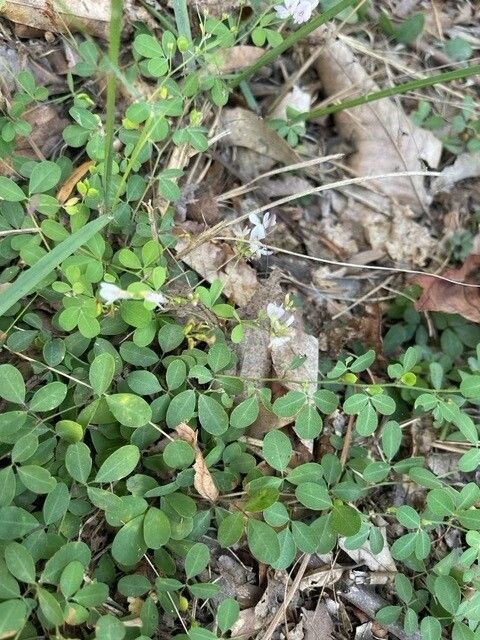
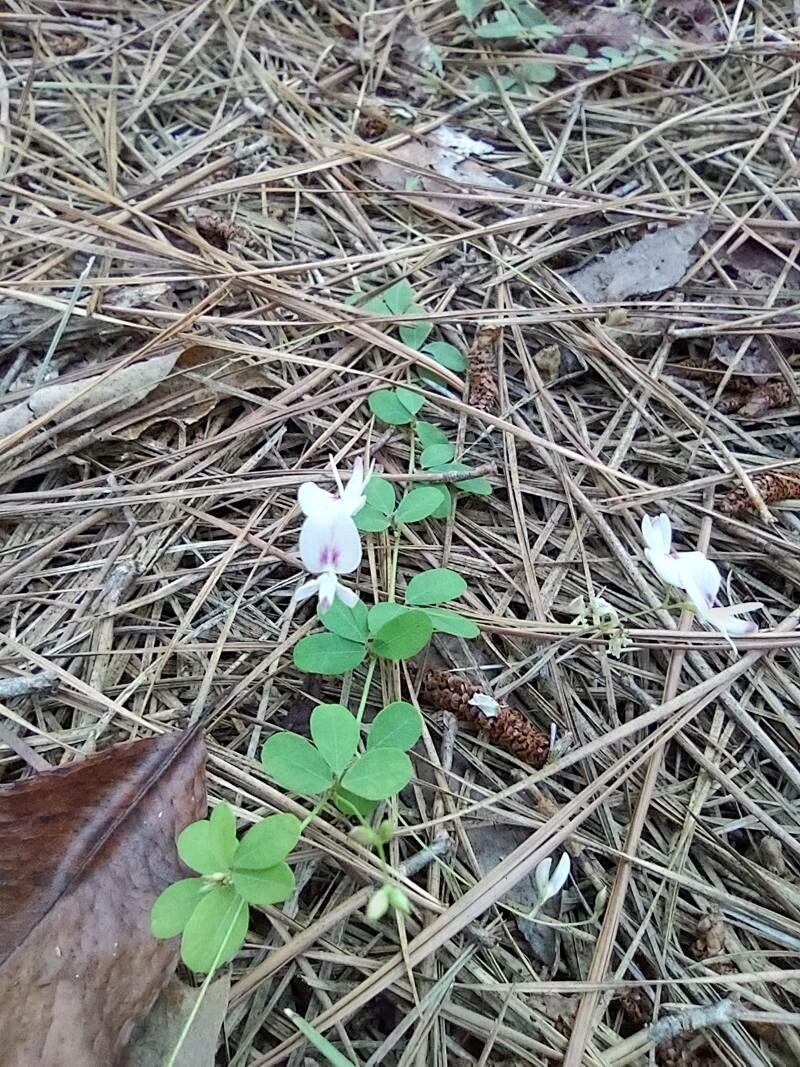
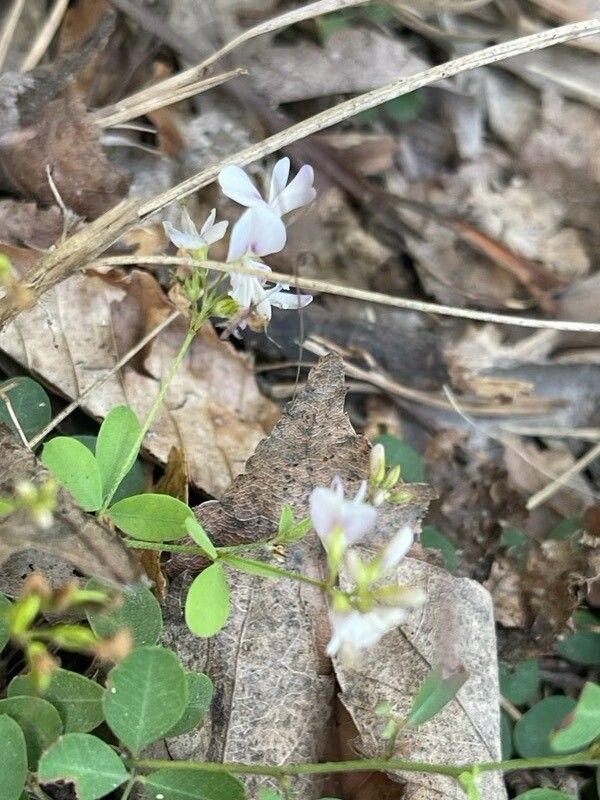
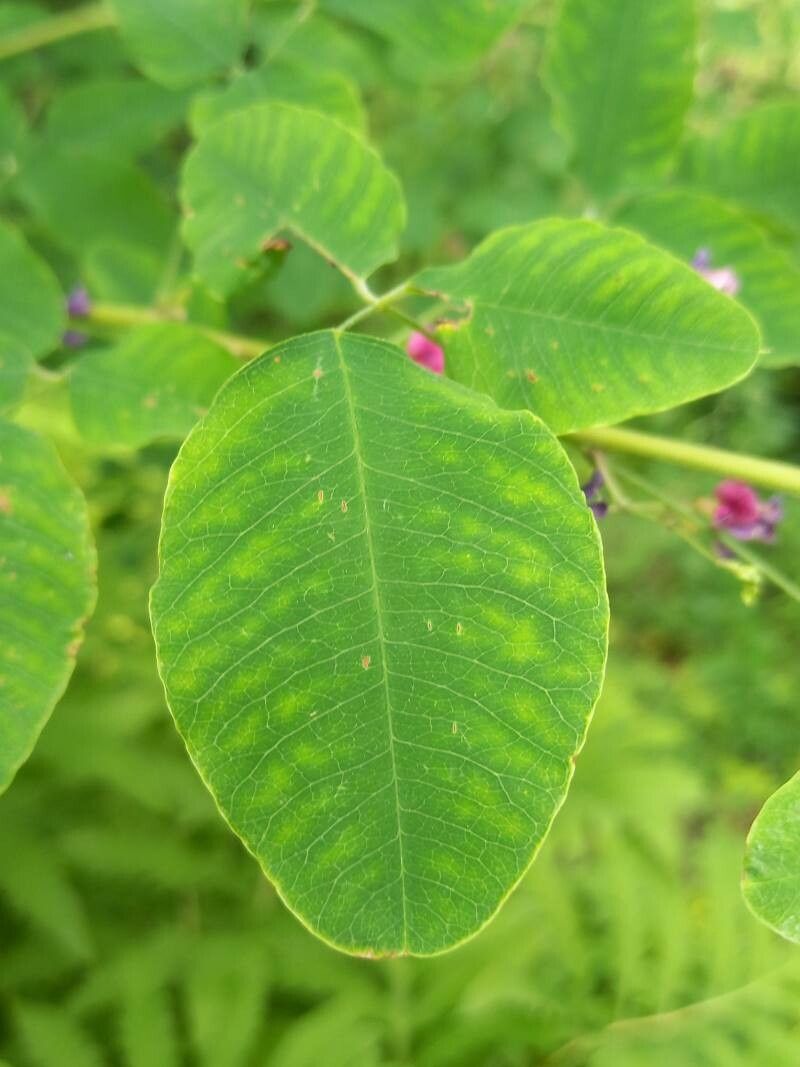
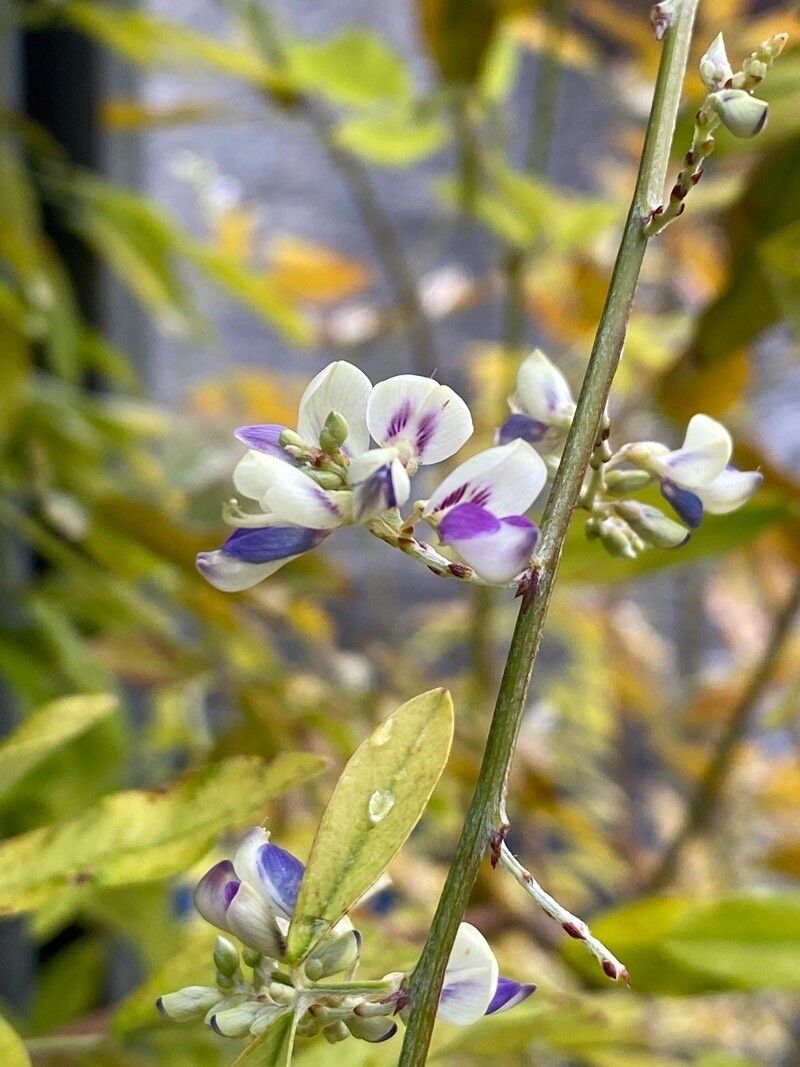
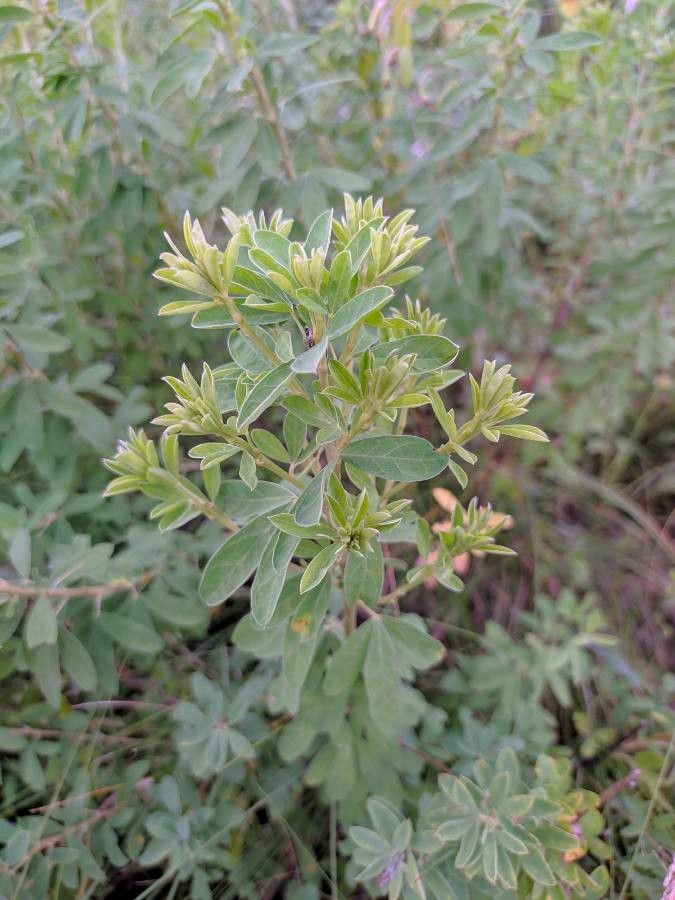
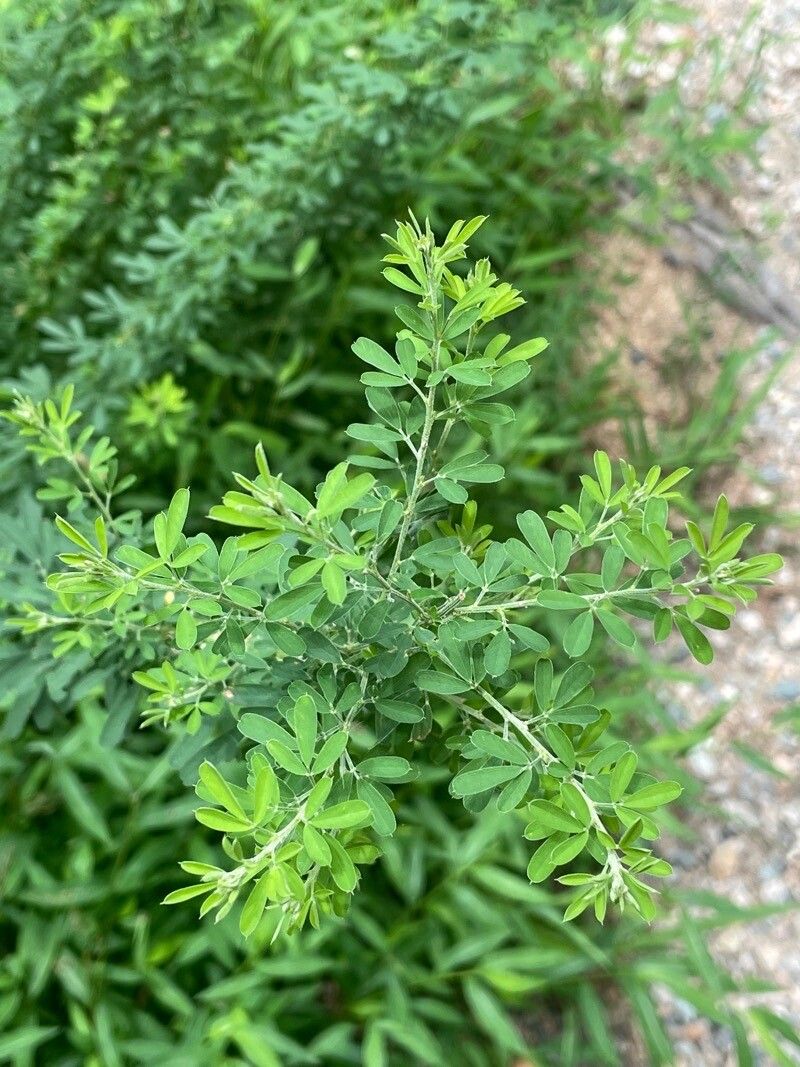
Lespedeza procumbens, commonly known as trailing lespedeza or prostrate lespedeza, is a low-growing perennial plant in the legume family. Native to North America, it thrives in various habitats, including prairies, meadows, and open woodlands. The plant exhibits a prostrate growth habit, with stems that can extend up to 3 feet in length. Its small, trifoliate leaves are dark green, and it produces pink or purple flowers that bloom from July to September. Lespedeza procumbens offers several ecological benefits. It provides food for wildlife such as deer, rabbits, quail, and other birds and helps to prevent soil erosion with its extensive root system. Native Americans have utilized the plant for medicinal purposes, treating ailments like diarrhea, dysentery, and fever. Overall, Lespedeza procumbens is an attractive, low-growing perennial that offers ecological benefits and medicinal properties, making it a valuable species within its native range.
Trailing Bush Clover has good disease resistance and is generally not prone to diseases. However, it can be susceptible to pests and diseases present in its surroundings. These infections are usually not severe. Regarding care, this plant requires moderate maintenance. It needs regular pruning to maintain a pleasing appearance and healthy growth. Fertilizing can also help encourage flowering. Trailing Bush Clover is suitable for anyone with outdoor space, such as a garden or patio, and does not require extensive care experience. It may need extra attention when grown indoors.
How to keep Lespedeza Procumbens.
Light
Trailing Bush Clover is a sun-loving, perennial, herbaceous plant native to open habitats and commonly found in meadows and grasslands. It prefers full sun exposure but can also tolerate partial sun conditions.
Water
Trailing Bush Clover thrives when watered weekly because this schedule mimics its natural rainfall pattern. The plant prefers moderate moisture and benefits from a consistent watering routine. Common in temperate regions, this outdoor plant is resilient to short dry spells, but it truly flourishes with regular watering, which positively influences its growth cycle and seasonal behavior.
Temperature
Trailing Bush Clover can tolerate a wide range of temperatures, but its distribution may still be restricted by various combinations of moisture and heat. It does best in warm summer climates with sufficient rainfall or watering. Extended periods of cloudy, rainy weather or prolonged high temperatures can increase the risk of Trailing Bush Clover dying. In winter, protecting the plant from cold can boost its chances of survival.
Fertilizer
The best time to fertilize a Trailing Bush Clover is in early spring, as it comes out of dormancy and starts active growth. Fertilizing supplies essential nutrients needed for healthy development. While Trailing Bush Clover generally requires little fertilizer, applying it once a year can improve its survival and encourage improved, longer-lasting flowers.
Pruning
To keep Trailing Bush Clover healthy and well-shaped, it's best to prune it between early and late spring. Pruning helps remove old branches, improve air circulation, and encourage flowering. When trimming, take care not to cut too close to the new buds; this ensures the best results and enhances the plant's appearance.
Botanical profile.
- Plant Type
- Herb
- Life Cycle
- Perennial
- Genus
- Lespedeza
- Family
- Fabaceae
- Hardiness Zone
- 4-9
- Mature Height
- 30 cm to 61 cm
- Mature Spread
- 61 cm to 91 cm
- Leaf Color
- Green
- Leaf Type
- Deciduous
- Flower Color
- Purple, Blue, Pink, Red
- Flower Size
- 0.51 cm to 0.76 cm
- Bloom Time
- Late summer, Early fall, Mid fall
- Planting Time
- Spring, Autumn
- Harvest Time
- Mid fall, Late fall
Other names.