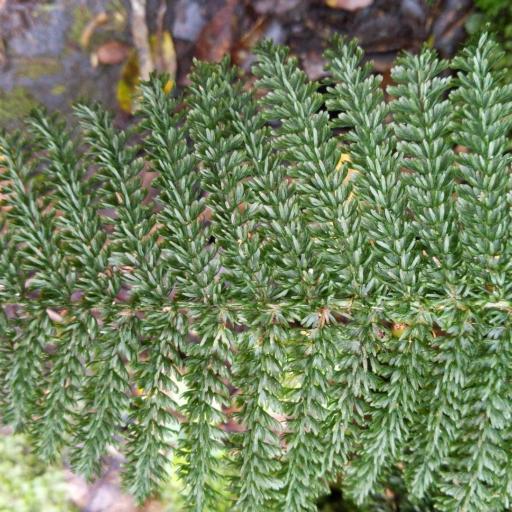
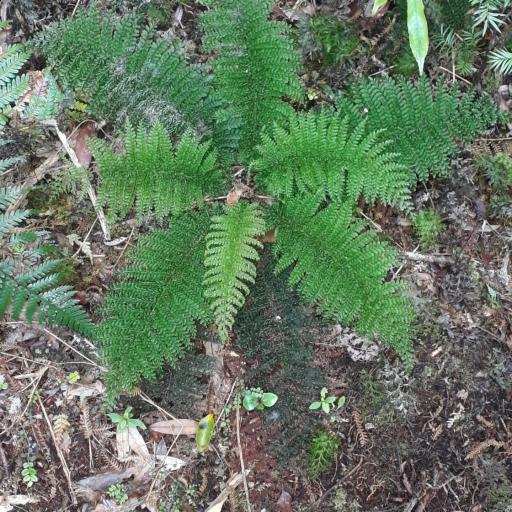
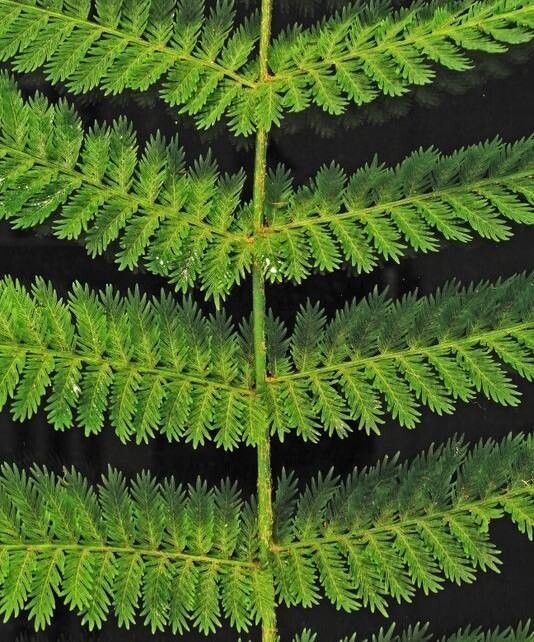
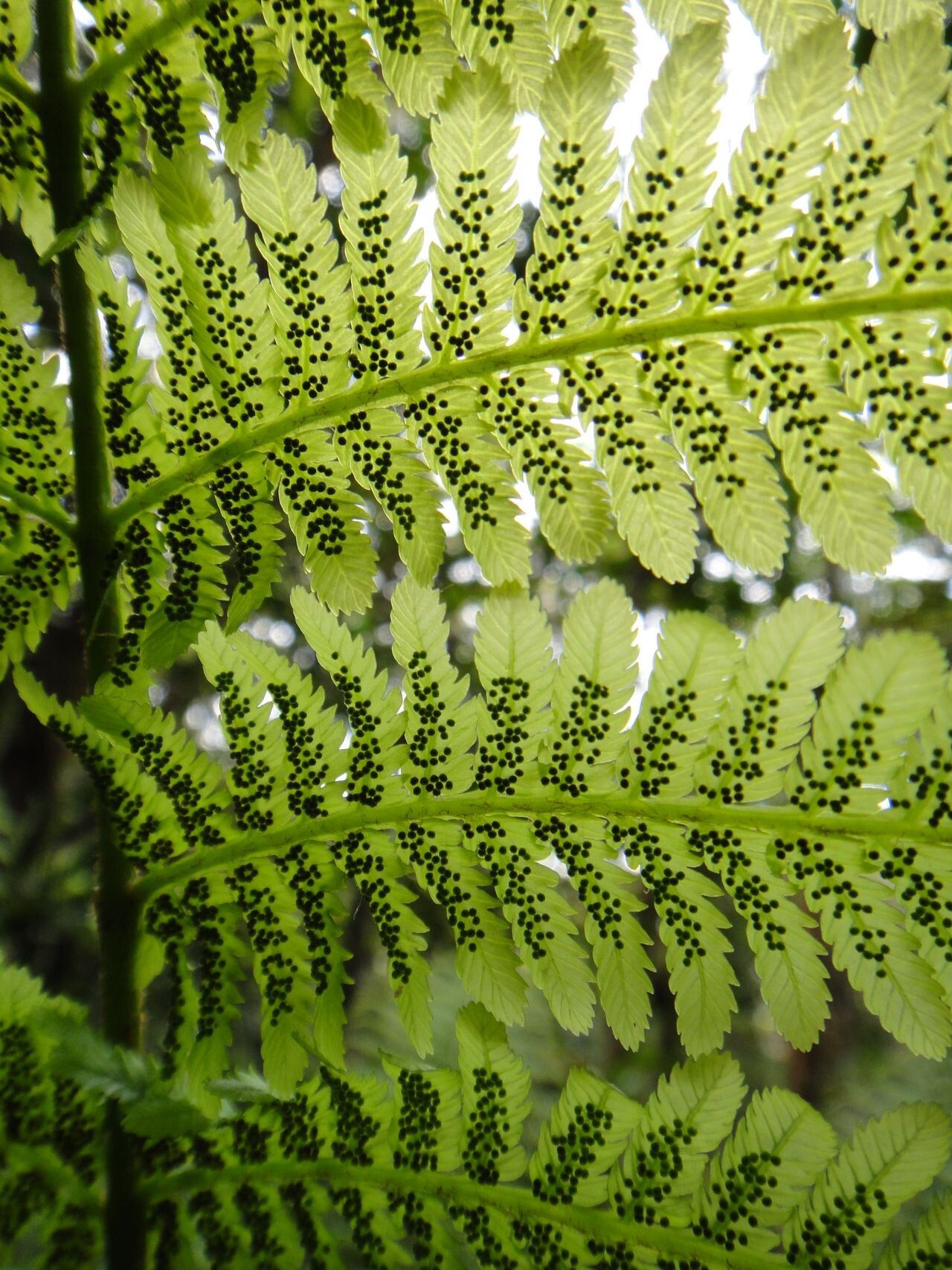
Leptopteris superba, commonly called Prince of Wales feathers or common crape fern, is a fern in the genus Leptopteris. It is considered endemic to New Zealand at North Island: Northland, Auckland, Volcanic Plateau, Gisborne, Taranaki, Southern North Island. South Island: Western Nelson, Sounds-Nelson, Westland, Canterbury, Otago, Southland Fiordland. Stewart Island. Altitudinal range: 0–1600 m. Leptopteris superba has a predominantly southern distribution, occurring from Mt. Te Aroha southwards, apart from an isolated record (Rawlings 1972) from c. 700 m in Waipoua Forest (CHR 191223) and a 19th-century collection by E.M. Smith from Little Barrier Island (AK 119092). In the North Island it is common in montane forest from Te Aroha to Wellington, occurring from about 250 m up to 1400 m on Maungapōhatu in the Urewera Ranges. In the South Island it is abundant in wet forest on the west side of the Main Divide, in the Marlborough Sounds, and around Dunedin and the Catlins, extending also to Stewart Island. It occurs from sea level in Fiordland to about 1600 m in the Takitimu Ranges near Monowai. It is characterized by having large fronds (around a meter in length) with large sporangia on their undersides. The shape of the fronds is elliptical (similar to that of Ostrich Fern). It grows from wet lowlands to montane forests.
Prince of wales fern usually shows good resistance to disease and is affected by relatively few insect pests. Its care level is considered difficult because it requires a moist environment and frequent watering. However, the roots can rot if the plant is overwatered or if the surroundings lack adequate ventilation. Prince of wales fern is suitable for people with some growing experience, as most people can keep it alive for a period of time. Even so, the fern may struggle to thrive and its leaves can dry out and become less healthy over time.
How to keep Leptopteris Superba.
Light
Prince of wales fern comes from habitats such as forest understories or rocky sites that provide natural shade. It prefers Full Shade but can tolerate Partial Sun.
Temperature
Prince of wales fern grows best in forest thickets. It is highly sensitive to temperature and humidity; high temperatures, dry conditions, and strong sunlight can all make the plant uncomfortable. In summer it needs adequate shading and a humid environment. Generally, Prince of wales fern does not require special care in winter, but an extended winter drought can still be fatal to the plant.
Pruning
To ensure the Prince of Wales fern remains lush and robust throughout the growing season, it's beneficial to prune it in early spring. Focus on removing only the dead or damaged fronds to promote healthy growth and improve air circulation. Be sure to use sterilized tools to prevent disease and maintain the plant's vitality. This seasonal care will help keep your fern thriving.
Botanical profile.
- Plant Type
- Fern
- Life Cycle
- Perennial
- Genus
- Leptopteris
- Family
- Osmundaceae
- Hardiness Zone
- 9-11
- Mature Height
- 30 cm to 61 cm
- Mature Spread
- 40 cm to 76 cm
- Leaf Color
- Dark Green, Forest Green
- Leaf Type
- Deciduous
- Planting Time
- Spring, Summer
- Native Area
- New Zealand
Other names.