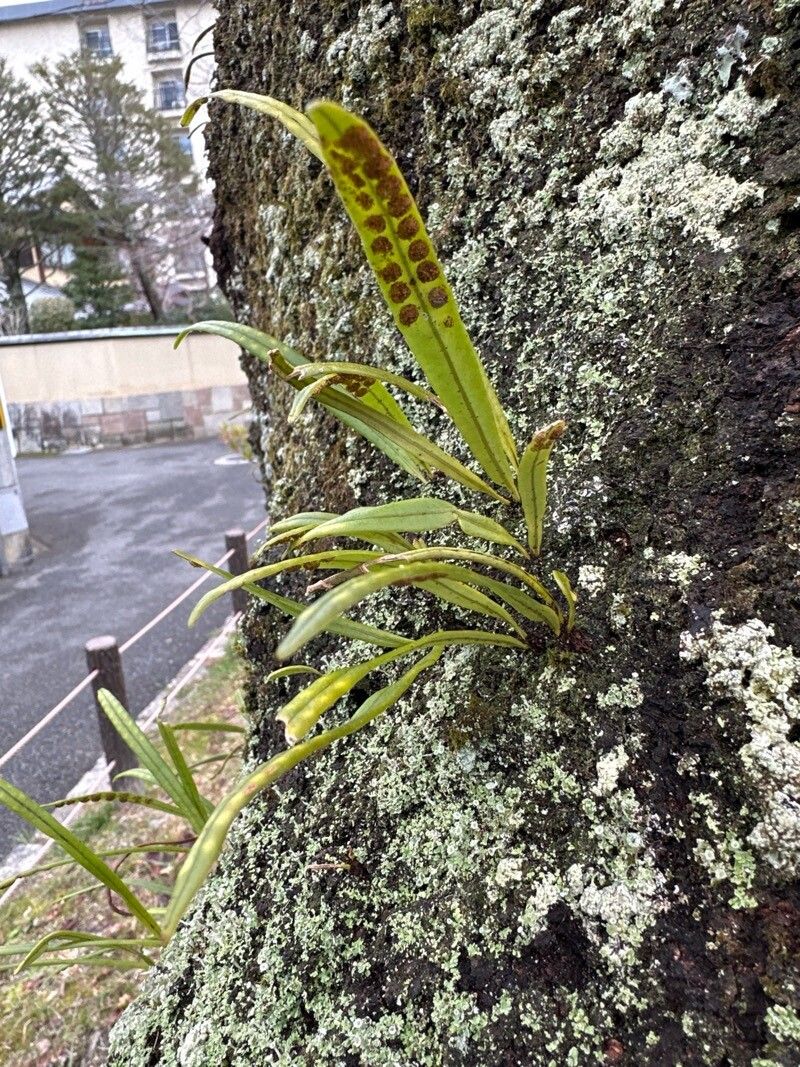
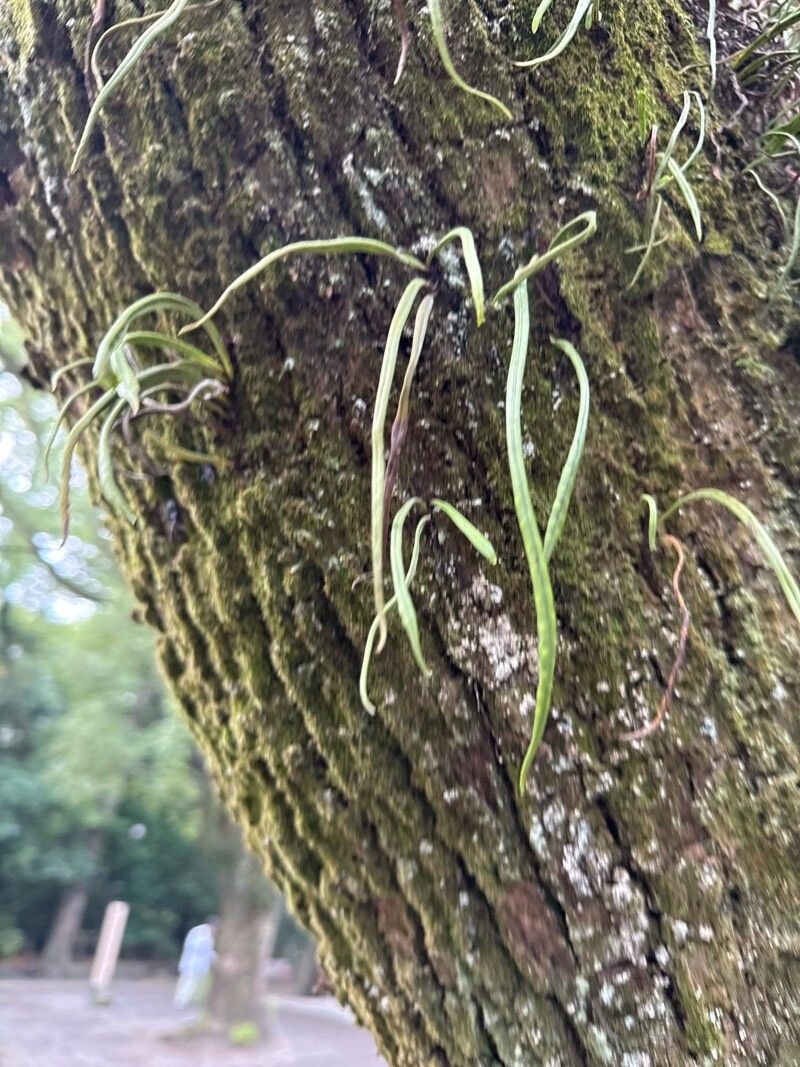
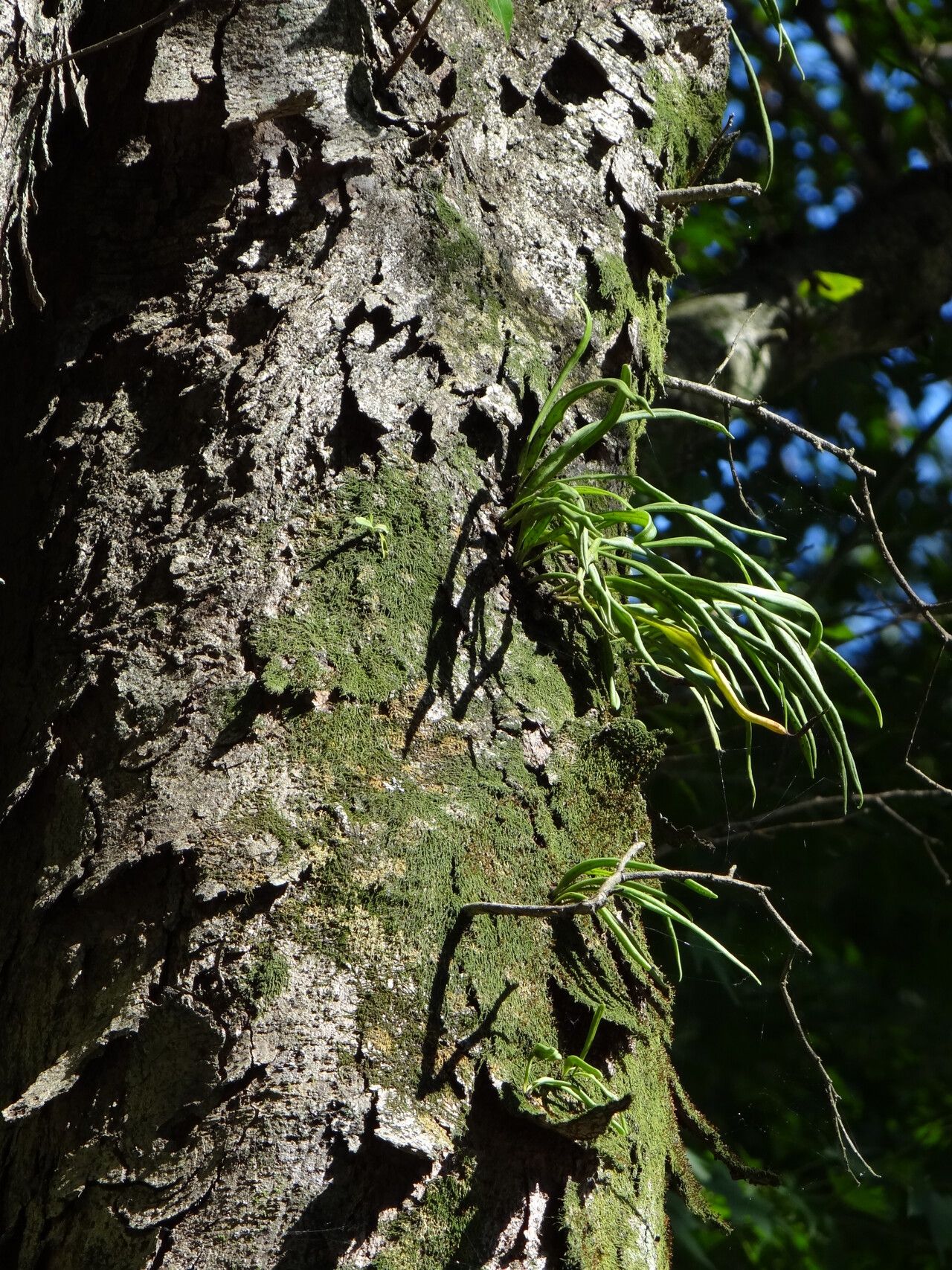
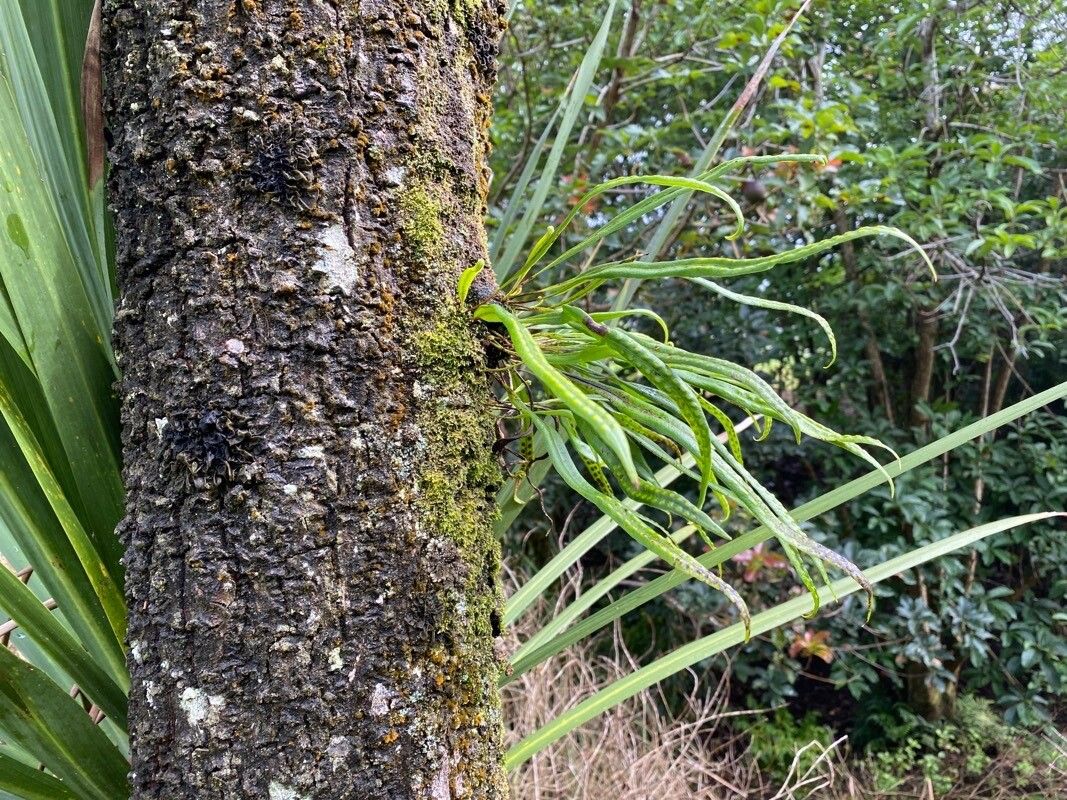
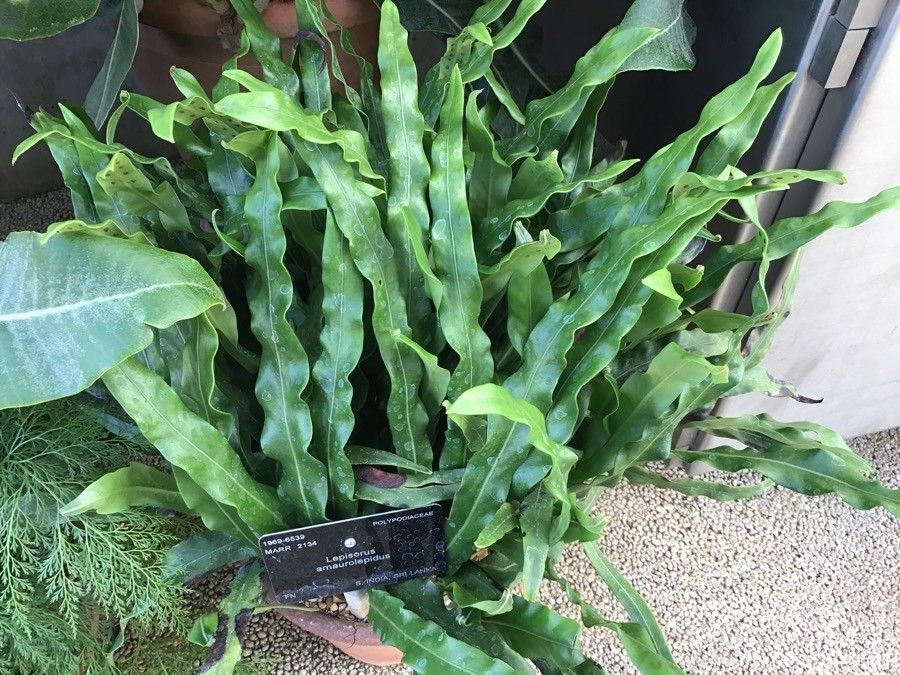
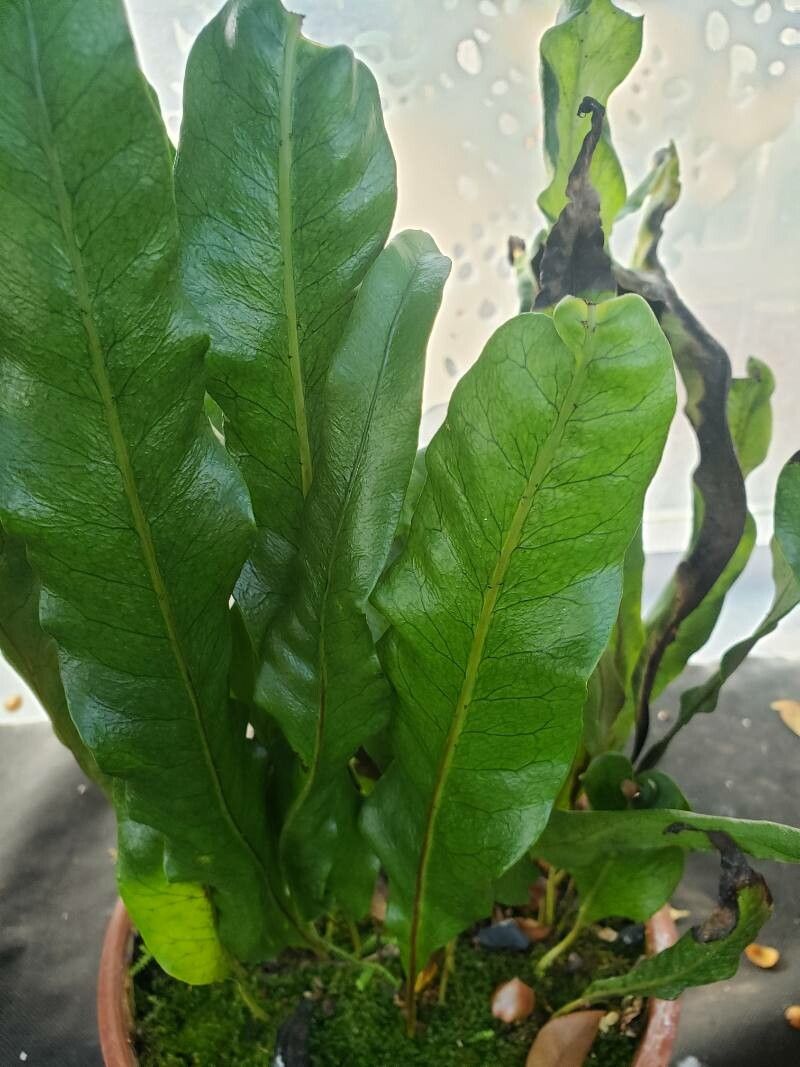
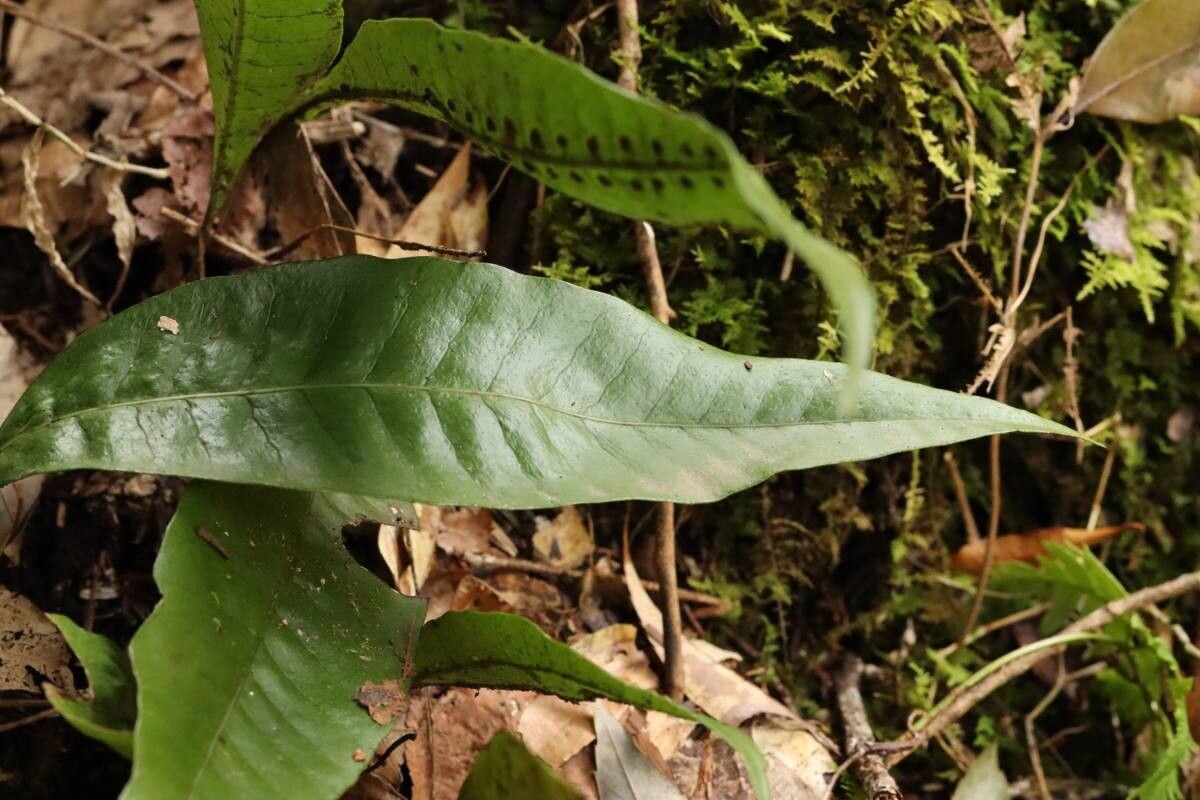
Lepisorus thunbergianus, the weeping fern, is an epiphyte with slender, undivided fronds. Across its native Asian and Pacific range, it has many common names, including 瓦韦 in Chinese, ノキシノブ (nokisinobu), "hiding under eaves" in Japanese, 일엽초 (il-yeobcho) in Korean, and ‘ēkaha ‘ākōlea, pua‘a kuhinia, or pākahakaha in Hawaiian. While it is currently accepted as a species, it is paraphyletic species complex, and "might need to be redefined."
Weeping fern is fairly disease-resistant and generally not prone to problems. However, it can be vulnerable to pests and diseases present in its environment. These issues are usually not serious. In terms of care, the plant requires moderate maintenance. Regular pruning is needed to keep a tidy appearance and support healthy growth. Fertilizing can also help encourage flowering. Weeping fern is suitable for anyone with outdoor space, such as a garden or patio, and does not demand extensive care experience. It may need more attention when kept indoors.
How to keep Lepisorus Thunbergianus.
Light
The weeping fern thrives in locations where it gets the highest amount of sunlight during the day, requiring plenty of sun for the best growth. A substantial amount of light exposure facilitates good health. While moderate light exposure can still lead to satisfactory growth, maximum light is preferable. Too much or too little light exposure may cause unfavorable conditions.
Temperature
The Weeping fern demonstrates substantial resilience to temperature, capable of enduring elevated temperatures as well as increased temperature fluctuations. It becomes crucial to ensure proper watering and shade during high temperatures to avoid sun damage. On the other hand, this fern shows a somewhat limited ability to withstand low temperatures. It can manage a certain level of chill, but exceedingly frigid conditions may result in frost harm.
Fertilizer
Typically, a one-time use of fertilizer in the spring season is adequate for Weeping fern, however, optimal growth can be achieved through multiple feedings. It's recommended to fertilize it every month to month and a half. Fertilization results in improved leaf appearance and operation, contributing to a steady color and robust texture. It additionally encourages the growth of roots and the uptake of nutrients, which benefits the overall health of the plant in the long run.
Botanical profile.
- Plant Type
- Herb
- Life Cycle
- Perennial
- Genus
- Lepisorus
- Family
- Polypodiaceae
- Hardiness Zone
- 7-10
- Mature Height
- 8 cm to 20 cm
- Mature Spread
- 15 cm to 40 cm
- Leaf Color
- Forest Green, Dark Green
- Leaf Type
- Deciduous
- Planting Time
- Summer
- Native Area
- Nepal, India, Vietnam, Myanmar, Japan, Philippines, Bhutan, Pakistan, Laos, South Korea, China
Other names.