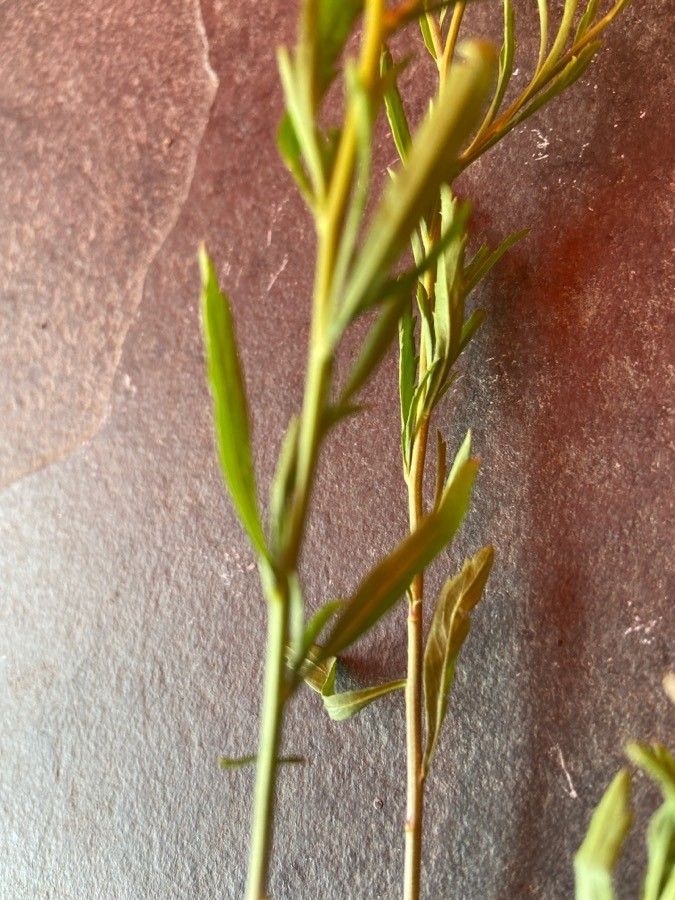
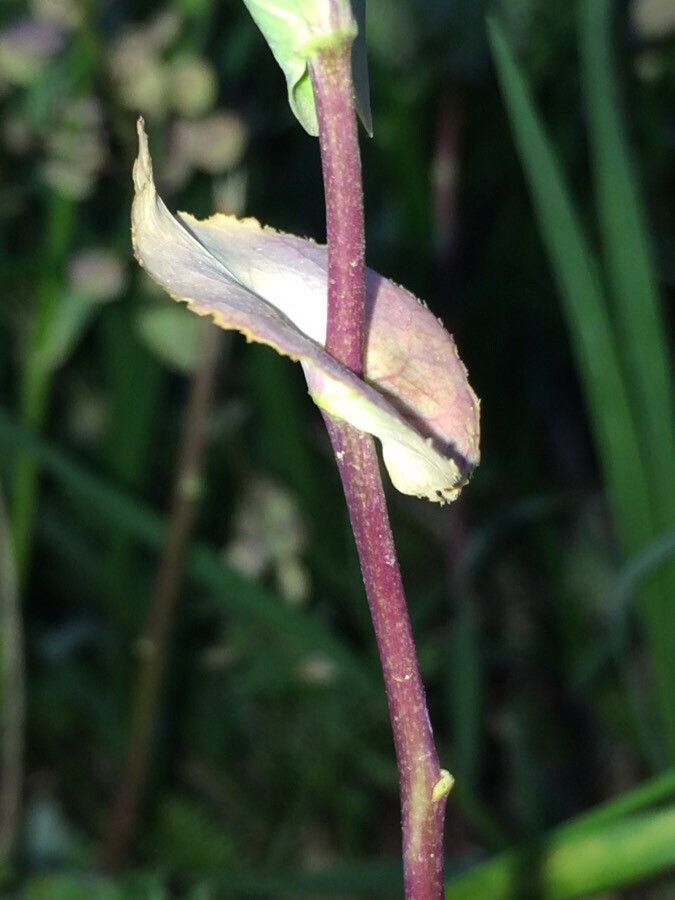
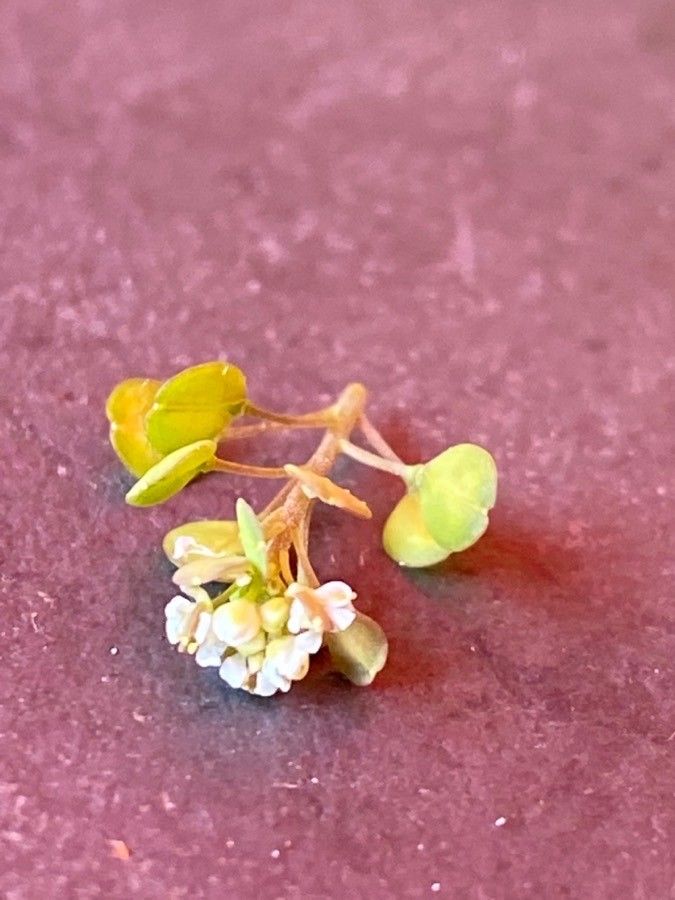
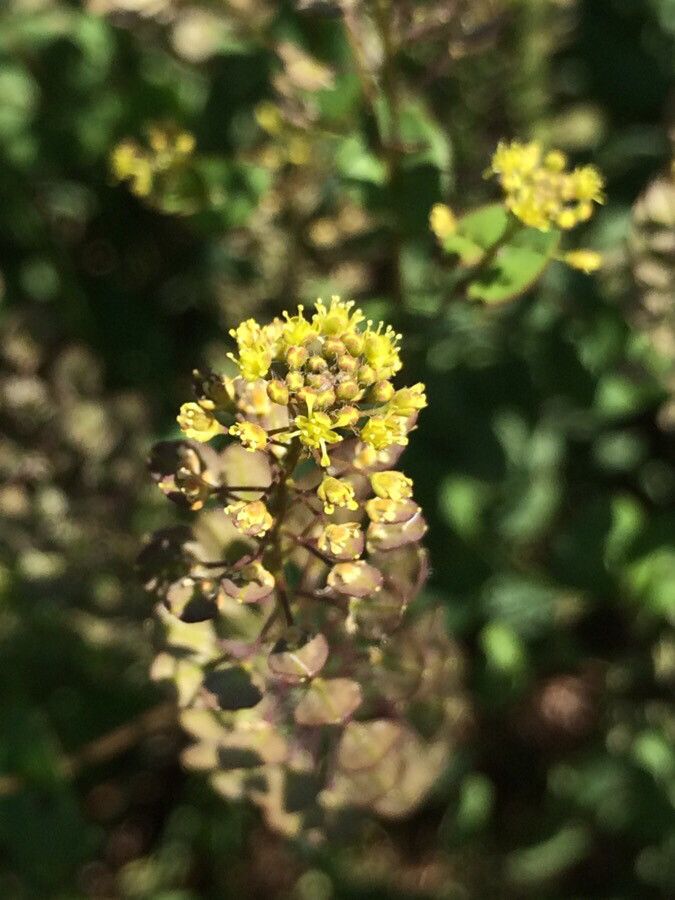
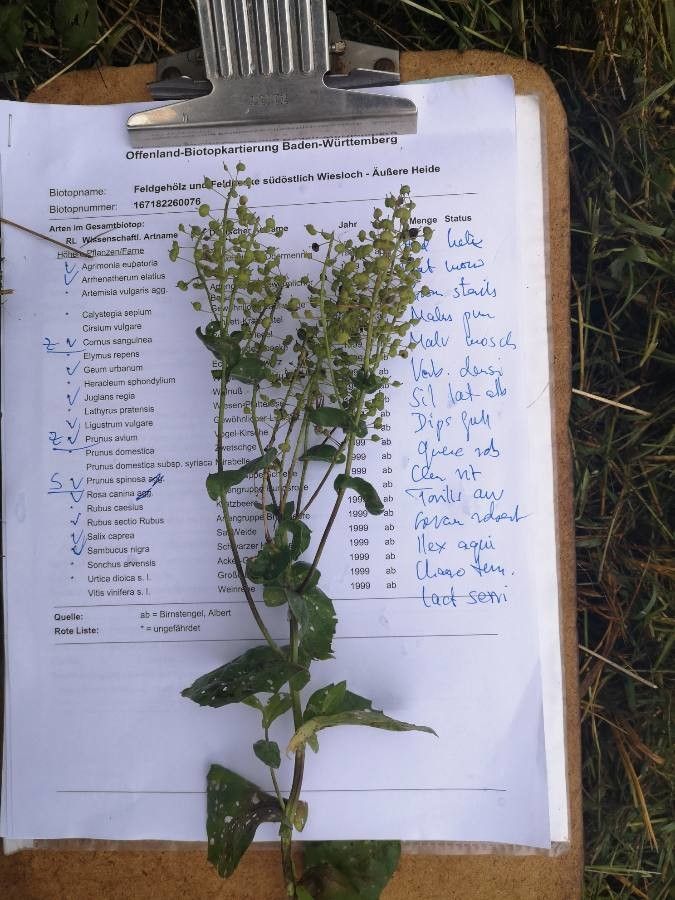
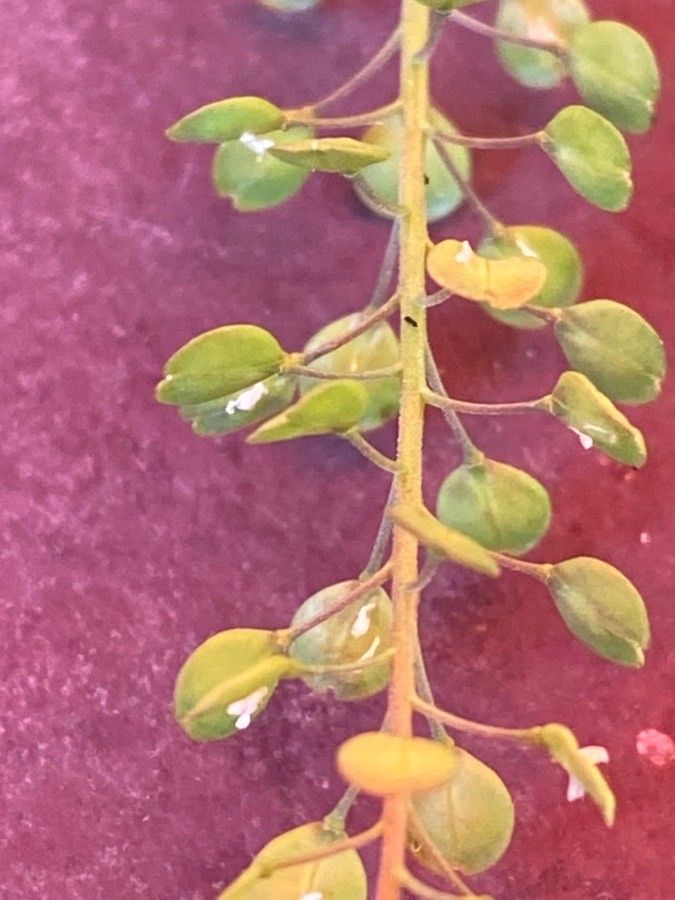
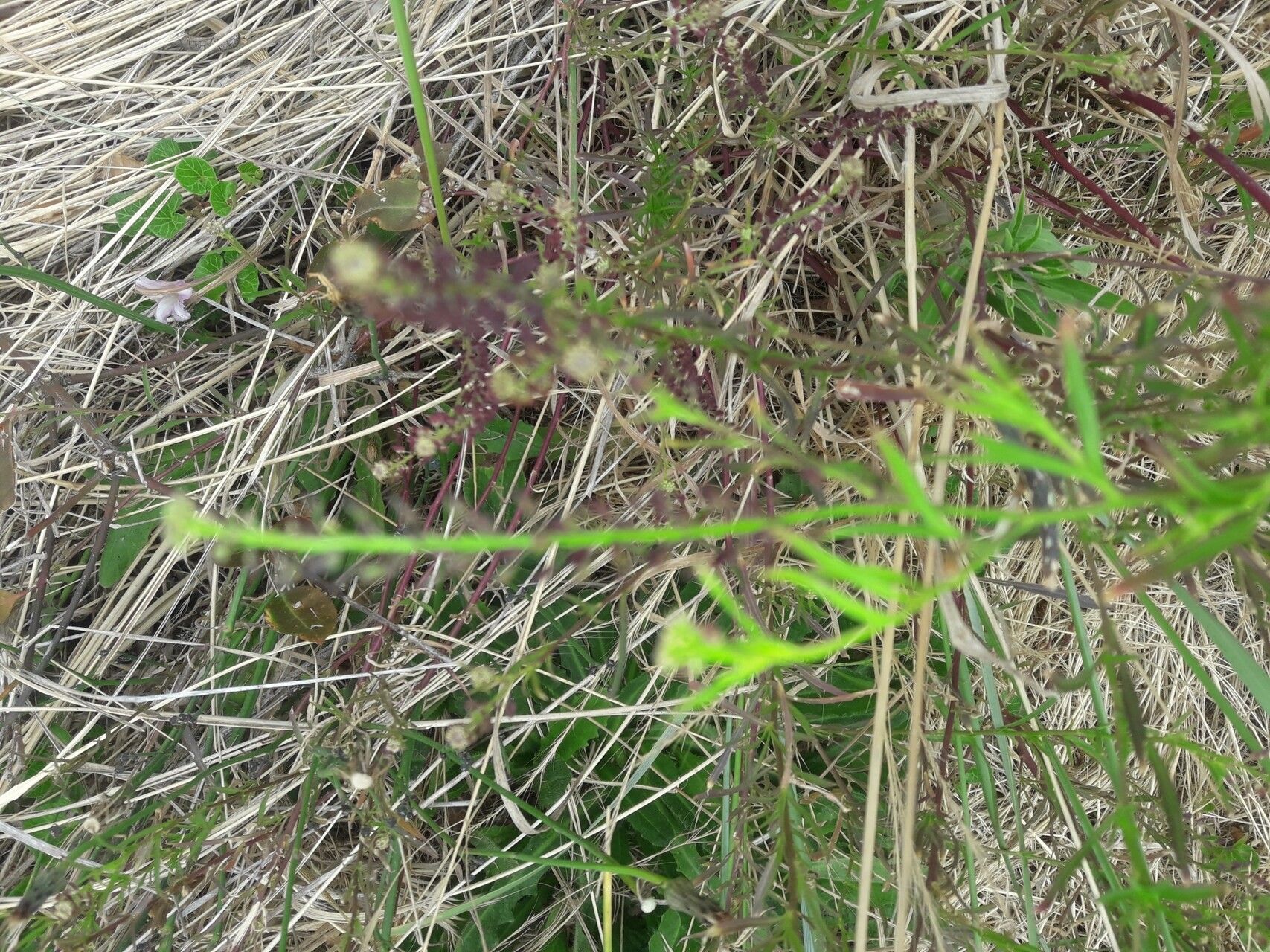
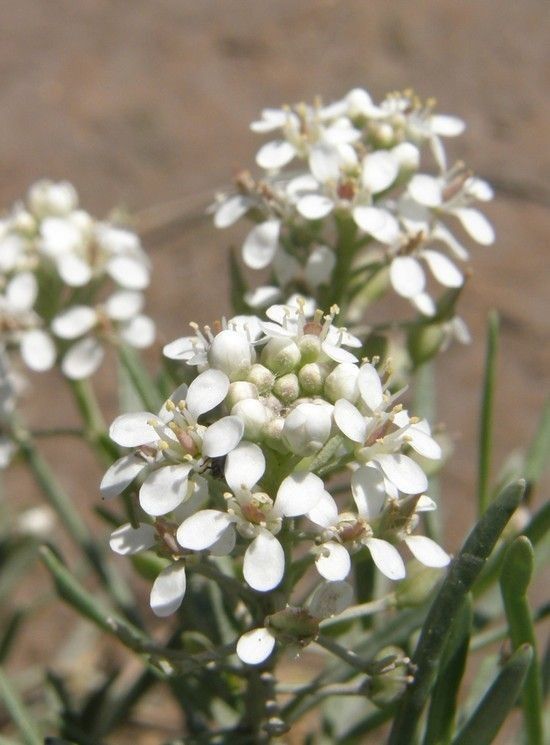
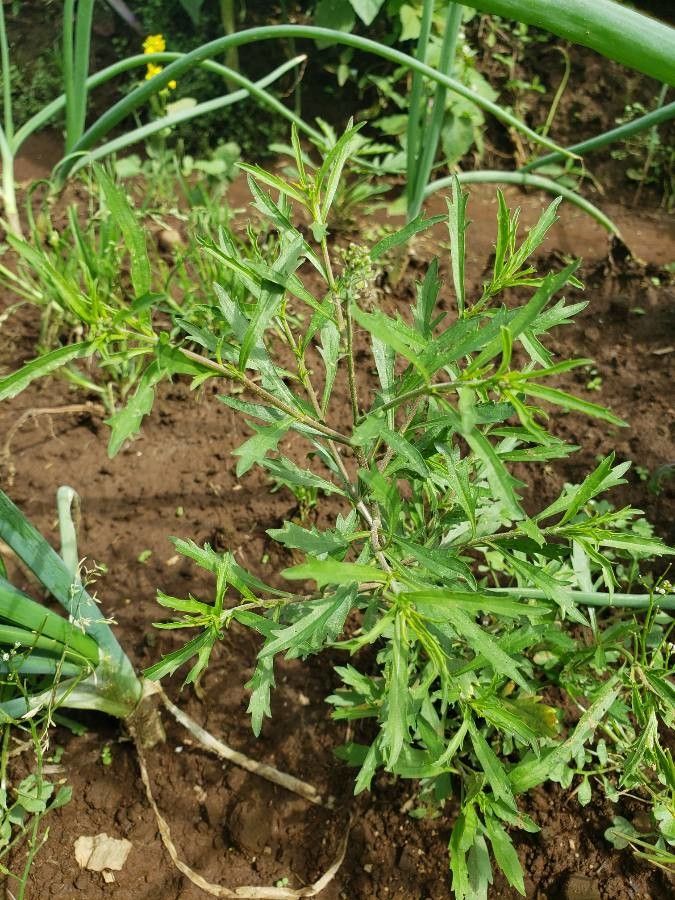
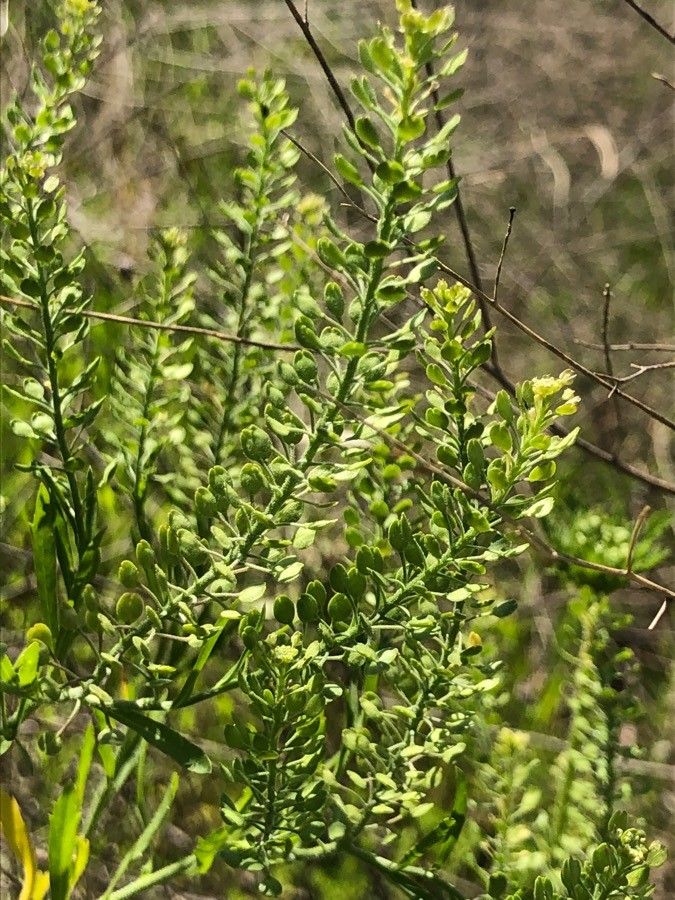
Lepidium perfoliatum is a species of flowering plant in the mustard family known by the common names clasping pepperweed and perfoliate pepperwort. It is native to Europe and Asia and it can be found in other parts of the world as an introduced species. This is an annual or biennial herb producing an erect stem to a maximum height near 60 centimeters. Leaves at the base of the plant are divided into linear lobes, while the leaves higher up on the stem are rounded to oval in shape and surround the stem. The tip of the stem is occupied by an inflorescence of very small flowers, each with yellow petals only 1 or 2 millimeters (0.039 or 0.079 in) long. The fruit is a flattened oval or diamond-shaped capsule about 4 millimeters (0.16 in) long.
Clasping pepperweed has strong disease resistance and is generally not prone to illnesses. Still, it can be vulnerable to pests and diseases present in its environment. Such problems are typically mild. Regarding care, the plant requires a moderate level of maintenance. It should be pruned regularly to preserve its appearance and support healthy growth. Applying fertilizer can also encourage flowering. Clasping pepperweed is suitable for anyone with outdoor space, like a garden or patio, and does not demand extensive gardening experience. It may need more attention if kept indoors.
How to keep Lepidium Perfoliatum.
Light
Clasping pepperweed is native to bright, open habitats and flourishes in full sun. It can tolerate partial shade but prefers direct sunlight for best growth. This plant, which may be annual or biennial, is noted for its sun-loving habit.
Temperature
Clasping pepperweed is acclimated to the temperature conditions typical of its native habitat, approximately 68 to 95°F (20 to 35 ℃). This preferred range should be kept, with adjustments made as seasonal climates change.
Fertilizer
Clasping pepperweed benefits from regular, light applications of fertilizer to encourage healthy leaf development. Fertilize Clasping pepperweed about once a month during the summer. Nitrogen is important for foliage, so supplying nitrogen-rich fertilizer helps Clasping pepperweed thrive.
Pruning
Clasping pepperweed is known for its distinctive leaf bases and peppery flavor. To promote growth and manage its size, prune the plant from early to late spring. Remove any damaged stems and leggy growth to improve air circulation and encourage new growth. Always use clean tools to prevent infections, and refer to horticultural guides for detailed pruning techniques.
Botanical profile.
- Plant Type
- Herb
- Life Cycle
- Annual, Biennial
- Genus
- Lepidium
- Family
- Brassicaceae
- Hardiness Zone
- 5
- Mature Height
- 40 cm
- Mature Spread
- 30 cm
- Leaf Color
- Green, Dark Green
- Leaf Type
- Deciduous
- Flower Color
- Yellow
- Flower Size
- 0.51 cm
- Bloom Time
- Early spring, Mid spring
- Planting Time
- Spring, Summer
- Harvest Time
- Late spring, Early summer
- Native Area
- Turkey, India, Austria, Slovakia, Montenegro, Pakistan, Slovenia, Croatia, Belarus, Uzbekistan, Russia, Iraq, Romania, Tajikistan, Cyprus, Bulgaria, Poland, Armenia, Greece, North Macedonia, Ukraine, Lebanon, Serbia, China, Afghanistan, Syria, Kyrgyzstan, Kazakhstan, Japan, Bosnia and Herzegovina, Iran, Albania, Azerbaijan, Hungary, Turkmenistan
Other names.
Reader questions.
How can I water my Clasping pepperweed at different stages of growth?
Clasping pepperweed goes through different growth stages throughout the year, each stage requiring a different amount of water. When starting with a seed, it is important to provide extra water during the germination phase. This means watering often to keep the soil consistently moist. As the seedling grows and emerges from the soil, it will require slightly less water. Once the plant reaches maturity, a regular watering frequency of about once per week can be established. During the flowering phase, you may need to increase the watering slightly to support the development of the flowers.
What are the sunlight requirements for Clasping Pepperweed?
Clasping Pepperweed thrives in environments with a lot of sunlight. For optimal growth, it requires full sun, which means it needs more than 6 hours of sunlight daily. However, it can also tolerate partial sun, needing about 3-6 hours of sunlight. It's important to observe how sunlight moves through your garden to pick the perfect spots that offer a balance of light and shade, ensuring the plants' well-being.
What is the optimal temperature range for the growth of Clasping pepperweed?
The Clasping pepperweed (Lepidium perfoliatum) thrives in a temperature range between 68 to 95°F (20 to 35°C), which reflects the typical climate of its native environment. It's important to adjust care accordingly with seasonal changes to maintain this optimal temperature range for the plant's well-being.
How do you use artificial lighting for indoor plants?
When natural sunlight is insufficient, especially during winter or in less sunny areas, artificial lighting becomes essential for indoor plants' growth. LED lights are recommended because they can be tailored to provide the specific wavelengths of light that plants require. For full sun plants, 30-50W per square foot is needed; for partial sun plants, 20-30W per square foot; and for full shade plants, 10-20W per square foot. The light source should be placed 12-36 inches above the plant, and most plants will need 8-12 hours of light per day to mimic natural daylight hours.
Does Clasping pepperweed require frost protection during winter?
Clasping pepperweed is highly cold-tolerant and doesn't require additional frost protection measures. However, to prepare for winter, it is advisable to water the plant generously before the first freeze. This ensures the soil remains moist and enters a frozen state, which helps prevent drought and water scarcity for the plant during the winter and early spring months.
What are the common symptoms of light deficiency in Clasping Pepperweed?
When Clasping Pepperweed is cultivated indoors and doesn't receive enough light, several symptoms can occur. These include smaller new leaves, leggy or sparse growth, faster leaf drop, slower or no new growth, lighter-colored new leaves, chlorosis (yellowing of leaves), sunscald, leaf curling, wilting, and leaf scorching. These symptoms indicate that the plant isn't receiving adequate sunlight for its needs.
What happens if Clasping pepperweed is exposed to temperatures below its cold tolerance?
If Clasping pepperweed experiences temperatures below its cold tolerance threshold of -25°C, while there may not be visible damage during the winter, there could be a decline in its ability to sprout or, in some cases, a complete absence of sprouting in the springtime. Should this occur, it is recommended to remove any parts of the plant that have failed to sprout as the weather warms.
What are the solutions for light-deficient Clasping Pepperweed plants?
To support light-deficient Clasping Pepperweed, gradually moving them to sunnier spots where they can receive at least 6 hours of direct sunlight daily is crucial. For indoor plants, this might mean placing them near a south-facing window or using artificial light sources, like desk lamps or professional plant grow lights, for at least 8 hours a day. For outdoor plants, it involves carefully transitioning them to areas with more sunlight to prevent sunburn. Reducing obstructions, such as pruning trees that block sunlight, or transplanting smaller plants to sunnier locations, can also help. Note that parts of the plant already affected might not recover, but new growth should be healthy with increased light exposure.
How does high temperature affect Clasping pepperweed, and what measures should be taken?
Clasping pepperweed is sensitive to high temperatures. Growth will halt if temperatures soar above 35°C, making the plant more vulnerable to rot. To mitigate damage, trim away any sunburnt or dried parts. Moving the plant to a shaded area, or employing a shade cloth during the midday and afternoon sun, can protect it. Additionally, watering the plant in the morning and evening helps keep the soil moist and supports the plant's health under high temperature stress.