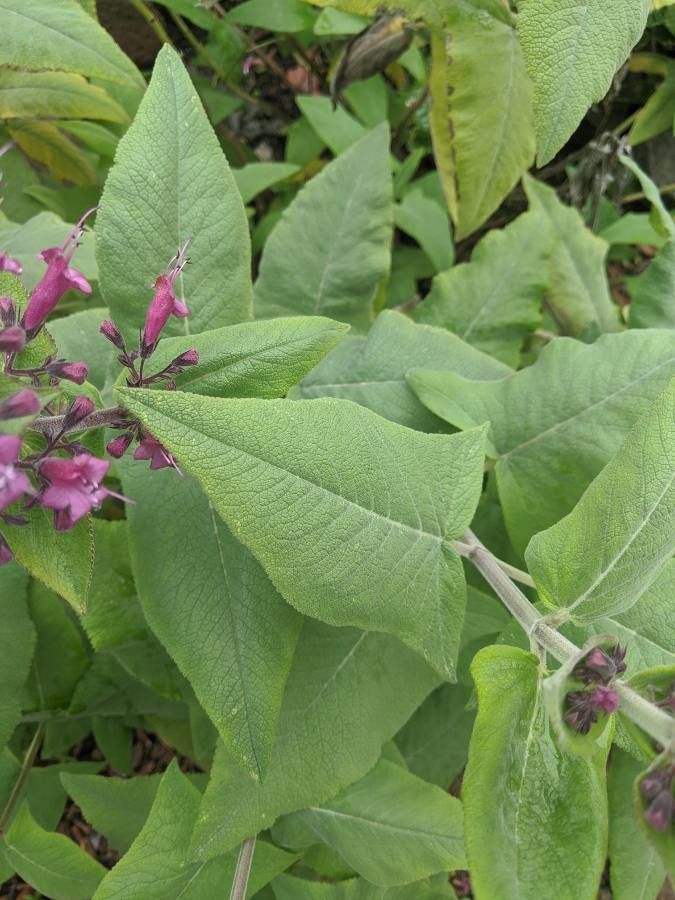
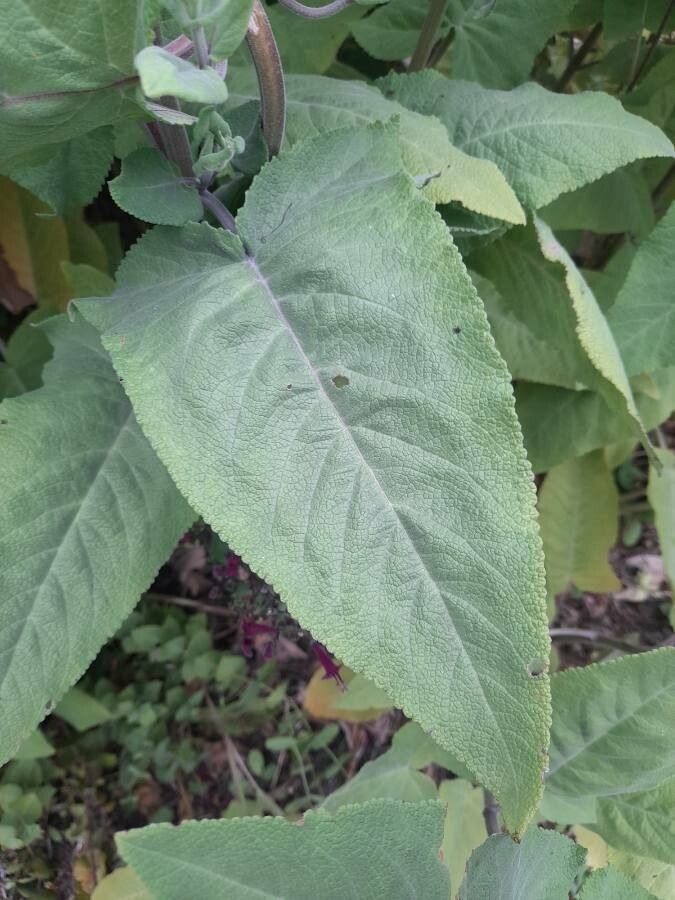
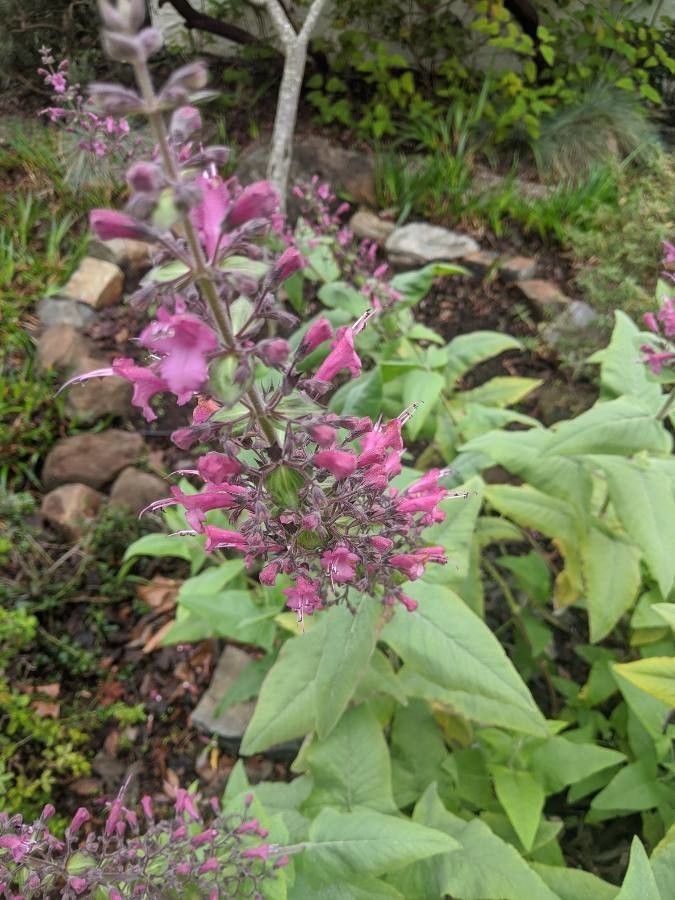
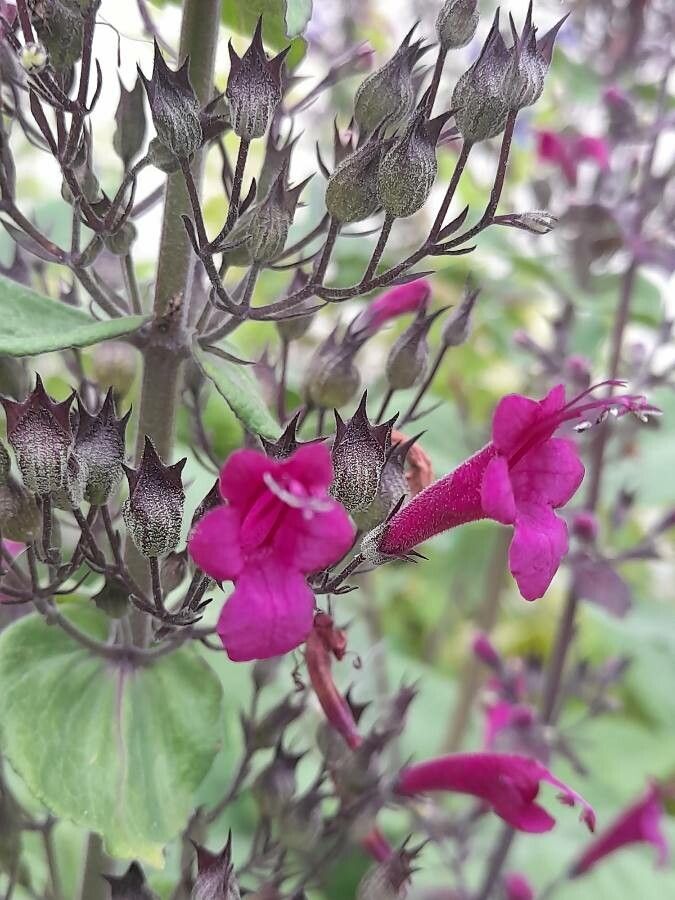
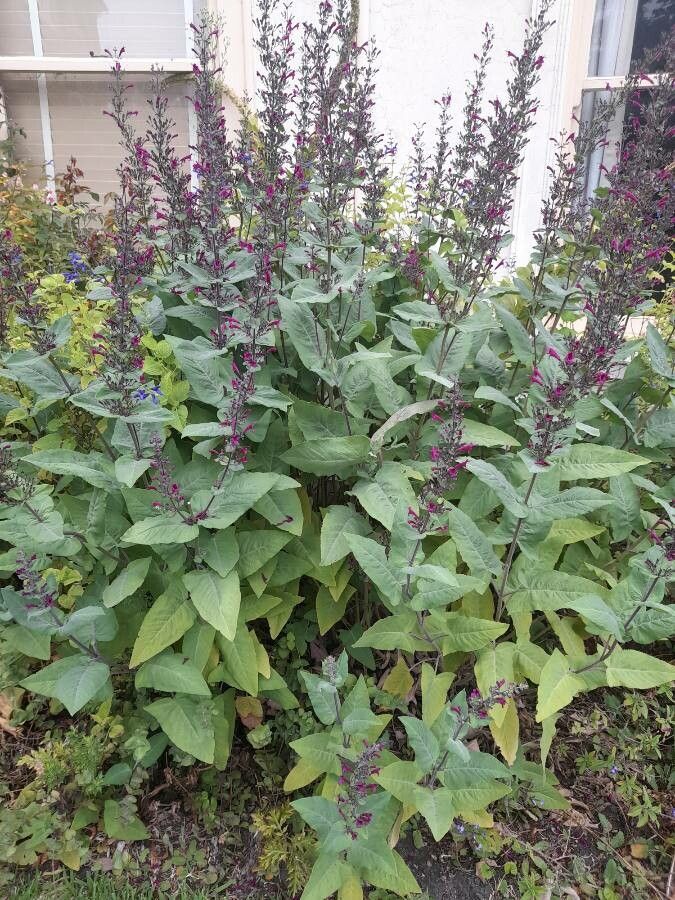
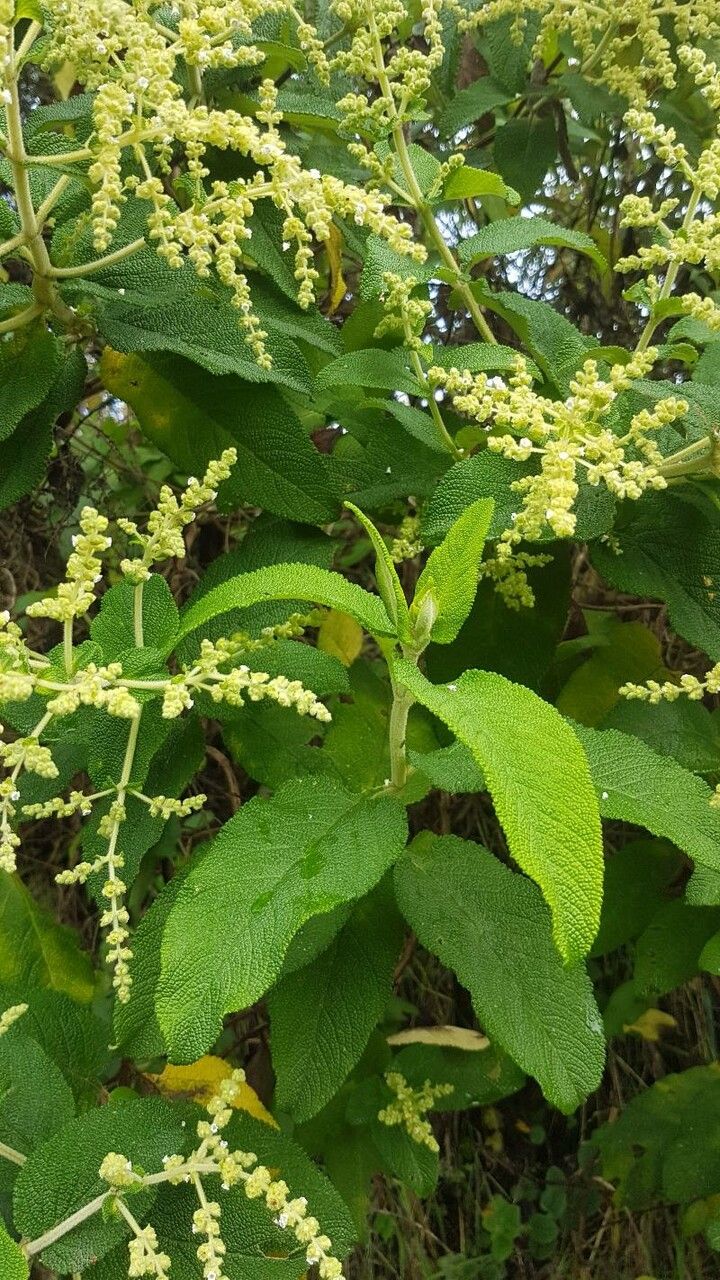
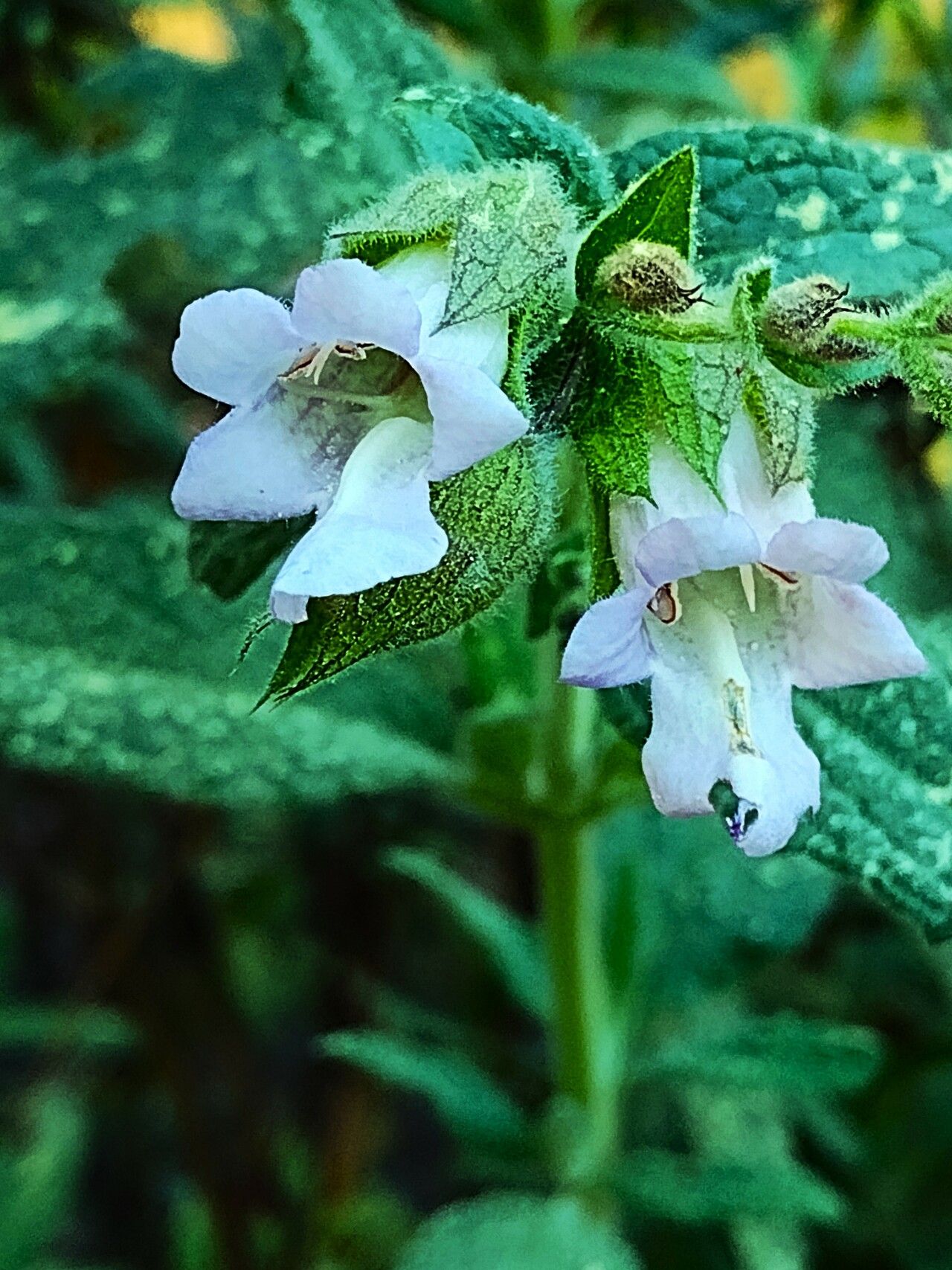
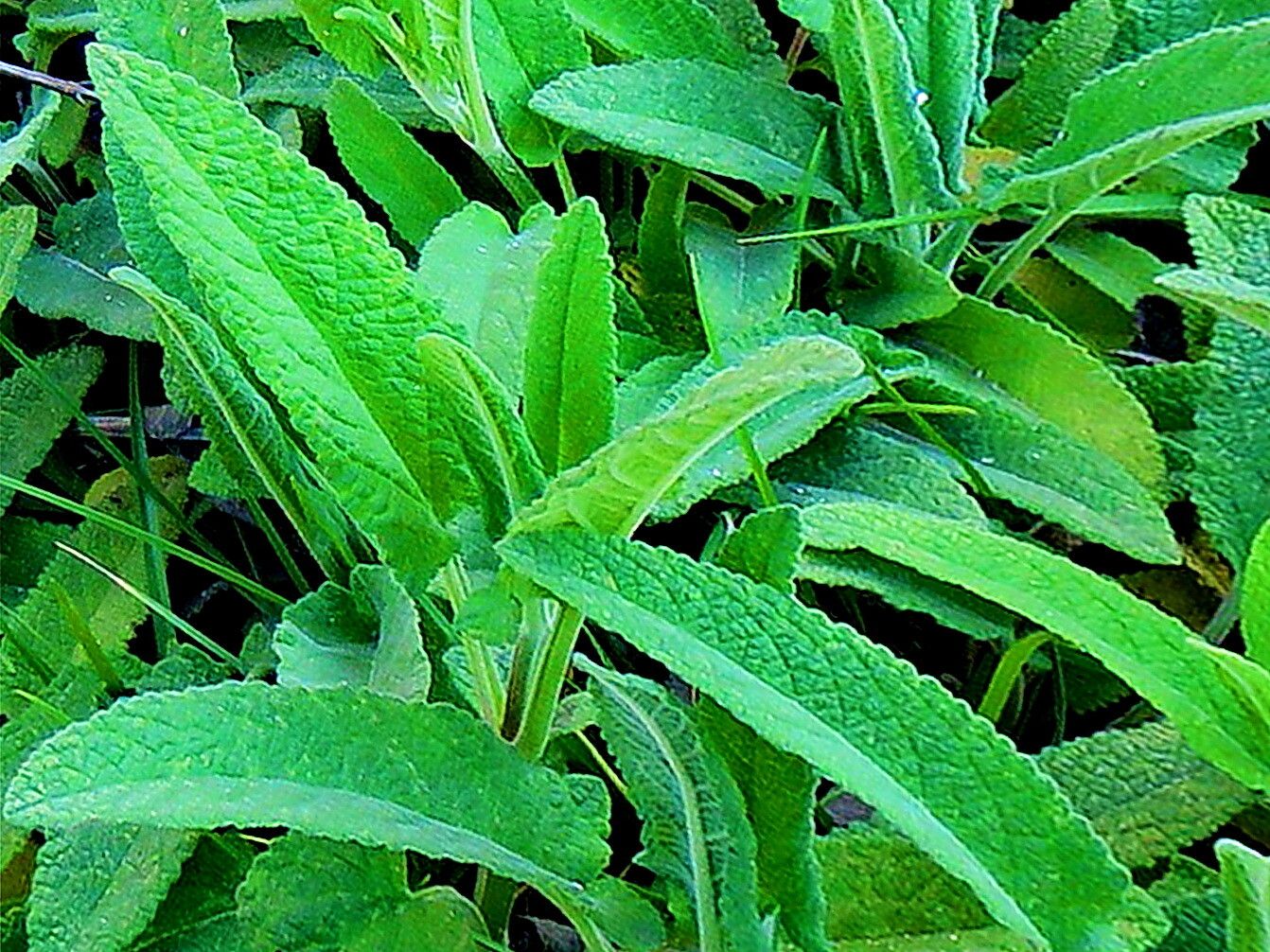
Lepechinia hastata is a rare species of perennial shrub in the mint family commonly known as the Cape pitcher sage or Baja pitcher sage. An aromatic plant, it is characterized by attractive magenta to purple flowers. The plant is slightly woody at the base, and has large arrowhead-shaped leaves. In the wild, it is only known from the forested mountains of the Sierra de La Laguna in Baja California Sur and the volcanic Socorro Island in the Pacific Ocean. The plants of Socorro Island represent their own subspecies. It is also found in the Hawaiian island of Maui where it is known as pakaha. It is unclear if the Hawaiian plants are introduced or represent a natural disjunct population. In horticulture, this plant is a widely-cultivated ornamental. It is one of three species of Lepechinia in the Baja California area, with the other two, Lepechinia ganderi and Lepechinia cardiophylla, found far to the north in drier chaparral habitat.
Pakaha displays good resistance to disease and is generally not susceptible to illnesses. However, it can be affected by pests and diseases present in its surroundings. These infections are usually mild. In terms of care, this plant needs moderate maintenance. It should be pruned regularly to keep a neat appearance and support healthy growth. Fertilizing can also help encourage flowering. Pakaha is suitable for anyone with outdoor space, such as a garden or patio, and does not demand extensive gardening experience. It may need more attention when grown indoors.
How to keep Lepechinia Hastata.
Light
Pakaha is native to habitats like forest understories and rocky areas, where it is subject to natural shade. It prefers partial sun but can adapt to full sun or full shade, reflecting its versatile and hardy character.
Temperature
Pakaha is highly adaptable to a range of climates, from scorching summers to chilly winters. That said, it still has an optimal temperature range for growth. When temperatures get excessively high, the plant can suffer heat and humidity stress that may lead to its death. In areas where temperatures near the lower limit of its cold tolerance, it is important to use insulation to protect the plant.
Fertilizer
Fertilize your Pakaha in early spring to encourage healthy growth. Regular feeding improves overall health, producing vigorous growth, increased resilience to harsh conditions, and enhanced resistance to pests and diseases. Keep a consistent fertilization schedule for your Pakaha to preserve lush, vividly colored foliage and a full appearance.
Botanical profile.
- Plant Type
- Shrub, Herb
- Life Cycle
- Perennial
- Genus
- Lepechinia
- Family
- Lamiaceae
- Hardiness Zone
- 9-11
- Mature Height
- 0.61 m to 1.22 m
- Mature Spread
- 61 cm to 91 cm
- Leaf Color
- Green, Dark Green
- Leaf Type
- Evergreen
- Flower Color
- Purple, Lavender
- Flower Size
- 2.03 cm to 3.05 cm
- Bloom Time
- Summer, Early fall, Mid fall
- Planting Time
- Summer, Autumn
- Harvest Time
- Late summer, Fall, Early winter
Other names.