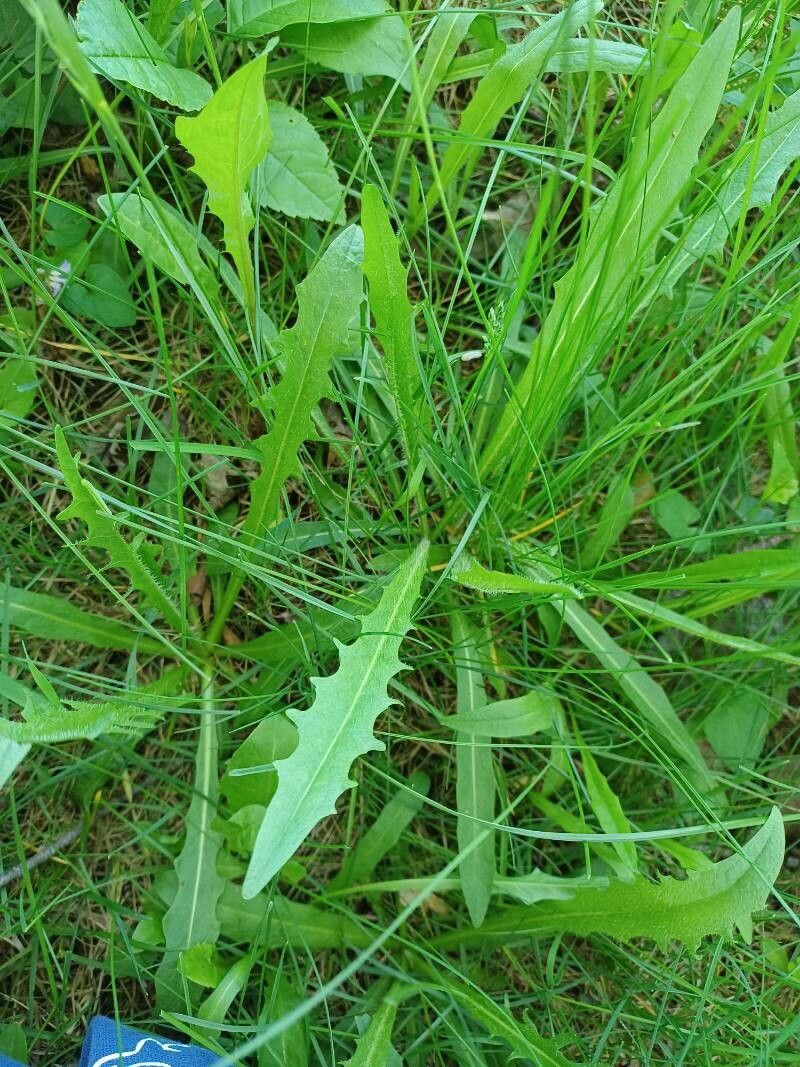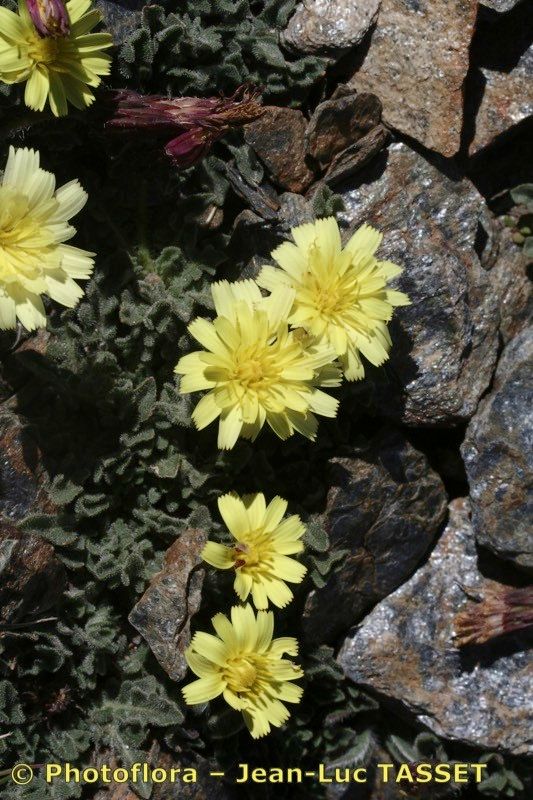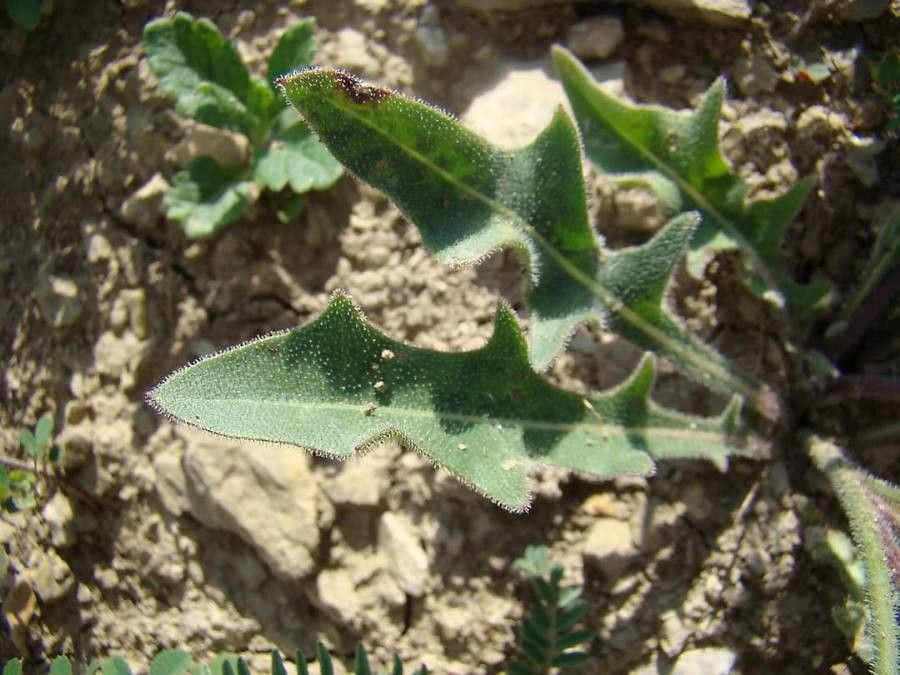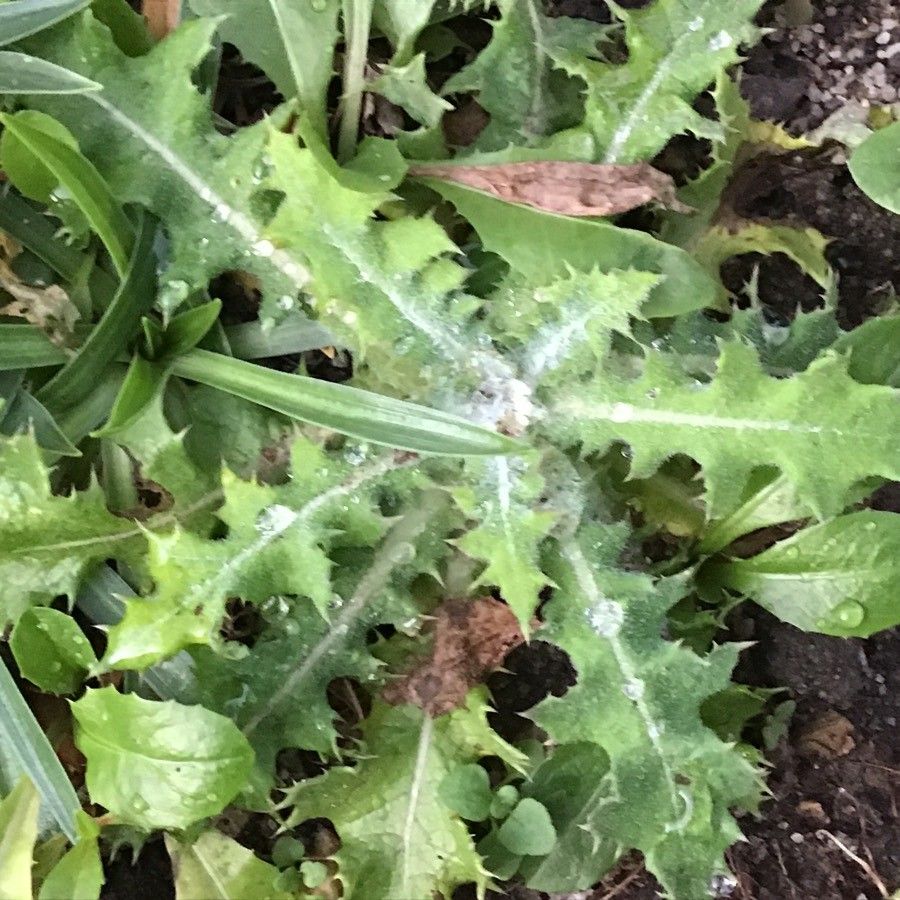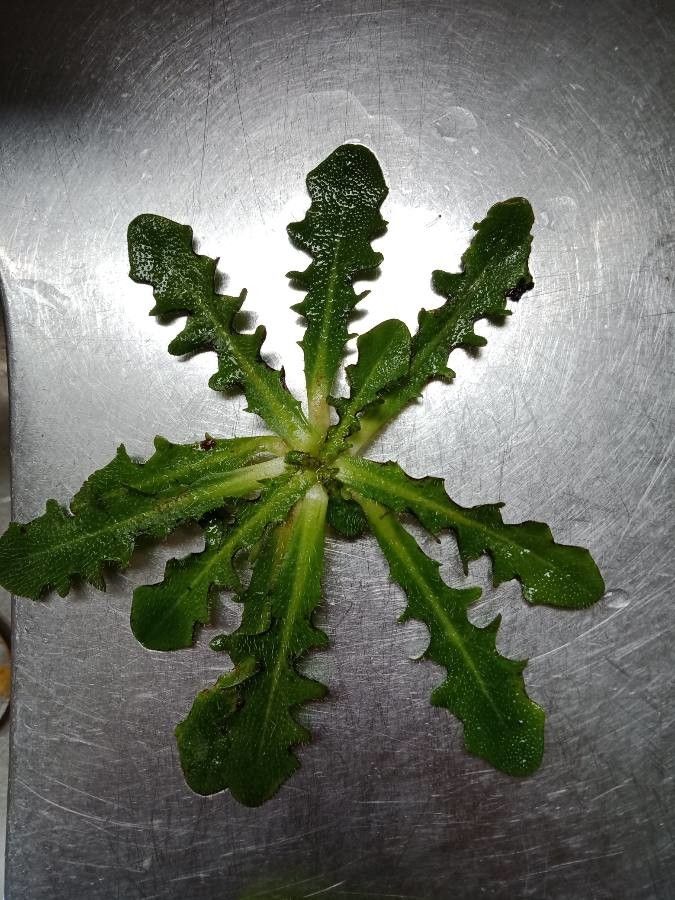
Leontodon saxatilis is a species of hawkbit known by the common names lesser hawkbit, rough hawkbit, and hairy hawkbit. It is native to Europe and North Africa but can be found in many other places across the globe as an introduced species and often a noxious weed. This is a dandelion-like herb growing patches of many erect, leafless stems from a basal rosette of leaves. The leaves are 2 to 15 centimeters long, 0.5 to 2.5 centimeters wide, entire or lobed, and green in color. Atop the stems are solitary flower heads which are ligulate, containing layered rings of ray florets with no disc florets. The florets are yellow with toothed tips. The fruit is a cylindrical achene with a pappus of scales. Fruits near the center of the flower head are rough, while those growing along the edges of the head are smooth.
Lesser hawkbit is fairly resistant to disease and generally not prone to illnesses. Nonetheless, it can be affected by pests and diseases present in its environment. These problems are typically mild. For care, this plant requires moderate maintenance. It should be pruned regularly to preserve a neat appearance and encourage healthy growth. Fertilizing can also aid in promoting flowering. Lesser hawkbit is well suited to people with outdoor spaces like a garden or patio and does not demand extensive care experience. It may need more attention when kept indoors.
How to keep Leontodon Taraxacoides.
Light
The lesser hawkbit is native to bright, uncovered areas where it flourishes under direct sunlight. While it can withstand semi-shaded environments, its preference is for full sun exposure for the best growth. This plant, which is an annual and biennial, is renowned for its fondness for sunlight.
Temperature
Lesser hawkbit can tolerate a wide range of temperatures, but its distribution may still be restricted by particular combinations of moisture and heat. It does best in warm summer climates with sufficient rainfall or watering. Extended spells of cloudy, rainy weather, as well as prolonged high temperatures, can raise the chance of Lesser hawkbit dying. In winter, adequate protection from cold can increase the plant’s survival rate.
Fertilizer
Lesser hawkbit are often seen as high consumers when it comes to nutrients. Regular and moderate administration of nitrogen and potassium fertilizers, as well as intermittent applications of micronutrients, sulfur, phosphorus, and magnesium are required for sustaining healthy growth and vivid coloration. Consistent fertilization throughout the growth period is necessary to prevent signs of deficiency and to uphold maximum growth.
Botanical profile.
- Plant Type
- Herb
- Life Cycle
- Biennial, Perennial
- Genus
- Leontodon
- Family
- Asteraceae
- Hardiness Zone
- 5-9
- Mature Height
- 10 cm to 30 cm
- Mature Spread
- 15 cm to 25 cm
- Leaf Color
- Green
- Leaf Type
- Semi-evergreen
- Flower Color
- Yellow
- Flower Size
- 1.52 cm to 2.54 cm
- Bloom Time
- Late spring, Summer, Fall
- Planting Time
- Spring, Summer
- Harvest Time
- Summer, Fall, Early winter