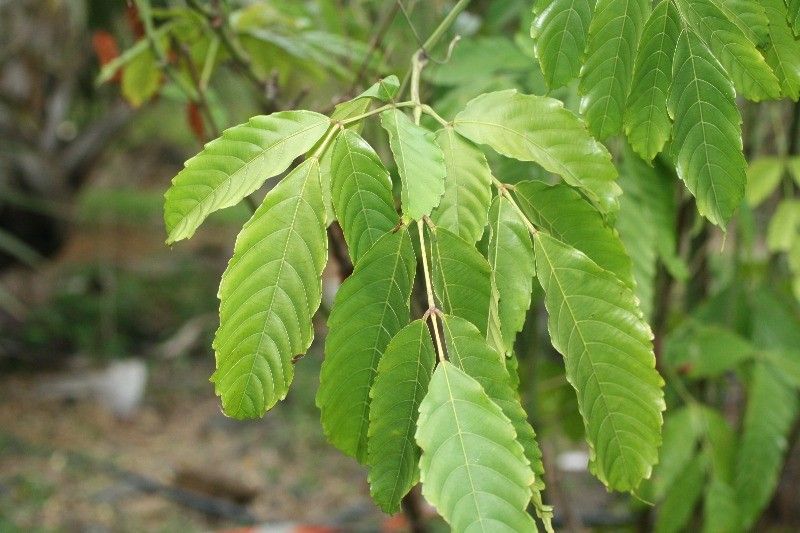
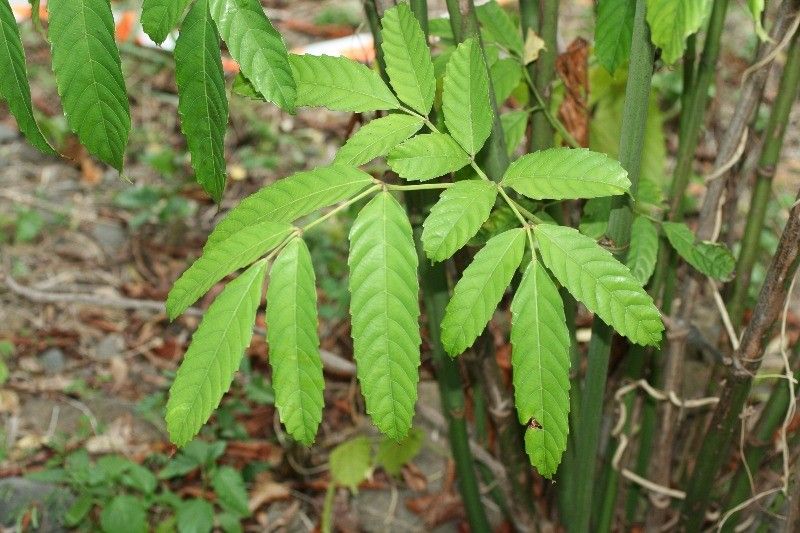
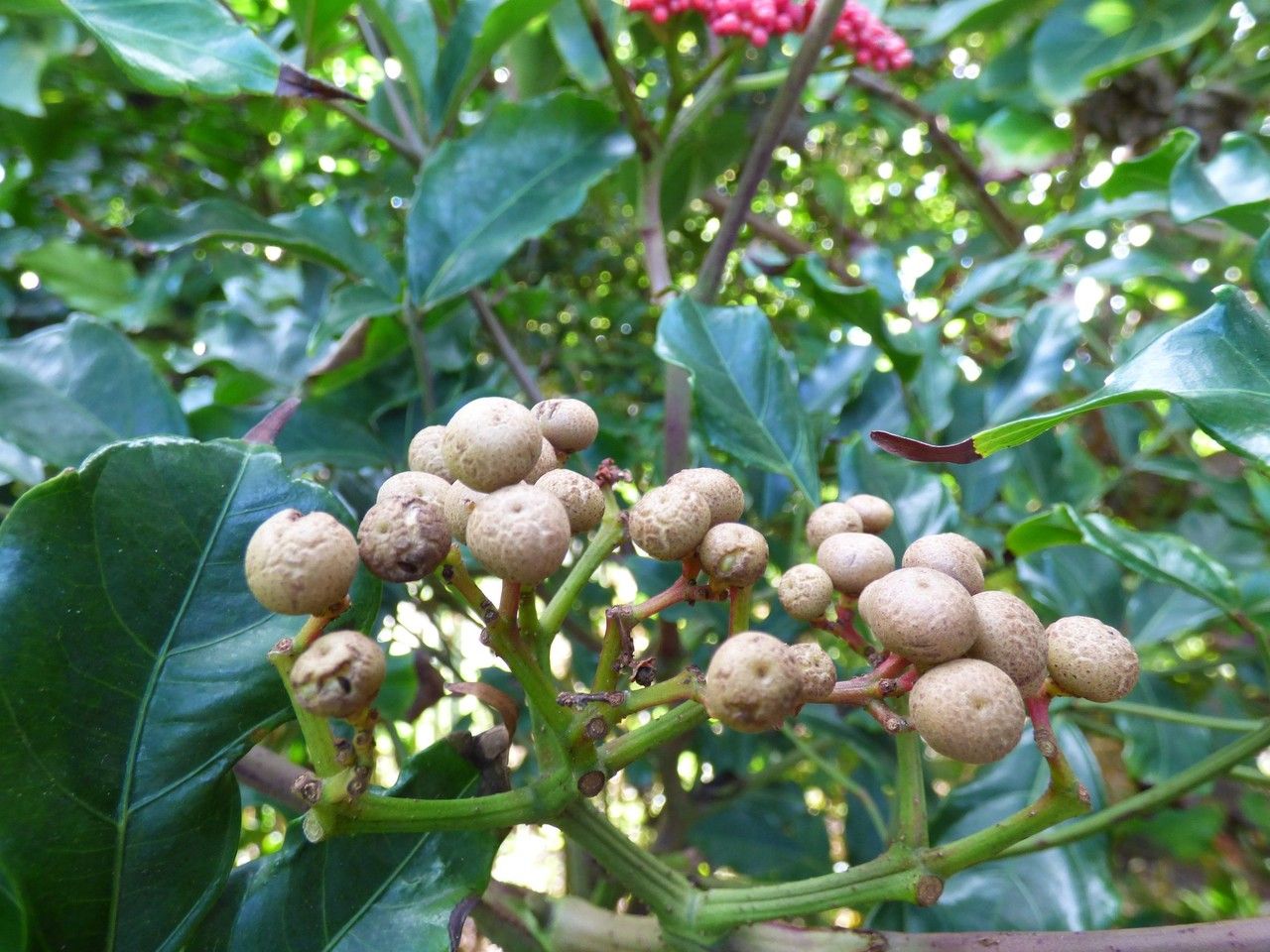
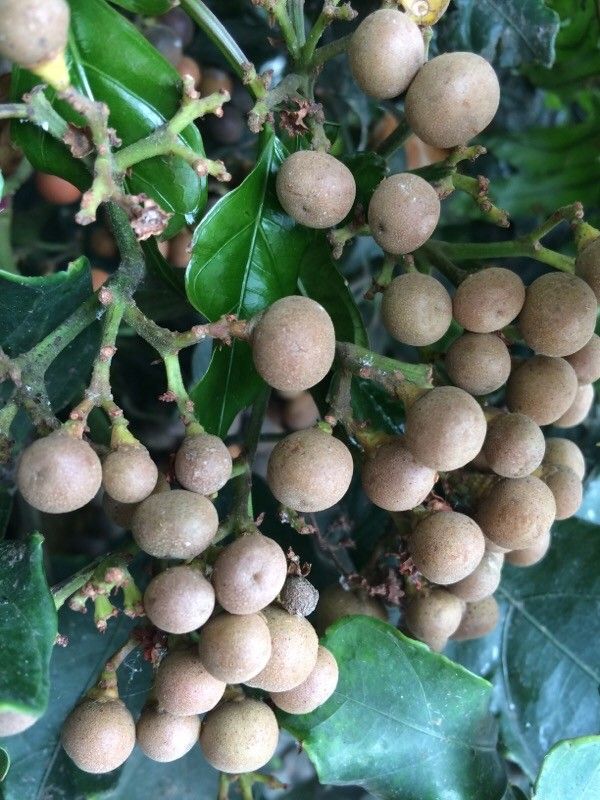
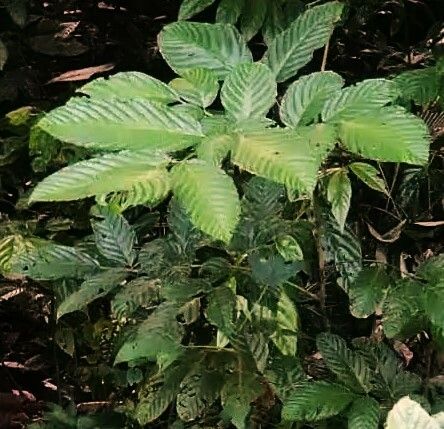
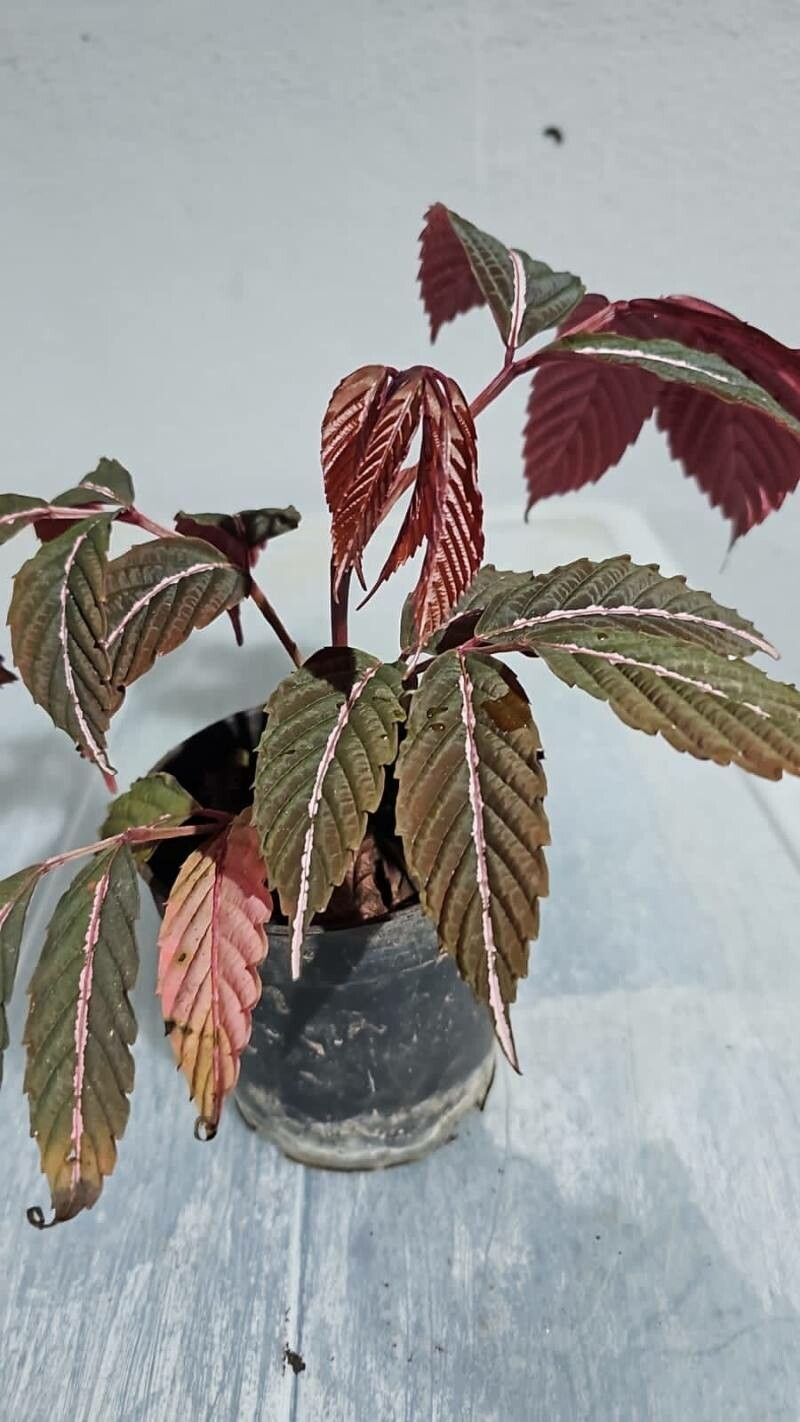
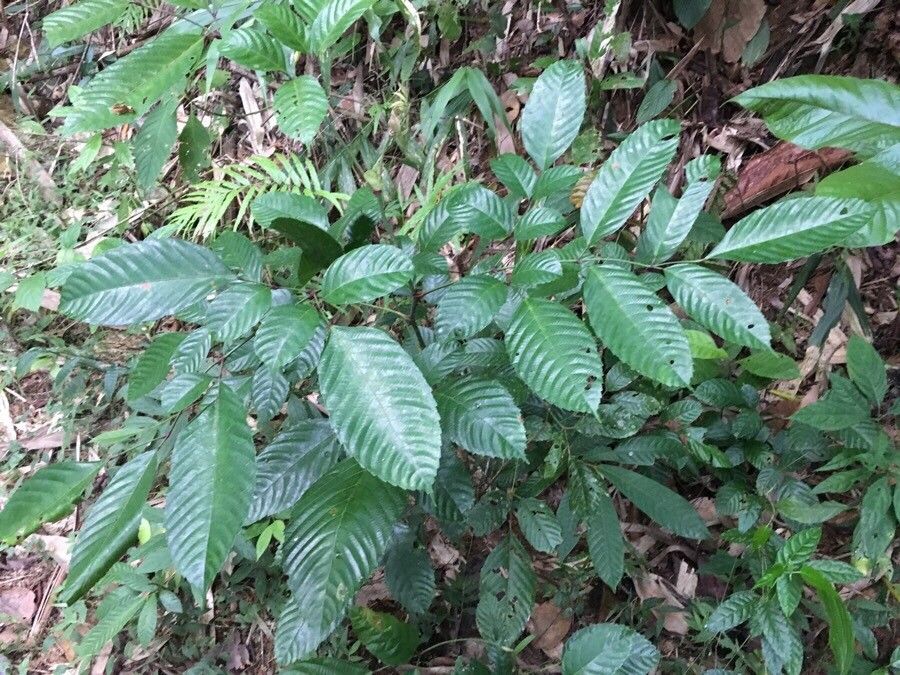
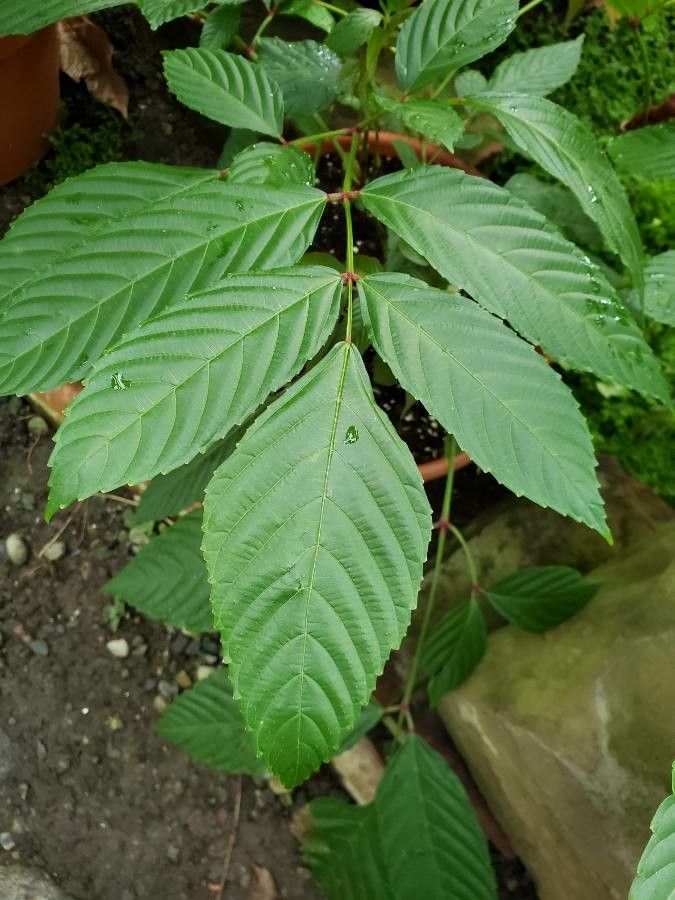
Leea guineensis is a tropical plant species in the family Leeaceae, commonly known as West African Holly or Red Leea due to its striking red leaves. Native to West Africa, it can be found in countries such as Nigeria, Cameroon, and Ghana.
This plant can grow up to 3 meters tall and features a woody stem with large, deeply lobed leaves. The leaves are bright green when young but turn red as they mature, making it an attractive ornamental choice for gardens.
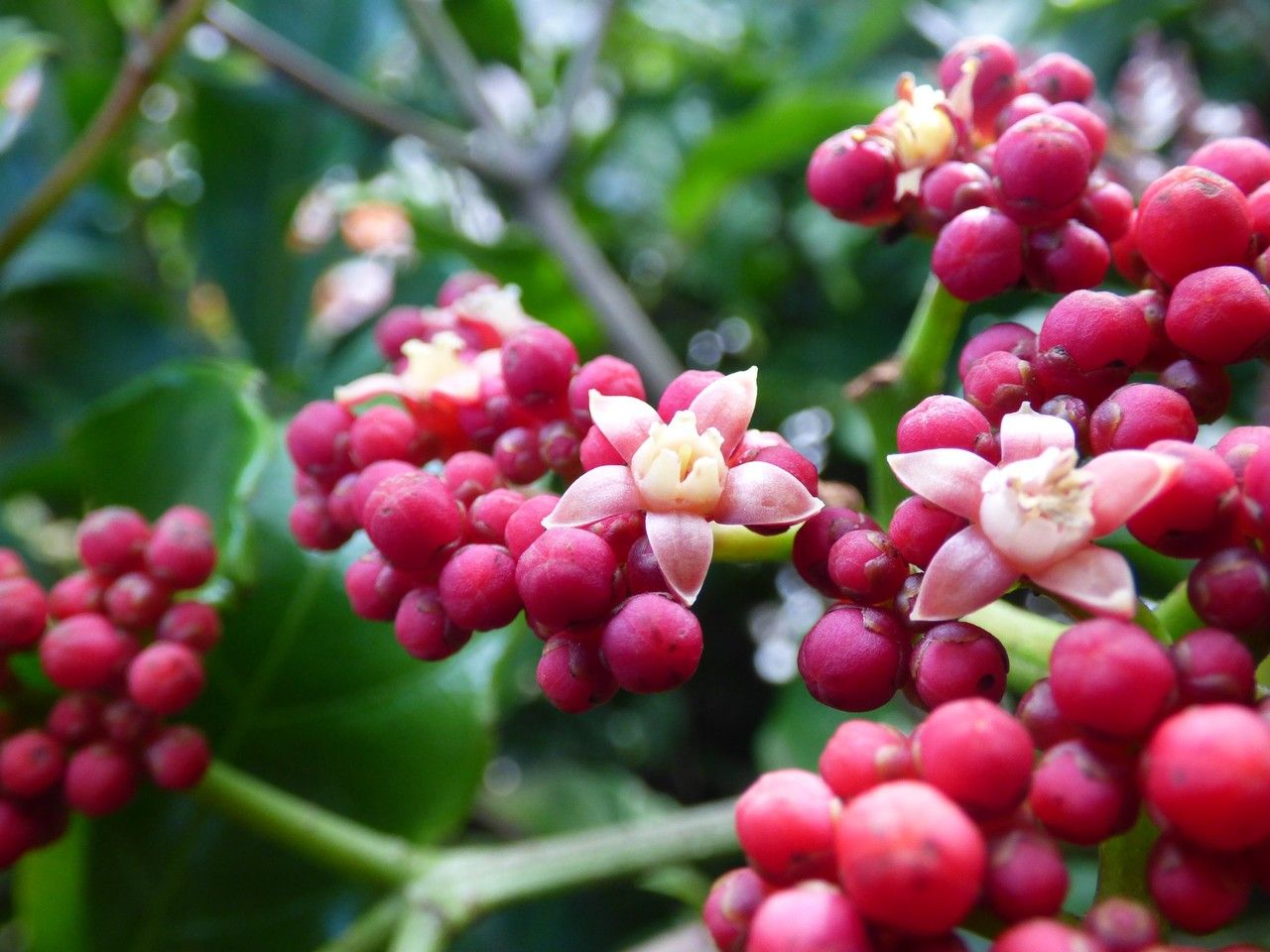
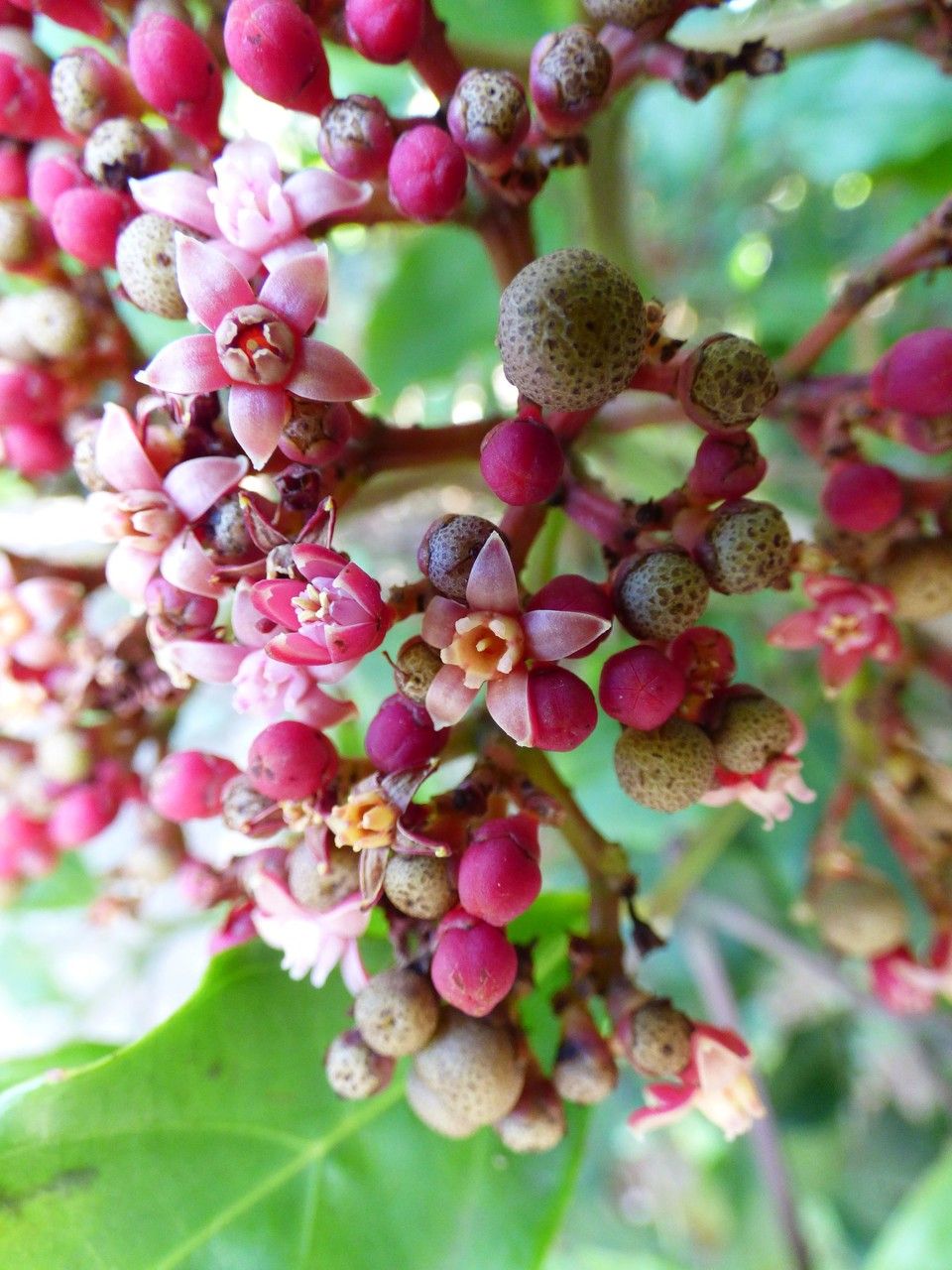
The flowers of Leea guineensis are small and greenish-yellow, arranged in clusters at the ends of branches. The plant produces small berries that turn from green to black when ripe.
Leea is commonly used in traditional medicine, primarily for treating skin diseases and headaches. Contemporary scientific studies are investigating the various beneficial compounds found in Leea. Recent research suggests that it may have potential anticancer properties and could be useful in treating anxiety and stress. FUN FACT · FROM THE LIBRARY
Leea guineensis has been used for centuries by traditional healers in Africa for its anti-inflammatory properties. It also has applications in traditional African cuisine.
In summary, Leea guineensis is a visually appealing tropical shrub with vibrant red foliage. Found throughout West Africa, it is valued not only for its ornamental beauty but also for its medicinal properties, making it an important plant in traditional practices across the region.
The bandicoot berry, scientifically known as Leea guineensis, produces edible dark-purple berries that are commonly consumed by bandicoots in the wild. Bandicoots, a type of rat, are native to the Australia–New Guinea region. As omnivores, bandicoots eat a variety of foods, but they frequently feed on plant materials such as seeds, roots, and berries.
Leea displays strong resistance to disease and is usually not susceptible to illnesses. Regarding care, this plant is fairly low-maintenance. Planted outdoors, it needs only minimal watering, and larger specimens typically do not require pruning. However, smaller plants should be pruned after they have finished blooming. Leeat is well suited to anyone with an outdoor area, such as a garden or deck, and does not need extensive plant-care experience.
How to keep Leea Guineensis.
Light
Leea does well in locations that receive a generous amount of sunlight, although it can still grow in less sunny spots. Too much or too little sun can harm its growth. Originating from a habitat with considerable shade, its different growth stages generally face varying light conditions.
Water
Leea, a plant native to humid environments, thrives best with moderate moisture and consistent humidity. To mimic its tropical climate and encourage vibrant foliage typical of rainforest plants, water it every 2-3 weeks and mist it regularly.
Temperature
Leea comes from tropical areas, where the climate is generally warm and humid. Consequently, it is well adapted to high temperatures and moisture. It does not tolerate sudden temperature shifts and prefers a stable thermal environment, so avoiding temperature fluctuations indoors is important. It usually cannot endure cold conditions and needs higher temperatures to grow. If the surrounding temperature drops too low, the plant may stop growing or even die.
Fertilizer
The best time to fertilize a Leea is in early spring as it comes out of dormancy. This encourages overall growth and development of flowers. Fertilizing improves the foliage, stems, and branches, and promotes flowers that are large, vibrant, and long-lasting. It helps move nutrients from the roots to the flowers and enhances the plant’s health and resistance to disease.
Pruning
Prune leea plants in early to late winter while they are dormant. Remove up to one-third of the dead or overcrowded branches to promote growth and improve air circulation. Regular pruning encourages branching and flower production while maintaining the plant's natural shape for optimal aesthetics.
Botanical profile.
- Plant Type
- Tree, Shrub
- Life Cycle
- Perennial
- Genus
- Leea
- Family
- Vitaceae
- Hardiness Zone
- 10-12
- Mature Height
- 1.52 m to 6.1 m
- Mature Spread
- 1.22 m to 2.44 m
- Leaf Color
- Green
- Leaf Type
- Evergreen
- Flower Color
- White, Yellow, Red, Orange
- Flower Size
- 1.02 cm to 2.03 cm
- Bloom Time
- Early summer, Mid summer
- Planting Time
- Spring
- Harvest Time
- Mid summer, Late summer, Early fall
- Native Area
- Burkina Faso, India, Malaysia, Angola, Madagascar, Rwanda, Nigeria, Kenya, Uganda, Tanzania, Guinea-Bissau, Benin, Mali, Sierra Leone, Indonesia, Cambodia, Equatorial Guinea, Liberia, Cameroon, Burundi, Ghana, Congo, Nepal, Malawi, Central African Republic, Philippines, Zambia, Sudan, Laos, Guinea, China, Vietnam, Myanmar, Togo, Bhutan, Côte d'Ivoire, Congo (DRC), Thailand, Gabon
Other names.
Reader questions.
What's the difference between watering my Leea plant inside or outside?
Depending on its location and your climate, your Leea may or may not require supplemental watering when grown outdoors. If you live in an area with little rain, you should water the plant every two weeks. If you reside outside the plant's natural hardiness zone, it is best to grow it indoors. However, when growing indoors, you should be mindful of the soil moisture as it can dry out faster in containers or when exposed to HVAC units like air conditioners. In such cases, you may need to water the plant more frequently compared to when it is grown outdoors.
When should I fertilize my Leea plant for best results?
Ensuring proper timing is essential when fertilizing Leea. If applied too early, when the plant is still dormant, the fertilizer will not be effective and will be washed away by rainwater, resulting in waste and pollution. To begin, apply the first dose of fertilizer during early spring. Then, continue fertilizing once every month until early summer.
What are the sunlight requirements for Leea plants?
Leea plants require about 3-6 hours of sunlight (partial sun) and can also thrive in full shade, which is less than 3 hours of sunlight. Observing the movement of sunlight in your garden is crucial to find the ideal balance of light and shade for your plants. While Leea thrives in environments with substantial sunlight, it can grow in less sunny areas as well. However, both excess and scarcity of sunlight can be harmful to its growth.
What is Leea guineensis?
Leea guineensis, often simply referred to as Leea, is a species of plant. Detailed information including its essentials, symptoms, and additional aspects has not been provided or is not available.
How should I water my Leea?
Your Leea plant isn't too particular about how you water it, so you can use almost any common watering tool. Watering cans, hoses, or even cups are all suitable options. Regardless of the tool you choose, it's best to apply the water directly to the soil. Make sure to evenly moisten all areas of the soil to provide water to the entire root system. Filtered water is recommended as tap water may contain harmful particles. It's also beneficial to use water that is at or slightly above room temperature since extremely cold or hot water can be a bit shocking for the Leea plant. However, the Leea plant generally responds well to any type of water you give it.
Why should I put fertilizer on my Leea?
Fertilizing a Leea is important for various reasons. Firstly, it enhances the production of beautiful blooms in the plant. Secondly, applying fertilizer in early spring ensures excellent flowers during that season. Additionally, fertilizer provides the Leea with abundant energy that it can store in the ground during its dormant growth phases. By providing extra nutrients during the fall planting or late spring, the Leea can store more energy to utilize once active growth resumes.
How can artificial lighting be used for Leea plants?
Artificial lighting is essential for indoor Leea plants when natural sunlight is insufficient, especially during winter or in less sunny spaces. LED lights are recommended because they can provide specific wavelengths needed for plant growth. The amount of artificial light required varies: full sun plants need 30-50W/sq ft, partial sun plants need 20-30W/sq ft, and full shade plants need 10-20W/sq ft. The light source should be placed 12-36 inches above the plant and be kept on for 8-12 hours per day to mimic natural sunlight.
What should I do if I give my Leea plant too much water or too little water?
Outdoor plants, especially newly planted ones or seedlings, are prone to lack of watering. Remember to water them sufficiently for a few months when they are small or just planted. Once the roots are established, they can rely on rain most of the time. When Leea plants are in pots, overwatering is more likely. If you accidentally overwater your Leea, take immediate action to fix the situation. First, stop watering the plant to minimize the effect of overwatering. Then, remove the Leea from its pot to check the roots. If there is no sign of root rot, you can put the plant back in its container. If you do find root rot, trim any affected roots and apply a fungicide to prevent further damage. Finally, repot the Leea in well-draining soil. On the other hand, underwatering a Leea is easily remedied. When the plant is underwatered, its leaves will droop, dry out, and fall off. After sufficient watering, the leaves will quickly return to their usual fullness. Make sure to adjust your watering frequency accordingly when underwatering occurs.
When is the best time to not fertilize my Leea?
To best care for Leea, it's important to avoid excessive nitrogen in the fertilizer. Too much nitrogen can result in an abundance of leaves but few blooms. Instead, choose a fertilizer with a lower nitrogen content compared to other nutrients. Additionally, refrain from fertilizing Leea during late autumn to prevent excessive growth right before winter. Similarly, avoid fertilizing during hot and dry periods since dry soil is not as effective at delivering nutrients. Fertilizing during these times can stimulate growth that requires more water, which may not be readily available. It's preferable to apply fertilizer earlier in the season when temperatures are cooler. Lastly, be mindful that Leea can absorb fertilizer from nearby plants or lawns, so be cautious about accidentally giving the tree or shrub a double dose of fertilizer.
What are the symptoms of inadequate light for Leea plants?
When Leea plants do not receive enough light, they may exhibit symptoms such as smaller new leaves, leggy or sparse growth, faster leaf drop, slower or no new growth, lighter-colored new leaves, chlorosis (leaves losing their green color), sunscald (damage from intense sunlight), leaf curling (to minimize water loss), wilting (due to excessive transpiration), and leaf scorching (brown, dry edges on leaves). These symptoms indicate insufficient sunlight and can affect the plant's overall health.
How often do I need to water my Leea?
If you have plants growing outdoors, they can usually rely on rainfall for their water needs. However, if you live in an area with limited rainfall, you'll need to water your plants every 2 weeks in the spring and fall. In the summer, you'll need to water more frequently, and in the winter, when plants need less water, you can water less often or even not at all. If you have a young or newly planted Leea, you should water it more often to help it establish and grow. For potted plants, there are two main ways to determine how often to water your Leea. The first is to set a regular watering schedule, but keep in mind that this may not always work for your specific growing conditions. The second option is to water based on the moisture level of the soil. Generally, you should wait until the top two to four inches of soil have dried out before giving more water. This strategy will be especially important during the summer when your plant's water needs are highest.
Which fertilizer should I use for my Leea plant?
To provide the best care for your Leea plant, it is recommended to use a fertilizer with a balanced mix of three main nutrients, with slightly more phosphorus. Another option is to enhance the soil by incorporating organic materials like compost, worm castings, and manure. Experienced gardeners may choose to supplement with water-soluble fertilizers containing phosphorus when the flower buds emerge. This will promote better flower development, larger blooms, and longer blooming periods. There are various forms of fertilizers available for your Leea, but liquid or powdered forms are considered the most effective. Whichever type you choose, remember to dilute the fertilizer and apply it while watering your Leea.