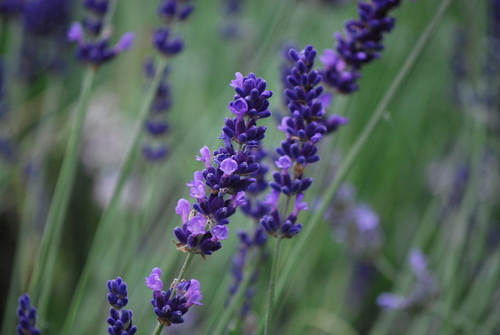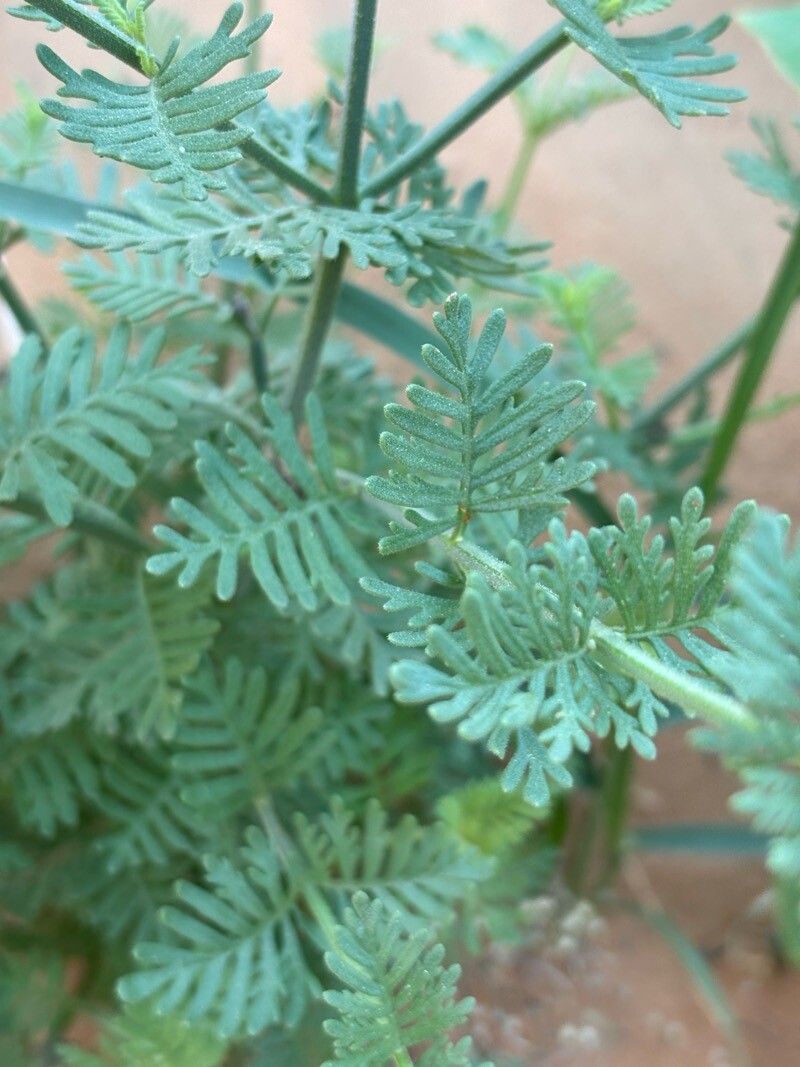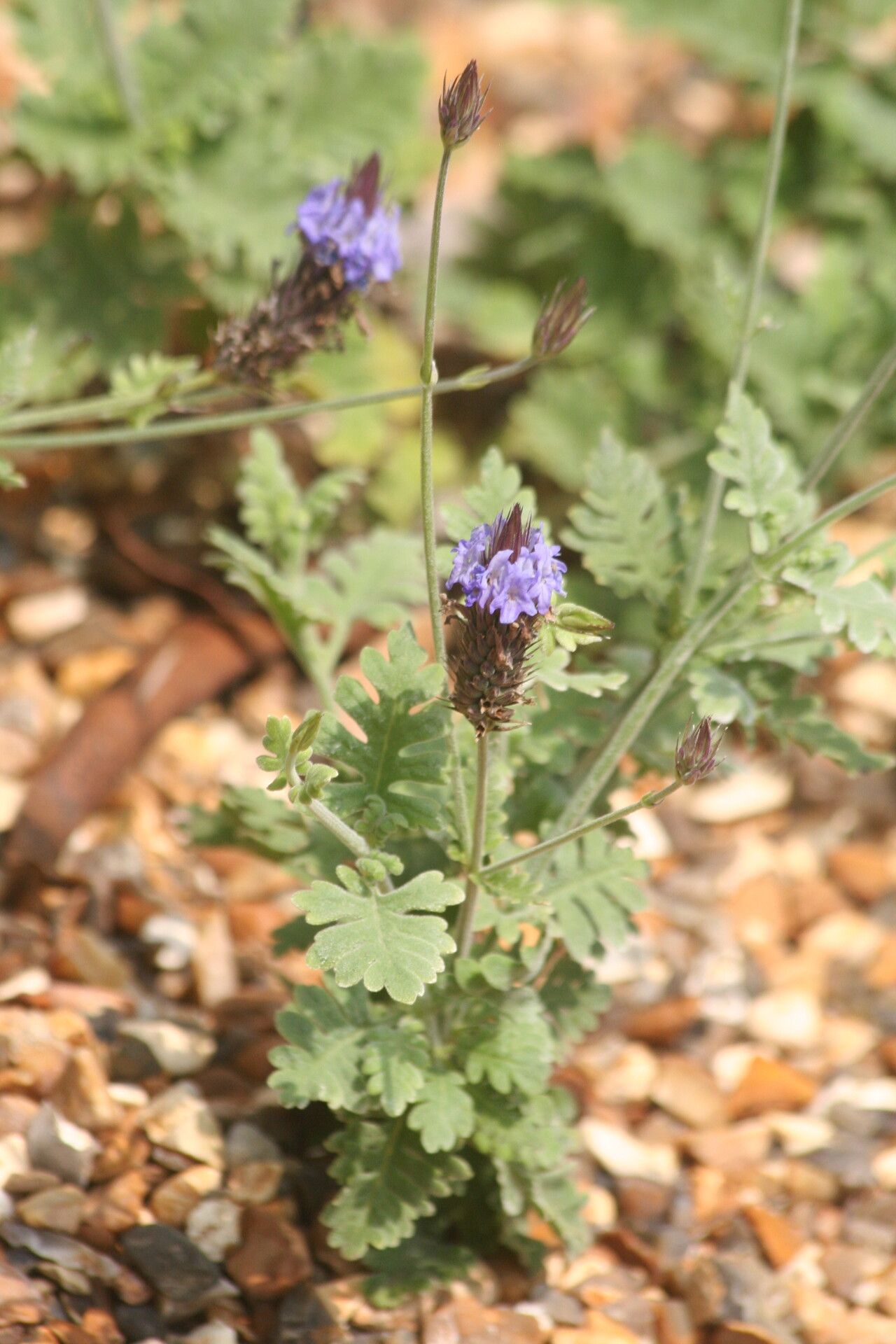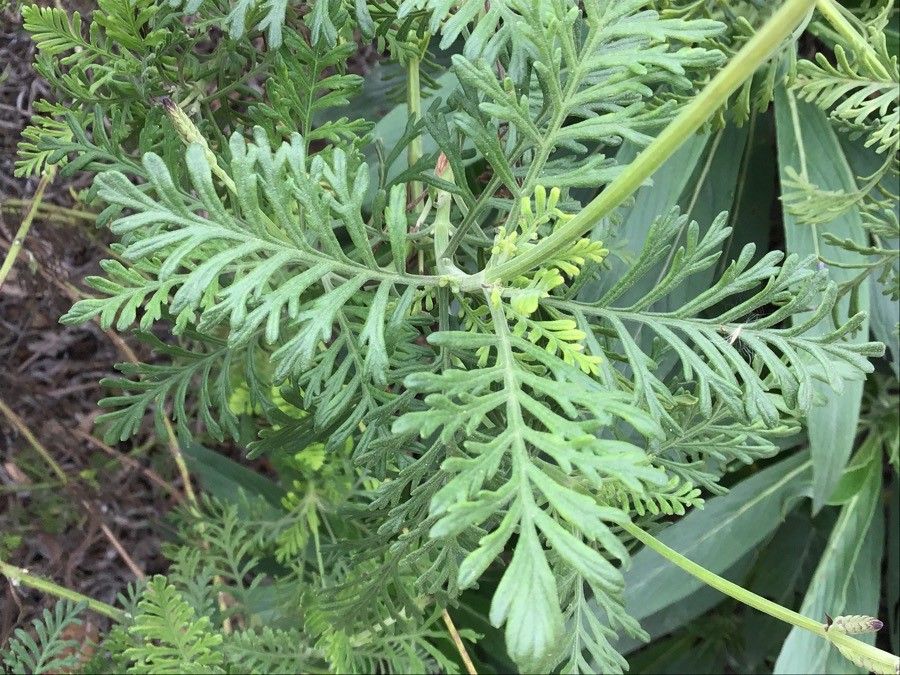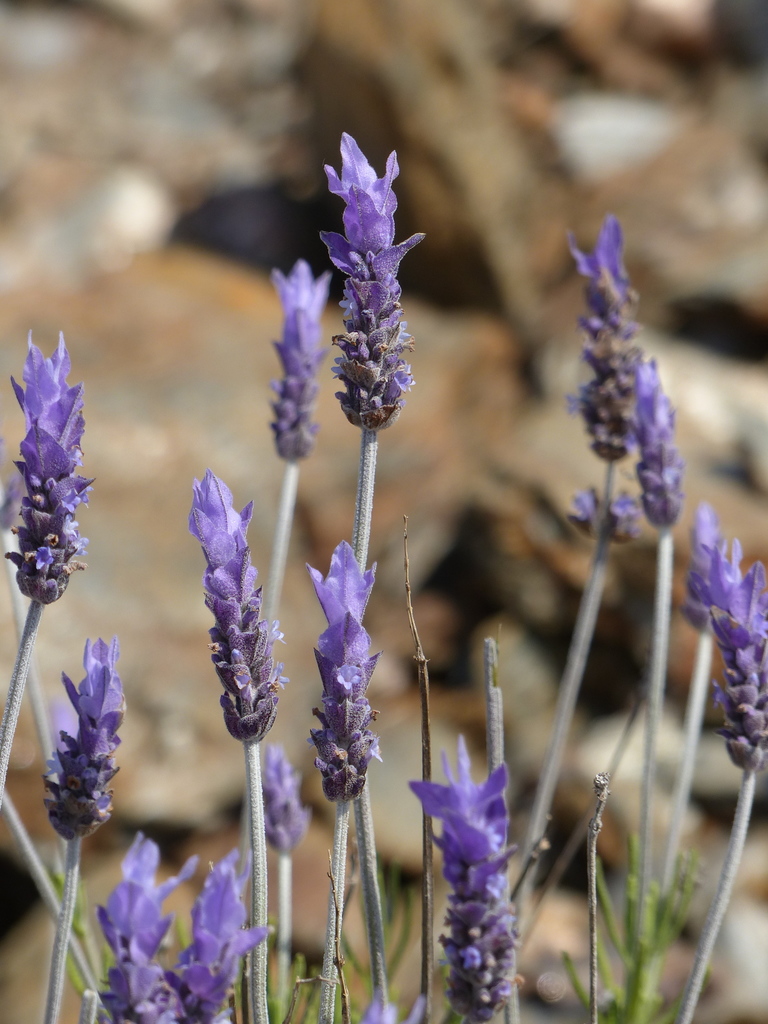
Lavandula dentata, Lavanda de la brecha (Spain), fringed lavender or French lavender, is a species of flowering plant in the family Lamiaceae, native to the Mediterranean, the Atlantic islands and the Arabian peninsula. Growing to 60 cm (24 in) tall, it has gray-green, linear or lance-shaped leaves with toothed edges and a lightly woolly texture. The long-lasting, narrow spikes of purple flowers, topped with pale violet bracts, first appear in late spring. The whole plant is strongly aromatic with the typical lavender fragrance.Its native habitat includes low hills with limestone substrates amidst other shrubs. It is present on Madeira and the Canary Islands.One of several species known by the English common name French lavender (see also Lavandula stoechas), it is commonly grown as an ornamental plant and its essential oil is used in perfumes. Like other lavenders, it is particularly associated with dry, sunny, well-drained conditions in alkaline soil. But it will tolerate a range of conditions, though it may be short-lived. The cultivar L. dentata var. dentata 'Royal Crown' has gained the Royal Horticultural Society's Award of Garden Merit. It requires some shelter in frost-prone areas.
French lavender is highly resistant to disease and is generally not prone to illnesses. However, it can be vulnerable to leaf spots when light and ventilation are poor and watering is excessive. Its care level is considered easy, as it only needs regular watering and little other attention. French lavender is well suited to people who lack the time and energy to devote to regular care.
How to keep Lavandula Dentata.
Light
French lavender thrives with abundant sunlight, which supports healthy growth. Its native habitat is sun-drenched, so it can tolerate lower light levels, though it will not do as well. Excessive sun can lead to wilting, while insufficient light may inhibit growth or cause pale leaves. Its need for sun does not change significantly at different growth stages.
Water
French lavender, native to the Mediterranean region, flourishes in dry, sunny conditions with well-drained soil and low humidity. For optimal growth, it needs watering once a week, but it is also drought-tolerant. This makes it suitable for less frequent watering schedules, especially when grown outdoors where it can benefit from natural rainfall.
Humidity
This plant will thrive in moderate humidity, which is probably the level in your home. However, misting it a few times a week can be very beneficial. Make sure the room has good ventilation.
Temperature
The french lavender grows naturally in areas with mild climates and prefers temperatures between 59 to 95 ℉ (15 to 35 ℃). In winter it may need extra protection from extreme cold, while in summer it does well with regular watering to prevent dehydration. During hot summer days, providing some shade is recommended to protect it from sunburn and heat stress.
Fertilizer
The best time to fertilize French lavender is in early spring, as it comes out of dormancy and begins active growth. Fertilizing supplies essential nutrients for healthy development. While French lavender requires relatively little fertilization, applying fertilizer once a year can improve its survival and encourage better, longer-lasting blooms.
Pruning
French lavender features toothed leaves and aromatic flowers, making it ideal for ornamental purposes. To maintain its health and encourage bushier growth, prune the plant from late winter to early spring. Remove spent blooms and trim back one-third of the new growth. Be careful not to cut into the old wood, as this helps promote better regrowth.
Pot & Repot
When repotting French lavender, choose a pot 1-2 inches (2.5–5.0 cm) larger that has ample drainage. Use a well-draining potting mix. Repot in spring or fall, making sure the root ball sits slightly lower than the rim of the flower pot. Water thoroughly after repotting and place it in a warm spot with indirect sunlight.
Toxicity
Lavender used orally may result in headaches, constipation, and an increase in hunger. It is dangerous to consume lavender oil orally. Lavender can cause allergic reactions in certain people. After breathing lavender or absorbing it through the skin, some people have also complained of experiencing nausea, vomiting, headaches, and chills.
Further reading →
The toxicity and danger assessments provided are for reference only. We do not assure their accuracy, so it's crucial not to depend on them. Seek professional advice when necessary for accurate guidance.
Botanical profile.
- Plant Type
- Herb, Shrub
- Life Cycle
- Perennial
- Genus
- Lavandula
- Family
- Lamiaceae
- Hardiness Zone
- 8-9
- Mature Height
- 61 cm to 91 cm
- Mature Spread
- 91 cm
- Leaf Color
- Green, Gray
- Leaf Type
- Evergreen
- Flower Color
- Purple, Blue, Mauve
- Flower Size
- 1.02 cm to 2.03 cm
- Bloom Time
- Spring, Fall, Winter
- Planting Time
- Spring, Autumn
- Harvest Time
- Spring, Early summer, Fall, Winter
- Native Area
- Saudi Arabia, Spain, Eritrea, Ethiopia, Algeria, Morocco, Yemen
Other names.
Reader questions.
How should I water my French lavender?
To properly water French lavender, it's best to use filtered water at room temperature. Tap water may contain harmful particles. Also, it's important to avoid using cold water as it can shock the plant because French lavender thrives in a warm environment. Additionally, overhead watering should be avoided as it can cause foliage issues. Instead, gently pour the filtered room temperature water onto the soil until it is completely soaked. This helps to moisten the roots and support their spread through the soil for proper nutrient collection.
Why should I add fertilizer to my French lavender plants?
Fertilization is important for French lavender for several reasons. Primarily, it provides necessary nutrients for the plant's growth both above and below the ground. Although French lavender's overall fertilization needs are relatively low, annual fertilization can be highly beneficial. While it is possible for French lavender to survive without fertilization, regular fertilization helps keep the plant alive and enhances the quality and durability of its flowers. Therefore, those looking to maintain the best appearance for their French lavender should prioritize annual fertilization.
What are the sunlight requirements for French lavender?
French lavender thrives in conditions where it receives full sun, defined as above 6 hours of sunlight per day. However, it can also tolerate partial sun, which is about 3-6 hours of sunlight per day. It's crucial to observe how sunlight moves through your garden to choose spots that provide a good balance of light and shade, ensuring your plants' happiness. In its native, sun-drenched habitat, French lavender exhibits healthy development under copious sunlight but can tolerate less sunlight, albeit with less vigor. Too much sun can lead to wilting, while insufficient sunlight may hinder growth or cause leaves to appear ashen. Throughout its different growth stages, French lavender's need for sunlight does not significantly change.
What are the ideal growing conditions for French lavender?
French lavender, or Lavandula dentata, flourishes in regions with mild temperatures, preferring environments where temperatures range between 59 to 95°F (15 to 35°C). During the summer, it is essential to ensure regular watering to avoid dehydration and provide some shade during the peak of the day to protect the plant from sunburn and heat stress. While French lavender has a moderate tolerance to cold, withstanding temperatures just below -5°C without needing extra protection, measures must be taken when temperatures are expected to drop further. Wrapping the plant with materials such as plastic film or fabric can help shield it from extreme cold. These protections should be removed once temperatures rise again to avoid any potential damage.
What should I do if I give too much or too little water to my French lavender?
Overwatering your French lavender can cause wilting, yellowing leaves, and potentially deadly diseases like root rot, mold, and mildew. Underwatering is less common but can still happen, resulting in brittle, brown leaves. It's important to recognize the signs of overwatering early and reduce watering immediately, especially since some of the diseases caused by overwatering may be irreversible if not addressed promptly. Additionally, if your French lavender is in poorly draining soil, it's crucial to replace it with a loose, well-draining potting mix. Conversely, if signs of underwatering are present, simply water more regularly until the plant recovers.
When should I fertilize my French lavender?
To give your French lavender the best start for the season, it is recommended to fertilize it in late winter to early spring when it is transitioning from its dormant phase to active growth. This will promote healthy growth. Fertilizing during the fall is also acceptable, but it is not advisable to feed your French lavender during summer or winter.
How can artificial lighting support French lavender growth indoors?
Indoor plants like French lavender require adequate lighting for optimal growth, especially when natural sunlight is insufficient, such as in winter or less sunny spaces. Artificial lighting, particularly LED lights, can be customized to provide the specific wavelengths of light needed by plants. For plants requiring full sun, 30-50W per square foot of artificial light is recommended, whereas partial sun plants need 20-30W per square foot, and full shade plants need 10-20W per square foot. The light source should be placed 12-36 inches above the plant to mimic natural sunlight, and most plants benefit from 8-12 hours of artificial light per day.
How does French lavender react to low temperatures, and what are the solutions?
French lavender exhibits moderate tolerance to low temperatures and fares best when temperatures remain above 15°C. In winter, it's crucial to keep it above -5°C to prevent damage. Should the temperature dip below -10°C, the plant's leaves may droop, and in severe cases, wilt and fall off. To mitigate these effects, it's advisable to trim off frost-damaged parts and, before any future cold spells, wrap the plant with non-woven fabric or cloth, and establish a wind barrier to shield it from cold winds.
How often do I need to give water to my French lavender plant?
If your French lavender is potted, the best way to determine if it needs water is by checking the moisture level in the soil. Stick your finger into the soil and if the top two to three inches are dry, it's time to water. For French lavender planted outdoors, you can use the same method to test the soil. When you find the top few inches of soil have dried out, it's time to water. In the spring and early fall, watering once a week is usually enough. However, during hot weather, you may need to water twice or more per week. It's worth noting that mature, well-established French lavender can handle drought conditions quite well.
When is the best time to not put fertilizer on my French lavender?
To properly care for French lavender, it is important to limit fertilization to the late winter and early spring. This plant has low fertilization needs and will thrive with just one feeding per year. Fertilizing during spring, summer, and fall can lead to overfertilization and its associated problems, unless you missed fertilizing in the spring, in which case fall feeding is acceptable. Additionally, there is no need to fertilize during the winter when the plant is dormant and not actively growing new leaves.
What are the symptoms of inadequate lighting for French lavender?
Inadequate lighting can lead to several symptoms in French lavender. New leaves may grow smaller than previous ones, and the plant may exhibit leggy or sparse growth due to longer spaces between leaves or stems. There might be faster leaf drop as the plant sheds older leaves to conserve resources, and growth may slow down or stop altogether. Leaves may develop lighter colors or show irregular patterns, indicating insufficient chlorophyll and nutrients. Conditions like chlorosis, where leaves turn yellow due to chlorophyll breakdown; sunscald, represented by pale or bleached areas on plant tissue; leaf curling, as a defense to minimize water loss; wilting due to increased transpiration; and leaf scorching, characterized by brown, dry edges on leaves, can also occur under improper light conditions.
How does French lavender respond to high temperatures, and what are the corrective steps?
When temperatures soar above 35°C during the summer, French lavender may show signs of stress, such as lighter leaf color, dry and withered leaf tips, curled leaves, and increased susceptibility to sunburn. To manage this, trim away the sunburned and dried parts, relocate the plant to a spot where it can receive shade during the intense midday and afternoon sun, or use a shade cloth. Additionally, maintaining soil moisture by watering in the mornings and evenings can help alleviate the stress caused by high temperatures.