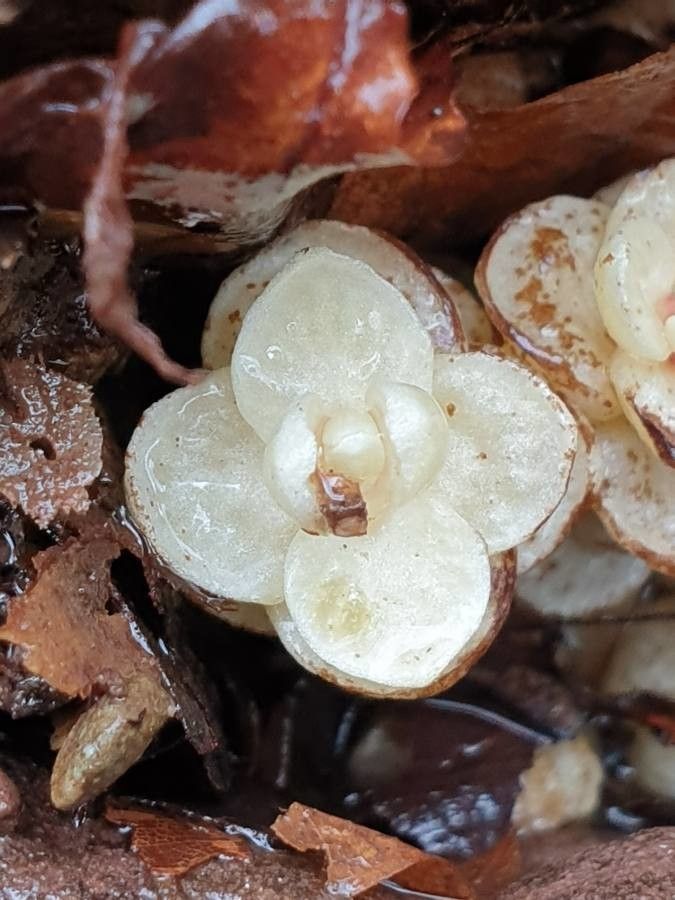
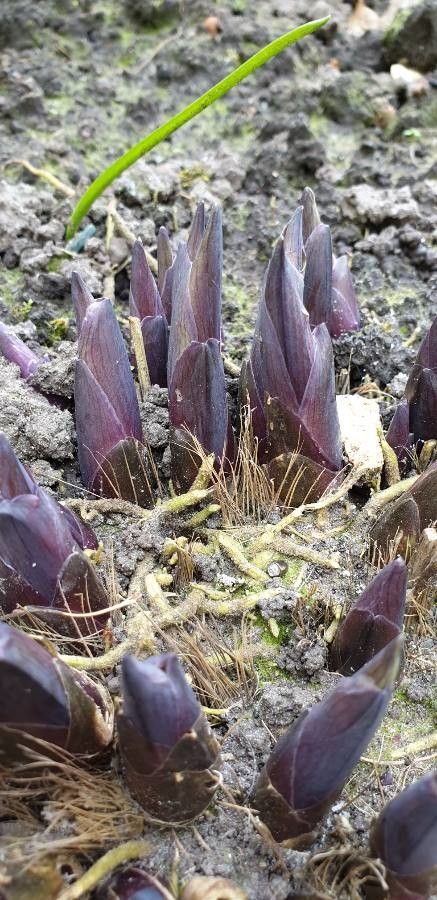
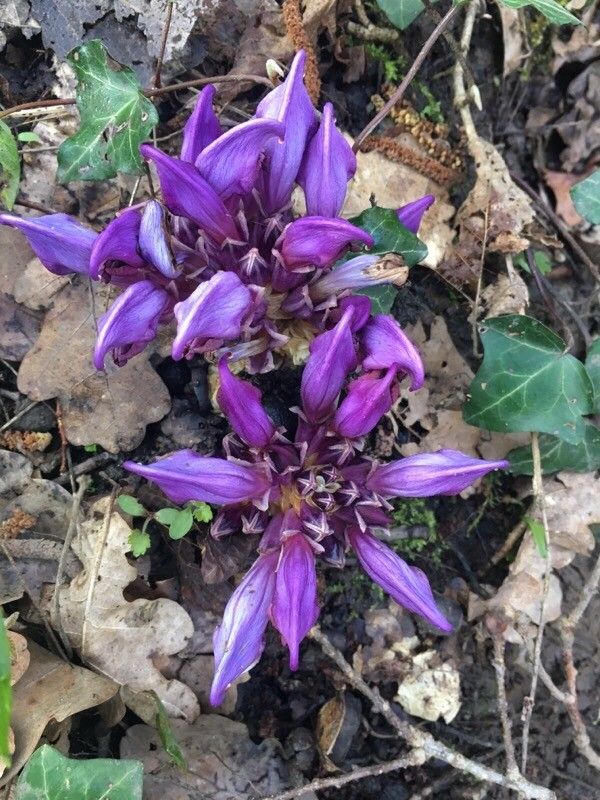
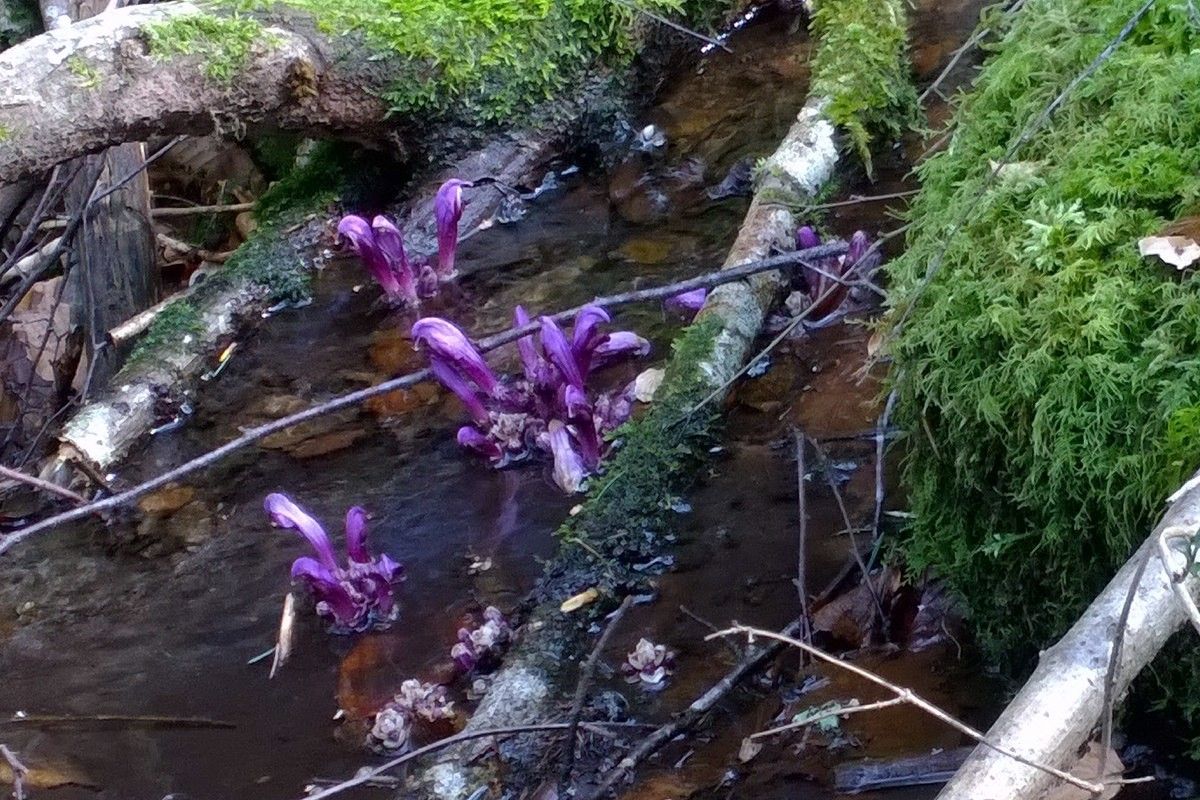
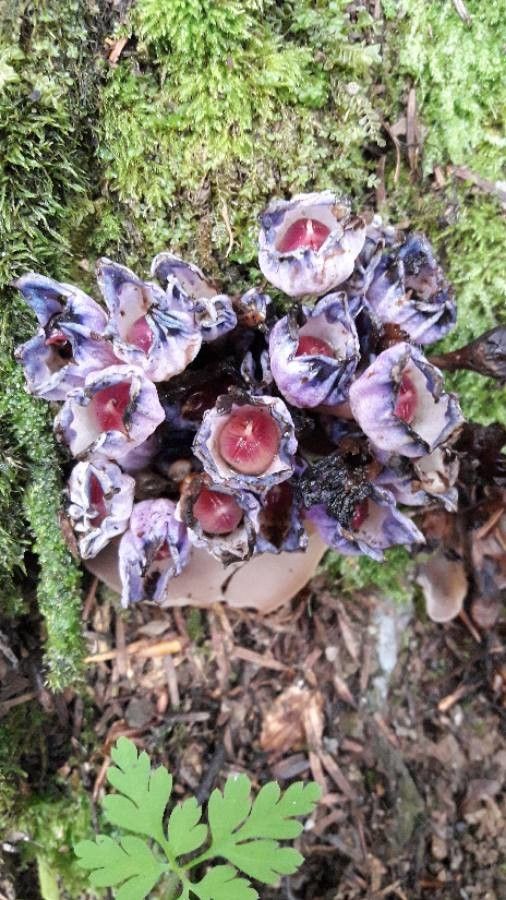
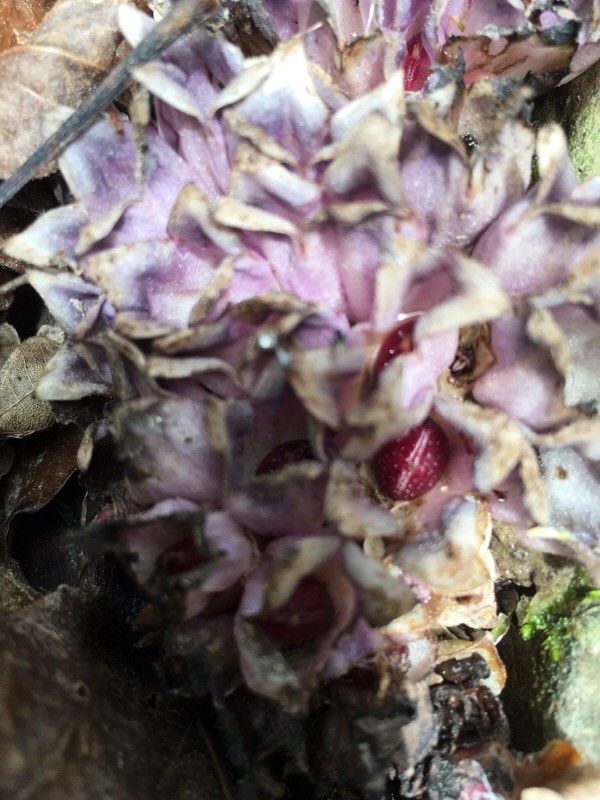
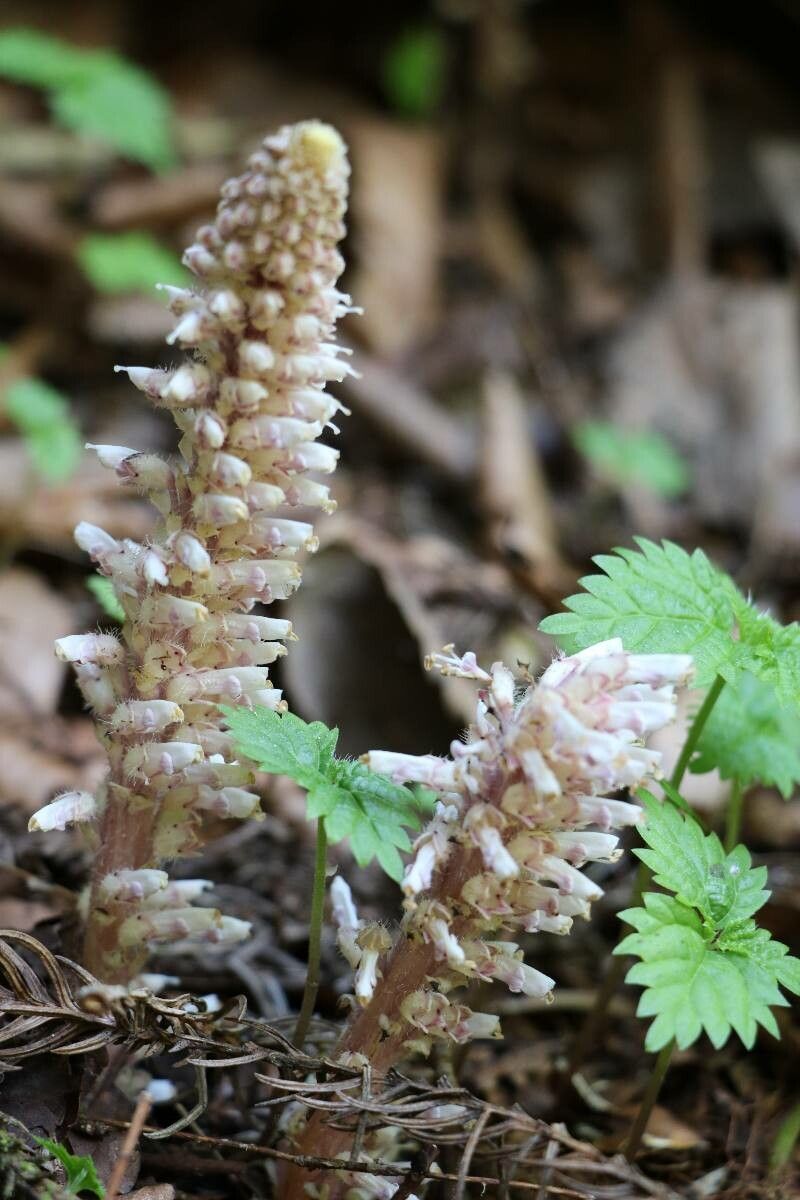
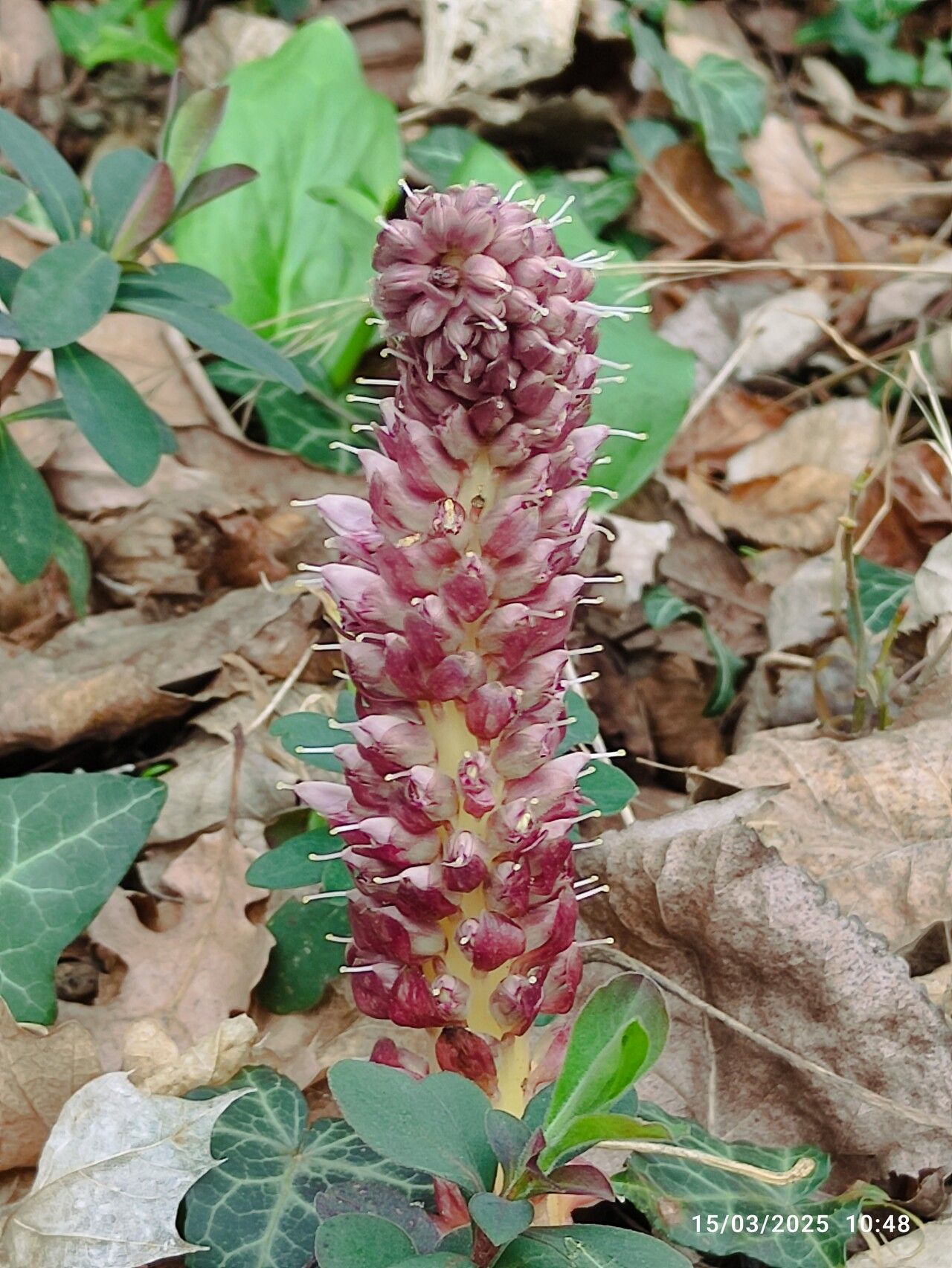
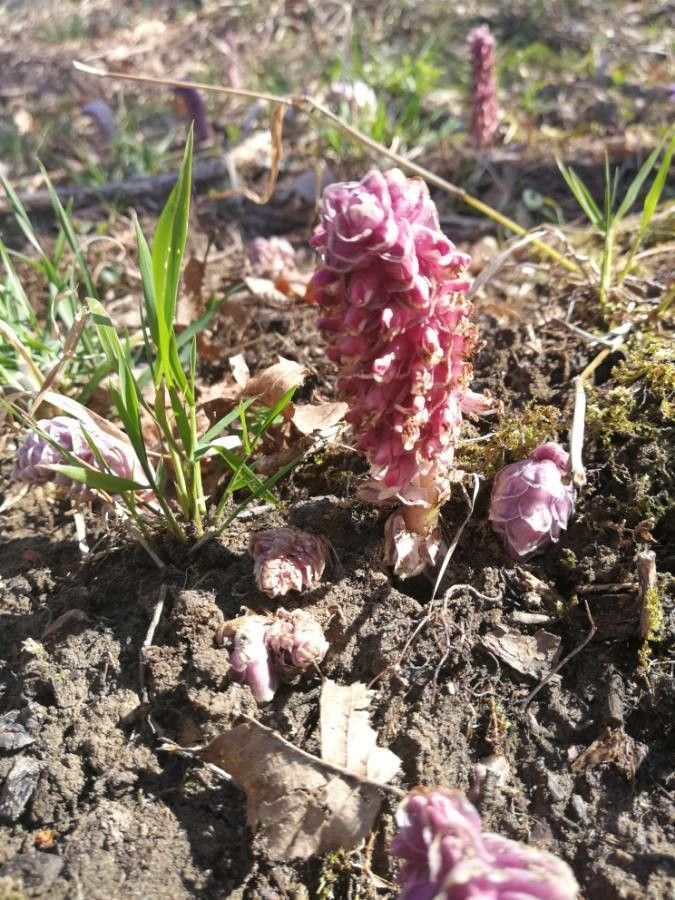
Lathraea clandestina, commonly known as the purple toothwort, is a parasitic plant belonging to the family Orobanchaceae. Native to Europe and Western Asia, it thrives in damp woodlands, along riverbanks, and in other shaded areas.
Lacking chlorophyll, the purple toothwort depends entirely on its host plants for nutrients. It attaches to the roots of trees such as alder, hazel, or willow using specialized structures called haustoria, which penetrate into the host's roots.
The plant features a fleshy stem that can grow up to 30 cm tall, adorned with small, scale-like leaves that are reduced in size due to its parasitic nature. Its tubular flowers, ranging in color from purplish to pink, bloom on spikes at the top of the stem.
While some cultures have used the purple toothwort for its purported anti-inflammatory properties, it is important to note that the plant can be toxic if ingested.
Overall, Lathraea clandestina is a fascinating example of a parasitic plant with unique adaptations that enable survival without photosynthesis.
Botanical profile.
- Plant Type
- Herb
- Life Cycle
- Perennial
- Genus
- Lathraea
- Family
- Orobanchaceae
- Hardiness Zone
- 5-8
- Mature Height
- 15 cm
- Mature Spread
- 49 cm
- Leaf Color
- White
- Leaf Type
- Deciduous
- Flower Color
- Purple, Violet
- Flower Size
- 3.05 cm to 5.08 cm
- Bloom Time
- Early spring, Mid spring
- Planting Time
- Spring, Summer
- Harvest Time
- Late spring, Early summer
- Native Area
- Italy, Spain, Belgium, France
Other names.