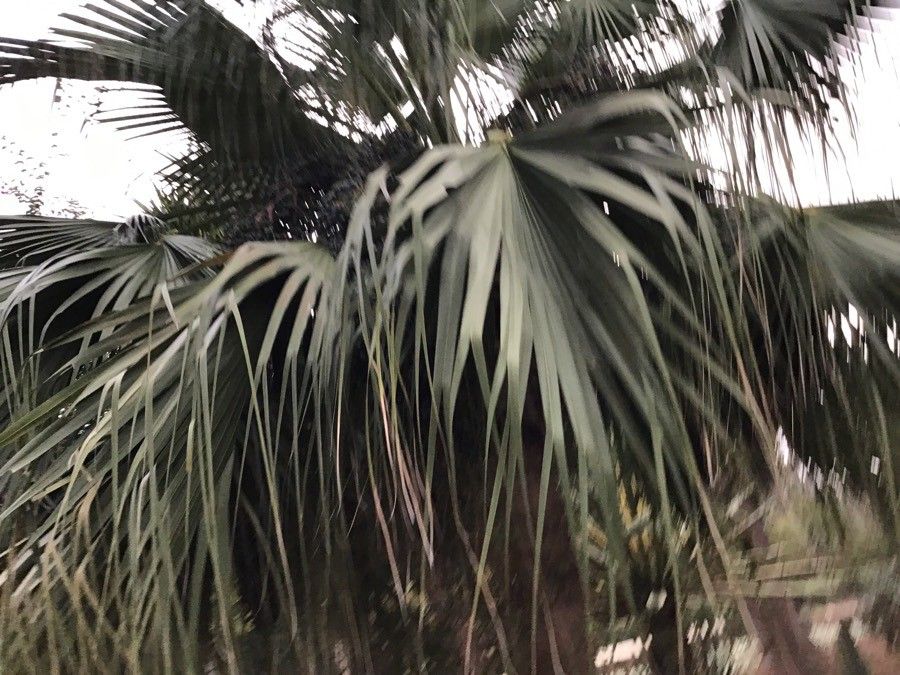
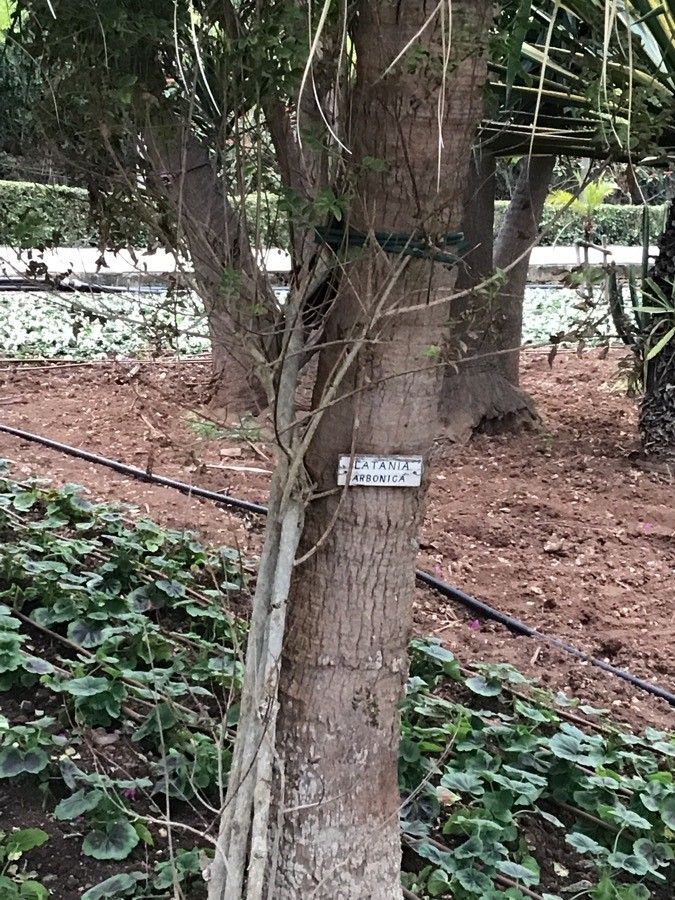
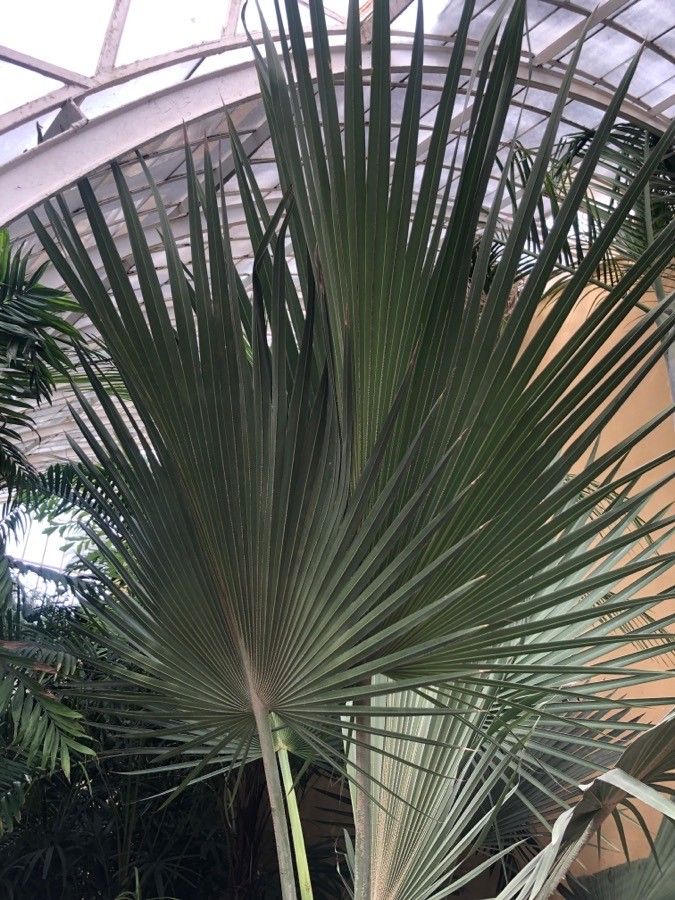
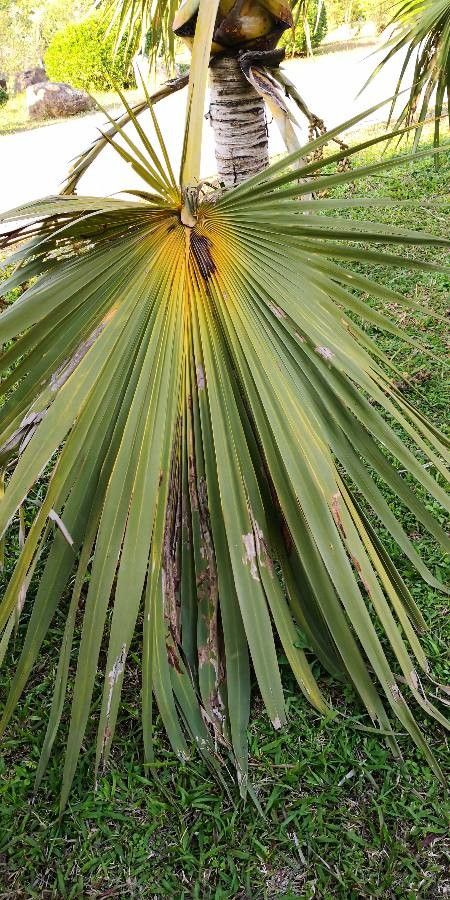
Latania lontaroides, commonly known as the Latan Palm or Red Latan Palm, is a palm tree species indigenous to the Mascarene Islands in the Indian Ocean. This palm grows slowly and can reach a height of up to 15 meters, with a solitary trunk that may expand to a diameter of 30 centimeters. The leaves are large and fan-shaped, featuring stiff petioles covered with sharp spines. The leaf blades are dark green on the upper surface and silvery-white beneath.
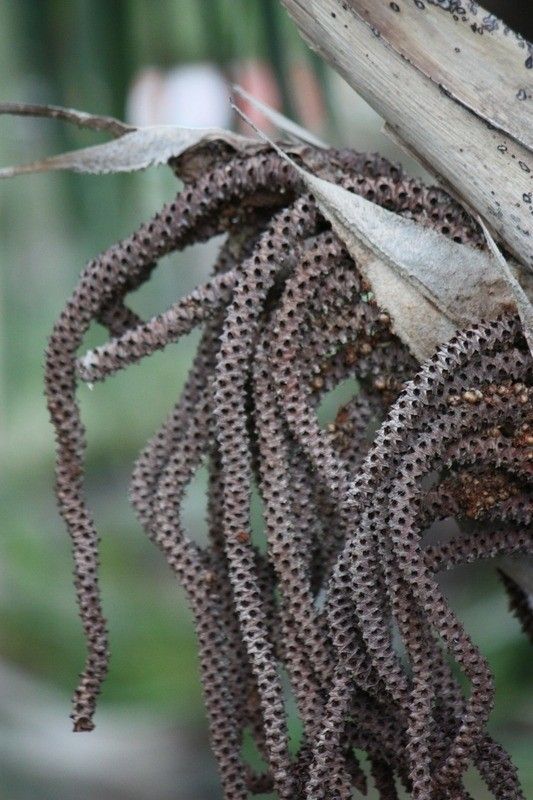
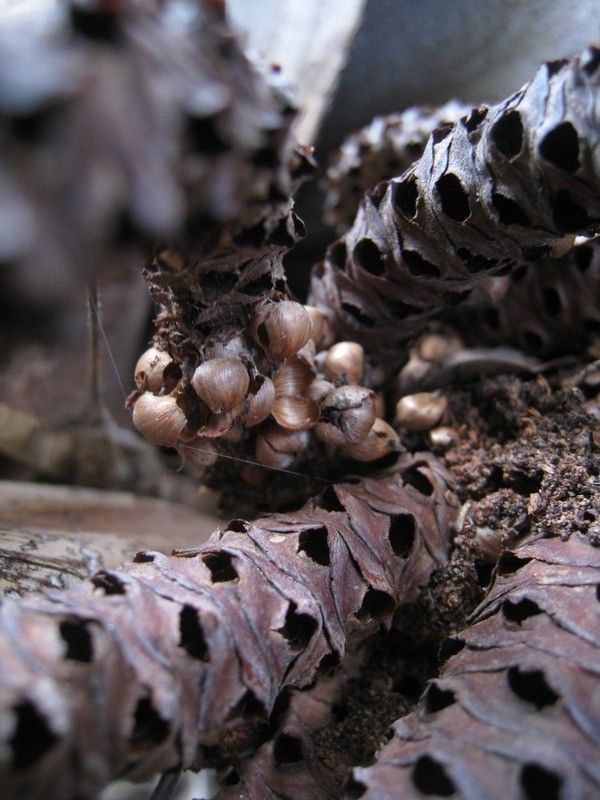
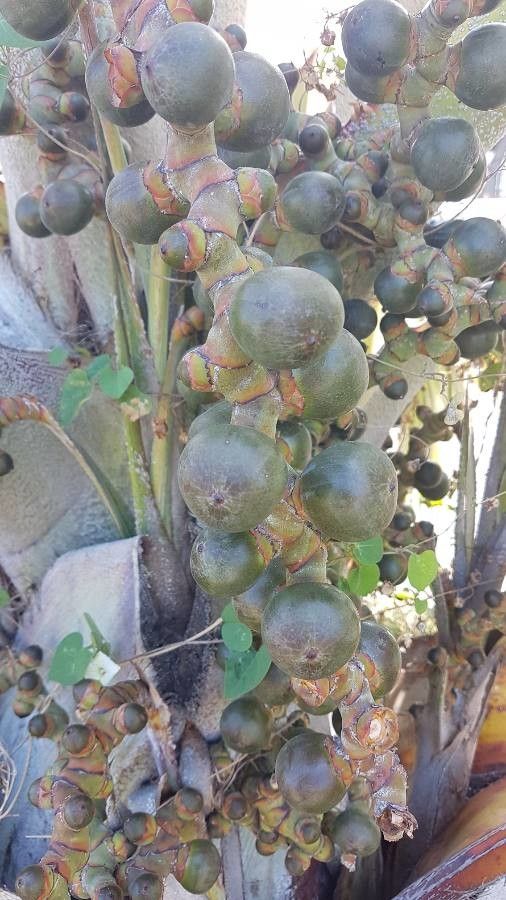
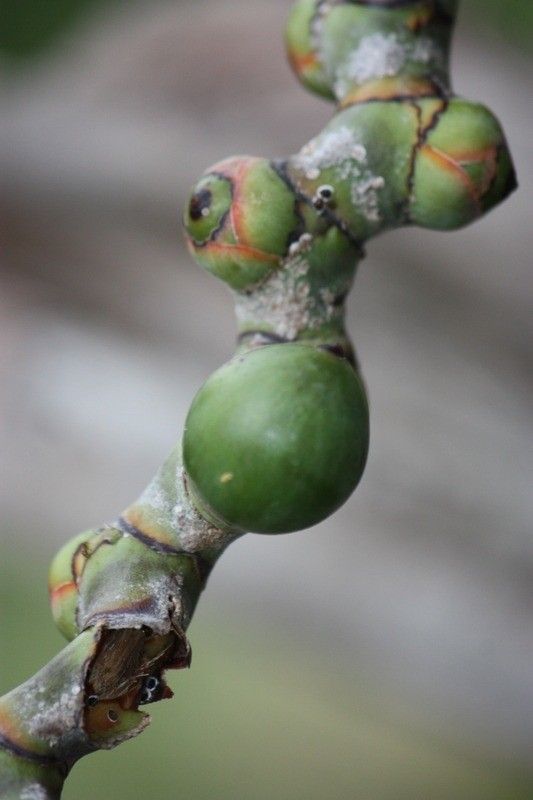
During the summer months, the Latan Palm produces small yellow flowers on long inflorescences. These flowers eventually yield small black fruits, each containing a single seed.
The Red Latan Palm is highly prized for its ornamental qualities, frequently serving as an accent plant or specimen tree in tropical gardens worldwide. It thrives in well-drained soil and full sun exposure but can also tolerate partial shade.
Unfortunately, habitat loss due to deforestation for agricultural purposes and over-harvesting for ornamental use has rendered this species endangered in its native habitat. Conservation efforts, spearheaded by local governments and organizations such as the International Union for Conservation of Nature (IUCN), are ongoing to protect this beautiful plant from extinction.
The red latan palm is disease-resistant and generally not susceptible to illnesses. In terms of care, this plant is fairly low-maintenance. When grown outdoors it needs little watering, and larger specimens usually do not require pruning. Smaller plants, however, should be pruned after they bloom. The red latan palm is suitable for anyone with outdoor space, such as a garden or deck, and does not demand extensive gardening experience.
How to keep Latania Lontaroides.
Light
Red latan palm does best when exposed to sunlight all day, though it can adjust to spots with less light. In its native habitat these plants receive abundant sun. A sufficient amount of light ensures healthy growth. Too little light may slow growth, while an excess can be harmful, causing scorching.
Water
Adapted to arid regions, the red latan palm thrives with minimal moisture due to its high drought tolerance. It prefers dry conditions and only needs watering every 2-3 weeks. Well-suited for warm climates and xeriscaping, the red latan palm has robust roots that efficiently make use of infrequent rainfall.
Temperature
Red latan palm grows best in its native habitat where temperatures range from 68 to 95°F (20 to 35 ℃). It favors warm conditions and may need measures like indoor housing or greenhouse environments during colder periods.
Fertilizer
The best time to fertilize a Red latan palm is in early spring, as it comes out of dormancy. This encourages overall growth and the development of flowers. Fertilization improves the foliage, stems, and branches, and promotes large, vibrant, long-lasting flowers. It helps transfer nutrients from the roots to the flowers and boosts the plant's health and resistance to disease.
Pruning
The red latan palm is known for its striking red leaves and sturdy trunk. For optimal growth, minimal pruning is recommended. You should only remove dead fronds in early spring. Additionally, regularly trimming damaged leaves and fruit stalks can enhance the palm's appearance, improve air circulation, and help prevent pests. Be sure to make clean cuts to avoid damaging healthy tissue.
Botanical profile.
- Plant Type
- Tree
- Life Cycle
- Perennial
- Genus
- Latania
- Family
- Arecaceae
- Hardiness Zone
- 10
- Mature Height
- 4.57 m to 12.19 m
- Mature Spread
- 4.88 m to 6.1 m
- Leaf Color
- Green
- Leaf Type
- Evergreen
- Flower Color
- Yellow, Gold
- Flower Size
- 1.02 cm
- Bloom Time
- Late spring, Summer
- Planting Time
- Spring, Summer, Autumn
- Harvest Time
- Late summer, Fall
Other names.
Reader questions.
How should I water my Red latan palm?
Your Red latan palm is not very picky about how you water it. You can use any common watering tool, such as a watering can, hose, or even a cup, to moisten the soil. It's important to apply the water directly to the soil and make sure all areas are moistened evenly to provide water to the entire root system. Using filtered water is recommended, as tap water may contain harmful particles. Water at or slightly above room temperature is best, as very cold or hot water can potentially shock the Red latan palm. However, this plant typically responds well to any type of water you use.
Why is it important to fertilize my Red Latan palm?
Regular fertilization is crucial for the Red latan palm because its showy leaves require significant energy for production and maintenance. Not only does the palm need enough energy to keep its leaves in good shape, but it also needs energy to support the growth of stems, branches, roots, and other vital structures. Neglecting fertilization can result in two likely outcomes. Firstly, the palm's leaves will lose their natural color and texture, looking unhealthy and detracting from its ornamental appeal. Secondly, the palm's overall growth may slow down or produce weak growth that is prone to breakage.
What are the sunlight requirements for a Red latan palm?
Red latan palm requires full sunlight to thrive well, benefiting from being continuously bathed in sunlight throughout the day. It can, however, adapt to areas with less light. In their natural habitats, these plants are accustomed to generous amounts of solar exposure. It's important to ensure they receive an adequate duration of light for healthy growth. Full sun consists of above 6 hours of sunlight, while partial sun ranges from about 3-6 hours. It is essential to observe the movement of sunlight through your garden to select spots that provide an ideal balance of light and shade, ensuring the plants' well-being.
What are the optimal temperature conditions for a Red latan palm?
The Red latan palm, or Latania lontaroides, thrives best in its native environment where temperatures range between 68 to 95°F (20 to 35°C). It is a heat-loving plant that prefers warm weather, requiring adjustments like indoor housing or greenhouse conditions in colder seasons. During the winter, it's beneficial to maintain temperatures above 20°C, avoiding any temperatures approaching 5°C, as these are detrimental to the plant's health.
What should I do if I give my Red Latan Palm tree too much water or not enough water?
For outdoor plants, especially newly planted ones or seedlings, watering can be an issue. It's important to remember to water enough for the first few months when the tree is small or newly planted. After the roots are established, the Red latan palm can rely on rain most of the time. However, when the palm is in pots, overwatering is more likely. If you accidentally overwater your Red latan palm, there are steps you can take to remedy the situation. First, stop watering the plant immediately to minimize the effect of overwatering. Then, remove the palm from its pot to inspect the roots. If you find no signs of root rot, you can return the plant to its container. But if you do find signs of root rot, trim the affected roots and consider applying a fungicide. Lastly, repot the palm in well-draining soil. In the case of underwatering, simply water the Red latan palm more frequently. Underwatering is usually easy to fix as the leaves will droop, dry out, and fall off, but they will quickly recover when given sufficient water. So, correct your watering frequency as soon as you notice underwatering.
When should I fertilize my Red latan palm tree?
To ensure optimal growth of your Red latan palm, occasional feedings are recommended instead of a set feeding schedule. One simple method is to fertilize the plant when watering it now and then. Additionally, make sure to provide an adequate amount of water, especially during the growing season. Feeding the plant once every two to three weeks is sufficient and should be continued as long as the palm is producing new growth.
How can artificial lighting be used for indoor Red latan palms?
For indoor Red latan palms, especially when natural sunlight is insufficient, such as during winter or in less sunny spaces, artificial lighting can be a vital solution to promote better and faster growth. LED lights are popular for indoor plants as they can be customized to offer specific wavelengths needed by the plants. Full sun plants require 30-50W/sq ft of artificial light, partial sun plants need 20-30W/sq ft, and full shade plants should have 10-20W/sq ft. The artificial light source should be placed 12-36 inches above the plant, mimicking natural sunlight, and should be kept on for 8-12 hours a day to simulate the length of natural daylight hours.
How should I care for my Red latan palm during cold seasons?
During the autumn and winter months, it is recommended to bring your outdoor-grown Red latan palm indoors to protect it from the cold. Place it near a bright window for sufficient sunlight but keep it at a certain distance from heaters to avoid excessive dryness. Ensuring the indoor environment remains above 20°C during winter is crucial for the plant’s growth. Taking these steps helps protect the palm from cold temperatures, which can cause significant harm.
How often should I give water to my Red latan palm?
To properly care for outdoor plants, consider their watering needs based on the amount of rainfall in your area. If there is not enough natural rainfall, you should water your plants every two weeks in the spring and fall, with more frequent watering required in the summer. In the winter, when plants do not require as much water due to slower growth, you can water them less frequently or not at all. However, if you have a young or newly planted Red latan palm, you should water it more often to help it establish and grow. For potted plants like the Red latan palm, there are two main approaches to determine watering frequency. The first is to follow a set schedule, such as once a week or every other week. However, this may not always be effective as it does not consider the specific growing conditions of your palm. Another method is to check the soil moisture. It is recommended to wait until the top two to four inches of soil (about ⅓ to ½ depth of the pots) have completely dried out before watering again. Keep in mind that during the summer, when the plant's water needs are highest, a predetermined schedule may not be sufficient.
When is it not a good time to fertilize my Red Latan Palm?
For most of the year, you can fertilize your Red latan palm regularly. This should be done during the active growing season of spring, summer, and early fall. However, during the winter, you should stop fertilizing the plant. This is because the Red latan palm goes into a dormant growth phase during the winter, where it doesn't grow much or at all. Since the plant is using less energy during this time, fertilization is not necessary.
What are the symptoms of inadequate lighting in Red latan palms?
Red latan palms exhibit several symptoms when exposed to insufficient lighting, including smaller new leaves, leggy or sparse growth, faster leaf drop, slower or halted growth, and lighter-colored or irregularly colored new leaves. Other symptoms related to light issues include chlorosis, where leaves turn yellow due to chlorophyll breakdown; sunscald, characterized by pale, bleached areas on plant tissue; leaf curling as a defense against extreme sunlight; wilting, which occurs when the plant can't maintain hydration due to water loss from overexposure to sunlight; and leaf scorching, seen as brown, dry edges on leaves from excessive light.
What should I do if my Red latan palm experiences low temperatures?
If your Red latan palm is exposed to low temperatures, you should trim off the frost-damaged parts and immediately move the plant to a warm environment for protection. Positioning the plant near a south-facing window ensures ample sunlight, which is beneficial for its recovery. Additionally, avoid placing the plant near heaters or air conditioning vents as these can cause excessive dryness in the air and further stress the plant.