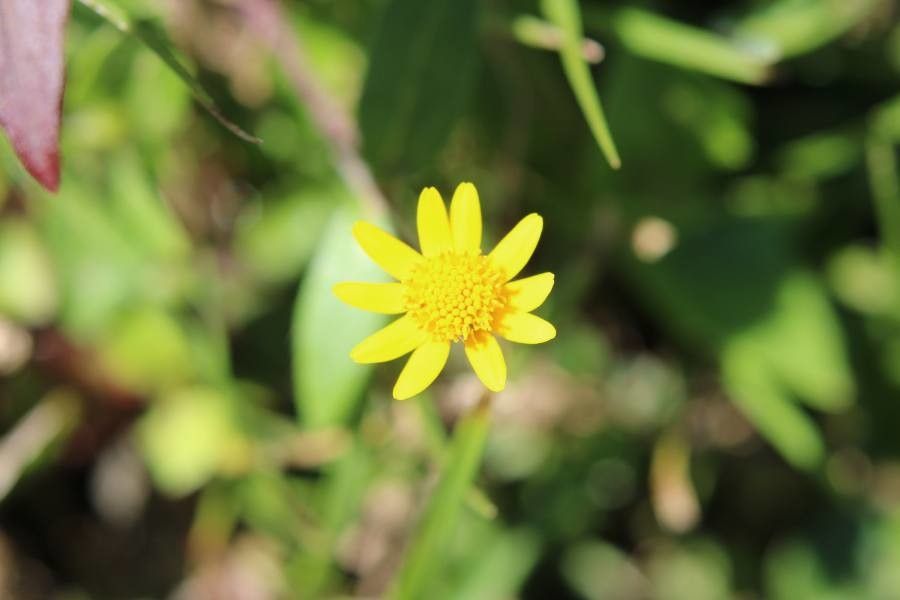
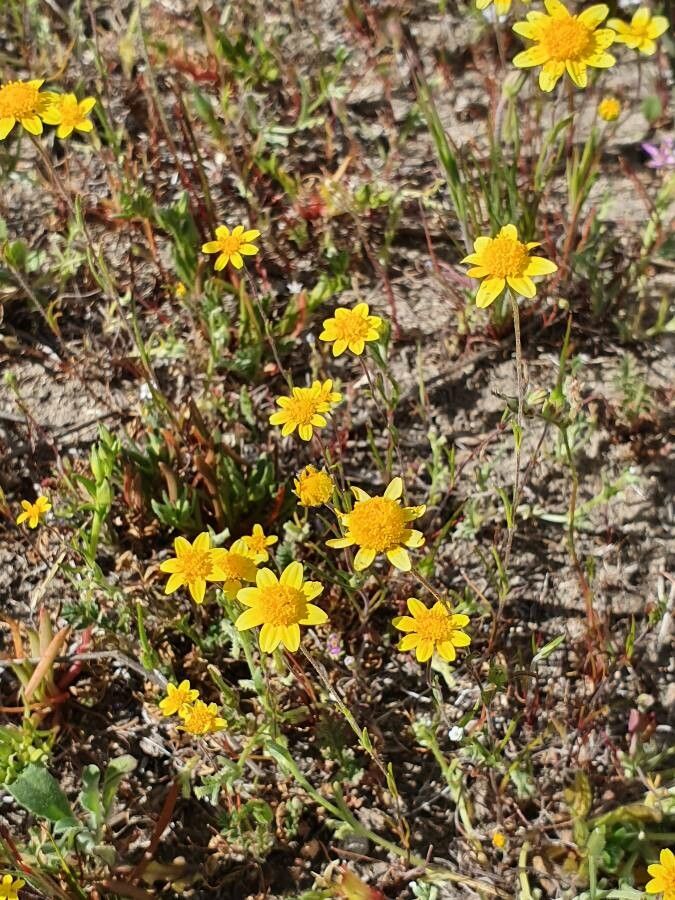
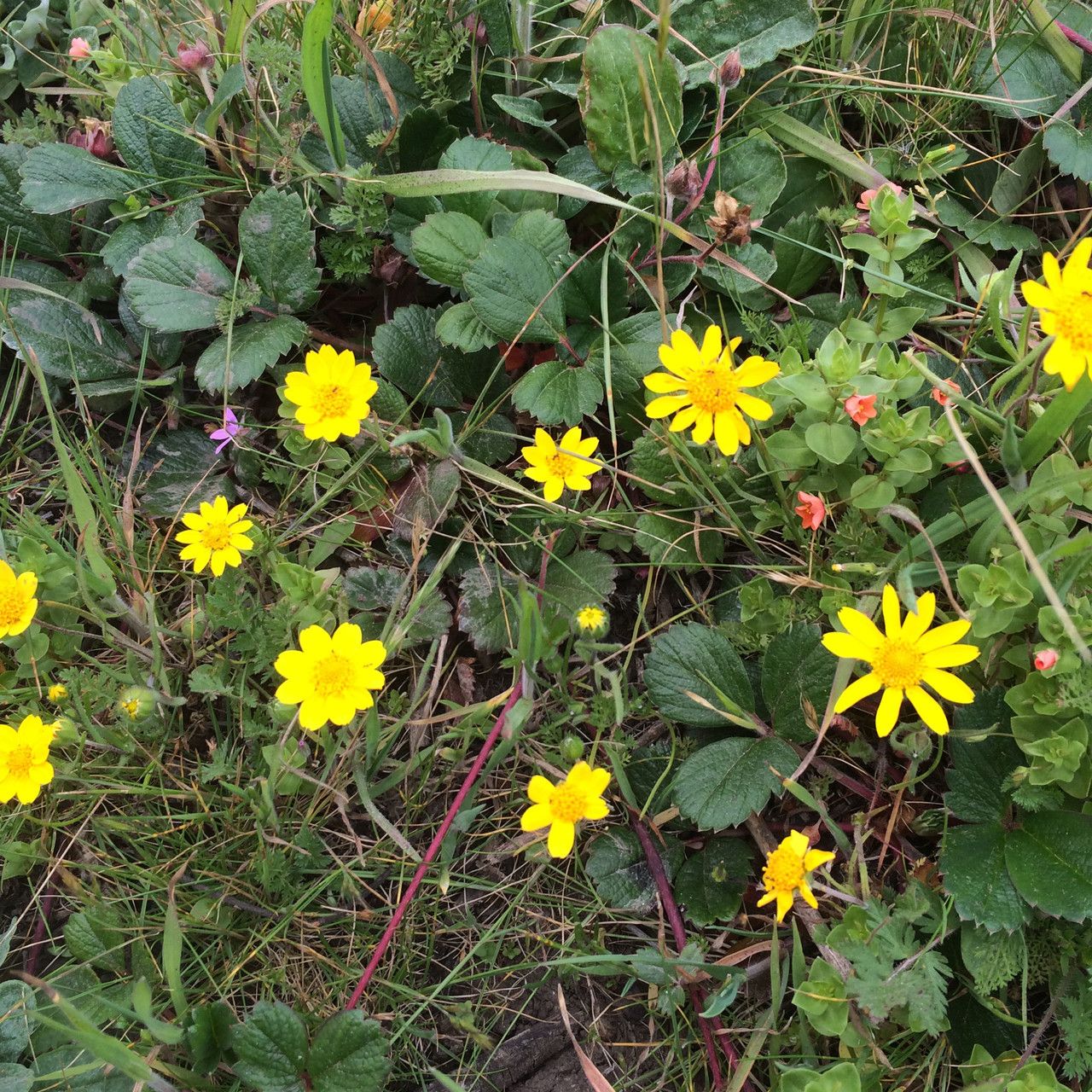
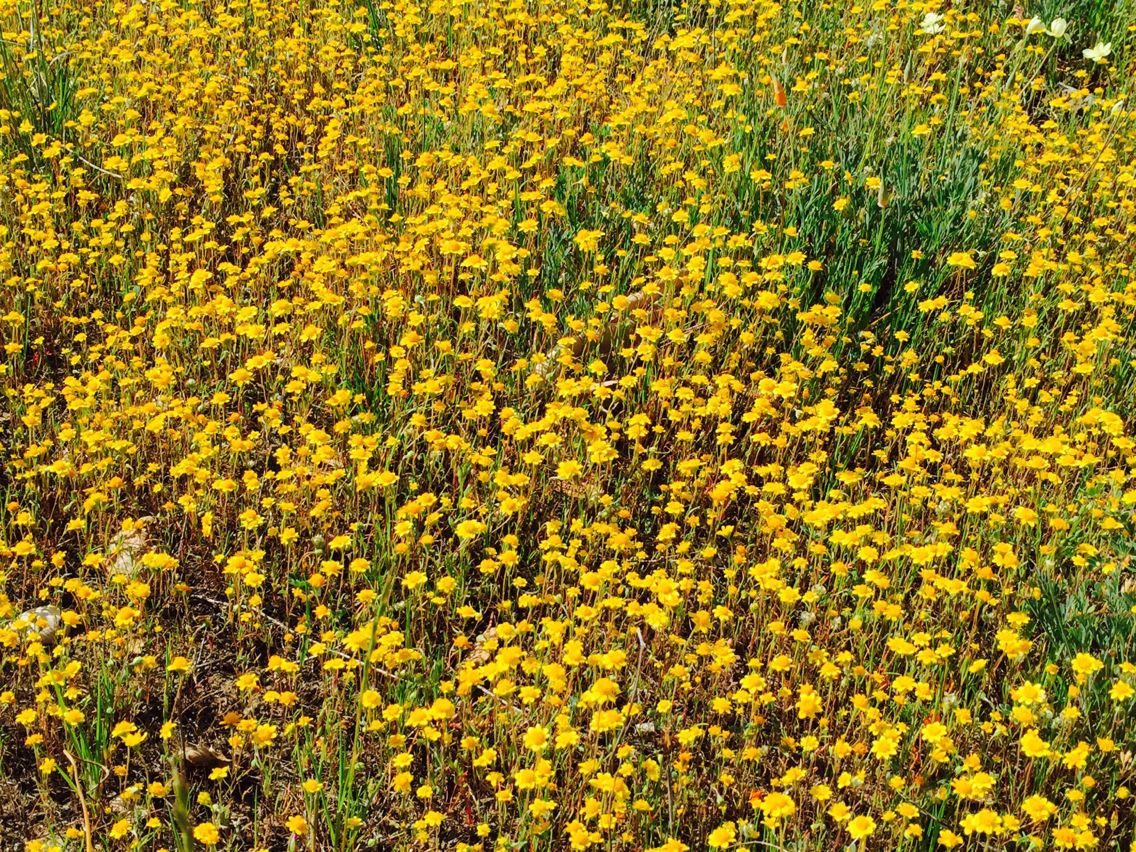
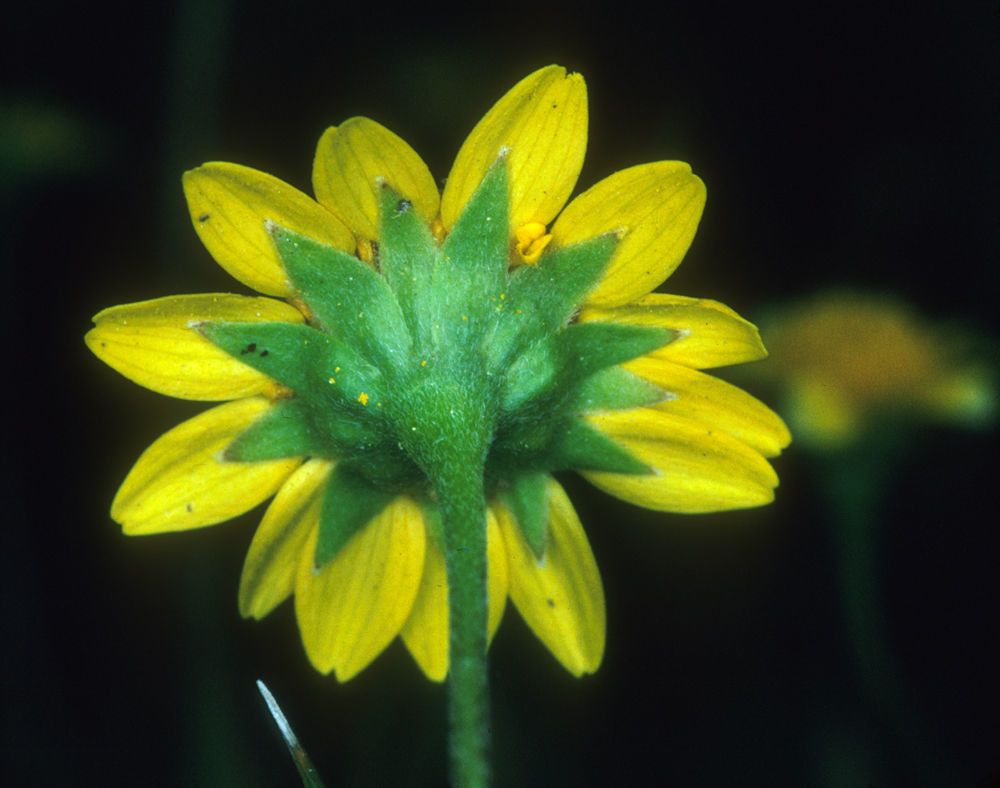
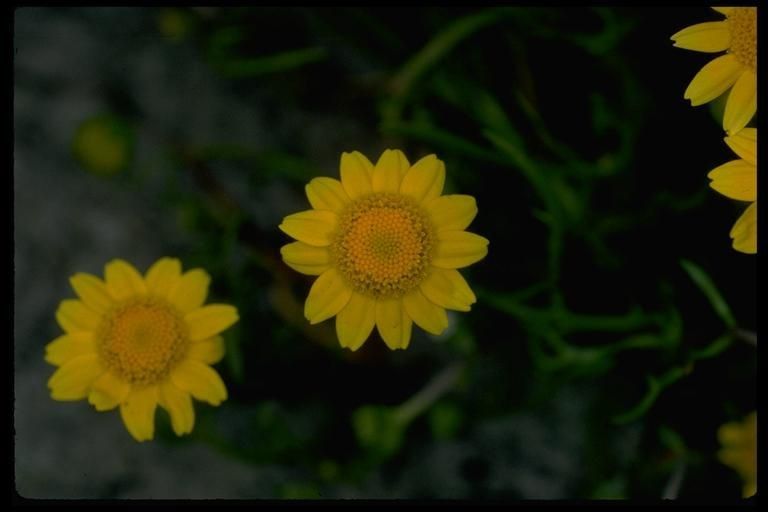
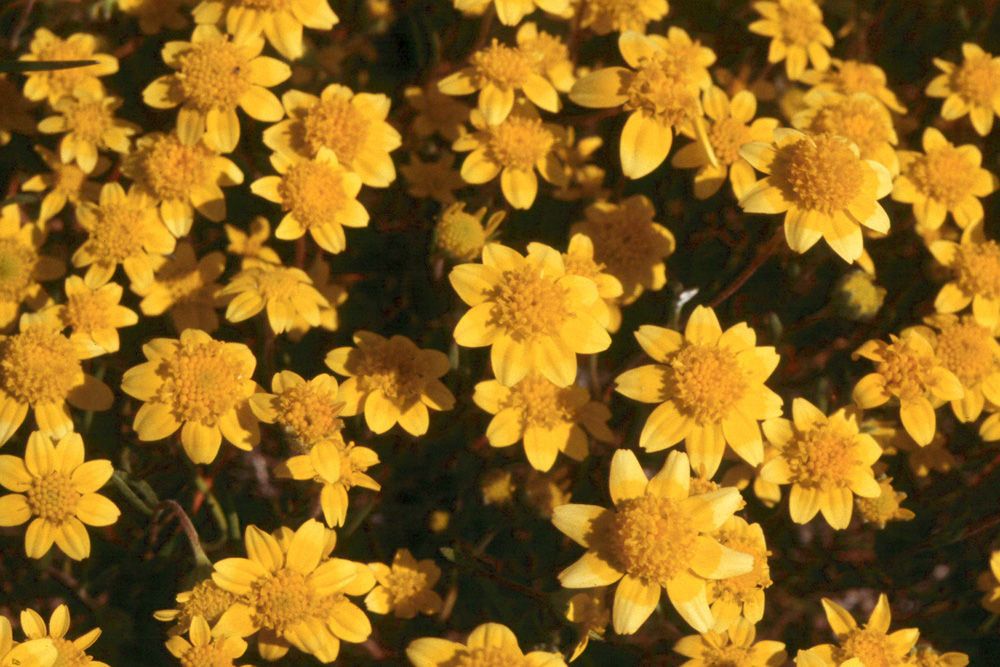
Lasthenia californica, commonly known as California goldfields, is a species of flowering plant in the sunflower family. Native to California, it thrives in grasslands and open areas across the state. The plant typically reaches a height of 6 to 12 inches and produces bright yellow flowers that bloom from March to May. Its leaves are small, narrow, and gray-green.
California goldfields play an essential role as a nectar source for bees and other pollinators during their blooming season. Additionally, their vibrant coloration makes them a popular choice for decorative planting in gardens. However, they require full sun exposure to thrive and may not grow well in shaded areas or regions with high humidity.
Overall, Lasthenia californica is a striking wildflower that adds color to California's natural landscape while providing crucial ecological benefits as a food source for pollinators like bees.
Baker's Goldfields has good resistance to disease and is generally not susceptible to illnesses. However, it can be affected by pests and diseases present in its environment. These infections are generally mild. Regarding care, this plant requires moderate maintenance. Regular pruning is needed to preserve a neat appearance and promote healthy growth. Fertilizing can also help encourage flowering. Baker's Goldfields is appropriate for anyone with outdoor space, such as a garden or patio, and does not require extensive care experience. It may need more attention if grown indoors.
How to keep Lasthenia Californica.
Light
Baker's Goldfields performs best in sites that receive a large amount of unobstructed sunlight throughout the day. Its typical habitat is open areas with plentiful light. Both excessive and insufficient sun can lead to wilting or discoloration. Its sunlight preference stays the same at every stage of growth.
Water
Baker's Goldfields, originally from the sunny fields of California, thrive best with moderate moisture and need weekly watering to mimic their natural rainfall. Typically cultivated outdoors, their growth and flowering cycles rely heavily on the availability of water, making careful irrigation management essential.
Temperature
Baker's Goldfields is native to temperate regions and prefers growing at temperatures between 68 and 95 °F (20 and 35 °C). Seasonal adjustments may be required to keep it within this optimal temperature range.
Fertilizer
When most of Baker's Goldfields' flowers have fully opened, resume fertilizing. During the peak bloom period, apply fertilizer about every three to four weeks, weather permitting. Once Baker's Goldfields begins producing fewer new blooms, stop fertilizing; there's no need to feed the plant when it can no longer produce more flowers.
Pruning
Baker's Goldfields is a vibrant annual plant known for its golden-yellow flowers. To maintain its health and appearance, it is important to apply key pruning techniques such as deadheading and light trimming. These should be done ideally from early to late spring. According to reputable horticultural sources, these practices enhance airflow, reduce the risk of disease, and invigorate growth by removing damaged parts.
Botanical profile.
- Plant Type
- Herb
- Life Cycle
- Annual, Perennial
- Genus
- Lasthenia
- Family
- Asteraceae
- Hardiness Zone
- 9
- Mature Height
- 5 cm to 30 cm
- Mature Spread
- 46 cm
- Leaf Color
- Green
- Leaf Type
- Semi-evergreen
- Flower Color
- Gold, Yellow
- Flower Size
- 1.52 cm to 4.57 cm
- Bloom Time
- Spring
- Planting Time
- Spring
- Harvest Time
- Late spring, Early summer, Mid summer
Other names.
Reader questions.
How should I water my Baker's Goldfields to keep them healthy?
There are various ways to water Baker's Goldfields, including using a garden hose with a spray nozzle, a watering can, or any other common watering tool. This plant is not too particular about the type of water it receives, as it can survive on rainwater, tap water, or filtered water. However, it is best to avoid watering this plant from above, as it can harm the leaves and flowers and potentially cause disease. A drip irrigation system is often the most effective method for watering Baker's Goldfields, as it provides even and direct watering to the soil. When watering a container-grown Baker's Goldfield, you can use a cup, watering can, or tap to apply water directly to the soil.
What are the sunlight requirements for Baker's Goldfields?
Baker's Goldfields (Lasthenia californica) thrives best in locations where it can receive more than 6 hours of sunlight daily, indicating its preference for full sun. It's essential to observe how sunlight navigates through your garden, aiming to find an ideal balance of light and shade that ensures the well-being of your plants. This species is naturally adapted to open environments that offer abundant light, playing a crucial role throughout all its growth stages. Insufficient sun exposure can lead to issues such as wilting or discoloration.
What is the preferred temperature range for growing Baker's Goldfields?
Baker's Goldfields (Lasthenia californica) thrives best in temperate environments, with an ideal temperature range between 68 to 95 °F (20 to 35 °C). It's crucial to make seasonal adjustments to maintain this optimal range for the plant's growth.
What should I do if I give my Baker's Goldfields too much water or too little water?
To remedy underwatering issues with Baker's Goldfields, you simply need to water it more regularly once you notice it lacks moisture. However, be cautious of overwatering as it can be much more problematic if not addressed early. Overwatering can lead to diseases that cause the plant to decline and die. To prevent this, choose a suitable location with adequate sunlight to dry the soil and ensure good drainage to prevent water from pooling and causing waterlogged soil. If your potted Baker's Goldfields is overwatered, consider transferring it to a new pot with better drainage and loose soil.
How do artificial lights support the growth of indoor plants like Baker's Goldfields?
For indoor Baker's Goldfields or other plants lacking natural sunlight, especially during winter or in less sunny locations, artificial lighting can be a beneficial supplement. Proper lighting supports healthier and faster growth. LED lights are advisable for their customizable wavelengths suited to plant needs. Full sun plants require 30-50W per square foot of artificial light, partial sun plants 20-30W, and full shade plants 10-20W. Place the light source 12-36 inches above the plant, mimicking natural sunlight conditions, and ensure that most plants receive 8-12 hours of light daily.
Does Baker's Goldfields have any tolerance to cold temperatures?
Yes, Baker's Goldfields has a moderate tolerance to cold temperatures. It generally does not require additional protective measures when the temperature is above 0°C. However, if temperatures are expected to drop below 0°C, temporary measures such as wrapping the plant with plastic film, fabric, or other materials are recommended. Once temperatures rise again, these protective layers should be promptly removed.
How often do I need to water my Baker's Goldfields?
To keep your Baker's Goldfields healthy, it's important to provide regular watering. In the spring, aim for watering once a week. As the season progresses and it gets warmer, you may need to increase the frequency to two to three times per week. However, be careful not to overwater, as this can be harmful. Regardless of the frequency, make sure the soil remains moist but not wet. For Baker's Goldfields in a pot, watering needs to be adjusted. Since pot soil can dry out faster, you'll likely need to water container-grown plants a few times per week, compared to just once per week for plants in the ground.
What are the common symptoms of inadequate light in Baker's Goldfields?
When Baker's Goldfields doesn't receive enough light, several symptoms can emerge. These include smaller new leaves, elongated spaces between leaves or stems resulting in a sparse appearance, early leaf drop to conserve energy, halted growth as the plant enters survival mode, pale new leaves indicating insufficient chlorophyll, and chlorosis, where leaves turn yellow due to the breakdown of chlorophyll. Other signs are sunscald from intense light exposure, leaf curling as a defense against excessive sunlight, wilting due to significant water loss, and leaf scorching, noted by crispy leaf edges.
How should Baker's Goldfields be cared for in low temperatures?
In low temperatures, especially during winter when temperatures are expected to stay above 0°C but may occasionally drop below, Baker's Goldfields shows moderate tolerance. Should temperatures fall below -5°C, leaves may begin to droop, with severe cold causing leaves to wilt and detach. If frost damage occurs, trim the damaged parts and before facing low temperatures again, wrap the plant with non-woven fabric or cloth and establish a wind barrier for extra protection.
How much water is needed for my Baker's Goldfields plant?
When determining how much water to give your Baker's Goldfields, there are a few different methods you can use. Some gardeners prefer to feel the soil to determine moisture levels. If you go with this method, you should water until the first six inches of soil feel moist. Another option is to use a specific measurement. Typically, Baker's Goldfields need about two gallons of water per week, depending on factors like heat and soil dryness. However, following this guideline strictly could result in overwatering if your plant requires less water. When growing Baker's Goldfields in a container, a different approach is needed. In this case, you should water until all layers of dry soil become moist. You can check for moisture by sticking your finger into the soil or by observing excess water trickling out of the pot's drainage holes.
What are the recommended solutions for Baker's Goldfields experiencing light-related issues?
To address light-related issues in Baker's Goldfields, gradually moving plants to sunnier spots to ensure at least 6 hours of sunlight daily is key. For indoor plants, keep them near south-facing windows or use artificial grow lights for 8 hours a day. Outdoor plants should also be relocated gradually to avoid sunburn. Removing obstructions like tree branches that block sunlight can help, as can transplanting smaller plants to sunnier locations during their dormant period for better sunlight exposure and drainage. Note that while affected parts may not recover, new growth should be healthy with proper light exposure.
What should be done if Baker's Goldfields is exposed to high temperatures?
During periods of high temperature, particularly when exceeding 35°C, Baker's Goldfields might show signs of stress, like lighter leaf color, drying or curling of leaf tips, and increased susceptibility to sunburn. To care for the plant in such conditions, any sunburned or dried sections should be trimmed. Relocate the plant to a shaded area during the intense midday and afternoon sun or use a shade cloth. Additionally, keep the soil moist by watering in the mornings and evenings.