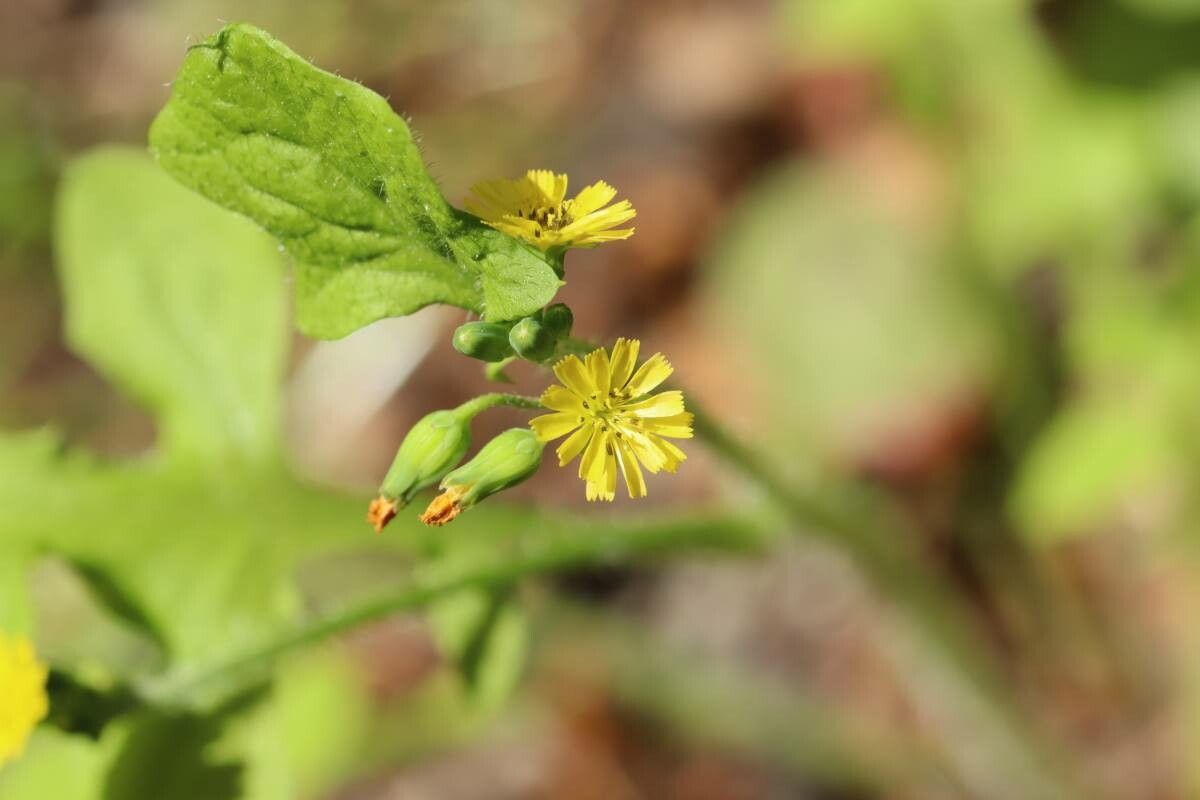
Japanese nipplewort shows good resistance to diseases and is generally not prone to them. Still, it can be affected by pests and diseases present in its environment; these problems are typically not serious. For care, the plant requires a moderate level of maintenance. It should be pruned regularly to preserve a neat appearance and healthy growth. Fertilizing can also encourage flowering. Japanese nipplewort is suitable for anyone with an outdoor area, such as a garden or patio, and does not demand extensive care experience. It may need more attentive care when grown indoors.
How to keep Lapsanastrum Apogonoides.
Light
Japanese nipplewort comes from habitats featuring mottled sunlight like forest undergrowths or rocky places that provide organic shade. It flourishes in semi-sunlight but can also accommodate itself to conditions with full sunlight.
Water
Japanese nipplewort flourishes in environments that are consistently moist, with a strong preference for evenly moist soil to achieve optimal growth. To support its water-dependent processes, it requires weekly watering. The natural rainfall found in temperate regions further aids in its seasonal development by ensuring the plant receives adequate moisture throughout its lifecycle.
Temperature
Japanese nipplewort demonstrates a strong capacity to adjust to temperature changes, as it can endure both high temperatures and substantial fluctuations in temperature. When the temperature increases, it is crucial to monitor watering and supply suitable shade to ward off sunburn. Yet, Japanese nipplewort is fairly susceptible to low temperatures. Although it has some resistance to coldness, extremely low temperatures may result in frost harm.
Fertilizer
Regular, mild applications of fertilizer can aid in the healthful development of leaves in Japanese nipplewort. During the summer, it is advisable to fertilize this plant roughly every month. Incorporating nitrogen, which is vital for leaf growth, into the mix from rich sources can greatly boost the well-being of Japanese nipplewort.
Pruning
Japanese nipplewort benefits greatly from careful pruning from early to late spring, which promotes its health and growth. To improve air circulation, make sure to remove dead stems and thin out crowded areas. Additionally, sterilize your tools to prevent the spread of disease. Regular pruning not only enhances the plant’s shape but also encourages vigorous flowering, resulting in a healthier appearance.
Botanical profile.
- Plant Type
- Herb
- Life Cycle
- Annual, Biennial
- Genus
- Lapsanastrum
- Family
- Asteraceae
- Hardiness Zone
- 7-10
- Mature Height
- 6 cm to 20 cm
- Mature Spread
- 20 cm to 40 cm
- Leaf Color
- Green, Blue
- Leaf Type
- Deciduous
- Flower Color
- Yellow
- Flower Size
- 1.02 cm
- Bloom Time
- Late spring, Early summer, Mid summer
- Planting Time
- Spring, Autumn
- Harvest Time
- Mid summer, Late summer
- Native Area
- South Korea, Japan, China