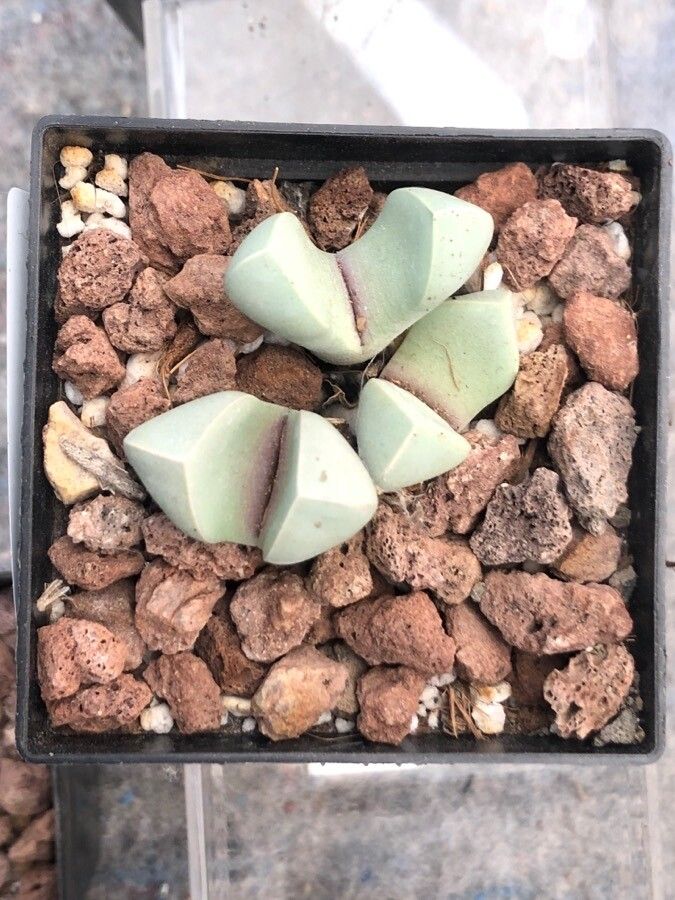
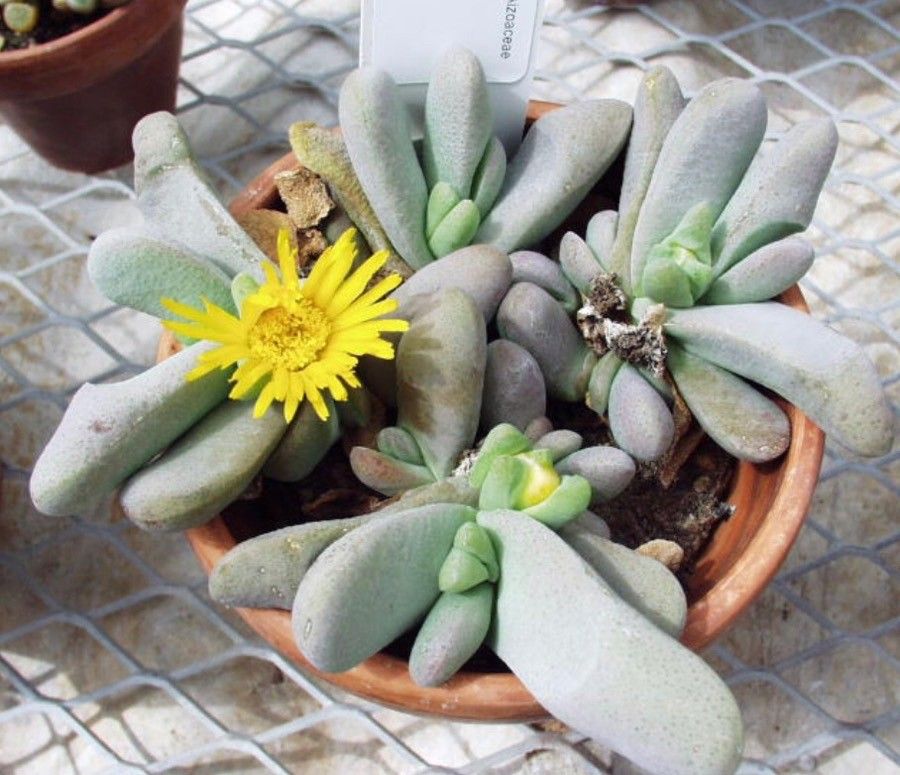
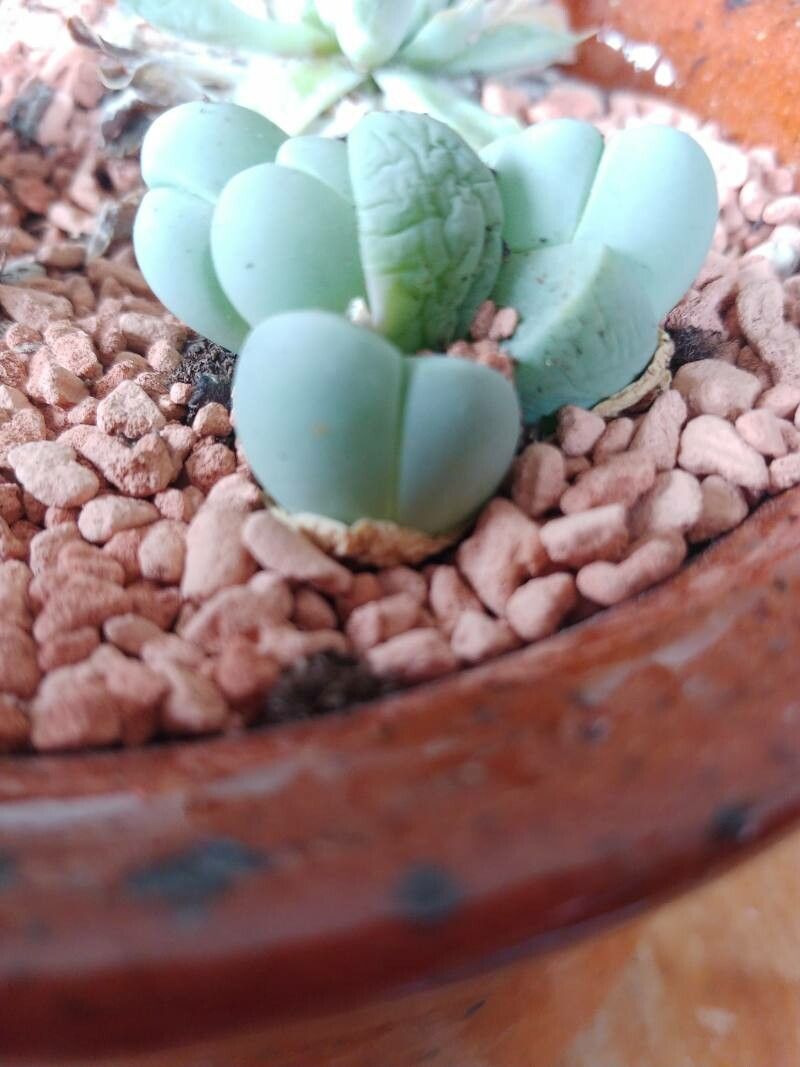
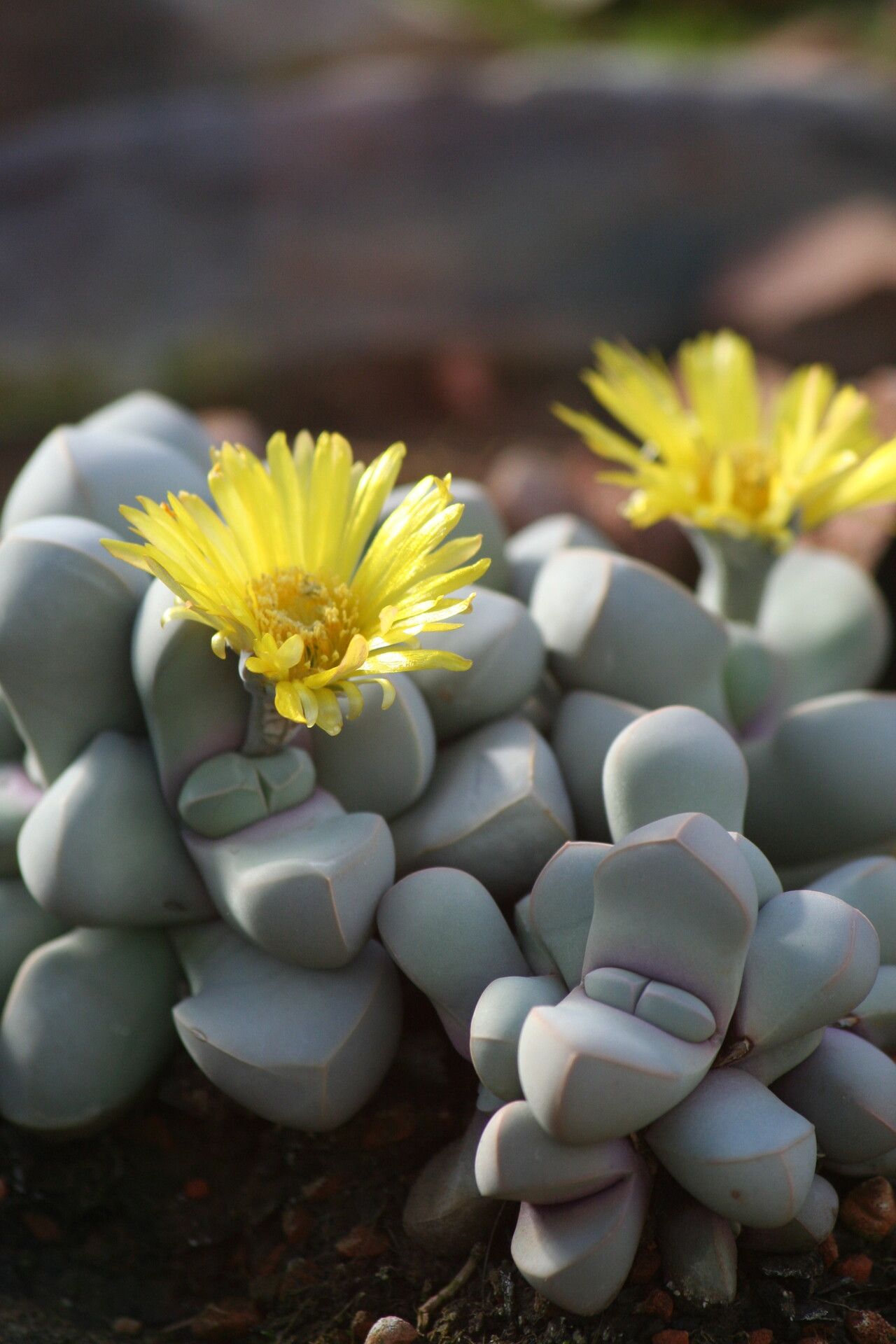
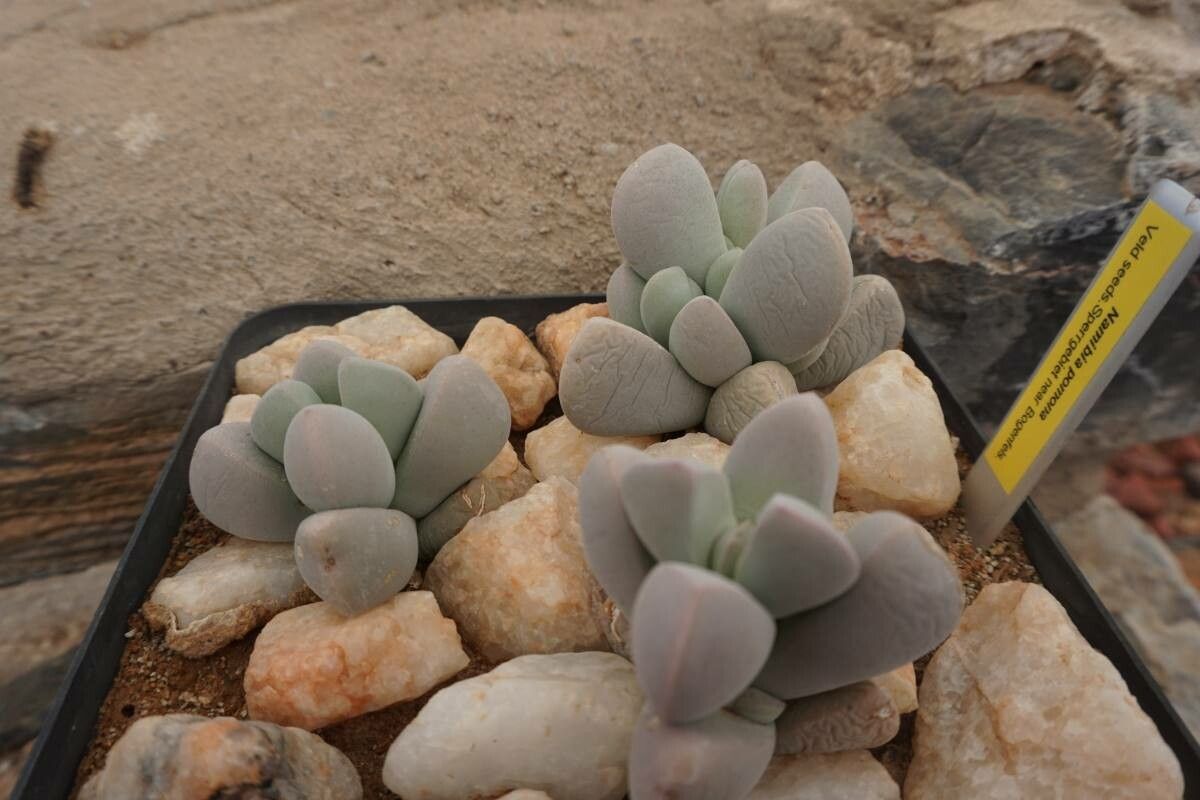
Lapidaria is a monotypic genus of dwarf succulent plants in the family Aizoaceae. The only species it contains is Lapidaria margaretae, also known as the Karoo rose.
The Karoo rose has moderate disease resistance but is more sensitive to humidity. It becomes vulnerable to disease when humidity is high and is prone to root rot during dormancy. In terms of care, the Karoo rose is drought-tolerant but requires more water during the growing season. Watering should be greatly reduced or stopped entirely during the dormant period. The Karoo rose is suited to growers with some experience, though it can be hard to care for, particularly during dormancy. It is especially appropriate for those who can devote time to its care in the winter months.
How to keep Lapidaria Margaretae.
Light
The karoo rose grows best with abundant sunlight and can tolerate moderate light levels. In its native habitat it needs plenty of light to develop vigorously. Too much or too little sun can harm the plant's health and vigor.
Water
The Karoo rose is well adapted to arid conditions and shows excellent drought tolerance. To prevent overwatering, it only needs to be watered every 2–3 weeks. This plant thrives indoors, preferring well-draining soil that mimics its native habitat. This choice of soil not only enhances its ornamental appeal but also highlights its adaptability to dry conditions.
Humidity
This plant prefers dry conditions, so don't mist it. However, watering it less often can also thrive in higher humidity.
Temperature
Karoo rose is a plant native to semi-arid regions where average temperatures range from 68 to 100 °F (20 to 38 ℃). It prefers warmer climates, ideally within that temperature range. Seasonal adjustments may be needed, for instance supplying heat during colder months.
Fertilizer
Light applications of fertilizer once or twice a year during the growing season are enough for Karoo rose. Avoid fertilizing in winter and in summer when it is dormant. Reduce fertilizer for repotted plants and wait a couple of months after repotting before fertilizing. Fertilizing supports healthy growth and encourages blooms.
Pruning
To preserve the shape of the Karoo rose, prune any redundant or dense branches in the spring and autumn using a knife or scissors. For propagation, cut sturdy stems with 5-6 leaves, apply sulfur powder to the cut, and let it heal before planting. Ensure the soil remains slightly moist during this process.
Pot & Repot
When repotting a Karoo rose, pick a pot slightly bigger than the current one that has good drainage. Use a gritty, well-draining cactus or succulent mix. Gently remove the plant from its old pot, brush off excess soil, and set it in at the same depth. Wait a few days before watering to let any root injuries heal. Repot in spring or fall and place it in a brightly lit location.
Botanical profile.
- Plant Type
- Succulent
- Life Cycle
- Perennial
- Genus
- Lapidaria
- Family
- Aizoaceae
- Hardiness Zone
- 9-11
- Mature Height
- 10 cm
- Mature Spread
- 8 cm
- Leaf Color
- Gray, Light Gray
- Leaf Type
- Evergreen
- Flower Color
- Yellow
- Flower Size
- 5.08 cm
- Bloom Time
- Fall
- Planting Time
- Winter
- Harvest Time
- Winter
- Native Area
- South Africa, Namibia
Other names.
Reader questions.
What should I do if I give my Karoo rose too much water or too little water?
The Karoo rose and other succulents are strong and can go without water for a long time, so it's rare to see one suffering from underwatering. However, if you have forgotten to water it for a month or more, your Karoo rose will likely look thirsty and may have some damage. Signs of underwatering include a lackluster appearance, wrinkled leaves, complete drying up, turning brown and crispy, and leaves falling off. To remedy underwatering, give your plant plenty of water by submerging the pot in water for about 5-10 minutes. Once you feel moisture on the surface of the soil, the watering is done properly. Overwatering is dangerous for a Karoo rose and can lead to root rot, which prevents the roots from absorbing nutrients and water. Signs of overwatering include yellow, swollen, and translucent organs that may burst open. If left untreated, the plant may turn brown or black and leaves may fall off easily. Check the soil to confirm if overwatering is the issue. To help an overwatered plant, change the growing conditions, improve air ventilation, and adjust water frequency. Saving an overwatered plant is difficult but catching the issue early is important. If the roots are rotten, it may be impossible to save the plant. Remove the plant from its pot, remove wet soil from around the roots, and rinse them clean. If the majority of the roots are affected by root rot, it may not be possible to save the plant. In that case, remove any healthy stem to propagate a new Karoo rose. If only a portion of the roots have rot, there is still a chance for saving the plant. Use a sterilized cutting tool to remove unhealthy roots and dip the remaining healthy roots in a fungicide. Repot the Karoo rose in fresh, well-draining soil. Although not guaranteed, most plants will fully recover and grow new leaves in the next season.
Why should I put fertilizer on my Karoo rose?
Fertilizing Karoo rose is important for nutrient supply and healthy growth. While it does store water and nutrients, applying plant food during the growing season further supports growth and encourages blooming in mature specimens.
What are the sunlight requirements for a Karoo rose?
The Karoo rose thrives best under abundant exposure to sunlight, requiring conditions that range from full to medium sunlight for optimal growth. Full sun exposure means the plant should receive above 6 hours of sunlight per day, whereas partial sun is about 3-6 hours of sunlight per day. It's important to observe how sunlight moves through your garden, choosing spots that offer a perfect balance of light and shade, to ensure the plant's happiness and health. In its original habitat, the Karoo rose necessitates abundant light for robust growth. Both an overflow and scarcity of sun exposure can adversely affect the plant's health and vigor.
What is the ideal temperature range for Karoo rose?
The Karoo rose thrives in semi-arid regions and prefers warmer climates with average temperatures ranging from 68 to 100 °F (20 to 38 ℃). It requires adjustments per season, including providing heat during colder months to maintain its ideal temperature range, especially when conditions fall below its preferable threshold.
How frequently should I give water to my Karoo rose plant?
Determining how often to water Karoo rose is not set in stone. The simplest way is to check the dryness of the soil and water only when it is completely dry. To do this, you can either use your finger or a moisture meter to check the moisture level beneath the soil surface. If you have planted it in a deep pot, you can use a stick or chopstick to perform the check. If the soil feels even slightly damp, wait a few days and check again. In general, most people will need to water Karoo rose approximately every two weeks during the summer and once a month in the winter. However, there are various factors that can affect the frequency of watering. Some of these factors are listed below to provide assistance in determining the appropriate watering schedule.
When should I fertilize my Karoo rose for the best results?
Karoo rose plants require minimal fertilizer during the growing season. It is recommended to fertilize them 1-2 times a year in the spring and autumn, avoiding winter and summer when they are dormant. When repotting, be cautious and reduce the amount of fertilizer. It is advisable to wait a couple of months after repotting before applying any fertilizer.
How can artificial lighting supplement sunlight for Karoo rose indoors?
Indoor Karoo rose plants require adequate lighting for optimal growth, especially when natural sunlight is insufficient, like during winter or in less sunny spaces. Artificial lights, such as LED lights, are recommended as they can provide the specific wavelengths that plants need. The amount of artificial light needed varies with the type of plant: 30-50W per square foot for full sun plants, 20-30W per square foot for partial sun plants, and 10-20W for full shade plants. The light source should be placed 12-36 inches above the plant to mimic natural sunlight, for about 8-12 hours per day to promote faster, healthier growth.
How should Karoo rose be cared for during winter?
During the winter, the Karoo rose gradually stops growing and enters a dormant state. It is not tolerant of low temperatures and should be moved indoors for cultivation when the outdoor temperature drops below 0°C. A south-facing window is ideal for providing as much sunlight as possible. If natural light is insufficient, supplemental lighting is recommended. Watering should be reduced or stopped to prevent root rot when temperatures fall below 20°C. For outdoor plants, watering should halt in low temperatures, and insulating measures, like setting up a temporary greenhouse or wrapping the plant with plastic film or fabric, may be necessary.
What do I need to think about when watering my Karoo rose plant?
To properly water your Karoo rose, you need to consider several environmental factors such as container size, soil type, temperature, and humidity. The container and soil you choose will determine how often and how much water to use. Make sure the container has drainage holes so excess water can escape. A small container holds less moisture and needs more frequent watering, while a larger pot stays wet longer and requires less watering. Avoid using an oversized pot as it can lead to overwatering. When repotting, go up just one size larger than the current container and use a shallow container since Karoo rose has shallow roots. In terms of watering frequency, Karoo rose needs less water in winter and more water during the active growing seasons of spring and autumn. In winter, growth slows down and the plant doesn't require as much water or energy. The cooler air also reduces evaporation, keeping the soil wet for longer periods. The climate of your location also affects watering needs. In humid areas with frequent rainfall, you'll need to water less compared to dry and arid climates. Keep in mind that conditions can vary even within the same geographic location due to seasons and indoor heating or air conditioning. If you have planted Karoo rose in the ground, it should only need supplemental water during long dry periods as it receives moisture from precipitation and dew. However, if it's in a container, you can move it outdoors during suitable spring and summer temperatures and bring it back inside when temperatures drop. Outdoor potted Karoo rose will generally require more water due to increased sun exposure, even on a shaded porch.
When is it a bad idea to add fertilizer to my Karoo rose?
Karoo rose, like many other plants, undergoes a dormancy period where it stops growing. During the summer and winter, it is best to avoid applying fertilizer. It is also recommended to refrain from fertilizing for a few months after repotting in the spring.
What are the symptoms of insufficient light in Karoo rose?
When Karoo roses are placed in areas with suboptimal lighting, they may exhibit symptoms indicating a deficiency in light. These symptoms include smaller new leaves, leggy or sparse growth, faster leaf drop, slower or no new growth, lighter-colored new leaves indicating a lack of chlorophyll and essential nutrients, chlorosis where leaves lose their green color and turn yellow, sunscald that appears as pale or necrotic areas on the plant, leaf curling as a defense against excessive sunlight exposure, wilting due to increased water loss through transpiration, and leaf scorching characterized by brown, dry edges on leaves.
What are the symptoms and solutions for Karoo rose in low temperatures?
Karoo rose is not tolerant of low temperatures, growing best above 20°C and requiring protection to stay above 0°C during winter. Exposure to temperatures below -5°C may lead to the plant becoming weak, wilting, and prone to root rot. Mild frost damage might not show immediate symptoms, but the plant may wither gradually over a week. The solution includes trimming frostbitten areas, removing rotted roots, propagating through cuttings if necessary, and moving the plant to a warm environment indoors near a south-facing window, using supplemental lighting if needed.