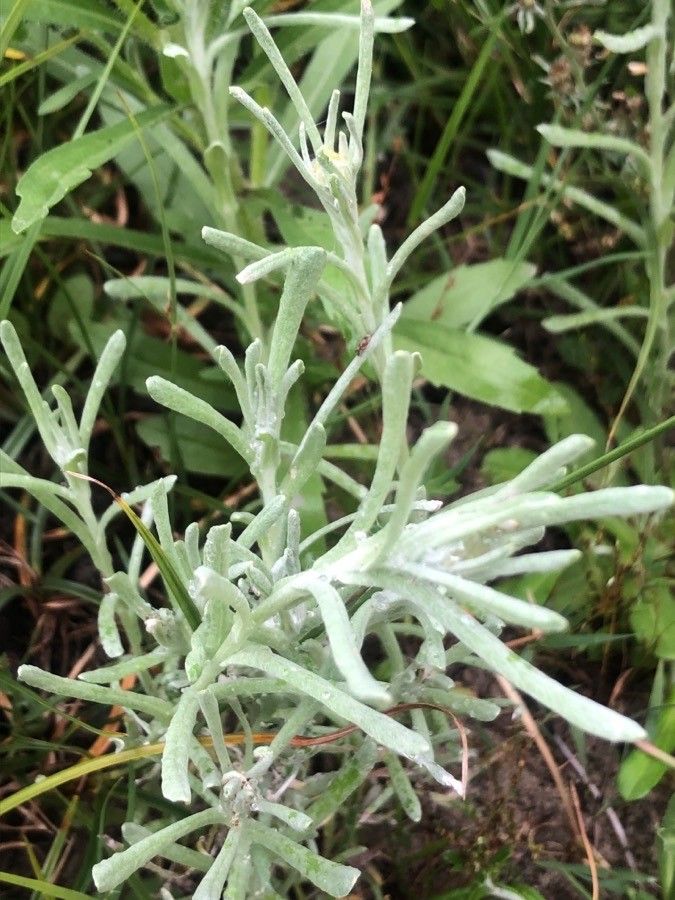
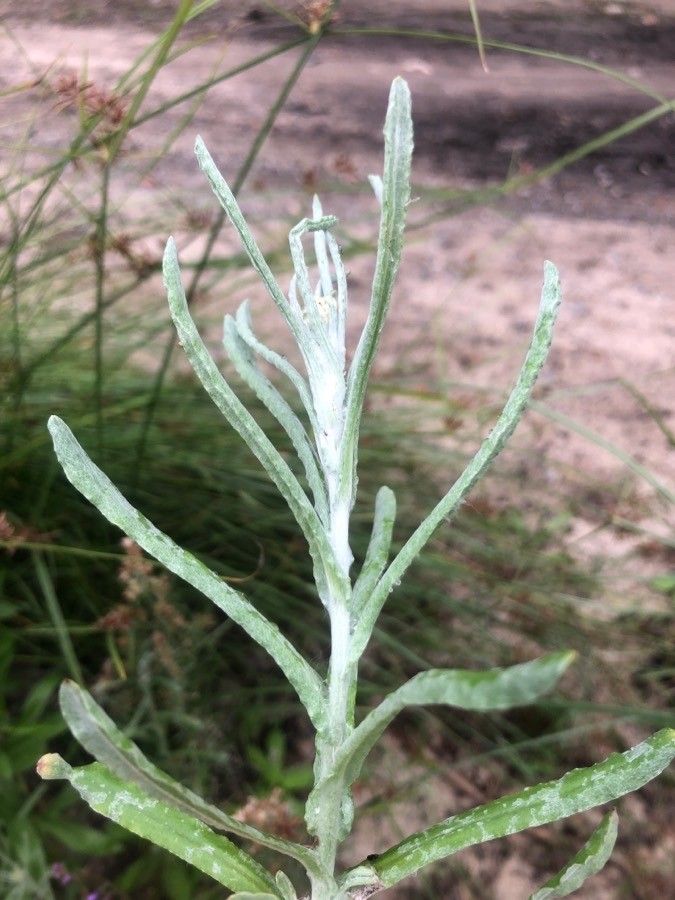
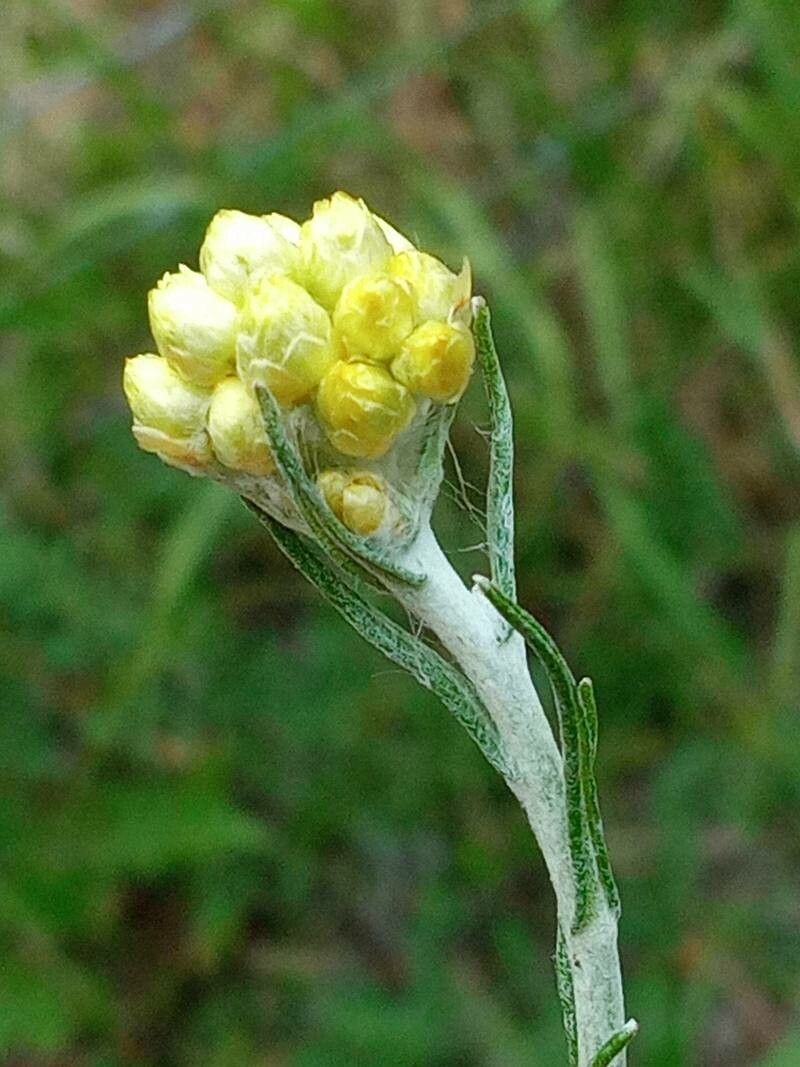
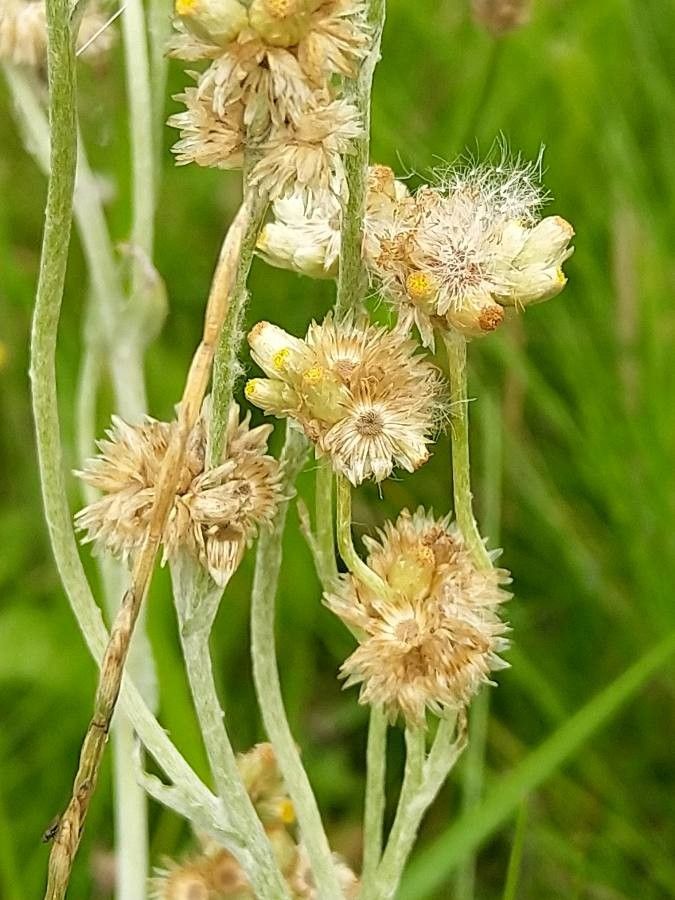
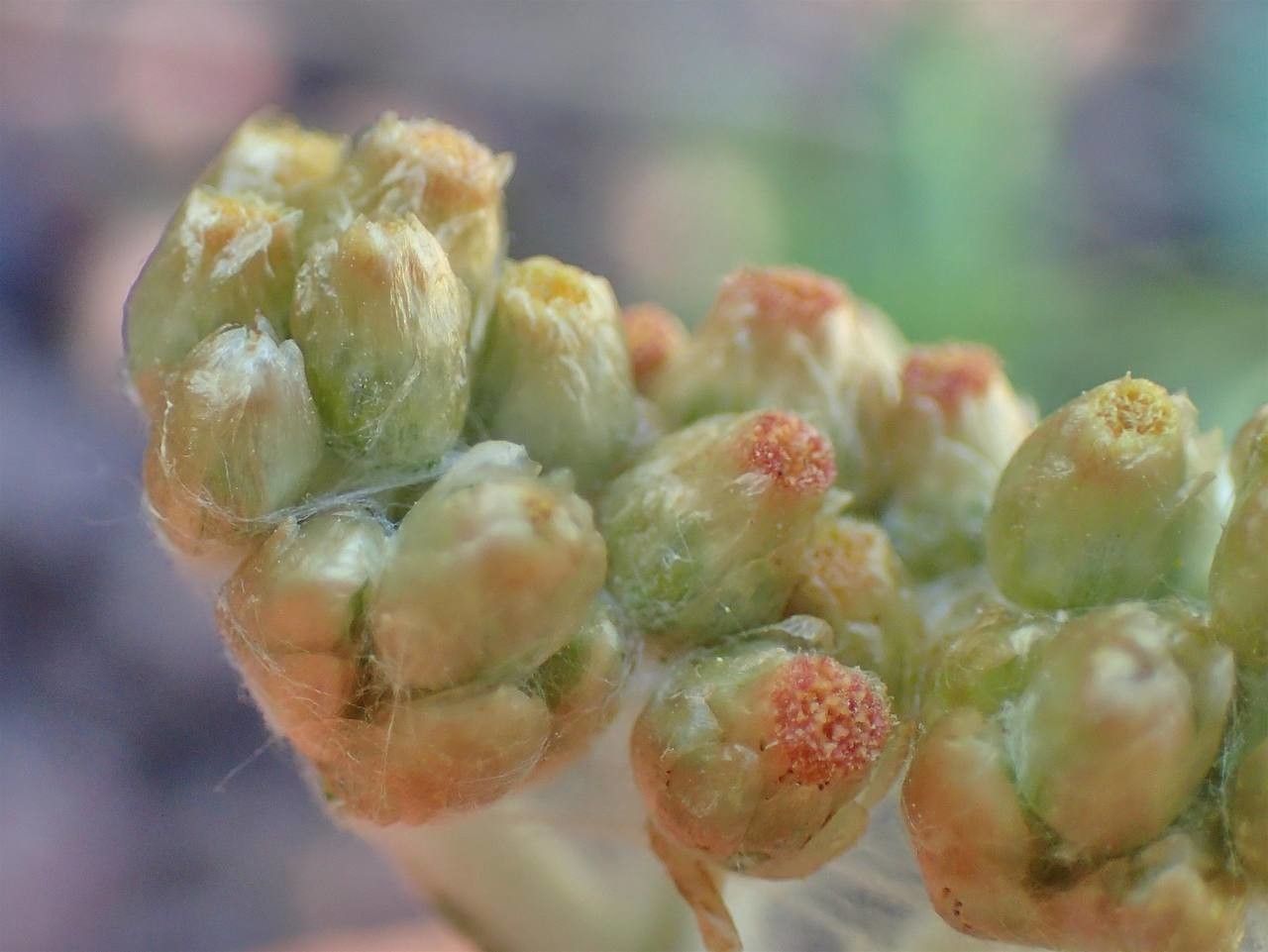
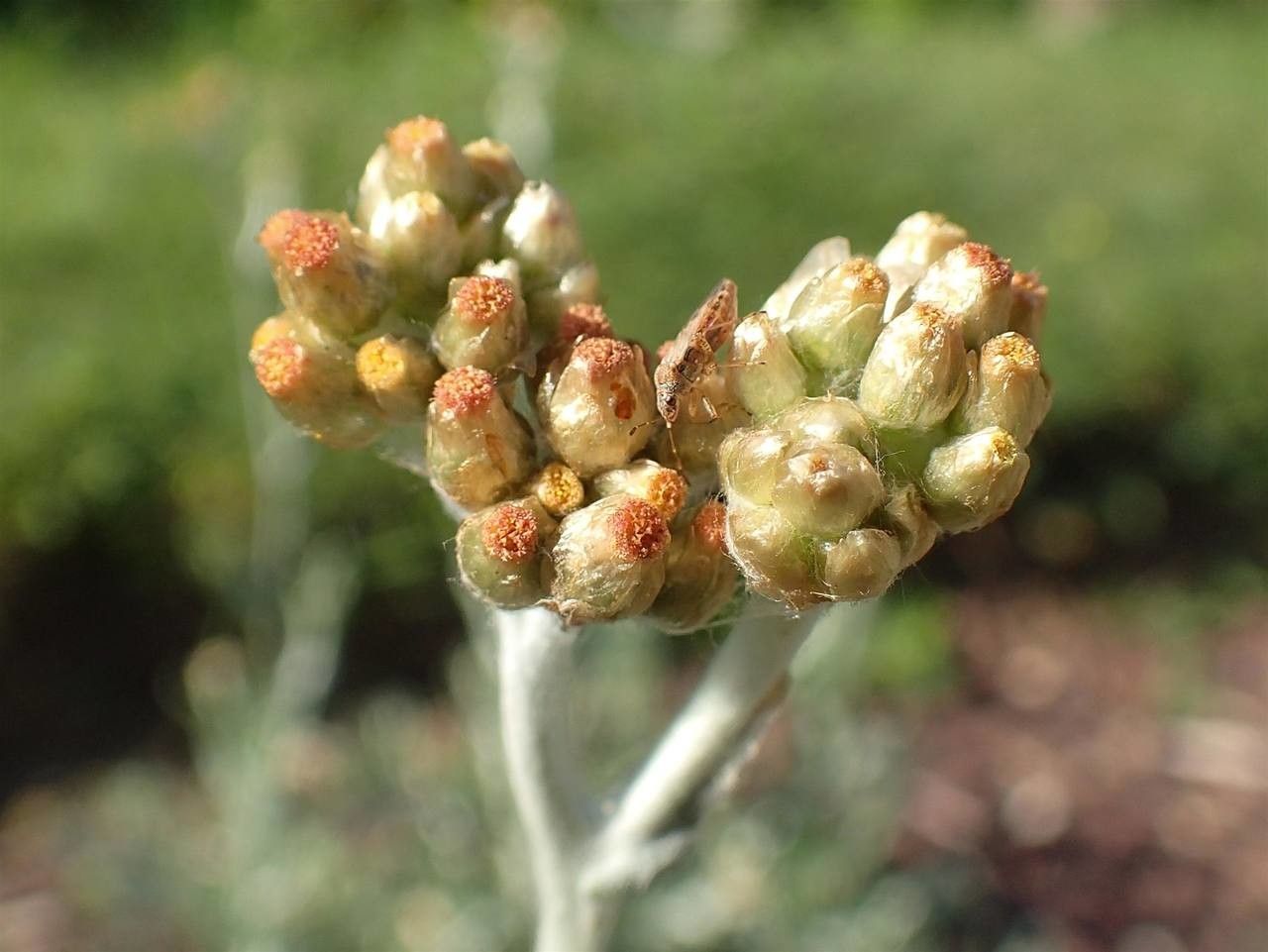
Laphangium luteoalbum, commonly known as the yellow-white laphangium, is a perennial herbaceous plant belonging to the family Asteraceae. Native to various regions of Europe, including the Mediterranean and Balkan areas, this plant typically grows between 30 to 60 cm in height. It features a woody base with several stems covered in small hairs. The leaves of Laphangium luteoalbum are alternate, lanceolate, and have serrated edges. Its small, yellow-white flowers are arranged in clusters at the end of each stem and bloom from June to August. This plant prefers well-drained, nutrient-rich soils but can also tolerate dry conditions. It commonly grows on rocky slopes or meadows at altitudes ranging from 200 to 1,500 meters above sea level. Historically, Laphangium luteoalbum has been used for its medicinal properties, particularly for its anti-inflammatory effects. Leaves have been used as poultices to treat wounds and skin irritations, while the roots have been employed as a remedy for digestive issues. In summary, Laphangium luteoalbum is a fascinating herbaceous plant with both ornamental and medicinal value, making it worth considering for cultivation or conservation efforts.
Jersey cudweed has strong disease resistance and is generally not prone to illnesses. Still, it can be affected by pests and diseases present in its surroundings. Such infections are usually mild. For care, this plant requires a moderate amount of maintenance. It should be pruned regularly to keep a neat appearance and promote healthy growth. Fertilizing can also help boost flowering. Jersey cudweed is suitable for anyone with outdoor space, like a garden or patio, and does not demand extensive care experience. It may need more attention if grown indoors.
How to keep Laphangium Luteoalbum.
Light
Jersey cudweed thrives with plenty of sunlight, though it can also tolerate dimmer conditions. It is adapted to environments where light is abundant and steady. Excessive or insufficient sunlight can affect its healthy growth, changing its natural color and development.
Temperature
Jersey cudweed is a plant that prospers in its native temperate environment where temperatures range from 68 to 95 °F (20 to 35 ℃). It should be kept within this temperature band to thrive. Seasonal adjustments might be necessary in climates that are hotter or colder.
Fertilizer
Jersey cudweed benefits from regular, dilute fertilizer applications to encourage healthy leaf development. You should apply fertilizer about once a month during the summer. Nitrogen is important for the foliage, and supplying nitrogen-rich sources helps Jersey cudweed thrive.
Botanical profile.
- Plant Type
- Herb
- Life Cycle
- Annual, Biennial
- Genus
- Laphangium
- Family
- Compositae
- Hardiness Zone
- 5-9
- Mature Height
- 61 cm
- Mature Spread
- 30 cm
- Leaf Color
- Green
- Leaf Type
- Semi-evergreen
- Flower Color
- White, Yellow
- Flower Size
- 2.54 cm
- Bloom Time
- Early summer, Mid summer
- Planting Time
- Spring
- Harvest Time
- Mid summer
- Native Area
- Burkina Faso, Libya, India, Turkey, Sweden, Slovakia, Madagascar, Montenegro, Pakistan, Slovenia, Croatia, Morocco, Belarus, Benin, Germany, Indonesia, Cameroon, Ethiopia, Romania, Belgium, Moldova, Netherlands, Central African Republic, Portugal, Saudi Arabia, Tunisia, Philippines, Bulgaria, Bangladesh, Laos, Cyprus, Turkmenistan, Ukraine, New Zealand, Chad, China, Lebanon, Afghanistan, Syria, Italy, Kazakhstan, Senegal, Eswatini, Iran, Azerbaijan, Lesotho, Egypt, Angola, Austria, Namibia, Eritrea, Yemen, Zimbabwe, Uzbekistan, Russia, Mali, Iraq, Oman, Qatar, Botswana, France, Tajikistan, Czech Republic, South Africa, Sudan, Mauritania, Zambia, Poland, Greece, Guinea, Serbia, Lithuania, Hungary, Spain, Switzerland, Vietnam, Myanmar, Denmark, Albania, Ireland, United Kingdom, Algeria, Thailand
Other names.