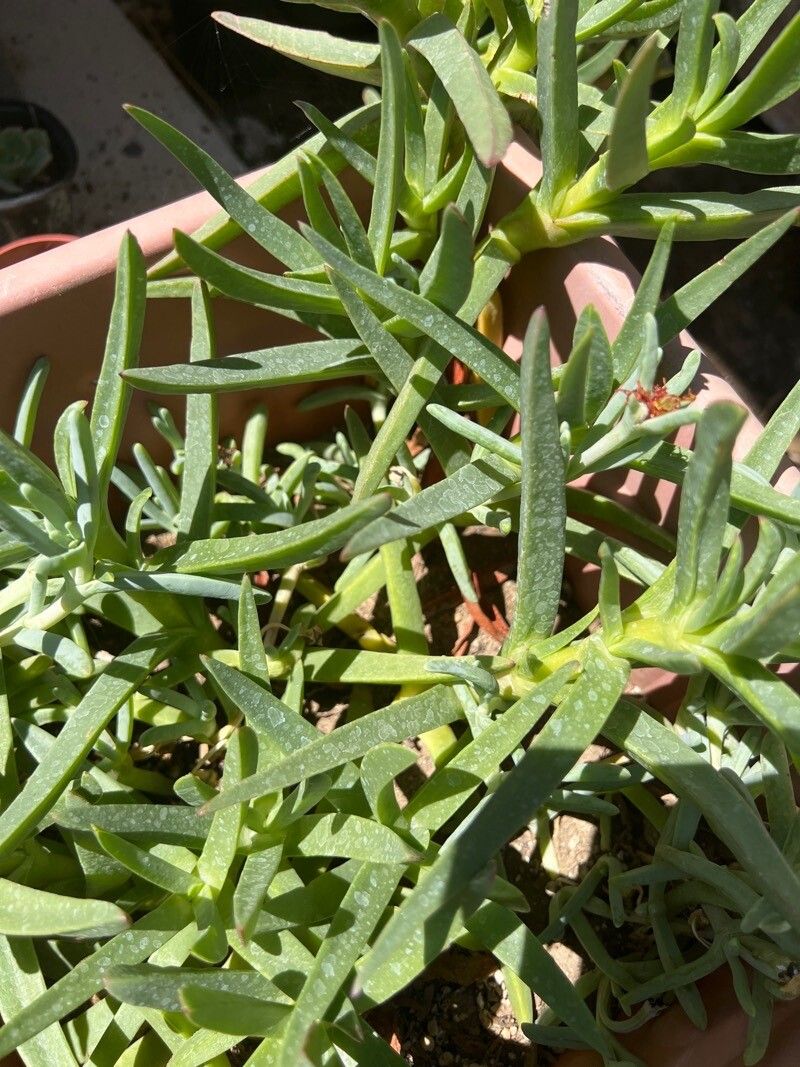
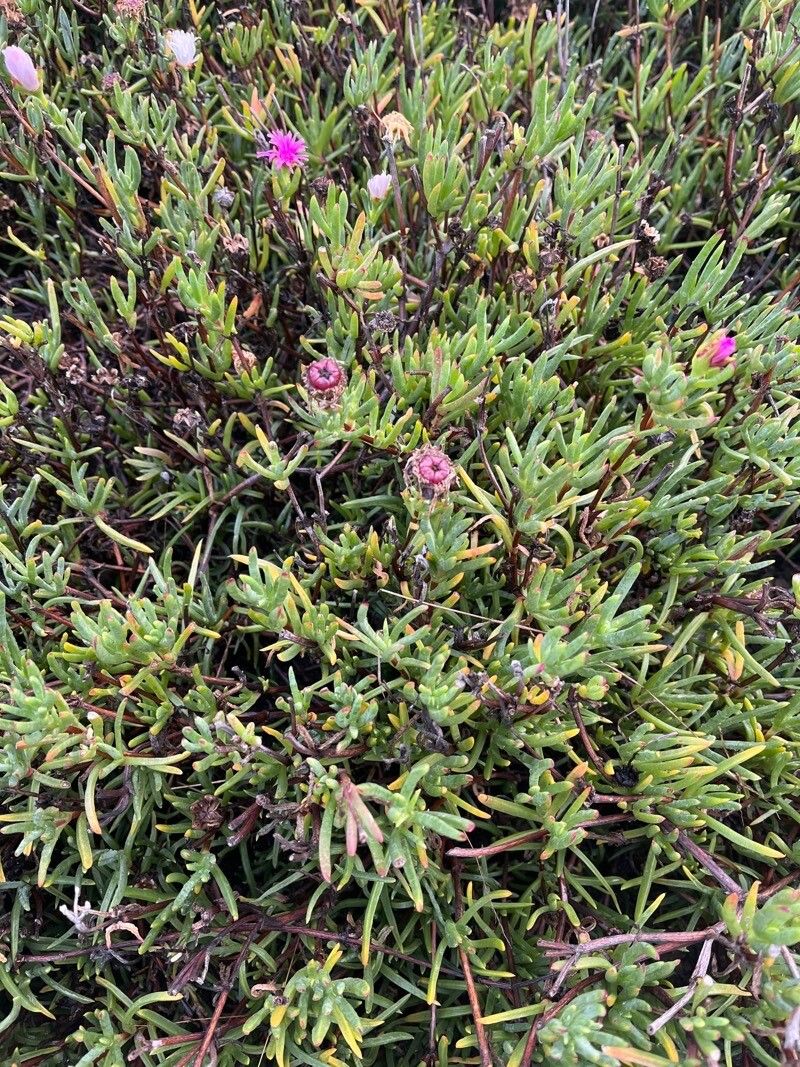
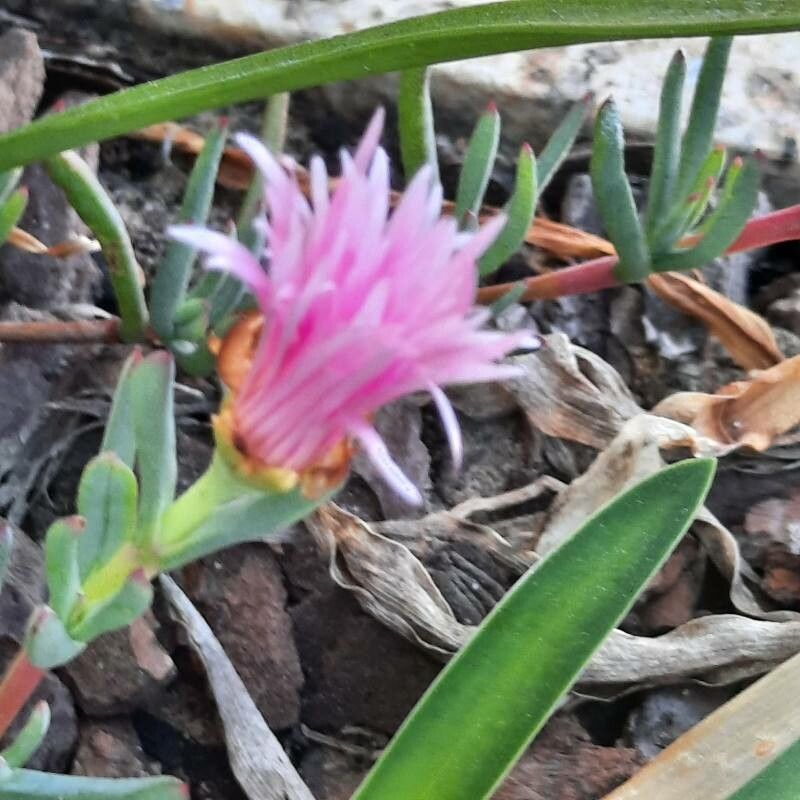
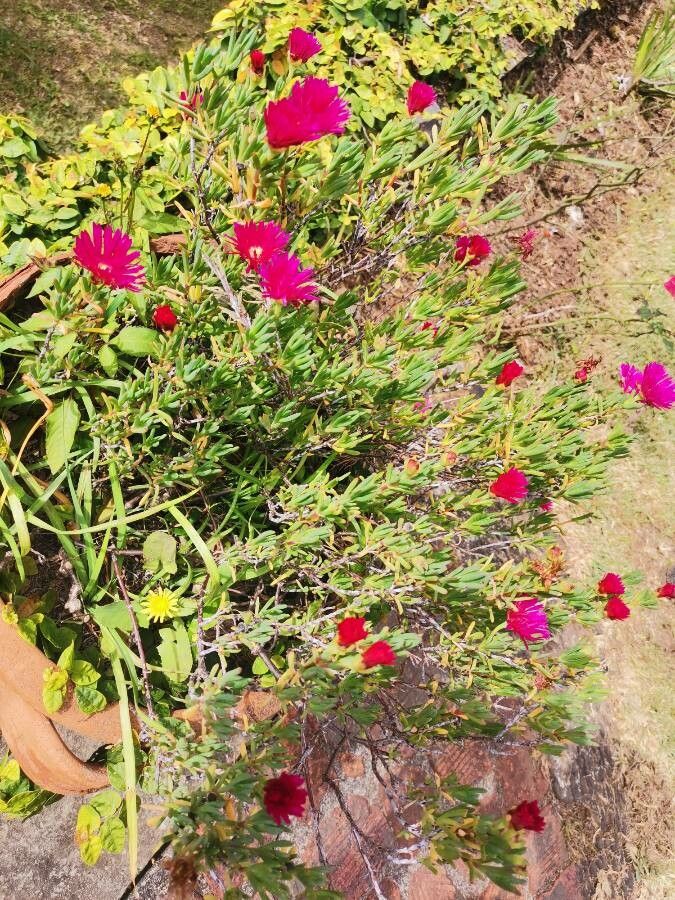
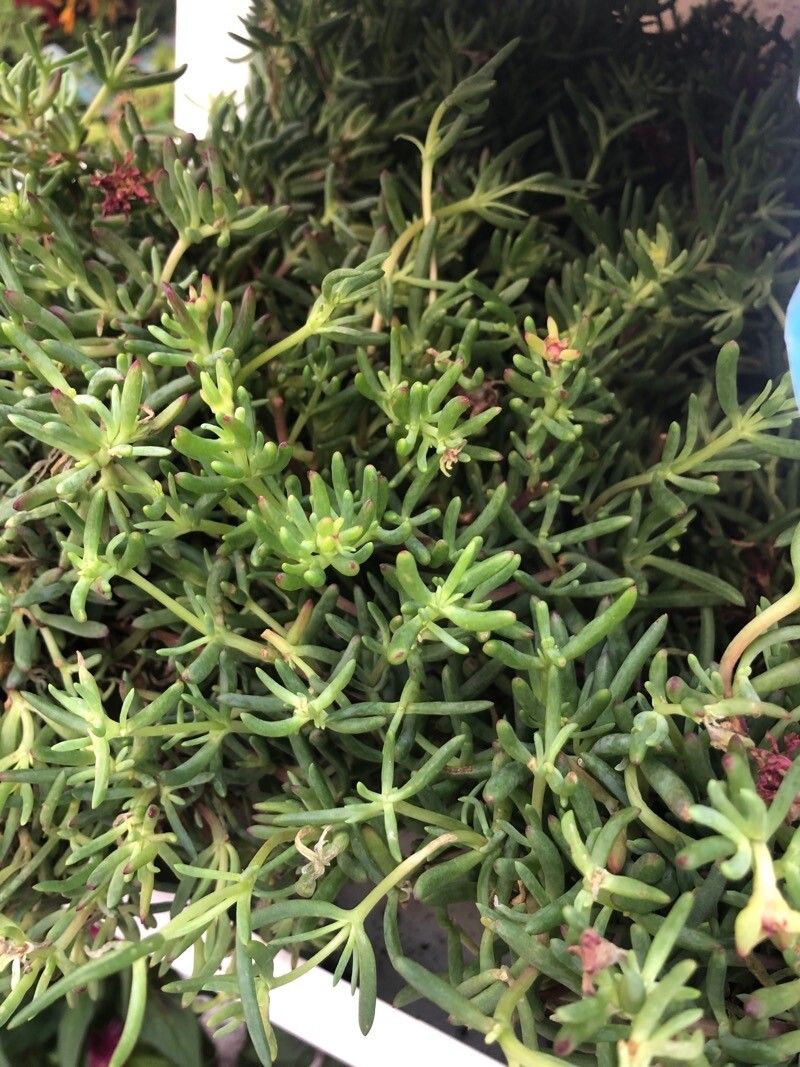
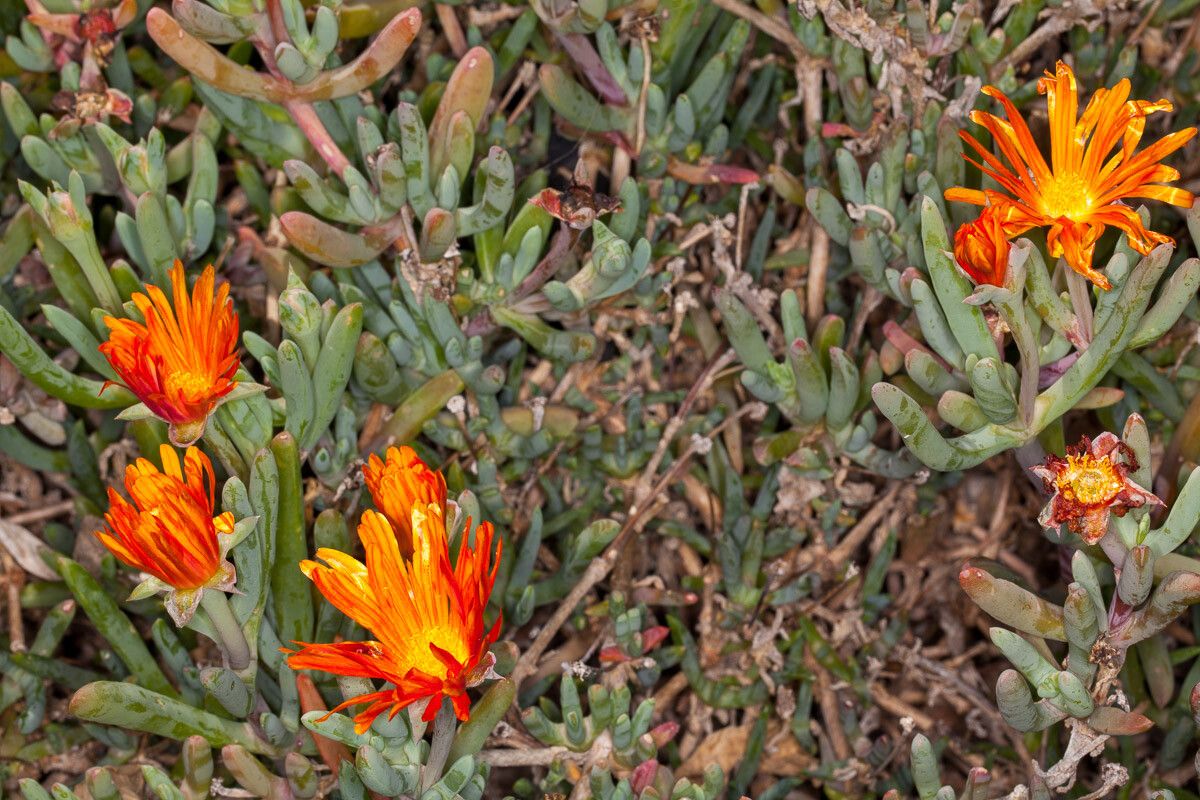
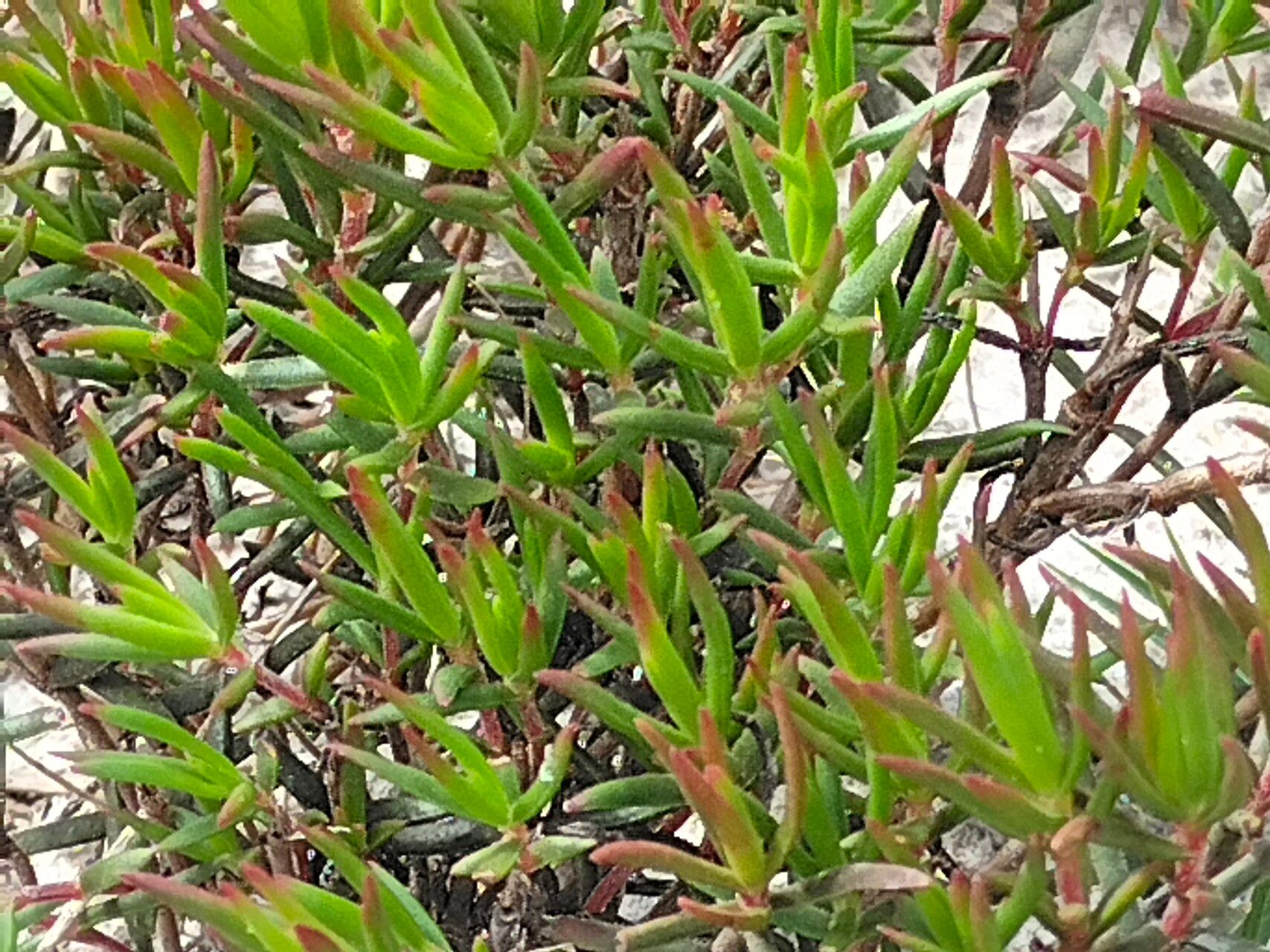
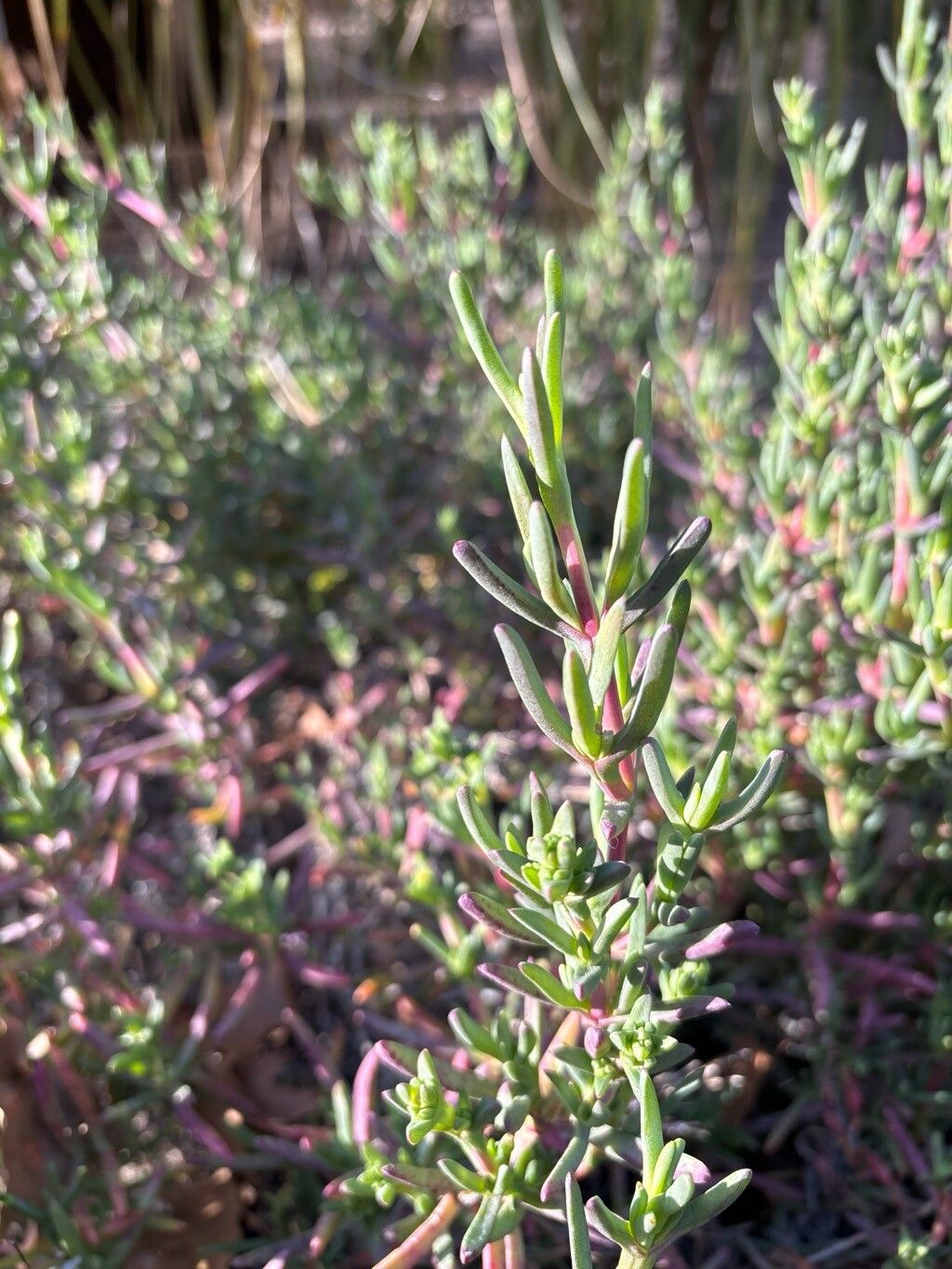
Lampranthus spectabilis is a succulent plant species from the Aizoaceae family, commonly referred to as the Trailing Ice Plant or Purple Vygie. Native to South Africa, this plant exhibits a trailing growth habit and can reach up to 30 cm in height. Its fleshy, cylindrical leaves are usually green but may turn purple or red under stress.
The Lampranthus spectabilis produces large, showy flowers that bloom from late spring through summer. These daisy-like flowers feature bright pink-purple petals and yellow centers. The flowers are diurnal, opening during the day and closing at night.
This plant thrives in full sun but can tolerate partial shade. It prefers well-draining soil with low fertility levels, making it an excellent choice for rock gardens or dry landscapes where other plants often struggle.
Although Lampranthus spectabilis is drought-tolerant once established, it requires regular watering during its first growing season for proper establishment. Occasional fertilization during its active growing period can also promote better health and growth.
In summary, Lampranthus spectabilis is an attractive succulent that adds color and texture to any garden with minimal maintenance once established.
Trailing ice plant has moderate disease resistance and is more vulnerable to humidity and excess watering. It becomes more prone to illness when it lacks light and is overwatered. Regarding care, trailing ice plant is drought-tolerant and can withstand long stretches without water. It requires little fertilizer and only occasional pruning. This makes it suitable for growers at any skill level, especially those who prefer to spend less time on plant care and who may be away from home for extended periods. It is a good option for people who do not want to devote a lot of time to plant care but still want an easy-to-maintain plant.
How to keep Lampranthus Spectabilis.
Light
The trailing ice plant grows best when it receives as much sunlight as possible. It can still do well in spots with moderate light, though not as spectacularly. Excessive shade will weaken the plant, while strong sun exposure boosts its vigor and flowering.
Water
The trailing ice plant is well-suited for arid conditions, thanks to its ability to conserve water with its thick, fleshy leaves. To prevent root rot, it should be watered weekly. While it is drought-tolerant, if grown outdoors in full sun, it may need more frequent watering during periods of extreme heat to offset increased evaporation.
Temperature
The trailing ice plant originates from regions that commonly have high temperatures. It grows best between 68 and 100 ℉ (20 and 38 ℃) and is vulnerable to frost. During the summer months, this plant needs frequent watering to cope with the heat.
Fertilizer
For trailing ice plant, light applications of fertilizer once or twice a year during the growing season are sufficient. Do not fertilize in winter or summer when the plant is dormant. Cut back on fertilizer for repotted plants and wait a couple of months after repotting before feeding. Fertilizing helps maintain healthy growth and promotes blooms.
Pruning
To maintain their shape, prune large succulent plants, such as the trailing ice plant, in the spring and autumn by removing any redundant or dense branches. For propagation, choose sturdy stems with 5-6 leaves. Cut these stems and apply sulfur powder to the cut area to promote healing. Once the wound has healed, plant the stems. Make sure to gently moisten the soil for the cuttings using a watering can.
Pot & Repot
When repotting Trailing ice plant, choose a pot slightly larger than the current one that has good drainage. Use a gritty, well-draining cactus or succulent mix. Gently remove the plant from its old pot, brush off excess soil, and set it back in at the same depth. Delay watering for a few days to allow any root damage to heal. Repot in spring or fall and place it in a brightly lit location.
Botanical profile.
- Plant Type
- Succulent, Herb
- Life Cycle
- Perennial
- Genus
- Lampranthus
- Family
- Aizoaceae
- Hardiness Zone
- 10-11
- Mature Height
- 25 cm
- Mature Spread
- 30 cm to 61 cm
- Leaf Color
- Green, Gray
- Leaf Type
- Evergreen
- Flower Color
- Purple, Pink
- Flower Size
- 5.08 cm
- Bloom Time
- Early spring, Mid spring, Fall, Winter
- Planting Time
- Autumn, Winter
- Harvest Time
- Spring, Mid fall, Late fall, Winter
- Native Area
- South Africa
Other names.
Reader questions.
What should I do if I give my Trailing ice plant too much or too little water?
Trailing ice plants and other succulents are typically able to withstand long periods without water, so it's rare to find them suffering from underwatering. However, if you forget to water your Trailing ice plant for a month or more, you'll likely notice that it looks thirsty or damaged from lack of watering. Identifying an underwatered Trailing ice plant is fairly easy. The plant will appear lackluster and wrinkled. Some leaves may have dried up completely, turned brown and crispy, or fallen off. Additionally, the soil will be completely dried out. To remedy this, give your Trailing ice plant plenty of water as soon as possible. A good method is to submerge the pot entirely in water for about 5-10 minutes, ensuring that the soil and plant are properly rehydrated. When you feel moisture on the surface of the soil with your finger, you can consider the watering process complete. Overwatering is dangerous for Trailing ice plants and can be fatal if not addressed. Excess moisture over time can lead to root rot, preventing the roots from absorbing nutrients and water from the soil. Root rot occurs when wet conditions allow fungi and bacteria to thrive in the soil and feed on the roots. If you notice that your Trailing ice plant is overwatered, it's important to adjust the growing conditions by providing more air ventilation and adjusting the frequency of watering. The symptoms of overwatering include yellow, swollen, and translucent parts, which may even burst open from being filled with water. If left untreated, the plant may turn brown or black and easily fall off. To determine if overwatering is the issue, it's important to check the soil, as similar symptoms can be caused by other problems. Saving an overwatered plant can be challenging, but not impossible. Catching the issue early before significant damage is essential. If the roots have developed rot, it is likely that the entire plant will be affected. If you suspect your Trailing ice plant is overwatered, the first step is to remove it from its pot and inspect the roots and soil. After removing the plant from its pot, gently remove the wet soil from around the roots and rinse them with room-temperature water. This will help eliminate any lurking fungus in the soil and provide a better understanding of the root's health. If root rot is present, you will notice dark brown or black, soft, mushy, or slimy roots. If the majority of the roots are affected by root rot, saving the plant may not be possible. In this case, it's best to remove any healthy stems and attempt to propagate a new Trailing ice plant. However, if only a portion of the roots are affected and healthy roots remain, there is a chance of saving the plant. Using a sterilized cutting tool, remove any unhealthy-looking roots. Once you're left with firm and pale roots, it's recommended to dip them in a fungicide to eliminate any remaining spores. Afterward, you can repot your Trailing ice plant in fresh, well-draining potting soil. While this method doesn't always work for succulents with root rot, in most cases, the plant will recover and begin new growth in the next growing season.
Why is it important to add fertilizer to my Trailing ice plant?
Applying plant food during the growing season to trailing ice plant provides added nutrients to support healthy growth. While it does store water and nutrients, fertilizing can also promote the production of blooms in mature specimens during this time.
How much sunlight does the Trailing ice plant need in order to grow?
To ensure the proper growth of trailing ice plant, it is recommended to provide a minimum of 6 hours of sunlight daily. However, more sunlight is preferable. While the exact minimum hours may vary depending on sunlight intensity and environmental conditions, it is unlikely that the plant will receive excessive sunlight. In fact, trailing ice plants can thrive with up to 14 hours of sunlight each day.
What is the best temperature for your Trailing ice plant?
To keep the Trailing ice plant thriving, it thrives best within a specific range of conditions. Ideally, it should be exposed to temperatures between 75-90℉ (25-32℃). In the early winter, it's crucial that the temperature doesn't drop below 75℉(25℃) for this plant. If needed, you can bring it indoors for added protection against extreme temperatures. While the Trailing ice plant can tolerate some extreme temperatures, it's not ideal. It may survive in low temperatures like 50℉ (15℃), but it's recommended to bring it indoors during winter conditions.
How much should I water my Trailing ice plant?
Determining how often to water Trailing ice plant is not a fixed rule. The best approach is to check the soil and only water when it is completely dry. To do this, you can either insert your finger or use a moisture meter to assess the moisture level below the surface. If you have planted it in a deep pot, you can use a stick or chopstick to perform the test. If the soil feels slightly moist, it is advisable to wait a few days before checking again. Generally, most people will need to water Trailing ice plant approximately every two weeks during summer and once a month in winter, although this can vary depending on certain factors. The following section provides some considerations to help determine the appropriate watering frequency.
When should I fertilize my Trailing ice plant?
Trailing ice plant, like other plants, benefits from additional nutrients. However, it only requires a light dose of fertilizer during the growing season. It is recommended to fertilize the plant 1-2 times a year, specifically in spring and autumn. Avoid fertilization during winter and summer when the plant is dormant. If you have repotted the plant, use less fertilizer and wait a few months before starting to apply it.
What kind of sunlight does Trailing ice plant require?
Trailing ice plants thrive with lots of bright sunlight. They are full-sun plants that can do well with direct light or bright indirect sun. While some types can survive with partial sun, more sunlight usually leads to better growth.
How do I change the temperature for my Trailing ice plant as it grows?
Trailing ice plant has various growing phases. Firstly, the dormant seeds require specific environmental conditions, with a temperature of 75-90℉ (25-32℃), in order to germinate and transform into seedlings. To maximize its growth, it is recommended to expose the plant to temperatures around 85℉(30℃) during the summer. Therefore, during the hot summer months, you can move your Trailing ice plant from indoors to a sunny spot to ensure it receives adequate sunlight.
What do I need to think about when I water my Trailing ice plant?
To properly water your Trailing ice plant, there are various environmental factors to consider, such as container size, soil type, temperature, and humidity. The size of the container and type of soil used will determine the frequency and amount of water needed. Ensure that the container has enough drainage holes to allow excess water to escape. A small container holds less soil and moisture, requiring more frequent watering, while a larger pot retains moisture longer, needing less frequent watering. Avoid using an oversized pot as it can lead to overwatering. When repotting, move to a container just one size larger than the current one, preferably a shallow one, as Trailing ice plants have shallow root systems. In terms of seasons, Trailing ice plants should be watered less often during winter when growth slows down, and more frequently during the active growing seasons of spring and autumn. The cooler winter air results in less evaporation, causing the soil to remain wet for longer periods. Additionally, the general climate of your location affects watering needs. If you reside in a humid and rainy area, watering will be required less frequently compared to dry and arid climates. It's important to note that conditions can vary even within the same geographical location, depending on the season and indoor heating or air conditioning usage. For Trailing ice plants planted in the ground, once their root system is established, they generally don't require additional watering beyond natural precipitation and dew. However, during extended dry periods, occasional watering may be necessary. In regions where the plant can only be grown in a container, it can be moved outdoors during suitable spring and summer temperatures, returning indoors as temperatures begin to drop. Keep in mind that potted Trailing ice plants kept outside typically need more water due to increased sun exposure, even if placed on a shaded porch.
When is the best time to not fertilize my Trailing ice plant?
The Trailing ice plant, like other plants, goes through a dormant period. During this time, it is best to avoid using fertilizer. This happens in the summer and winter when the plant stops growing. It is also recommended to refrain from fertilizing for the first few months after repotting in the spring.
Should I keep the trailing ice plant away from direct sunlight?
Trailing ice plant thrives in hot, sunny environments and is well-suited to this type of climate, meaning it does not require sun protection. However, if you're considering relocating your Trailing ice plant to a very sunny spot that it isn't accustomed to, caution is advised. Plants need time to adjust to different conditions. To acclimate your Trailing ice plant, start by gradually exposing it to a couple of hours of sunlight each day, then progressively increase the duration of sun exposure. Once acclimatized, most varieties of Trailing ice plant will thrive in full sun without requiring any additional protection.
How do I keep my Trailing ice plant warm when it's cold outside?
To protect your Trailing ice plant from the harsh winter conditions, it's best to bring it indoors. Some people choose to purchase grow lights to ensure the plants receive enough sunlight. However, if your home is not very dark, buying these lights may not be necessary. Instead, place your plants where they can receive the most sunlight possible. In winter, there should be enough light to keep the Trailing ice plant thriving. If you have multiple plants, rotate their positions to ensure they all get enough sunlight. If you live in northern areas with frigid weather, be cautious about placing your Trailing ice plant too close to the window. The extreme cold could damage them.