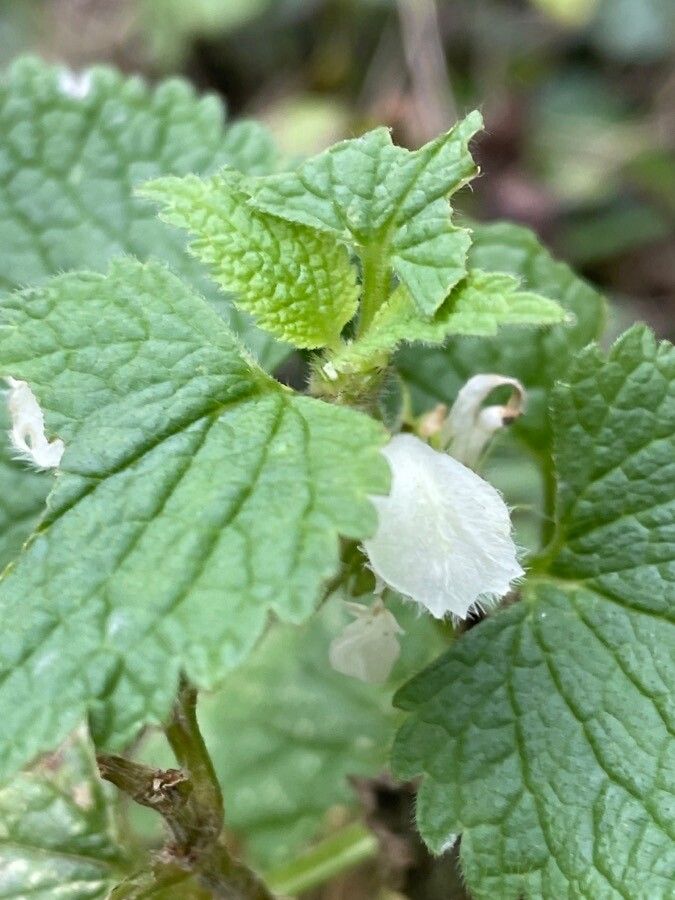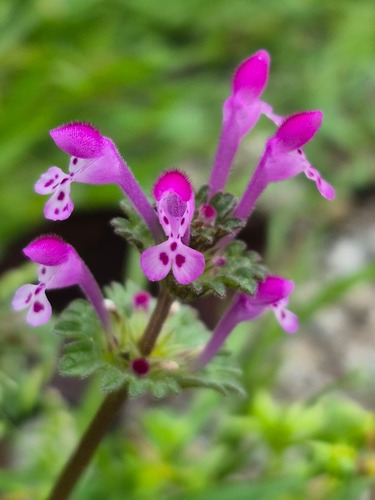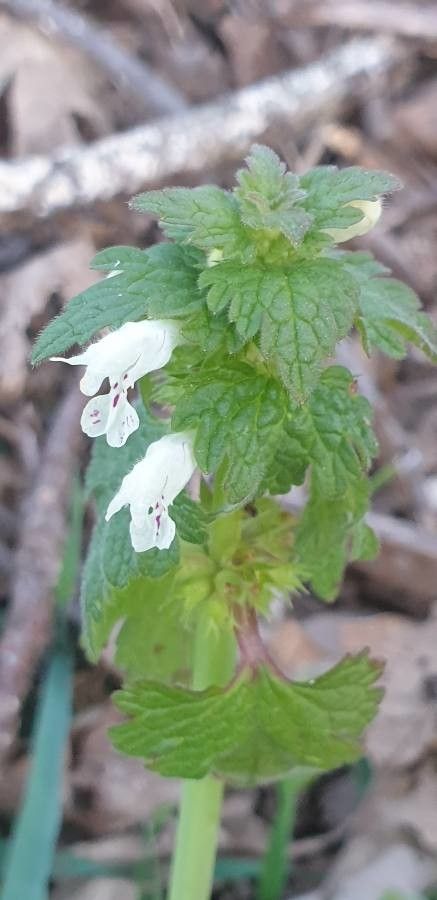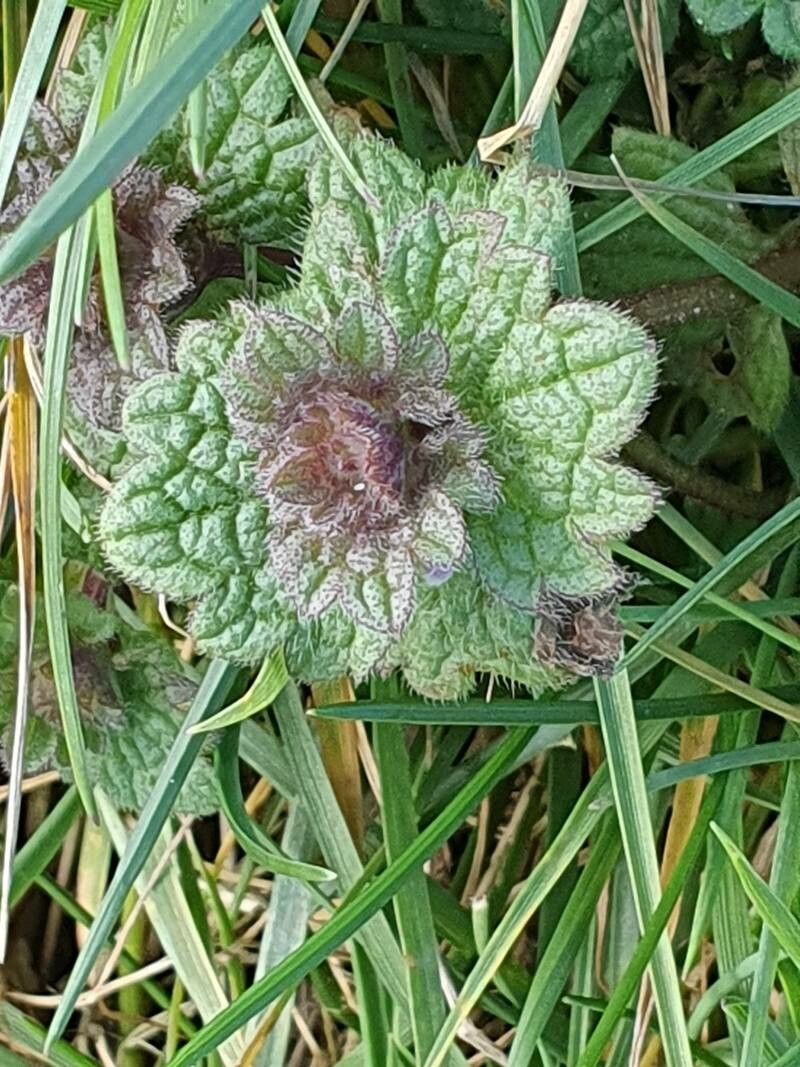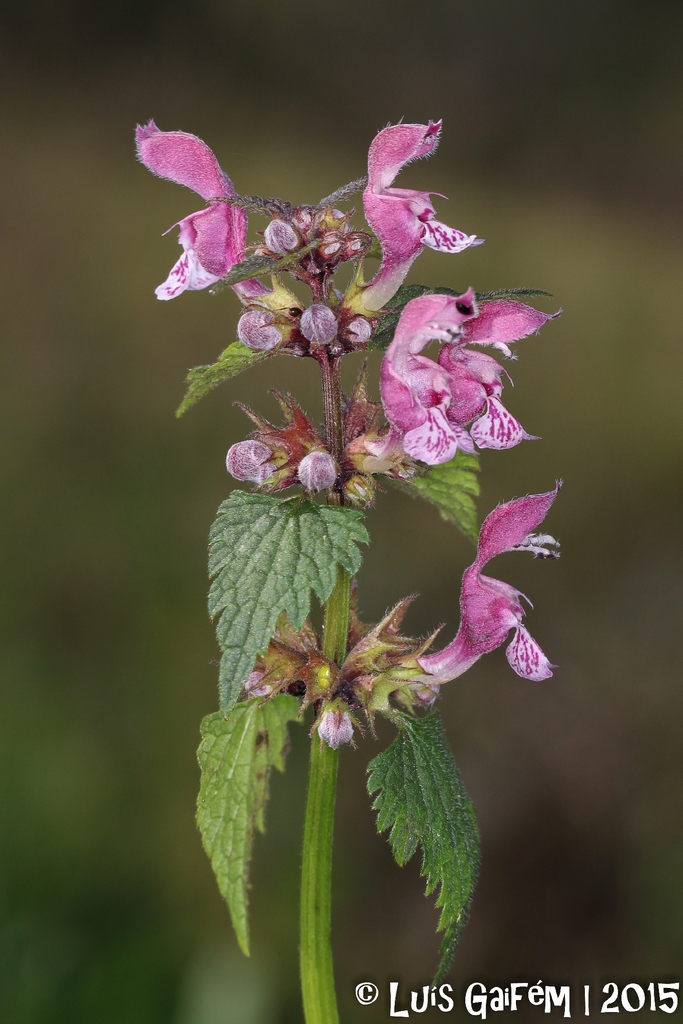
Lamium maculatum, commonly known as spotted deadnettle, is a herbaceous perennial plant belonging to the mint family. Originally native to Europe and western Asia, it has—over time—naturalized widely across North America. The plant typically grows up to 30 cm tall and exhibits a spreading habit, featuring square stems covered in fine hairs. The leaves of Lamium maculatum are arranged oppositely, heart-shaped with serrated edges, and are notable for their distinct white or silver markings. Blooming from late spring through summer, its flowers are composed in whorls around the stem. These tubular-shaped flowers have two lips: the upper lip is hooded, while the lower lip has three lobes. Spotted deadnettle prefers moist soils but can tolerate dry conditions once established. It flourishes in partial shade or full sun but performs best in cooler temperatures during hot summers. This plant is commonly used as ground cover due to its spreading habit and attractive foliage. It also attracts pollinators such as bees, butterflies, and hummingbirds, thanks to its nectar-rich flowers. In traditional medicine, Lamium maculatum was used to treat various ailments, including respiratory infections, digestive disorders, and skin irritations, due to its anti-inflammatory properties. Overall, Lamium maculatum is an attractive ornamental plant that adds aesthetic value to gardens and provides ecological benefits by attracting pollinators. It is an excellent addition for gardening enthusiasts seeking low-maintenance plants that offer both beauty and ecological advantages.
Dead Nettle, also known as Spotted Dead Nettle, belongs to the Lamium genus in the mint family. There are about 50 species in this group. The plant is commonly called "dead nettle" because its leaves resemble those of stinging nettles, but they lack the ability to sting. In mild climates, this near-evergreen plant grows as a low creeper. It is often referred to as "spotted dead nettle" because the lower, bilobed leaves are whitish and adorned with purple dots.
Spotted dead nettle has strong resistance to disease and is generally not likely to suffer from illnesses. However, it can be vulnerable to pests and diseases present in its environment. Such infections are typically not serious. Regarding care, this plant needs moderate maintenance. It should be pruned regularly to keep a tidy appearance and support healthy growth. Fertilizing can also help encourage flowering. Spotted dead nettle is appropriate for anyone with an outdoor area, like a garden or patio, and does not demand extensive gardening experience. It may need more attention if grown indoors.
How to keep Lamium Maculatum.
Light
Spotted dead nettle performs best beneath a canopy of dappled sunlight, though it can tolerate fairly well locations that are mostly shaded. Originally adapted to forest habitats, it is used to diffuse light conditions. Too little sunlight can lessen the vivid variegation of the leaves, while too much light may scorch them.
Water
Spotted Dead Nettles flourish in the consistently moist conditions commonly found in temperate regions. They prefer soil that remains evenly moist but can tolerate short periods of drought. To ensure optimal growth, water them weekly. The plant's spreading foliage helps retain moisture, reducing the need for frequent watering.
Temperature
Spotted dead nettle comes from habitats with moderate temperatures, typically between 68 and 95 °F (20 to 35 ℃). It favors warmer conditions but can adapt to seasonal changes. Care should be taken to keep it adequately warm during winter.
Fertilizer
One fertilizer application in spring is generally enough for Spotted dead nettle, though additional feedings can optimize growth. Feed every month to month and a half. Fertilization improves the leaves' appearance and function, encouraging even color and a healthy texture. It also encourages root development and nutrient uptake for the plant's long-term health.
Pruning
Spotted Dead Nettles benefit from regular pruning, especially in early to late spring, to remove dead stems and control growth. Trimming the plants after they flower can encourage more blooms. Always clean your tools to prevent the spread of disease. Consistent pruning not only promotes growth and improves air circulation, but also helps maintain an attractive appearance.
Pot & Repot
When repotting Spotted dead nettle, pick a pot 1-2 inches (2.5–5.1 cm) larger with good drainage. Use a well-draining potting mix. Repot in spring or fall, making sure the root ball sits slightly below the rim of the flower pot. Water thoroughly after repotting and place it in a warm spot with indirect sunlight.
Toxicity
Spotted dead nettles are not considered toxic to humans and animals. Although, like most plants, ingesting large quantities of the plant may lead to mild digestive upset.
Further reading →
The toxicity and danger assessments provided are for reference only. We do not assure their accuracy, so it's crucial not to depend on them. Seek professional advice when necessary for accurate guidance.
Botanical profile.
- Plant Type
- Herb
- Life Cycle
- Perennial, Annual
- Genus
- Lamium
- Family
- Lamiaceae
- Hardiness Zone
- 3-10
- Mature Height
- 20 cm to 76 cm
- Mature Spread
- 91 cm
- Leaf Color
- Green, Silver, Gray, Red, Variegated
- Leaf Type
- Deciduous
- Flower Color
- Pink, Purple
- Flower Size
- 2.54 cm
- Bloom Time
- Mid spring, Late spring, Early summer
- Planting Time
- Spring
- Harvest Time
- Early summer, Mid summer
- Native Area
- Turkey, Austria, Slovakia, Montenegro, Croatia, Slovenia, Belarus, Russia, Germany, Estonia, Romania, Latvia, Belgium, Portugal, Netherlands, France, Czech Republic, Bulgaria, Armenia, Poland, Greece, Ukraine, Lebanon, Serbia, Lithuania, China, Syria, Italy, Spain, Switzerland, Albania, Azerbaijan, Hungary
Other names.
Reader questions.
When Should I Water My Spotted Dead Nettles?
Determining the right time to water your Spotted Dead Nettles (Lamium maculatum) is key for its health and growth. To assess the need for watering, check the soil moisture by inserting a finger or moisture meter into the soil - if the top 1 to 2 inches of soil feels dry, it's time to water. Wilting, droopy, or discolored leaves are indications the plant is dehydrated and needs water. However, take note that some wilting in the morning can be normal. For those growing in containers, a lighter pot signals the need for watering. Pay attention to signs of both over and under-watering, such as root rot or wilted leaves, to maintain the balance necessary for vibrant growth and flower production.
Why is it important to fertilize my Spotted Dead Nettles?
The Spotted Dead Nettles primarily consist of leaves, and proper fertilization is crucial for ensuring that these leaves maintain both their appearance and function. By providing the right nutrients, fertilization helps the Spotted Dead Nettles retain consistent color and a healthy texture in their leaves. Additionally, fertilization supports the growth of new roots and the maintenance of existing roots, enhancing the plant's ability to absorb soil nutrients not only in the present but also in the future.
What are the sunlight requirements for Spotted Dead Nettles?
Spotted Dead Nettles, scientifically known as Lamium maculatum, thrive best in partial sun, requiring about 3-6 hours of sunlight a day. They can also grow in full shade, which means they get less than 3 hours of sunlight. It's crucial to observe how sunlight moves through your garden to find the perfect balance of light and shade for these plants, ensuring their health and happiness.
What is the native environment of Spotted Dead Nettles?
Spotted Dead Nettles, or Lamium maculatum, is native to environments that have moderate temperatures typically ranging from 68 to 95 °F (20 to 35 °C). It thrives in warmer conditions but can adjust to seasonal changes, enduring both cold and warm climates effectively. During the winter, it shows strong cold resistance and does not usually require special frost protection measures. Nonetheless, if temperatures are expected to drop below -35°C, providing some form of cold protection, such as covering the plant with soil or straw, is advisable. To prepare for winter, it is recommended to water the plant abundantly before the first freeze of autumn, to ensure the soil remains moist and enters a frozen state, which helps prevent drought and water scarcity during the colder months.
How Should I Water My Spotted Dead Nettles?
Watering Spotted Dead Nettles correctly enhances its growth, health, and flowering. Techniques that mimic its natural environment work best. Use bottom watering to encourage root moisture without surface saturation. Misting can help replicate the dewy habitat it thrives in but avoid soaking the foliage. Employ a watering can with a narrow spout to focus on the root zone, reducing the risk of disease by preventing water from splashing on the leaves. Rotate the plant for even moisture absorption, and let the soil nearly dry out between waterings to prevent root rot.
When should I fertilize my Spotted Dead Nettles?
If you grow your Spotted Dead Nettles outdoors, they will start growing again in early spring. This is when you should start fertilizing them. Usually, a single application of fertilizer in the spring will be enough for the plant to thrive. However, if you want your Spotted Dead Nettles to grow as much as possible, you can fertilize them multiple times throughout the spring and early summer. In this case, you can fertilize them about once every month to a month and a half.
What are the essential care tips for Spotted Dead Nettles?
Spotted Dead Nettles prefer a canopy of filtered sunlight but can also do well in shadowy areas, thanks to their original adaptation to forest environments where light is dispersed. Not getting enough sunlight can affect the plant's vibrant leaf variegation, making it less vivid, while too much exposure can lead to leaf burn. For indoor plants, artificial lighting can be a solution during less sunny seasons or in spaces without sufficient natural light. LEDs are a good choice for providing the necessary light wavelengths, with full sun plants requiring 30-50W/sq ft, partial sun plants 20-30W/sq ft, and full shade plants 10-20W/sq ft. The light source should be placed 12-36 inches above the plant for 8-12 hours a day to mimic natural sunlight conditions.
How does Spotted Dead Nettles react to low temperatures?
Spotted Dead Nettles is quite tolerant to cold weather and performs best when the temperature remains above 20°C. During winter, keeping the temperature above 0°C is ideal for its survival. However, when temperatures fall below -35°C, the plant may not show noticeable changes during the winter, but come spring, there could be a decrease in sprouting, or it may not sprout at all. To manage this, in spring, it is recommended to remove any parts of the plant that have failed to sprout, facilitating its recovery and continued growth.
How Much Water Does Spotted Dead Nettles Really Need?
Spotted Dead Nettles has moderate watering needs, reflecting its natural habitat. Aim to water it in a way that keeps the soil evenly moist but not waterlogged. The exact amount will depend on factors like pot and plant size, but generally, 1 to 2 cups of water per plant should suffice during each watering. Ensure the potting mix is well-draining to prevent waterlogged conditions. Healthy Spotted Dead Nettles will display vibrant green leaves and strong stems. Avoid both over and under-watering to prevent issues like yellowing leaves or stunted growth.
When is it best to not fertilize my Spotted Dead Nettles?
During the late fall and winter, your Spotted Dead Nettles will go into a dormant phase where new growth stops. It's important to avoid fertilizing them during this time. In the spring and summer, if you do choose to fertilize, start decreasing the amount as summer approaches because the growth rate of your Spotted Dead Nettles will slow down. It's generally not a good idea to fertilize them when it's unusually hot or the soil is extremely dry, as this can stress them and lead to premature demise.
What are the symptoms of insufficient light for Spotted Dead Nettles?
When Spotted Dead Nettles do not receive enough light, they may show several symptoms, including smaller new leaves, leggy or sparse growth, faster leaf drop, slower or no new growth, and lighter-colored new leaves. Additionally, too much sunlight can cause issues like chlorosis, sunscald, leaf curling, wilting, and leaf scorching. These symptoms indicate that the plant is under stress due to either insufficient or excessive light.
What should be done if Spotted Dead Nettles experiences high temperatures?
During the summer months, it is essential to ensure that Spotted Dead Nettles does not get exposed to temperatures above 35°C. Exposure to temperatures exceeding 41°C can cause the leaves to lighten in color, become prone to curling, susceptible to sunburn, and, in severe cases, lead to wilting and drying of the entire plant. If these symptoms are observed, the recommended solution is to trim away the sunburned and dried-up parts of the plant. Moreover, it would help to move the plant to a location that provides shade from the midday and afternoon sun, or utilize a shade cloth to protect it. Ensuring the soil stays moist by watering the plant in the morning and evening is also crucial to combat the effects of high temperatures.