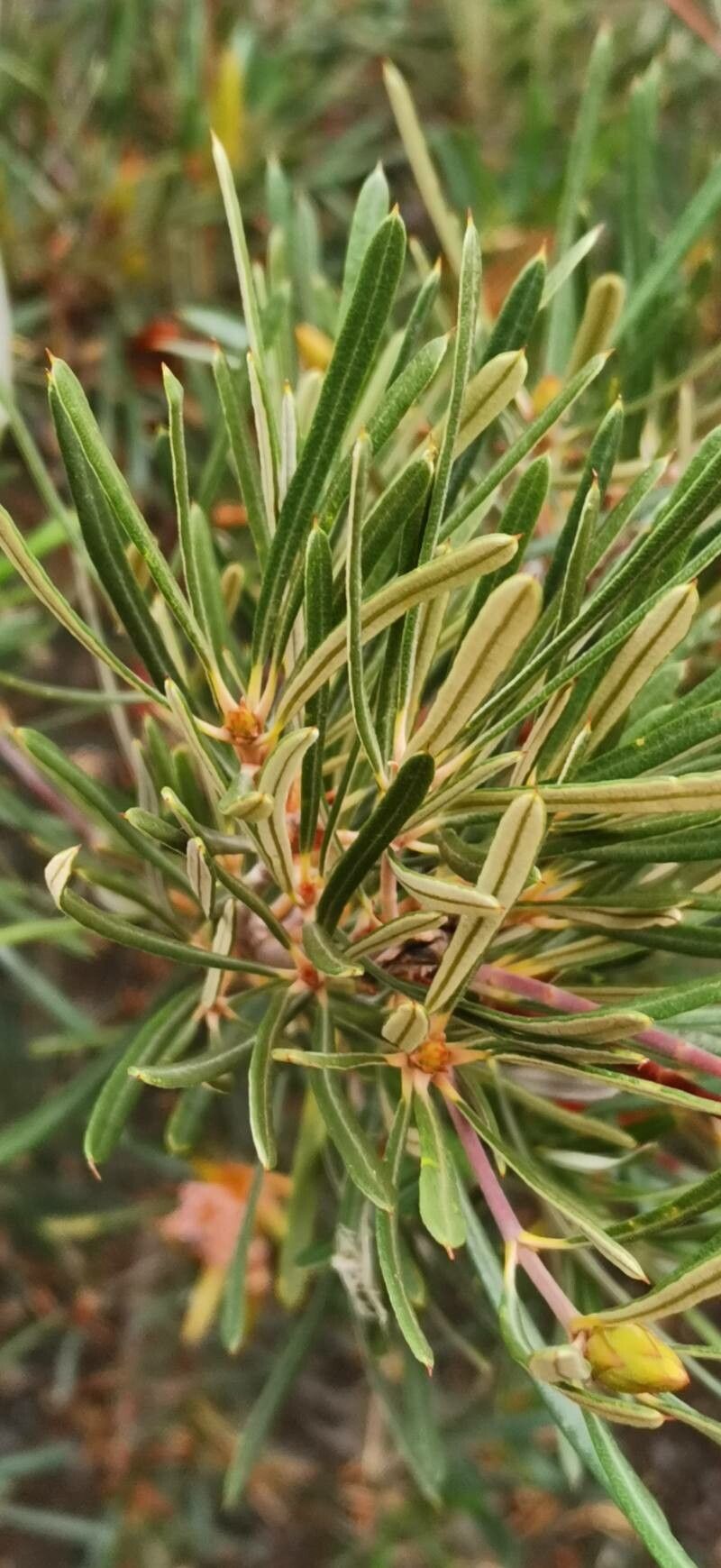
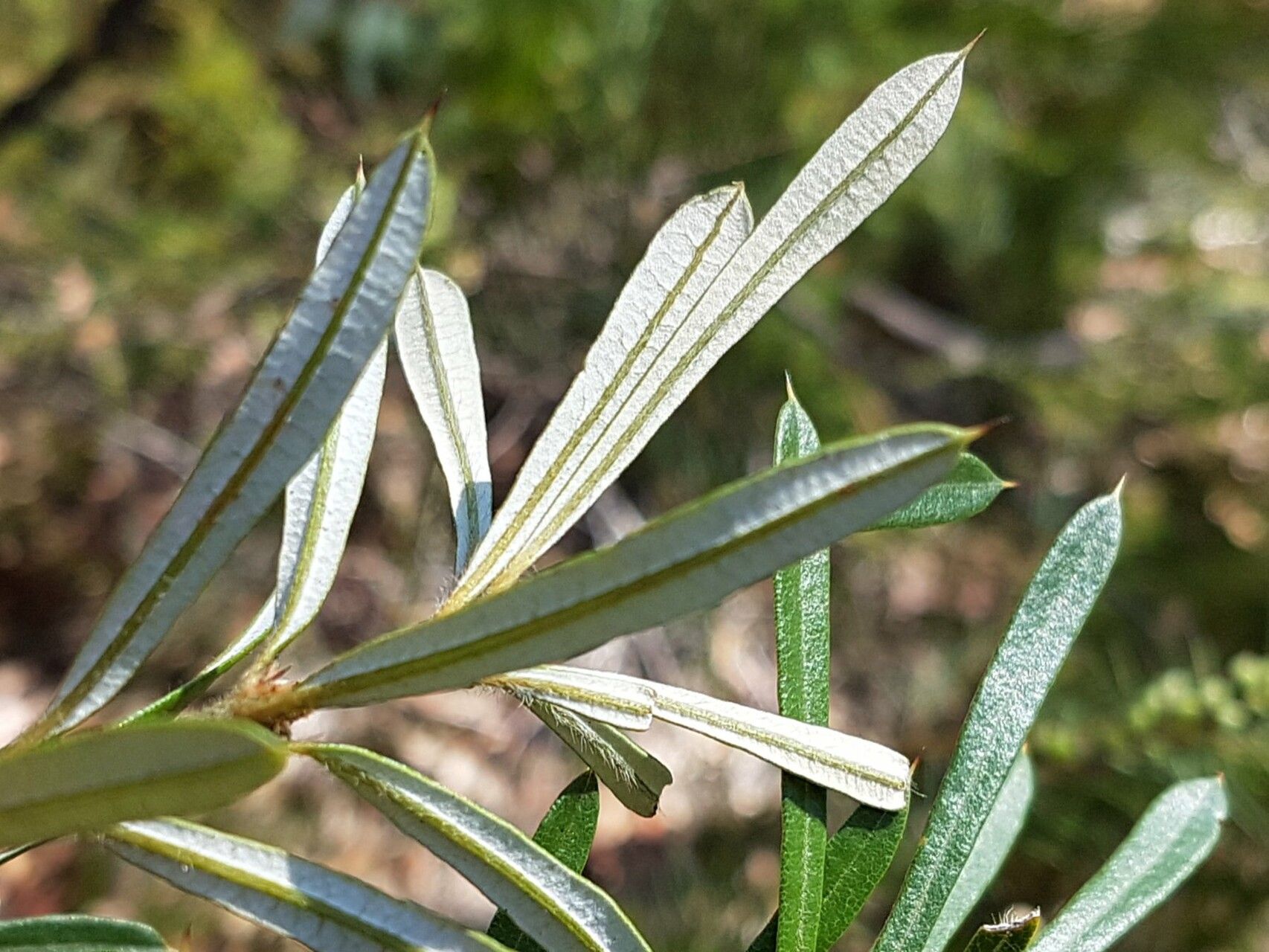
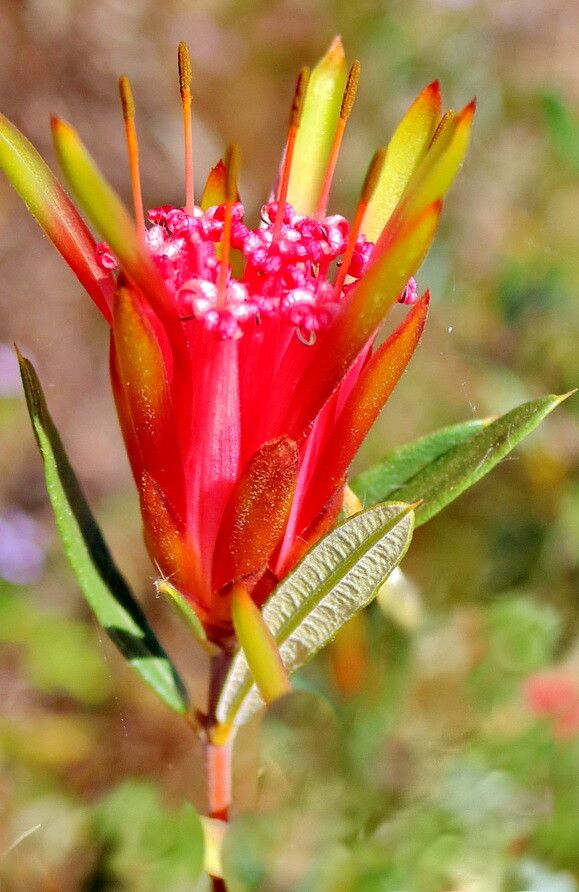
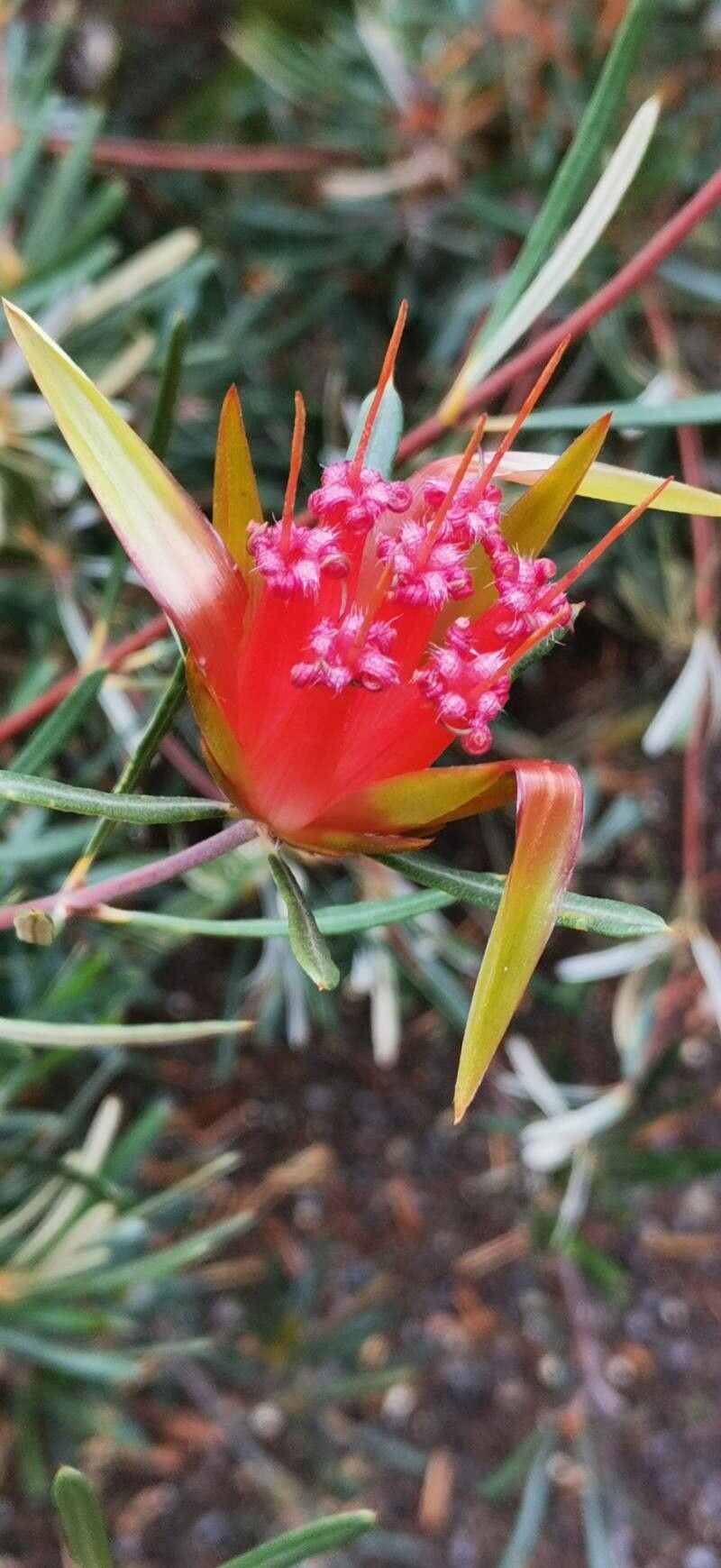
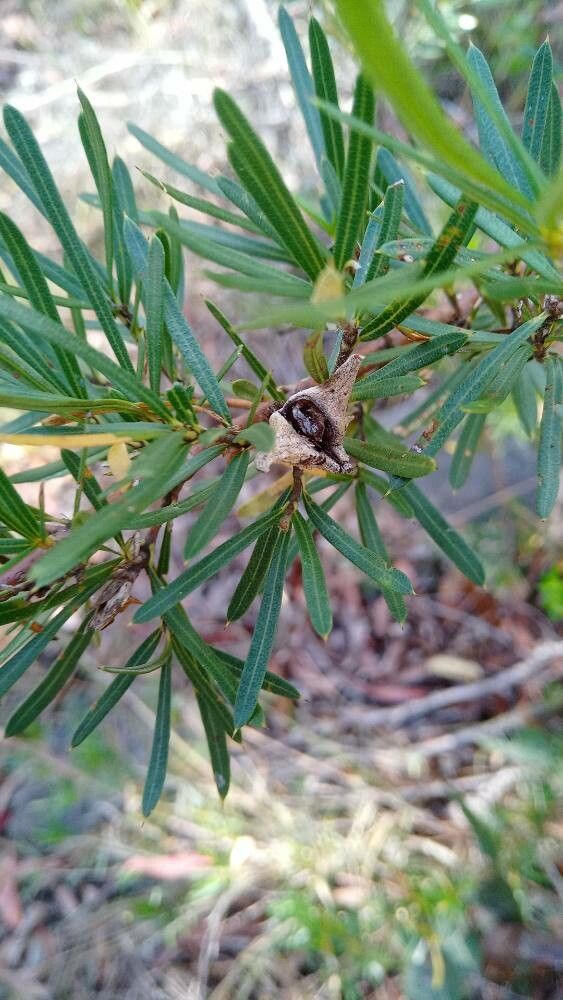
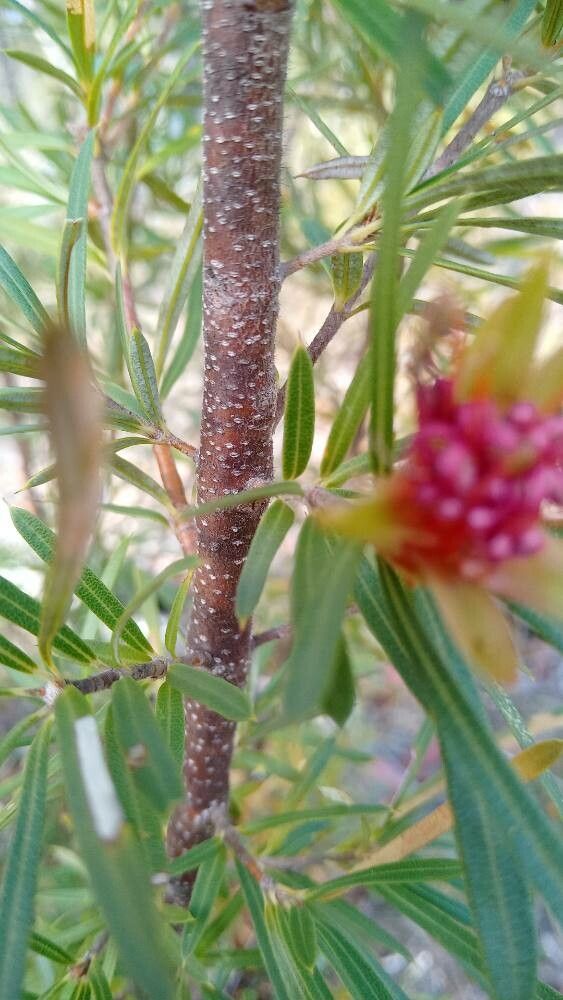
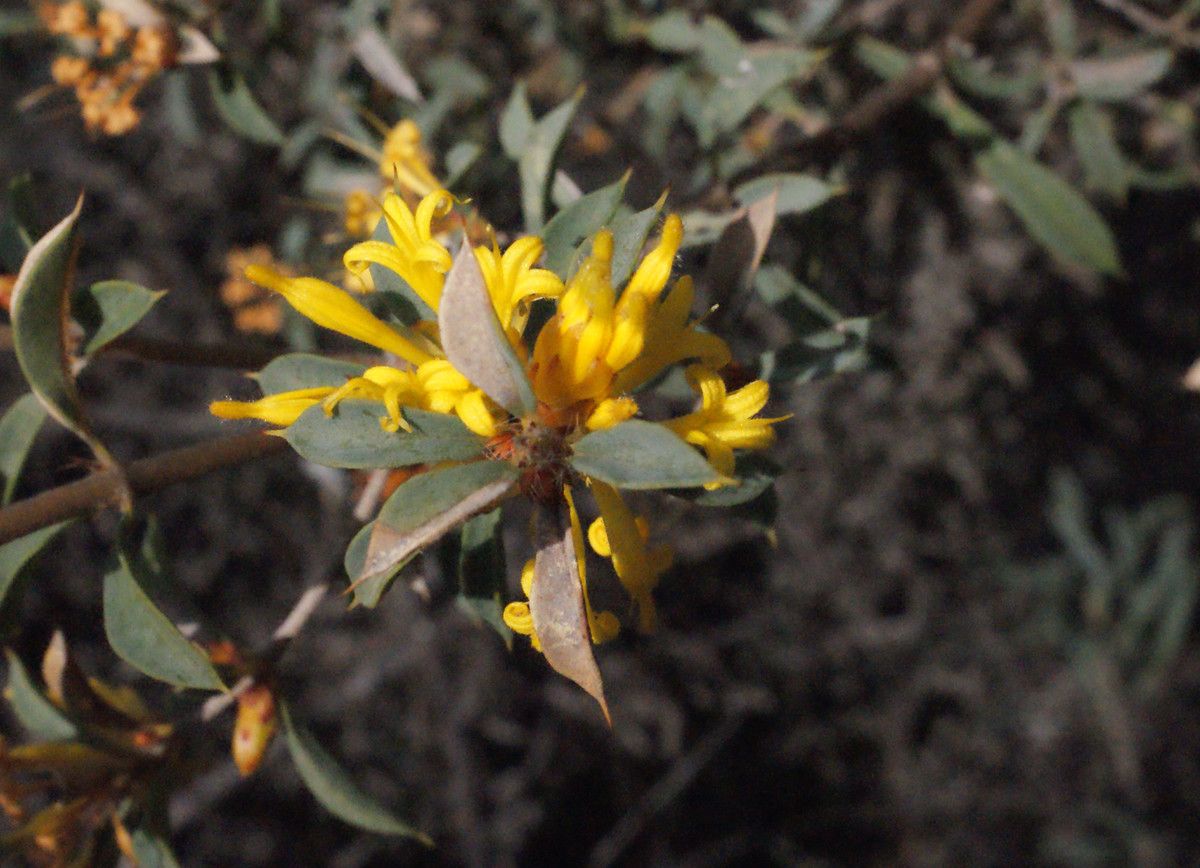
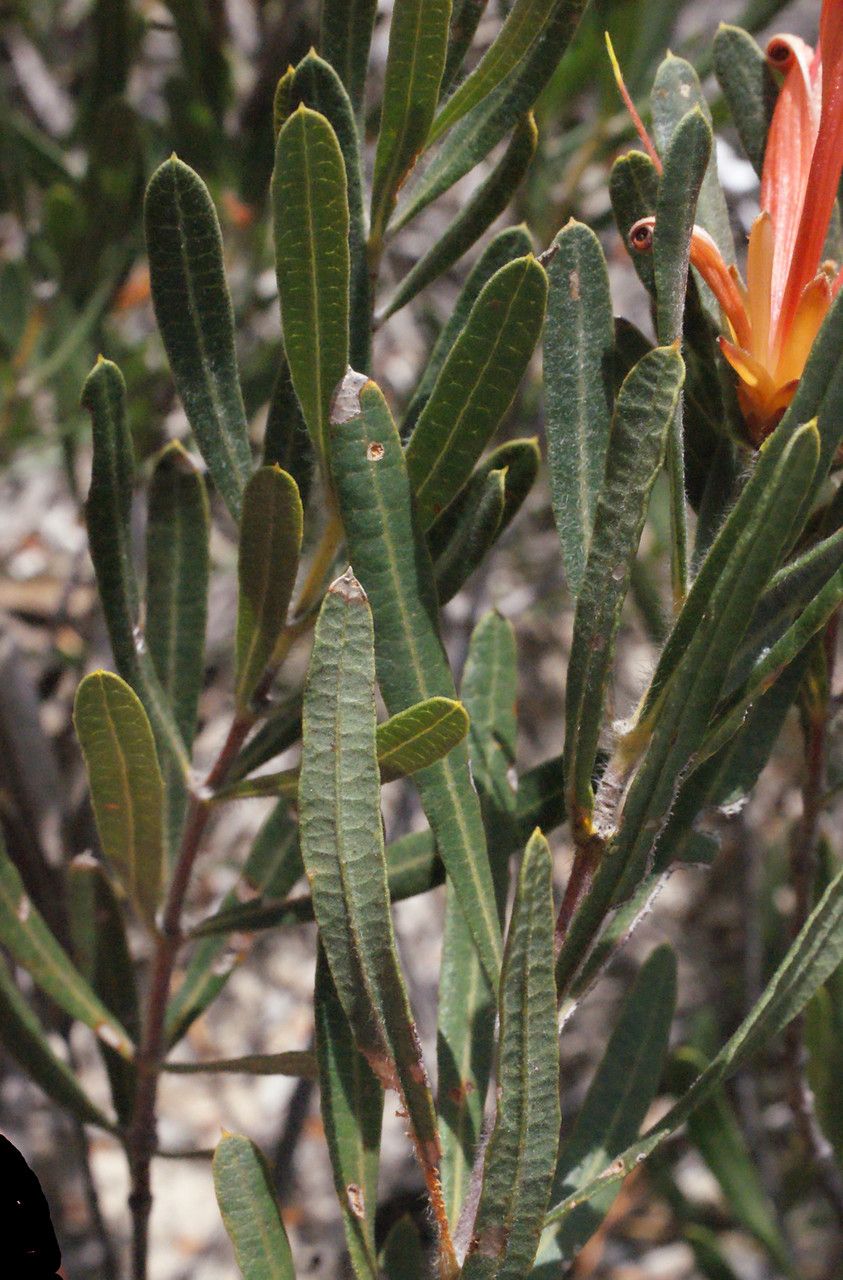
Lambertia formosa, commonly known as mountain devil, is a shrub of the family Proteaceae, endemic to New South Wales, Australia. First described in 1798 by English botanist James Edward Smith, it is the type species of the small genus Lambertia. It is generally found in heathland or open forest, growing in sandstone-based soils. It grows as a multistemmed shrub to around 2 m (7 ft) with a woody base known as a lignotuber, from which it regrows after bushfire. It has stiff narrow leaves, and the pink to red flowerheads, made up of seven individual tubular flowers, generally appear in spring and summer. It gains its common name from the horned woody follicles, which were used to make small devil-figures.
Mountain devil is resistant to disease and typically does not develop illnesses. Regarding care, this plant is fairly low-maintenance. When grown outdoors it needs little watering, and larger specimens usually do not require pruning. Smaller plants, however, should be trimmed after they finish blooming. Mountain devilt is a good choice for anyone with an outdoor area, like a garden or a deck, and it does not demand extensive gardening experience.
How to keep Lambertia Formosa.
Light
Mountain devil thrives with abundant daylight during the day, though it can also endure lower light levels. Excessive or inadequate light can influence its growth. The light exposure patterns of its native environment have shaped this preference, encouraging strong growth.
Water
Native to Australia's arid regions, the mountain devil plant showcases remarkable drought tolerance, requiring watering only every 2-3 weeks. As an evergreen, it needs minimal but consistent watering throughout the year. It thrives in well-draining soil, which helps prevent root rot, making it an ideal choice for low-maintenance outdoor cultivation.
Temperature
Mountain devil originates from habitats where temperatures usually range from 59 to 95 °F (15 to 35 °C). It does best within this temperature range. Seasonal adjustments to temperature may be required to replicate its native conditions.
Fertilizer
The timing is important when fertilizing Mountain devil. Apply fertilizer in early spring and continue once a month until early summer. Fertilizer encourages lovely blooms and supplies energy during both dormant and active growth phases.
Pruning
The Mountain Devil plant, known for its vibrant red to orange flowers and distinctive woody fruit, benefits greatly from regular pruning. The best time to prune is in early spring, when you can enhance flowering and improve air circulation. Light pruning helps maintain the plant's shape, while more substantial cuts can rejuvenate older plants, leading to healthier blooms and better size control.
Botanical profile.
- Plant Type
- Shrub
- Life Cycle
- Perennial
- Genus
- Lambertia
- Family
- Proteaceae
- Hardiness Zone
- 8-10
- Mature Height
- 2.13 m
- Mature Spread
- 1.52 m
- Leaf Color
- Dark Green
- Leaf Type
- Semi-evergreen
- Flower Color
- Red
- Flower Size
- 3.05 cm to 5.08 cm
- Bloom Time
- Fall, Early winter
- Planting Time
- Spring, Summer, Autumn
- Harvest Time
- Mid winter, Late winter, Early spring, Mid spring
Other names.