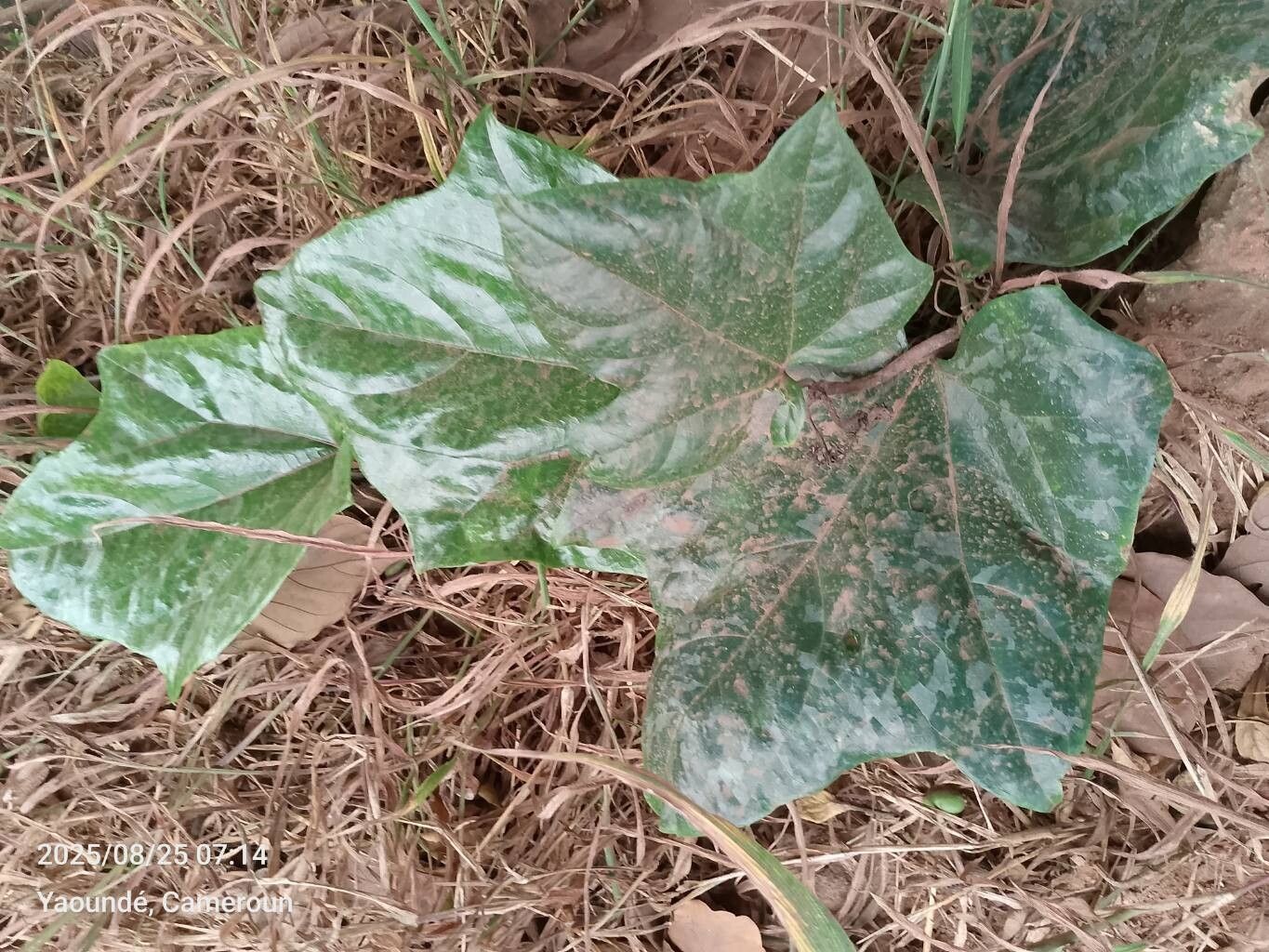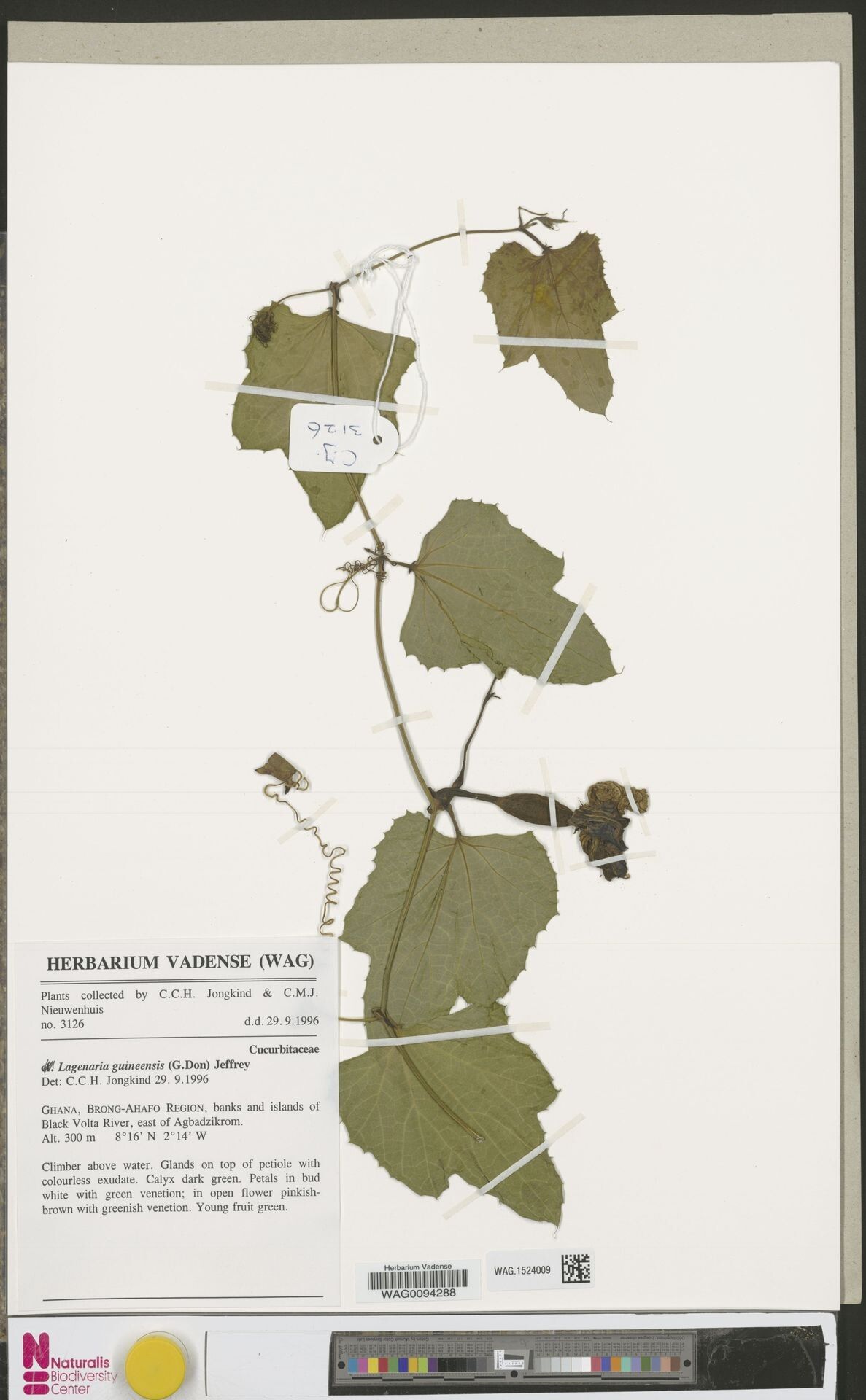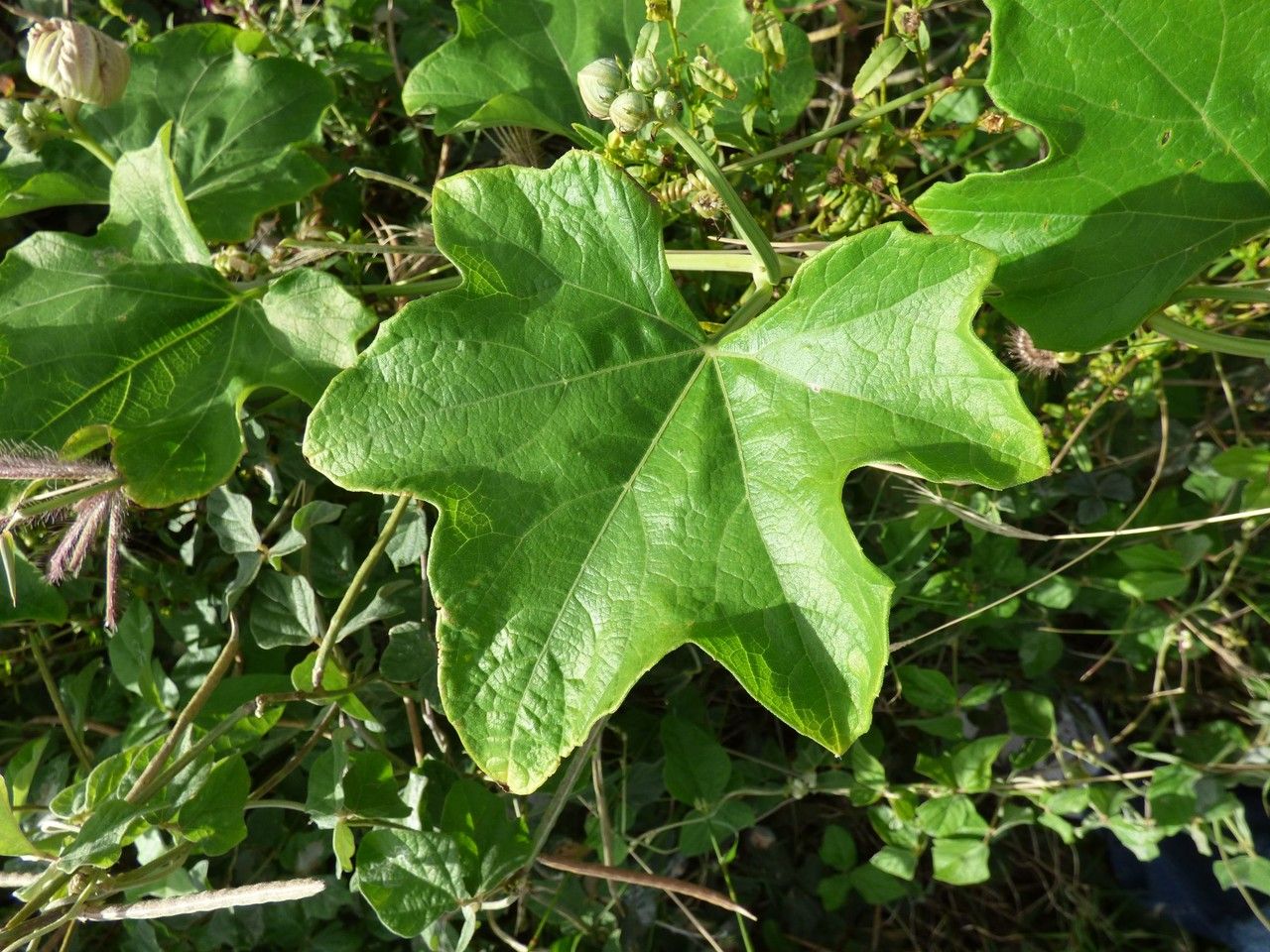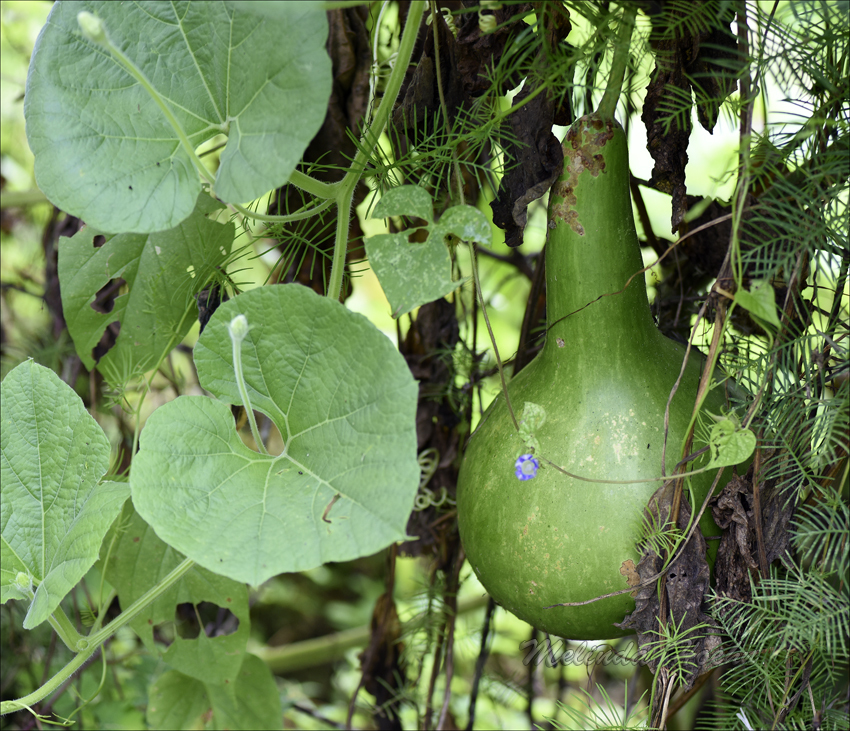
Lagenaria siceraria, commonly known as the bottle gourd or calabash, is a vine plant belonging to the Cucurbitaceae family. Native to Africa, it has been widely cultivated around the world for its edible fruit and ornamental purposes. The plant features large leaves and produces long, cylindrical or bottle-shaped fruits that can grow up to 1 meter in length.
In many cultures, the fruit of Lagenaria siceraria is used in cooking, often prepared as a vegetable when young. When matured and dried, the fruit can serve as a container. The dried fruits are also commonly used to make musical instruments, utensils, and decorative items.
Beyond its practical applications, Lagenaria siceraria has medicinal properties. Its leaves are known to have anti-inflammatory effects, and its seeds have traditionally been used to treat ailments such as coughs and skin diseases.
Lagenaria siceraria is easy to grow, thriving in warm climates with well-drained soil. It requires regular watering but should not be overwatered to avoid root rot. With proper care and maintenance, this versatile plant can offer both practical and aesthetic value to any garden or landscape.
Bottle gourd has low disease resistance and is prone to powdery mildew, horn spot, and leaf spot. It also has poor resistance to most insect pests. If it becomes infected, it requires treatment, although most diseases will only reduce yield and are not fatal. For care, bottle gourd needs frequent watering in summer and extra fertilizer to encourage fruit growth. It does not require much pruning. This makes it suitable for people with a garden or outdoor space who have some energy to care for it.
How to keep Lagenaria Siceraria.
Light
Bottle gourd does best in strong, continuous sunlight, which supports healthy growth and good productivity. Native to areas with plentiful sunshine, the plant needs these conditions throughout its various growth stages. Both too much and too little sun can impede its development, resulting in issues like wilting or discoloration.
Water
Bottle gourd, a plant native to warm and subtropical regions, needs consistent moisture and is sensitive to drought. To keep the soil adequately moist without causing waterlogging, it's important to water it weekly. The plant thrives best when grown outdoors, where it can take advantage of natural rainfall, especially during its growing season, to support optimal vine growth.
Humidity
This plant will thrive in moderate humidity, which is probably the level in your home. However, misting it a few times a week can be very beneficial. Make sure the room has good ventilation.
Temperature
The bottle gourd is native to warm regions and prefers temperatures of 68 to 100 °F (20 to 38 ℃). Conditions that are too cold or too hot can stunt its growth. Monitor the climate and, when necessary, adjust watering or use covers to keep conditions ideal.
Fertilizer
To feed Bottle gourd, apply organic or commercial fertilizers high in nitrogen for leaf development, phosphorus for root and flower formation, and potassium to support photosynthesis and maximize fruit yield. Plant in spring, improve the soil with compost or manure, and feed seedlings when they are 2-4 inches tall. A shortage of macronutrients causes slow growth, wilting, and reduced fruit quality.
Pruning
Bottle gourd plants have a climbing habit and heart-shaped leaves. Key pruning practices include removing dead parts and thinning the plant to improve airflow. This is best done in early spring. Regular pruning helps enhance growth and increases fruit yield. When pruning, make cuts just above the leaf nodes to encourage new buds to develop.
Pot & Repot
When repotting Bottle gourd, choose a pot that is 1-2 inches (2.5–5.1 cm) larger in diameter and that has good drainage. Use a well-draining potting mix and consider adding perlite for extra drainage. Repot in spring or early summer, water thoroughly afterward, and place it in a shady spot for the initial period.
Botanical profile.
- Plant Type
- Vine, Herb
- Life Cycle
- Annual, Biennial
- Genus
- Lagenaria
- Family
- Cucurbitaceae
- Hardiness Zone
- 6-12
- Mature Height
- 6.1 m to 9.14 m
- Mature Spread
- 3.05 m to 4.88 m
- Leaf Color
- Green
- Leaf Type
- Deciduous
- Flower Color
- White, Yellow, Gold
- Flower Size
- 7.62 cm to 11.43 cm
- Bloom Time
- Early summer, Mid summer
- Planting Time
- Spring, Summer
- Harvest Time
- Mid summer, Late summer, Early fall
- Native Area
- Burkina Faso, Djibouti, Somalia, Angola, Namibia, Nigeria, Kenya, Uganda, Guinea-Bissau, Niger, Benin, Tanzania, Zimbabwe, Sierra Leone, Cameroon, Liberia, Mozambique, Ghana, Botswana, Congo, Central African Republic, Malawi, South Africa, Zambia, Sudan, Guinea, Chad, Togo, Côte d'Ivoire, Eswatini, Congo (DRC), Gabon
Other names.
Reader questions.
How should I water my Bottle gourd plant in the best way?
The Bottle gourd has specific preferences when it comes to water. It not only cares about the amount of water it receives, but also the way it is provided. Improper watering techniques can harm your tomatoes. To water the Bottle gourd correctly, apply water directly to the soil in a slow and gentle manner. Avoid pouring all the water into the soil at once or doing overhead watering. While watering slowly, make sure to water deeply so that the soil around the Bottle gourd is adequately moist.
Why do I have to put fertilizer on my bottle gourd plant?
When growing Bottle gourd for its fruit, it is important to ensure that the soil provides the necessary nutrients for optimal growth. There are different types of nutrients that plants require, with phosphorus being particularly important for promoting the formation of flowers and fruit. In addition, a plant needs a proper root system and healthy leaves to absorb sunlight in order to produce flowers and fruit. Insufficient levels of these essential macronutrients can result in decreased vitality, slower growth, and potential wilting. Since plants require a significant amount of energy for flowering and fruiting, the lack of these key components can also affect the quality of the resulting fruits.
What are the sunlight requirements for bottle gourd plants?
Bottle gourd plants require full sun, meaning they thrive best with above 6 hours of sunlight daily. It's important to watch how sunlight moves through your garden to find spots offering the perfect balance between light and shade. Bottle gourd originates from sunny environments and needs strong, uninterrupted sunlight for healthful growth and productivity. Both too much and too little sun can be detrimental, leading to issues like wilting or discoloration.
What is the optimal temperature range for growing Bottle gourd?
Bottle gourd thrives in warmer climates, with an optimal temperature range between 68 to 100°F (20 to 38°C). It is important to maintain these temperatures for the plant's growth, especially during winter, by ensuring the environment stays above 20°C and above the freezing point to avoid damage. When temperatures approach -5°C (25°F), protective measures such as bringing the plant indoors or using covers like plastic film or fabric are advisable to shield the plant from cold.
What do I need to do if I give my Bottle gourd too much or too little water?
If you've overwatered your Bottle gourd and you're worried about disease, take immediate action. The best solution is to remove the plant from its current spot and let the roots dry a bit before replanting it in an area with good drainage. If you're growing in pots, consider moving your plant to a pot with better drainage. On the other hand, if you're underwatering, simply increase the frequency of watering.
What is the right time to put fertilizer on my Bottle gourd?
To successfully grow bottle gourd, it is important to plant it in the spring to allow for fruit production in the summer. Check the specific variety for appropriate planting times. Additionally, bottle gourd requires nutrient-rich soil for high-quality produce. Prior to planting, incorporate a 2-inch layer of compost or well-rotted manure into the soil to provide essential nutrients and improve drainage. Fertilize transplants immediately after planting, while seedlings should reach a height of 2 to 4 inches before their first fertilization. For established plants, feed them every 3 to 4 weeks during the growing season until either the first frost or when the plant ceases to produce. Consider the specific fertilizer type and bottle gourd variety to tailor your fertilization schedule accordingly. When unsure, it is always better to use less fertilizer.
How can artificial lighting be used for indoor bottle gourd plants?
Indoor bottle gourd plants require adequate lighting for optimal growth, especially when natural sunlight is insufficient. Artificial lights, such as LEDs which can be customized to provide specific wavelengths of light, are vital in promoting healthy growth. The required artificial light intensity varies based on the plant's sunlight needs: full sun plants need 30-50W/sq ft, partial sun plants 20-30W/sq ft, and full shade plants 10-20W/sq ft. The light source should be placed 12-36 inches above the plant, mimicking natural light, for 8-12 hours per day.
How does Bottle gourd react to low temperatures?
Bottle gourd has a moderate tolerance to low temperatures, performing best within the 20°C to 38°C range. It's vital to keep the plant above 0°C during winter to prevent frost damage. Exposure to temperatures below -25°C can result in darkened leaves, water-soaked necrosis, wilting, drooping, and eventually, the leaves may turn brown. If frost damage occurs, affected parts should be trimmed away, and the plant should be moved to a warm environment or protected with a makeshift greenhouse. Placement near a south-facing window or using supplemental lighting can help ensure adequate sunlight indoors.
How many times should I give water to my Bottle gourd?
Bottle gourd plants have a high water requirement throughout the growing season. To address this, it's important to water them regularly, especially during spring and summer. Initially, watering once or twice a week is sufficient. However, as the season progresses, the frequency should be increased, potentially requiring twice-daily watering or more in hot weather. Once the plants have completed the main growth phases, the watering frequency can be decreased to about once a week until the end of the growing season.
When is it not a good idea to add fertilizer to my Bottle gourd plant?
To ensure optimal growth and fruit production, it is important to avoid using a nitrogen-rich fertilizer on Bottle gourd. Excessive nitrogen can encourage leaf development at the expense of blooms and fruits. Instead, select a fertilizer with a lower nitrogen content relative to other nutrients. Moreover, it is crucial to avoid fertilizing Bottle gourd during periods of high temperatures or dry conditions. This is because the fertilizer can easily wash away without being absorbed into the soil. Additionally, plants have reduced nutrient absorption capabilities during hot weather, which can lead to the fertilizer remaining in the soil, preventing the plants from taking up water. This can pose a risk to the plants during droughts or heatwaves.
What are the symptoms of insufficient light in bottle gourd plants?
When grown indoors or under limited light, bottle gourd plants may exhibit symptoms of light deficiency such as smaller new leaves, leggy or sparse growth, faster leaf drop, slower or no growth, and lighter-colored new leaves. Other issues like chlorosis, sunscald, leaf curling, wilting, and leaf scorching can arise from improper sunlight exposure. These symptoms highlight the plant's struggle with adapting to less than ideal lighting conditions.
How should Bottle gourd be cared for in high temperatures?
In high temperatures, specifically above 38°C, Bottle gourd's growth can slow, and the plant may exhibit lighter leaf coloration and become prone to sunburn. To protect the plant, trim away any sunburned or dried parts, and move it to a shaded location, especially away from the intense afternoon sun. It's also beneficial to water the plant in the morning and evening to maintain soil moisture and help the plant cope with the heat.