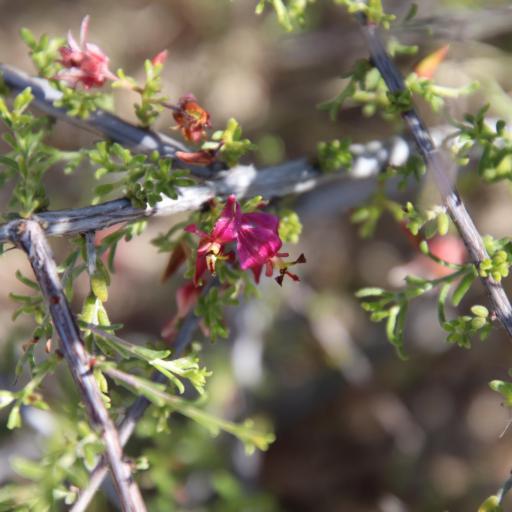
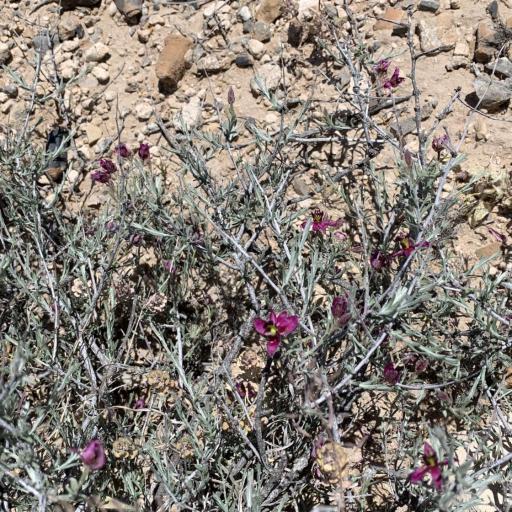
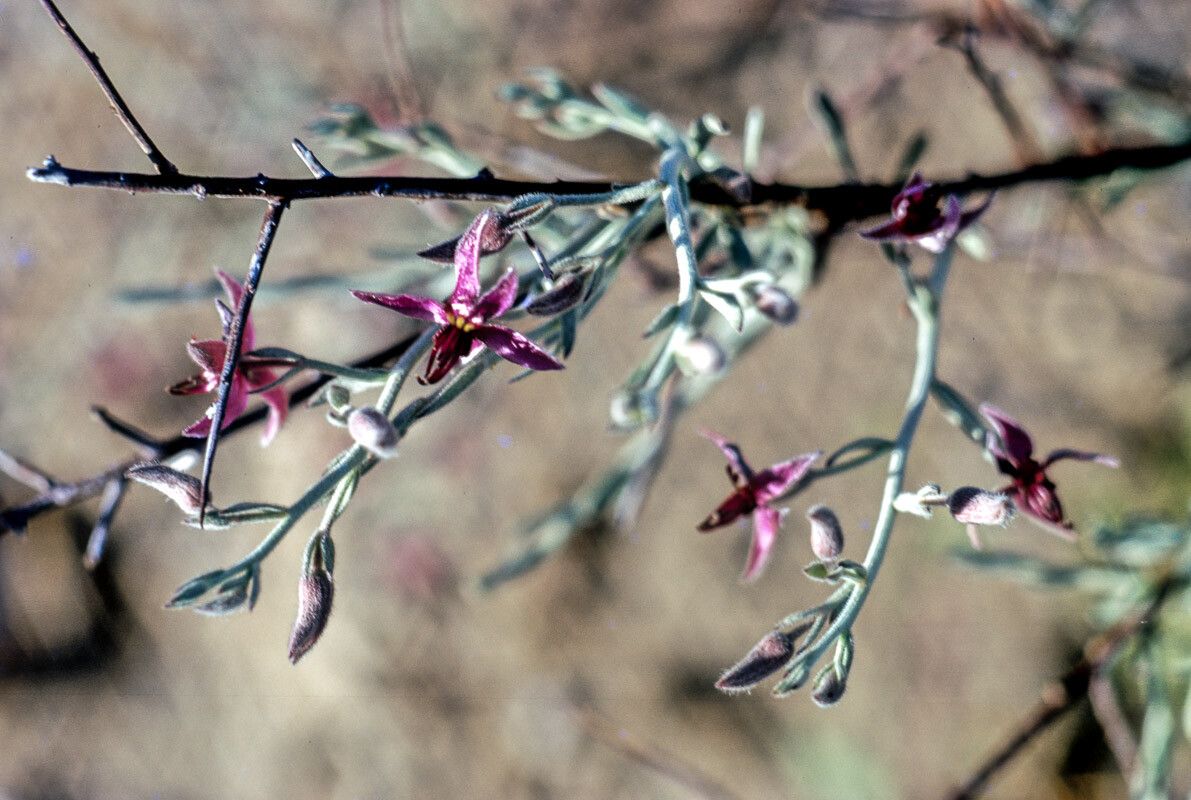
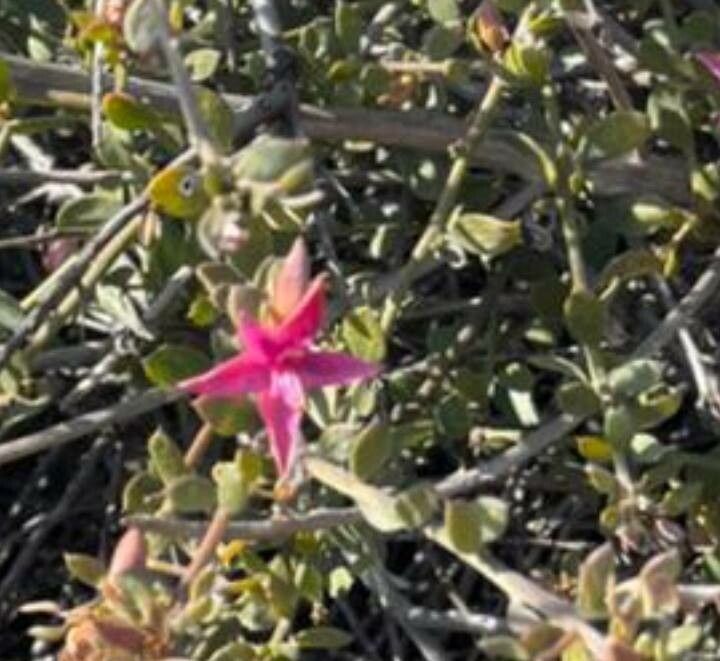
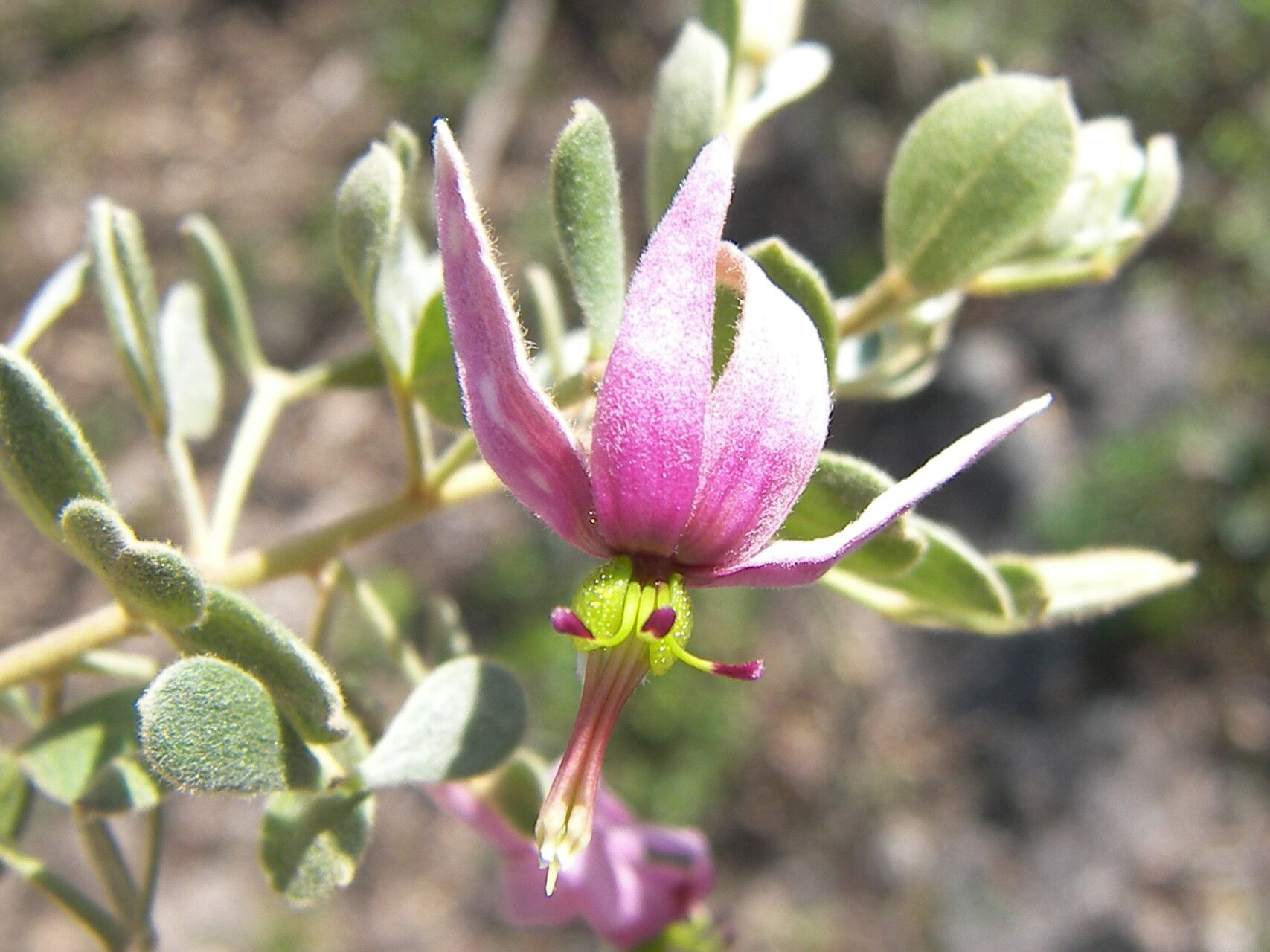
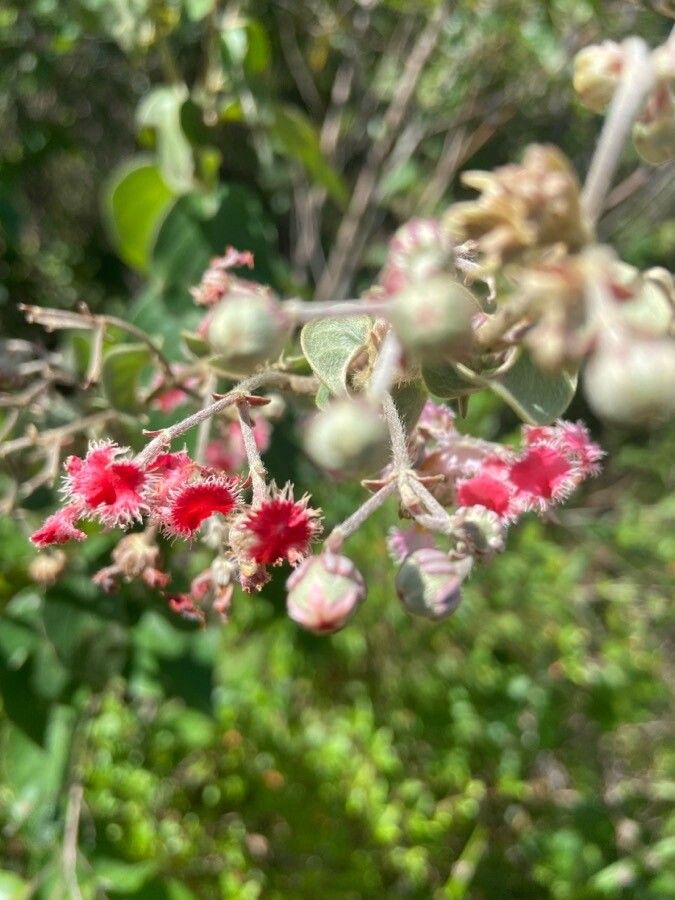
Krameria erecta is a species of rhatany known by several common names, including Pima rhatany, purple heather, and littleleaf rhatany. It is native to the southwestern United States and northern Mexico, where it grows in dry areas such as desert flats and chaparral slopes. This is a small, tangled shrub under a meter in height with blunt, thorny branches covered in silky hairs and fuzzy linear leaves. The shrub flowers in the spring and again in the fall during wetter years. The showy flower has four or five bright pink cup-shaped sepals and usually five smaller, triangular petals which are pink with green bases. The three upper petals are held erect and the lower two are glandular structures next to the ovary. Next to these are four curving stamens. The fruit is a furry heart-shaped body covered in pink spines. It reproduces by seed. This species and others in its genus are root parasites, tapping the tissues of nearby plants for nutrients, especially water. This helps it survive in soil that is almost totally dry.
Littleleaf ratany has strong resistance to disease and is usually not prone to illnesses. As for care, this plant is fairly low-maintenance. When grown outdoors it needs only minimal watering, and larger plants typically do not require pruning. Smaller plants, however, should be pruned after they have finished blooming. Littleleaf ratanyt is suitable for anyone with an outdoor area, such as a garden or a deck, and does not demand much care experience.
How to keep Krameria Erecta.
Light
Littleleaf ratany is native to open habitats, such as sunny meadows and forest edges, which offer abundant light. It performs best in Full Sun but can also tolerate Partial Sun, adapting well to various sunlight levels.
Temperature
Littleleaf ratany is native to temperate regions and does best in temperatures between 59 and 89.6 °F (15 to 32 ℃). Seasonal adjustments can be made to manage extreme temperature fluctuations.
Fertilizer
Timing is important when fertilizing Littleleaf ratany. Apply fertilizer in early spring and continue doing so monthly until early summer. Fertilizer promotes attractive blooms and supplies energy during both dormant and active growth phases.
Botanical profile.
- Plant Type
- Shrub
- Life Cycle
- Perennial
- Genus
- Krameria
- Family
- Krameriaceae
- Hardiness Zone
- 7
- Mature Height
- 91 cm
- Mature Spread
- 61 cm to 91 cm
- Leaf Color
- Gray, Silver
- Leaf Type
- Deciduous
- Flower Color
- Purple
- Flower Size
- 1.52 cm to 2.03 cm
- Bloom Time
- Mid spring, Late spring, Early summer
- Planting Time
- Spring, Summer, Autumn
- Harvest Time
- Summer
- Native Area
- Mexico
Other names.