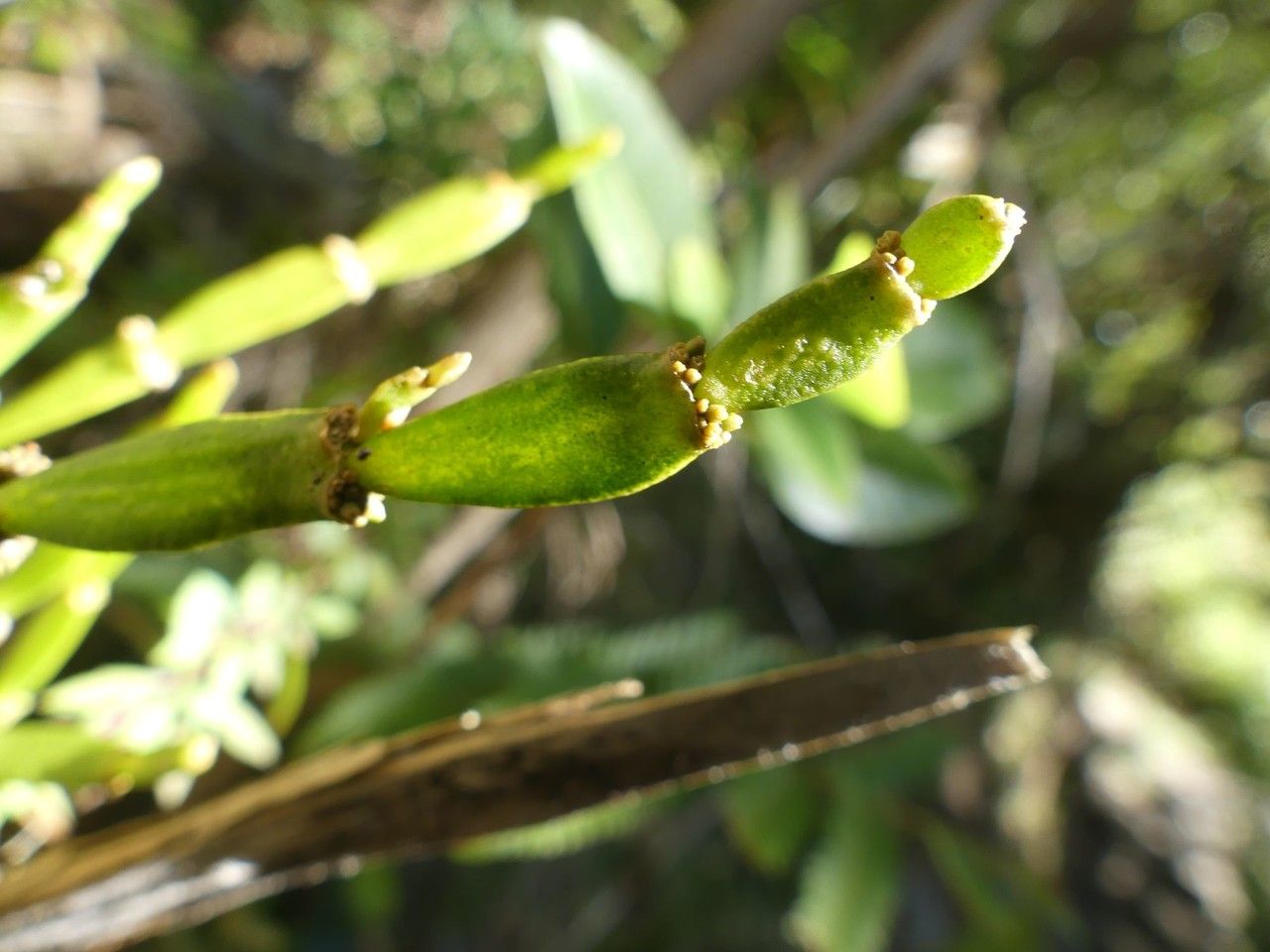
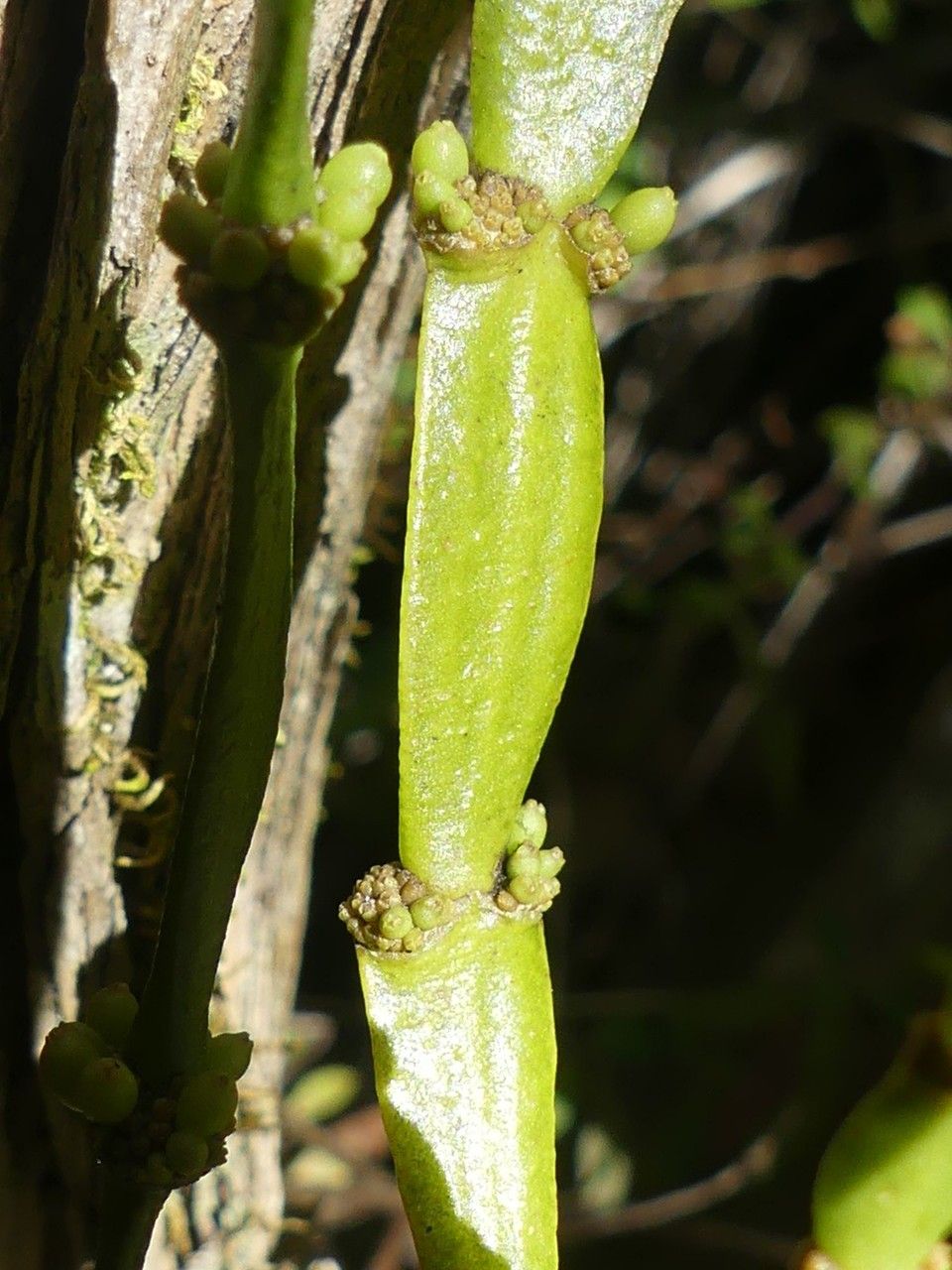
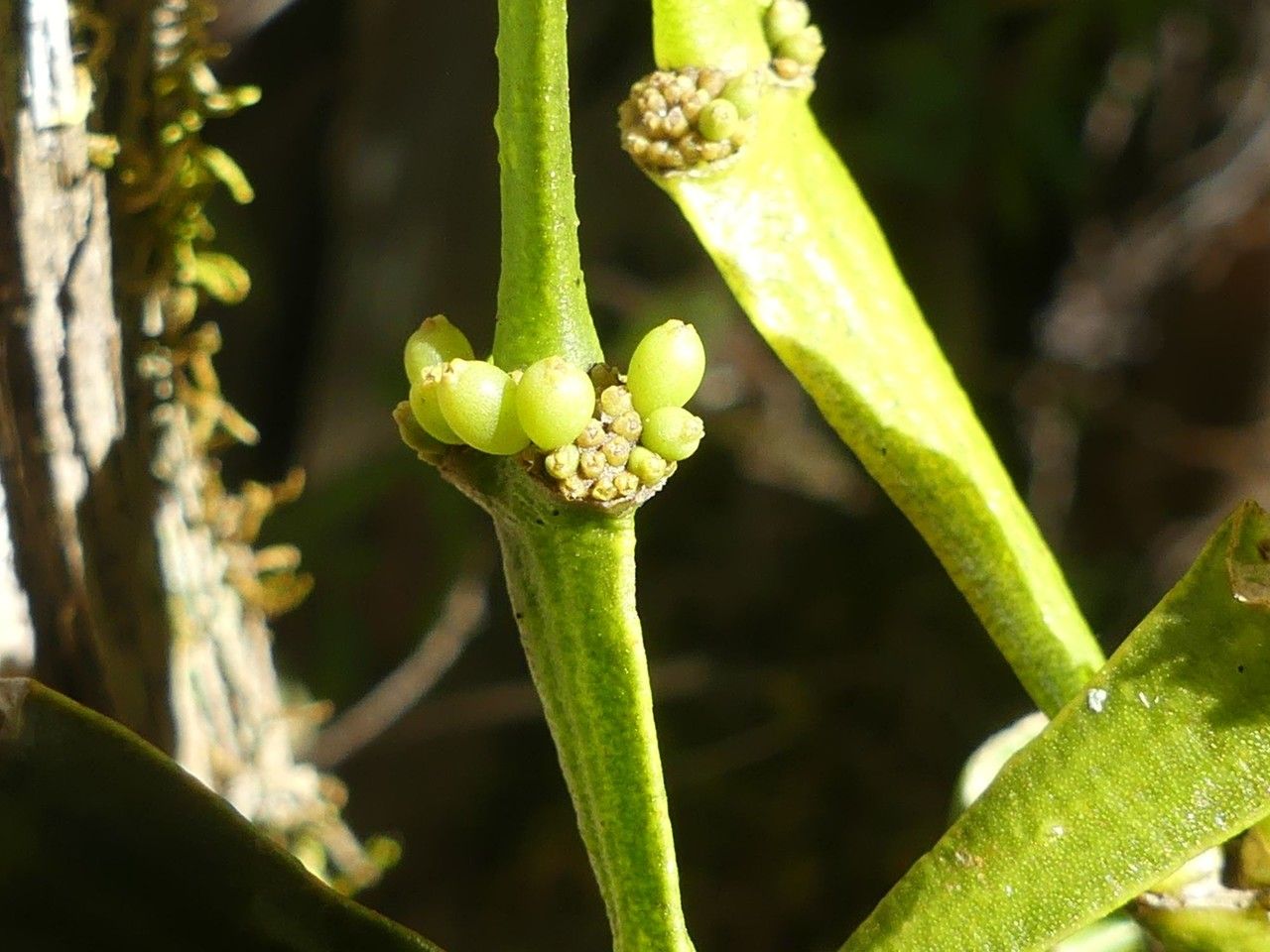
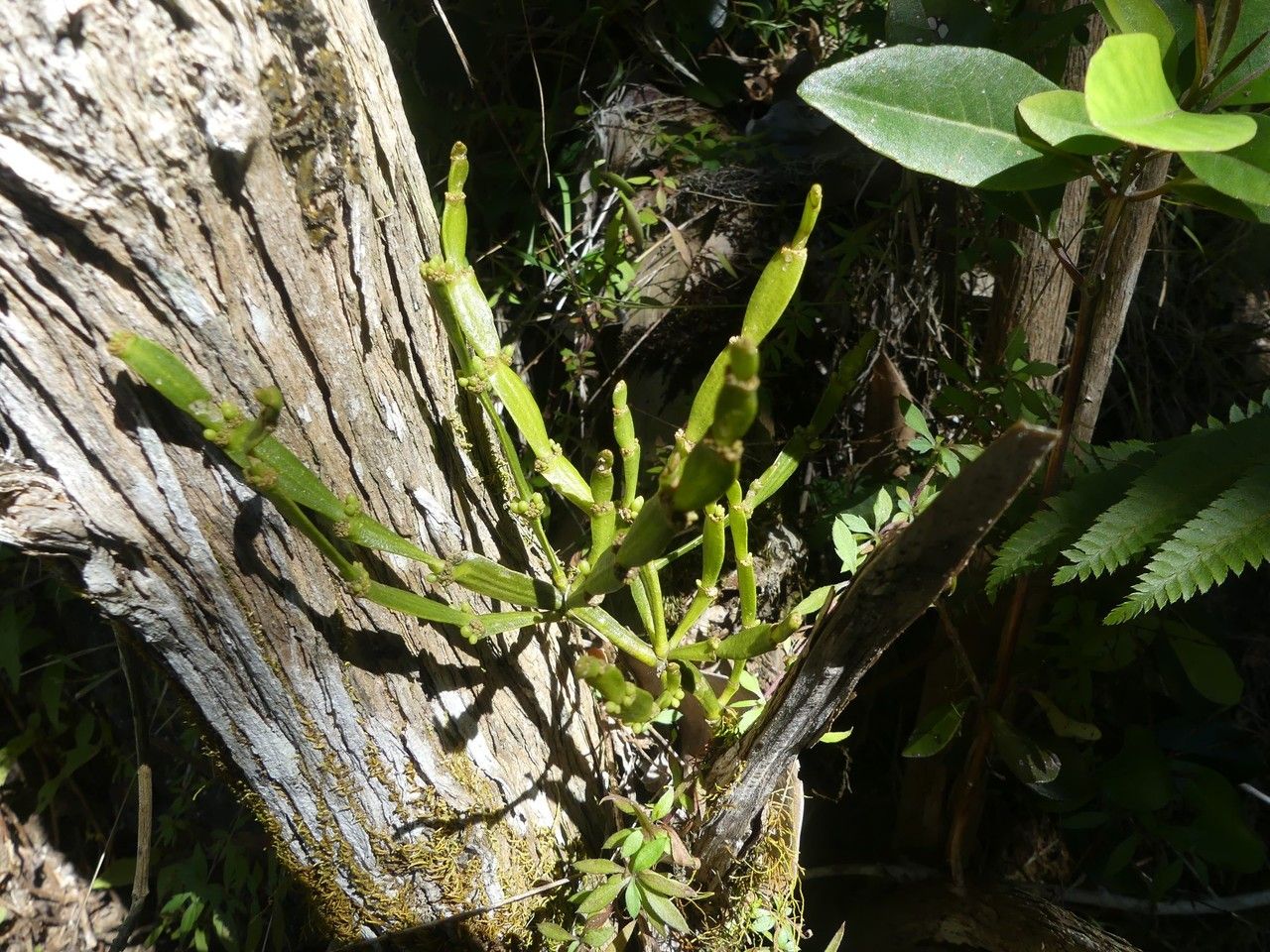
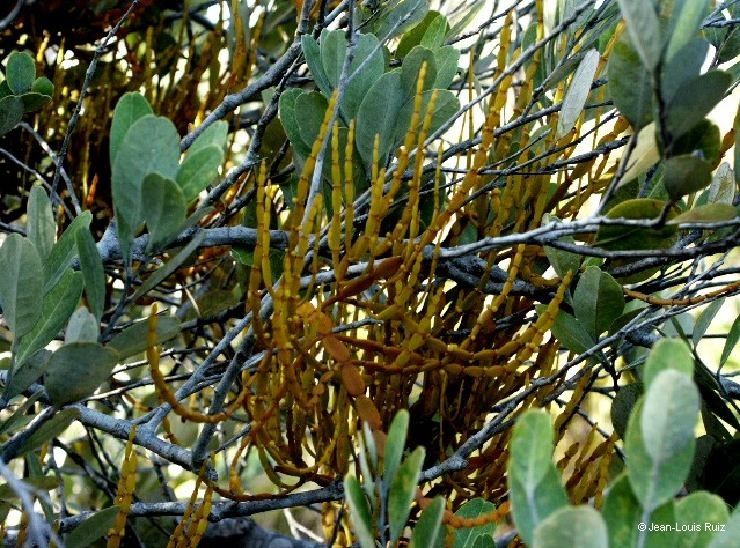
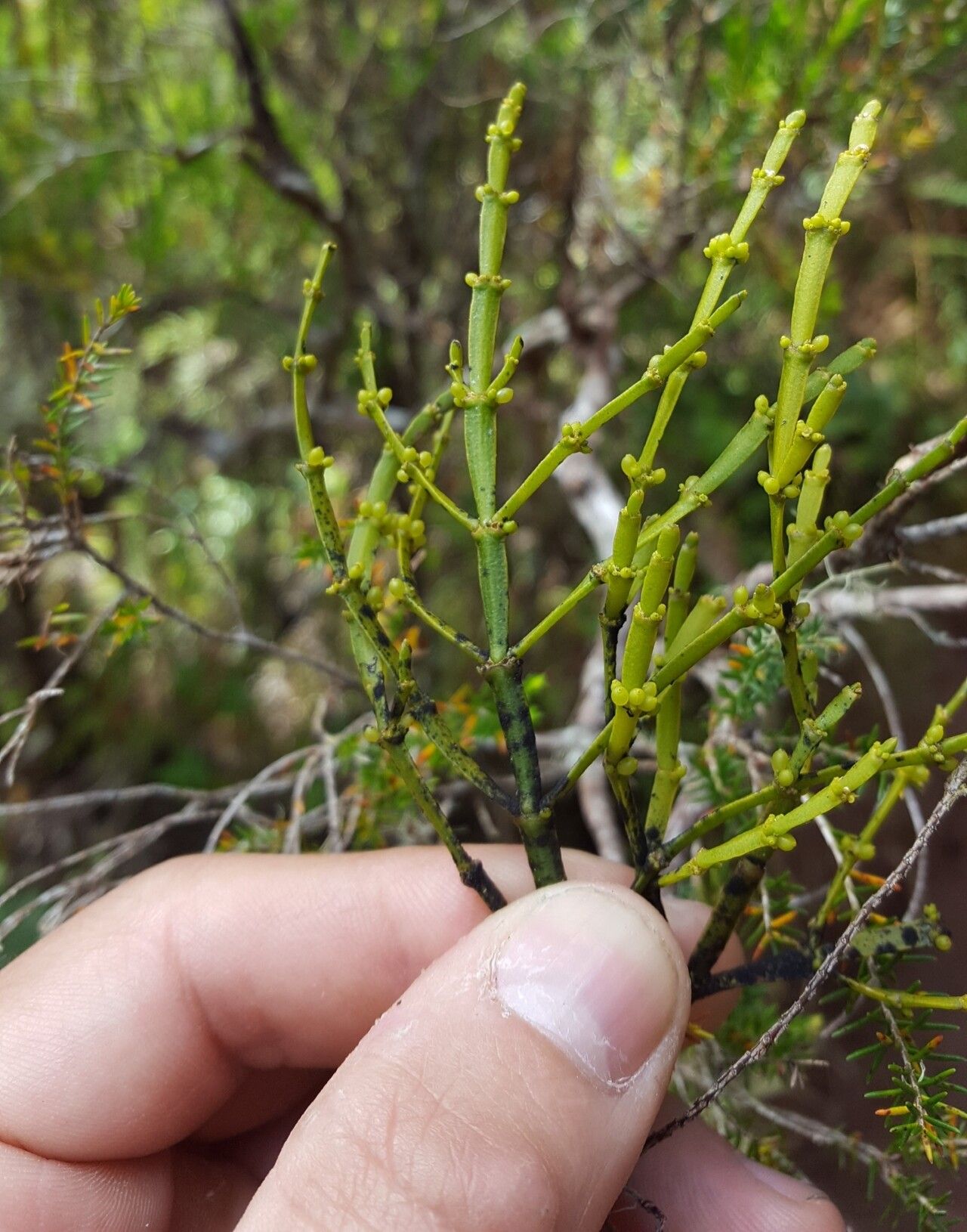
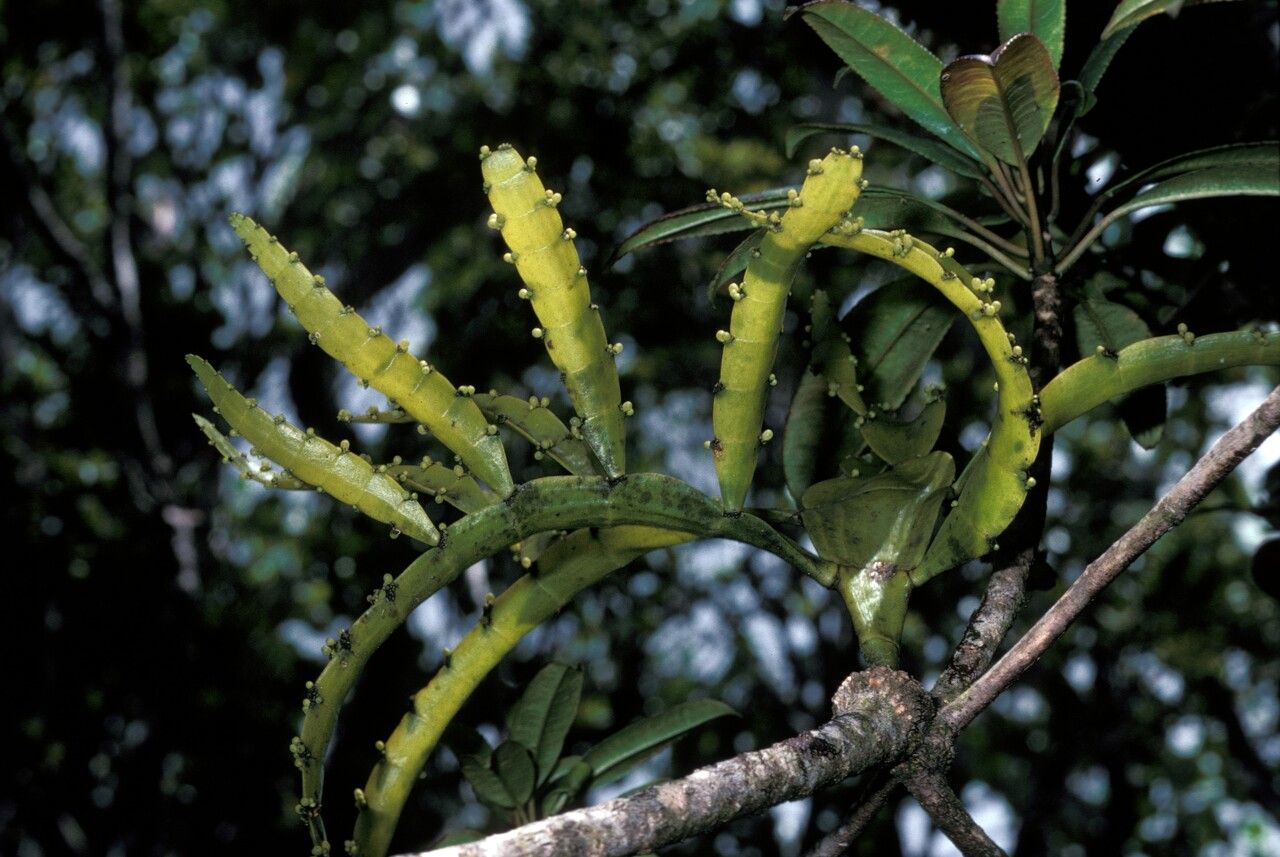
Jointed mistletoe resists disease well and is generally not prone to illness. In terms of care, the plant is relatively low-maintenance. When grown outdoors it needs minimal watering, and larger plants usually do not require pruning; smaller plants, however, should be pruned after they finish blooming. Jointed mistletoe is suitable for anyone with an outdoor space, such as a garden or deck, and does not require much prior care experience.
How to keep Korthalsella Japonica.
Light
Jointed mistletoe is found naturally in settings like forest understories or rocky terrain, where it grows in natural shade. It favors partial sun but can tolerate both full sun and full shade, reflecting its versatile, hardy nature.
Water
Jointed mistletoe is native to arid climates and demonstrates excellent drought tolerance. It requires minimal watering, needing hydration only every 2-3 weeks. As an epiphyte, it benefits from occasional misting and grows best in well-draining soil with moderate light. Thanks to its efficient moisture retention, it thrives as an evergreen plant.
Temperature
Jointed mistletoe is fairly adaptable to heat, tolerating high temperatures and wide temperature fluctuations. In hot weather, you should ensure proper watering and provide some shade to avoid sunburn. On the other hand, Jointed mistletoe is not very tolerant of cold; it can handle some chill, but very low temperatures may cause frost damage.
Fertilizer
Fertilize your Jointed mistletoe in early spring to encourage healthy growth. Regular feeding improves its overall health, leading to vigorous development, increased tolerance of harsh conditions, and enhanced resistance to diseases and pests. Keep to a specific fertilization schedule for your Jointed mistletoe to maintain foliage that is vibrant, deeply colored, and lush.
Pruning
Jointed mistletoe features jointed, leafless stems and benefits from pruning between early and late winter to maintain its health. To prune effectively, remove any dead or damaged stems by cutting them back to the nearest joint. Proper pruning improves air circulation, reduces the risk of disease, and enhances the plant's structure and appearance.
Botanical profile.
- Plant Type
- Shrub
- Life Cycle
- Perennial
- Genus
- Korthalsella
- Family
- Santalaceae
- Hardiness Zone
- 9-11
- Mature Height
- 15 cm
- Mature Spread
- 5 cm to 15 cm
- Leaf Color
- Olive Drab
- Leaf Type
- Evergreen
- Flower Color
- Yellow, Green, Brown
- Flower Size
- 0.10 cm to 0.20 cm
- Bloom Time
- Late spring, Early summer, Mid summer
- Planting Time
- Spring, Summer
- Harvest Time
- Late summer, Early fall, Mid fall
- Native Area
- Sri Lanka, India, Malaysia, Philippines, Madagascar, Pakistan, China, Afghanistan, Indonesia, Vietnam, Myanmar, Japan, Bhutan, South Korea, Thailand
Other names.
Reader questions.
How often do I need to water my Jointed mistletoe?
Most outdoor plants can rely on rainfall for their water needs. However, if your area doesn't get enough rain, you should water your plants adequately every 2 weeks in the spring and fall. In the summer, you'll need to water more frequently, while in winter, when growth slows down, you can water less often or even not at all. For young or newly planted Jointed mistletoe, more frequent watering is necessary to help it establish and grow to be more adaptable and drought tolerant. When it comes to potted plants, there are two main options for determining watering frequency for Jointed mistletoe. The first is to follow a set schedule, such as once every week or every other week. However, this approach may not consider the specific conditions of your growing environment. Another approach is to base watering frequency on soil moisture. It's generally best to wait until the first two to four inches of soil have completely dried out before watering again, which is typically about halfway down the pots. Keep in mind that during summer, when the plant's water needs are highest, a set schedule may not be sufficient.