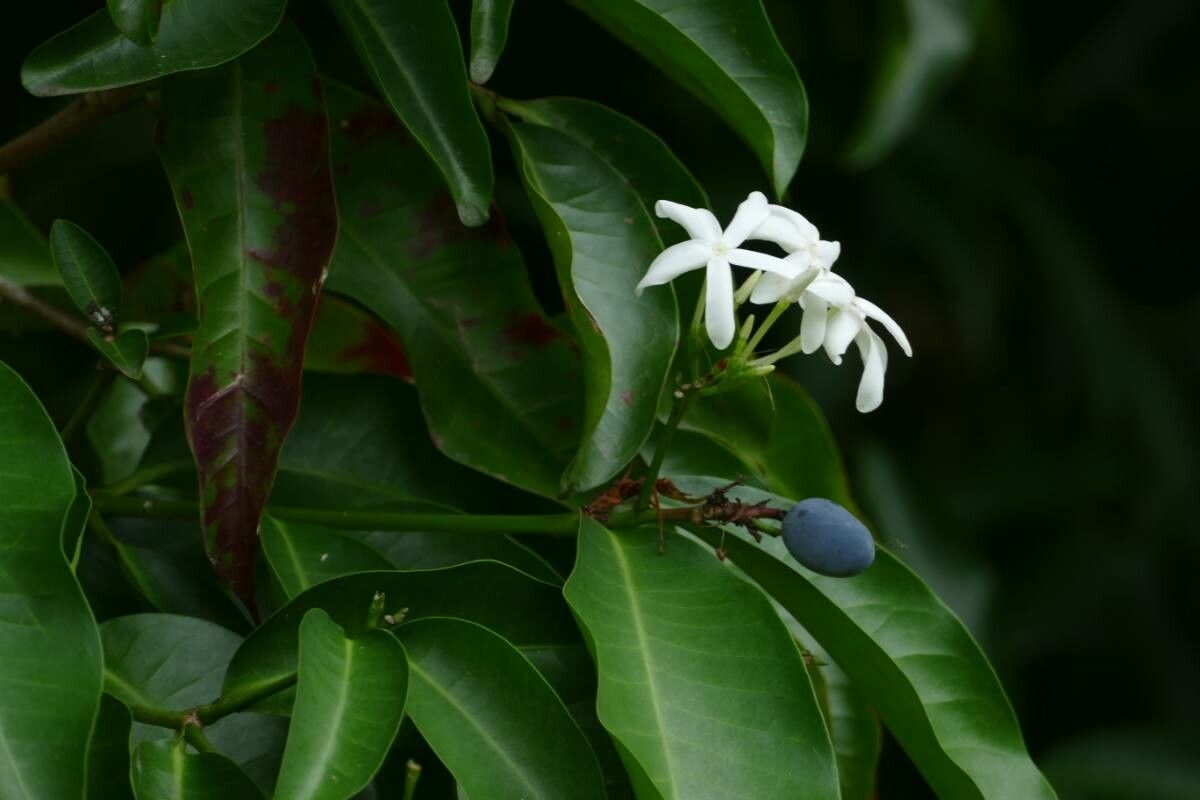
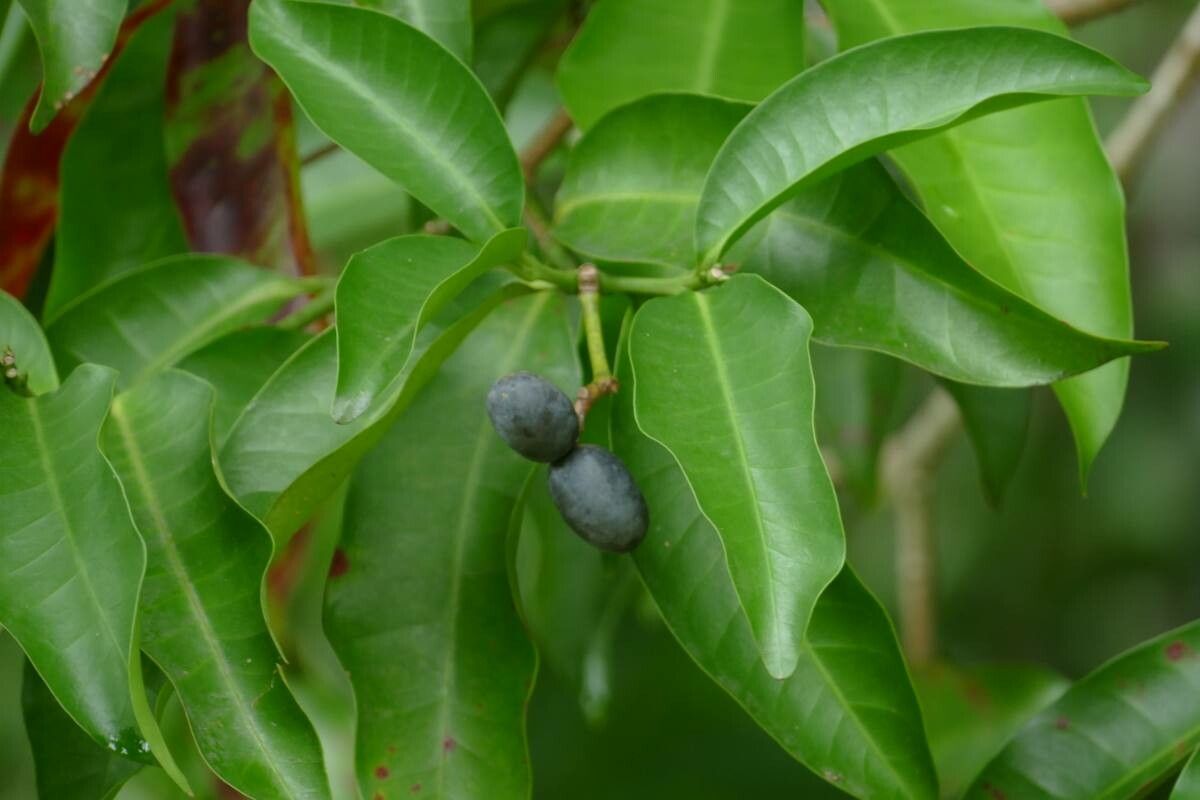
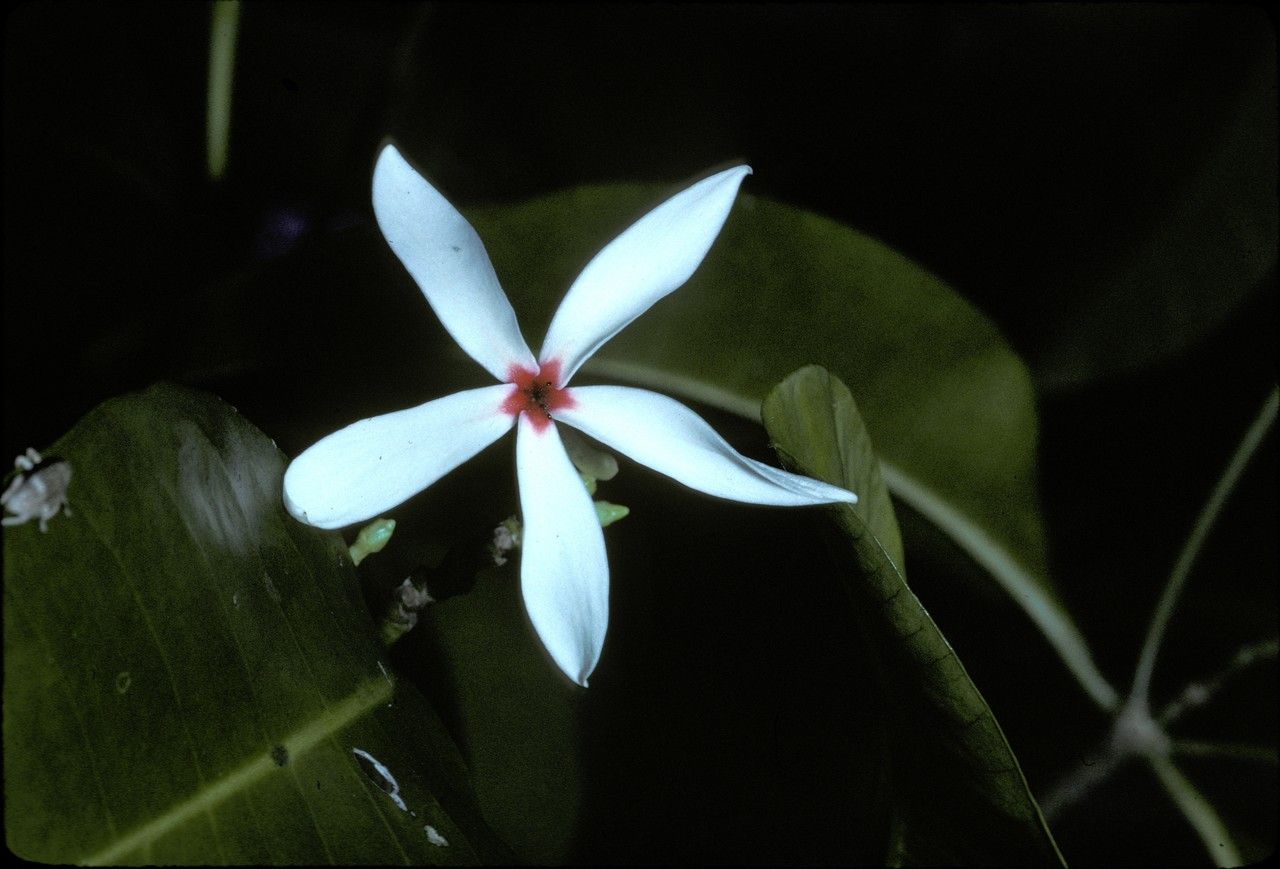
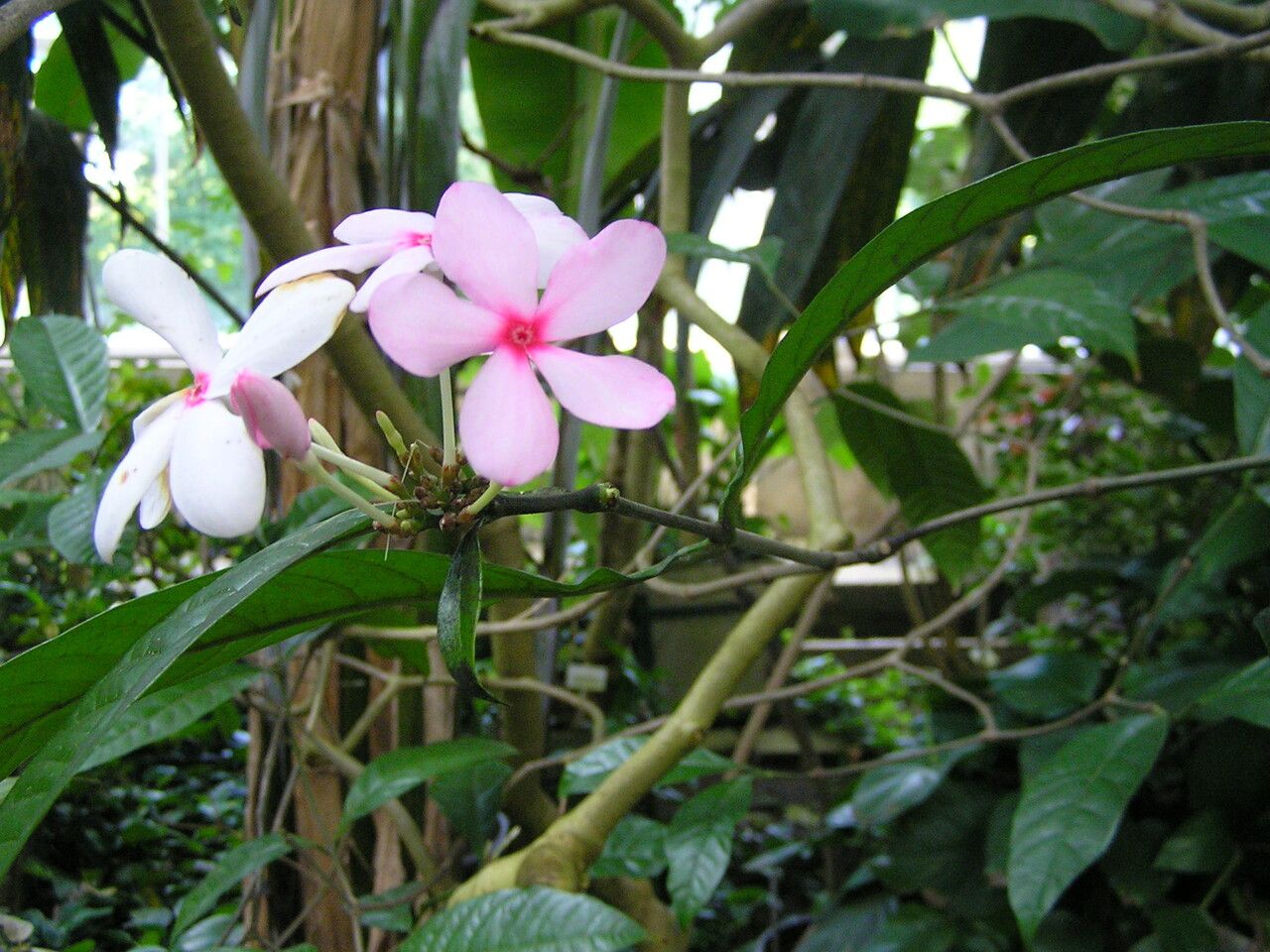
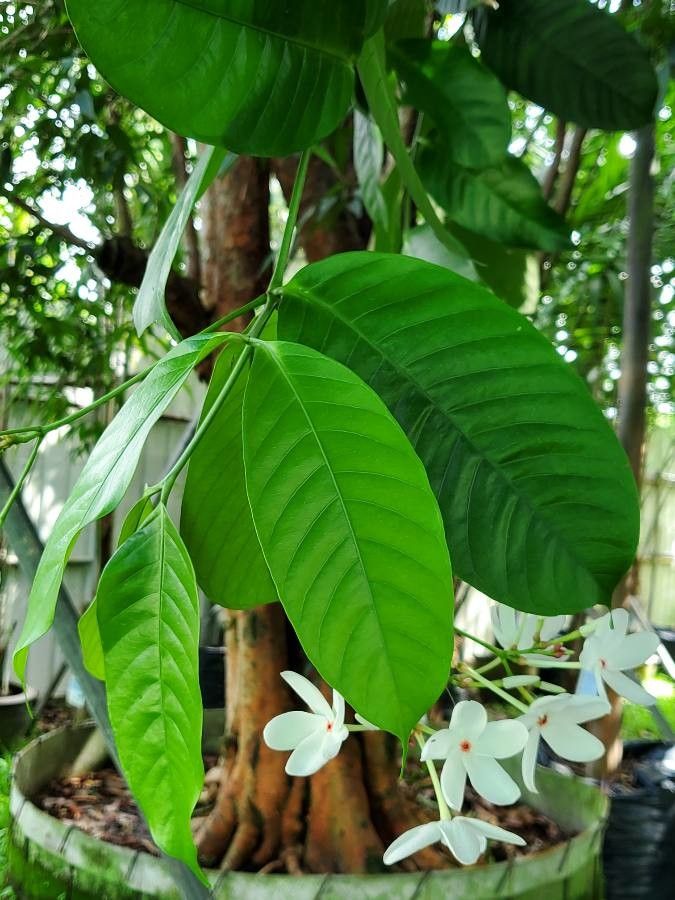
Kopsia arborea is a tree in the family Apocynaceae.
White kopsia has strong disease resistance and is generally not susceptible to illnesses. In terms of care, this plant is fairly low-maintenance. When planted outdoors it needs minimal watering, and larger plants usually do not require pruning. However, smaller plants should be pruned after they have finished blooming. White kopsiat is suitable for anyone with an outdoor area, such as a garden or deck, and does not require a lot of care experience.
How to keep Kopsia Arborea.
Light
The white kopsia does best with plenty of the sun's light, similar to its native environment. Too much light won't harm it, and it doesn't need reduced light at different stages of growth, but insufficient light can impede its healthy development.
Water
White kopsia thrives in tropical conditions with consistent moisture and high humidity. To keep the soil evenly moist, water the plant every two weeks. As an evergreen, white kopsia requires careful attention to watering during the growing season to maintain its continuous leaf growth.
Temperature
White kopsia is primarily found in areas where temperatures range from 68 to 95 °F (20 to 35 ℃). In its natural habitat, it is shown to grow best within that temperature range. It is advisable to adjust temperatures to replicate these conditions across different seasons.
Fertilizer
The best time to fertilize a White kopsia is in early spring, when it breaks dormancy. This encourages overall growth and flower development. Fertilizing improves the foliage, stems, and branches, and helps produce larger, more vibrant, and longer-lasting flowers. It also helps move nutrients from the roots to the flowers and boosts the plant’s health and resistance to disease.
Pruning
The white kopsia is a beautiful plant known for its attractive white flowers and glossy evergreen leaves. To keep it healthy, prune it from early to late winter after it has finished flowering. Focus on removing dead branches and shaping the plant to enhance its form. Thinning the plant improves air circulation and light exposure, which promotes its health and minimizes stress and pest risks during its dormant period.
Botanical profile.
- Plant Type
- Tree
- Life Cycle
- Perennial
- Genus
- Kopsia
- Family
- Apocynaceae
- Hardiness Zone
- 10
- Mature Height
- 14.02 m
- Mature Spread
- 9.14 m to 10.36 m
- Leaf Color
- Green, Blue
- Leaf Type
- Evergreen
- Flower Color
- White, Pink
- Flower Size
- 1.52 cm to 4.06 cm
- Bloom Time
- All year round
- Planting Time
- Spring, Summer, Autumn
- Harvest Time
- All year round
- Native Area
- India, Malaysia, Indonesia, Cambodia, Vietnam, Philippines, Laos, Thailand, China
Other names.
Reader questions.
How should I water my White kopsia plant as it grows?
To provide the best care for a young White kopsia, especially when it is a seedling, it is important to water it more than you would for a mature plant. Consistently keeping the soil moist at this early stage will help encourage root development. The same goes for any White kopsia that has been transplanted to a new location. Additionally, giving the White kopsia proper care can lead to beautiful flowers and fruits. If your White kopsia is in a flowering or fruiting phase, it may require a bit more water than usual to support these plant structures.
What are the sunlight requirements for White Kopsia?
White Kopsia requires full sun, which equates to more than 6 hours of sunlight daily. It's crucial to observe how sunlight moves through your garden to find spots that ensure a balance of light and shade, optimizing the plants' health. These light conditions mimic White Kopsia's native ecosystem, ensuring its growth remains robust without the risk of overexposure. However, insufficient sunlight can impede its growth, so ensuring adequate light is key.
What are the ideal temperature conditions for White kopsia?
White kopsia thrives in temperatures ranging between 68 to 95 °F (20 to 35 °C). It is a heat-loving plant that does poorly in cold temperatures. During autumn, it's recommended to bring the plant indoors, placing it near a bright window but away from direct heat sources. Keeping the temperature above 20°C during winter is crucial for its growth, as temperatures nearing 5°C can be harmful.
Can White Kopsia benefit from artificial lighting?
Yes, White Kopsia can benefit from artificial lighting, especially indoor plants or those in environments with less natural sunlight. When sunlight is insufficient, artificial lights such as LEDs, which can be customized to provide specific wavelengths, are recommended. For full sun plants, 30-50 watts per square foot is advisable, while partial sun and full shade plants require 20-30 watts and 10-20 watts per square foot, respectively. The light source should be placed 12-36 inches above the plant to mimic natural sunlight for 8-12 hours per day.
How does low temperature affect White kopsia and what are the solutions?
White kopsia is sensitive to low temperatures and prefers environments above 20°C. Exposure to temperatures below 1°C can cause the leaves to lighten in color, and frost damage may lead to leaves turning brown or black, along with wilting and drooping. If frost damage occurs, trim off the damaged parts and move the plant to a warm indoor environment. Placing it near a south-facing window ensures ample sunlight, but keep it away from heaters or air conditioning vents to avoid dry air.
What are the signs of insufficient light in White Kopsia?
Signs of insufficient light in White Kopsia include smaller new leaves, leggy or sparse growth, faster leaf drop, slowed or stopped growth, and paler new leaves. These symptoms indicate the plant isn't receiving enough sunlight, leading to reduced chlorophyll and essential nutrients. Additionally, excessive sunlight can cause chlorosis, sunscald, leaf curling, wilting, and leaf scorching, indicating the need for balance in light exposure.
How does high temperature affect White kopsia and what are the solutions?
In high temperatures, specifically above 35°C, White kopsia's leaves may lighten in color, indicating stress, and it becomes more prone to sunburn if temperatures exceed 41°C. To mitigate damage, trim away sunburned or dried parts and relocate the plant to a shaded area during the peak sun hours. Watering in the morning and evening helps maintain soil moisture and protect the plant.
How can I address light-related issues in White Kopsia?
To address light-related issues in White Kopsia, gradually increase sunlight exposure to achieve at least 6 hours of direct sunlight daily. Moving plants to south-facing windows or using artificial light such as desk lamps or grow lights for at least 8 hours a day can ensure enough light for indoor plants. Outdoors, gradually move plants to sunnier spots to avoid sunburn. If physical obstructions block sunlight, consider pruning trees or transplanting smaller plants to better-lit areas, ensuring the plants adapt well and exhibit healthy new growth.
What is the botanic name of White kopsia?
The botanic name of White kopsia is Kopsia arborea.