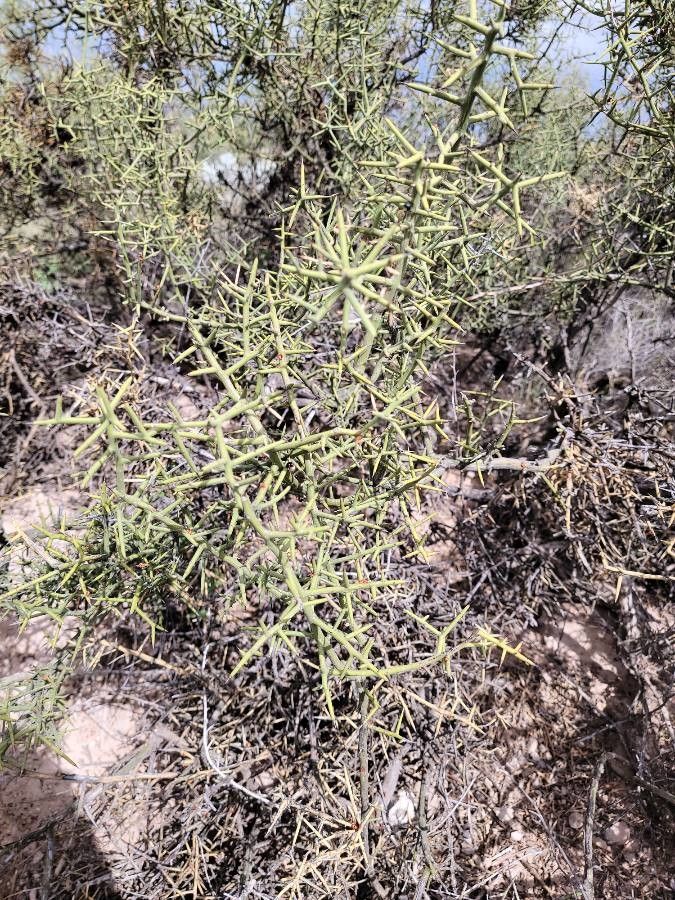
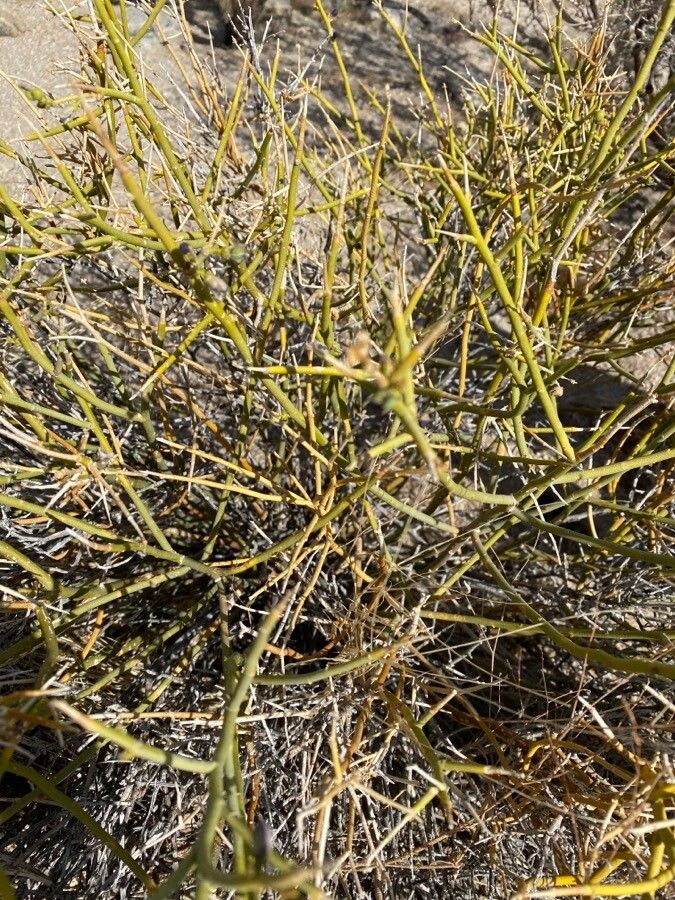
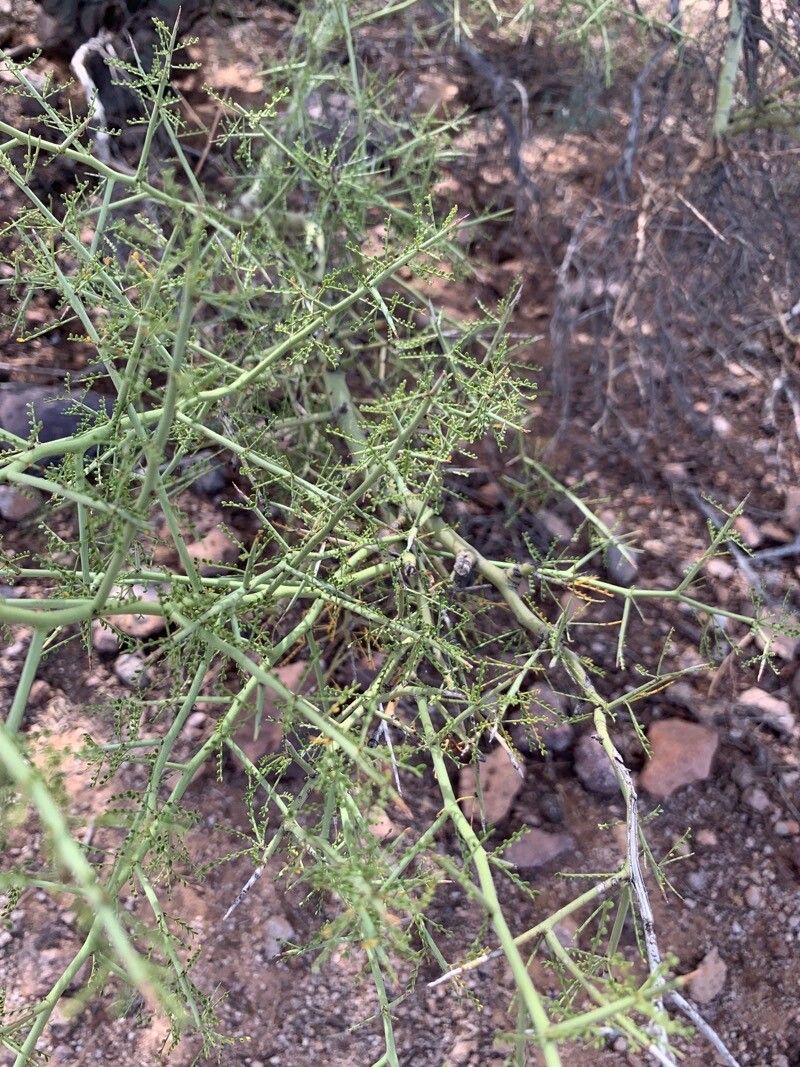
Koeberlinia spinosa, commonly known as the crucifixion thorn, is a remarkable and resilient plant species that belongs to the Zygophyllaceae family. Native to the arid regions of the southwestern United States and northern Mexico, this plant features spiny branches that can reach up to 10 feet in height and bear small green leaves. In spring, it produces small, yellowish-white flowers that bloom in clusters. Adapted to survive in harsh desert environments, the crucifixion thorn has a deep root system that can extend up to 30 feet underground. This allows it to withstand extreme temperature variations, ranging from freezing winters to scorching summers. For centuries, Native American tribes have utilized the crucifixion thorn for its medicinal properties. The plant contains compounds with anti-inflammatory benefits and has been used as a natural remedy for ailments such as fever, coughs, headaches, and stomach problems. Ecologically, Koeberlinia spinosa plays a crucial role in desert ecosystems. It provides shelter for birds and other wildlife, and serves as a vital food source for pollinators like bees. Overall, Koeberlinia spinosa is a fascinating plant that thrives under harsh conditions while offering significant medicinal and ecological benefits. It is a valuable addition not only aesthetically, but also functionally, to any garden or landscape design project in the arid regions of the southwestern United States or northern Mexico, where it naturally occurs.
Crown of thorns has strong resistance to disease and is generally not likely to suffer from illnesses. In terms of care, this plant is fairly low-maintenance. When grown outdoors, it needs minimal watering, and larger specimens typically do not require pruning. Smaller plants, however, should be pruned after they finish blooming. Crown of thorns is appropriate for anyone with an outdoor area, such as a garden or deck, and does not demand extensive experience in plant care.
How to keep Koeberlinia Spinosa.
Light
The crown of thorns plant hails from wide-open environments like sun-drenched meadows and borders of forests, where there is plenty of light. It flourishes best in Full Sun, but can equally withstand Partial Sun, demonstrating its ability to accommodate a range of sunlight circumstances.
Water
The crown of thorns plant thrives in dry conditions and is exceptionally drought-tolerant, needing water only every 2-3 weeks. As an outdoor plant, it is ideal for xeriscaping. It efficiently stores water and flourishes during the growing season, even with infrequent but heavy rainfalls, mimicking the moisture levels of its natural habitat.
Temperature
The crown of thorns is native to temperate climates and does best in temperatures from 59 to 100°F (15 to 38°C). During colder months, it is recommended to regulate indoor temperatures to match this range for optimal growth.
Fertilizer
Fertilize your Crown of thorns in early spring to encourage healthy growth. Regular feeding improves its overall condition, leading to vigorous development, better toughness in challenging conditions, and increased resistance to pests and disease. Keep a consistent fertilization routine for your Crown of thorns to maintain foliage that is bright, richly colored, and lush.
Pruning
The crown of thorns plant, known for its spiny structure, benefits greatly from pruning in early spring. By removing dead branches, you can encourage new growth, while light trimming helps maintain the plant's size. This process also improves air circulation and light exposure, which are crucial for the health of the foliage. Be careful when handling the plant because of its spines. For the best outcomes, consult local guides on pruning practices.
Botanical profile.
- Plant Type
- Shrub
- Life Cycle
- Perennial
- Genus
- Koeberlinia
- Family
- Koeberliniaceae
- Hardiness Zone
- 8-11
- Mature Height
- 3.96 m
- Mature Spread
- 1.83 m
- Leaf Color
- Dark Green
- Leaf Type
- Deciduous
- Flower Color
- White
- Flower Size
- 0.76 cm
- Bloom Time
- Mid spring, Late spring, Early summer
- Planting Time
- Spring, Summer, Autumn
- Harvest Time
- Mid summer, Late summer, Early fall
- Native Area
- Mexico
Other names.
Reader questions.
How should I water my Crown of thorns plant?
To promote excellent root development, place a garden hose at the base of the plant, avoiding direct spraying of the leaves. If the plant is outdoors in direct sunlight, the leaves will need more watering. You can also use bubblers or soaker hoses to moisten the roots. When adding or removing plants, use soaker hoses that cover the entire garden or bed to ensure deep root penetration. Drain any excess water and wait for the soil to dry before watering again. Water the plants at ground level to prevent diseases. On sunny days, it may be helpful to spray the entire bush with water. Whether potted or in-ground, remember that Crown of Thorns plants prefer deep watering rather than light sprinkling.
What are the sunlight requirements for Crown of Thorns plants?
Crown of Thorns plants thrive in environments that offer plentiful sunlight, much like their natural habitats of sunny meadows and forest edges. They require full sun, which means they need more than 6 hours of sunlight daily, but they can also tolerate partial sun, with about 3-6 hours of sunlight. It's important to monitor the sun's movement through your garden to ensure your plants are placed in spots that offer an ideal balance of light and shade, which is crucial for their growth and well-being.
What is the native climate of the Crown of Thorns?
The Crown of Thorns is native to temperate climates, flourishing in temperatures that range from 59 to 100°F (15 to 38°C). This plant shows some tolerance to cold and generally doesn't require special care when temperatures are above -5°C. However, it's crucial to regulate indoor temperatures within this range during colder seasons for optimal growth.
What should I do if I give too much or too little water to my Crown of thorns plant?
If you overwater your Crown of thorns plant, you may notice yellowing, wilting leaves, and mushy stems. Adjust your watering schedule when these signs appear. Wilting can also be a sign of underwatering, in which case the leaves will become crispy and dry. Check the soil moisture level and water thoroughly if the soil is dry. However, even with enough water, the damaged root system may cause the plant to still appear dry with yellow leaves in a few days. Once the plant recovers, the yellowing should stop. When keeping the Crown of thorns indoors, be cautious of overwatering and look out for black spots. If present, allow the soil to dry out by refraining from watering for a few days. Overwatering can lead to root rot, so if you see discolored and slimy roots, consider transferring the plant to a different pot. It's important to prevent root rot by avoiding overly soggy soil. When planting the Crown of thorns outdoors, make sure to check the soil's moisture level and water adequately if it is too dry.
Can artificial lighting be used for Crown of Thorns plants, and how?
Yes, artificial lighting can be beneficial for Crown of Thorns plants, especially when natural sunlight is insufficient, like during winter or in areas of your home that receive less sunlight. LED lights are a popular and effective choice for indoor plant lighting, as they can be tailored to provide the specific wavelengths of light needed by your plants. For optimal growth, full sun plants require 30-50W/sq ft of artificial light, partial sun plants need 20-30W/sq ft, and full shade plants need 10-20W/sq ft. The artificial light source should be placed 12-36 inches above the plant, mimicking natural sunlight as closely as possible, and most plants will benefit from 8-12 hours of artificial light per day.
What should I do to protect Crown of Thorns from cold temperatures?
If temperatures are expected to drop below -5°C, you'll need to take temporary measures to protect your Crown of Thorns from the cold. This can include wrapping the plant in plastic film, fabric, or other materials suitable for insulation. As soon as temperatures rise again, these protective measures should be removed to prevent any potential damage to the plant.
How frequently do I need to water my Crown of thorns?
The Crown of thorns prefers deep and infrequent watering. When planted in pots, be sure to soak them in a gallon of water. Potted plants have limited water storage, so the soil dries out quickly. If you live in a cold region, water every 3 to 5 days. Water in the morning when the soil is dry, both outdoors and indoors. You can also check the soil inside to determine if watering is necessary. When the top 2-3 inches of soil are dry, it's time for a full watering. During hot days, check the moisture daily as the heat can dry out the pot soil quickly. If you have a garden, you'll also need to irrigate the soil. In a hot climate, water once a week when about 2 to 3 inches of soil become too dry. If there's a lot of rainfall, no additional watering may be necessary. Crown of thorns typically grows in spring and fall. Outdoors, add 3 to 4 inches of mulch to conserve water. Sandy soil requires more frequent watering, while clay soil can go 2-3 days without watering to avoid root rot. Keep track of watering dates on a calendar and watch for drooping leaves, which could indicate that you're a day late in watering.
What are some common symptoms of light deficiency in Crown of Thorns plants?
Crown of Thorns plants display several symptoms when they experience light deficiency, key among them being small leaves, leggy or sparse growth, faster leaf drop, slower or no new growth, lighter-colored new leaves, chlorosis, sunscald, leaf curling, wilting, and leaf scorching. These symptoms vary from the subtle, such as new leaves growing smaller and paler due to insufficient chlorophyll and nutrients, to the more severe, such as leaf scorching and curling as a result of excessive sunlight or insufficient hydration.
How does low temperature affect Crown of Thorns and what can be done?
Crown of Thorns has a moderate tolerance to low temperatures and thrives best above 15°C. When temperatures fall below -5°C, and especially under -10°C, you may notice the leaves starting to droop. Mild cases may see recovery, but severe cold can cause leaves to wilt and fall off. To protect the plant, trim off frost-damaged parts and, to prevent future cold damage, wrap the plant with non-woven fabric or cloth and set up a wind barrier.
How much water should I give to my Crown of thorns plant?
The Crown of thorns plant needs about a gallon of water on a regular schedule. For potted plants, water them deeply until the water drips out the bottom, then wait for the soil to dry before watering again. Use a water calculator or moisture meter to determine how much water the plant has received in a week. During the flowering period, give the plant plenty of water, but allow the moisture to evaporate to prevent root rot. If the Crown of thorns is planted outdoors with sufficient rainfall, it may not need extra watering. However, when it is young or newly planted, ensure it gets 1-2 inches of rain per week. As the plant grows, it can rely on rainfall alone. Only water it during very hot weather or when there has been no rain for 2-3 weeks. Water during cooler parts of the day to prevent heat damage. Additional watering may be necessary during prolonged dry spells.
How can you address light deficiency symptoms in Crown of Thorns plants?
To address light deficiency in Crown of Thorns plants, you can employ several strategies, both for indoor and outdoor plants. For indoor situations, gradually move your plants to sunnier locations each week until they get at least 6 hours of direct sunlight daily, utilizing south-facing windows for maximum exposure. Artificial lighting, like desk lamps or professional grow lights, can also provide necessary light for growth. Outdoors, gradually acclimatizing your plants to sunnier spots can prevent sunburn. Reducing obstructions, such as by pruning trees that shade your garden, or transplanting smaller plants to sunnier areas, can improve sunlight exposure. Note that parts of the plant already affected by insufficient sunlight may not recover, but new growth can be healthy with increased light exposure.
How does high temperature affect Crown of Thorns and how can it be mitigated?
During summer, keeping the Crown of Thorns below 38°C is crucial. Temperatures exceeding 43°C can lead to lighter leaf colors, dry and withered leaf tips, curled leaves, and increased susceptibility to sunburn. To help the plant cope with high temperatures, trim away any sunburned or dried-up parts. Relocating the plant to a shaded area or using a shade cloth can protect it from harsh sun. Additionally, watering the plant in the morning and evening can help keep the soil moist and reduce temperature stress.