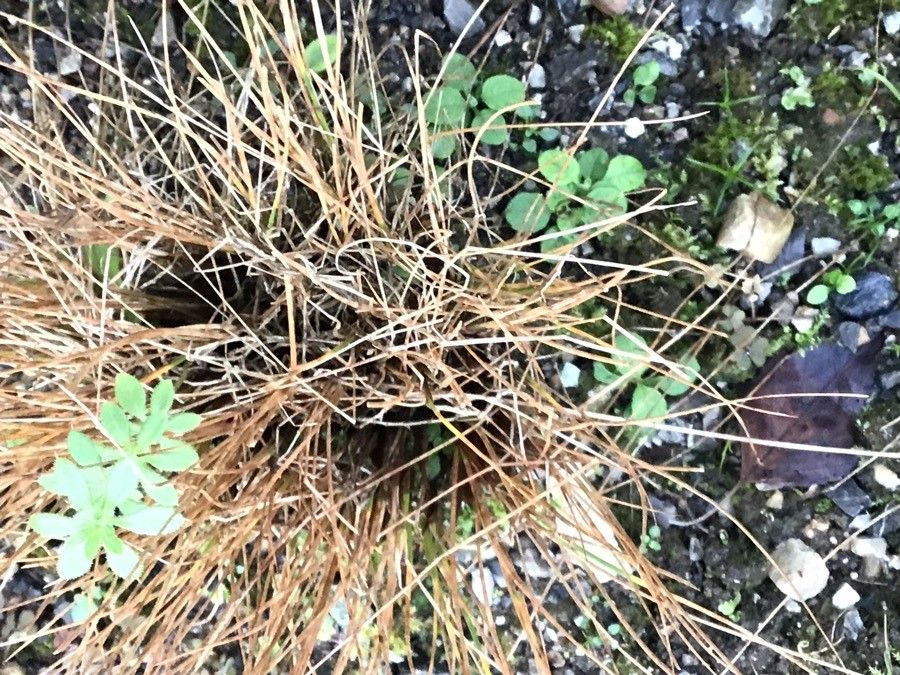
Kobresia simpliciuscula is a species of sedge known by the common names false sedge, simple bog sedge and simple kobresia. It has a circumpolar distribution, occurring throughout the northern latitudes of the Northern Hemisphere.This perennial plant forms tufts of several triangular stems reaching up to 50 centimeters in height. It has short rhizomes. The leaves are up to 20 centimeters long. The inflorescence contains up to 12 spikes of flowers. Light is required for the seeds to germinate.This plant occurs on tundra and in alpine climates. It grows in wet habitat types such as ponds and meadows. It often grows in calcareous substrates such as limestone.
False sedge is fairly resistant to disease and typically not prone to illnesses. However, it can be affected by pests and diseases present in its surroundings, and these problems are usually minor. As for care, the plant requires moderate maintenance. It should be pruned regularly to maintain appearance and promote healthy growth. Fertilizing can also encourage flowering. False sedge is suitable for anyone with an outdoor area, such as a garden or patio, and does not demand extensive care experience. It may need more attention when grown indoors.
How to keep Kobresia Simpliciuscula.
Light
False sedge originates from habitats like forest understories or rocky regions, where it naturally enjoys shade. It favors a partly sunny environment but is equally comfortable in total sunlight or complete shade, signifying its adaptability and resilience.
Fertilizer
False sedge typically only needs one fertilizer application in springtime, however, for optimal growth, multiple feedings could be beneficial. This should be done every 30 to 45 days. Fertilization boosts the looks and usefulness of the leaves by encouraging regular color and a robust texture. Additionally, it invigorates root development and the assimilation of nutrients, contributing to the enduring health of the plant.
Botanical profile.
- Plant Type
- Herb, Grass
- Life Cycle
- Perennial
- Genus
- Kobresia
- Family
- Cyperaceae
- Hardiness Zone
- 3-7
- Mature Height
- 10 cm to 40 cm
- Mature Spread
- 15 cm to 30 cm
- Leaf Color
- Green, Dark Green
- Leaf Type
- Evergreen
- Flower Size
- 0.20 cm to 0.51 cm
- Bloom Time
- Late spring, Early summer
- Planting Time
- Spring, Summer, Autumn
- Harvest Time
- Mid summer, Late summer
- Native Area
- Tajikistan, Turkey, Sweden, Austria, Slovakia, Pakistan, Poland, Russia, Norway, Germany, Italy, Spain, Switzerland, Denmark, Mongolia, Finland, United Kingdom, Romania, France