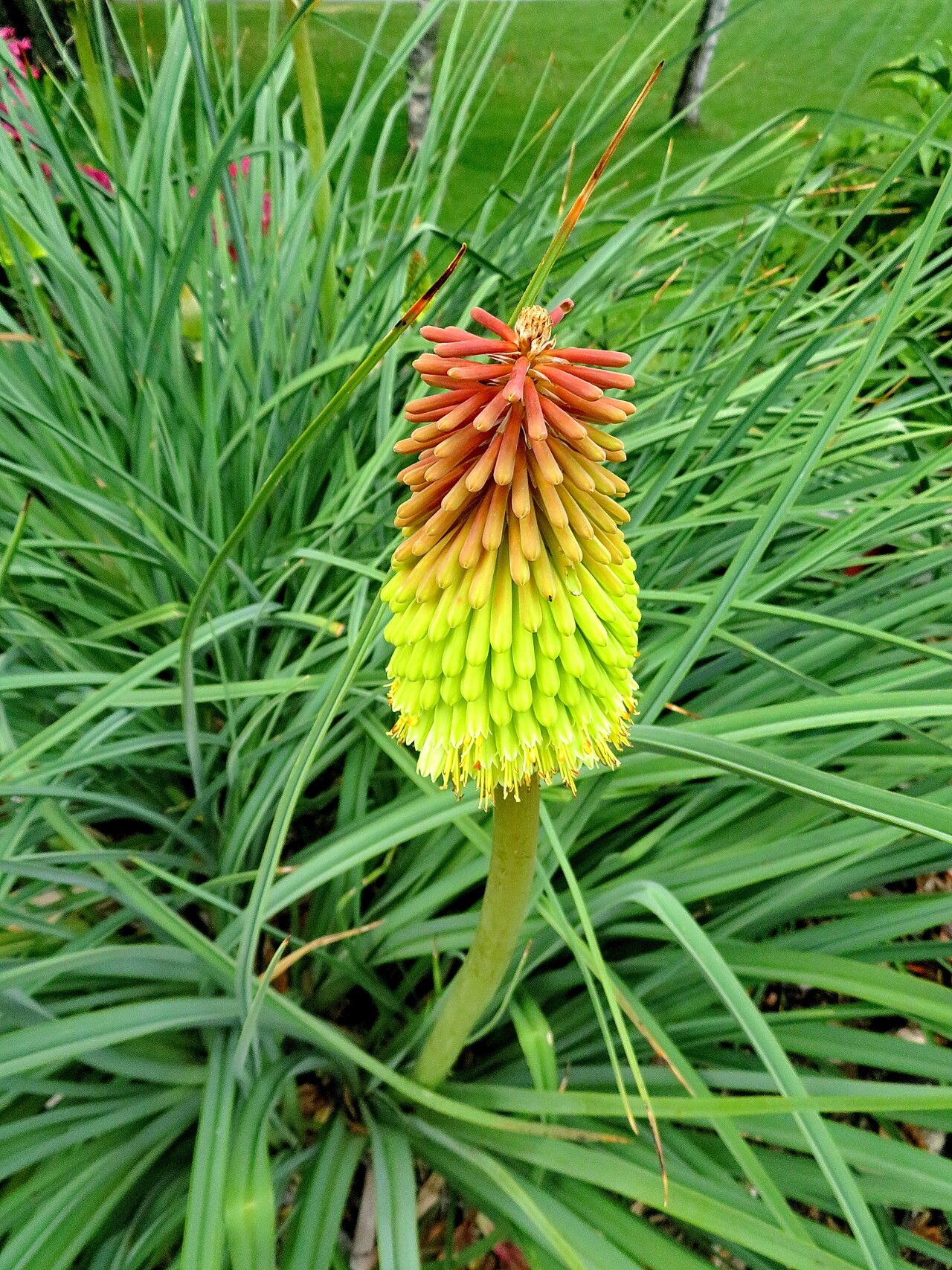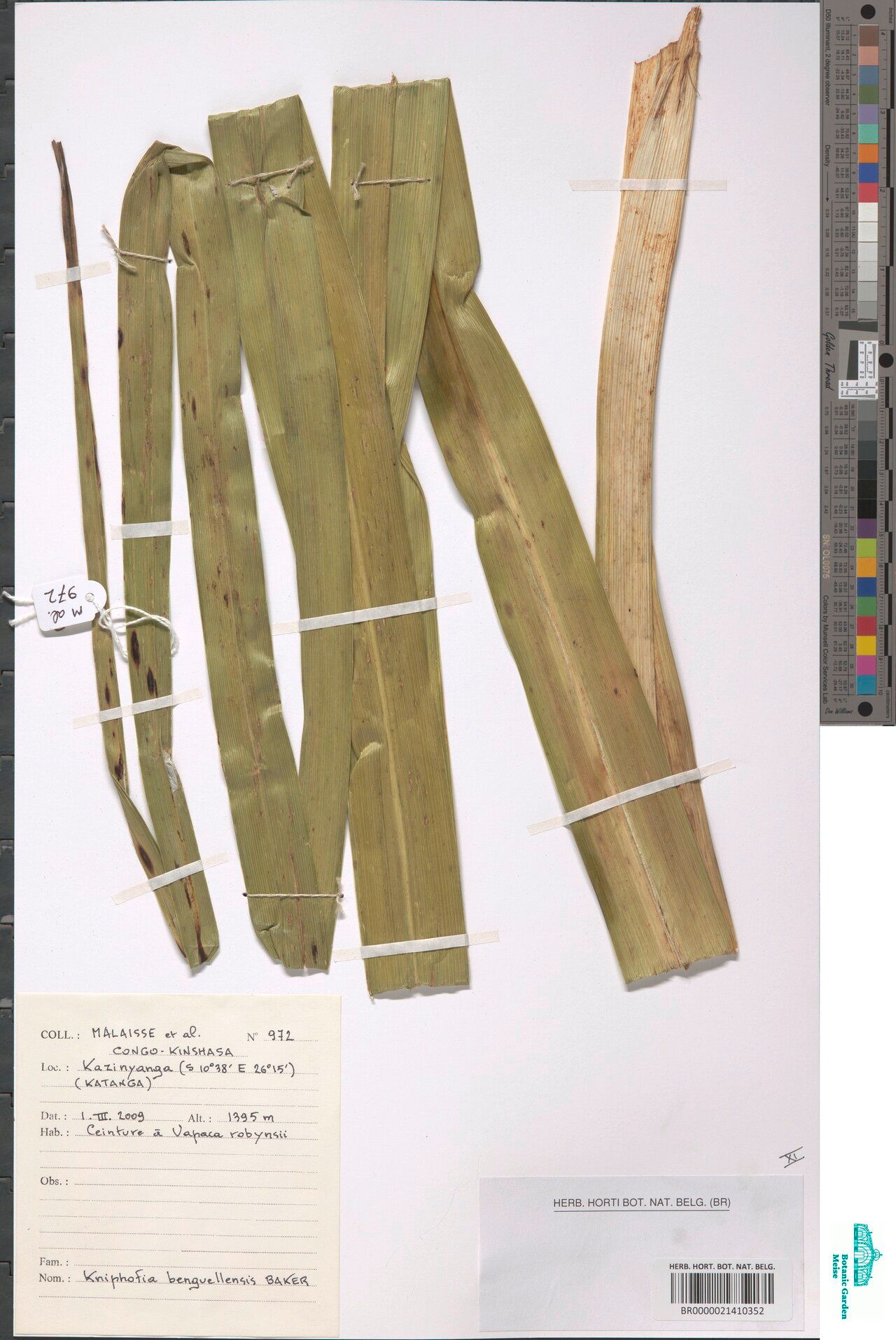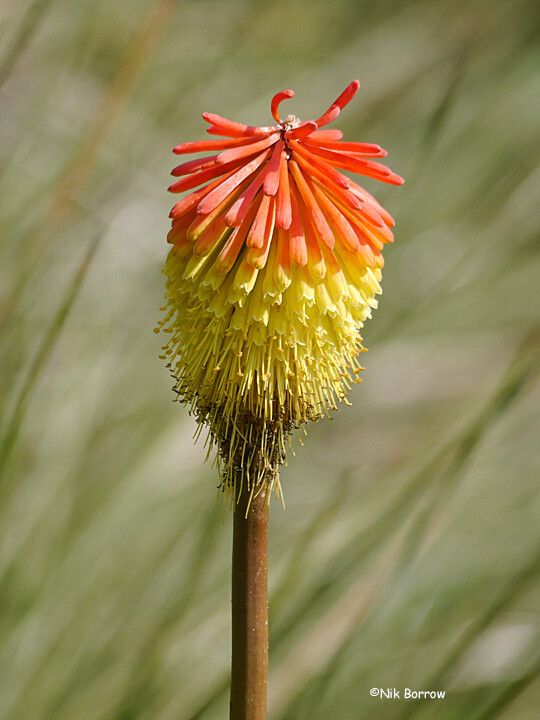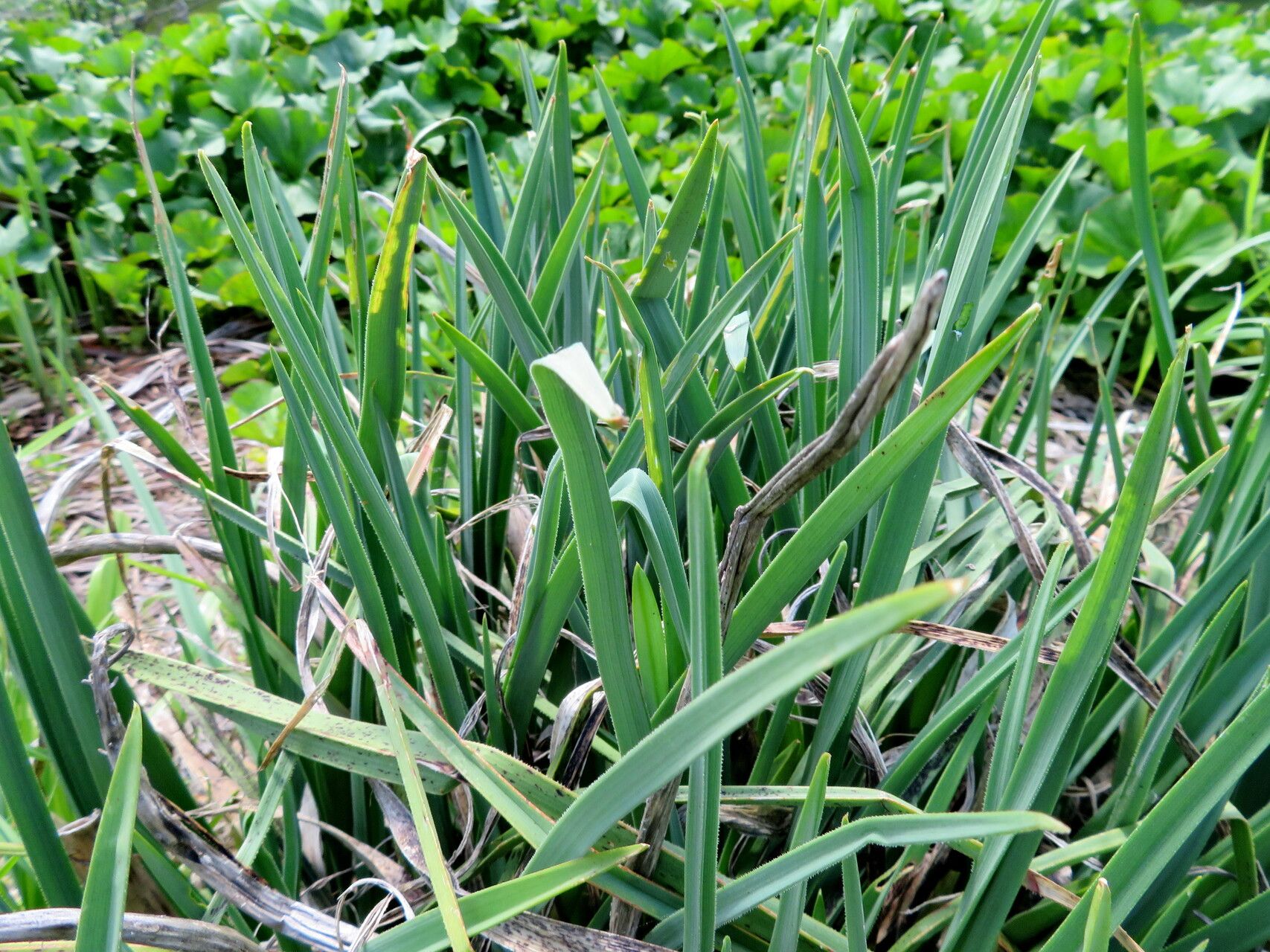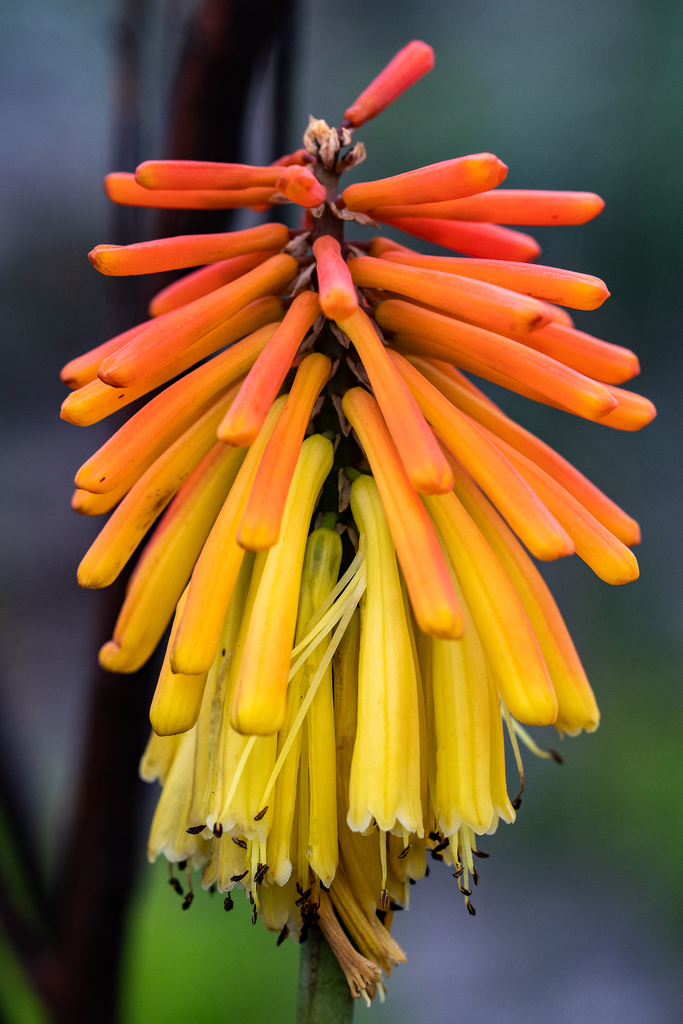
Kniphofia uvaria, commonly known as red hot poker or torch lily, is a perennial flowering plant native to South Africa. Belonging to the Asphodelaceae family, it is renowned for its striking tall spikes of tubular flowers that bloom in vibrant shades of red, orange, and yellow. Typically, the plant reaches up to 1.5 meters in height and features long, narrow leaves that form a clump at the base of the stem.
Red hot poker plants thrive in full sun and well-draining soil with moderate moisture levels. While they are drought-tolerant once established, they require regular watering during their growing season in spring and summer.
The flowers of Kniphofia uvaria attract hummingbirds, bees, butterflies, and other pollinators, making it an excellent addition to any garden or landscape design. Moreover, the plant holds medicinal properties, as it contains compounds traditionally used to treat various ailments such as fever, coughs, and wounds.
Overall, Kniphofia uvaria is an easy-to-grow perennial with eye-catching blooms that add color and interest to any garden setting while also providing ecological benefits by attracting pollinators.
Red-hot poker is a plant that stands out due to its striking appearance. Its flowers rise above clusters of green leaves, resembling torches. The conical flower heads are a vivid red, likening them to small torches. This unique appearance is why the plant is often called "red-hot poker."
Red hot poker has strong disease resistance and is generally not prone to illnesses. Still, it can be affected by pests and diseases present in its surroundings. These infections are generally mild. In terms of care, this plant requires a moderate level of maintenance. It needs regular pruning to maintain a neat appearance and healthy growth. Fertilizing can also help encourage flowering. Red hot poker is suitable for anyone with outdoor space, such as a garden or patio, and does not require extensive experience in plant care. It may demand more attention when grown indoors.
How to keep Kniphofia Uvaria.
Light
Red hot poker requires plenty of sunlight, though it can tolerate situations where it does not get constant sun exposure. It was originally adapted to flourish in bright, sun-rich habitats, and insufficient light can restrict its growth and flowering. Conversely, too much continuous sun can endanger its health.
Water
The red hot poker, native to the arid regions of South Africa, flourishes in dry conditions and requires only minimal moisture, with watering needed just once a week. As a perennial, it demands well-draining soil to prevent root rot, highlighting its sensitivity to overwatering. Despite these requirements, it produces striking inflorescences, adding a remarkable visual appeal.
Humidity
This plant will thrive in moderate humidity, which is probably the level in your home. However, misting it a few times a week can be very beneficial. Make sure the room has good ventilation.
Temperature
Red hot poker grows best in temperatures from 41 to 95℉ (5 to 35℃). Its native habitat is a warm temperate climate with an average annual temperature of 64 to 68℉ (18 to 20℃). In spring, it is recommended to raise the temperature gradually by 5-10℉ (2-5℃) to encourage vigorous growth.
Fertilizer
The best time to fertilize a Red hot poker is in early spring, when it is coming out of dormancy and beginning active growth. Fertilizing supplies essential nutrients for healthy development. Although Red hot poker has fairly low fertilizer requirements, an annual application can improve its survival and encourage better, longer-lasting blooms.
Pruning
Red hot poker plants benefit from pruning in early to late spring. By trimming spent flower stalks and removing dead foliage, you can promote healthier growth and improve flowering. This practice not only enhances the plant's appearance, but also helps prevent disease, making it an essential part of an effective gardening routine.
Pot & Repot
When repotting Red hot poker, pick a pot 1-2 inches (2.5–5.1 cm) larger that has ample drainage. Use a well-draining potting mix. Repot in spring or fall, making sure the root ball sits slightly below the rim of the flower pot. Water thoroughly after repotting and place the pot in a warm spot with indirect sunlight.
Botanical profile.
- Plant Type
- Herb
- Life Cycle
- Perennial
- Genus
- Kniphofia
- Family
- Asphodelaceae
- Hardiness Zone
- 5-9
- Mature Height
- 0.76 m to 1.22 m
- Mature Spread
- 91 cm
- Leaf Color
- Green
- Leaf Type
- Deciduous
- Flower Color
- Red, Orange, Yellow
- Flower Size
- 3.05 cm to 4.06 cm
- Bloom Time
- Late spring, Early summer, Mid summer
- Planting Time
- Spring
- Harvest Time
- Early summer, Mid summer
- Native Area
- South Africa
Other names.
Reader questions.
How should I water my Red hot poker plant?
To ensure the wellbeing of the Red hot poker when you water it, it is best to use filtered water at room temperature. This is because tap water may contain harmful particles. The plant prefers warmer water since it is native to warm environments and cold water can be a shock. Additionally, it is advisable to avoid overhead watering as it can cause issues with the foliage. Instead, gently apply filtered room temperature water to the soil until it is completely soaked. This helps moisten the roots and promotes their spread through the soil for nutrient absorption.
Why should I put fertilizer on my Red hot poker?
Fertilization is essential for the Red hot poker and other plants because it provides necessary nutrients for growth. Despite this, the Red hot poker has relatively low fertilization requirements and can sometimes survive without it. However, annual fertilization benefits the plant by keeping it alive and promoting the production of longer-lasting flowers. Therefore, those who want their Red hot poker to look its best should regularly fertilize it.
What are the sunlight requirements for Red Hot Poker plants?
Red Hot Poker plants require full sun, which means they need above 6 hours of sunlight daily, but they can also tolerate partial sun, receiving about 3-6 hours of sunlight. It's essential to observe the movement of sunlight through your garden to pick spots that offer the right balance of light and shade. These plants crave an ample amount of sunlight and are adapted to thrive in bright habitats. However, having too little sun can hinder their growth and bloom, while too much constant exposure can affect their health negatively.
What is the ideal growing temperature range for Red hot poker (Kniphofia uvaria)?
Red hot poker thrives in a temperature range of 41 to 95°F (5 to 35°C), with its native growth environment favoring warm temperate climates averaging annual temperatures of 64 to 68°F (18 to 20°C). To encourage vigorous growth in spring, it's beneficial to gradually increase the temperature by 5-10°F (2-5°C).
If I give too much or too little water to my Red hot poker plant, what should I do?
Overwatering is a common issue for Red hot poker plants and can cause wilting and yellowing of the stems and leaves. It can also lead to diseases like root rot, mold, and mildew, which can be fatal for the plant. Underwatering is less common but can still happen, causing the leaves to become brittle and brown. It's important to notice the signs of overwatering early on, as some of the resulting diseases may not be reversible if left too long. If you see these signs, reduce your watering schedule and check the soil drainage. If the soil is not draining well, replace it with a loose, well-draining potting mix. If you notice signs of underwatering, simply water the plant more regularly until the signs go away.
When should I fertilize my Red hot poker plant?
The best time to fertilize a Red hot poker is in the late winter to early spring. This is when the plant is transitioning from its dormant phase to a phase of active growth. Fertilizing during this time promotes healthy growth and sets the plant up for a great season. While early spring is generally the most beneficial time to fertilize, it is also acceptable to fertilize during the fall. However, it is not advised to feed a Red hot poker during the summer or winter months.
How do artificial lights benefit indoor Red Hot Poker plants?
Indoor Red Hot Poker plants can greatly benefit from artificial lighting, especially when natural sunlight is insufficient, such as during winter or in less sunny spaces. Artificial lights, particularly LED lights, provide essential wavelengths necessary for optimal growth. For full sun plants, 30-50W/sq ft is required, partial sun plants need 20-30W/sq ft, and full shade plants need 10-20W/sq ft. The light source should be placed 12-36 inches above the plant, mimicking natural sunlight. Also, most plants thrive on 8-12 hours of artificial light per day.
Does Red hot poker require any special frost protection measures during winter?
Red hot poker exhibits strong cold resistance, usually negating the need for special frost protection measures during winter. However, in exceptionally cold conditions where temperatures are expected to drop below -25°C, providing cold protection by covering the plant with soil or straw is advised. To prepare for winter, abundant watering before the first freeze in autumn to ensure the soil remains moist and enters a frozen state is recommended, aiding in drought prevention during the colder seasons.
How often do I need to water my Red hot poker plant?
If your Red hot poker plant is in a pot, the most precise way to determine if it needs water is by checking the soil. Stick your finger into the soil and if the top two to three inches are dry, it's time to water it. If you have the Red hot poker plant growing outdoors in the ground, you can use a similar method to test the soil. Again, if the first few inches of soil are dry, then it needs water. Typically, during the spring and early fall, you will need to water this plant about once a week following this method. However, during extremely hot weather, you may need to increase the frequency to about twice or more per week. It's worth noting that mature and well-established Red hot poker plants have the ability to withstand drought.
When is the best time to not fertilize my Red hot poker plant?
To ensure optimal growth and avoid complications, it is recommended to fertilize your Red hot poker only in late winter and early spring. This plant requires minimal fertilization, therefore, a single feeding per year is sufficient. It is important to avoid fertilizing throughout spring, summer, and fall as it can easily lead to overfertilization. However, if you forgot to fertilize in spring, it is acceptable to feed the plant in the fall. Furthermore, there is no need to fertilize the plant during the winter as it enters a dormant growth phase and does not produce new growth. Thus, it is advisable to refrain from fertilizing during most of the winter.
What are the symptoms of inadequate sunlight for Red Hot Poker plants?
When Red Hot Poker plants receive inadequate sunlight, they may show various symptoms. Small leaves, leggy or sparse growth, faster leaf drop, and slower or no new growth are signs of light deficiency. New leaves might exhibit irregular color patterns or appear lighter, indicating a lack of chlorophyll. Moreover, excessive sunlight can cause chlorosis, sunscald, leaf curling, wilting, and leaf scorching, affecting the plant's health and ability to photosynthesize.
How does low temperature affect Red hot poker and what are the solutions?
Red hot poker is cold-tolerant and performs best when temperatures stay above 5°C. During winter, temperatures should be kept above -20°C. If temperatures fall below -25°C, there might be no visible signs of distress during winter, but the plant may show decreased sprouting or fail to sprout at all in spring. If this occurs, removing parts of the plant that have failed to sprout in spring is the suggested solution.