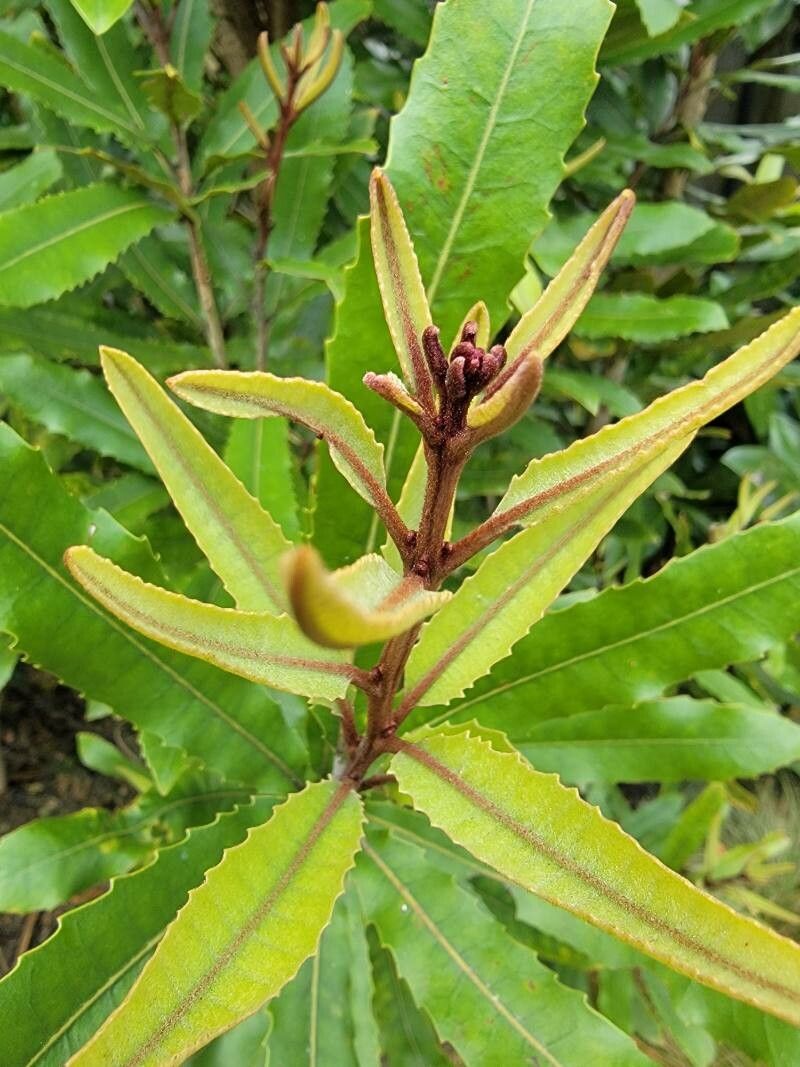
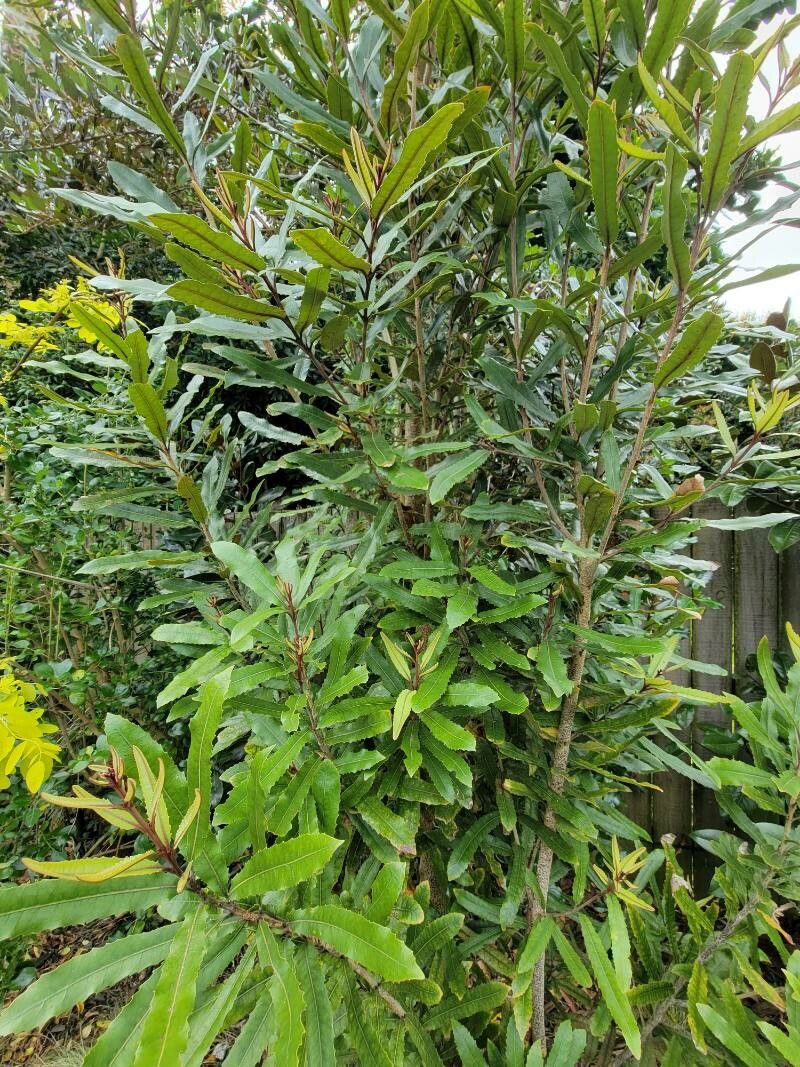
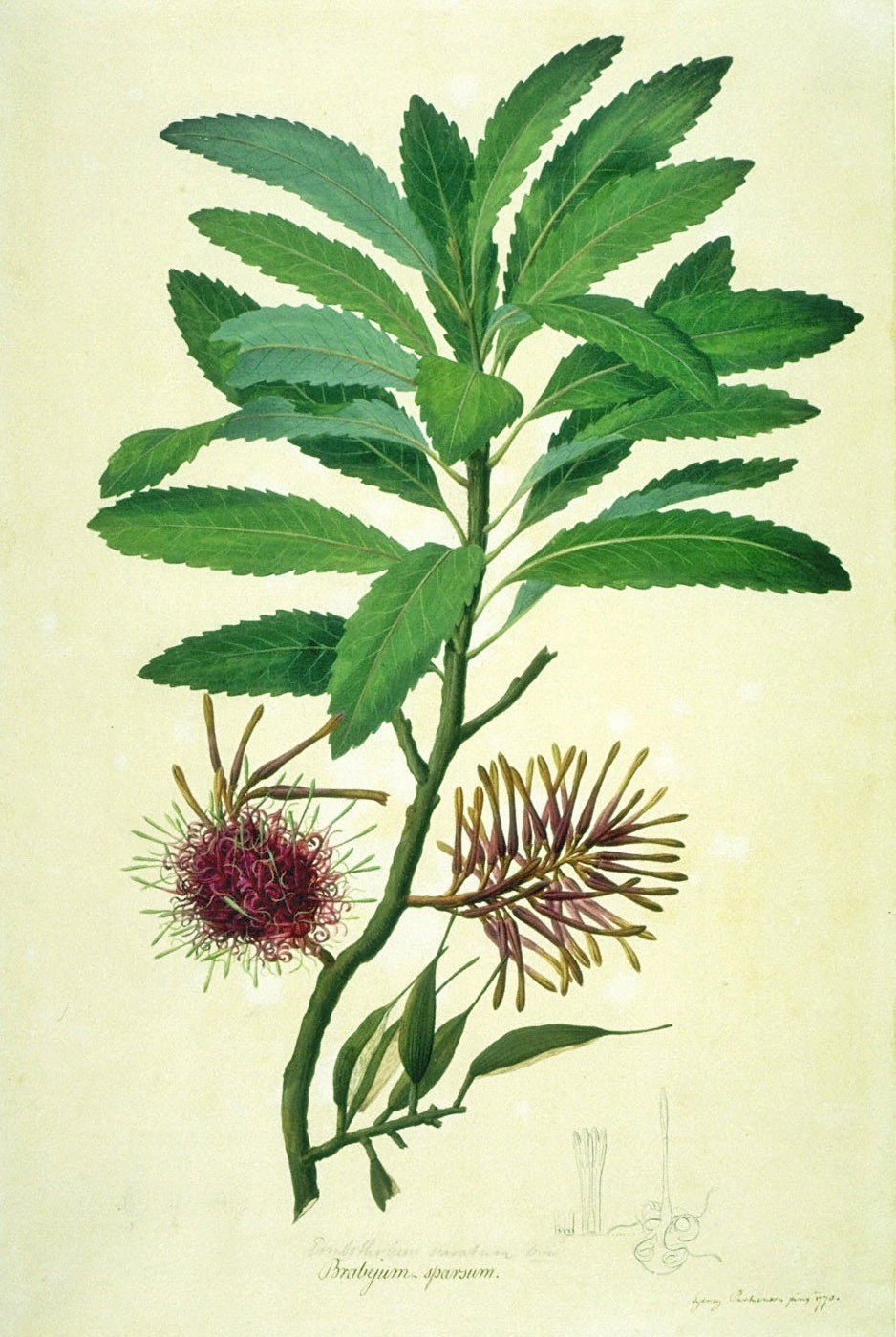
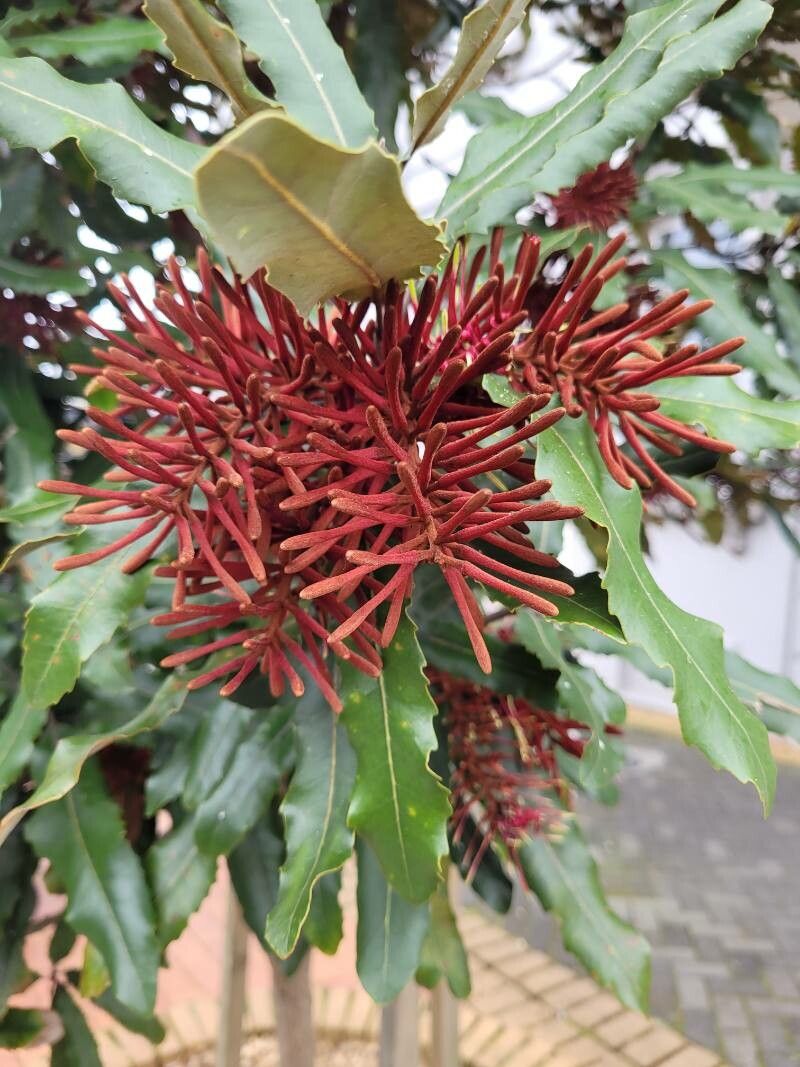
Knightia excelsa, commonly called rewarewa (from Māori), is an evergreen tree endemic to the low elevation and valley forests of New Zealand's North Island and Marlborough Sounds (41° S) and the type species for the genus Knightia. Rewarewa grows to 30 m tall, with a slender crown. The leaves are alternate, leathery, narrow oblong, 10 – 15 cm long and 2.5 - 3.5 cm wide, and without stipules. The flowers are 2 - 3.5 cm long, bright red, and borne in racemes 10 cm long. Produces dry woody follicles. It was called New Zealand honeysuckle by early European settlers but the name has fallen into disuse in preference for the Māori name. Rewarewa flowers are a great source for honey production. The rewarewa is noted for its timber, which is handsomely figured for interior work although not durable in exposed situations.
The New Zealand bottlebrush is resistant to disease and is generally not susceptible to illnesses. Regarding care, this plant is fairly low-maintenance. When grown outdoors it needs only minimal watering, and larger specimens typically do not require pruning. Smaller plants, however, should be trimmed after they have finished blooming. The New Zealand bottlebrush is suitable for anyone with outdoor space, such as a garden or deck, and does not demand much hands-on care experience.
How to keep Knightia Excelsa.
Light
New Zealand bottlebrush flourishes with full sun exposure throughout the day — a characteristic shaped by its native habitat. Although it can tolerate lower light levels, reduced sunlight may somewhat compromise its health and growth, causing it to appear languid. Both too little and too much light can affect its overall vitality.
Water
The New Zealand bottlebrush, a plant native to New Zealand, thrives in high humidity and prefers soil that is both evenly moist and well-drained. During the growing season, it should be watered every 1-2 weeks, ideally with rainwater. This helps meet the plant's hydration needs without the risk of overwatering.
Temperature
The New Zealand bottlebrush is native to temperate regions and does best in temperatures of 59 to 100°F (15 to 38°C). It’s important to keep these temperature conditions and make seasonal adjustments to ensure optimal growth.
Fertilizer
Timing is vital for fertilizing New Zealand bottlebrush. Apply fertilizer in early spring and continue once a month until early summer. Fertilizer promotes attractive blooms and supplies energy during both dormant and active growth periods.
Pruning
The New Zealand bottlebrush is known for its vibrant crimson flower spikes. To keep the plant healthy and encourage strong spring growth, it should be pruned from early to late winter, outside of its flowering period. Pruning during this time improves air circulation and reduces the risk of disease. It is also essential to use clean tools to prevent infections. Pruning during the dormant season is especially beneficial for promoting robust growth in the spring.
Pot & Repot
When repotting New Zealand bottlebrush, select a pot 1–2 inches (2.5–5.1 cm) larger that provides ample drainage. Use a well-draining potting mix. Repot in spring or fall, making sure the root ball sits slightly below the rim of the flower pot. Water thoroughly after repotting and place the pot in a warm spot with indirect sunlight.
Botanical profile.
- Plant Type
- Tree
- Life Cycle
- Perennial
- Genus
- Knightia
- Family
- Proteaceae
- Hardiness Zone
- 8-11
- Mature Height
- 29.87 m
- Mature Spread
- 3.96 m
- Leaf Color
- Dark Green, Olive Drab
- Leaf Type
- Evergreen
- Flower Color
- Red
- Flower Size
- 2.03 cm to 3.56 cm
- Bloom Time
- Early fall, Mid fall
- Planting Time
- Spring, Summer, Autumn
- Harvest Time
- Winter
- Native Area
- New Zealand
Other names.