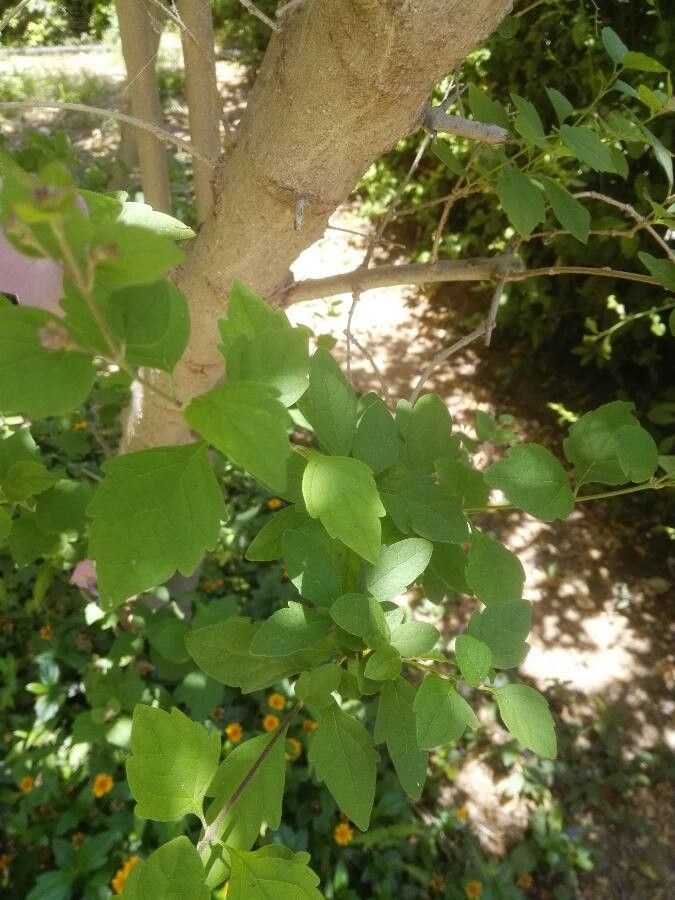
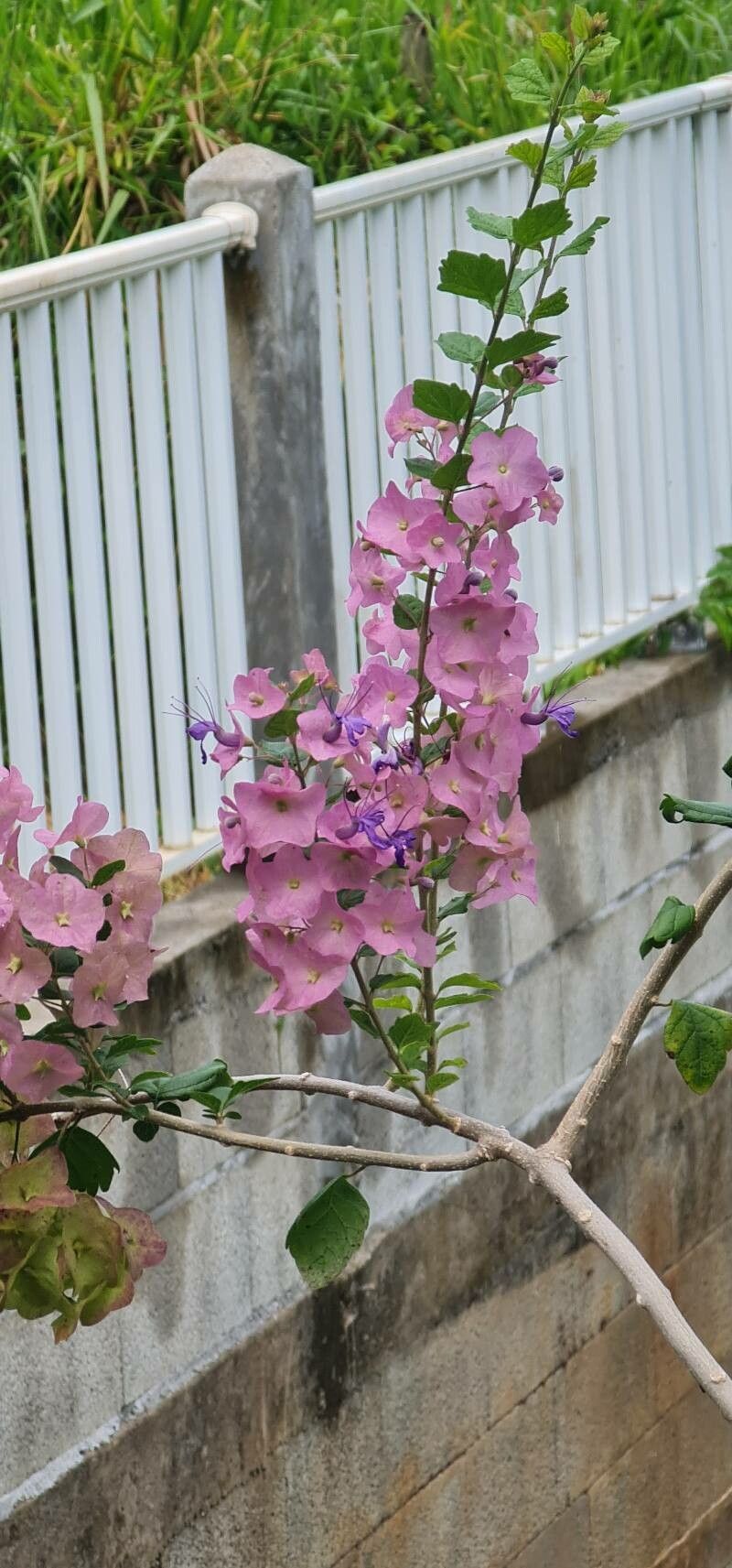
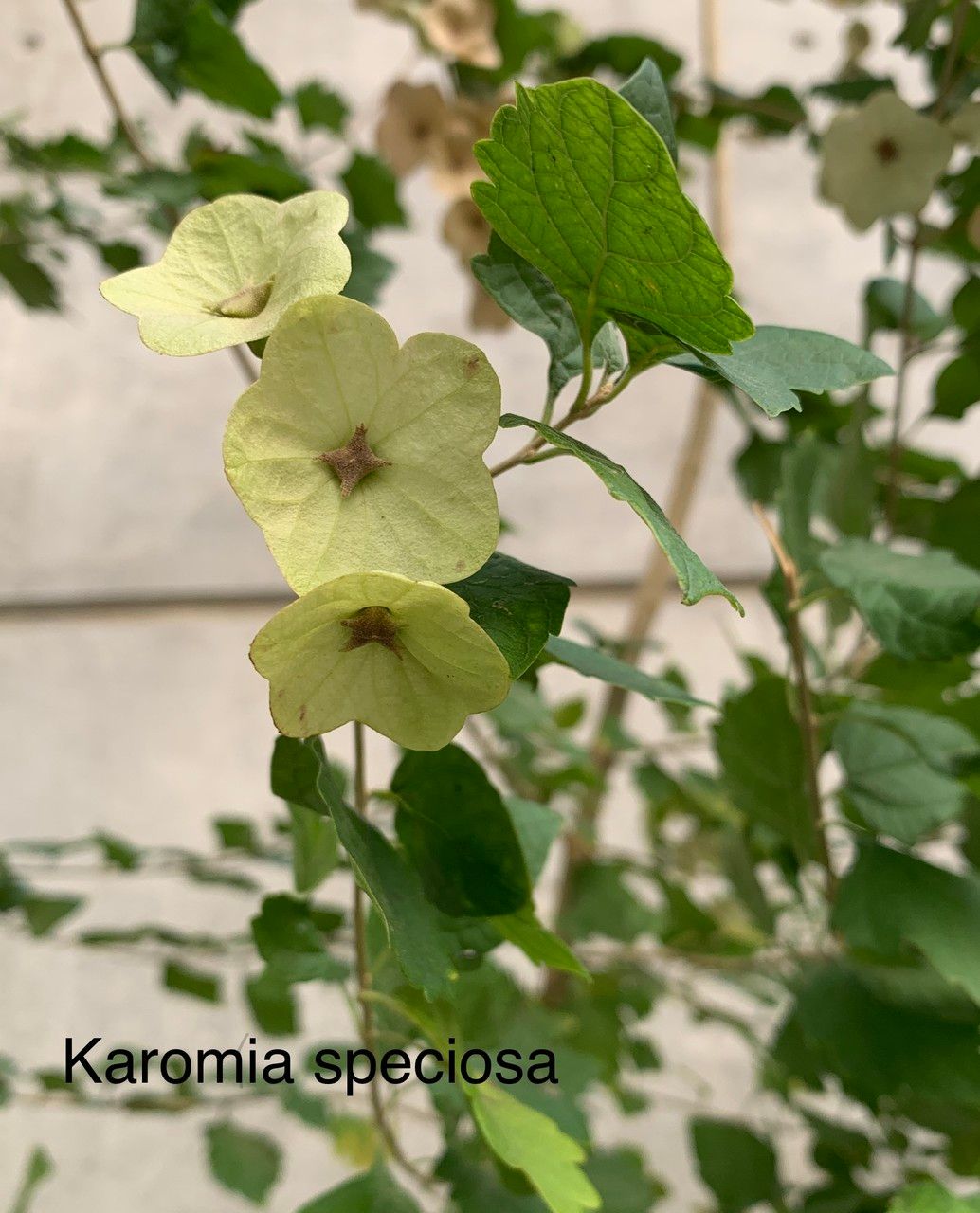
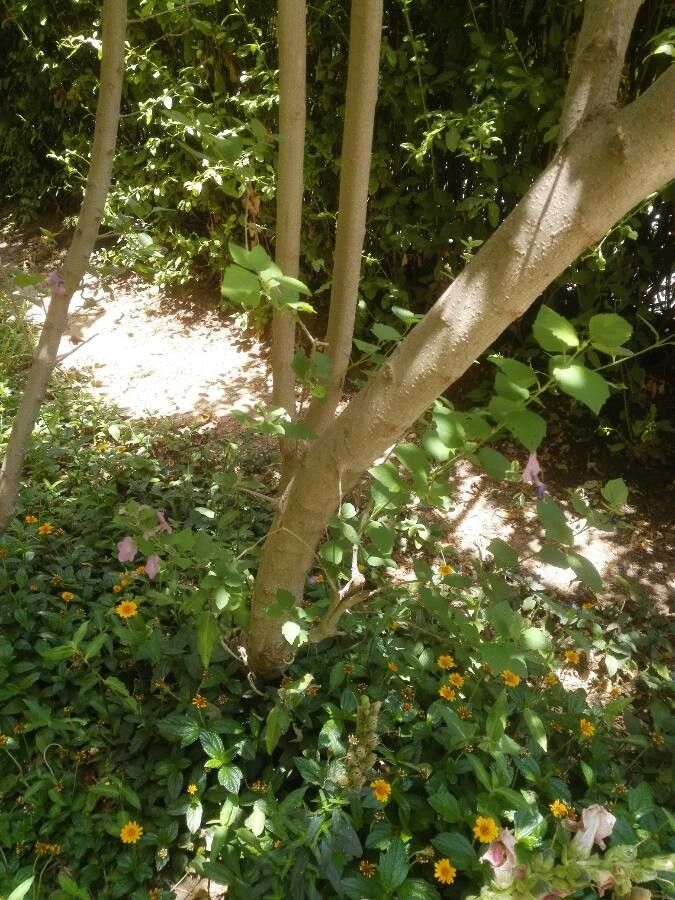
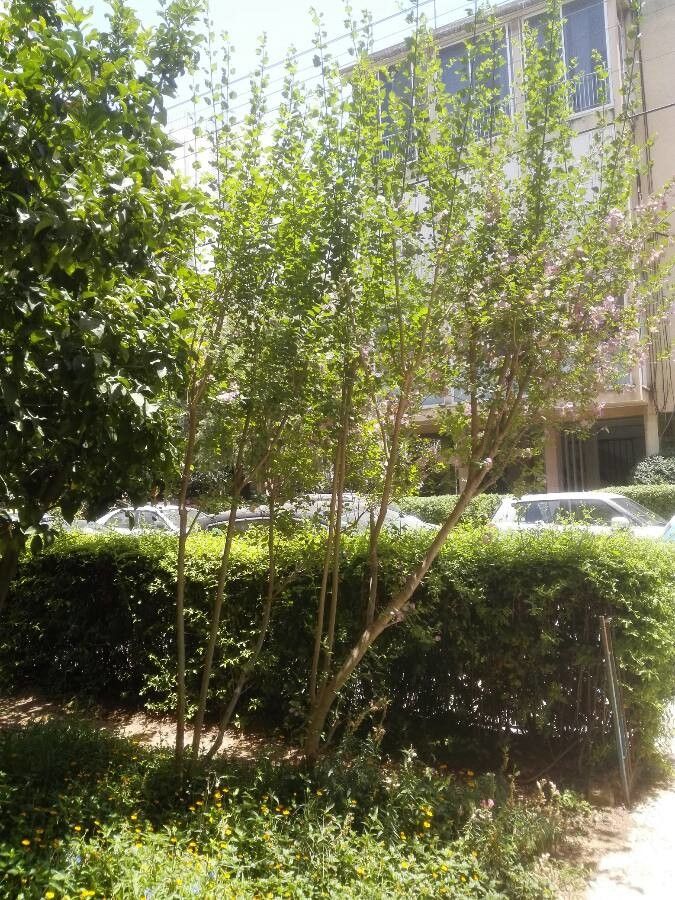
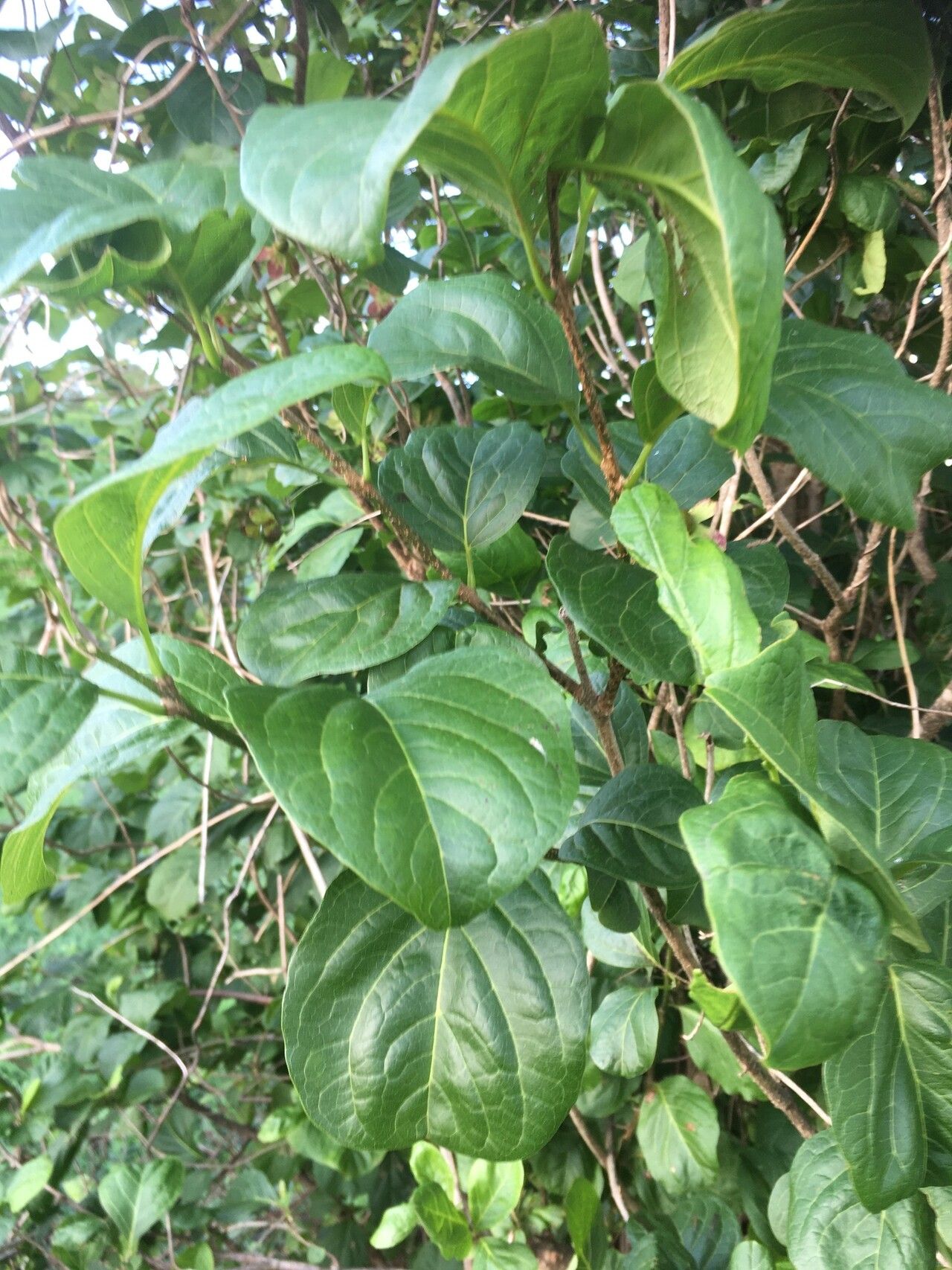
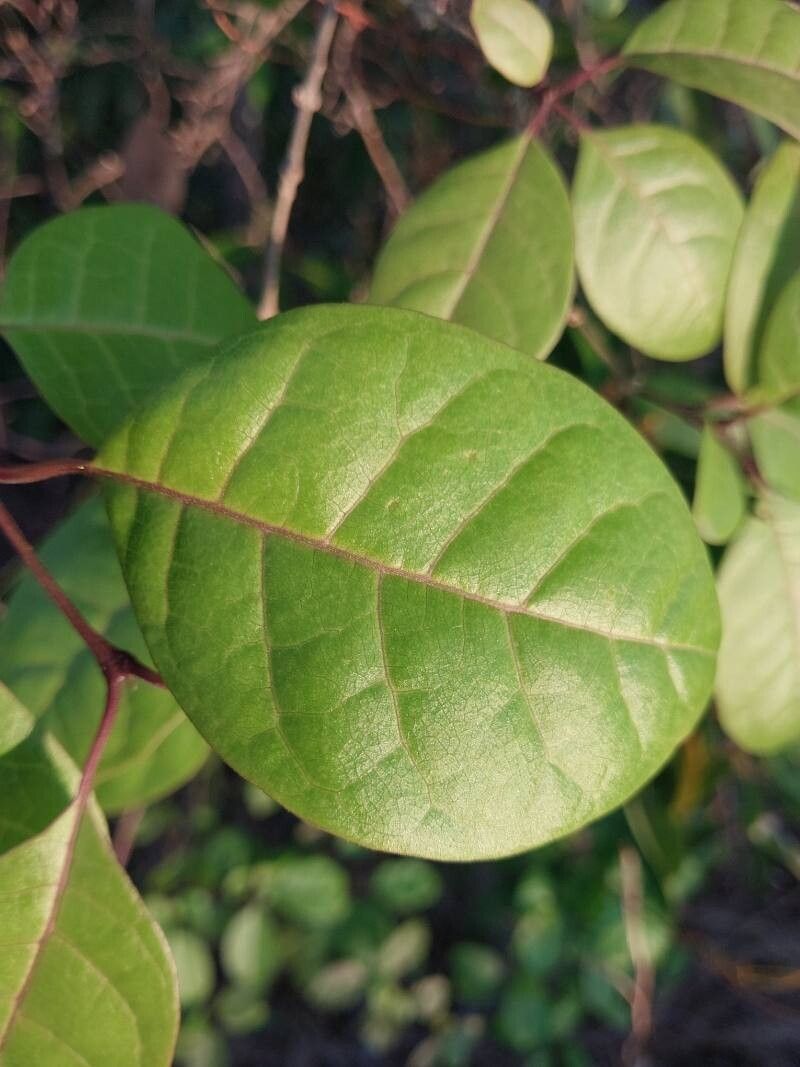
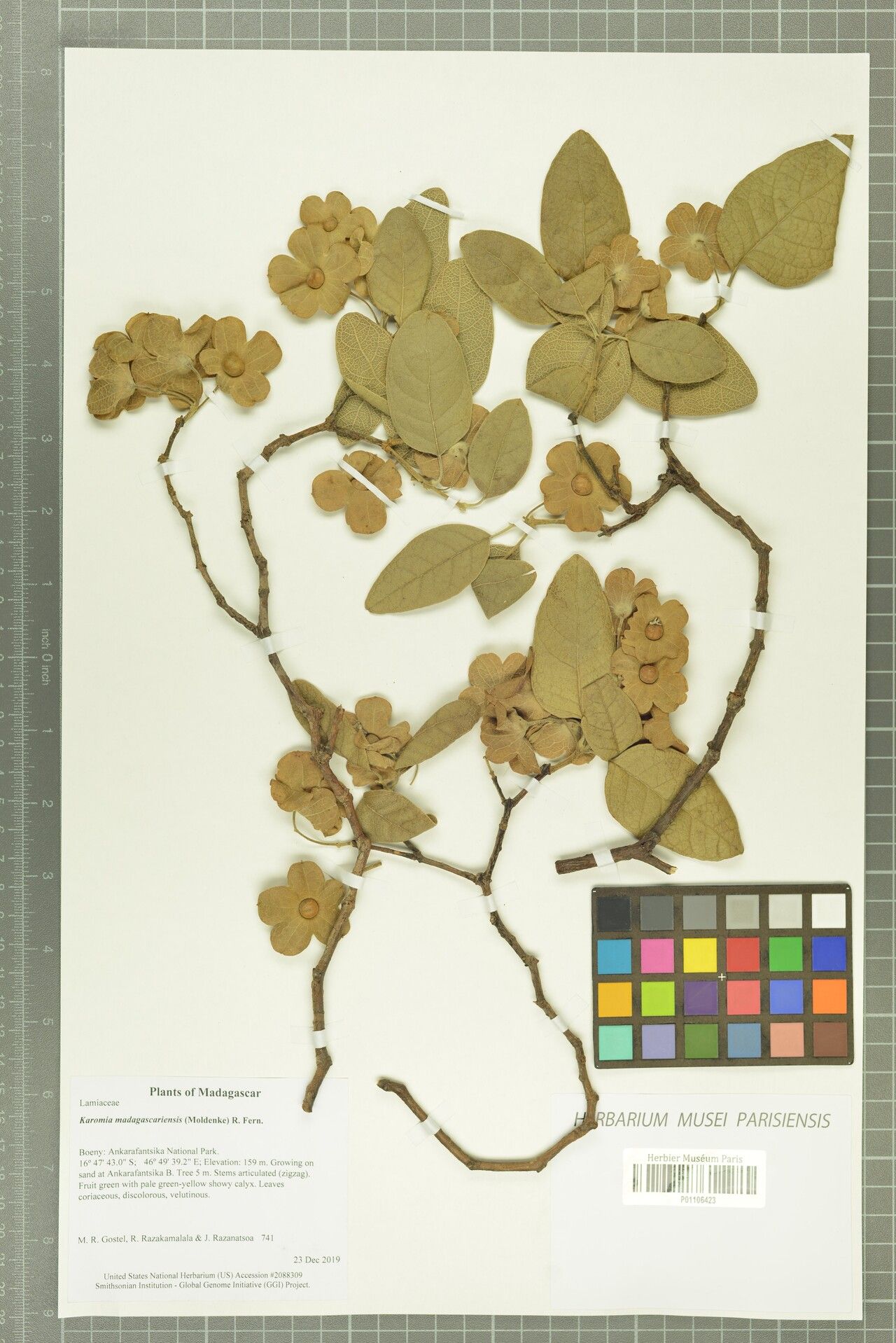
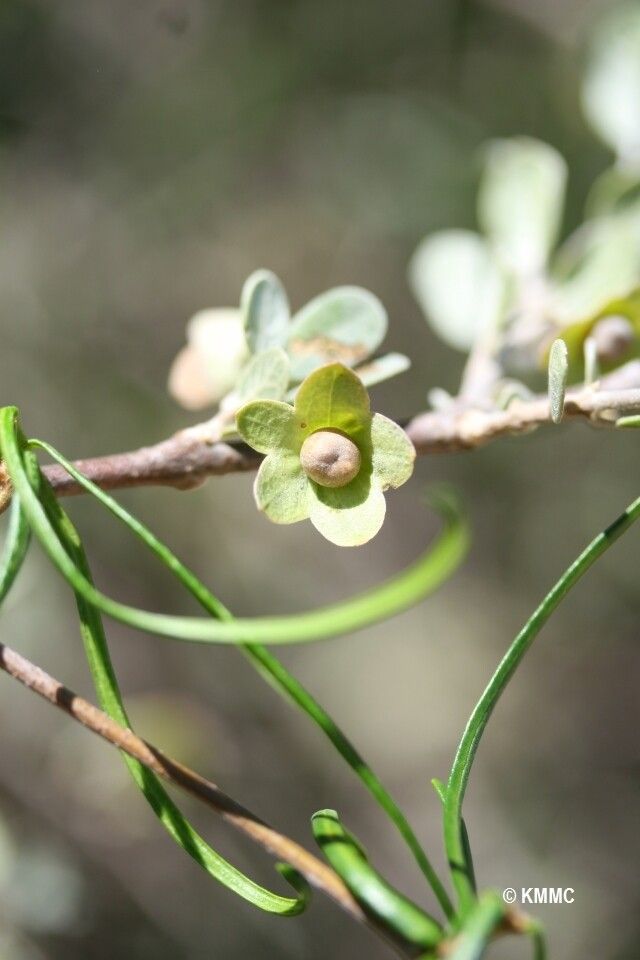
Karomia speciosa is an African deciduous large shrub or bushy tree up to 7 m, and relocated to the family Lamiaceae from Verbenaceae. It is one of 9 species in the genus Karomia, a genus containing species previously classified in Holmskioldia, and is closely related to Clerodendrum. The only remaining species in the genus is Holmskioldia sanguinea, occurring in the foothills of the Himalayas.Karomia speciosa is found in the northern parts of South Africa, Eswatini and north into tropical Africa and Madagascar, growing in bush or wooded areas on hot, dry, rocky slopes and riverine thickets. Producing showy, mauve and purple flowers in profusion, the species is either single- or multi-stemmed, with pale, smooth grayish-brown bark. The softly pubescent leaves have coarsely toothed margins, are dark green above and a paler green below. The papery calyx is dusty-pink or mauve in colour, while the bilabiate corolla is deep-blue or violet. Branchlets woody, terete, shortly and softly pubescent, marked with pale lenticels ; internodes about 2 cm. long. Leaves broadly ovate, triangular at the apex, broadly wedge-shaped at the base, 2-5-4 cm. long, 2-3 cm. broad, coarsely crenate, with few (about three) rounded teeth, very shortly setulose above, paler below and conspicuously glandular and shortly pubescent ; lateral nerves about three on each side of the midrib ; petiole 7 mm. long, densely pubescent. Flowers few, arranged in axillary cymes about 4 cm. long ; peduncles slender, softly pubescent; lower bracts more or less leafy, spathulate-obovate, up to 7 mm. long; pedicels up to 1.2 cm. long, with two small opposite linear bracteoles above the middle. Calyx pink-coloured, gradually enlarging, broadly top-shaped, glandular-pubescent outside; tube 1 cm. long, with broadly rounded lobes, the latter rigidly membranous in the fruiting stage and expanding to 25 cm. Corolla purple, 2-2.5 cm. long, glandular and softly pubescent outside; tube up to 1.5 cm. long. Stamens long exserted; filaments glabrous. Ovary hairy in the upper part ; style a little longer than the stamens, slender, glabrous. Fruit truncate, 4-horned, included by the accrescent calyx. The genus Karomia was first described in 1932 by the botanist Paul Louis Amans Dop (1876-1954) in 'Bull. Mus. Hist. Nat.' (Paris) ser. 2. 4: 1052.
Southern chinese-hats possess strong resistance to disease and are typically unlikely to suffer from illnesses. Regarding upkeep, this plant is fairly easy to care for. When grown outside, it needs little watering, and larger specimens usually do not require pruning. Smaller specimens, however, should be trimmed after they finish flowering. Southern chinese-hatst can be grown by anyone who has an outdoor area, such as a garden or a deck, and does not demand extensive gardening experience.
How to keep Karomia Speciosa.
Light
Southern chinese-hats is native to open areas, such as sunny meadows and the edges of forests, which offer abundant light. It grows best in Full Sun but can also tolerate Partial Sun, adjusting well to different sunlight levels.
Water
The Southern Chinese-Hat plant thrives in moderately moist environments and only needs watering every 2 to 3 weeks due to its drought-resistant nature, adapted from its subtropical origins. As an evergreen plant, it retains its leaves year-round and requires consistent moisture for optimal growth.
Temperature
Southern Chinese-hats comes from tropical areas, where the climate is generally warm and humid. Consequently, it is well suited to high temperatures and humidity. It does not tolerate sudden temperature shifts and prefers a stable thermal environment, so it is important to avoid temperature fluctuations indoors. It usually cannot endure cold and needs higher temperatures to grow. If the surrounding temperature drops too low, the plant may stop growing or even die.
Fertilizer
The best time to fertilize a Southern chinese-hats is in early spring, when it emerges from dormancy. This encourages overall growth and the development of flowers. Fertilization improves foliage, stems, and branches while encouraging large, vibrant, long-lasting blooms. It helps move nutrients from the roots to the flowers and enhances the plant’s health and resistance to disease.
Pruning
The Southern Chinese-hat plant features vibrant clusters of flowers that resemble miniature hats. To maintain its health and appearance, prune the plant from early to late winter. This involves removing dead wood, thinning out crowded branches, and shaping it for aesthetic purposes. Proper pruning enhances airflow, reduces the risk of disease, and encourages blooming, all while respecting the plant's natural growth habits for optimal health.
Botanical profile.
- Plant Type
- Tree, Shrub
- Life Cycle
- Perennial
- Genus
- Karomia
- Family
- Lamiaceae
- Hardiness Zone
- 10
- Mature Height
- 7.01 m
- Mature Spread
- 3.05 m
- Leaf Color
- Forest Green
- Leaf Type
- Evergreen
- Flower Color
- White, Purple, Pink
- Flower Size
- 4.06 cm
- Bloom Time
- Summer
- Planting Time
- Spring, Summer
- Harvest Time
- Late summer, Early fall, Mid fall
- Native Area
- South Africa, Eswatini, Mozambique
Other names.
Reader questions.
How should I water my Southern Chinese hats?
When it comes to watering your Southern Chinese-hats plant, you have plenty of flexibility. You can use common watering tools like watering cans, hoses, or even cups. It's important to water the soil directly, making sure that all areas are adequately moistened to nourish the entire root system. Using filtered water is a good idea, as tap water may contain harmful particles for the plant. It's also beneficial to use water that is at or slightly above room temperature, as extreme temperatures can be a bit overwhelming for the plant. However, overall, the Southern Chinese-hats plant is adaptable and responds well to various types of water.
What are the sun requirements for Southern Chinese-hats?
Southern Chinese-hats, also known by its botanical name Karomia speciosa, thrives best in environments that closely mimic its native habitat, which includes sunny meadows and forest edges. These plants require Full Sun, defined as more than 6 hours of direct sunlight daily, for optimal growth. However, they are also adaptable to Partial Sun conditions, meaning they can tolerate around 3-6 hours of sunlight. It's essential to observe how sunlight moves through your garden to select ideal spots that ensure a good balance of light and shade, promoting the plants' health and happiness.
What is the botanical name of Southern Chinese-hats?
The botanical name of Southern Chinese-hats is Karomia speciosa. This name helps in scientific classification and identification of the plant.
What should I do if I give too much or too little water to my Southern Chinese hats?
Outdoor plants, especially new ones and seedlings, are prone to becoming dehydrated. It is important to consistently water these plants for a few months after planting, as their roots are not yet fully established. Once the roots are developed, they can usually rely on rainwater. However, when Southern Chinese-hats are in pots, there is a higher risk of overwatering. If you accidentally overwater your Southern Chinese-hats, you should immediately stop watering to minimize the effects. Take the plant out of its pot and inspect the roots for any signs of root rot. If no root rot is found, you can return the plant to its container. If root rot is present, trim any affected roots and apply a fungicide. Repot the plant using well-draining soil. On the other hand, underwatering is an easier issue to resolve. If your Southern Chinese-hats is not receiving enough water, its leaves will droop, dry out, and fall off. Water the plant more frequently to address this. Adjust your watering schedule as soon as you notice signs of underwatering.
How does artificial lighting support the growth of indoor Southern Chinese-hats?
When natural sunlight is insufficient, especially during winter or in spaces that do not receive enough sunlight, artificial lighting serves as a crucial alternative to support the healthy growth of indoor Southern Chinese-hats. Optimal growth under artificial light involves selecting the right type of light, such as LED lights, which can be customized to provide specific wavelengths needed by the plants. For plants requiring Full Sun, 30-50W/sq ft of artificial light is recommended, while those needing Partial Sun should have 20-30W/sq ft. The light source should be placed 12-36 inches above the plant, imitating the sun's natural position, and it is most beneficial to mimic natural day length, usually providing 8-12 hours of light per day to meet the species' requirements.
How often do I need to water my Southern chinese-hats?
If your outdoor plants receive enough rainfall, they can grow naturally. However, if your area lacks rainfall, make sure to water your plants adequately every 2 weeks in the spring and fall. During the summer, you will need to water them more frequently. In the winter, when growth slows down and water needs decrease, water sparingly or not at all. For young or newly planted Southern Chinese-hats, water more frequently to help them establish and become more adaptable to drought conditions. When it comes to potted plants, there are two main ways to determine watering frequency for Southern Chinese-hats. The first way is to follow a predetermined watering schedule, such as watering once a week or once every other week. However, this approach may not take into account the unique growing conditions of your plants. Watering frequency can also vary depending on the season. During summer, when water needs are highest, a predetermined schedule may not be enough. Another option is to base your watering frequency on soil moisture. It is generally best to wait until the top two to four inches of soil, about ⅓ to ½ the depth of the pots, have completely dried out before watering again.
What are the signs of insufficient light in Southern Chinese-hats?
When Southern Chinese-hats are not receiving adequate sunlight, certain symptoms may appear, signaling the need for more light. These symptoms include smaller new leaves, leggy or sparse growth, faster leaf drop, slower or halted new growth, and leaves that may appear lighter or discolored, indicating insufficient chlorophyll and essential nutrients. Sunscald, chlorosis (yellowing leaves), leaf curling, wilting, and leaf scorching are further symptoms that could arise from too much sunlight or insufficient protection. Recognizing these symptoms early can help in taking corrective actions to improve the plant's health.
How much water does my Southern Chinese hat plant need?
When watering your Southern chinese-hats, remember that it doesn't always require a lot of water. If only a few inches of soil have dried since the last watering, give it about five to ten ounces of water. You can also gauge the water volume by checking the moisture level of the soil. If more than half of the soil has become dry, it's a good idea to give it more water until you see excess water draining from the pot's drainage holes. If your plant is outdoors and receives plenty of rain, it may not need additional watering. However, when it's young or establishing, make sure it gets 1-2 inches of rain per week. As it grows and becomes more established, it can rely solely on rainwater, but in very hot weather without rainfall for a couple of weeks, give it a full watering to prevent stress.
What solutions are available for addressing light deficiency in Southern Chinese-hats?
To combat light deficiency in Southern Chinese-hats, indoor plants can be gradually moved to sunnier locations, ensuring they receive at least 6 hours of direct sunlight daily. Utilize south-facing windows and keep curtains open during daylight hours. If the plant is too large or not easily movable, supplementing with artificial light, such as a desk or ceiling lamp, for at least 8 hours a day, or investing in professional grow lights can be effective. For outdoor plants, it's crucial to adjust their location gradually to prevent shock or sunburn, aiming for spots with optimal sunlight. When dealing with physical obstructions to sunlight, consider pruning or relocating smaller plants to sunnier areas, ensuring they have good drainage and the right environment for growth. Note that while parts of the plant that were previously affected by low light may not fully recover, new growth should be healthy with improved lighting conditions.
How do I know if I'm watering my Southern chinese-hats enough?
The overwatering issue is more common with Southern Chinese-Hats plants, and there are specific signs to watch out for. An overwatered plant will typically have yellowing leaves and could drop some as well. In addition, overwatering can make the plant's overall structure shrink and can lead to root rot. On the other hand, an underwatered Southern Chinese-Hats plant will also start to wilt and might have brown or brittle leaves. If you notice signs of overwatering or underwatering, it's important to take action and restore the plant's health.
How should I give water to my Southern chinese-hats when they are growing at different times?
When the Southern chinese-hats is young, especially during the seedling stage, it requires more water compared to when it is fully grown. In the early stages, it is crucial to keep the soil consistently moist to promote root development. This applies to any Southern chinese-hats that have been moved to a new location. Additionally, providing the correct care can result in showy flowers and fruits for the Southern chinese-hats. When the plant is in a flowering or fruiting phase, it may require a slightly increased amount of water to support these structures.
How do I make sure my Southern Chinese-hats get enough water all year round?
Watering your Southern chinese-hats will be affected by seasonal changes. In the hot summer months, you will likely need to water the plant more often, especially if it receives a lot of sunlight. The strong summer sunlight can dry out the soil quickly, so frequent watering is necessary. On the other hand, during winter when the plant is not actively growing, it will require much less water. You can water it once every 2 to 3 weeks, or even less frequently. If you are growing the plant indoors, be cautious of appliances like air conditioners, as they can cause the plant to dry out faster, requiring more frequent watering.