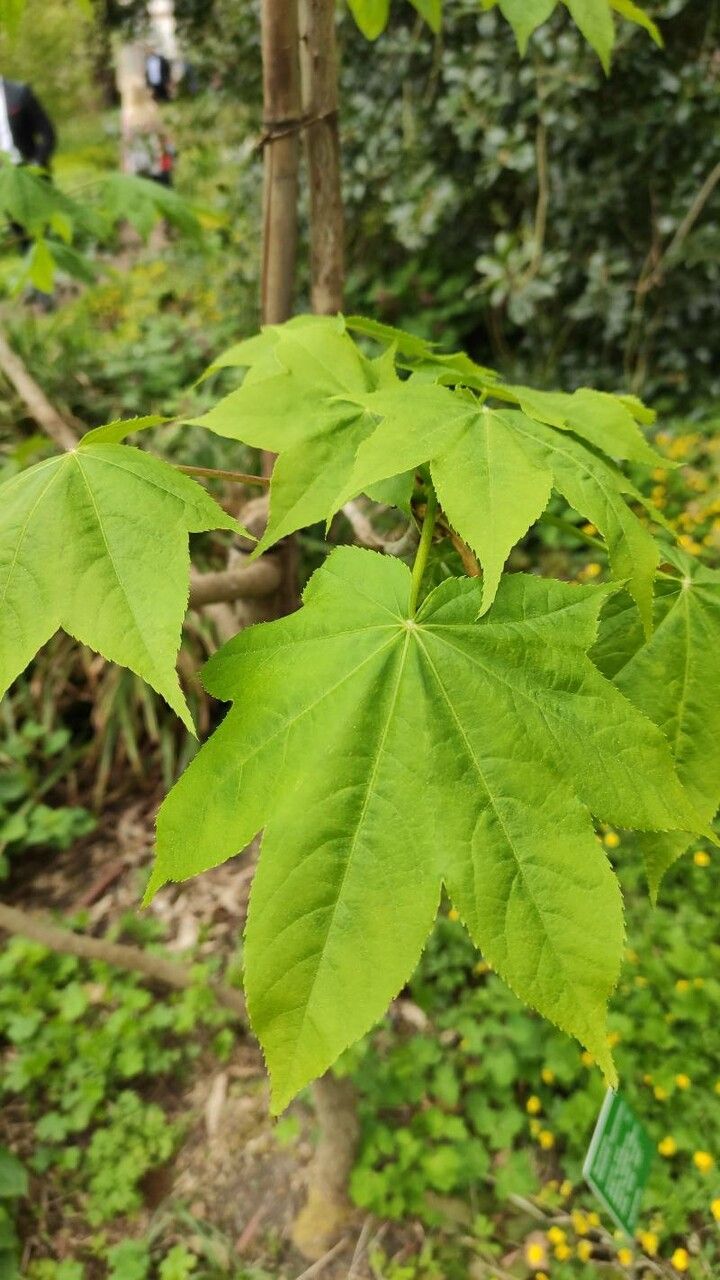
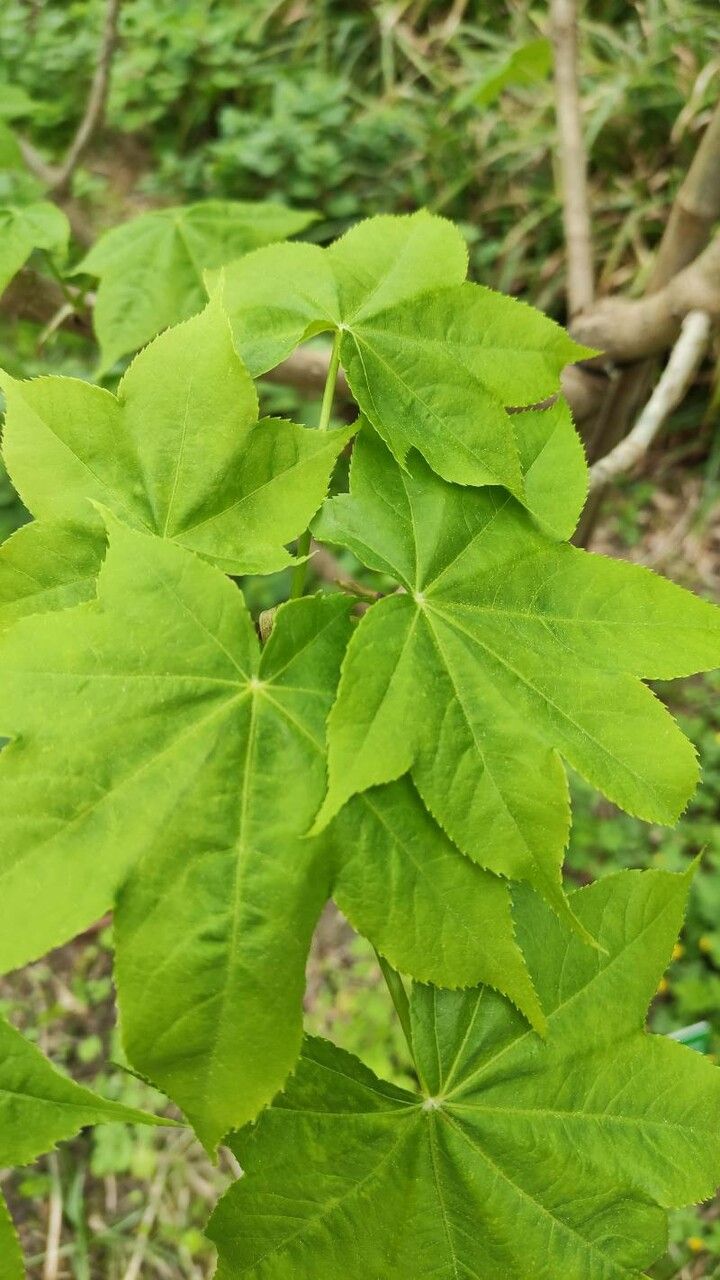
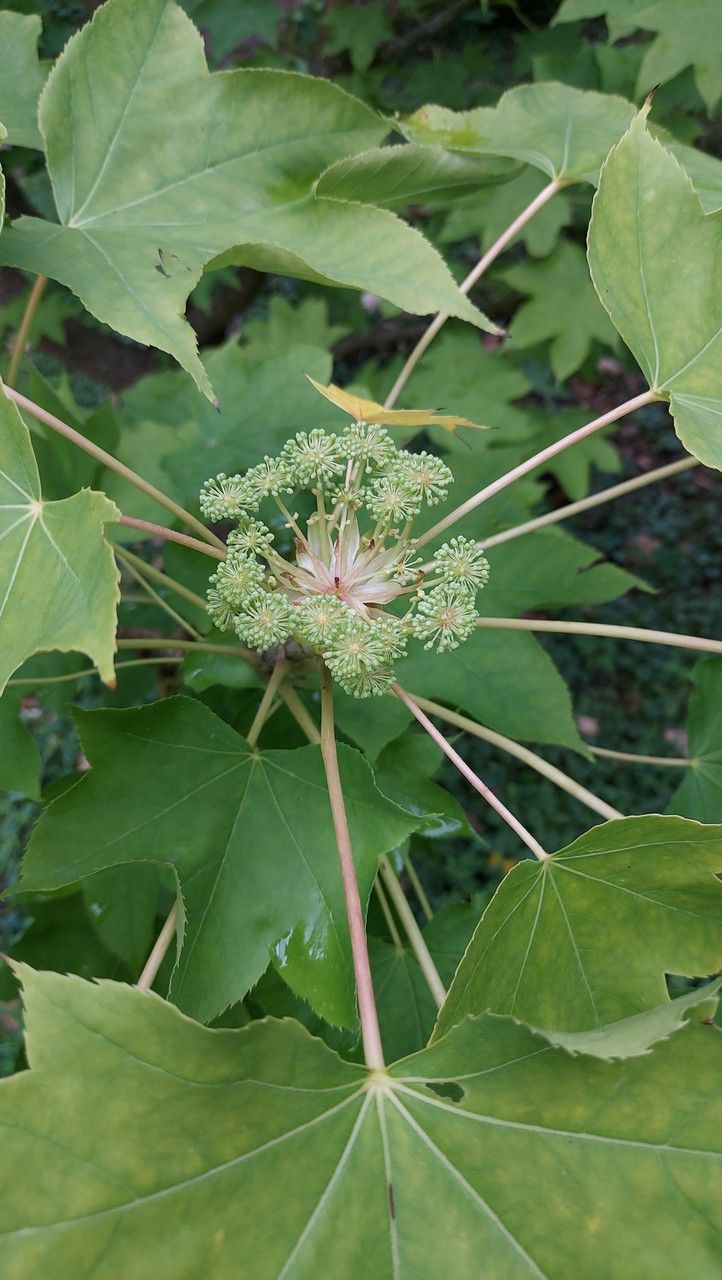
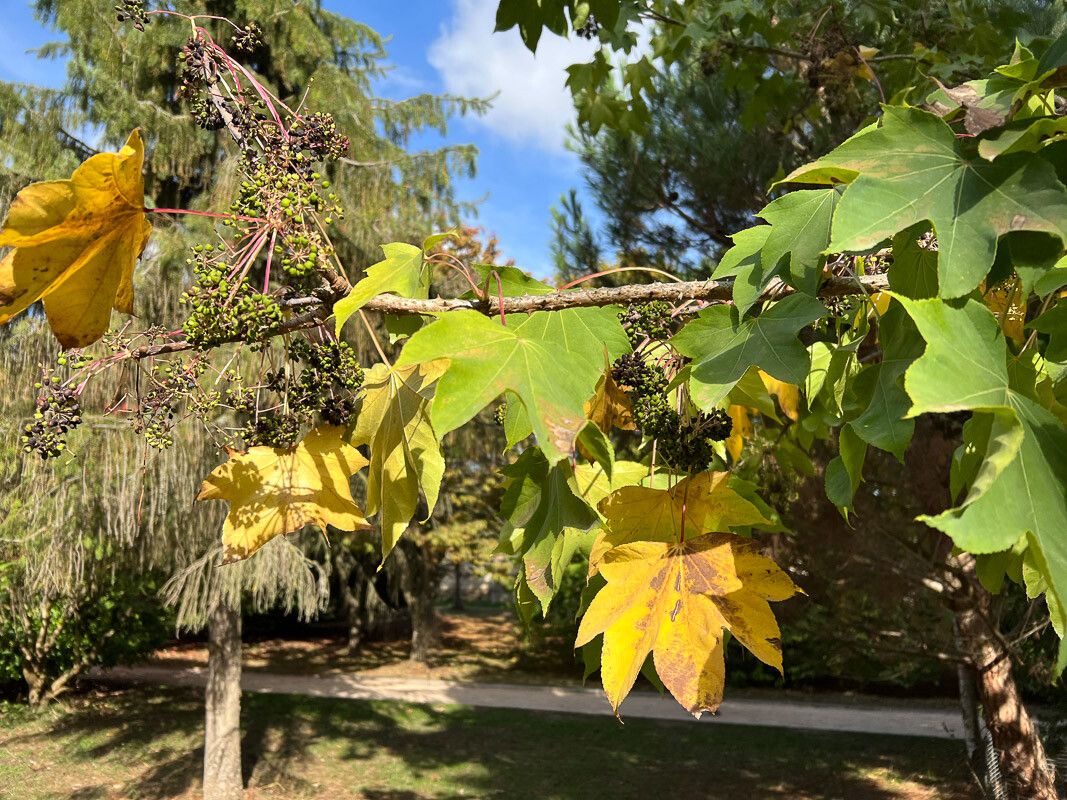
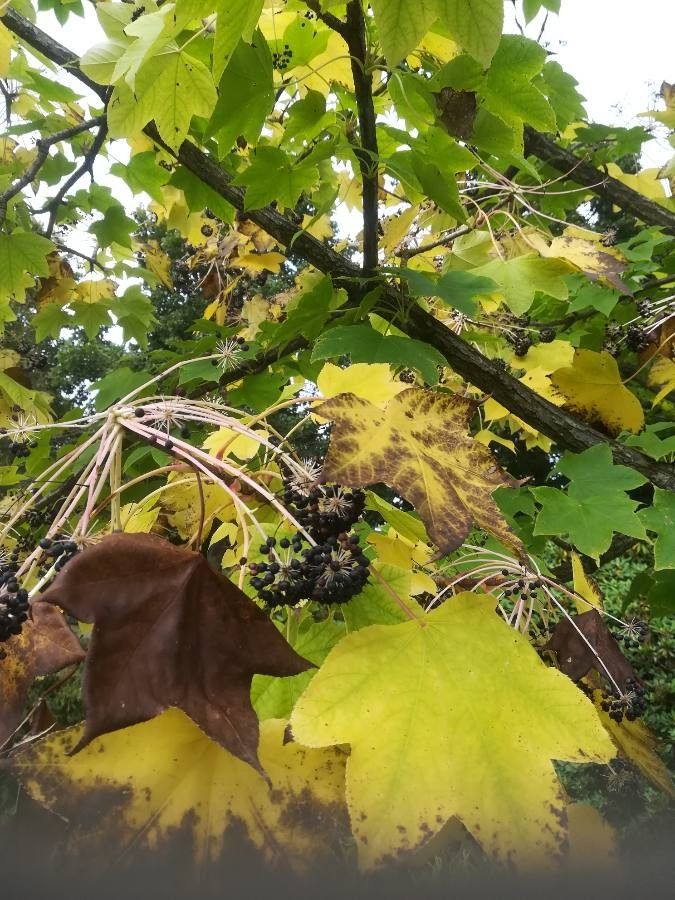
Kalopanax septemlobus, commonly referred to as the Castor Aralia or Tree Aralia, is a deciduous tree native to East Asia. Reaching heights of up to 20 meters, this tree boasts a broad crown and large leaves that can grow up to 30 centimeters in diameter. Its bark is grayish-brown with distinctive corky ridges, giving it a unique appearance.
In late summer, the Castor Aralia produces small white flowers, which are followed by small black berries that are popular with birds. Known for its medicinal properties, this plant has been used in traditional Chinese medicine for centuries.
Beyond its medicinal applications, Kalopanax septemlobus is also prized as an ornamental plant due to its attractive foliage and interesting bark texture. It prefers moist soil conditions but can tolerate some drought once established.
In summary, Kalopanax septemlobus is a versatile and intriguing plant with both practical medicinal uses and aesthetic appeal for landscaping.
Prickly castor oil tree is highly resistant to disease and typically not susceptible to illnesses. As for care, this plant is fairly low-maintenance. When grown outdoors it needs little watering, and larger specimens generally do not require pruning. Smaller plants, however, should be trimmed after they finish blooming. Prickly castor oil tree is suitable for anyone with an outdoor area, like a garden or a deck, and does not demand extensive experience in plant care.
How to keep Kalopanax Septemlobus.
Light
Native to forests where sunlight filters through the tree canopy, the prickly castor oil tree flourishes with a plentiful supply of unfiltered light, which encourages healthier growth, and it can tolerate lower light conditions. Its sunlight requirement remains constant through all growth stages, and both excessive light and too little light can harm the plant.
Water
The prickly castor oil tree flourishes in cool temperate regions with moderate moisture. It is well adapted to withstand occasional dry spells and only needs watering once every two weeks. This plant is an excellent choice for gardens that experience seasonal rainfall, as it effectively balances hydration with drought resistance.
Temperature
The Prickly castor oil tree is native to areas with temperatures between 41 and 89.6 °F (5 to 32 ℃). In summer it favors valleys and shaded locations to protect it from intense heat. During winter, make sure it is kept in a frost-free environment.
Fertilizer
Timing is important when fertilizing a Prickly castor oil tree. Apply fertilizer in early spring and repeat every month until early summer. The fertilizer encourages attractive blooms and gives the tree energy during both dormant periods and active growth.
Pruning
The prickly castor oil tree is characterized by its spiny trunk and large leaves. It thrives when pruned in early spring. The key techniques for pruning include removing dead branches, thinning crowded areas, and shaping the canopy. These practices promote vigorous growth, prevent disease, and help maintain an attractive form.
Botanical profile.
- Plant Type
- Tree
- Life Cycle
- Perennial
- Genus
- Kalopanax
- Family
- Araliaceae
- Hardiness Zone
- 4-8
- Mature Height
- 29.87 m
- Mature Spread
- 20.12 m
- Leaf Color
- Green
- Leaf Type
- Deciduous
- Flower Color
- White
- Flower Size
- 20.32 cm to 30.48 cm
- Bloom Time
- Early summer, Mid summer
- Planting Time
- Spring, Autumn
- Harvest Time
- Early fall, Mid fall
- Native Area
- Koppen, Japan, South Korea
Other names.
Reader questions.
How should I water my Prickly castor oil tree?
To ensure excellent root development, place a garden hose at the base of the plant without spraying the leaves. Remember that leaves will need more water if they are outside and exposed to direct sunlight. For moistening the roots, you can use bubblers on each plant or soaker hoses that cover the entire garden or bed. When adding or removing plants, ensure the roots are pushed deeply. After watering, drain any excess water and allow the soil to dry before watering again. Water at ground level to prevent diseases. On sunny days, consider spraying the entire bush with water. Whether potted or in-ground, keep in mind that the Prickly castor oil tree prefers deep watering rather than light sprinkling.
Why is it necessary to add fertilizer to my Prickly castor oil tree?
No matter the type of Prickly castor oil tree you have, regular fertilization is crucial for its overall health. Providing the right nutrients promotes stronger growth and enhances its resilience to harsh conditions, diseases, and pests. The foliage of your Prickly castor oil tree is a standout feature, so it's important to maintain it. To achieve this, follow a consistent fertilization schedule tailored to your specific tree. This will result in vibrant leaves with a rich color and lush appearance.
What are the sunlight requirements for the Prickly Castor Oil Tree?
The Prickly Castor Oil Tree, known botanically as Kalopanax septemlobus, flourishes best in full sun, which means it requires more than 6 hours of sunlight daily. It can also grow in partial sun, receiving around 3-6 hours of sunlight. Observing how sunlight moves through your garden will help in choosing spots that provide a balance of light and shade, ensuring the plants' well-being.
What is the ideal temperature range for the prickly castor oil tree?
The prickly castor oil tree, botanically known as Kalopanax septemlobus, flourishes in environments where temperatures range from 41 to 89.6 °F (5 to 32 °C). It prefers valleys and shaded areas during summer to protect it from extreme heat and requires a frost-free environment during the winter. Although the tree has strong cold resistance, special frost protection measures are advised if temperatures drop below -30°C.
What should I do if I give too much/not enough water to the Prickly castor oil tree?
An overwatered Prickly castor oil tree can show various signs of distress. Its leaves may turn yellow, wilt, and eventually fall off. The plant might also appear unhealthy and lackluster, with mushy stems being a possible indication. In such cases, it's important to adjust your watering schedule accordingly. However, wilting can also occur due to under watering. In this scenario, the leaves may become crispy and dry, as opposed to the soft and wilted appearance of overwatered leaves. If the soil is dry and a simple watering is not sufficient, it is advisable to thoroughly water the plant. While this will promote recovery, the damaged root system may cause the tree to still exhibit dryness and yellowing leaves for a few days. Once the tree returns to normal, the yellowing will cease. When cultivating a Prickly castor oil tree indoors, always monitor the moisture levels in the pot. Avoid overwatering, and watch for signs of black spots, which could indicate a problem. If present, allow the soil to dry out by refraining from watering for a few days. Overwatering can lead to root rot, so it is important to be mindful of this. If root rot is detected, consider transferring the tree to a different pot, particularly if the roots appear discolored and slimy. Take measures to prevent root rot by ensuring the soil does not become excessively soggy. When planting a Prickly castor oil tree outdoors, dig a little deeper and assess the soil moisture. If it feels too dry, it may imply underwatering. Adequate watering is essential for the tree's recovery and overall health.
When should I fertilize my Prickly castor oil tree?
To ensure healthy growth, it is recommended to fertilize your Prickly castor oil tree in late winter or early spring. This supplies the necessary nutrients for growth during warmer weather. For those in warm climates, an additional fertilizer feeding in early fall is beneficial. This provides extra nutrients for the following growing season and helps the tree withstand winter cold without foliage damage. Earlier fertilization allows new branches to have sufficient time to grow and withstand the cold winter.
How does the Prickly Castor Oil Tree respond to artificial lighting?
For indoor Prickly Castor Oil Trees, when natural sunlight is insufficient, especially during winter or in spaces that do not receive enough sunlight, artificial lighting becomes crucial for optimal growth. LED lights are advisable as they can be customized to emit specific wavelengths needed by the plant. For full sun plants, 30-50W per square foot is needed; partial sun plants require 20-30W per square foot, while full shade plants need 10-20W per square foot. The artificial light source should be placed 12-36 inches above the plant to simulate natural sunlight, and the duration should mimic natural daylight hours, generally between 8-12 hours per day.
How should I protect my prickly castor oil tree in winter?
To protect your prickly castor oil tree during winter, particularly if temperatures are expected to fall below -30°C, wrap the trunk and branches with non-woven fabric or cloth. Additionally, watering the plant abundantly before the first freeze in autumn ensures the soil remains moist and enters a frozen state. This helps prevent drought and water scarcity during winter and early spring. Normally, the tree doesn't require special frost protection due to its strong cold resistance.
How often do I need to water my Prickly castor oil tree?
The Prickly castor oil tree prefers deep and infrequent watering. It is best to soak them in a gallon of water, especially if they are planted in pots. Potted plants have limited water storage, so the soil tends to dry out faster. In cold regions, watering is needed every 3 to 5 days. It is best to water in the morning when the soil is dry, both indoors and outdoors. You can check if watering is needed by feeling the soil. When the top 2-3 inches of soil are dry, it is time to water the plant. During hot days, it is important to check the soil moisture daily, as the heat can quickly dry out the potting soil. If you have a garden, you will also need to irrigate the soil. In hot climates, it is recommended to water once a week. Only water when you notice that about 2 to 3 inches of soil have become dry. Take into consideration the amount of rainwater on the plant and avoid watering excessively to prevent root rot. If there is a significant amount of rainfall, additional watering may not be necessary. Prickly castor oil trees typically grow in spring and fall. When they are outdoors, adding a 3-4 inch layer of mulch can help conserve water. Sandy soil drains faster, so plants in sandy soil may need to be watered more frequently. On the other hand, clay soil retains moisture better, so plants in clay soil can be watered less frequently, allowing 2-3 days for the soil to dry before watering again to avoid root rot. To keep track of watering, you can mark the date on a calendar and pay attention to any drooping leaves, which may indicate that watering is needed.
When is the best time to not put fertilizer on my Prickly castor oil tree?
There are a few times during the year when you shouldn't fertilize your Prickly castor oil tree. The first time is in early and mid-winter when the tree is dormant and doesn't need to be fed. It's also not a good idea to fertilize it in late spring and summer because the weather is hotter and drier, which can cause a negative reaction to fertilization. To avoid problems, only feed your tree in early spring and early fall.
What symptoms indicate light deficiency or excessive sunlight in the Prickly Castor Oil Tree?
Light deficiency in the Prickly Castor Oil Tree may manifest as smaller new leaves, leggy or sparse growth, faster leaf drop, slower or halted growth, and lighter-colored or pale new leaves. Meanwhile, excessive sunlight can cause chlorosis (yellowing leaves), sunscald (pale, bleached areas on leaves or stems), leaf curling (leaves curl or twist to reduce surface area exposed to sunlight), wilting (due to excessive water loss), and leaf scorching (brown, dry edges on leaves). These symptoms help identify if the plant is receiving too much or too little sunlight.
What are the symptoms of a prickly castor oil tree exposed to low temperatures?
When exposed to low temperatures, specifically below -30°C, the prickly castor oil tree's branches may become brittle and dry during spring, even though there might not be visible changes during winter. No new shoots will emerge if the temperature falls below this threshold. It is crucial for the tree's survival to keep it above -25°C during winter to prevent such damage.