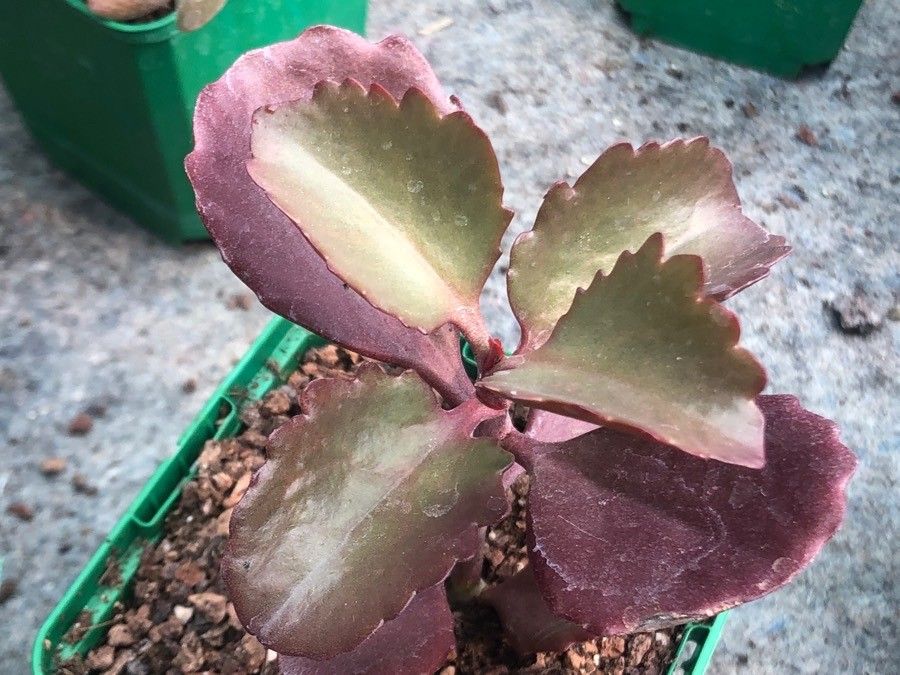
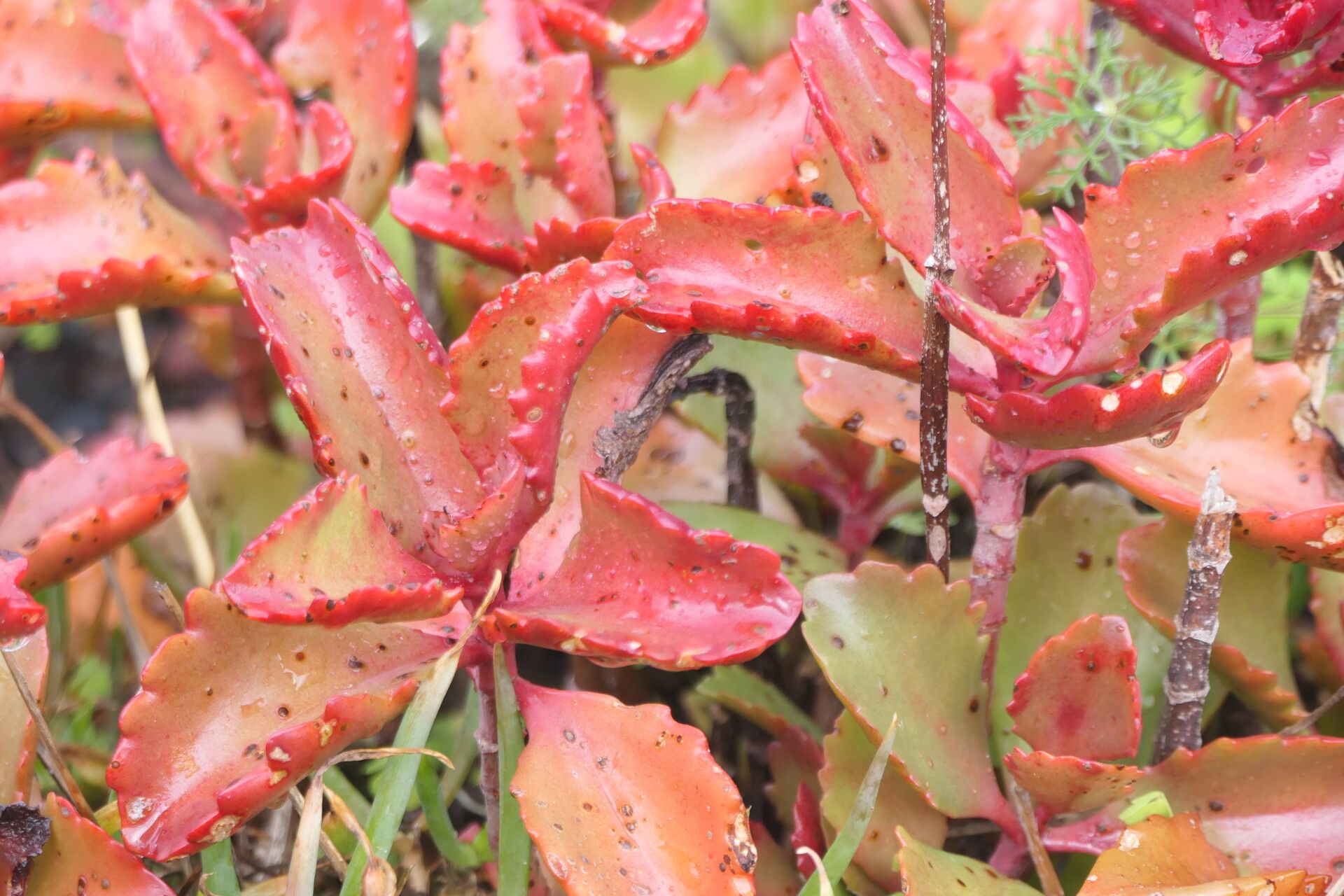
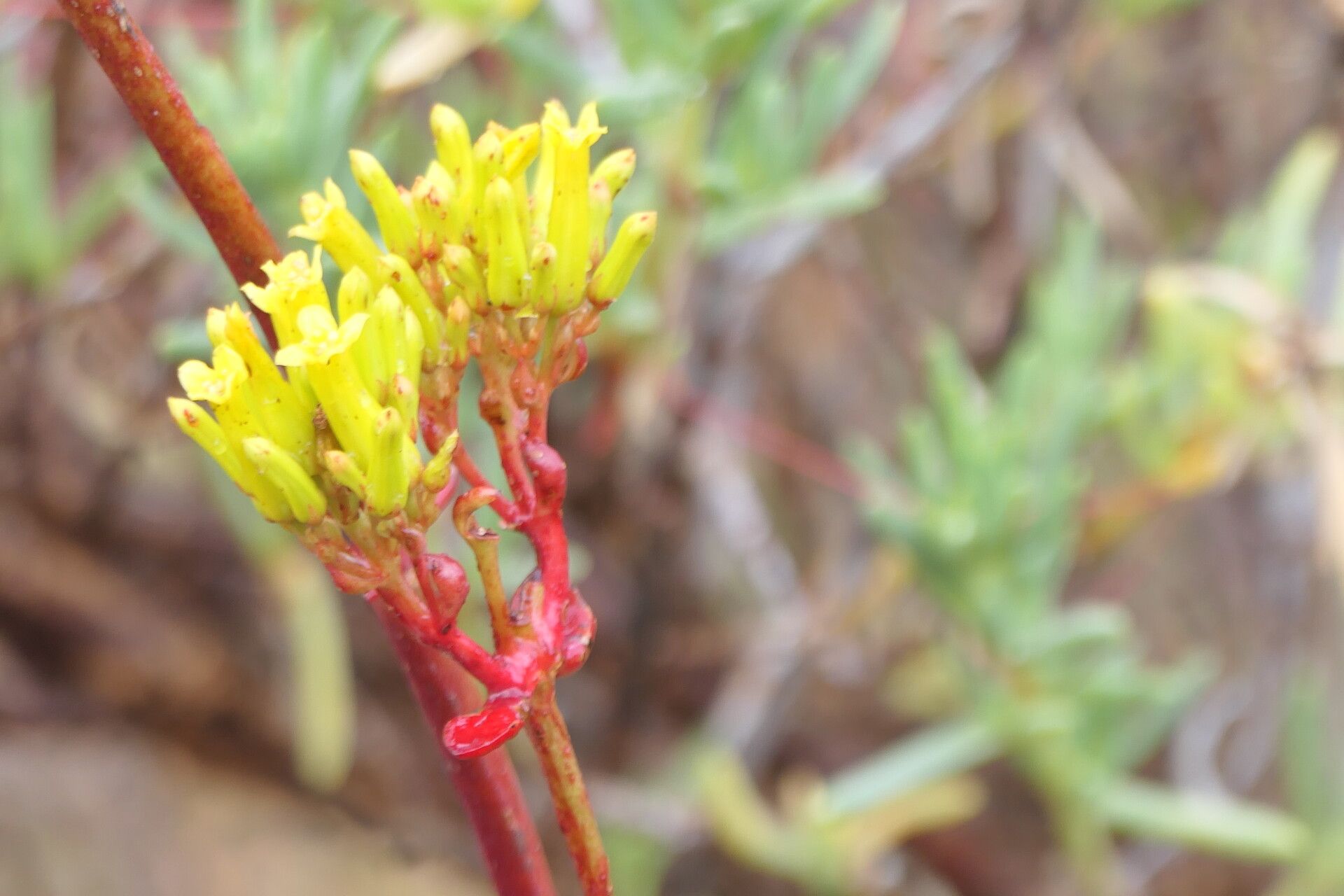
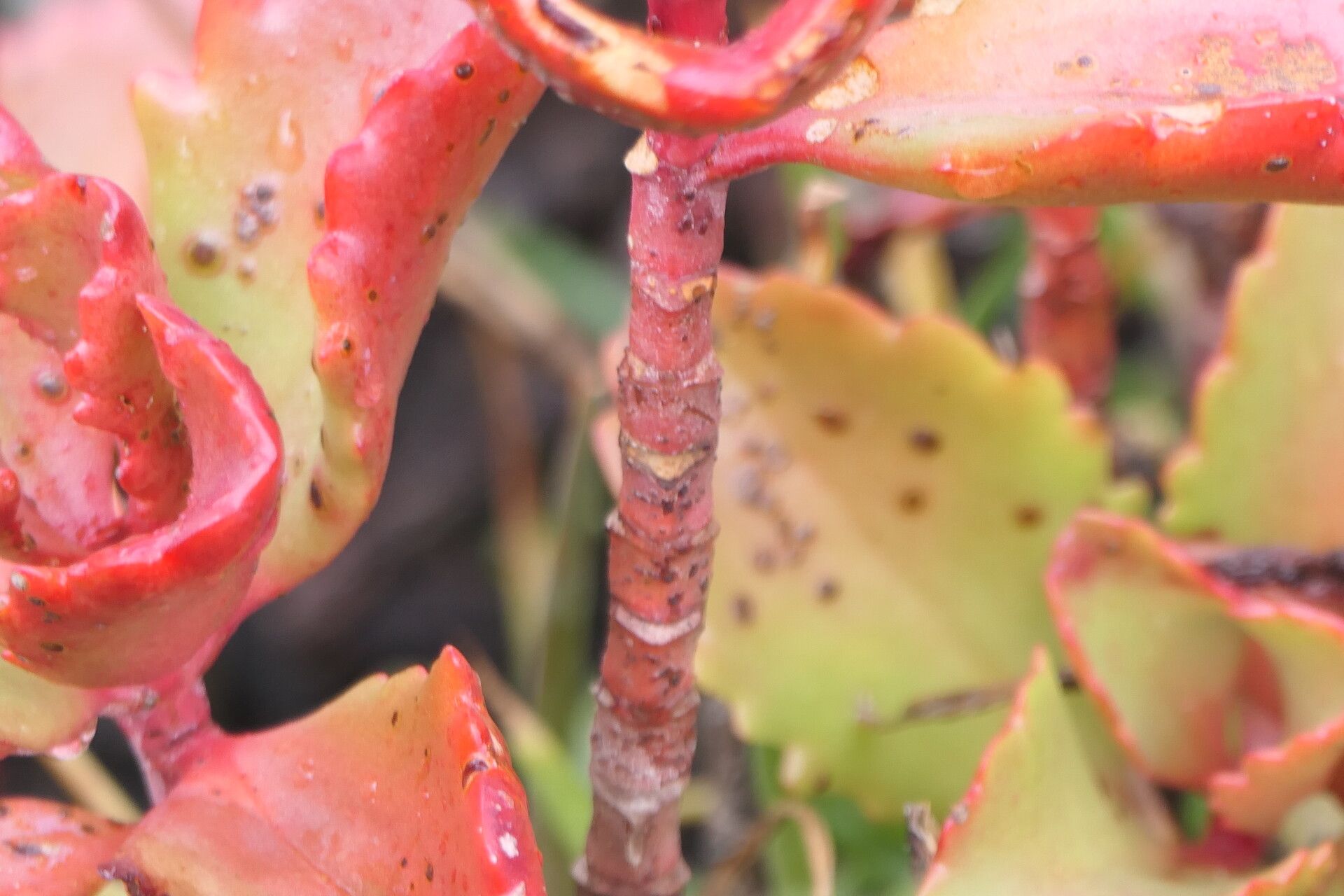
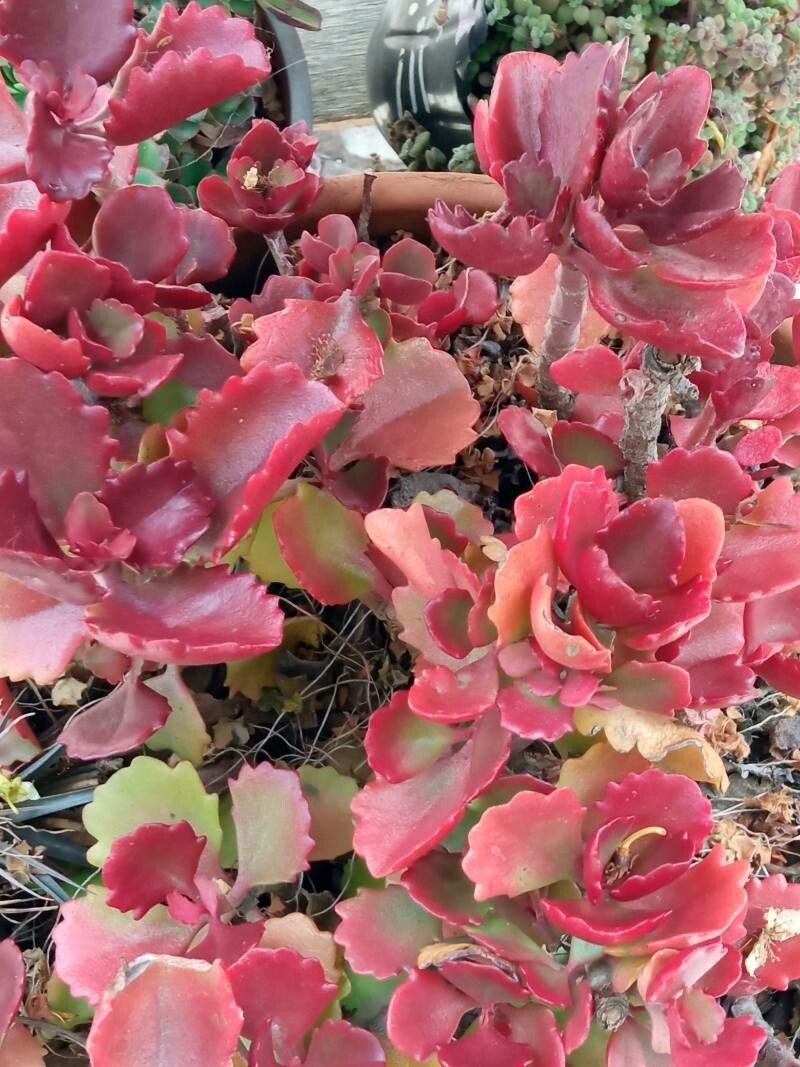
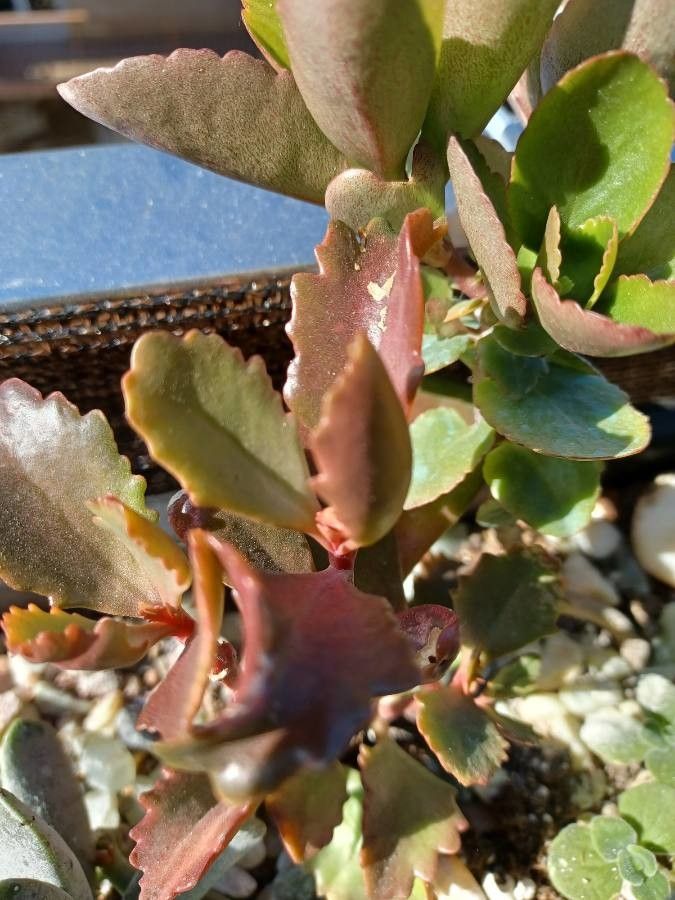
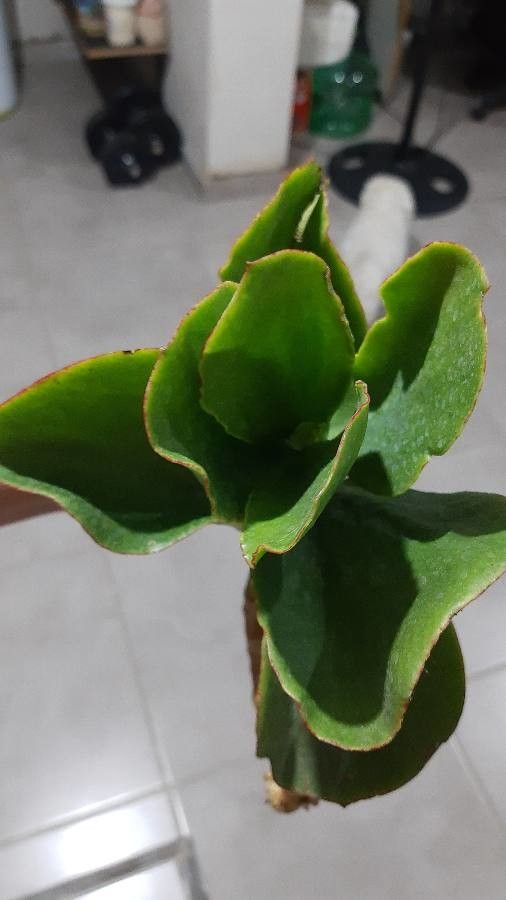
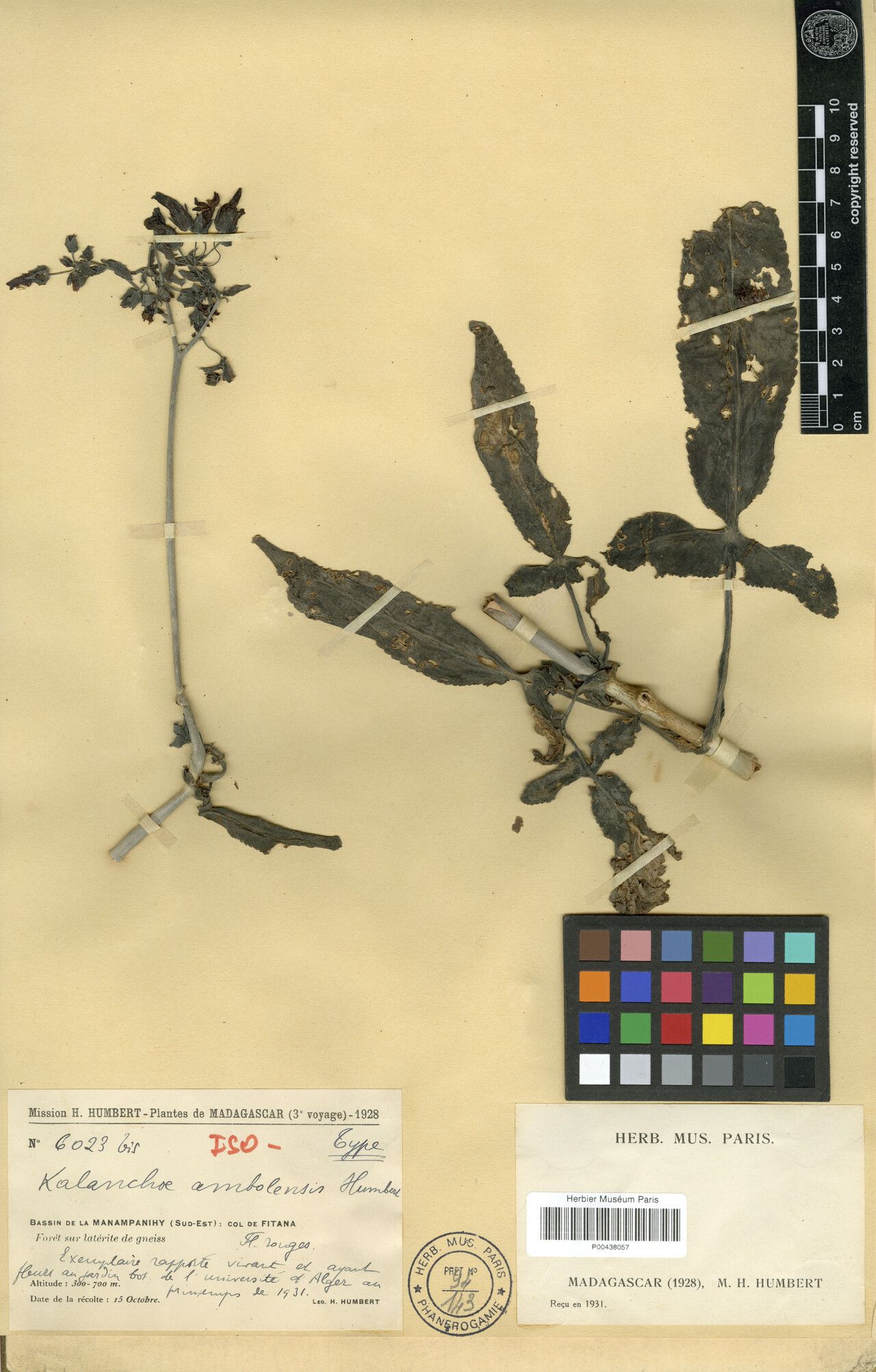
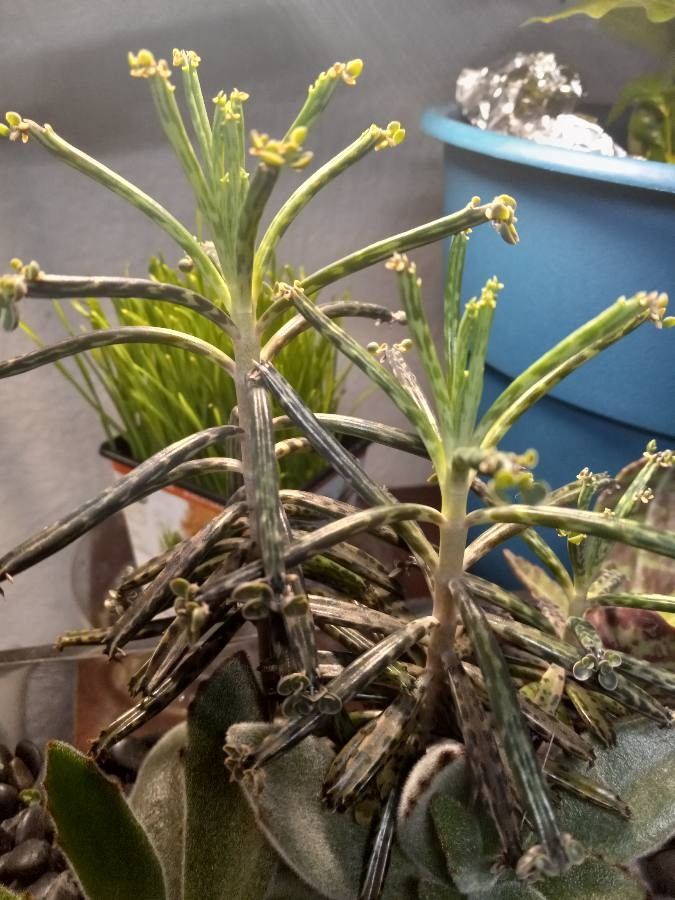
Kalanchoe sexangularis is a succulent plant in the Crassulaceae family, native to Madagascar. It can grow up to 30 cm in height and features thick, fleshy leaves arranged in a rosette pattern. The leaves are green with red margins and have six sides, which is reflected in the name "sexangularis," meaning six-sided.
This plant produces small, tubular flowers that are either pink or red and bloom during the winter months. These flowers grow on long stems that rise above the foliage.
Kalanchoe sexangularis is easy to care for and can be grown both indoors and outdoors, provided it receives plenty of sunlight. It prefers well-draining soil and requires moderate watering during its growing season, with the soil allowed to dry out between waterings.
Historically, indigenous people of Madagascar have used Kalanchoe sexangularis for its medicinal properties. It has been employed to treat various ailments such as headaches, fever, wounds, and respiratory issues due to its anti-inflammatory properties.
Overall, Kalanchoe sexangularis is an attractive succulent that not only enhances the beauty of its surroundings but also offers some medicinal benefits. However, it should be used for medicinal purposes only by experts or under medical supervision.
Bushveld Kalanchoe has moderate disease resistance and is relatively sensitive to humidity and overwatering. It also becomes more prone to disease if it lacks light and is overwatered. Regarding care, Bushveld Kalanchoe is drought tolerant and can withstand long stretches without watering. It requires little fertilizer and only occasional pruning. These traits make it a suitable plant for people at any experience level, especially those who prefer to spend less time on plant care and who may sometimes be away from home for long periods. It is a good option for people who do not want to spend much time caring for their plants but still want an easy-to-maintain plant.
How to keep Kalanchoe Sexangularis.
Light
Originating from dry regions, the Bushveld Kalanchoe performs best in full sun, as its native habitat has strong sunlight and little shade. It can also tolerate partial sun, providing some flexibility in its growth.
Water
The Bushveld Kalanchoe is well-suited for arid environments, as it has a high tolerance for drought and needs very little water. It should be watered approximately every three weeks. This evergreen plant is commonly grown indoors, where it keeps its foliage year-round as a way to store water. It thrives particularly well in stable temperatures with limited moisture availability.
Temperature
Bushveld Kalanchoe does best in warm conditions and needs higher temperatures during the growing season to encourage growth and metabolic activity. It prefers plenty of sunlight, suitable moisture, and good air circulation. However, it can be damaged by very low temperatures and by overwatering. It's important to keep conditions balanced and avoid excessive heat or overly dry conditions as well.
Fertilizer
Bushveld Kalanchoe requires only light fertilizing once or twice a year during its growing season. Do not fertilize in winter or in summer when the plant is dormant. Use less fertilizer for plants that have been repotted, and wait a couple of months after repotting before you resume feeding. Fertilizing helps maintain healthy growth and promotes flowering.
Pruning
To keep your bushveld Kalanchoe in good shape, prune any excessive or dense branches during the spring and autumn. Use tools such as scissors and apply sulfur powder to prevent infections. If you want to propagate the plant, cut sturdy stems with 5 to 6 leaves. Treat the cut ends with sulfur powder, allowing them to heal before planting. When you plant the cuttings, make sure the soil stays slightly moist.
Toxicity
The Kalanchoe Rubinea is not toxic to humans but is considered highly dangerous to animals. This plant contains cardiac toxins that have been known to poison dogs, cats, birds, and cattle. Ingesting any part of the plant may result in gastrointestinal upset or irritation but severe cases may lead to tremors, seizures, and heart arrhythmias.
Further reading →
The toxicity and danger assessments provided are for reference only. We do not assure their accuracy, so it's crucial not to depend on them. Seek professional advice when necessary for accurate guidance.
Botanical profile.
- Plant Type
- Shrub, Succulent
- Life Cycle
- Perennial
- Genus
- Kalanchoe
- Family
- Crassulaceae
- Hardiness Zone
- 9-12
- Mature Height
- 30 cm to 61 cm
- Mature Spread
- 30 cm to 46 cm
- Leaf Color
- Green, Dark Red
- Leaf Type
- Semi-evergreen
- Flower Size
- 1.02 cm to 1.52 cm
- Bloom Time
- Winter
- Planting Time
- Spring, Summer, Autumn
- Harvest Time
- Late winter, Early spring, Mid spring
- Native Area
- Mozambique, South Africa, Zambia, Eswatini, Zimbabwe