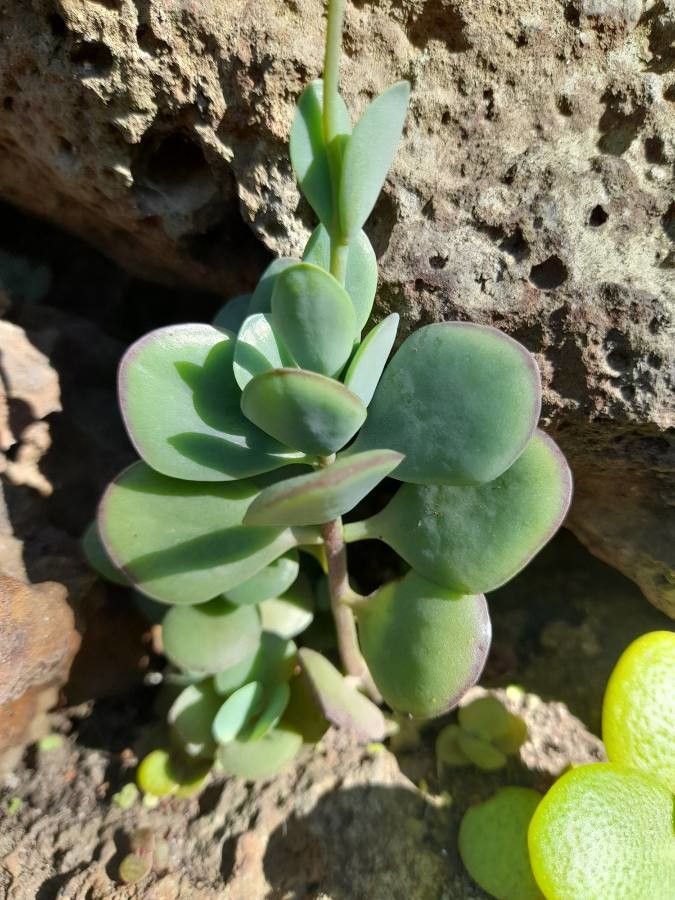
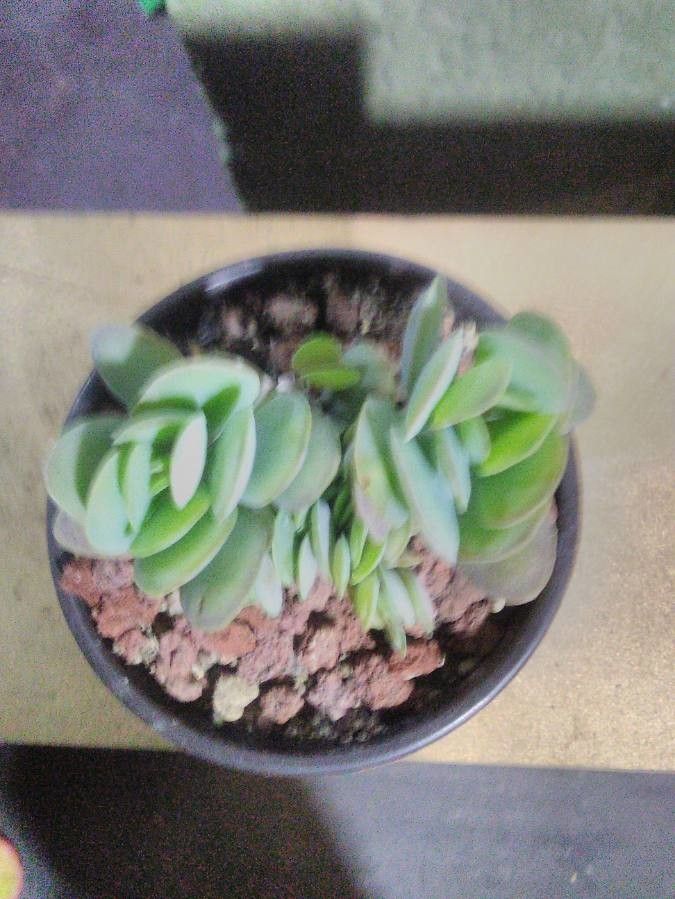
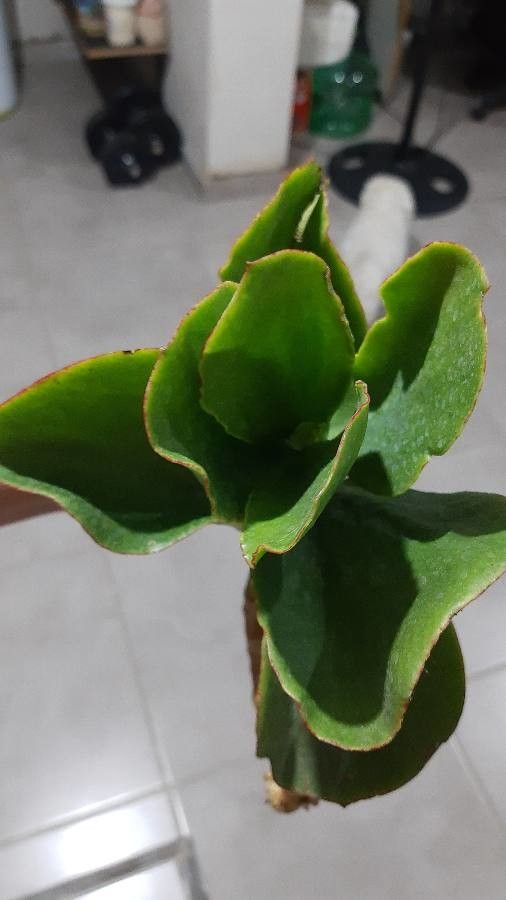
Kalanchoe rotundifolia, commonly known as the paddle plant or round-leaved Kalanchoe, is a succulent from the Crassulaceae family. Native to Madagascar, it is also found in other parts of Africa. This plant features thick, round leaves that are greenish-gray and can grow up to 6 inches in diameter. The leaves form a rosette pattern and have scalloped edges.
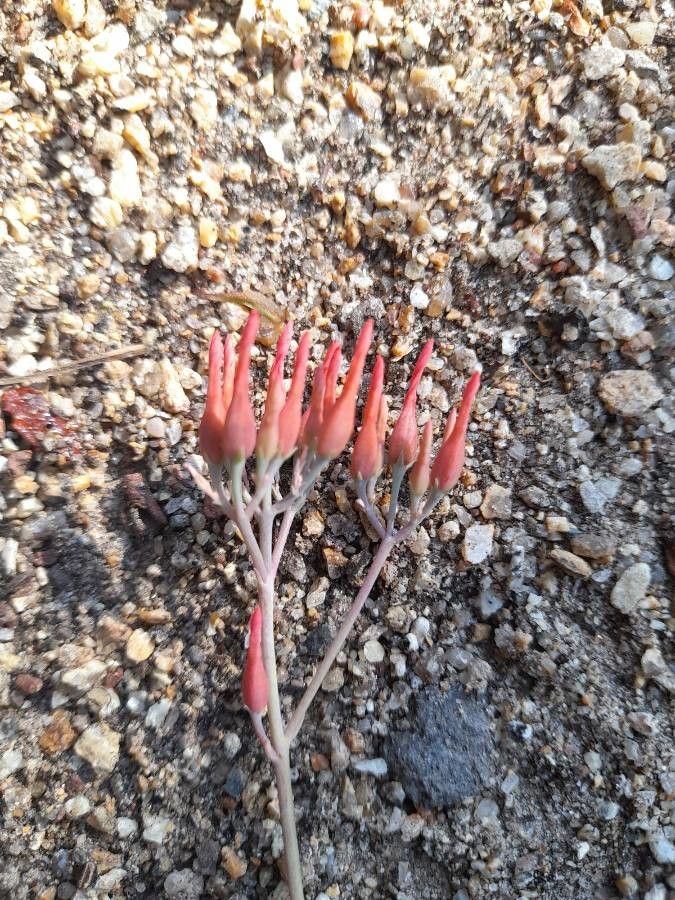
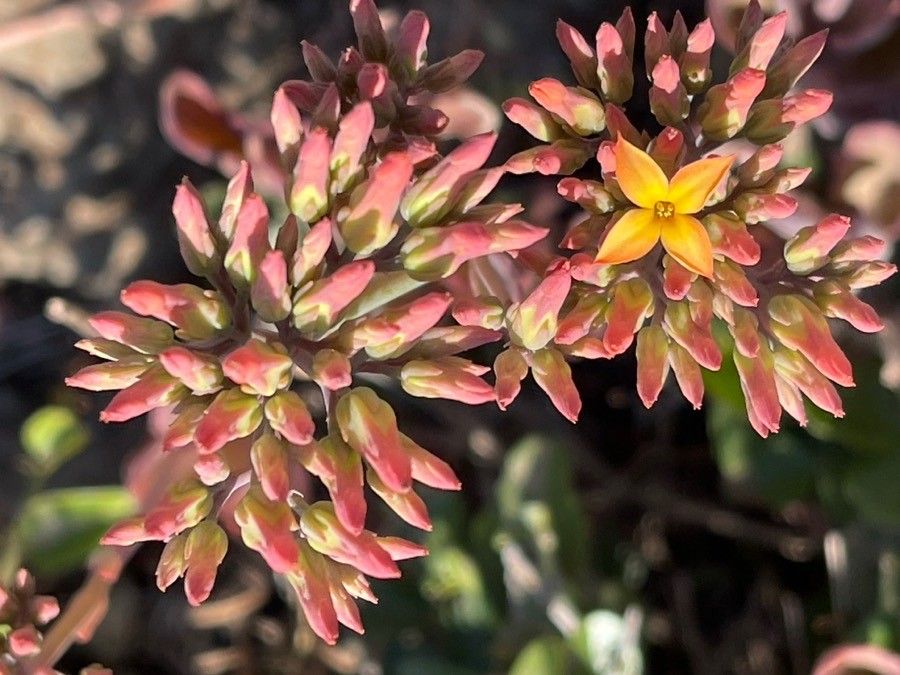
In late winter or early spring, the paddle plant produces small clusters of tubular flowers on tall stalks that rise above the foliage. These flowers are typically pinkish-red or yellow-orange and attract pollinators like bees.
Kalanchoe rotundifolia is an easy-to-care-for houseplant, requiring minimal watering. It thrives best when placed near a sunny window in well-draining soil. It can also be grown outdoors in warm climates with partial shade.
For centuries, indigenous people have used the paddle plant for its anti-inflammatory properties, but it should not be ingested without proper medical supervision.
Overall, Kalanchoe rotundifolia is an attractive succulent with unique foliage and colorful blooms, making it a popular choice among indoor gardeners seeking low-maintenance plants with ornamental value.
Common kalanchoe has moderate disease resistance and is more sensitive to humidity. It becomes prone to disease when humidity is high and is liable to develop root rot during dormancy. Regarding care, Common kalanchoe tolerates drought but requires increased watering in the growing season. Watering should be greatly reduced or stopped entirely during the dormant period. Common kalanchoe is appropriate for people with some growing experience, though it can be challenging to care for, especially during dormancy. It is particularly suited to those who can dedicate time to its care throughout the winter months.
How to keep Kalanchoe Rotundifolia.
Light
Common kalanchoe comes from habitats with mottled light, such as the understory of forests or rocky locations that provide natural shade. It prefers partial sunlight but can also tolerate full sun.
Water
Kalanchoe plants are low-maintenance when it comes to watering. The frequency of watering depends on factors such as weather conditions, plant growth stages, and soil moisture levels. In hot weather or during dormant periods, water the plant every 1 to 2 weeks. Keep an eye on the plant for signs like wrinkled or drooping leaves, which indicate it needs water. Additionally, the type of pot you use can influence how much moisture is retained, which will also affect how often you need to water the plant.
Temperature
Although Common kalanchoe can tolerate some heat, it mainly prefers and grows during the cooler seasons and becomes dormant in summer. During hot summer temperatures, provide shade to avoid scorching from strong sunlight. Watering should be reduced or stopped during the hottest season to prevent root rot. Winter and spring are when Common kalanchoe grows most vigorously. As long as temperatures do not fall too low, it will continue to grow steadily.
Fertilizer
For Common kalanchoe, light applications of fertilizer once or twice a year during the growing season are enough. Do not fertilize in winter or summer while it is dormant. Cut back on fertilizer for repotted plants and wait a couple of months after repotting before fertilizing. Fertilizing helps maintain healthy growth and promotes blooming.
Pruning
The common kalanchoe features fleshy, rounded leaves and vibrant tubular flowers. To improve its shape and encourage bushiness, prune the plant in early spring. Remove any dead leaves and trim back long, slender stems to stimulate new growth. Regular pruning enhances air circulation, helping to reduce pests, and supports the plant's growth cycle for optimal health.
Pot & Repot
When repotting Common kalanchoe, choose a pot slightly larger than the current one that has good drainage. Use a gritty, well-draining cactus or succulent potting mix. Gently lift the plant from its old pot, remove excess soil, and plant it at the same depth. Wait several days before watering to allow any root injury to recover. Repot in spring or fall and place the plant in a brightly lit location.
Botanical profile.
- Plant Type
- Succulent, Herb
- Life Cycle
- Perennial
- Genus
- Kalanchoe
- Family
- Crassulaceae
- Hardiness Zone
- 9-11
- Mature Height
- 30 cm
- Mature Spread
- 30 cm
- Leaf Color
- Light Green, Pale Green
- Leaf Type
- Evergreen
- Flower Size
- 1.02 cm to 1.52 cm
- Bloom Time
- Winter, Early spring, Mid spring
- Planting Time
- Summer
- Harvest Time
- Spring, Early summer, Mid summer
- Native Area
- Somalia, Mozambique, Tanzania, South Africa, Namibia, Eswatini, Ethiopia, Kenya, Botswana, Zimbabwe
Other names.
Reader questions.
What are the sunlight requirements for a Common Kalanchoe?
A Common Kalanchoe, botanically known as Kalanchoe rotundifolia, thrives in varying degrees of sunlight. For optimal growth, it requires 'Full sun' which means the plant should receive above 6 hours of sunlight daily. Alternatively, it can also do well in 'Partial sun', getting about 3-6 hours of sunlight each day. It's important to observe the movement of sunlight through your garden to find spots that offer a balance of light and shade, ensuring the plants remain healthy and happy.
What is the botanical name of the Common Kalanchoe?
The botanical name of the Common Kalanchoe is Kalanchoe rotundifolia. This plant is known for its unique characteristics and is part of the diverse Kalanchoe genus.