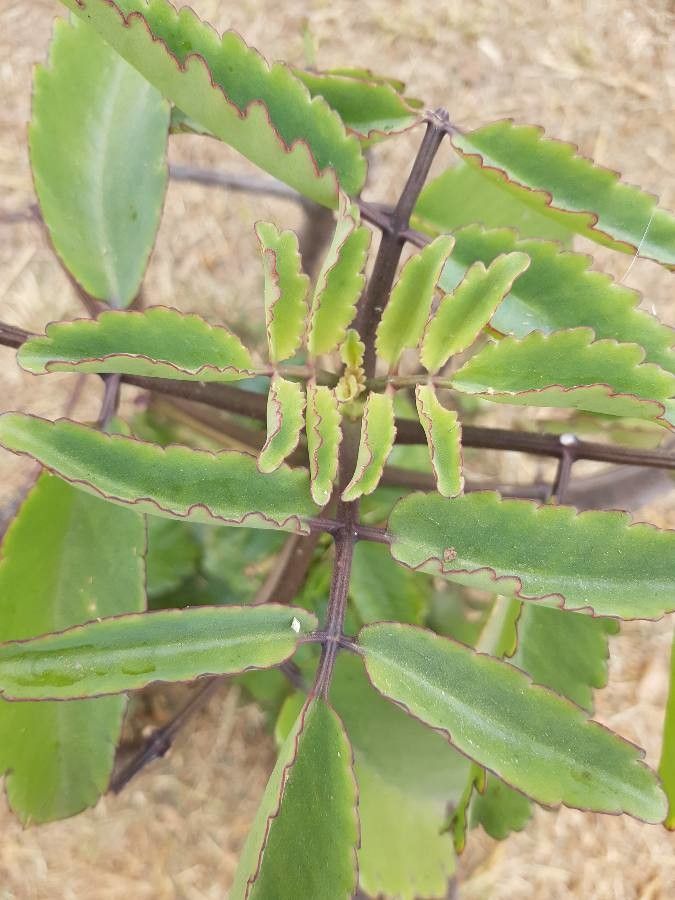
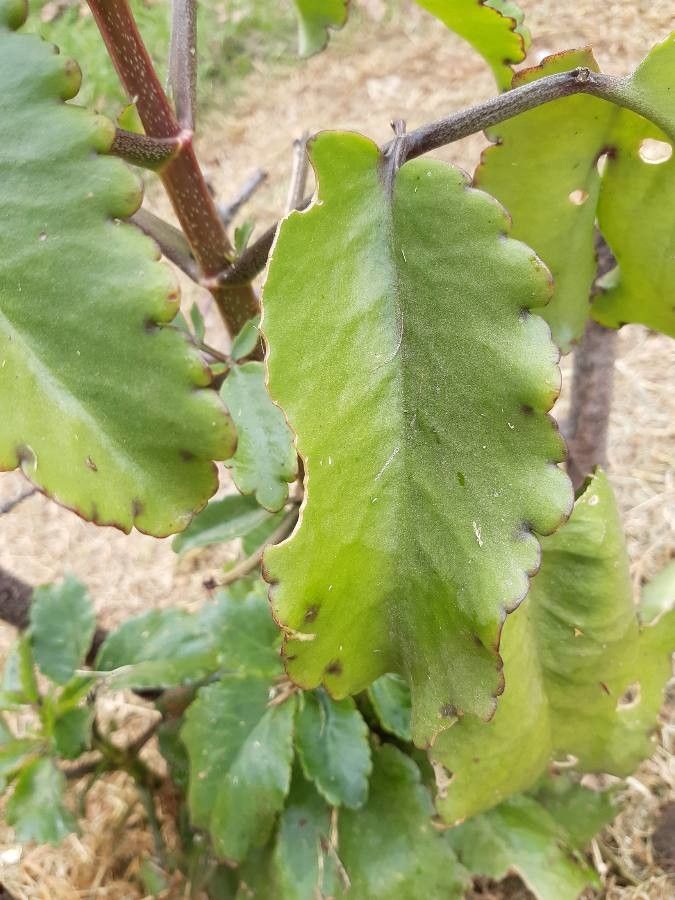
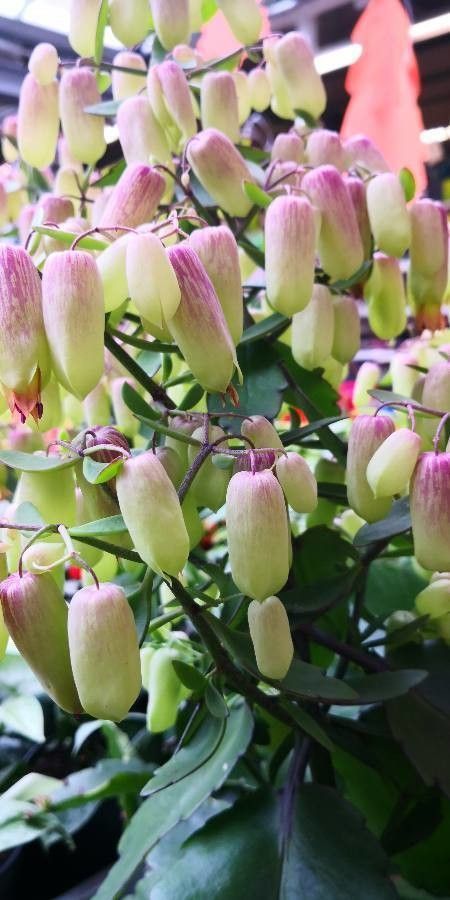
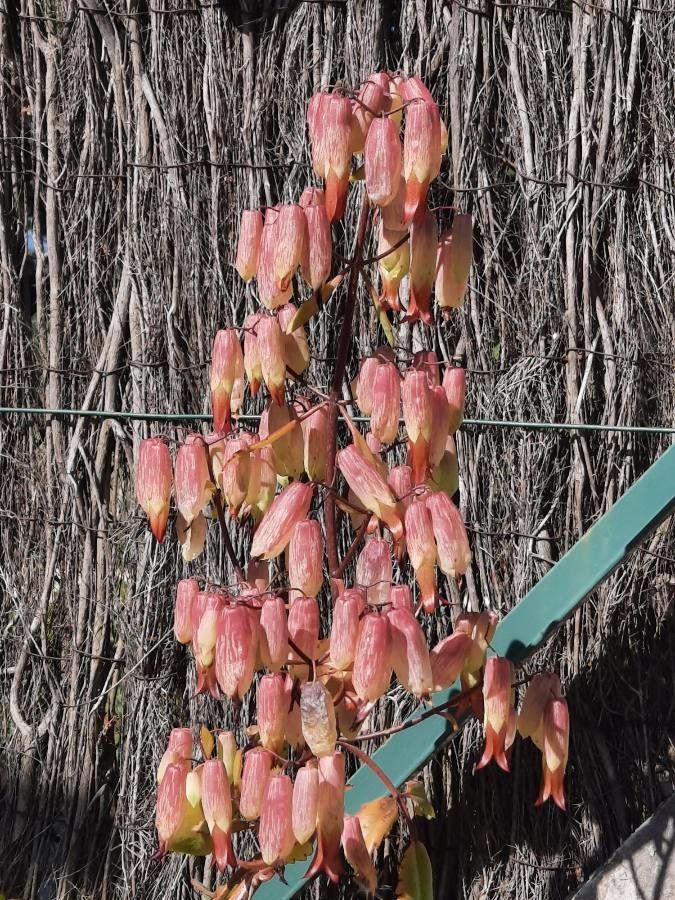
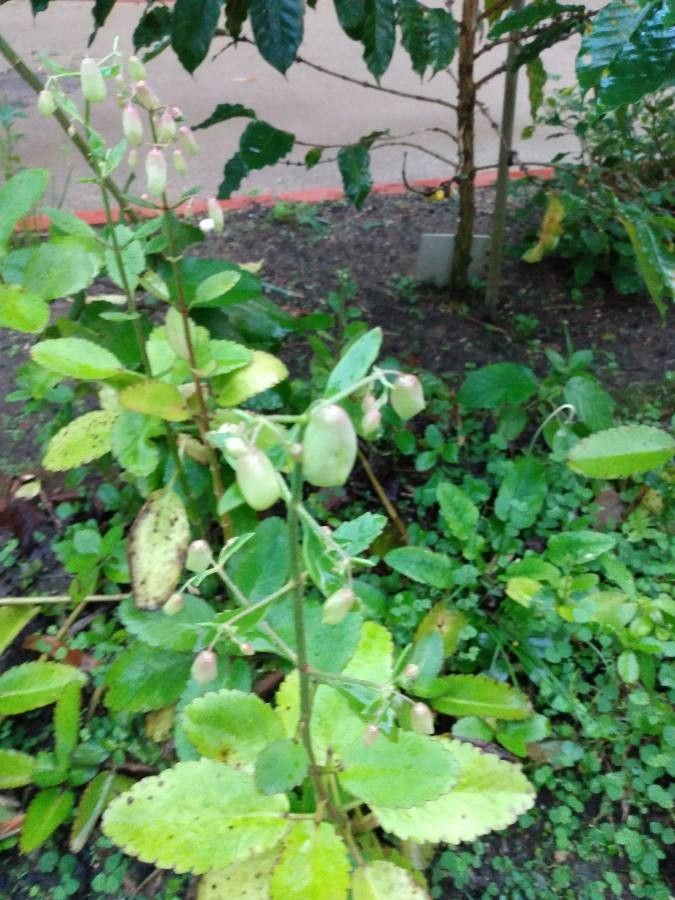
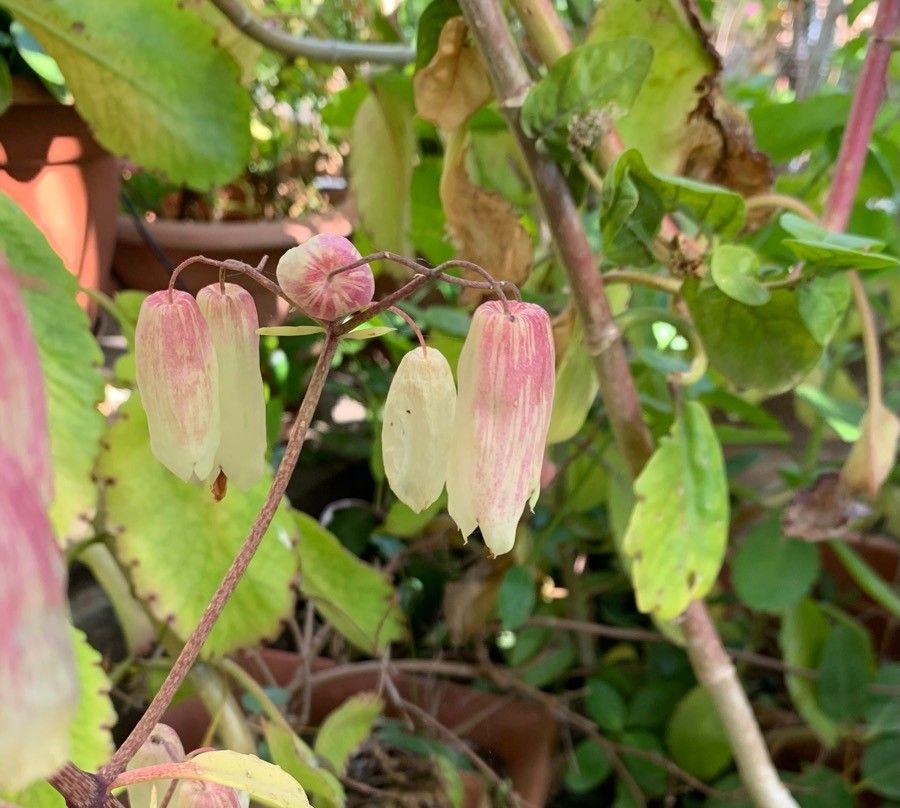
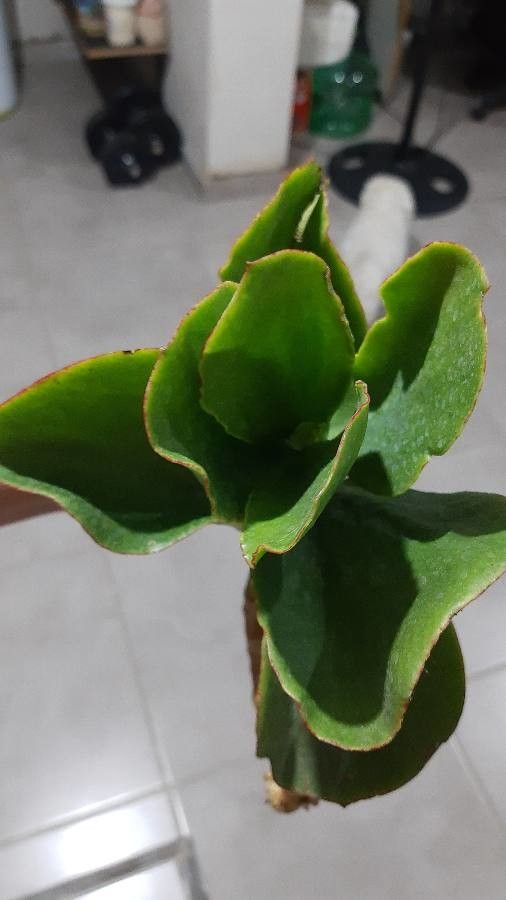
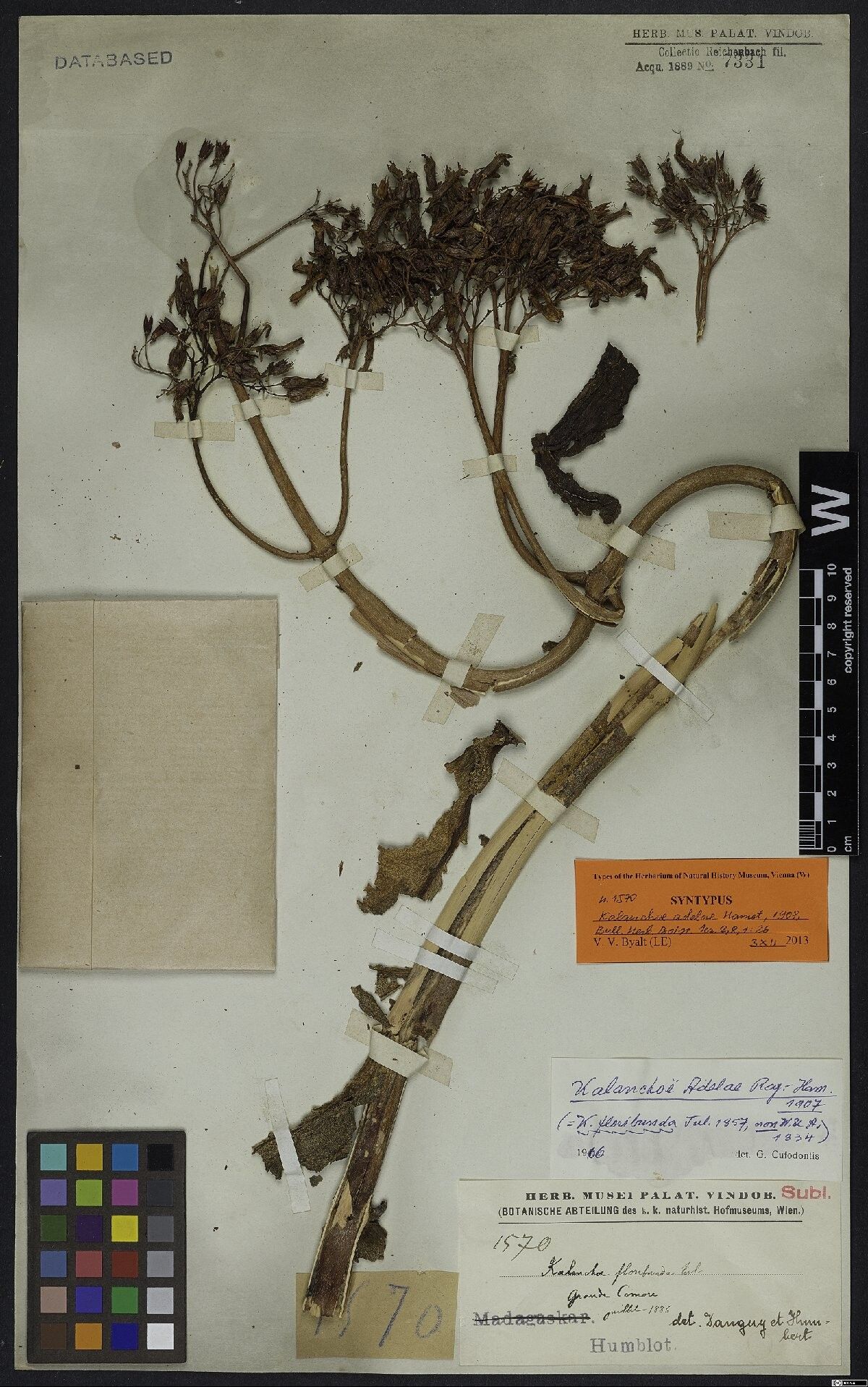
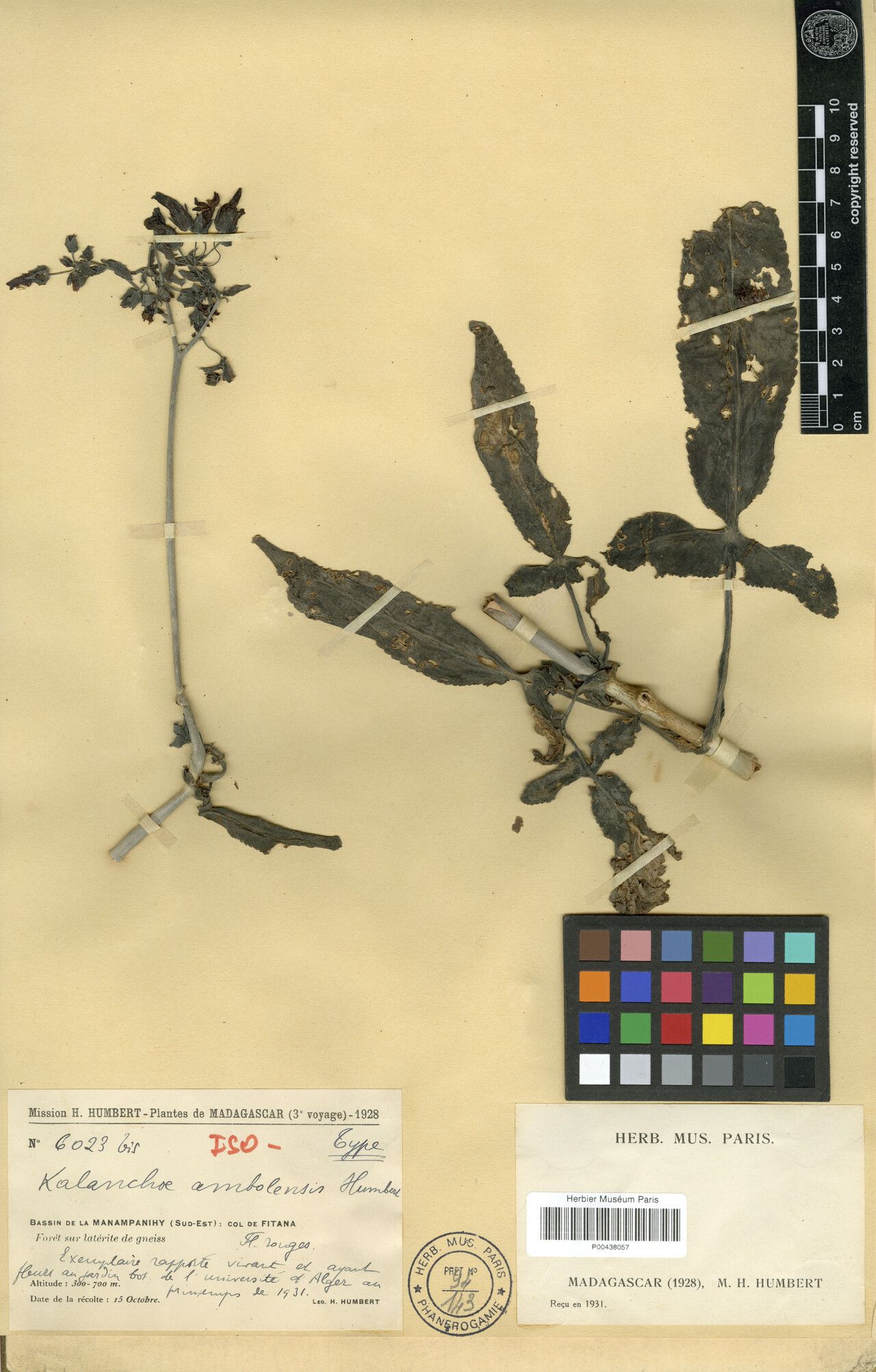
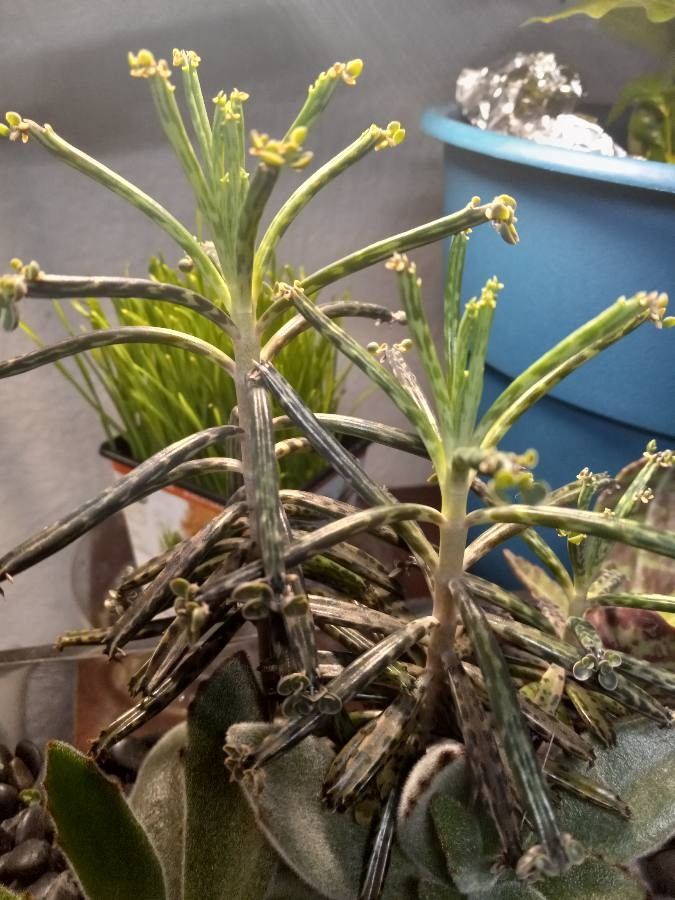
Kalanchoe pinnata, commonly known as cathedral bells, air plant, life plant, miracle leaf, and Goethe plant is a succulent plant native to Madagascar. It is a popular houseplant and has become naturalized in tropical and subtropical areas. The species is distinctive for the profusion of miniature plantlets that form on the margins of its phylloclades, a trait it has in common with some other members of Bryophyllum (now included in Kalanchoe). It is a succulent, perennial plant, about 1 m (39 in) tall, with fleshy cylindrical stems and young growth of a reddish tinge, which can be found in flower throughout most of the year. The specific epithet "pinnata" is the feminine form of the Latin adjective pinnatus, meaning "winged, pinnate".
Cathedral Bells: This plant is characterized by its green, succulent leaves with distinct scalloped edges. It features tall stems adorned with flowers resembling cathedral bells, which is how it got its name.
Life plant has moderate disease resistance and is more sensitive to humidity. It becomes vulnerable to disease when humidity is high and is prone to developing root rot during dormancy. Regarding care, Life plant tolerates drought but requires more frequent watering in the growing season. Watering should be greatly reduced or stopped entirely during the dormant period. Life plant is suitable for growers with some experience, but it can be challenging to maintain, especially during dormancy. It is particularly well suited to people who can dedicate time to its care during the winter months.
How to keep Kalanchoe Pinnata.
Light
The life plant thrives when it gets plenty of sun exposure for healthy growth. However, it can also manage with moderate brightness. It originates from a place abundant with sunlight, thus getting too much of it can cause the leaves to scorch. Conversely, insufficient light can result in elongated growth and diminished leaf hues.
Water
The life plant, a tropical species, is well-adapted to withstand drought conditions and only needs watering every 2-3 weeks. It thrives best in well-draining soil with moderate humidity, maintaining consistent moisture. As an evergreen commonly grown indoors, the life plant benefits from higher humidity levels, which help mimic its natural tropical habitat and improve its overall appearance.
Humidity
This plant will thrive in moderate humidity, which is probably the level in your home. However, misting it a few times a week can be very beneficial. Make sure the room has good ventilation.
Temperature
Life plants originate from tropical regions and flourish best in temperatures between 20 and 38℃ (68 to 100℉). Regular hydration is essential for these plants and they should be shielded from direct sunlight to avoid sun scald. In colder seasons, supplementary sources of heat are advised to uphold the plant's preferred temperature range.
Fertilizer
For the Life plant, light applications of fertilizer once or twice a year during the growing season are adequate. Avoid fertilizing in winter or in summer when the plant is dormant. Cut back on feeding for plants that have been repotted, and wait a couple of months after repotting before you start fertilizing again. Fertilizing helps maintain healthy growth and encourages blooming.
Pruning
To maintain their shape, prune large succulent plants, such as the life plant, in the spring and autumn by removing dense or unnecessary branches. For propagation, cut stems that have 5-6 leaves, treat the cut surfaces with sulfur powder to prevent infection, and then plant them after the wounds have healed. Make sure the soil for the cuttings is slightly moist.
Pot & Repot
While repotting the Life plant, choose a container that is slightly more substantial than its current one and ensure it has adequate drainage. Opt for a gravelly succulent or cactus blend with excellent drainage. Remove the plant from its previous pot with caution, dust off surplus soil, and reposition it at an identical depth. Hold off on watering for several days to let any damaged roots mend. Repot during spring or fall, and place it in an area with plenty of light.
Botanical profile.
- Plant Type
- Succulent, Herb
- Life Cycle
- Perennial
- Genus
- Kalanchoe
- Family
- Crassulaceae
- Hardiness Zone
- 10-12
- Mature Height
- 0.3 m to 2.13 m
- Mature Spread
- 34 cm
- Leaf Color
- Green, Red
- Leaf Type
- Evergreen
- Flower Color
- Pink
- Flower Size
- 1.02 cm to 2.03 cm
- Bloom Time
- All year round
- Planting Time
- Spring, Autumn
- Harvest Time
- Spring, Summer, Fall
- Native Area
- Madagascar, Kenya, Malaysia
Other names.
Reader questions.
What are the sunlight requirements for Life plants?
Life plants, also known as Kalanchoe pinnata, thrive under conditions of full sun, which means they require above 6 hours of sunlight daily. However, they can also cope with partial sun, involving about 3-6 hours of sunlight. It's essential to monitor the movement of sunlight through your garden to identify spots that offer an ideal balance of light and shade, ensuring the plants' growth and happiness.
What are the essential care tips for a Life plant?
Life plants, native to tropical areas, flourish in temperatures between 20°C and 38°C (68°F to 100°F). They should be watered regularly and kept out of direct sunlight to avoid sunburn. During colder months, providing additional heat sources to keep the temperature above 20°C is crucial for their growth, as winter is their growing season. If the temperature falls below 5°C, it's advisable to move the plant indoors to a well-lit area and adjust watering based on temperature changes: increase watering with higher temperatures and decrease as it gets colder. For plants overwintering outdoors, a sheltered spot with ample sunlight is preferred, or consider a temporary greenhouse for consistent low temperatures, ensuring the plant stays moist.
What are the essential considerations for lighting when caring for Life plants?
Proper lighting is crucial for the growth of Life plants. These plants appreciate plenty of solar exposure for robust growth, but they can also manage in moderately sunny conditions. In their natural habitat, Life plants are exposed to ample sunlight, so while they can endure an abundance of light, too much can lead to leaf scorching, whereas not enough light can cause leggy growth and subdued leaf colors. For indoor plants, when natural sunlight is insufficient, artificial lighting becomes a necessary alternative to support optimal growth, especially during winter or in less sunny spaces. LED lights are recommended for their ability to provide specific wavelengths required for plant growth, with full sun plants needing 30-50W/sq ft, partial sun plants 20-30W/sq ft, and full shade plants 10-20W/sq ft of artificial light.
How does low temperature affect Life plant and what are the solutions?
Life plants are vulnerable to cold, thriving best between 20°C and 38°C. They should be kept above 5°C during winter as exposure to temperatures below 1°C leads to water-soaked necrosis and wilting of leaves. Mild frost may not show immediate symptoms, but after a week, significant wilting and leaf fall can occur. To mitigate frost damage, it's recommended to trim off frostbitten areas and immediately move the plant to a warmer indoor setting or set up a makeshift greenhouse for protection. A south-facing window is ideal for indoor placement to ensure sufficient sunlight, and proper ventilation is key in a greenhouse to prevent decay.
What symptoms indicate that a Life plant is receiving inadequate light?
Life plants exhibit several symptoms when they are not receiving enough light. Lighter-colored new leaves suggest insufficient sunlight, leading to a lack of chlorophyll and essential nutrients. Leggy or sparse growth, characterized by extended spaces between leaves or stems, indicates a plant is stretching towards the light, resulting in a weak and thinly spread appearance. Faster leaf drop is a reaction to low light conditions, as the plant sheds older leaves to conserve resources. Chlorosis, the loss of leaf green color turning to yellow, indicates a breakdown of chlorophyll often due to excessive sunlight, which affects photosynthesis. Sunscald, leaf curling, wilting, and leaf scorching are other symptoms of either too much or too little light, highlighting the importance of balanced light exposure for plant health.
How should I care for my Life plant during high temperatures?
During the summer, Life plants should be kept in temperatures below 38°C. If temperatures rise above 43°C, the plant may go into a dormant state and becomes susceptible to rot in high humidity. To care for your plant in high temperatures, you should remove any dry and rotten parts and relocate the plant to a partially shaded area, especially away from direct sunlight during the hottest parts of the day. It's also advisable to withhold watering until the weather cools down, to prevent further stress to the plant.
How can one mitigate the symptoms of light deficiency in Life plants?
To mitigate light deficiency in Life plants, gradual adjustments are key. For indoor plants, gradually moving them to a sunnier location each week until they receive at least 6 hours of direct sunlight daily is beneficial. Utilizing a south-facing window and keeping curtains open maximizes sunlight exposure. If moving the plant isn't feasible, consider supplemental lighting, such as keeping a lamp on for at least 8 hours daily or investing in professional grow lights. For outdoor plants, gradually acclimatizing them to sunnier spots can prevent sunburn. Pruning obstructions and transplanting smaller plants to locations with ample sunlight and good drainage are effective strategies for outdoor and ground-planted Life plants. It's important to note that parts of the plant that have already been affected by insufficient light may not recover, but new growth should be healthy with improved lighting conditions.