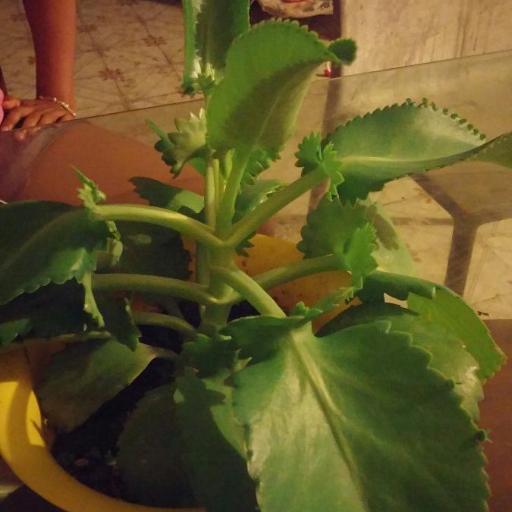
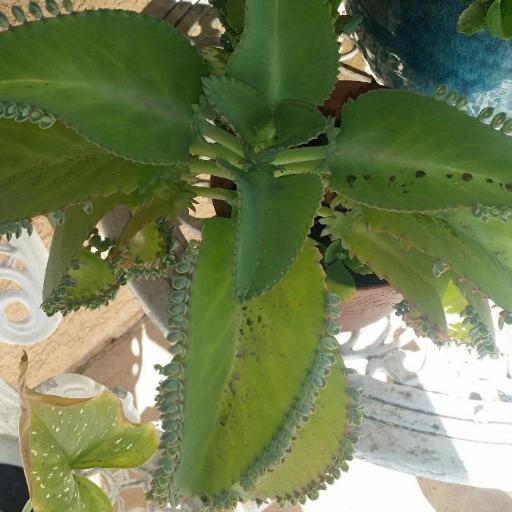
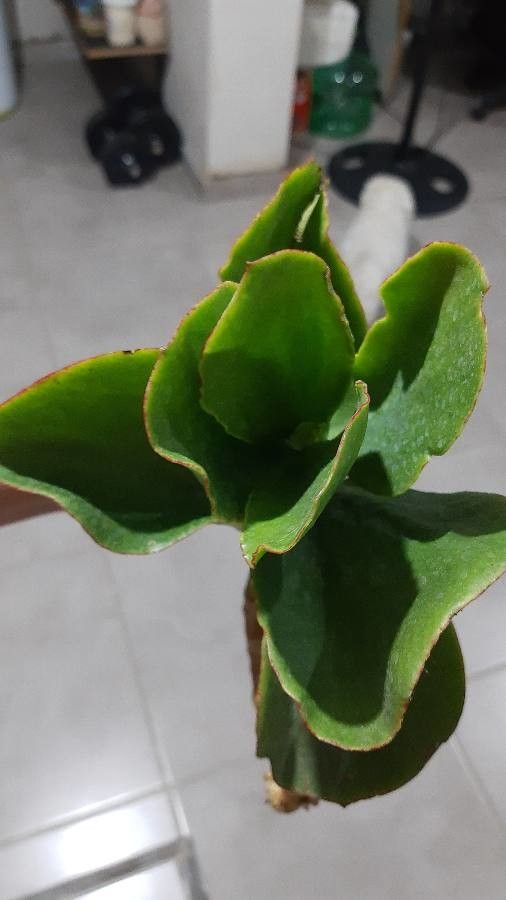
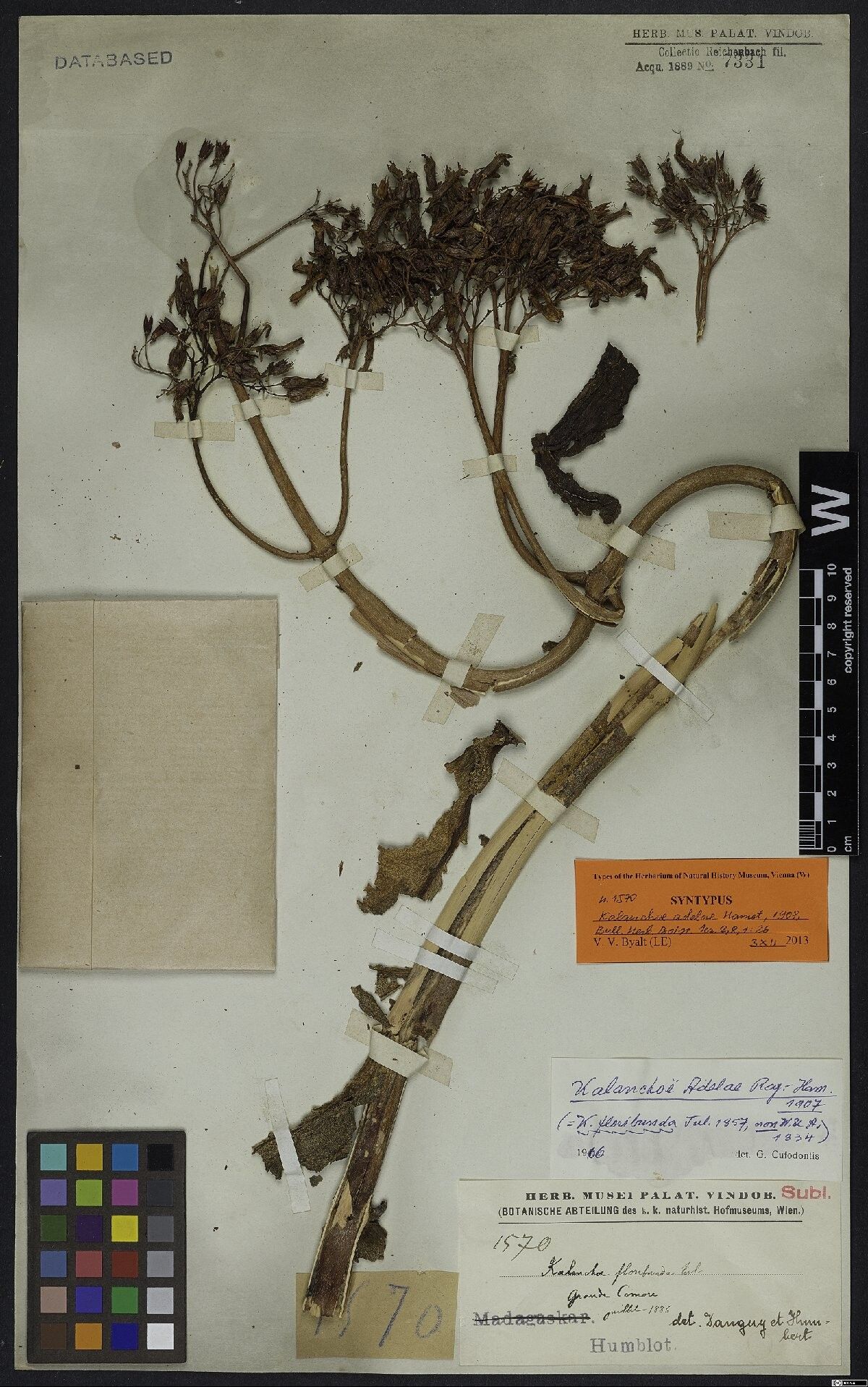
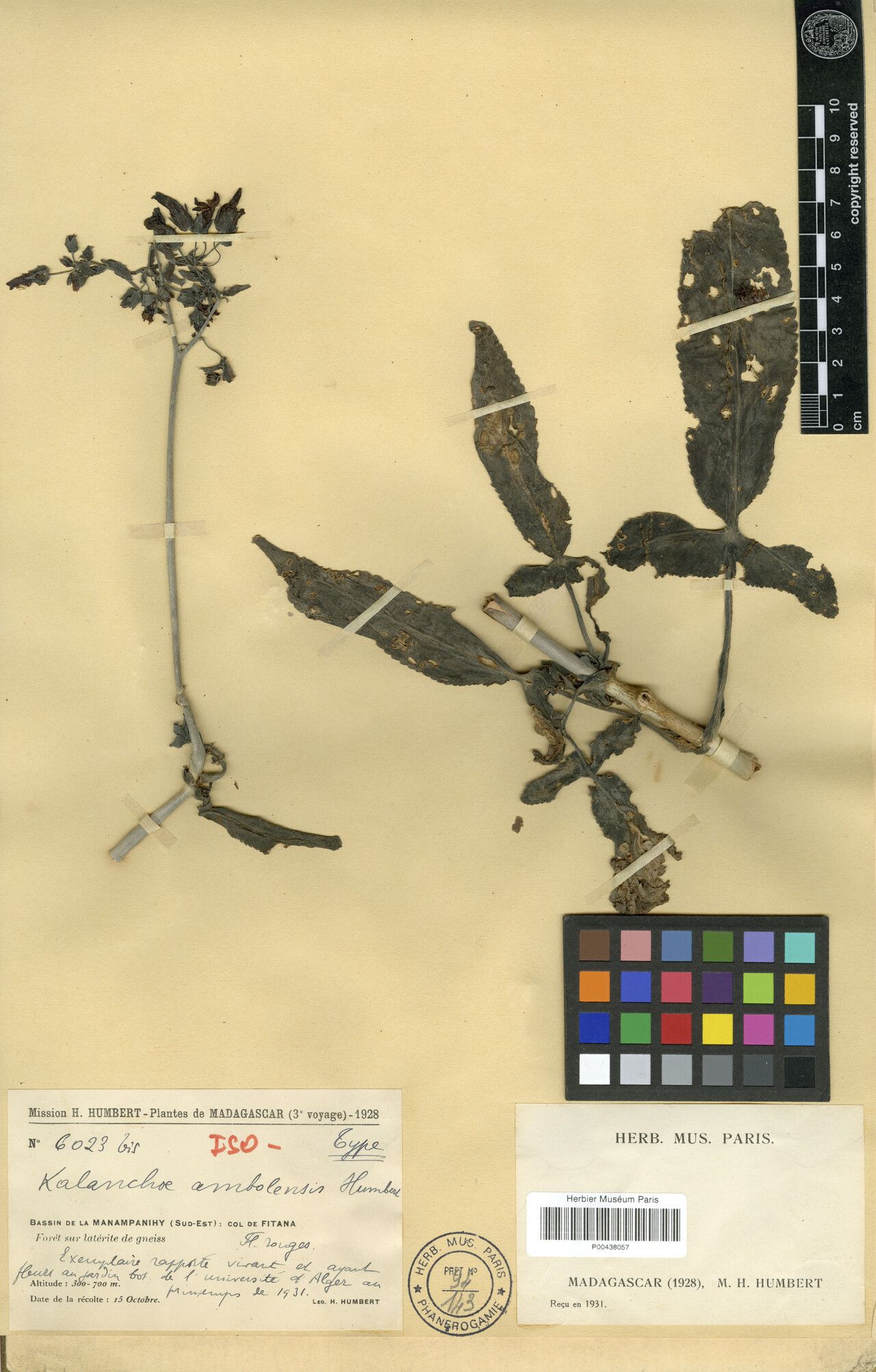
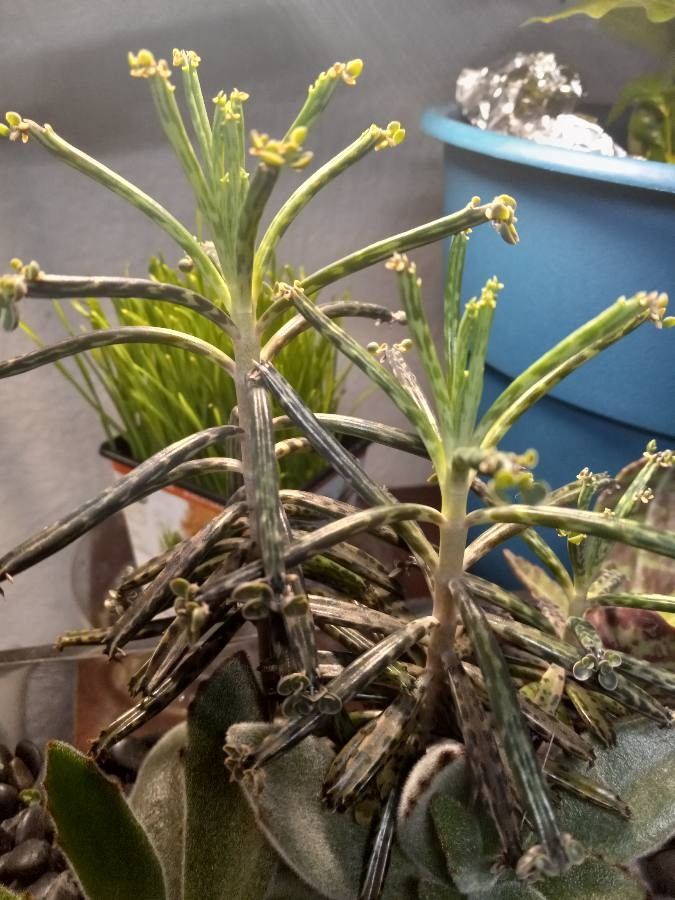
Kalanchoe laetivirens is a species of Kalanchoe. It was thought to be a hybrid between K. daigremontiana and K. laxiflora, and therefore a group of invalid names for such a hybrid, including Kalanchoe crenodaigremontiana, Kalanchoe crenato-daigremontiana, Bryophyllum crenodaigremontianum and Bryophyllum crenato-daigremontianum, are just synonyms of K. laetivirens. However, their true hybrid is distinct from this species.
Mother of thousands has moderate resistance to disease and is more vulnerable to issues caused by high humidity and excessive watering. It becomes even more prone to sickness if it receives too little light while being overwatered. Regarding care, Mother of thousands is drought-resistant and can go for extended periods without water. It requires little fertilizer and only occasional pruning. Because of these traits, it is appropriate for growers at any experience level, particularly for those who prefer to spend minimal time on plant care or who may be away from home for extended stretches. It is a strong option for people who do not want to invest much time in maintenance but still desire an easy-to-care-for plant.
How to keep Kalanchoe Laetivirens.
Light
Mother of thousands flourishes with abundant sunrays. Sufficient solar energy promotes rapid, vigorous growth. However, it can tolerate moderate sun if it is adequately rationalized. Excessive shade can reduce its vigor, while too much sun may scorch its leaves. Native to habitats with plentiful sunlight, its various growth stages do not significantly alter its sunlight requirements.
Water
Adapted to Madagascar's arid climate, the mother of thousands plant exhibits impressive drought tolerance, thriving with minimal water. It is best to water the plant every 2 to 3 weeks using well-draining soil to prevent root rot. As a resilient indoor plant, it efficiently stores water because of its succulent nature, requiring only occasional watering.
Humidity
This plant will thrive in moderate humidity, which is probably the level in your home. However, misting it a few times a week can be very beneficial. Make sure the room has good ventilation.
Temperature
Mother of thousands is native to regions with temperatures ranging from 68 to 100 °F (20 to 38 ℃). The plant does best in warmth and prefers temperatures toward the higher end of that range. In colder seasons, make sure it remains warm to maintain optimal health.
Fertilizer
For the Mother of thousands plant, it's enough to apply a light amount of fertilizer 1-2 times annually during the growth phase. It's advisable to refrain from fertilizing during winter and summer when the plant is in a dormant state. After repotting, minimize the use of fertilizer and hold off on it for several months. The application of fertilizer aids in promoting robust growth and supports flowering.
Pruning
To maintain their shape, prune large succulent plants like the mother of thousands in both spring and autumn. Remove any dense or redundant branches. For propagation, cut 5 to 6 leaf stems and apply sulfur powder to the wounds. Allow the cuts to heal before planting. For best results, slightly moisten the soil using a watering can.
Pot & Repot
For the re-potting process of Mother of thousands, choose a pot that is slightly bigger than the current one and ensure it has ample drainage. Utilize a succulent or cactus mix that drains well and has a gritty texture. Gently extract the plant from its previous pot, clean off surplus soil, and position it at the identical depth in the new pot. Let a few days pass before watering to let any root injuries recover. Perform the repotting in spring or autumn and place it in an area with plenty of light.
Botanical profile.
- Plant Type
- Succulent
- Life Cycle
- Perennial
- Genus
- Kalanchoe
- Family
- Crassulaceae
- Hardiness Zone
- 9-11
- Mature Height
- 30 cm
- Mature Spread
- 10 cm
- Leaf Color
- Light Green, Pale Green
- Leaf Type
- Evergreen
- Flower Color
- Pink, Purple
- Flower Size
- 2.54 cm
- Bloom Time
- Spring
- Planting Time
- Spring, Autumn
- Harvest Time
- Early summer, Mid summer
- Native Area
- Madagascar
Other names.