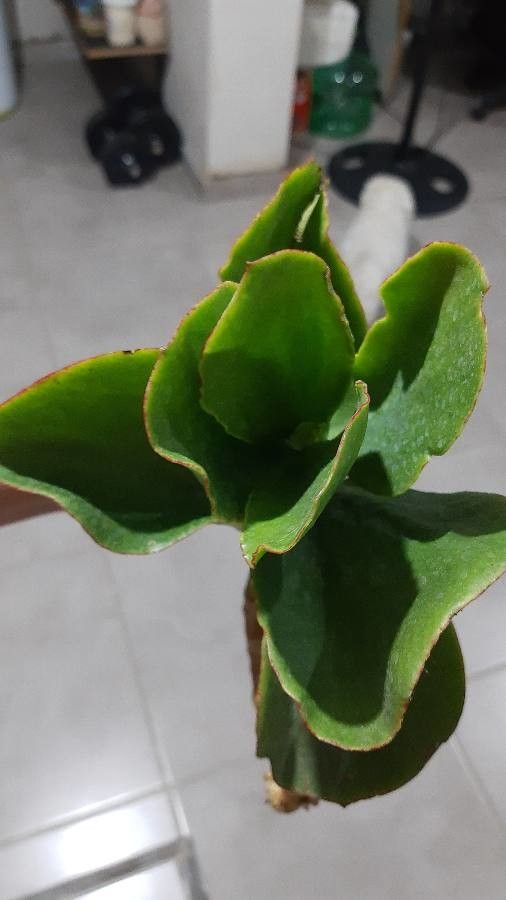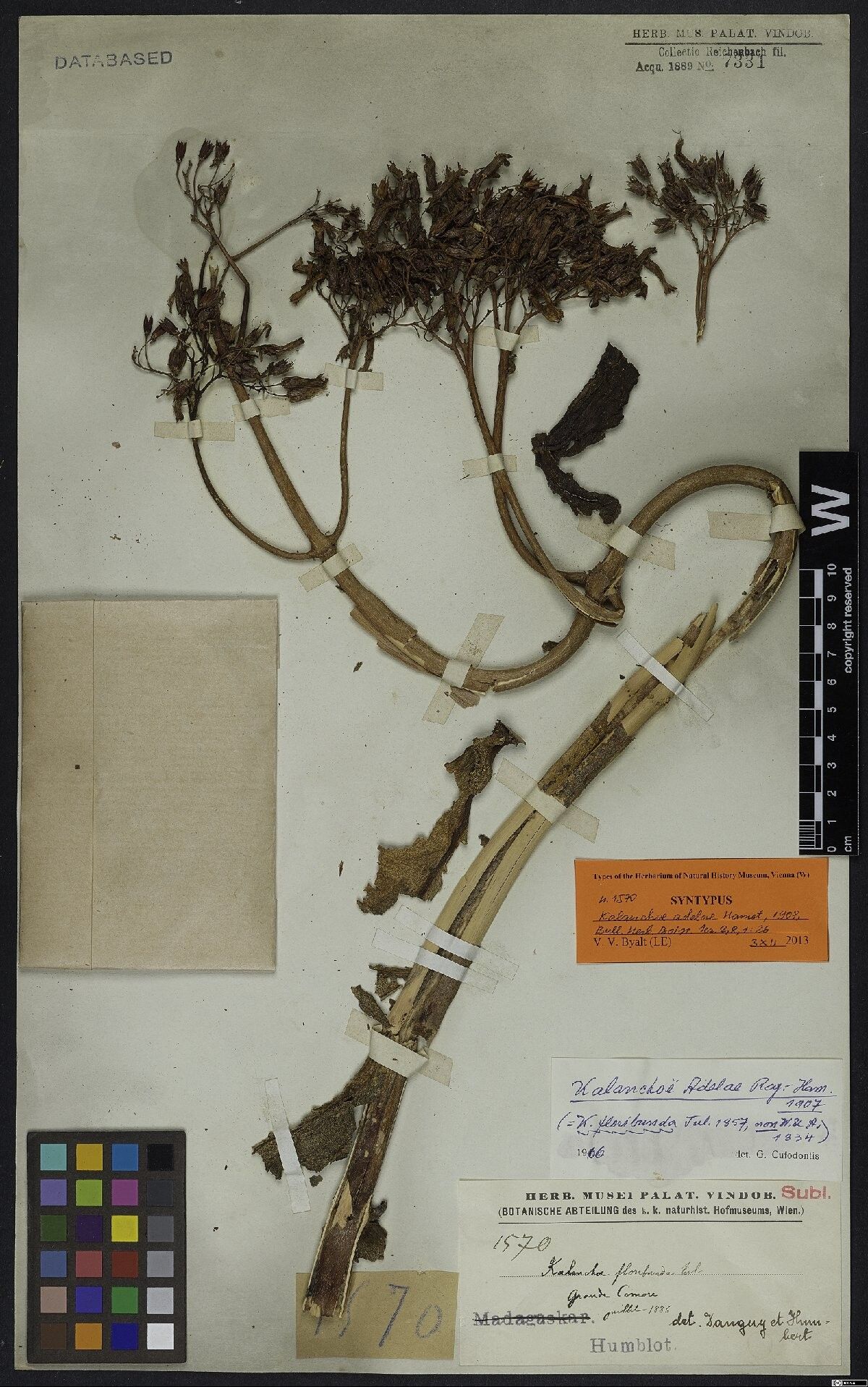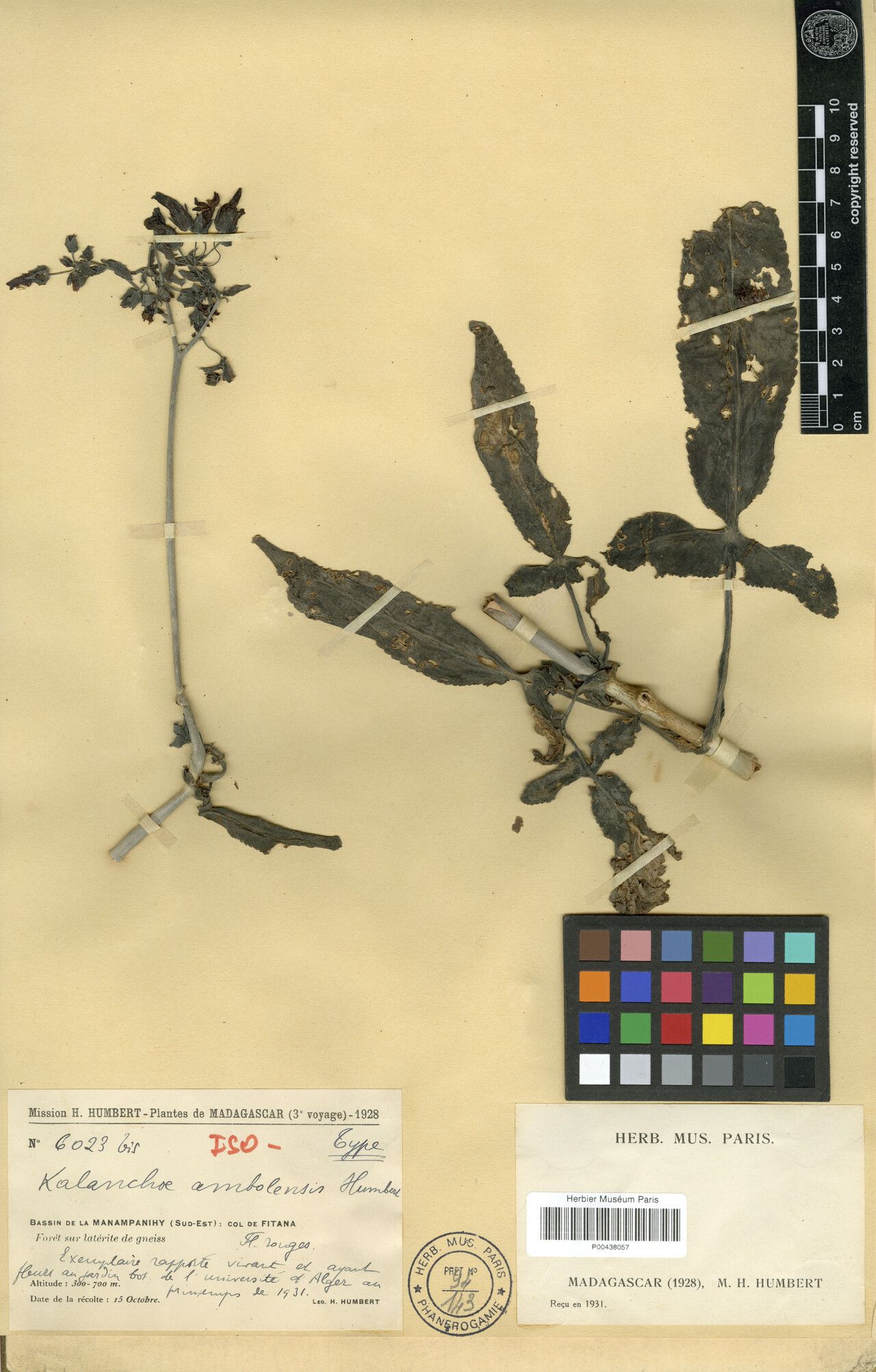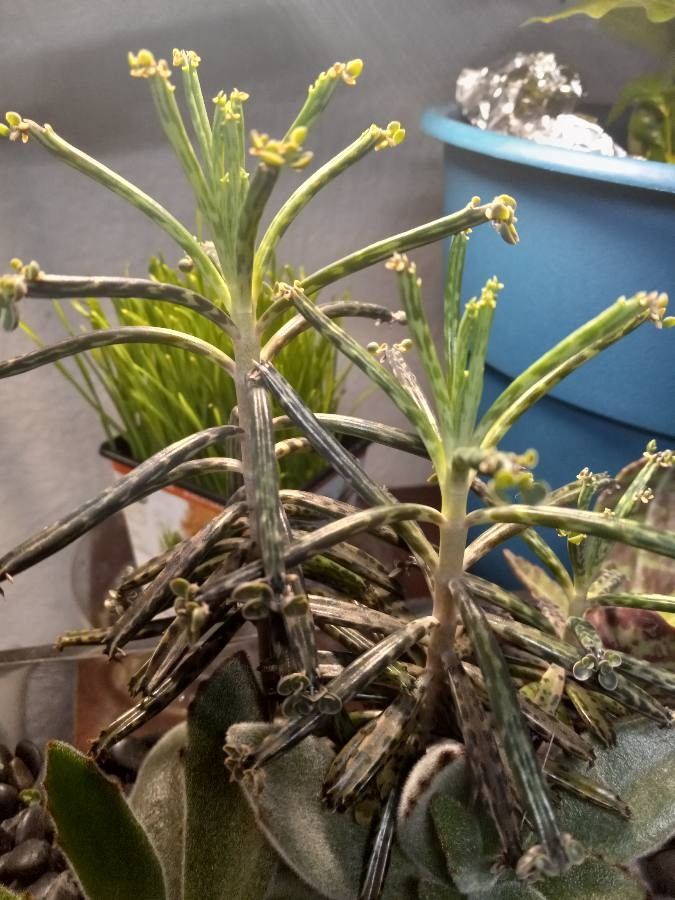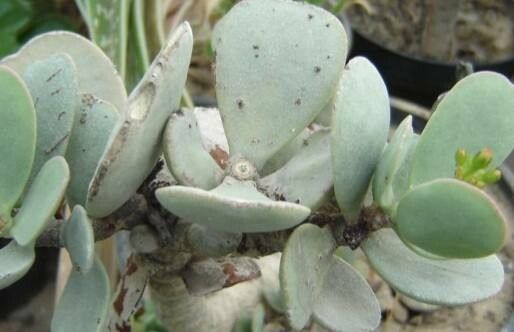
Kalanchoe farinacea is a species of plant in the family Crassulaceae. It is endemic to the Yemeni island of Socotra. Its natural habitat is subtropical or tropical dry shrubland at an altitude of 100-800m. While it is listed by International Union for Conservation of Nature(IUCN) as belonging to the order Rosales, Kalanchoes and other Crassulaceae are more usually placed in Saxifragales.
Kalanchoe farinacea shows moderate disease resistance and is relatively sensitive to humidity. It becomes prone to disease under high-humidity conditions and is at risk of root rot during dormancy. Regarding care, Kalanchoe farinacea is drought-tolerant but requires more frequent watering in the growing season. Watering should be greatly reduced or stopped entirely during the dormant period. Kalanchoe farinacea is best for growers with some experience, though it can be hard to care for, particularly while dormant. It is especially appropriate for people who can spend time tending to it during the winter months.
How to keep Kalanchoe Farinacea.
Light
Kalanchoe farinacea comes from habitats with dappled light, such as the understory of forests or rocky locations that offer natural shade. It favors partial sun but is also able to tolerate full sun.
Water
To care for Kalanchoe farinacea, it's important to adjust your watering routine based on the weather and the plant's condition. During its dormancy period, water the plant every 1 to 2 weeks. In summer, water it in the evening. Keep an eye on the condition of the leaves and the moisture level of the soil to determine when to water. Additionally, consider the type of pot, as it can affect how often the plant needs water. This approach will help ensure optimal care.
Temperature
Although Kalanchoe farinacea tolerates some heat, it mainly grows in cooler seasons and goes dormant in summer. In very hot weather, provide shade to avoid scorching from intense sunlight. Watering should be reduced or stopped during the hottest part of the year to prevent root rot. Winter and spring are the times of vigorous growth for Kalanchoe farinacea. If temperatures do not fall too low, it will continue to grow steadily.
Fertilizer
For Kalanchoe farinacea, light applications of fertilizer once or twice a year during the growing season are adequate. Do not fertilize in winter or in summer when the plant is dormant. Use reduced amounts of fertilizer for plants that have been repotted, and wait a couple of months after repotting before you start fertilizing. Fertilizing helps maintain healthy growth and promotes flowering.
Pruning
Kalanchoe farinacea, known for its fleshy leaves and compact growth, benefits greatly from proper pruning. It's best to prune this plant in early spring to remove any damaged stems and promote a bushier growth. Be careful not to over-prune, as this can stress the plant. Regular pruning helps improve air circulation, prevent disease, and enhance the overall health and appearance of your Kalanchoe farinacea.
Botanical profile.
- Plant Type
- Succulent
- Life Cycle
- Perennial
- Genus
- Kalanchoe
- Family
- Crassulaceae
- Hardiness Zone
- 9-11
- Mature Height
- 30 cm
- Mature Spread
- 20 cm to 40 cm
- Leaf Color
- Green
- Leaf Type
- Evergreen
- Flower Color
- Yellow, Red
- Flower Size
- 1.02 cm to 1.52 cm
- Bloom Time
- Winter
- Planting Time
- Spring, Autumn
- Harvest Time
- Late winter, Early spring, Mid spring