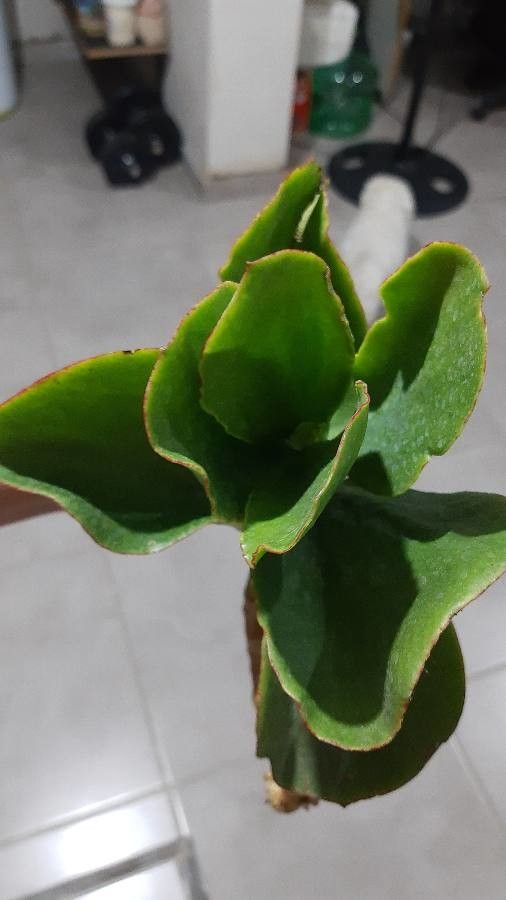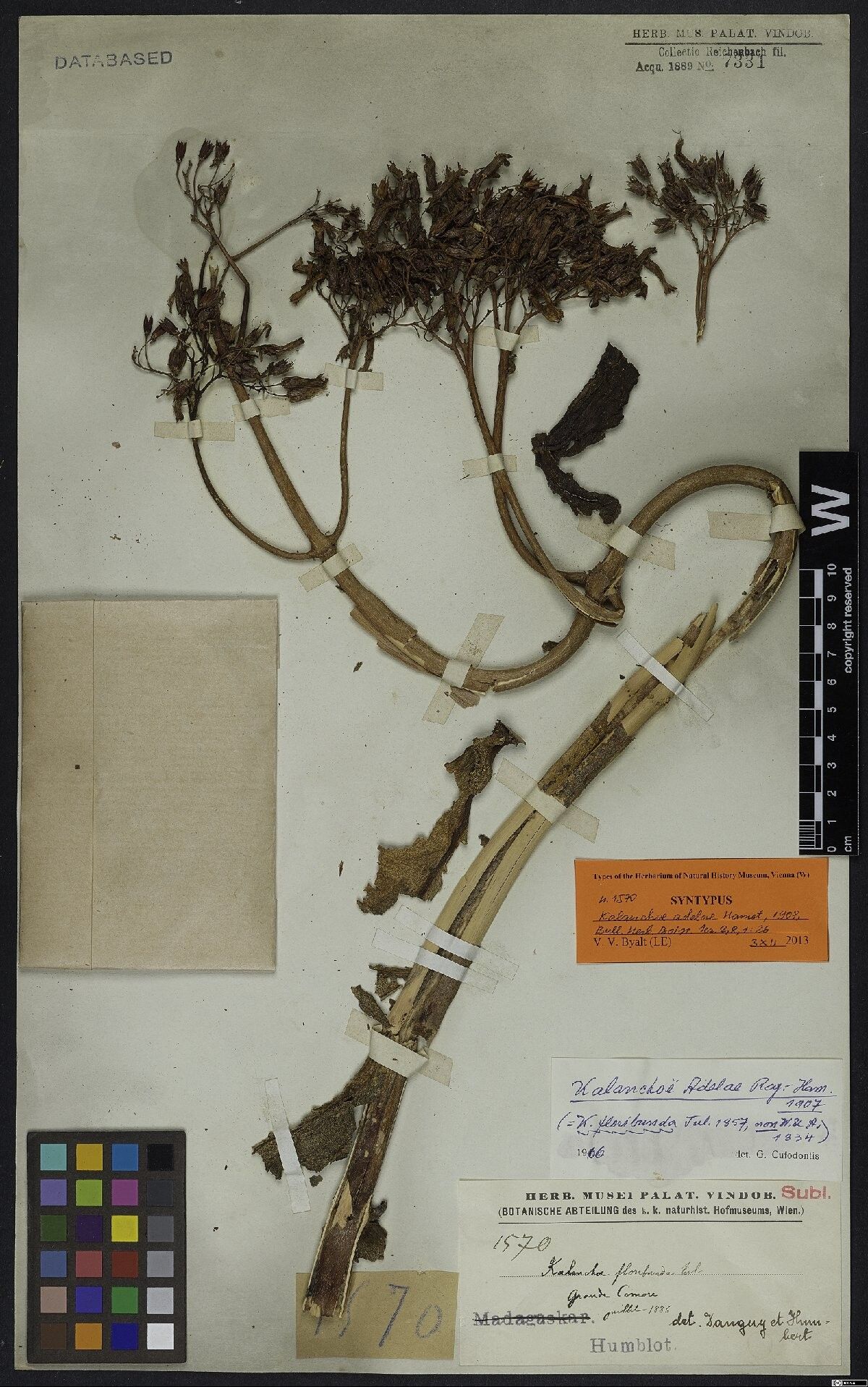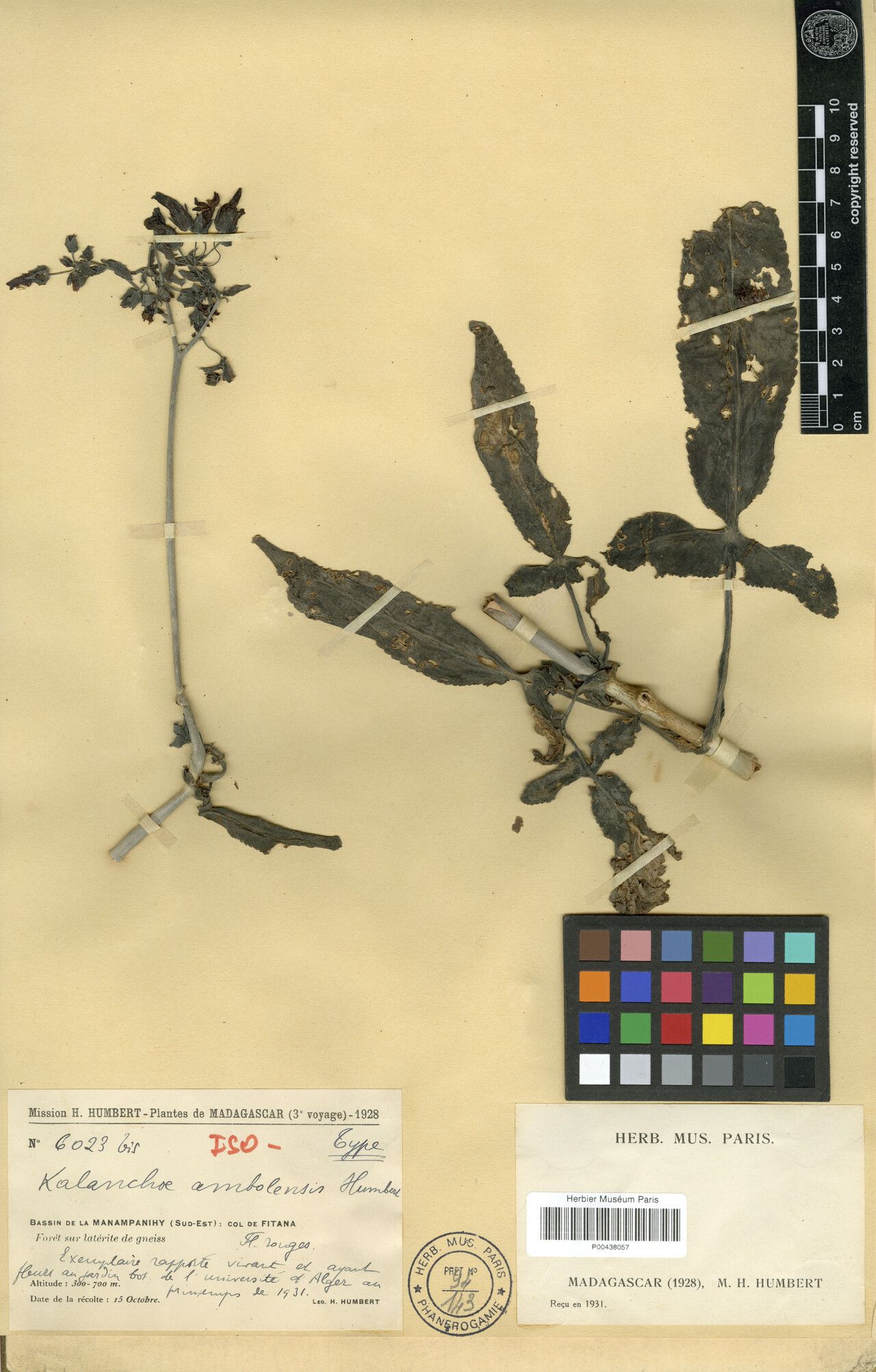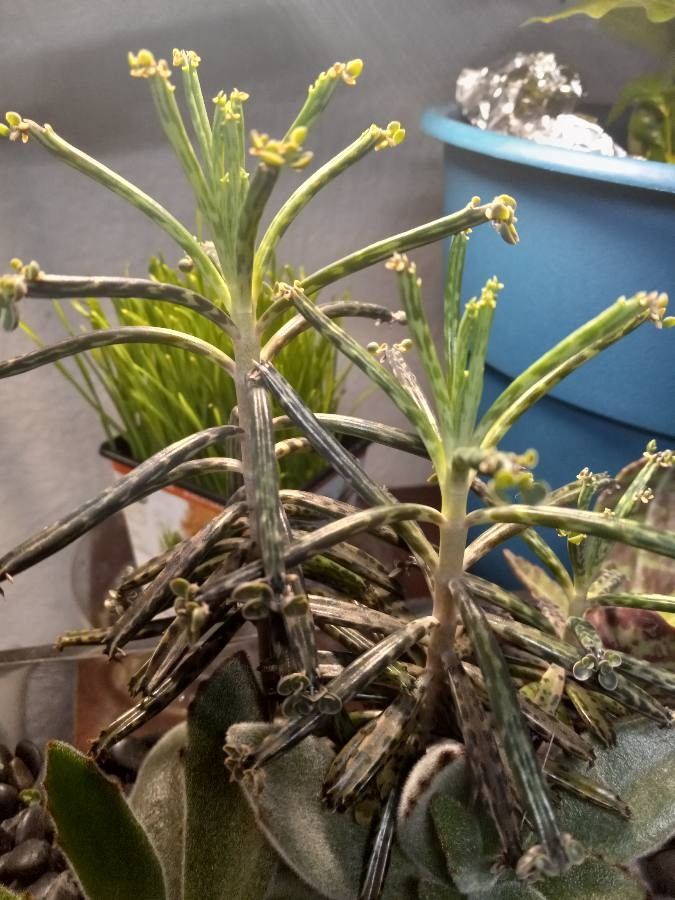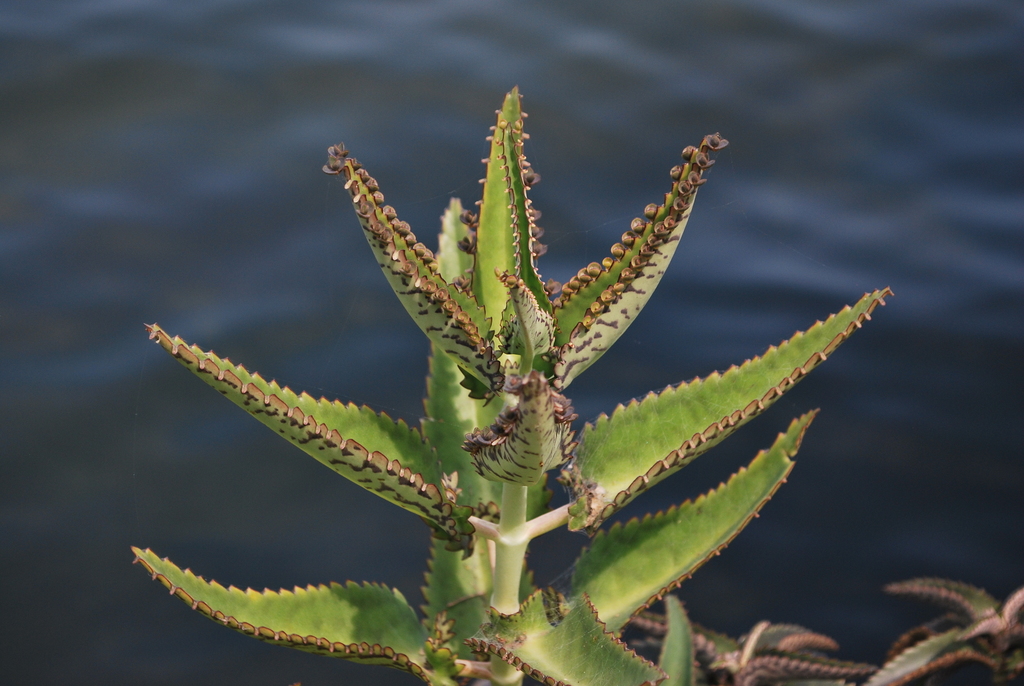
Kalanchoe daigremontiana, commonly known as the mother of thousands or alligator plant, is a succulent native to Madagascar. It is a popular houseplant due to its unique appearance and easy maintenance. The plant has thick, fleshy leaves that grow in opposite pairs along the stem, reaching up to six inches in length. The leaves are green with purple spots on the upper surface and have small plantlets that grow along their edges. These tiny plantlets can easily fall off and root wherever they land, earning the plant its nickname, "mother of thousands."
Kalanchoe daigremontiana produces small pink or white flowers on tall stalks during late winter or early spring. It prefers bright, indirect light but can tolerate some direct sunlight as well as low light conditions. The soil should be well-draining, and the plant requires occasional watering when the top inch of soil feels dry during the growing season. However, it should be kept dry during winter dormancy, when it naturally sheds some leaves before resuming growth in spring.
New growth can be easily propagated from leaf cuttings by placing them into moist soil. Within two to three weeks, roots will form, making the plantlets ready for transplanting into pots or garden beds. Succulent enthusiasts who enjoy growing these unique plants can propagate them year-round for garden or indoor display.
The "Evil Genius," also known as Bryophyllum daigremontiana, is a popular succulent. It features thick, fleshy leaves adorned with attractive adventitious buds along the edges. These buds resemble small butterflies resting on the ground, where they can take root and grow, spreading the plant to new areas. FUN FACT · FROM THE LIBRARY
Mother of Thousands: Each leaf of this succulent is lined with tiny corms, resembling a circle of teeth. When these corms fall to the ground and come into contact with the soil, they quickly take root and begin to grow. Because the plant produces hundreds of these corms, it is aptly named the "Mother of Thousands."
Mother of thousands has moderate disease resistance and is more sensitive to humidity. It becomes susceptible to disease in conditions of high humidity and is prone to root rot during dormancy. Regarding care, Mother of thousands is drought tolerant but requires increased watering during the growing season. Watering should be greatly reduced or stopped entirely during the dormant period. Mother of thousands is suitable for growers with some experience, but it can be challenging to look after, particularly during dormancy. It is especially appropriate for people who can dedicate time to its care throughout the winter months.
How to keep Kalanchoe Daigremontiana.
Light
The mother of thousands necessitates a wealth of sunlight to thrive healthily. This plant is native to a place where the sun shines generously most of the time, hence it grows more vibrantly when exposed to an ample amount of light. That said, it can also tolerate moderate light conditions when there is a lack of profuse sunlight. Too much sun can result in leaf burn, and insufficient light could potentially result in frail growth.
Water
The Mother of Thousands is a hardy plant that thrives in dry conditions due to its high drought tolerance. It needs watering only every three weeks, and it's important to let the soil dry out completely between waterings. This plant is perfect for indoor settings with low humidity. It effortlessly propagates through its leaflets, demonstrating its resilience and efficient water usage.
Humidity
This plant will thrive in moderate humidity, which is probably the level in your home. However, misting it a few times a week can be very beneficial. Make sure the room has good ventilation.
Temperature
The mother of thousands thrives best in its natural habitat with temperatures between 68 and 77℉ (20 to 25℃). Nevertheless, it can acclimate to temperatures that span from 68 to 100℉ (20 to 38℃), provided it is not subjected to intense heat or freezing conditions. In the colder periods, it is advised to maintain the plant in a heated area or utilize a heat lamp.
Fertilizer
For the Mother of thousands plant, it's enough to apply a light amount of fertilizer 1-2 times annually during the growth phase. It's advisable to refrain from fertilizing during winter and summer when the plant is in a dormant state. After repotting, minimize the use of fertilizer and hold off on it for several months. The application of fertilizer aids in promoting robust growth and supports flowering.
Pruning
To keep large succulent plants like the mother of thousands looking their best, consider pruning them in the spring and autumn. Use knives or scissors for trimming, and apply sulfur powder to the cuts to protect them. If you wish to propagate the plant, cut stems that have 5-6 leaves. Treat the cut ends, and once they have healed, plant them in slightly moist soil specifically for cuttings.
Pot & Repot
For the re-potting process of Mother of thousands, choose a pot that is slightly bigger than the current one and ensure it has ample drainage. Utilize a succulent or cactus mix that drains well and has a gritty texture. Gently extract the plant from its previous pot, clean off surplus soil, and position it at the identical depth in the new pot. Let a few days pass before watering to let any root injuries recover. Perform the repotting in spring or autumn and place it in an area with plenty of light.
Botanical profile.
- Plant Type
- Succulent, Herb
- Life Cycle
- Perennial
- Genus
- Kalanchoe
- Family
- Crassulaceae
- Hardiness Zone
- 10-12
- Mature Height
- 49 cm to 91 cm
- Mature Spread
- 30 cm
- Leaf Color
- Green, Brown, Silver
- Leaf Type
- Evergreen
- Flower Color
- Pink, Red, Silver
- Flower Size
- 2.03 cm to 3.05 cm
- Bloom Time
- Spring, Early summer, Winter
- Planting Time
- Spring, Autumn
- Harvest Time
- Late winter, Spring, Early summer
- Native Area
- Madagascar
Other names.
Reader questions.
When Should I Water My Mother Of Thousands?
Watering your Mother of Thousands is crucial for its health and growth, with proper watering preventing root rot and promoting optimal growth. The key signs that it's time to water include dry soil at a depth of 1-2 inches, wilting or curling leaves, leaves that appear soft and crinkle, and the rapid dropping of the plant's 'pups'. Additionally, a drooping appearance and loss of plant vigor suggest dehydration. It's important to balance between over-watering, which can cause root rot, and under-watering, which can lead to dehydration and leaf drop.
Why should I put fertilizer on my Mother of thousands?
Fertilizing Mother of thousands is important for adding nutrients to the growing medium. While it does store water and nutrients, applying plant food during the growing season supports healthy growth. Fertilizing can also help mature specimens produce blooms.
What are the sunlight requirements for the Mother of Thousands?
The Mother of Thousands, scientifically known as Kalanchoe daigremontiana, thrives in environments with an abundance of sunlight, benefiting greatly from being exposed to rich light exposure. It requires more than 6 hours of sunlight to be classified under full sun conditions, while about 3-6 hours of sunlight is considered partial sun. It's crucial to watch how sunlight moves through your garden to find the perfect balance of light and shade, ensuring your plants' happiness and health.
What are the ideal temperature conditions for the Mother of Thousands?
The Mother of Thousands thrives in temperatures ranging from 68 to 77°F (20 to 25°C), although it can adjust well to temperatures between 68 and 100°F (20 to 38°C) as long as it is not exposed to extreme heat or frost. To ensure optimal growth, particularly during its growing season in winter, maintain temperatures above 20°C. When outdoor temperatures fall below 5°C, it's advisable to bring the plant indoors to a well-lit area. The proper temperature management is crucial for the health and growth of the Mother of Thousands.
How Should I Water My Mother Of Thousands?
For Mother of Thousands, a balance in watering is essential to stave off dehydration without causing root rot. Bottom-watering is a favored method by placing the pot in a tray of water, allowing roots to absorb moisture from below, thus preventing over-saturation and fungal diseases. If using a watering can, opt for one with a narrow spout to direct water to the base of the plant. Employing a moisture meter can guide when the plant needs water by checking soil moisture levels accurately. Additionally, after watering, let the soil partially dry out, use filtered or distilled water to avoid mineral buildup, and always aim water at the plant’s base to prevent leaf wetting.
When should I put fertilizer on my Mother of thousands?
Mother of thousands only needs a light dose of fertilizer 1-2 times a year during the growing season. It is recommended to fertilize in the spring and autumn, avoiding winter and summer when it is dormant. Take caution with repotted plants, as you should reduce the amount of fertilizer used. Additionally, wait a few months after repotting before applying any fertilizer.
Can the Mother of Thousands survive in moderate light, and what are the implications of overexposure or insufficient light?
Yes, the Mother of Thousands can withstand moderate light levels, although it originates from an environment where sunlight is plentiful most of the time, and thus, it flourishes better with significant light exposure. Overexposure to sunlight can lead to leaf scorching, damaging the plant, while insufficient light may result in weak growth. The use of artificial lighting can be an excellent aid in conditions of natural sunlight shortage, especially indoor, to encourage healthier growth.
How should I care for my Mother of Thousands during different temperatures?
During colder months, keep your Mother of Thousands in a warm location or use a heat lamp to maintain optimal growth temperatures. If you need to overwinter the plant outdoors, place it in a sheltered area that receives ample sunlight. Consider setting up a temporary greenhouse to protect the plant if the outdoor temperature is consistently low. Remember to keep the plant adequately moist. Increase watering during higher temperatures and reduce it as temperatures approach 5°C for the health and well-being of your plant.
How Much Water Does Mother Of Thousands Really Need?
The water needs of Mother of Thousands depend on several factors including pot size, root depth, and the overall size of the plant, mimicking its native arid conditions. It's crucial to moisten the soil thoroughly allowing a small amount to drain through, with variations based on the container's depth and plant size. Over-watering leads to waterlogged soil and root rot, signified by yellow or brown leaves, while under-watered plants show wrinkled leaves. Ensure the soil dries out before the next watering, keeping in mind that deeper pots require thorough soaking, but avoid standing water.
When is it best to not use fertilizer on my Mother of thousands plant?
Mother of thousands, like many other plants, has a dormancy period. This is the time when you should avoid applying fertilizer. During the summer and winter, the plant stops growing, making it a good idea to halt fertilization. Additionally, it is advisable to refrain from fertilizing for the first few months after repotting in the spring.
How can artificial lighting help indoor plants like the Mother of Thousands?
Artificial lighting provides a vital solution for indoor plants requiring adequate lighting, especially when natural sunlight is not sufficient. LED lights are a popular choice because they can be customized to offer specific wavelengths needed by plants. For optimal growth under artificial light, full sun plants need 30-50W/sq ft, partial sun plants require 20-30W/sq ft, and full shade plants need 10-20W/sq ft. The lights should be placed 12-36 inches above the plant, mimicking natural sunlight for about 8-12 hours per day.
How does the Mother of Thousands react to low temperatures, and what should I do?
The Mother of Thousands is not tolerant of extremely cold temperatures and thrives best between 20°C and 38°C. Winter care is crucial as the plant should be kept above 5°C. Exposure to temperatures below 1°C can cause water-soaked necrosis, wilting, and potentially lead to leaf fall due to frost damage. To remedy frostbite, trim off the affected areas and move the plant indoors to a warm environment near a south-facing window for sunlight. Consider setting up a makeshift greenhouse for cold protection, ensuring good ventilation to prevent plant decay.