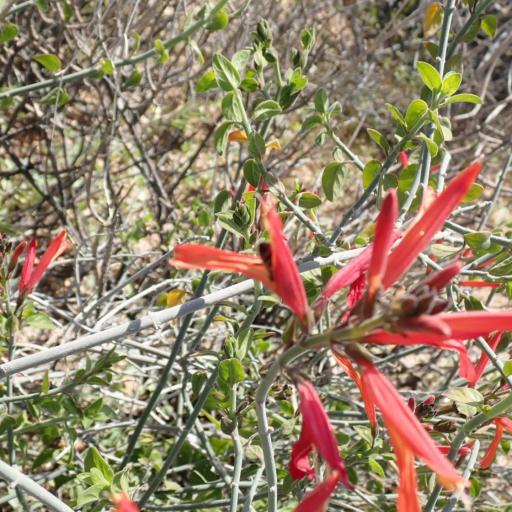
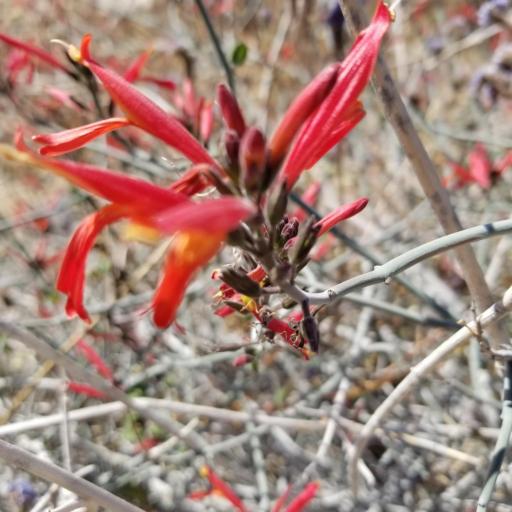
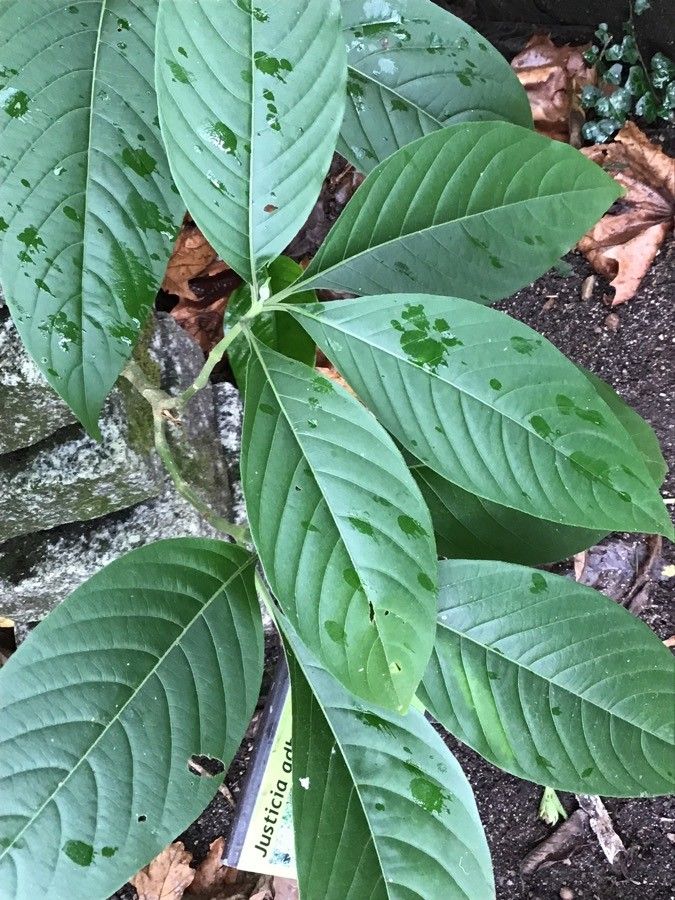
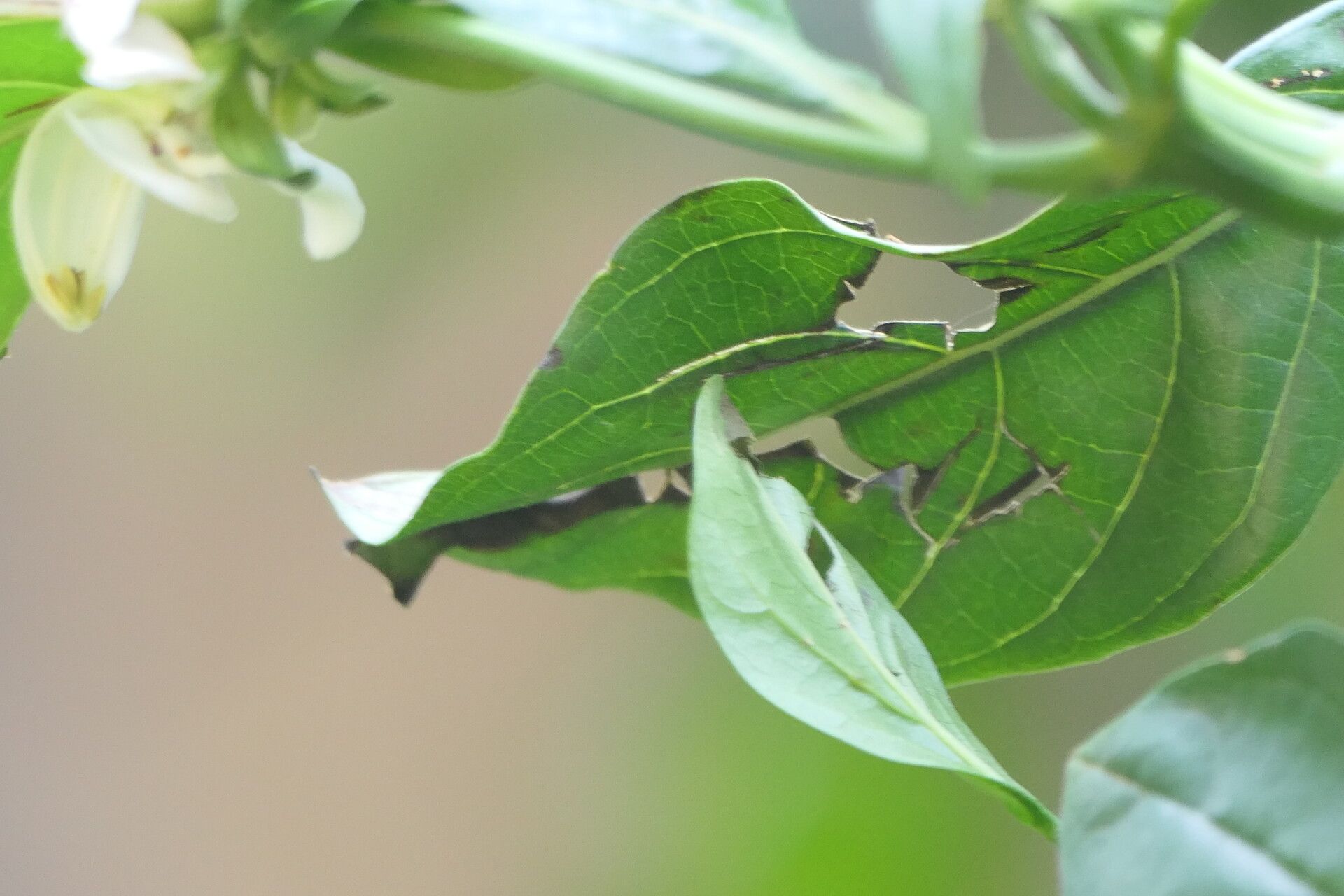
Justicia californica is a species of flowering shrub native to the deserts of southern California, Arizona, and northern Mexico. Its common names include chuparosa (or chiparosa, both colloquial Spanish terms for "hummingbird"), hummingbird bush, and beloperone. It is one of the northernmost distributed species of the mostly tropical genus Justicia. This is a low bush which grows in dry, hot regions in the sand or rocky terrain of the desert floor. For a short time it bears succulent leaves. It loses its leaves and then produces plentiful tubular flowers, usually in shades of bright to deep red, or sometimes yellow. Each long flower has a wide lower lip that falls open to reveal the inside of the blossom. Hummingbirds visit the bush to feed on the nectar. Other birds eat the sugar-rich flower centers. This plant is sometimes cultivated as a landscape ornamental in desert regions for its bright flowers and to attract birds.
Hummingbird bush is disease-resistant and is generally not prone to illnesses. Regarding care, this plant is fairly low-maintenance. When grown outdoors it needs only minimal watering, and larger specimens typically do not require pruning. Smaller plants, however, should be pruned after they have finished blooming. The hummingbird bush is suitable for anyone with an outdoor area, such as a garden or deck, and does not demand extensive care experience.
How to keep Justicia Californica.
Light
Hummingbird bush grows best with abundant daylight but can tolerate a moderate amount. Native to areas that receive plentiful daily light, this plant can maintain health and continue growing in slightly less illuminated conditions. Both excessive and insufficient light can negatively affect its health or growth.
Water
The hummingbird bush flourishes in dry regions due to its high drought tolerance and ability to survive with minimal moisture. To keep it healthy, water it once a week, which mimics the sparse rainfall of its natural environment. As a plant suited for xeric landscapes, it needs well-draining soil to replicate the dry, desert-like conditions it thrives in.
Temperature
Hummingbird bush originates from regions where temperatures typically range between 59 and 95 °F (15 and 35 ℃). It performs best within that temperature range. In colder months, consider giving extra warmth and indoor care to maintain suitable conditions.
Fertilizer
Timing is essential when fertilizing a Hummingbird bush. Begin fertilizing in early spring and continue once a month until early summer. Fertilizer encourages beautiful blooms and supplies energy during both dormant and active growth phases.
Pruning
The hummingbird bush is a hardy shrub that attracts hummingbirds with its bright, colorful flowers. To encourage growth, prune in early spring by removing dead branches and thinning out overcrowded areas. This maintenance not only promotes healthier blooms but also helps maintain an attractive and functional garden presence.
Pot & Repot
Repot your hummingbird bush every 2-3 years, preferably in early spring. Use a larger container to allow for root growth. After repotting, water the plant moderately and ensure it has good drainage. Place it in a location with bright, indirect light. Using a well-draining soil mix will help keep the plant healthy and encourage vibrant blooms.
Botanical profile.
- Plant Type
- Shrub
- Life Cycle
- Perennial
- Genus
- Justicia
- Family
- Acanthaceae
- Hardiness Zone
- 8-10
- Mature Height
- 0.91 m to 1.52 m
- Mature Spread
- 0.3 m to 1.52 m
- Leaf Color
- Green, Blue, Bronze
- Leaf Type
- Deciduous
- Flower Color
- Red
- Flower Size
- 2.54 cm to 5.08 cm
- Bloom Time
- Late winter, Spring, Early summer, Mid summer
- Planting Time
- Spring, Summer
- Harvest Time
- Late spring, Summer, Early fall
- Native Area
- Mexico
Other names.