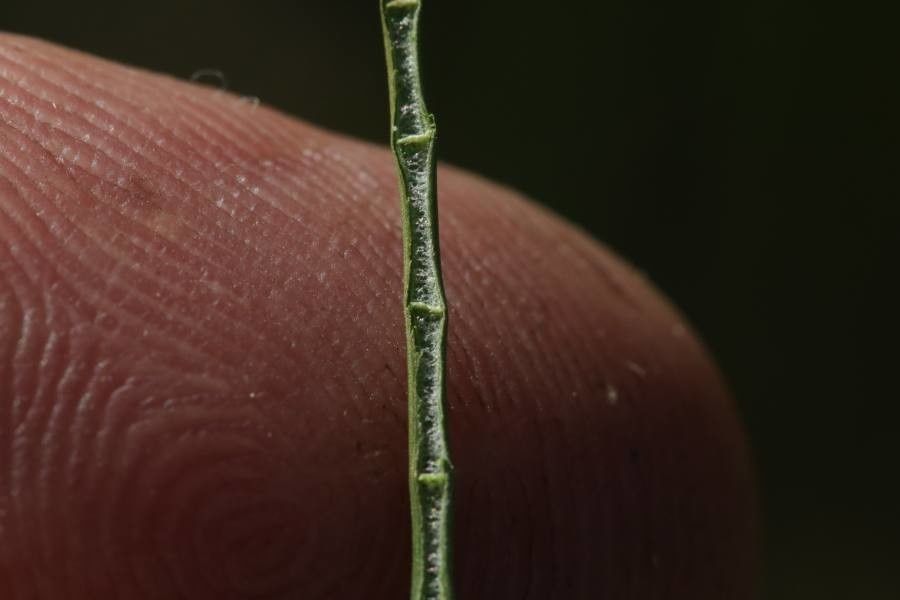
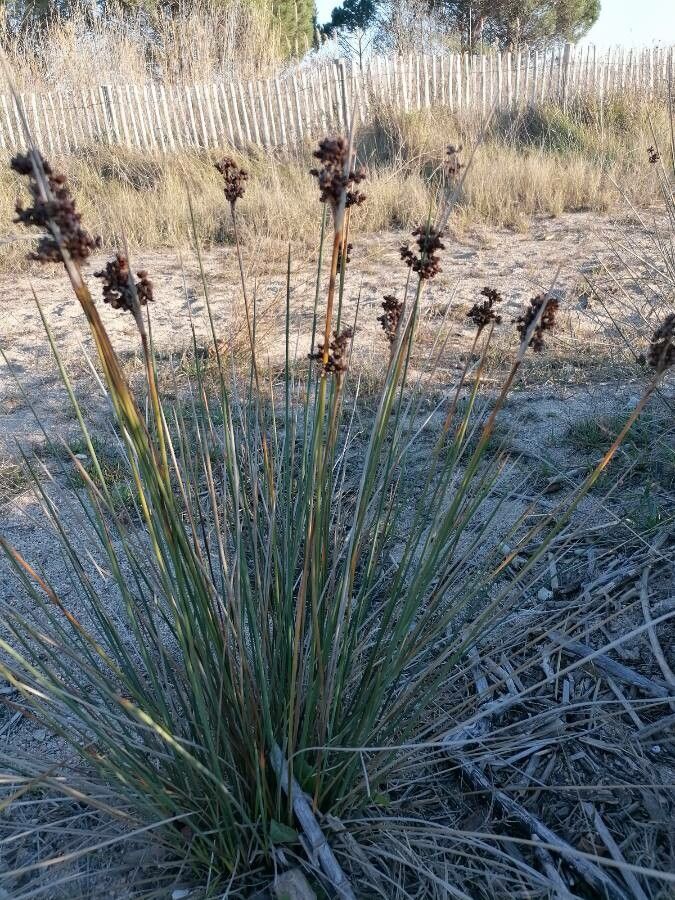
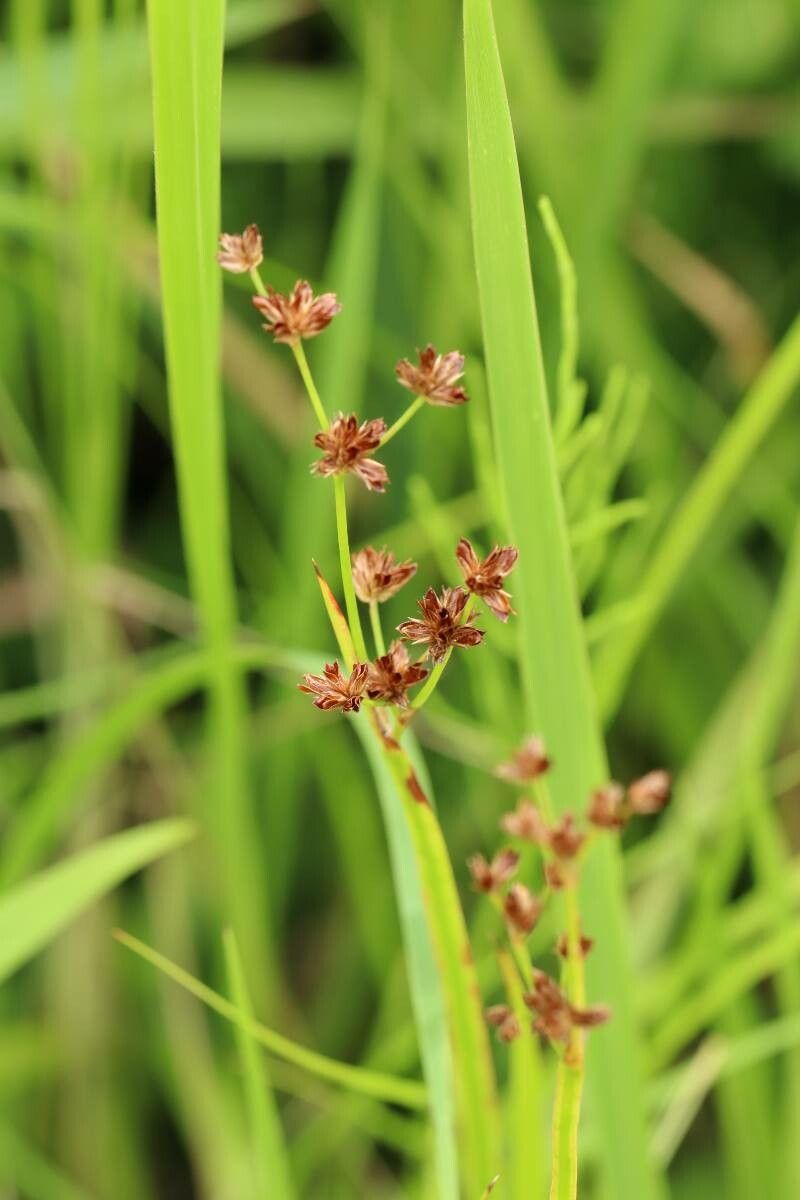
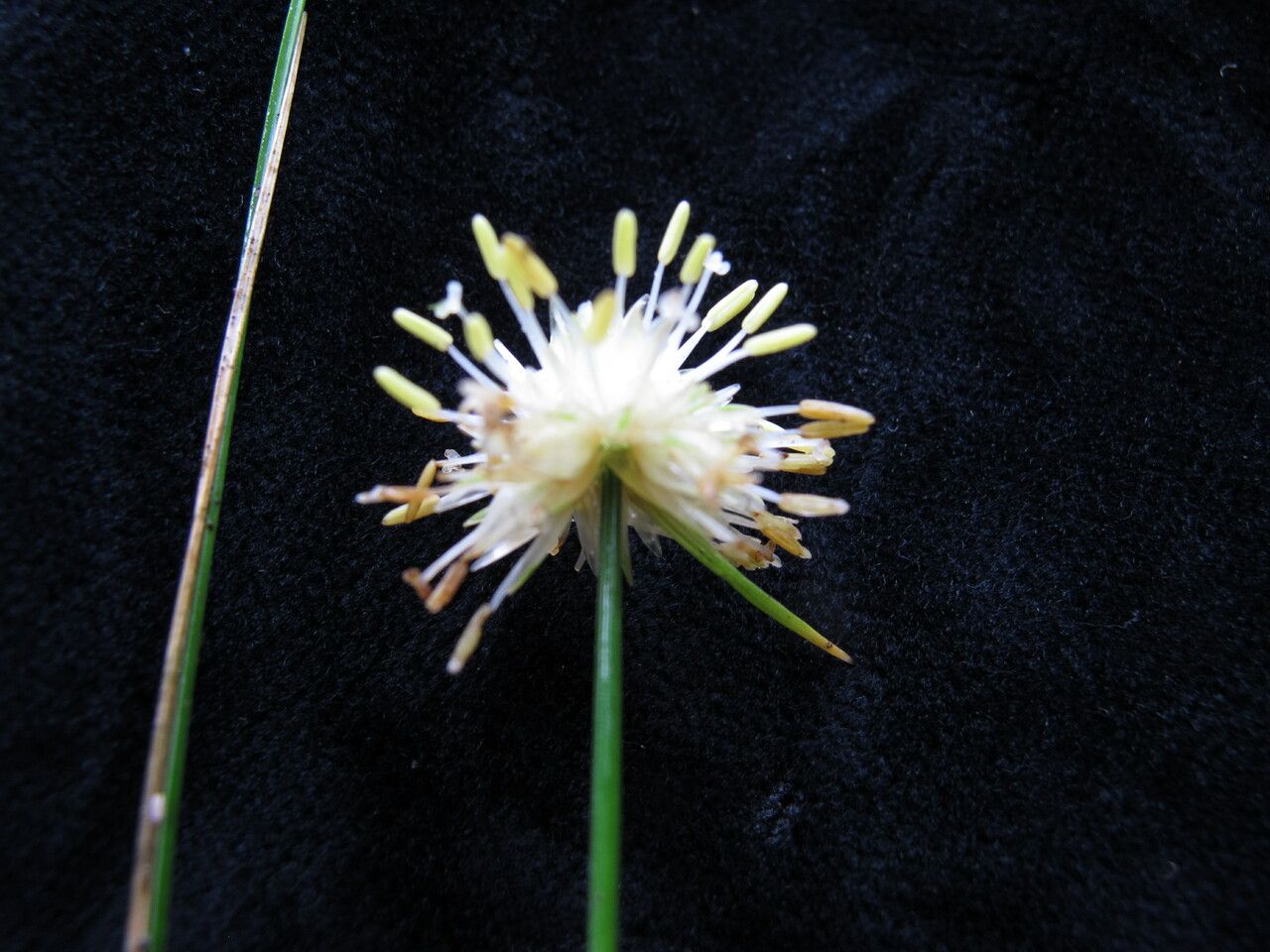
Juncus parryi is a species of rush known by the common name Parry's rush. It is native to western North America from British Columbia and Alberta to California to Colorado, where it grows in moist and dry spots in mountain habitat, including rocky talus and other areas in the subalpine and alpine climate. This is a rhizomatous perennial herb producing a dense clump of stems up to about 30 centimeters tall. There are short, thready leaves around the stem bases. The inflorescence is a cluster of flowers accompanied by a long, cylindrical bract which appears like an extension of the stem. The flower is made up of a few pointed, brown segments with membranous edges.
Parry's rush has strong resistance to disease and is generally not prone to illnesses. Nevertheless, it can be affected by pests and diseases present in its environment. These problems are typically mild. Regarding care, the plant requires a moderate amount of maintenance. It should be pruned regularly to keep a tidy appearance and support healthy growth. Applying fertilizer can also encourage flowering. Parry's rush is appropriate for anyone with outdoor space, such as a garden or patio, and does not demand extensive gardening experience. It may need more attention if grown indoors.
How to keep Juncus Parryi.
Light
Parry's rush is a perennial herb that flourishes in open environments and loves the sun. It typically grows in fields and prairies. While it favors full sun exposure, it can also adapt to conditions of partial sunlight.
Water
Parry's rush thrives in moist environments and requires regular watering, ideally once a week, to maintain its lush appearance. It is well-adapted to changing water levels and does particularly well in rain gardens. Its resilience shines during the growing season, as it can withstand temporary flooding.
Fertilizer
Parry's rush needs extra nutrients to encourage healthy new growth. In spring, applying compost around the plant's base will effectively supply the required nourishment. Fertilizing helps maintain vigorous growth and boosts the plant's resistance to diseases and pests.
Pruning
Parry's rush is a perennial marsh plant characterized by its cylindrical stems and small greenish-brown flowers. To keep the plant healthy and promote growth, it's important to prune it in early spring. This will remove any dead stems, making room for new growth. Regular pruning helps the plant use its energy more efficiently, encourages dense foliage, and reduces the risk of diseases and pests.
Botanical profile.
- Plant Type
- Herb
- Life Cycle
- Perennial
- Genus
- Juncus
- Family
- Juncaceae
- Hardiness Zone
- 4-8
- Mature Height
- 10 cm to 30 cm
- Mature Spread
- 10 cm to 20 cm
- Leaf Color
- Green
- Leaf Type
- Evergreen
- Flower Color
- Tan, Green
- Flower Size
- 0.25 cm to 0.51 cm
- Bloom Time
- Early summer, Mid summer
- Planting Time
- Spring, Summer, Autumn
- Harvest Time
- Late summer, Early fall
Other names.
Reader questions.
What are the sunlight requirements for Parry's rush?
Parry's rush plants are native to environments such as forest understories or rocky areas that naturally provide shade. They thrive best in full shade conditions, which means they require less than 3 hours of direct sunlight daily. However, they can also tolerate partial sun environments. It's essential to observe the sunlight patterns in your garden throughout the day to choose spots that offer the right balance of light and shade for your plants, ensuring they grow happy and healthy.
How can artificial lighting benefit indoor Parry's rush plants?
Indoor Parry's rush plants need adequate lighting for optimal growth, especially in locations where natural sunlight is insufficient, such as in winter or less sunny spaces. Artificial lighting can provide a vital solution by promoting faster, healthier growth. LED lights are advisable as they can be customized to deliver specific wavelengths of light that plants need. Full sun plants generally require 30-50W/sq ft of artificial light, partial sun plants need 20-30W/sq ft, and full shade plants need 10-20W/sq ft. The light source should be placed 12-36 inches above the plant to mimic natural sunlight conditions, and most plants benefit from 8-12 hours of light per day.
What symptoms indicate insufficient light in Parry's rush?
When Parry's rush is grown indoors with insufficient light, it may exhibit various subtle symptoms signaling light deficiency. These include new leaves growing smaller than previous ones, leggy or sparse growth due to longer spaces between leaves or stems, faster leaf drop as the plant conserves resources, stagnant growth as the plant enters survival mode, lighter-colored new leaves suggesting a lack of chlorophyll, and conditions such as chlorosis, sunscald, leaf curling, wilting, and leaf scorching, which are adverse effects due to inappropriate light exposure.
How can you address insufficient light for indoor and outdoor Parry's rush?
To address insufficient light for Parry's rush, for indoor settings, consider moving your plants to spots where they can receive ample filtered light, including brief moments of direct morning sunlight if possible, preferably 1-2 meters away from a window. If the plant is large or not easily movable, supplement with artificial light by keeping a desk or ceiling lamp on for at least 8 hours daily, or use professional plant grow lights. For outdoor plants, gradually adapt them to sunnier locations to prevent sunburn by moving them to a slightly sunnier spot each week. If the sunlight is obstructed, prune or remove the obstructions gradually, or consider transplanting smaller plants during their dormant period to a location with better sunlight and drainage. Note that parts of the plant affected by insufficient sunlight may not recover, but new growth should be healthy once the light conditions improve.