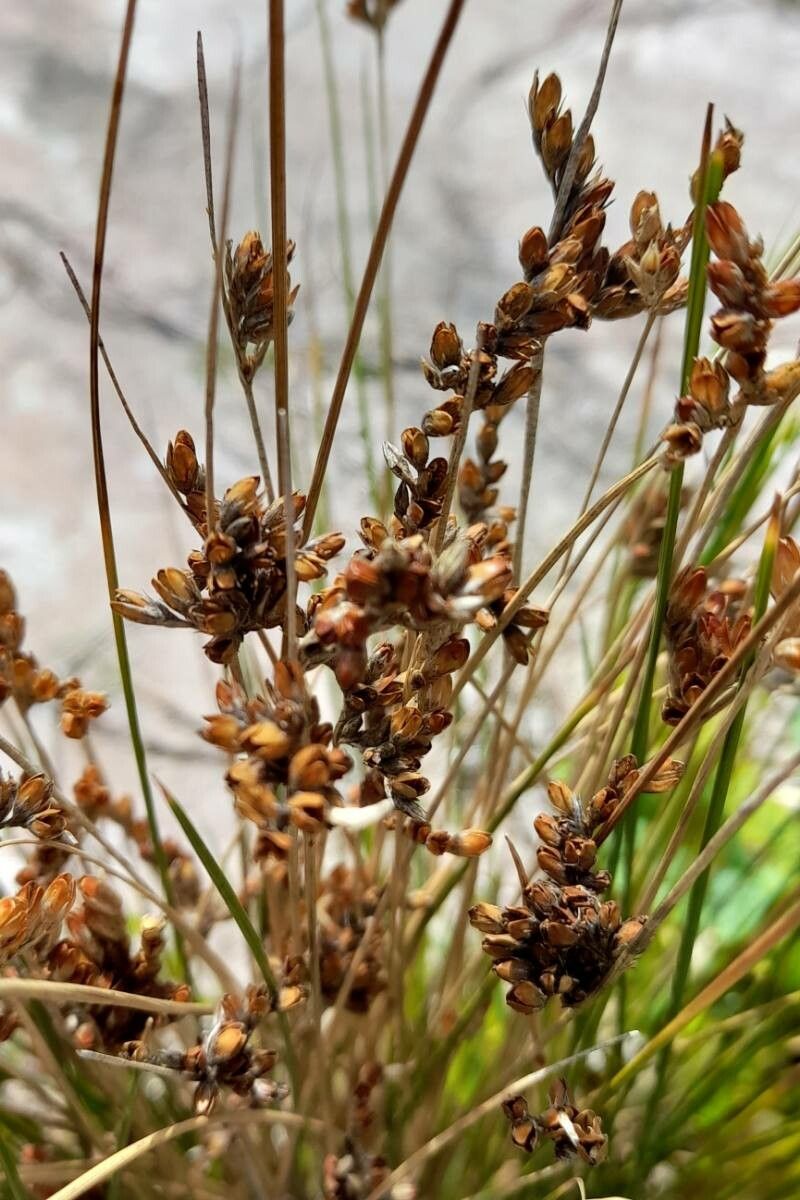
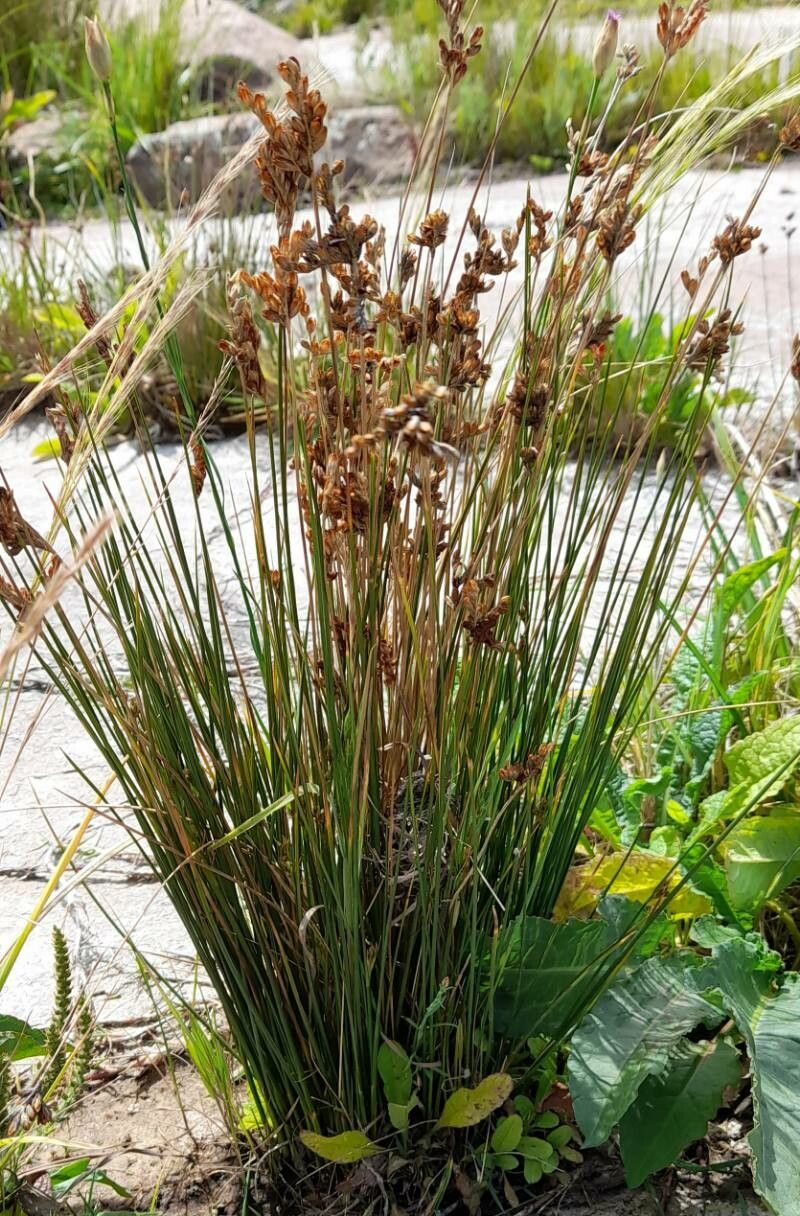
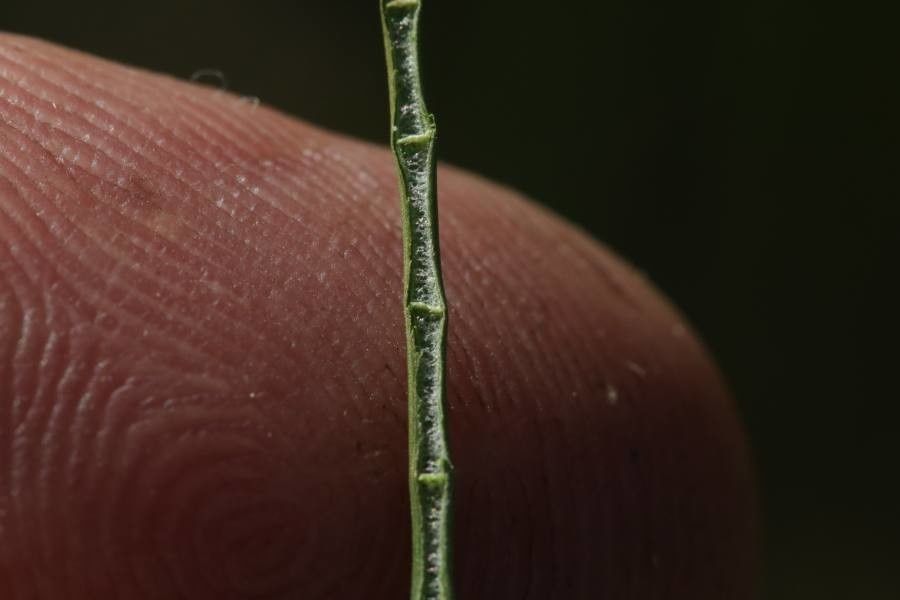
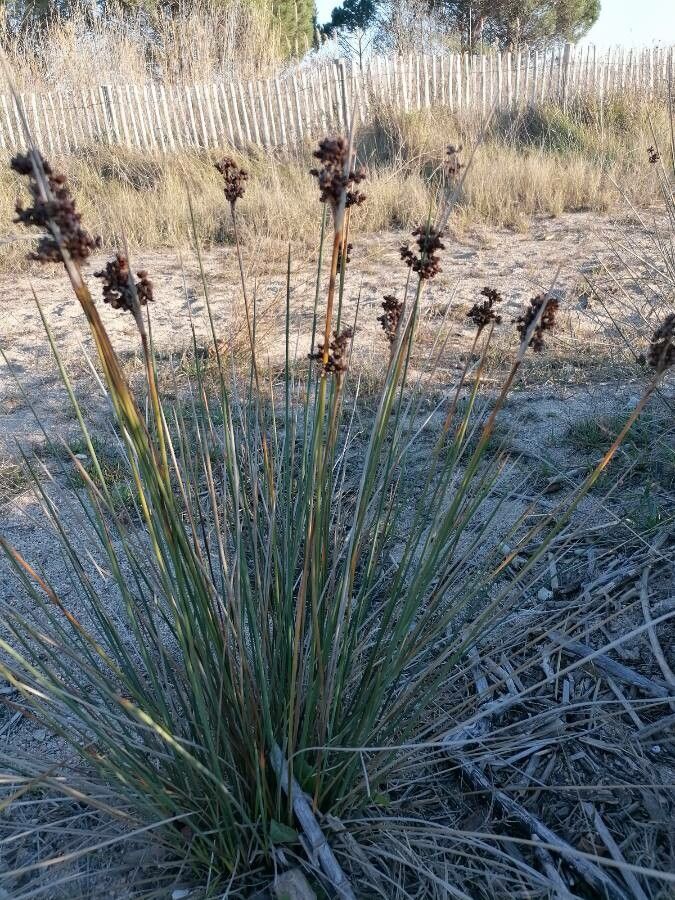
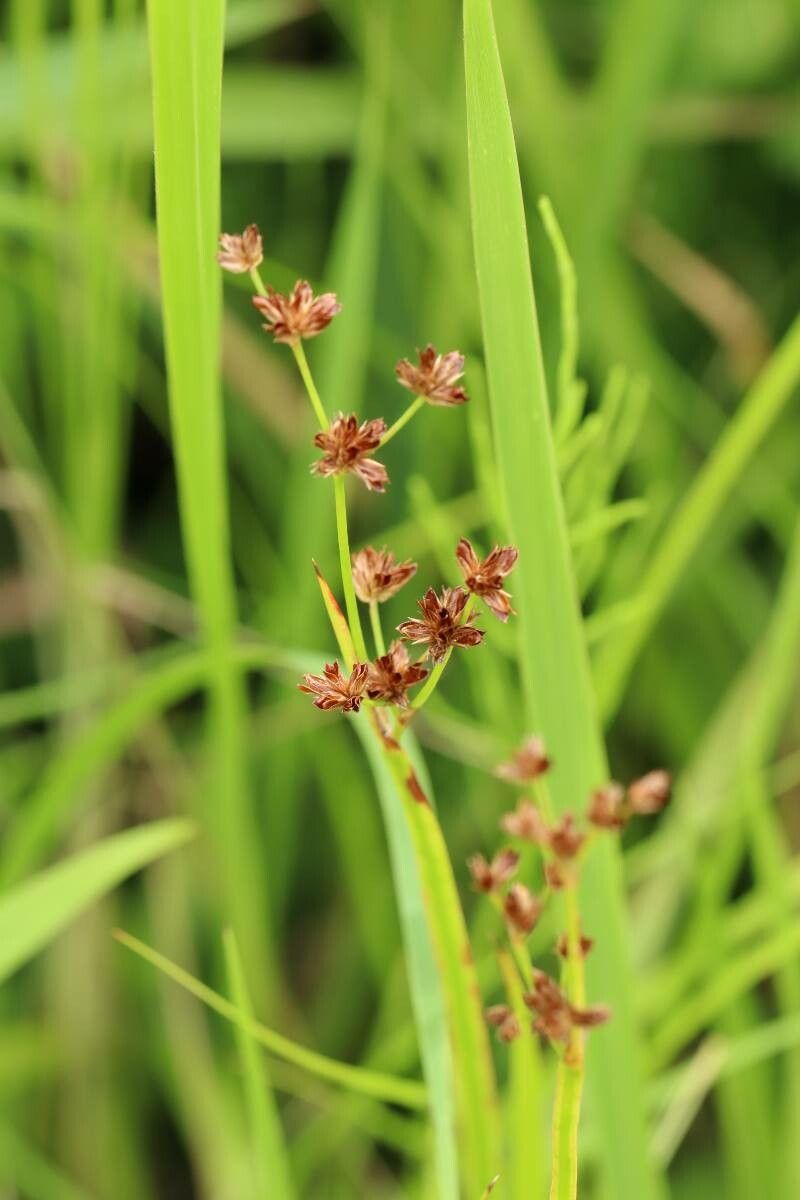
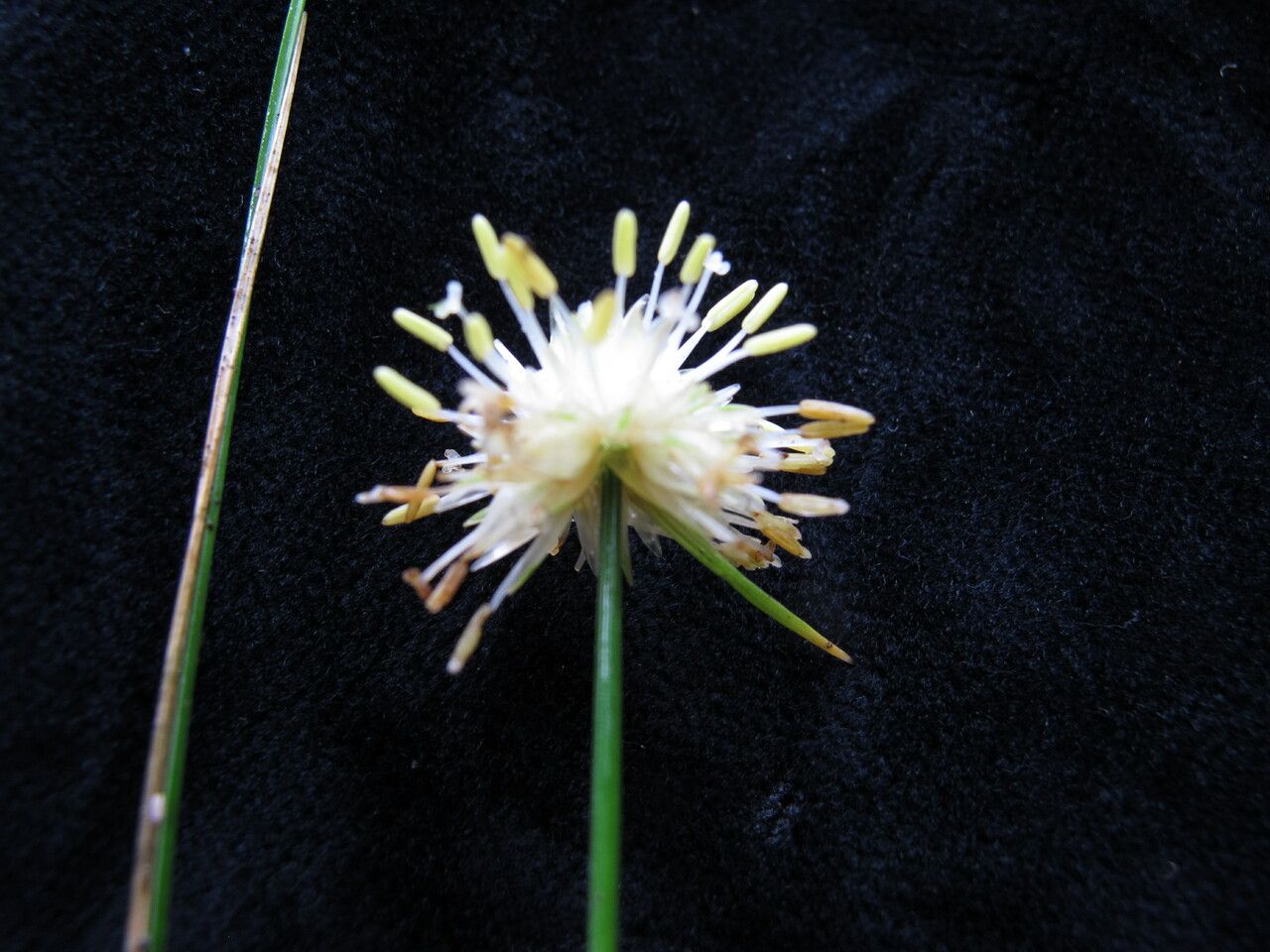
Juncus occidentalis is a species of rush known by the common name western rush. It is native to the western United States, where it grows in wet areas in many types of habitat. This is a bunching perennial herb with thin, stiff stems reaching maximum heights between 30 and 60 centimeters. The wispy leaves grow from the base of the stem and may approach half the stem's length. The inflorescence holds loose bundles of individual flowers and there is usually one long, leaflike bract extending far past the flowers. Each flower has green-striped brownish to reddish tepals each several millimeters long, and six stamens with small anthers. The fruit is a brown capsule which grows encased within the tepals.
Western rush shows strong resistance to disease and is usually not susceptible to illnesses. In terms of care, the plant is fairly low-maintenance. When grown outdoors it needs only minimal watering, and larger specimens typically do not require pruning. Smaller plants, however, should be pruned after they finish blooming. Western rush is suitable for anyone with outdoor space, such as a garden or deck, and does not demand a lot of gardening experience.
How to keep Juncus Occidentalis.
Fertilizer
Western rush needs extra nutrients to encourage healthy new growth. In spring, adding compost around the plant's base will effectively supply the nutrition it requires. Fertilizing supports vigorous growth and improves the plant's ability to withstand diseases and pests.
Pruning
To promote healthy growth in western rush, prune it in early spring by cutting dead or damaged stems all the way back to the base. Be careful not to over-prune; preserving its natural form is important. Regularly removing old foliage helps improve air circulation, reduces the risk of disease, and encourages strong, vibrant growth.
Botanical profile.
Other names.
Reader questions.
What are the sunlight requirements for Western rush (Juncus occidentalis)?
The Western rush, or Juncus occidentalis, thrives in conditions of full shade, which means it requires less than 3 hours of sunlight daily. It's important to observe the movement of sunlight through your garden carefully, to select spots that offer an ideal balance of light and shade. This careful placement ensures the plants' well-being by aligning with their natural growing conditions.