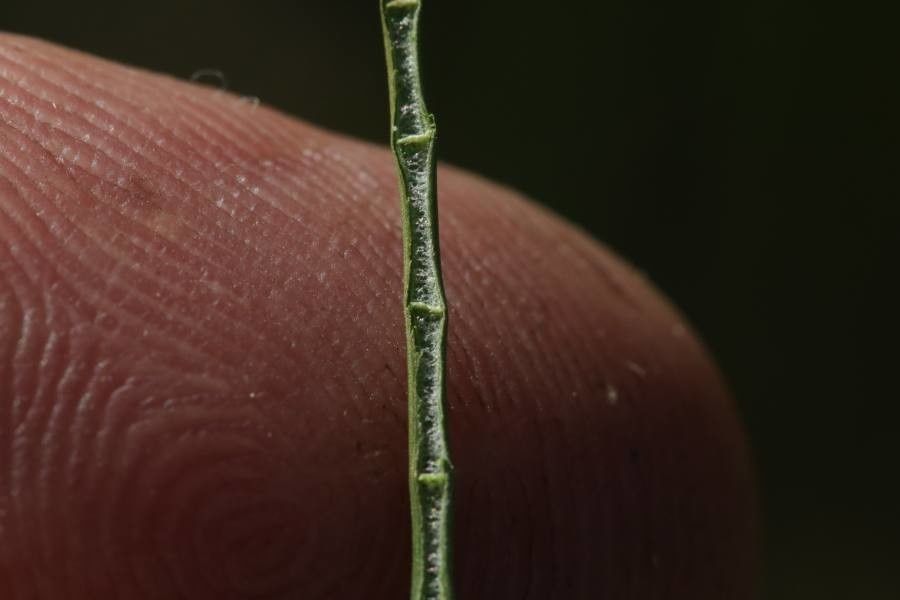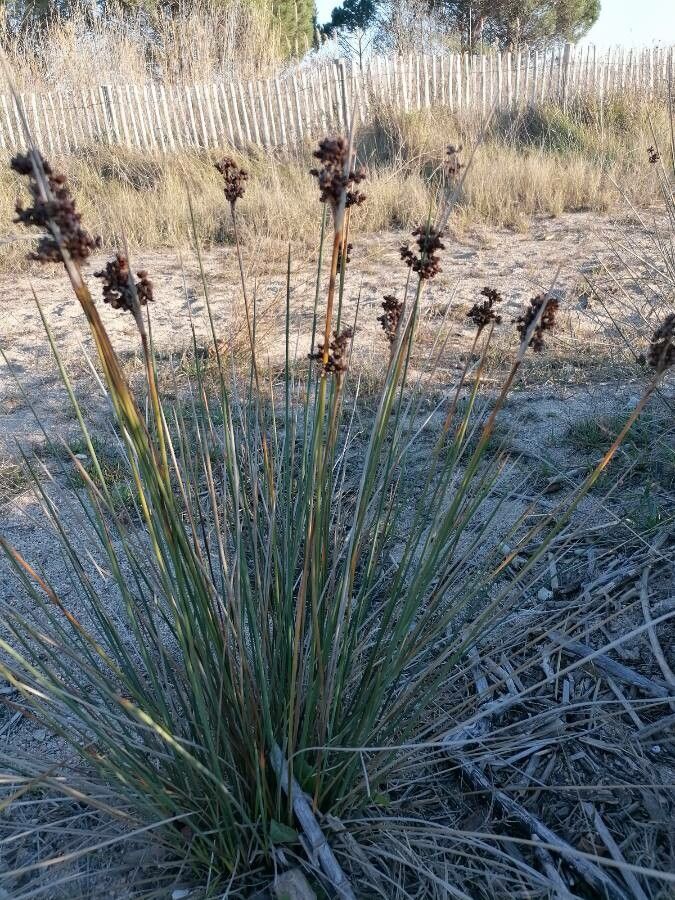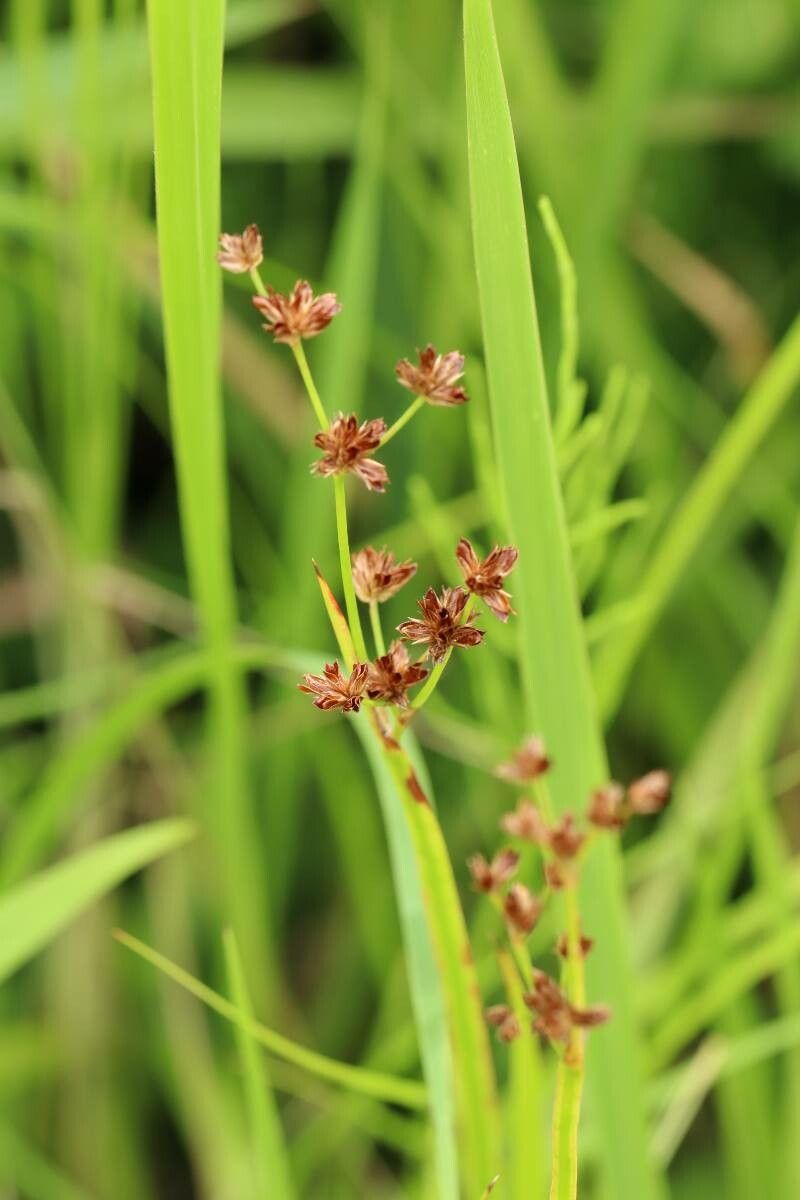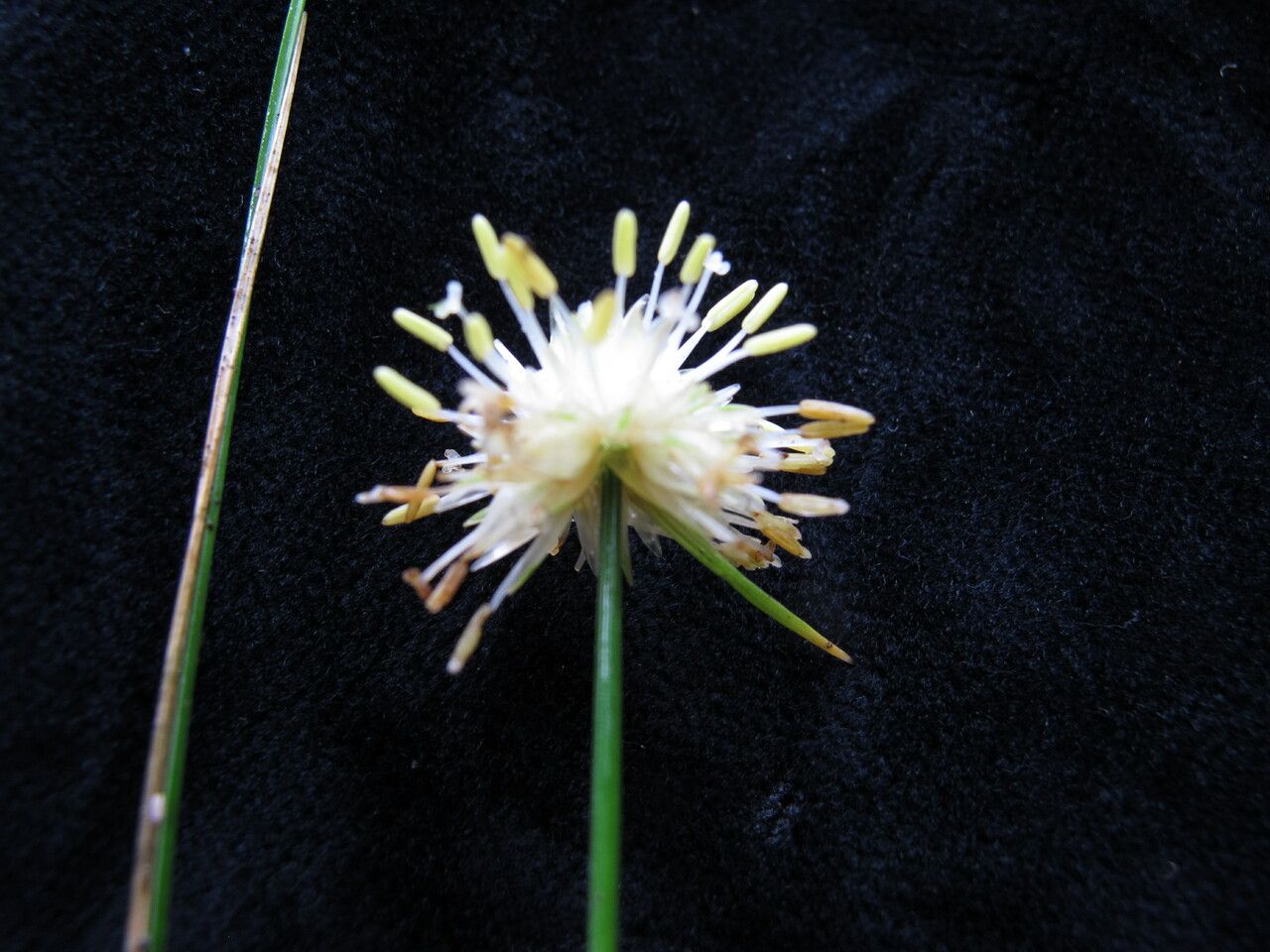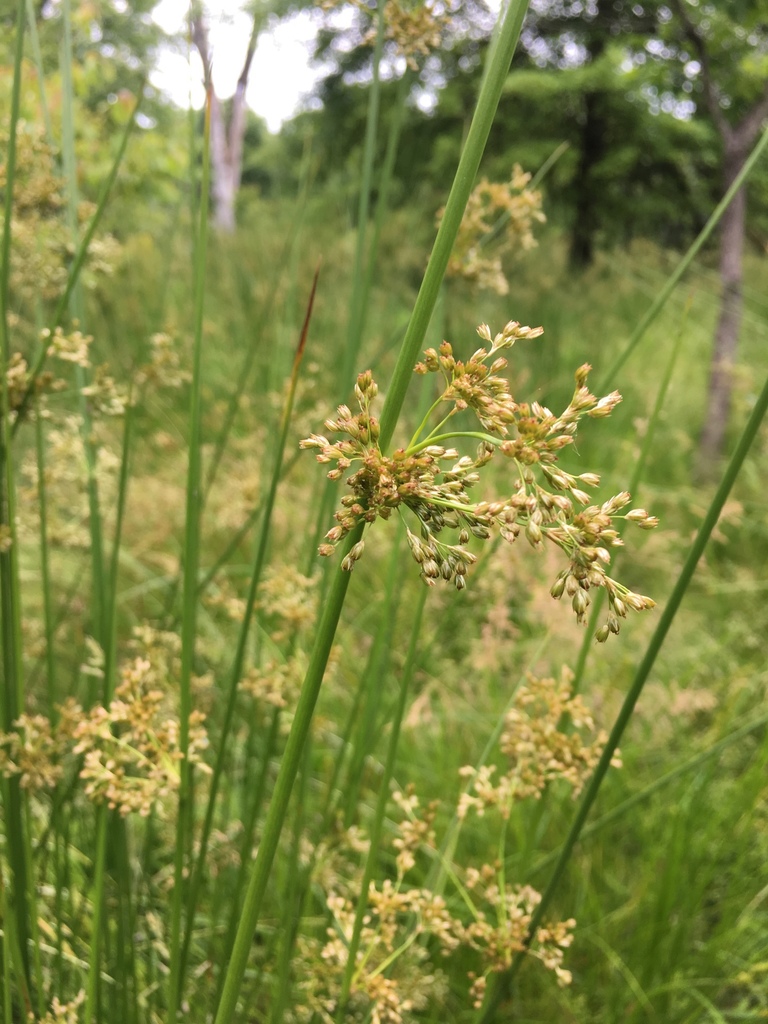
Juncus effusus, commonly known as soft rush, is a perennial plant belonging to the Juncaceae family. It is native to Europe, Asia, and North America and is typically found in wetlands such as marshes, swamps, and along riverbanks. The plant has a clumping growth habit with slender, cylindrical stems that can reach up to 1 meter in height. These green stems have a soft texture. The plant's leaves are reduced to small sheaths at the base of each stem. Juncus effusus produces small, brownish flowers that bloom from June through August. The flowers grow in branched inflorescences at the top of each stem. The plant serves several purposes, including erosion control along riverbanks, water filtration in wetlands, and as an ornamental grass for landscaping. In traditional medicine, Juncus effusus has been used for its diuretic properties that help increase urine production, thereby aiding kidney function. Overall, Juncus effusus is an important species due to its ecological significance and medicinal properties, making it a valuable part of our natural world today.
Common rush is fairly resistant to disease and typically does not suffer from illnesses. That said, it can be vulnerable to pests and diseases present in its immediate environment. These problems are usually mild. For care, the plant needs moderate maintenance. It should be trimmed regularly to preserve a neat appearance and encourage healthy growth. Feeding the plant can also support flowering. Common rush is suitable for people with outdoor areas like a garden or patio and does not demand extensive care experience. It may need more attention when kept indoors.
How to keep Juncus Effusus.
Light
Common rush performs best when given unobstructed, all-day sunlight, but it can also tolerate spots with less light. It is adapted to its native habitats, which get substantial sun each day. Excessive or insufficient sunlight may cause growth problems, although this is seldom an issue because the plant tolerates a broad range of light conditions.
Water
The common rush, which originates from wetlands, thrives in moist environments and can tolerate saturated soils. To support its lush growth, it requires regular watering, ideally twice a week. Rainwater is especially beneficial, as it complements the plant's natural watering cycle and enhances its vigorous perennial growth in temperate regions.
Humidity
This plant will thrive in moderate humidity, which is probably the level in your home. However, misting it a few times a week can be very beneficial. Make sure the room has good ventilation.
Temperature
Common rush prefers temperatures of 41 to 95 ℉ (5 to 35 ℃) and is native to temperate regions. To cope with shifting temperatures, it is recommended to water more frequently in summer and less frequently in winter.
Fertilizer
One spring application of fertilizer is generally enough for Common rush, though multiple feedings can boost growth. Fertilize about once every month to a month and a half. Feeding improves the leaves' appearance and function, helping maintain even color and a healthy texture. It also encourages root development and nutrient uptake for sustained plant health.
Pruning
The common rush is a perennial plant with slender stems. To encourage new growth and maintain its shape, it's best to prune the plant from early to late spring. Key pruning techniques involve cutting back old or damaged stems and using clean tools to make precise cuts. Proper pruning enhances the plant's aesthetic appeal and overall health.
Pot & Repot
When repotting Common rush, select a pot 1-2 inches (2.5–5.1 cm) larger with good drainage. Use a well-draining potting mix. Repot in spring or fall, making sure the root ball is slightly lower than the rim of the flower pot. Water thoroughly after repotting and place it in a warm spot with indirect sunlight.
Botanical profile.
- Plant Type
- Herb
- Life Cycle
- Perennial
- Genus
- Juncus
- Family
- Juncaceae
- Hardiness Zone
- 4-10
- Mature Height
- 0.61 m to 1.22 m
- Mature Spread
- 30 cm
- Leaf Color
- Green, Yellow
- Leaf Type
- Evergreen
- Flower Color
- Brown, Green
- Flower Size
- 2.54 cm
- Bloom Time
- Early summer, Mid summer
- Planting Time
- Spring
- Harvest Time
- Mid summer
- Native Area
- Sri Lanka, Turkey, India, Mexico, Guatemala, Madagascar, Morocco, Uganda, Tanzania, Belarus, Germany, Indonesia, Haiti, Ethiopia, Latvia, Belgium, Portugal, Netherlands, Honduras, Peru, Cyprus, Bulgaria, Laos, Ukraine, China, Colombia, Afghanistan, Italy, Japan, Finland, El Salvador, Iran, Ecuador, Azerbaijan, Costa Rica, Congo (DRC), Austria, Rwanda, Kenya, Zimbabwe, Russia, Iraq, Argentina, Burundi, Iceland, Venezuela, Estonia, Brazil, South Korea, France, Nepal, Chile, South Africa, Armenia, Poland, Greece, North Macedonia, Lithuania, Norway, Spain, Switzerland, Bolivia, Vietnam, Denmark, Bhutan, Albania, Ireland, United Kingdom, Hungary, Algeria, Thailand, Gabon
Other names.
Reader questions.
How should I water my Common rush plant?
To properly water the Common rush, it is important to use filtered water at room temperature or slightly warmer. Tap water may contain harmful particles for this plant, so filtered water is preferred. The reason for using room temperature water is that the Common rush is adapted to warm environments and cold water can be a shock to its system. Avoid overhead watering to prevent issues with the foliage. Instead, apply the filtered room temperature water directly to the soil until it is completely soaked. This helps moisten the roots and allows them to spread and collect the necessary nutrients from the soil.
Why should I put fertilizer on my Common rush plant?
The Common rush is mainly made up of leaves, and fertilization is crucial for making sure the leaves look good and perform their job effectively. Proper fertilization will contribute to maintaining consistent color and a healthy texture of the leaves. Additionally, fertilization will benefit the Common rush below the surface by promoting the growth of new roots and maintaining the existing ones. This ensures that the plant remains healthy and improves its ability to absorb nutrients from the soil in the long run.
What are the sunlight requirements for Common Rush?
Common Rush thrives best in conditions where it can receive unblocked, full day sun exposure, yet it's capable of adapting to areas with less sunlight due to its native environments being accustomed to substantial sunlight daily. For ideal growth, areas that provide full sun (above 6 hours of sunlight) or partial sun (about 3-6 hours of sunlight) are recommended. However, monitoring the plant's environment is crucial as too much or too little sunlight could lead to growth issues, though this plant shows a flexible tolerance.
What is the ideal temperature range for Common rush and how does it adjust to seasonal temperature changes?
Common rush thrives in a temperature range of 41 to 95°F (5 to 35°C), which is typical for temperate environments. To adapt to the warmer temperatures of summer, it's recommended to increase the frequency of watering. Conversely, during the cooler months of winter, reducing the frequency of watering is advisable. Despite its strong cold resistance, in regions where winter temperatures are expected to plummet below -30°C, it is crucial to employ cold protection measures, such as covering the plant with soil or straw. Additionally, watering the plant abundantly before the first freeze of autumn, ensuring the soil is moist as it freezes, can help prevent drought stress in winter and early spring.
What do I need to do if I give my Common rush plant too much or too little water?
Overwatering and underwatering can harm your Common rush plant, but overwatering is a more common problem. Excessive watering can cause the stems and leaves to wilt and turn yellow. It can also lead to diseases like root rot, mold, and mildew, which can be fatal for your plant. Underwatering is less likely for the Common rush because it can tolerate drought to some extent. However, it can still happen, and you'll notice that the leaves become brittle and brown. It is important to recognize the signs of overwatering early on. Some of the diseases caused by overwatering, like root rot, may not be fixable if you wait too long. If you see signs of overwatering, reduce your watering schedule immediately. Assess the soil quality where your Common rush is planted. If it doesn't drain well, replace it with a loose, well-draining potting mix. Conversely, if you notice signs of underwatering, simply water more regularly until those signs disappear.
When should I fertilize my Common rush?
To grow your Common rush effectively outdoors, it will send out new growth in early spring. This is the signal to start fertilizing for the year. Usually, a single application of fertilizer in the spring is sufficient for a Common rush to thrive. However, for maximum growth, you can fertilize it multiple times throughout the spring and early summer. In this case, you can feed your Common rush every month to a month and a half.
What should I do if my indoor plants don't get enough natural light?
If your indoor plants are not receiving sufficient natural light, especially during winter or in darker spaces, implementing artificial lighting is an effective solution. For optimal growth, selecting the right type of light, such as LED lights, is critical as they can be adjusted to provide specific wavelengths needed by your plants. The general guidelines are 30-50W/sq ft for full sun plants, 20-30W/sq ft for partial sun ones, and 10-20W/sq ft for full shade plants. Additionally, you should position the artificial light source 12-36 inches above the plants and ensure they receive 8-12 hours of light per day to mimic natural daylight as much as possible.
How does Common rush respond to low temperatures and what measures should be taken if it doesn't sprout in spring?
Common rush is notably resistant to cold, preferring temperatures to remain above 5°C and ideally not falling below -25°C during winter. Though capable of withstanding temperatures down to -30°C, the plant may not show visible changes in winter but could experience a reduction in springtime sprouting or fail to sprout at all. If this occurs, it is recommended to remove any non-sprouting parts in spring as a way to manage and possibly rejuvenate the plant for the upcoming growing season.
How frequently do I need to water my Common rush plant?
If your Common rush plant is in a pot, here's how to determine if it needs water: simply stick your finger into the soil. If the top two to three inches feel dry, it's time to water it. If you have your Common rush plant growing outside in the ground, you can use the same method to test the soil. Once the top few inches of soil are dry, it's time to water. During the spring and early fall, you'll likely need to water this plant about once a week using this method. When it gets really hot, you might need to water it twice a week or even more. However, it's worth noting that mature, well-established Common rush plants have an impressive ability to tolerate drought.
When is it not a good idea to fertilize my Common rush plant?
During late fall and winter, your Common rush goes into a dormant phase and stops producing new growth. Therefore, it is not recommended to fertilize during this time. In spring and summer, if you choose to fertilize multiple times, you should gradually reduce the amount of fertilizer as summer approaches since the growth rate of the Common rush also slows down. It is important to note that it is never a good idea to fertilize your Common rush during extremely hot weather or when the soil is excessively dry. Fertilizing in those conditions can stress the plant and lead to premature death.
How can I recognize and address light deficiency in Common Rush?
Light deficiency in Common Rush may manifest through various symptoms such as smaller new leaves, leggy or sparse growth, quicker leaf drop, halted new growth, lighter-colored or sometimes yellow leaves (chlorosis), along with potential sunscald, leaf curling, wilting, and leaf scorching from too much sun. To remedy this, for indoor plants, gradually transition them to sunnier spots, ideally near a south-facing window, and consider using artificial lighting for at least 8 hours a day if necessary. For outdoor plants, shift them to optimal sunlight spots gradually to avoid shock. Removing obstacles that block sunlight or transplanting smaller plants during their dormant period to sunnier locations can also help increase sun exposure.
How does Common rush react to high temperatures, and what solutions can mitigate heat damage?
During the summer, it is crucial for the health of Common rush to avoid temperatures exceeding 35°C. Exposure to temperatures above 41°C can cause the leaves to lighten in color, curl, become susceptible to sunburn, and in severe instances, cause the plant to wilt and dry out completely. To alleviate damage from high temperatures, sunburned and dried parts of the plant should be trimmed away. Relocating the plant to a shaded area or using a shade cloth can provide protection from the harsh midday and afternoon sun. Ensuring the soil remains moist through watering in the morning and evening is also beneficial in managing heat stress.