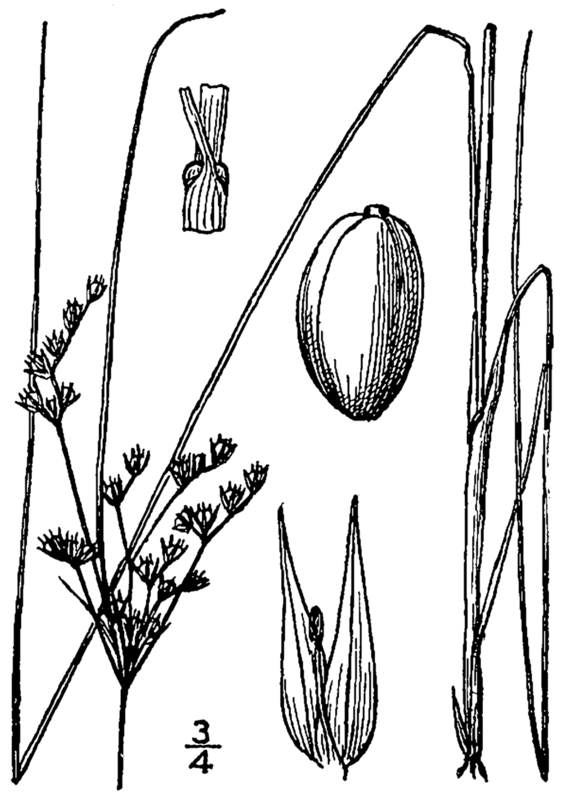
Juncus dudleyi, commonly known as Dudley's rush, is a perennial herbaceous plant belonging to the Juncaceae family. Native to the western United States, it thrives in wetlands, marshes, and along stream banks.
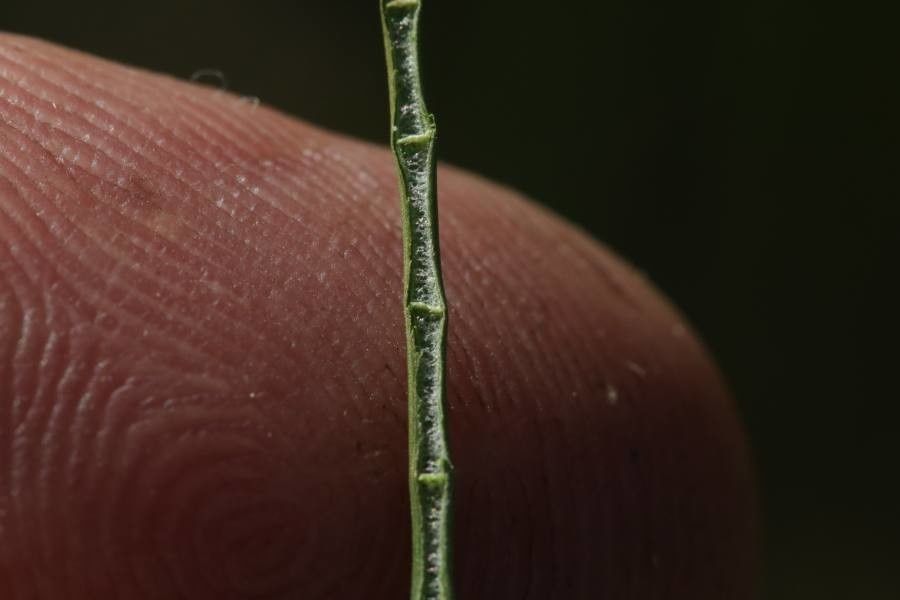
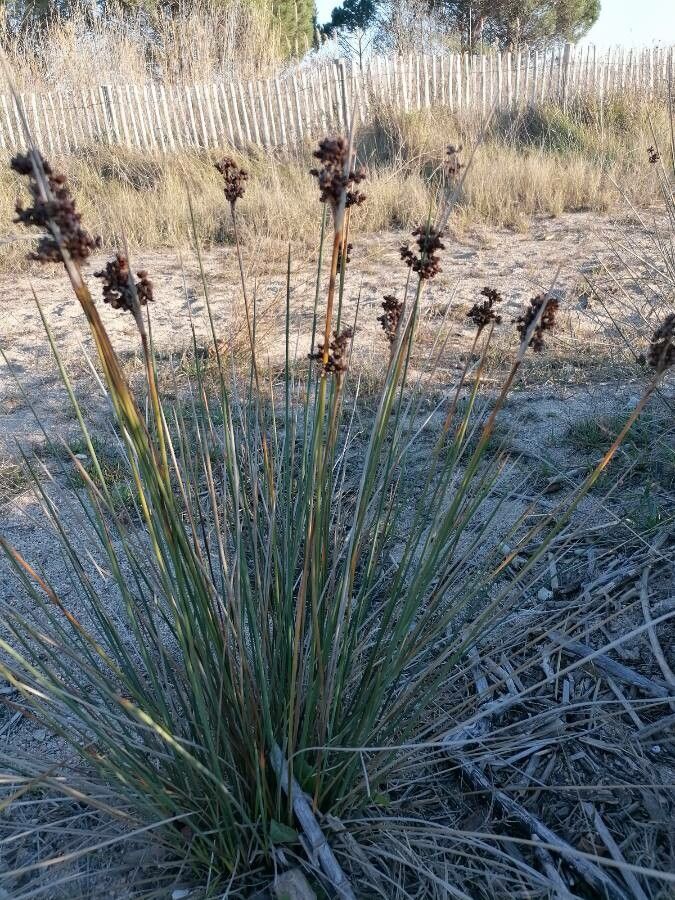
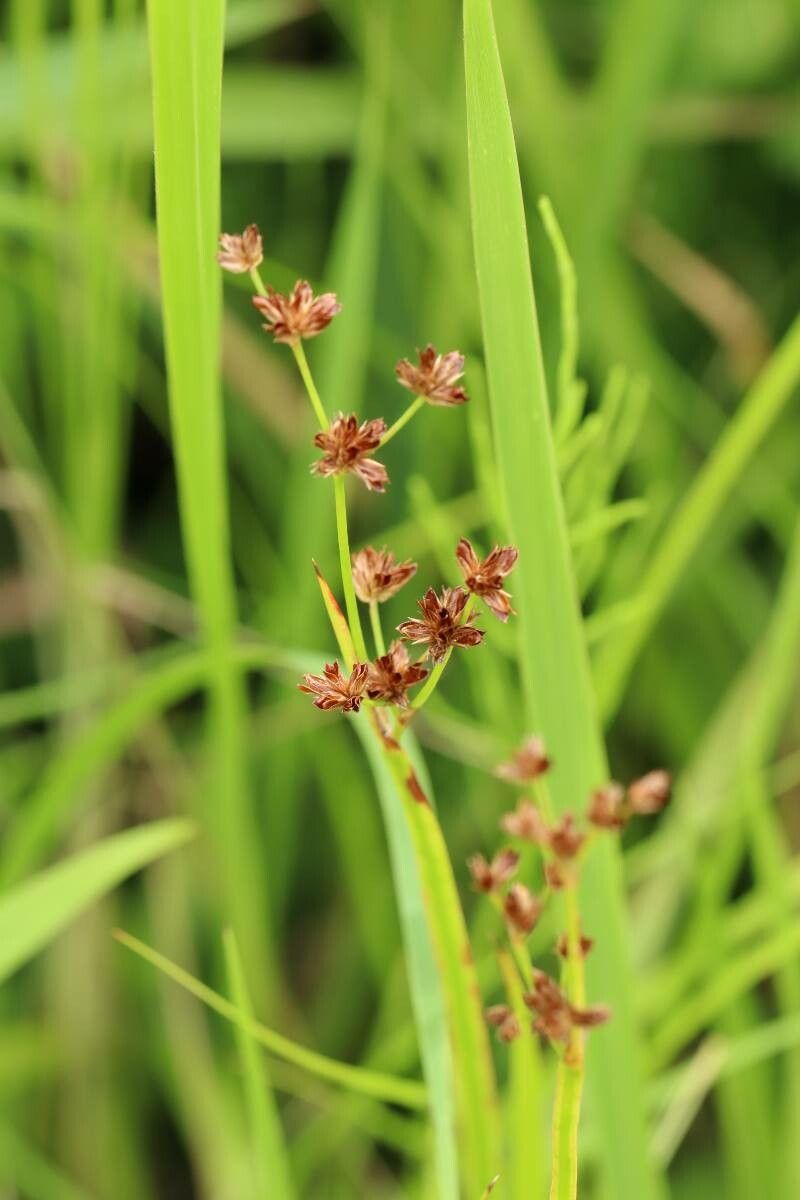
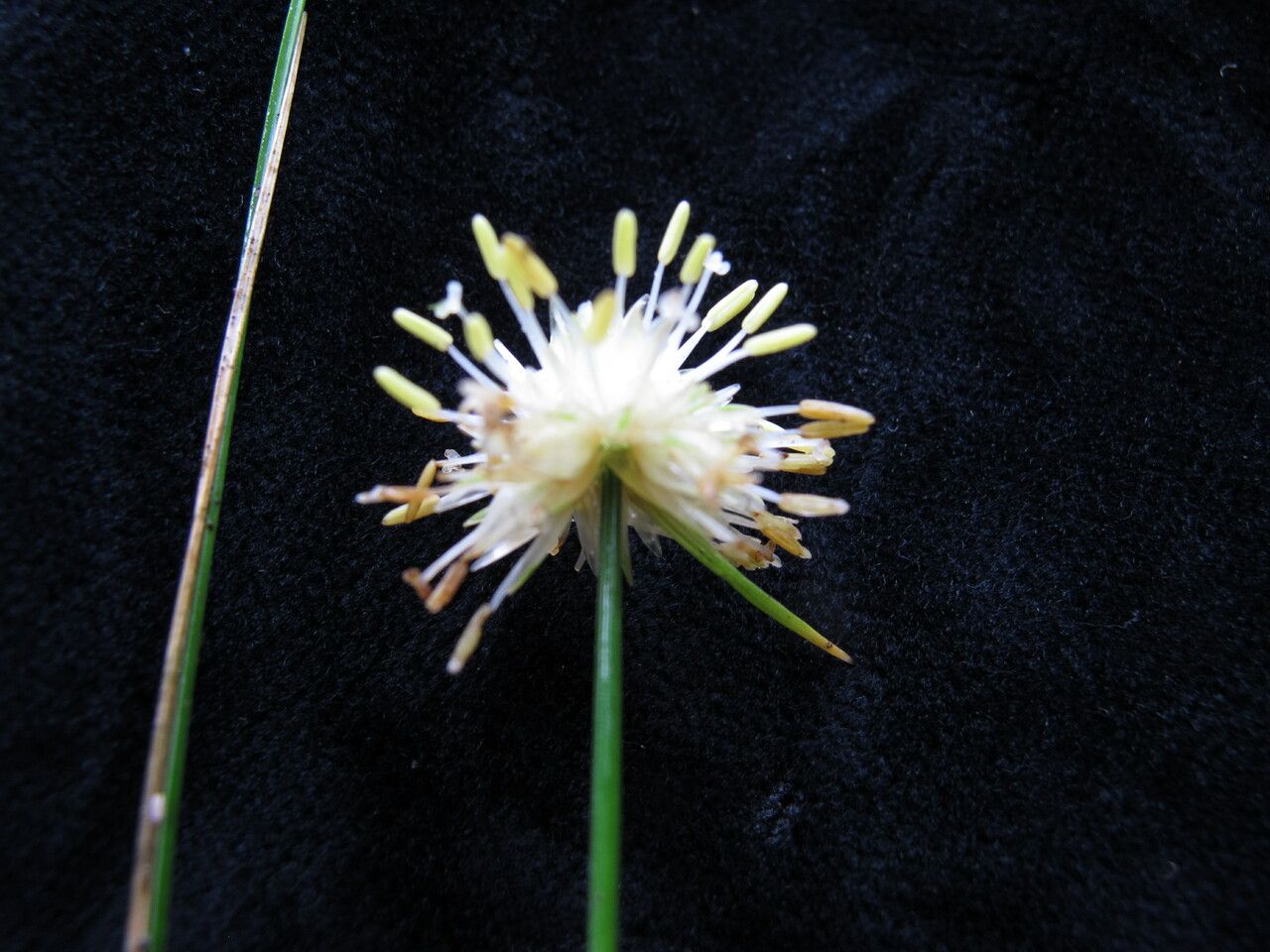
Dudley's rush grows in clumps, featuring slender stems that can reach up to 3 feet in height. The green, cylindrical stems bear no leaves or branches. From June to August, the plant produces small brownish flowers clustered at the stem tips.
This rush prefers moist soil but can tolerate some drought once established. It is an excellent choice for erosion control along stream banks and for wetland restoration projects.
Historically, Native Americans have utilized Dudley's rush for various medicinal purposes, such as treating headaches and stomach ailments. Additionally, the plant provides habitat for several wildlife species, including birds and insects.
Overall, Juncus dudleyi is an attractive native plant with significant ecological benefits, making it suitable for wetland restoration projects and naturalized landscapes where moisture levels support its growth requirements.
Dudley's rush has strong resistance to disease and is typically not vulnerable to illnesses. Regarding care, this plant is relatively low-maintenance. Planted outdoors, it needs only minimal watering, and larger specimens usually do not require pruning. Smaller ones, however, should be pruned after they have finished blooming. Dudley's rush is appropriate for anyone with an outdoor area, such as a garden or deck, and does not demand much experience in plant care.
How to keep Juncus Dudleyi.
Light
Dudley's rush is a sun-loving, perennial herbaceous plant native to open habitats, commonly found in meadows and grasslands. It prefers full sun but can also tolerate partial sun.
Temperature
Dudley's rush can tolerate a wide range of temperatures, but its distribution may still be restricted by particular combinations of moisture and heat. It does best in warm summer climates with sufficient rainfall or irrigation. Extended periods of cloudy, rainy weather or sustained high temperatures can increase the chance of Dudley's rush dying. In winter, adequate protection from cold can improve the plant's survival rate.
Fertilizer
Dudley's rush needs extra nutrients to encourage healthy new growth. In spring, spreading compost around the base of the plant can effectively supply the nutrition it requires. Fertilizing helps support vigorous growth and assists the plant in resisting diseases and pests.
Pruning
Dudley's rush is a hardy species that thrives in wetland environments. To promote healthy growth and improve its appearance, it's recommended to prune it in early spring. During pruning, remove any dead stems by cutting them down to the base. This practice not only stimulates new growth but also helps in pest management, ensuring Dudley's rush remains in excellent condition. These techniques are supported by horticultural experts.
Botanical profile.
- Plant Type
- Grass
- Life Cycle
- Perennial
- Genus
- Juncus
- Family
- Juncaceae
- Hardiness Zone
- 3-9
- Mature Height
- 46 cm to 76 cm
- Mature Spread
- 20 cm to 40 cm
- Leaf Color
- Dark Green
- Leaf Type
- Evergreen
- Flower Color
- Yellow, Green, Brown
- Flower Size
- 0.25 cm to 0.51 cm
- Bloom Time
- Early summer, Mid summer
- Planting Time
- Spring, Summer, Autumn
- Harvest Time
- Late summer, Early fall
- Native Area
- Mexico
Other names.
Reader questions.
What are the sunlight requirements for Dudley's rush?
Dudley's rush, botanically known as Juncus dudleyi, thrives under full shade conditions, receiving less than 3 hours of sunlight daily. It's important to observe the movement of sunlight through your garden carefully, selecting locations that strike a balance between light and shade. This consideration ensures the plants remain healthy and happy.
What is Dudley's rush?
Dudley's rush, known botanically as Juncus dudleyi, doesn't have any specific essentials, symptoms, or additional information provided. This means that either the information was not available or not applicable for this query.