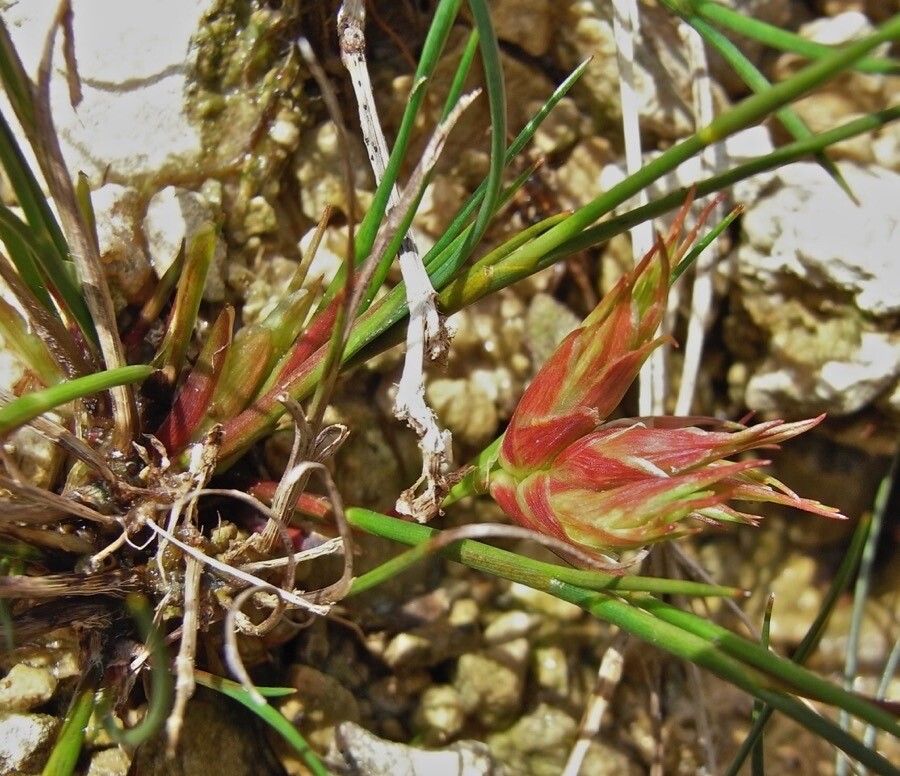
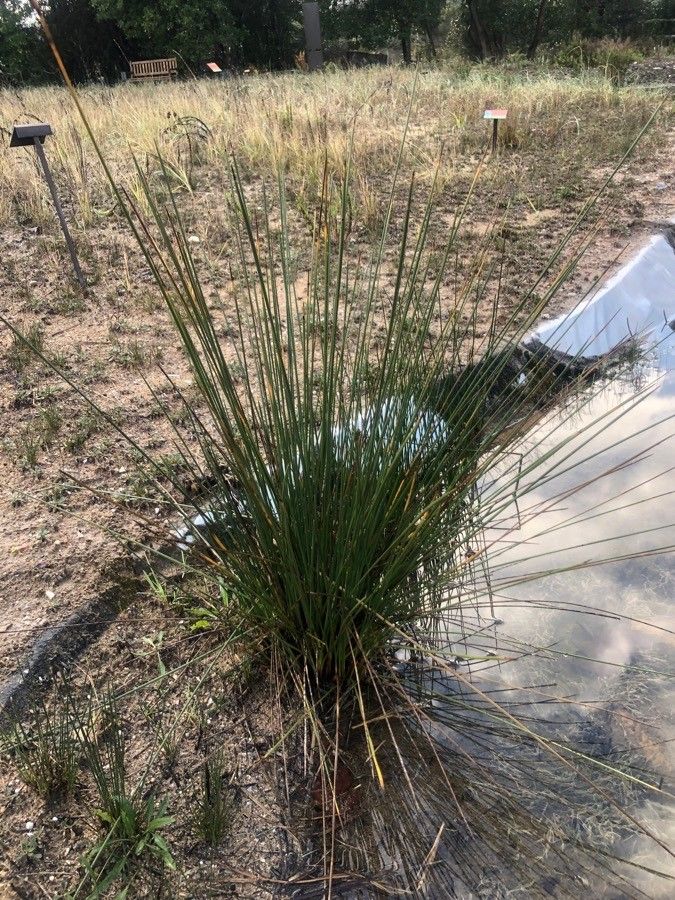
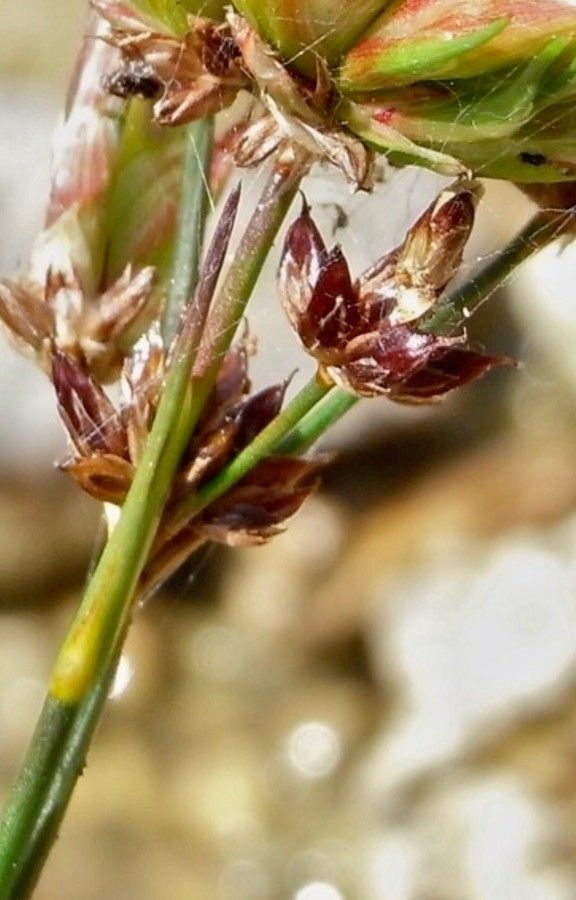
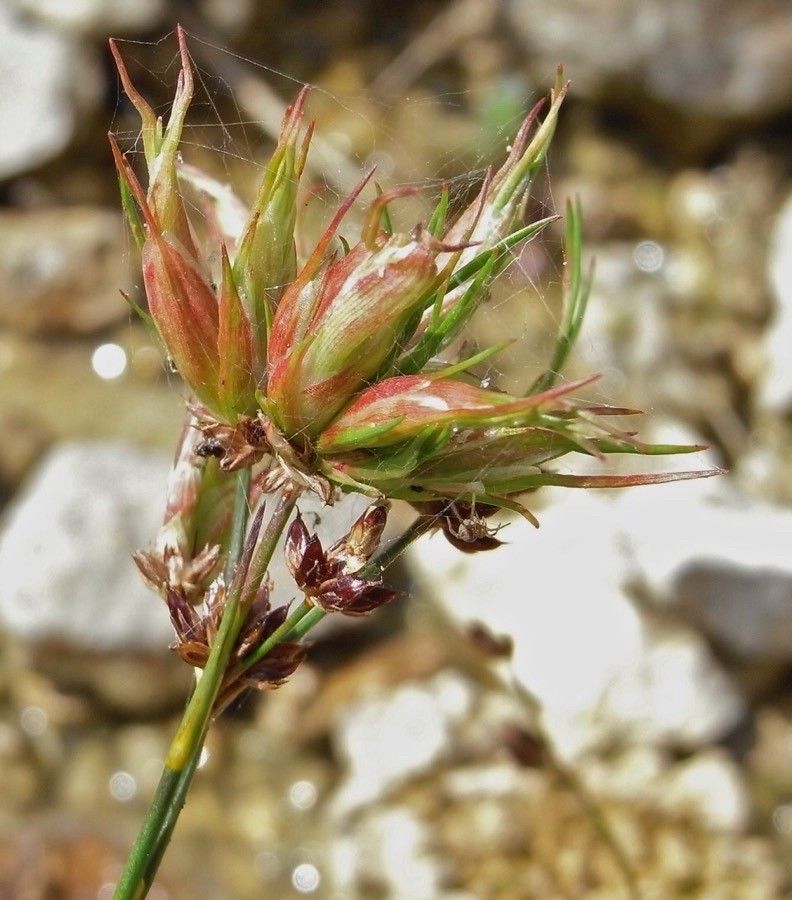
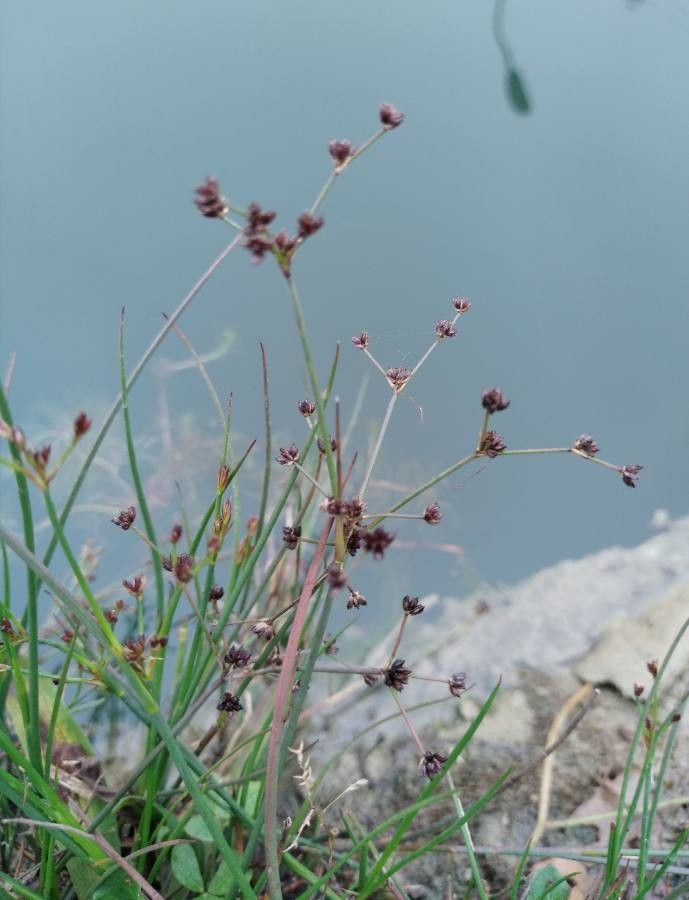
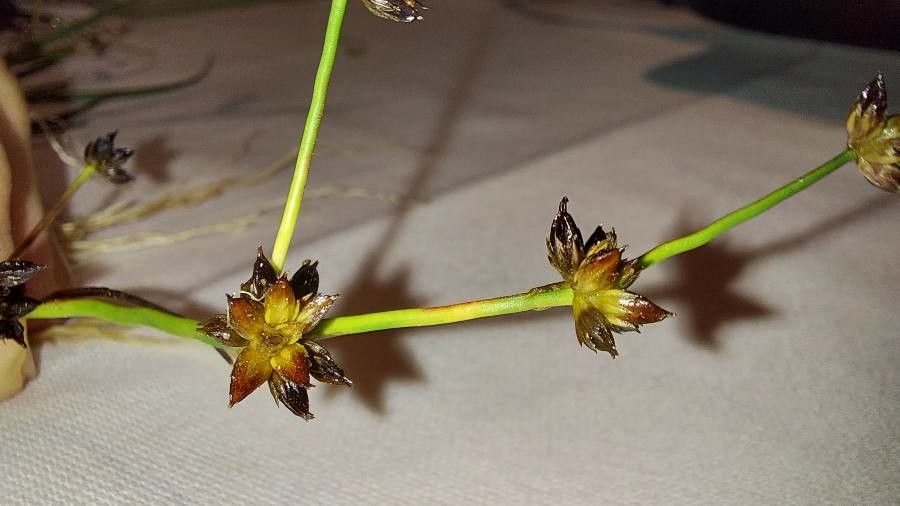
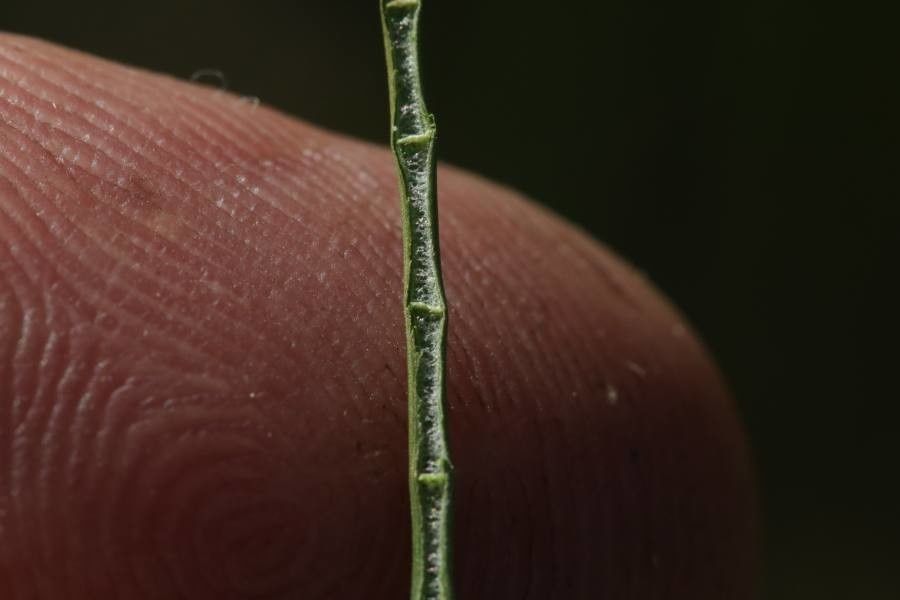
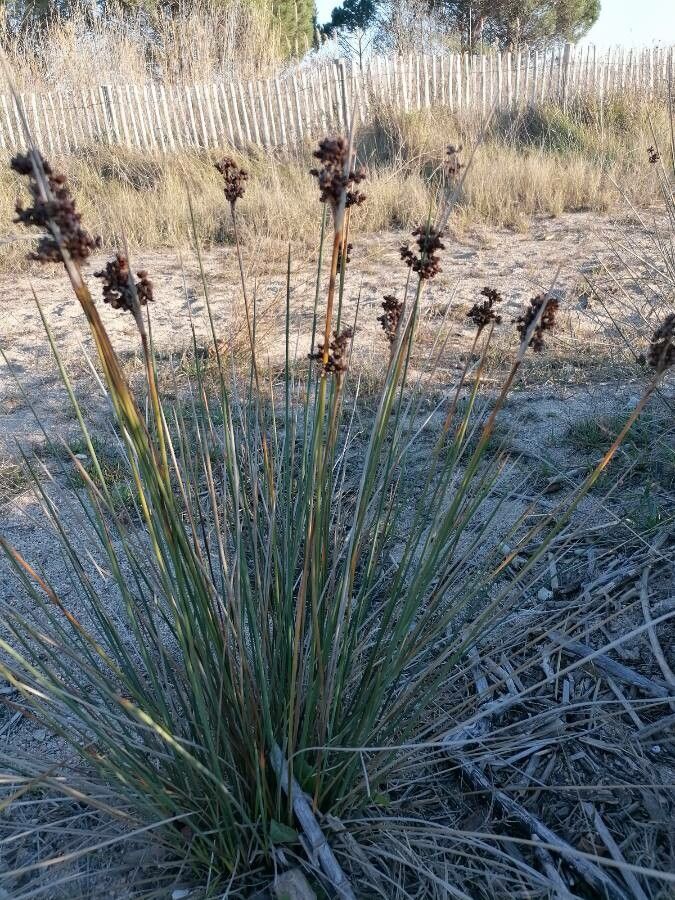
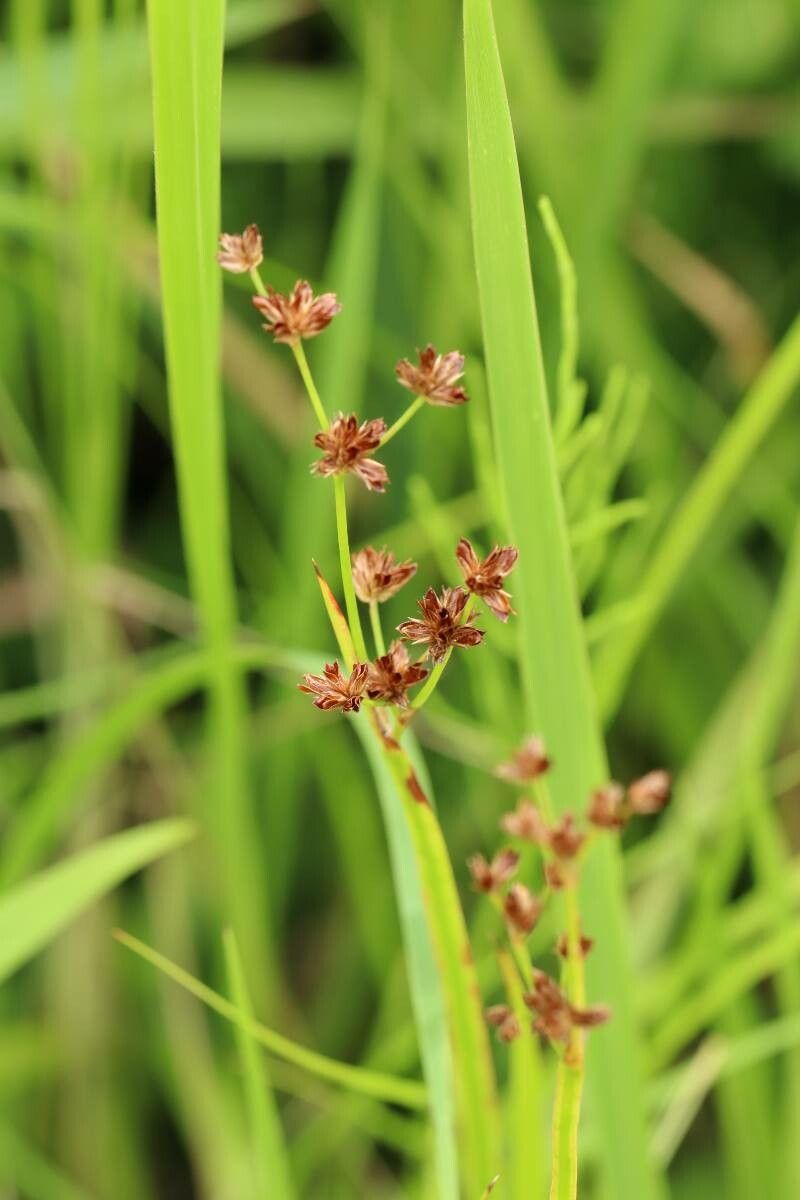
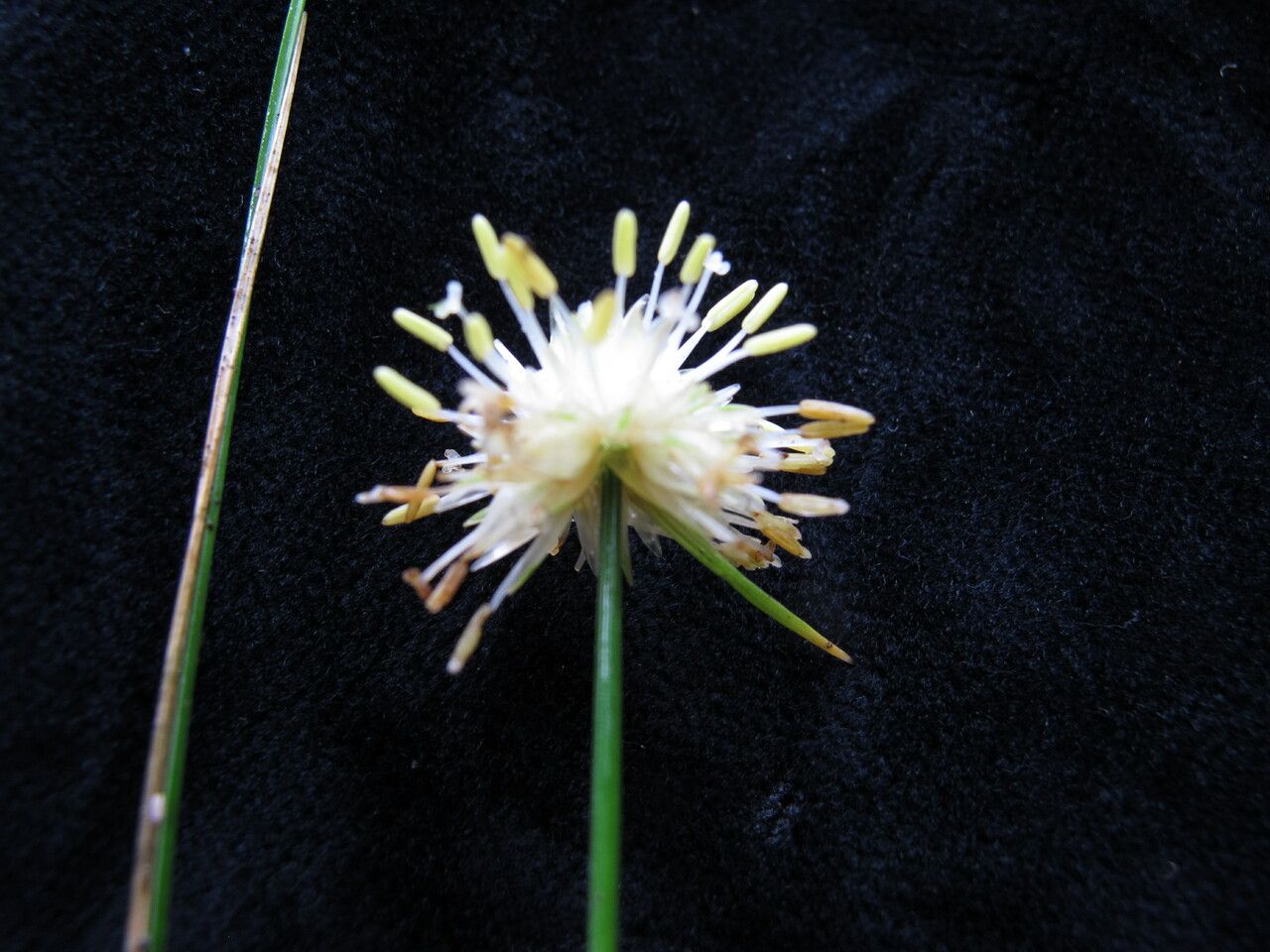
Juncus articulatus is a flowering plant species in the rush family Juncaceae. It is known by the common name jointleaf rush or jointed rush, which can also refer to J. kraussii from Australia. It is native to Eurasia, Canada, Greenland, and much of the United States. It grows in moist areas, such as wet sand, and thrives in calcareous soils. J. articulatus was found to be more sensitive to drought and salt stress than its congeners J. acutus and J. maritimus. It is a perennial herb producing mainly erect stems from a short rhizome. The stem may root at nodes, and it generally has one or more flattened hollow cylindrical leaves up to 10 centimeters long. Transverse internal partitions or joints may be seen or felt in the leaf of the plant. The inflorescence atop the stem has several branches with up to 25 clusters of up to 12 flowers each. Each individual flower has greenish to dark brown, pointed tepals 2 to 3 millimeters long, six stamens bearing anthers, and a protruding, feathery pistil. The fruit is a dark brown capsule with a pointed tip.
Jointleaf rush has strong resistance to disease and is usually not prone to infections. Regarding care, this plant is relatively low maintenance. Planted outdoors it needs only minimal watering, and larger plants typically do not require pruning. Smaller plants, however, should be pruned after they have bloomed. Jointleaf rush is suitable for anyone with outdoor space, such as a garden or deck, and does not demand much care experience.
How to keep Juncus Articulatus.
Light
The jointleaf rush grows well in places with little or no exposure to sunlight. Native to habitats with very limited light, its growth is not hindered by the absence of substantial light. Nevertheless, prolonged lack of light can impair its development and vigor.
Water
Originating from wetlands, jointleaf rush thrives in consistently moist environments. To maintain this condition, water the plant weekly, ensuring the soil stays moist but not waterlogged. As an outdoor plant typically found near water sources, the growth and reproduction of jointleaf rush are closely tied to the availability of water, which influences its seasonal adaptations.
Temperature
Jointleaf rush does best in cooler conditions, ideally between 41 and 77°F (5 and 25℃). It is indigenous to habitats where those temperatures are common. In hotter months, measures may be necessary to cool the planting area so the preferred temperature range is maintained.
Fertilizer
Jointleaf rush benefits from extra nutrients to encourage healthy new growth. In spring, spreading some compost around the plant’s base will effectively supply the required nourishment. Fertilizing supports robust growth and helps the plant withstand diseases and pests.
Pruning
The Jointleaf Rush features cylindrical, segmented stems that thrive in wet environments. To encourage dense growth and remove dead stems, prune the plant in early spring. Proper pruning not only enhances air circulation and sunlight exposure but also helps prevent the plant from becoming invasive. When pruning, be sure to use clean tools and wear gloves to protect your hands from the tough stems.
Botanical profile.
- Plant Type
- Grass
- Life Cycle
- Perennial
- Genus
- Juncus
- Family
- Juncaceae
- Hardiness Zone
- 4
- Mature Height
- 10 cm to 52 cm
- Mature Spread
- 15 cm to 30 cm
- Leaf Color
- Dark Green
- Leaf Type
- Deciduous
- Flower Color
- White, Yellow, Red
- Flower Size
- 0.51 cm to 0.76 cm
- Bloom Time
- Summer
- Planting Time
- Autumn
- Harvest Time
- Late summer, Early fall, Mid fall
Other names.
Reader questions.
What do I need to do if I give too much water or too little water to my Jointleaf rush?
Proper watering is crucial for the growth of this beautiful ornamental grass. When planted in the ground, watering problems can be resolved. However, in a container, too much or too little water can quickly kill Jointleaf rush. When it comes to water, the right balance is essential. Insufficient watering can stunt the growth of Jointleaf rush and cause drooping leaves, weak seed head production, and browning. On the other hand, overwatering can result in yellow leaves with brown tips. If you suspect the watering issue, the first step is to determine if it's receiving too much or too little water. If it's getting too much, stop watering immediately and allow the soil to dry out over time. Once you notice new growth, check the soil's moisture level to decide if more water is needed. On the contrary, if the grass is receiving too little water, simply give it a good, deep watering to see if it recovers. Keep in mind that long, deep watering is better than frequent shallow waterings. This encourages the grass to develop deep roots, making it more resistant to drought and less susceptible to watering-related problems.
Why should I put fertilizer on my Jointleaf rush?
Fertilizing Jointleaf rush is essential for the plant's well-being. By providing additional nutrients, you not only encourage healthy new growth but also enhance the health of existing foliage and bolster the plant's immunity against diseases and pests.
What are the sunlight requirements for Jointleaf rush?
Jointleaf rush, or Juncus articulatus, thrives in full shade environments, requiring less than 3 hours of sunlight per day. It is crucial to monitor the movement of sunlight through your garden carefully to ensure that your plants receive the right balance of light and shade, which is essential for their growth and health. This approach aids in selecting optimal spots that cater to the light needs of your plants, promoting their well-being.
What is the ideal temperature range for growing Jointleaf rush?
Jointleaf rush (Juncus articulatus) thrives best in cooler temperatures, with an ideal range between 41 to 77°F (5 to 25°C). This temperature range supports its natural growth cycle, and is typical of the environments where the plant is natively found. In areas experiencing warmer temperatures, especially beyond 25°C, measures might be necessary to cool the planting area to keep within this preferred temperature range, ensuring the plant's health and vitality.
How often do I need to water my Jointleaf rush?
The watering needs of Jointleaf rush depend on its planting location. In general, watering this grass once a week should suffice. However, in hot climates, it may be necessary to water it once or twice a week during the summer. In moderate climates, watering once every seven days or more may be enough. Grass grown in containers usually requires more frequent watering compared to grass planted in the ground. The specific location also plays a role, as shaded grasses require less frequent watering than those in the ground. It is important to only water Jointleaf rush when the soil is dry. You can check this by pressing your finger a couple of inches into the soil or by weighing the pot to see if it feels light. Insufficient water may result in folded and thinner blades. Despite its drought tolerance, regular and deep waterings will enhance its color. Although Jointleaf rush is drought-resistant, it still requires care and attention. Initially, it needs more frequent watering until it establishes deep roots. For potted Jointleaf rush, the soil may dry out quickly, especially if exposed to hot, direct sun. Test the soil every 3 to 4 days and water only when it feels dry. Ground-planted Jointleaf rush generally requires less watering, but this depends on the soil type. Clay soil may appear dry at the surface while retaining moisture below, while sandy soil that drains quickly may need more frequent watering.
When should I fertilize my Jointleaf rush plant for best results?
To ensure the survival of Jointleaf rush in your garden, it's important to know the right time to fertilize it. This plant doesn't require a lot of nutrients when it's dying back, so there's no need to add additional fertilizers during that time. At the beginning of the growing season, it's possible to use diluted fertilizer, but it's not the best recommendation. Instead, a better approach is to apply mulch or compost around the base of the plant.
How does artificial lighting benefit Jointleaf rush indoors?
Artificial lighting is vital for the growth of indoor Jointleaf rush plants, especially when natural sunlight is insufficient. During winter or in less sunny spaces, artificial lights provide necessary support for optimal growth. LED lights are favored for indoor planting due to their ability to supply specific light wavelengths required by plants. The general recommendation for artificial lighting is 30-50W/sq ft for full sun plants, 20-30W/sq ft for partial sun plants, and 10-20W/sq ft for full shade plants. It's important to place the light source approximately 12-36 inches above the plant and mimic natural daylight hours by keeping them on for 8-12 hours per day.
What are the cold weather care instructions for Jointleaf rush?
Jointleaf rush is notably cold-tolerant, able to withstand low winter temperatures without needing extra frost protection measures. However, to prepare it for winter, it's recommended to water the plant generously before the first freeze during autumn. This step is crucial to ensure the soil around the plant remains moist and enters a frozen state hydrated, which helps prevent potential drought and water scarcity issues during the colder winter and early spring months.
What do I need to be careful about when I water my Jointleaf rush in different seasons, climates, or while it's growing?
To determine if you are watering your grass enough, observe the rate of growth. Jointleaf rush is known to double in size during the hottest months of the year. If the weather is hot but the grass is not growing well, you may need to adjust your watering schedule. In winter, watering once a month may be sufficient, but check the soil to ensure it is moist. During the growth cycle in warm months, the grass requires more water, whereas in winter and cooler months, the water needs significantly decrease. The crucial thing to remember about Jointleaf rush is that the soil should always be allowed to completely dry before watering.
When is it not a good idea to add fertilizer to my Jointleaf rush?
If you are not using packaged fertilizers, you can stop worrying about when to stop feeding Jointleaf rush. Just apply a layer of compost or mulch in the spring, and it will be sufficient to keep the plant happy all year. You don't need to worry about mulching or composting during the winter when the plant is dormant.
What are some symptoms of light deficiency in Jointleaf rush when grown indoors?
When Jointleaf rush is grown indoors under insufficient light, it may display subtle symptoms indicating light deficiency. These include smaller new leaves, leggy or sparse growth, faster leaf drop, slower or halted growth, lighter-colored new leaves, chlorosis (yellowing of leaves due to chlorophyll breakdown), sunscald (damage from intense sunlight exposure), leaf curling (a defense mechanism against excessive sunlight), wilting (due to increased water loss), and leaf scorching (brown, dry, and crispy leaf edges caused by excessive sunlight). These symptoms point towards the need for better light management to ensure the plant's health.
How does Jointleaf rush react to very low temperatures, and what are the solutions if any issues arise?
Despite its high cold tolerance, Jointleaf rush can be affected when winter temperatures fall below -30°C. In such extreme cold, the plant may not show immediate damage but could experience reduced or even absent sprouting in the following spring. If this occurs, the recommended solution is to carefully remove any parts of the plant that have failed to sprout as spring arrives, to promote new growth and maintain plant health.