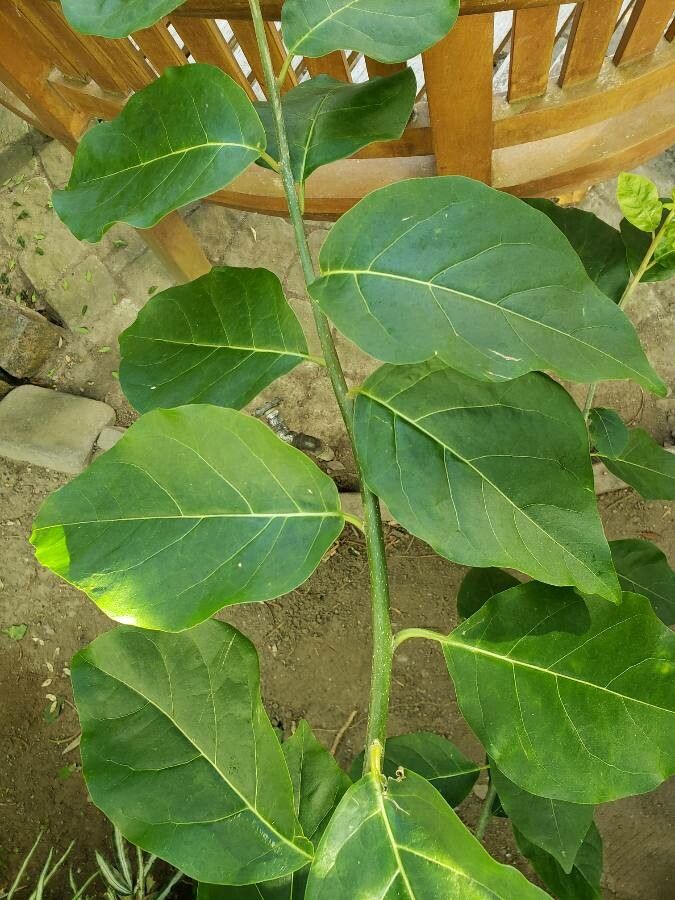
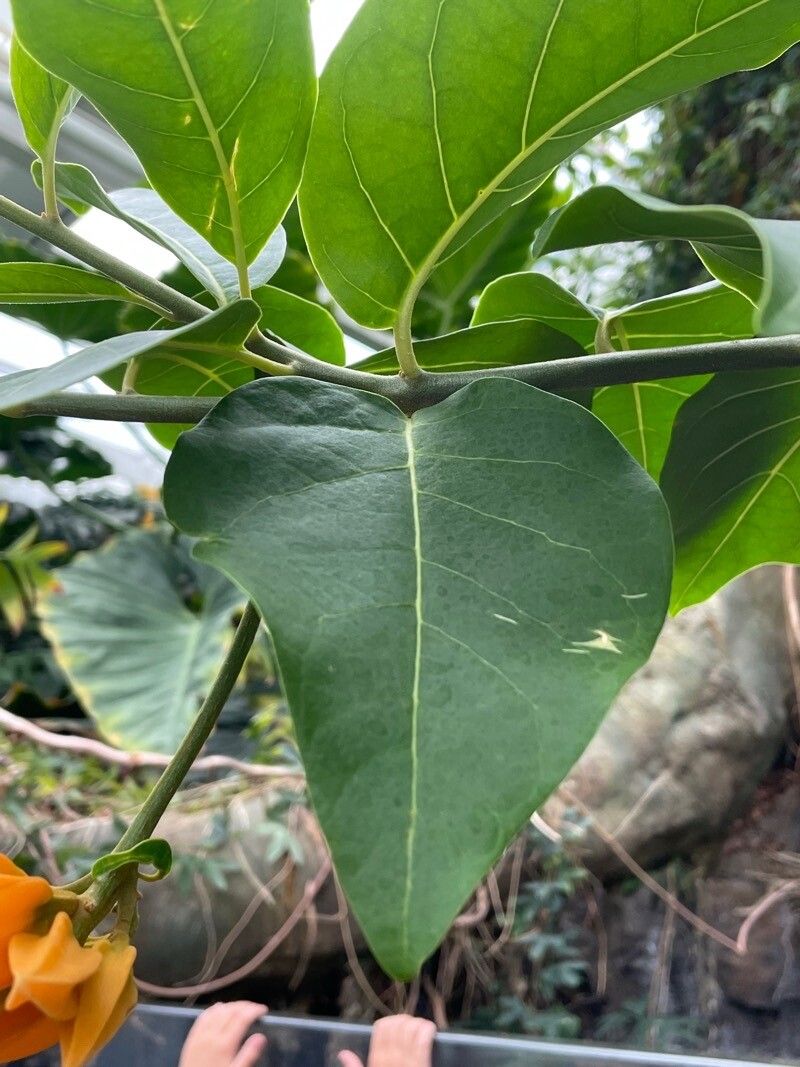
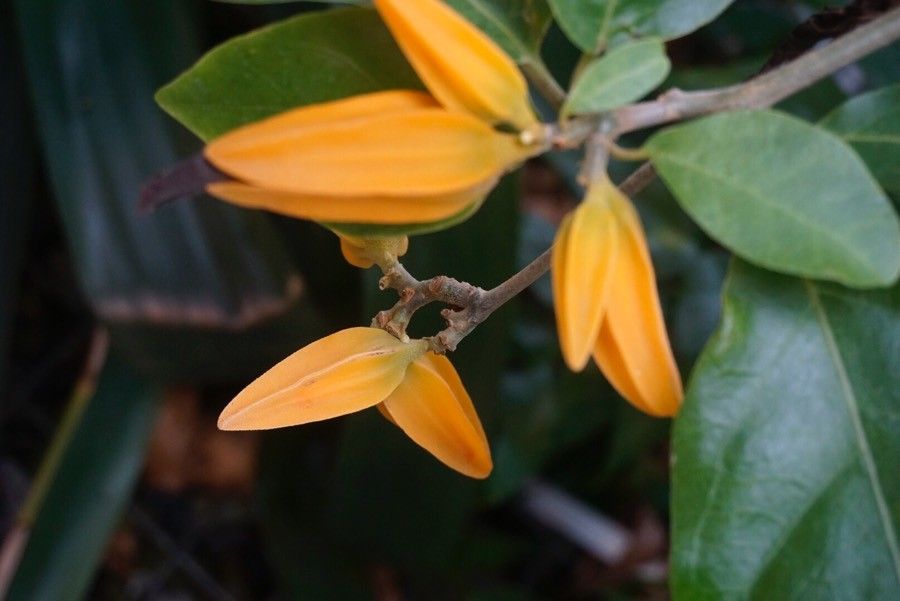
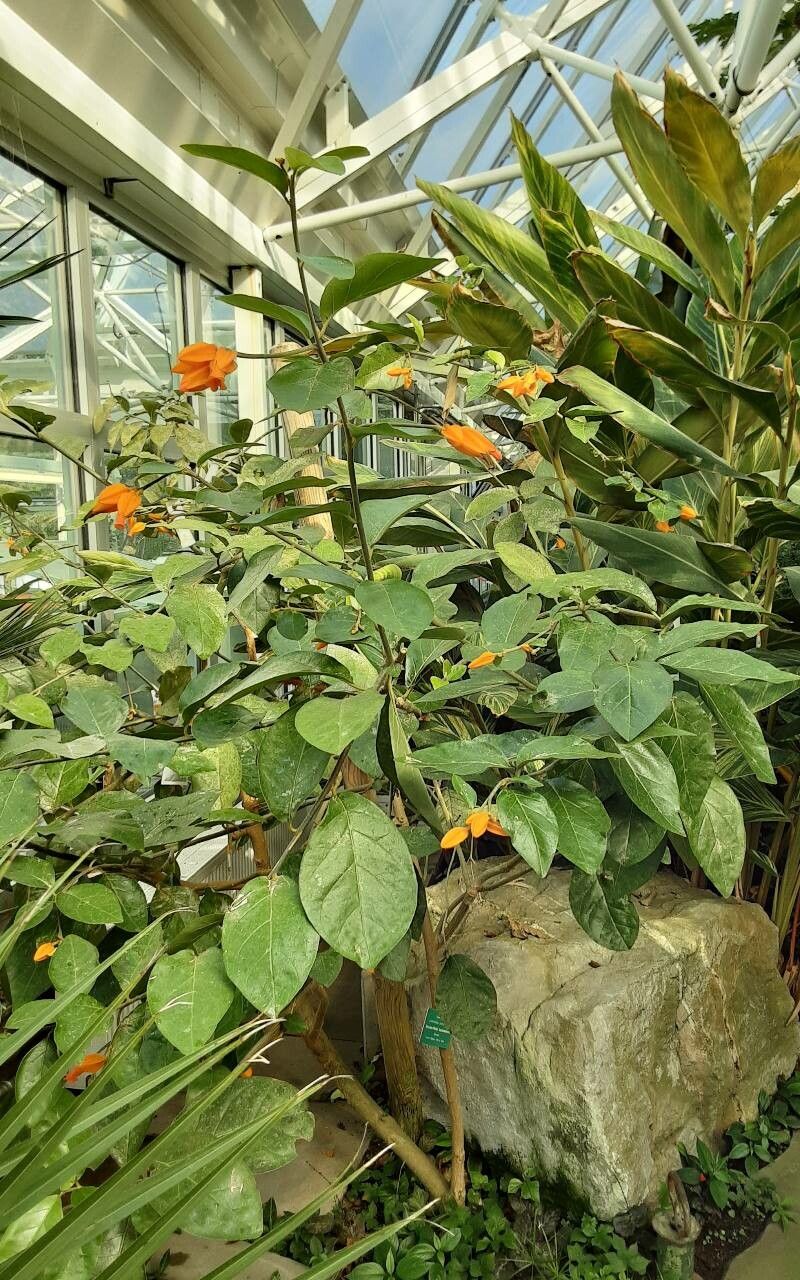
Juanulloa mexicana is a tropical plant native to Mexico and Central America, belonging to the Solanaceae family, which includes popular plants such as tomatoes, peppers, and eggplants. This climbing vine can grow up to 10 feet long and features large, glossy, heart-shaped leaves.
The plant produces striking yellow flowers with five trumpet-shaped petals. These blossoms, which appear in clusters from spring through fall, emit a sweet fragrance that attracts pollinators like bees and butterflies.
Juanulloa mexicana prefers warm temperatures ranging from 60-80°F (15-27°C) and high humidity levels. It thrives in well-draining soil rich in organic matter but can also do well in containers if provided with adequate support for climbing.
In traditional medicine, Juanulloa mexicana has been used for its medicinal properties, particularly in treating respiratory conditions like asthma and bronchitis due to its anti-inflammatory effects.
Overall, Juanulloa mexicana is an attractive tropical vine suitable for both indoor and outdoor cultivation, thanks to its beautiful flowers and easy-to-grow nature.
The gold finger plant is resistant to disease and typically does not develop illnesses. As for maintenance, it is fairly low-maintenance. When grown outdoors it needs only light watering, and larger specimens usually do not require pruning; smaller ones, however, should be trimmed after they finish blooming. Gold finger plantt is appropriate for anyone who has an outdoor area, such as a garden or deck, and it does not demand extensive gardening experience.
How to keep Juanulloa Mexicana.
Light
The gold finger plant prefers continuous exposure to sunlight, doing best in places where sunlight is plentiful. It can also tolerate locations with moderate light. This trait reflects its native habitats, which are commonly sun-rich. Both too much and too little light can negatively affect its health, resulting in stunted growth.
Water
The Gold Finger plant thrives in moist and humid environments similar to those found in tropical rainforests. To keep the soil adequately moist, it's best to water the plant once a week. As an evergreen that is often grown indoors, the Gold Finger plant also benefits from increased humidity. You can achieve this by grouping it with other plants or placing it on a pebble tray filled with water.
Temperature
Gold finger plant originates from areas where temperatures range from 68 to 100 °F (20 to 38 °C). Its temperature requirements mirror the climates of those regions. When seasonal temperatures become extreme, keep indoor conditions comfortable as needed to help the plant thrive.
Fertilizer
The best time to fertilize a Gold finger plant is in early spring as it comes out of dormancy. This encourages overall growth and the development of flowers. Fertilization improves the foliage, stems, and branches, while encouraging flowers that are larger, more vivid, and longer-lasting. It helps move nutrients from the roots to the blooms and enhances the plant’s health and resistance to disease.
Pruning
The Gold Finger plant is known for its vibrant orange blooms and climbing growth. To encourage bushy foliage and abundant flowers, it's beneficial to prune the plant in late spring. Trim back one-third of the growth to achieve this. Additionally, remove any dead stems to promote overall plant health. Maintain the plant's appearance by regularly pruning with sharp, clean tools.
Botanical profile.
- Plant Type
- Shrub
- Life Cycle
- Perennial
- Genus
- Juanulloa
- Family
- Solanaceae
- Hardiness Zone
- 9-11
- Mature Height
- 0.91 m to 1.83 m
- Mature Spread
- 1.22 m
- Leaf Color
- Dark Green
- Leaf Type
- Deciduous
- Flower Color
- Orange, Yellow
- Flower Size
- 2.54 cm to 5.08 cm
- Bloom Time
- All year round
- Planting Time
- Spring, Summer, Autumn
- Harvest Time
- All year round
- Native Area
- Colombia, Honduras, Mexico, Guatemala, Ecuador, Costa Rica, Panama
Other names.
Reader questions.
How should I water my Goldfinger plant?
To ensure excellent root development, consider these tips for watering your plants: 1. Place a garden hose at the base of the plant but avoid spraying the leaves directly. If your plants are outdoors and exposed to direct sunlight, the leaves may need more water. 2. Using bubblers or soaker hoses can help moisten the roots of each plant. Soaker hoses are especially useful for covering the entire garden or bed when adding or removing plants, as they help push the roots deeper. 3. After watering, make sure to drain any excess water and allow the soil to dry before watering again. Watering at ground level instead of overhead can help prevent diseases. 4. On a sunny day, consider spraying the entire bush with water to keep it hydrated. 5. Whether your plants are potted or in the ground, remember that the Gold finger plant prefers deep watering as opposed to light sprinkling.
Why should I use fertilizer on my Gold finger plant?
Fertilization is crucial for the overall health and well-being of a Gold finger plant. It helps the plant grow lush foliage along with strong stems and branches. But what really matters to gardeners are the flowers of the Gold finger plant. The good news is that fertilization also plays a key role in producing large, vibrant, and long-lasting flowers. This is because the right fertilizer makes it easier for the plant to transport nutrients from the roots to the flowers. Additionally, proper fertilization ensures the plant stays healthy, enabling it to better resist diseases.
What are the sunlight requirements for the Gold finger plant?
The Gold finger plant requires full sun exposure to thrive, ideally benefiting from more than 6 hours of direct sunlight each day. It can also tolerate partial sun, which amounts to about 3-6 hours of sunlight. This plant's preference for sunny spots mirrors its natural habitat, which is accustomed to abundant sunshine. To ensure your Gold finger plant's health and happiness, it's crucial to observe the movement of sunlight through your garden and select locations that offer an optimal balance of light and shade.
What is the preferred temperature range for the Gold finger plant?
The Gold finger plant, known botanically as Juanulloa mexicana, thrives in temperatures ranging from 68 to 100 °F (20 to 38 °C). Originating from warm regions, it prefers climates that mimic these temperatures. During extreme weather conditions, it's important to maintain indoor temperatures within this range to ensure the plant's health. The plant loves heat, and exposure to cold temperatures can be detrimental. In the autumn, if the plant is grown outdoors, it's advisable to bring it indoors and place it near a bright window while keeping it away from direct heat sources. Keeping the indoor temperature above 20°C during winter benefits its growth, and exposure to temperatures near 0°C should be avoided.
What should I do if I give the Goldfinger plant too much or too little water?
If your Gold finger plant is overwatered, you may notice yellowing, dropping, and wilting leaves, as well as a dull and unhealthy appearance with mushy stems. In this case, it's important to adjust your watering schedule. On the other hand, wilting can also indicate under watering, characterized by crispy and dry leaves. If the soil is dry and simply watering is not enough, give the plant a thorough watering. Although this will help the plant recover, it may still have yellow and dry leaves due to a damaged root system. Once the plant returns to normal, the yellowing of the leaves will stop. When you have a Gold finger plant indoors, regularly check the moisture levels in its pot and avoid overwatering. Look out for signs of black spots, and if they are present, allow the soil to dry out for a few days before watering again. Overwatering can lead to root rot, so if you see discolored and slimy roots, consider transferring the plant to a different pot. Preventing root rot and avoiding excessively soggy soil are key. When planting your Gold finger plant outdoors, ensure the soil is not too dry by digging a little deeper and using your fingers to check. Adequate watering is necessary to assist the plant's recovery.
When should I add fertilizer to my Gold finger plant for the best results?
The best time to fertilize a Gold finger plant is in early spring when it is coming out of dormancy and preparing to bloom. Fertilizing at this time provides the plant with the energy it needs for growth and flower development. However, it is also beneficial to give the plant another feeding in the fall, although a smaller amount is sufficient. Some gardeners choose to fertilize the plant when they are planting it, but it is not always necessary.
What are the essentials for growing a Gold finger plant successfully?
Successfully growing a Gold finger plant hinges on providing it with unabated sun exposure, as it flourishes in areas bathed in plentiful sunlight. Moderate sunshine is also acceptable for this plant, which echoes the conditions of its native environments. Both excessive and insufficient light can negatively impact its health, leading to impaired growth. In environments where natural light is lacking, especially during winter or in less sunny areas, artificial lighting can serve as an excellent alternative. This includes choosing the right type of light, like LED, which can be customized to the plant’s needs, and ensuring the proper intensity, distance, and duration of light exposure to simulate natural conditions for optimal growth.
How does low temperature affect the Gold finger plant and what should I do?
The Gold finger plant prefers warm temperatures and does not tolerate cold well. Its optimal growth occurs when temperatures are maintained above 20°C. Exposure to temperatures below 0°C, especially down to -5°C, can cause the leaves to lighten in color. If the plant suffers from frost damage, you might notice the leaves turning brown or black and symptoms such as wilting and drooping. If this occurs, trim off the frost-damaged parts and move the plant to a warmer indoor environment immediately. Placing the plant near a south-facing window can ensure it receives sufficient sunlight while avoiding the placement near heaters or air conditioning vents to prevent the air from becoming excessively dry.
How often do I need to water my Gold finger plant?
The Gold finger plant prefers deep watering with longer intervals. When watering potted Gold finger plants, it is important to soak them with a gallon of water each time due to the limited water storage in the pots, causing the soil to dry out faster. In colder regions, watering is necessary every 3 to 5 days. It is best to water in the early morning when the soil is dry, both indoors and outdoors. To determine if watering is needed, check the soil. If the top 2-3 inches of soil are dry, it is time to give the plant a thorough watering. During hot days, check the moisture daily, as the heat can quickly dry out the potting soil. If you have a garden, irrigation is also necessary. In hot climates, watering once a week is sufficient. Only water if the top 2-3 inches of soil are too dry. Take into consideration the amount of rainfall and avoid overwatering to prevent root rot. Additional watering may not be required if there is already ample rainfall. The Gold finger plant typically grows during spring and fall. When outdoors, adding a layer of mulch about 3 to 4 inches deep can help conserve water. Sandy soil drains faster, so plants in sandy soil will require more frequent watering. On the other hand, plants in clay soil should be watered less frequently to prevent root rot. Keeping track of watering dates on a calendar can be helpful, especially if you notice the leaves drooping, indicating that watering may be overdue.
When is it not a good idea to add fertilizer to my Gold finger plant?
During the winter, Gold finger plants go into a dormant phase and do not require fertilization since they don't need much energy from the soil to grow. Adding fertilizer during this time can lead to overfertilization and negative effects. The best times to feed a Gold finger plant are in early spring and fall. So, for most of the spring and summer, fertilization is not necessary. If the plant is exposed to hot or dry conditions, it's also a good idea to hold off on feeding.
What are the key symptoms of light deficiency in a Gold finger plant?
When a Gold finger plant suffers from insufficient lighting, several symptoms can be observed. These include smaller new leaves, leggy or sparse growth, faster leaf drop, slower or halted growth, lighter-colored new leaves, and symptoms of chlorosis, where leaves lose their green color and turn yellow, indicating a breakdown of chlorophyll. Excessive sunlight exposure can lead to sunscald, marked by pale or necrotic areas on the plant, leaf curling as a defense mechanism to reduce sunlight exposure, wilting due to increased water loss, and leaf scorching, where leaves show brown, dry edges or patches.
What are the effects of high temperature on the Gold finger plant and how can I mitigate them?
During the summer, it's crucial to ensure that the Gold finger plant's environment does not exceed 38°C to prevent heat stress. Temperatures surpassing 43°C can cause the leaves to lighten and increase the risk of sunburn. To mitigate these issues, trim away sunburned and dry parts of the plant. Relocating the plant to a shaded area, especially from the midday and afternoon sun, can help. Additionally, watering the plant in the morning and evening will help keep the soil moist and support the plant’s well-being in high temperatures.